
Food Additives Microcrystalline Cellulose Market - Europe Size & Outlook 2020-2034
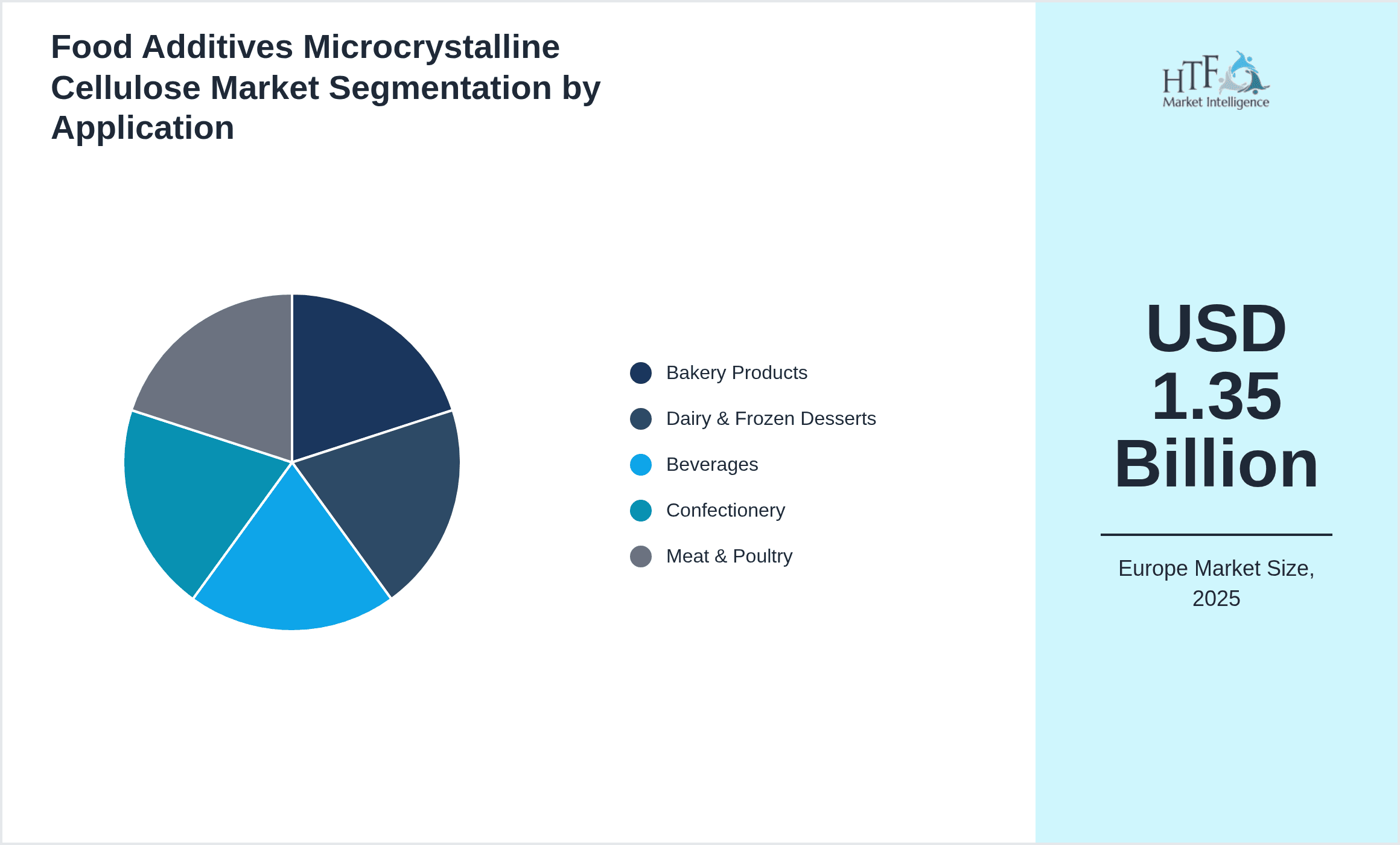
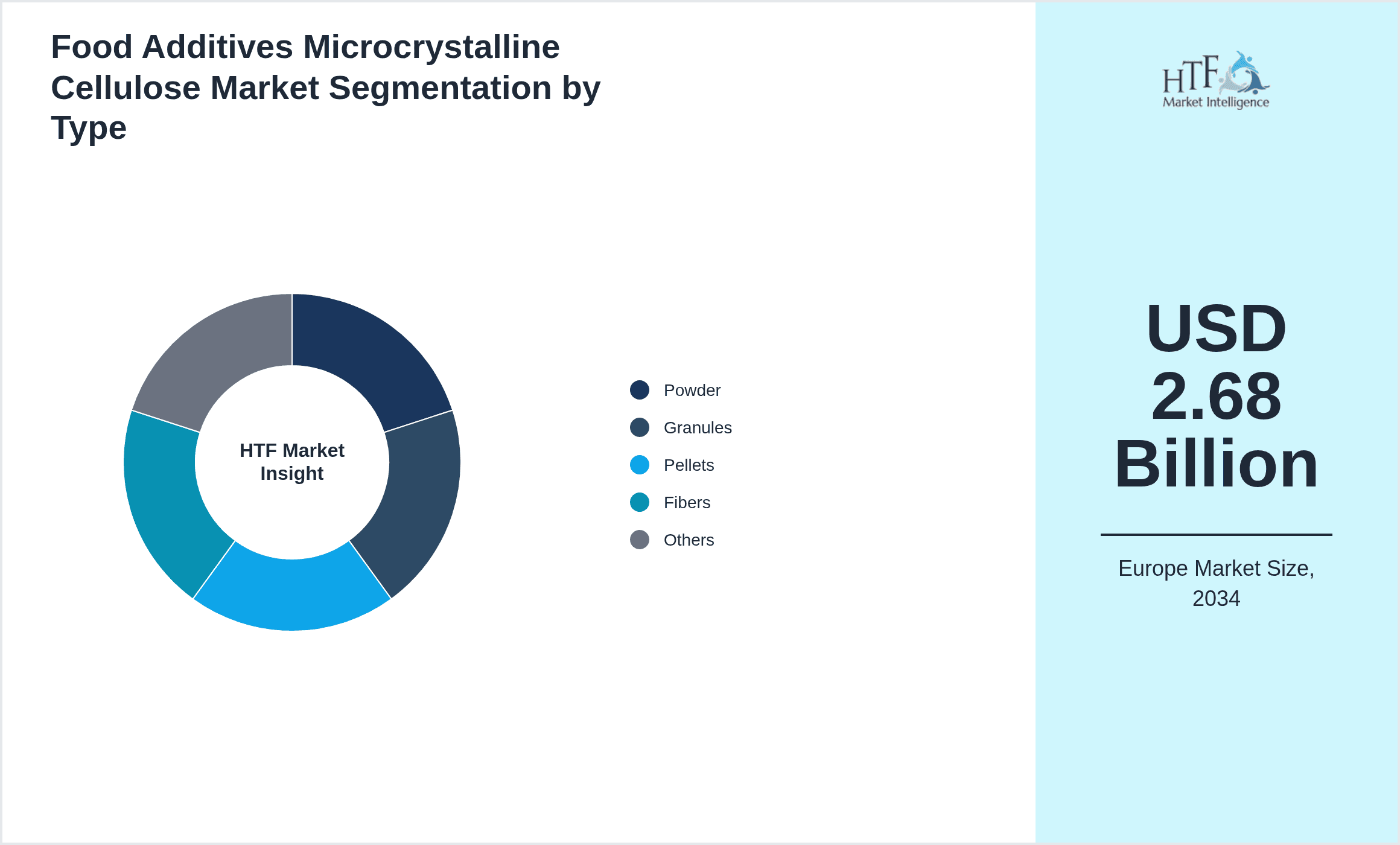
Europe Food Additives Microcrystalline Cellulose Market is segmented by Product Type (Powder, Granules, Pellets, Fibers, Others), Application (Bakery Products, Dairy & Frozen Desserts, Beverages, Confectionery, Meat & Poultry), Service Type (Custom Formulation, Bulk Supply, Technical Support, Quality Testing Services), Packaging Format (Powder Bags, Bulk Containers, Vacuum Sealed Packs), and Geography (Germany, France, The United Kingdom, BeNeLux, Spain, Italy, NORDIC, CEE, Others)
Pricing
Report Overview
Executive Summary
- •The Europe Food Additives Microcrystalline Cellulose market represents a critical segment within the broader food additives industry, focusing on the supply and utilization of MCC as a multifunctional ingredient. MCC is widely valued for its ability to improve texture, stability, and mouthfeel in a variety of food products such as bakery goods, dairy items, beverages, confectionery, and meat products. The scope of this market includes the entire value chain from raw material extraction, primarily from wood pulp, to the production of various MCC forms including powders, granules, pellets, and fibers. End users span food manufacturers, ingredient suppliers, and food service companies, all leveraging MCC to meet consumer demands for lower-calorie, fiber-enriched, and clean-label foods. The market is characterized by steady innovation in product formulations and manufacturing processes, driven by regulatory compliance and sustainability considerations in Europe. Key applications are expanding as food producers seek functional and health-promoting ingredients to enhance product appeal and meet nutritional guidelines. The market's growth is supported by a combination of technological advancements, evolving dietary trends, and robust regulatory frameworks that ensure product safety and efficacy within the European food industry.
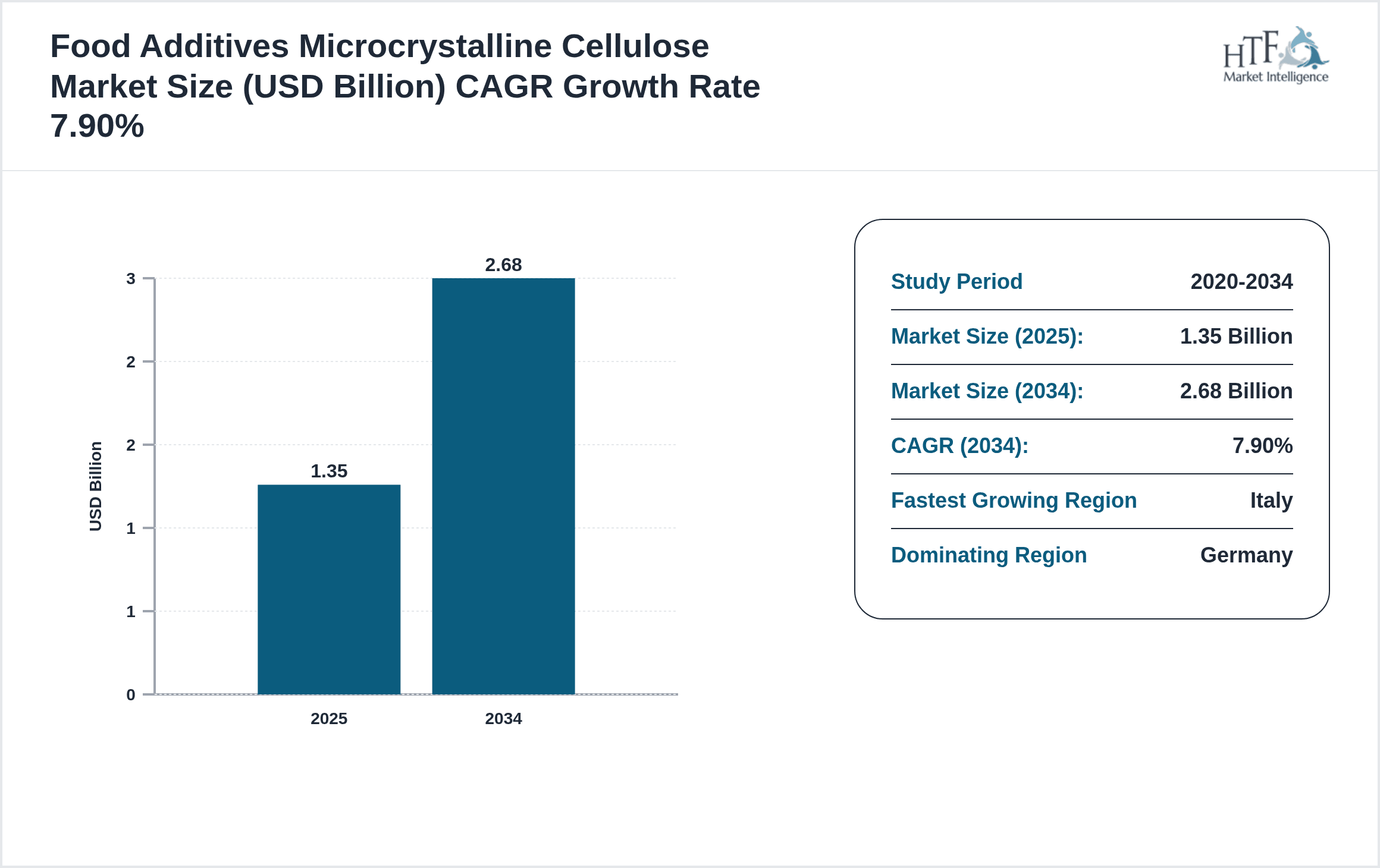
- •Key highlights of the market include a base year size of USD 1.35 Billion in 2025, growing at a CAGR of 7.9% to reach an estimated USD 2.68 Billion by 2034. Germany dominates the European market with a 28% share, while Italy is the fastest-growing country with a CAGR of 9.5%. The powder form of MCC remains the leading product type due to its versatility and ease of incorporation, whereas fibers represent the fastest growing segment driven by increasing demand for dietary fiber enhancement. Market growth is propelled by rising health awareness, demand for clean-label products, and expanding applications in emerging food segments.
- •This market holds strategic importance as it supports multiple food industry sectors by providing an additive that improves product quality and nutritional profile while complying with stringent European food safety regulations. Stakeholders including manufacturers, suppliers, and investors benefit from the market's growth prospects fueled by innovation, regulatory support, and increasing consumer preference for healthier food options. The integration of sustainable sourcing and production methods further enhances the market's appeal, reinforcing its role as a key ingredient segment in Europe’s food additives landscape.
Competitive Landscape
The Europe Food Additives Microcrystalline Cellulose market is highly competitive with a mix of established multinational corporations and specialized regional manufacturers. Market dynamics are influenced by product innovation focusing on higher purity, specialized particle sizes, and sustainable sourcing practices. Competitive strategies include strategic partnerships with food manufacturers, expansion of production capacities, and development of application-specific MCC grades. Pricing strategies are shaped by raw material availability and regulatory compliance costs. Leading players invest in R&D to develop bio-based and clean-label MCC variants to meet evolving consumer preferences for natural ingredients. Market entry barriers include regulatory approvals, quality certifications, and significant capital investment for production facilities. Distribution channels include direct sales to large food companies and partnerships with ingredient distributors. The competitive environment is further shaped by mergers and acquisitions aimed at consolidating market share and expanding geographical presence. Future trends point to increased customization, digital marketing strategies, and collaborations for sustainable innovation as key competitive differentiators.
Leading Companies in Food Additives Microcrystalline Cellulose Market
- •J.R. Simplot Company (United States)
- •FMC Corporation (United States)
- •Asahi Kasei Corporation (Japan)
- •FMC BioPolymer (United States)
- •Mingtai Chemical Co., Ltd. (China)
- •Blanver Farmoquímica Ltda. (Brazil)
- •DuPont Nutrition & Biosciences (United States)
- •Thiele Kaolin Company (United States)
- •Kraft Foods Group (United States)
- •Lotte Chemical Corporation (South Korea)
- •CP Kelco (United States)
- •Ashland Global Holdings Inc. (United States)
- •Globus Group (United Kingdom)
- •Celanese Corporation (United States)
- •Nouryon (Netherlands)
- •JRS PHARMA GmbH & Co. KG (Germany)
- •Lamberti S.p.A. (Italy)
- •Ingredion Incorporated (United States)
- •Mitsubishi Chemical Corporation (Japan)
- •BASF SE (Germany)
- •CPMC Group (China)
- •Daicel Corporation (Japan)
- •Fufeng Group Company Limited (China)
- •Brenntag AG (Germany)
- •Ashland Europe GmbH (Germany)
Market Breakdown
- •By Product Type
- ◦Powder
- ◦Granules
- ◦Pellets
- ◦Fibers
- ◦Others
- •By Application
- ◦Bakery Products
- ◦Dairy & Frozen Desserts
- ◦Beverages
- ◦Confectionery
- ◦Meat & Poultry
- •By Service Type
- ◦Custom Formulation
- ◦Bulk Supply
- ◦Technical Support
- ◦Quality Testing Services
- •By Packaging Format
- ◦Powder Bags
- ◦Bulk Containers
- ◦Vacuum Sealed Packs
Growth Dynamics
- •Increasing consumer demand for clean-label and natural food ingredients is a primary driver for the Europe MCC market, prompting manufacturers to innovate with cellulose-based additives that meet regulatory and health standards. This shift supports product reformulation in bakery, dairy, and beverage segments to reduce calories and improve fiber content.
- •Technological advancements in MCC production, such as enhanced purification processes and particle size customization, enable broader application scopes, improving product functionality and acceptance across diverse food categories.
- •Rising awareness of dietary fiber benefits and government initiatives promoting healthier diets in Europe create favorable market conditions for MCC, as it serves as a cost-effective fiber enhancer in processed foods.
- •Growing demand for plant-based and low-fat food products drives MCC adoption as a fat replacer and texture modifier, especially in dairy alternatives and meat substitutes.
- •Expansion of the European food processing industry, alongside increasing investment in food technology startups focusing on functional ingredients, fuels market growth by broadening MCC application avenues.
Market Trends
- •The shift towards plant-based and vegan food products is accelerating MCC use due to its functional properties in replicating texture and mouthfeel traditionally provided by animal-based ingredients.
- •Sustainability and eco-friendly sourcing of cellulose raw materials are becoming key market trends, with companies adopting certified sustainable forestry practices to appeal to environmentally conscious consumers.
- •Innovations in MCC particle engineering allow manufacturers to tailor additive characteristics, enhancing solubility and dispersibility to meet specific application requirements in beverages and dairy products.
- •Collaborations between ingredient suppliers and food manufacturers are increasing to co-develop clean-label formulations that comply with European regulatory standards and consumer expectations.
- •Digitalization of supply chains and adoption of Industry 4.0 technologies improve traceability and quality assurance in MCC production, reinforcing market confidence.

Market Opportunities
- •There is significant potential in expanding MCC applications within the growing plant-based food sector, where texture and fiber enhancement are critical for consumer acceptance.
- •Emerging markets within Eastern Europe offer untapped growth opportunities due to increasing processed food consumption and evolving dietary patterns.
- •Investment in R&D for developing MCC with tailored functional properties can open new application segments such as nutraceuticals and dietary supplements.
- •Strategic partnerships with sustainable forestry initiatives can enhance raw material sourcing, aligning with consumer demand for environmentally responsible products.
- •Expansion of private label product lines in Europe’s retail sector presents opportunities for MCC suppliers to increase market penetration through cost-effective additive solutions.
Market Challenges
- •Strict regulatory standards in Europe regarding food additive safety and labeling can pose compliance challenges and increase time-to-market for new MCC formulations.
- •High raw material dependency on wood pulp exposes MCC manufacturers to price volatility and supply chain disruptions impacting production costs.
- •Competition from alternative fiber sources and synthetic additives may limit MCC market share growth in certain food segments.
- •Consumer skepticism related to food additives, despite MCC’s natural origin, requires continuous education and transparency from manufacturers.
- •Complexity in achieving uniform functionality across diverse food matrices necessitates ongoing formulation expertise and technical support.
Regulatory Framework
- •The European Food Safety Authority (EFSA) updated its safety assessment of MCC in 2020, confirming its status as a safe food additive (E460) with established acceptable daily intake levels, thereby reinforcing market confidence.
- •REACH regulations, effective since 2021, require MCC manufacturers to comply with chemical safety standards, impacting production and import processes within Europe.
- •The EU’s Novel Food Regulation mandates detailed dossiers for new MCC-based formulations intended for innovative applications, ensuring rigorous safety evaluations.
- •Labeling requirements under the EU Food Information to Consumers Regulation (FIC) enforce transparent declaration of MCC presence in food products, influencing marketing strategies.
- •Sustainability-related policies encourage manufacturers to source cellulose from certified sustainable forestry programs, aligning production with EU Green Deal objectives.
Market Intelligence
- •15th February 2025, JRS PHARMA GmbH & Co. KG launched an innovative fiber-enhanced microcrystalline cellulose product tailored for bakery applications in Europe. This product features enhanced water-binding capacity and improved texture modification, aimed at meeting the growing demand for clean-label and high-fiber bakery items. The launch supports JRS PHARMA's strategic objective to expand its presence in the European food additives market, leveraging advanced processing technologies to differentiate its portfolio. The initiative also aligns with sustainability goals by utilizing certified cellulose sources. Source: JRS PHARMA Official Press Release
- •10th April 2025, BASF SE announced the expansion of its microcrystalline cellulose production facility in Germany, increasing capacity by 30% to meet rising European demand. The investment includes the implementation of new purification technologies that reduce environmental impact and improve product consistency. This strategic expansion is expected to strengthen BASF’s competitive position in the European food additives market, enabling faster delivery times and broader product customization options for food manufacturers. BASF also highlighted its commitment to sustainable sourcing and circular economy principles in its growth strategy. Source: BASF Corporate News
- •23rd June 2025, Nouryon entered into a strategic partnership with several European food processing companies to co-develop MCC-based solutions tailored for plant-based meat alternatives. The collaboration focuses on enhancing texture and fiber content while maintaining clean-label status. Nouryon’s proprietary MCC grades will be integrated into pilot projects across multiple countries, aiming to accelerate product innovation and adoption. This partnership reflects the growing market trend toward plant-based diets and the need for functional ingredients that meet consumer expectations for natural and sustainable foods. Source: Nouryon Press Release
- •5th August 2025, Brenntag AG completed the acquisition of a regional specialty cellulose distributor in Southern Europe to bolster its supply chain and expand market reach. The acquisition enhances Brenntag’s portfolio in the food additives segment, providing greater access to local food manufacturers and improved logistic capabilities. This move supports Brenntag’s growth ambitions in Europe, emphasizing customer-centric service and product innovation in the MCC market. The integration is expected to be completed by late 2025, with synergies anticipated in sales and technical support functions. Source: Brenntag Official Announcement
Regional Outlook
The Germany currently holds a significant share of the market, primarily due to several key factors: increasing consumption rates, a burgeoning population, and robust economic momentum. These elements collectively drive demand, positioning this region as a leader in the market. On the other hand, Italy is rapidly emerging as the fastest-growing area within the industry. This remarkable growth can be attributed to swift infrastructure development, the expansion of various industrial sectors, and a marked increase in consumer demand. These dynamics make this region a crucial player in shaping future market growth.
In our report, we cover a comprehensive analysis of the following regions and countries:
- Germany
- France
- The United Kingdom
- BeNeLux
- Spain
- Italy
- NORDIC
- CEE
- Others
| Feature | Details |
|---|---|
| Base Year Market Size | USD 1.35 Billion |
| Forecast Year Market Size | USD 2.68 Billion |
| CAGR | 7.9% |
| Forecast Period | 2026 to 2033 |
| YoY Growth | 7.7% |
| Scope of Report | Market is segmented by Product Type (Powder, Granules, Pellets, Fibers, Others), Application (Bakery Products, Dairy & Frozen Desserts, Beverages, Confectionery, Meat & Poultry), Service Type (Custom Formulation, Bulk Supply, Technical Support, Quality Testing Services), Packaging Format (Powder Bags, Bulk Containers, Vacuum Sealed Packs) |
| Regions Covered | Germany, France, The United Kingdom, BeNeLux, Spain, Italy, NORDIC, CEE, Others |
| Key Companies | J.R. Simplot Company (United States), FMC Corporation (United States), Asahi Kasei Corporation (Japan), FMC BioPolymer (United States), Mingtai Chemical Co., Ltd. (China), Blanver Farmoquímica Ltda. (Brazil), DuPont Nutrition & Biosciences (United States), Thiele Kaolin Company (United States), Kraft Foods Group (United States), Lotte Chemical Corporation (South Korea), CP Kelco (United States), Ashland Global Holdings Inc. (United States), Globus Group (United Kingdom), Celanese Corporation (United States), Nouryon (Netherlands), JRS PHARMA GmbH & Co. KG (Germany), Lamberti S.p.A. (Italy), Ingredion Incorporated (United States), Mitsubishi Chemical Corporation (Japan), BASF SE (Germany), CPMC Group (China), Daicel Corporation (Japan), Fufeng Group Company Limited (China), Brenntag AG (Germany), Ashland Europe GmbH (Germany) |
Food Additives Microcrystalline Cellulose Market - Europe Size & Outlook 2020-2034 - Table of Contents
Frequently Asked Questions (FAQ):
The Compact Track Loaders market is expected to see value worth 5.3 Billion in 2025.
North America currently leads the market with approximately 45% market share, followed by Europe at 28% and Asia-Pacific at 22%. The remaining regions account for 5% of the global market.
Key growth drivers include increasing construction activities, rising demand for versatile equipment in agriculture, technological advancements in track loader design, and growing preference for compact equipment in urban construction projects.