
North America Organic Mushroom Soy Sauce Market Size, Growth & Revenue 2024-2034
North America Organic Mushroom Soy Sauce Market is segmented by Type (Light Soy Sauce, Dark Soy Sauce, Mushroom Soy Sauce, Tamari, Shoyu), Application (Cooking, Marinades, Condiments, Ready-to-Eat Meals, Food Processing), Distribution Channel (Supermarkets & Hypermarkets, Specialty Organic Stores, Online Retail, Foodservice Channels), Packaging Format (Glass Bottles, Plastic Bottles, Bulk Containers), and Geography (United States, Canada, Mexico)
Pricing
Report Overview
Executive Summary
- •The North America Organic Mushroom Soy Sauce market represents a niche yet rapidly expanding segment within the broader soy sauce industry, characterized by the integration of organic cultivation methods and mushroom-derived flavoring agents. The market's boundaries include the production of organically certified soy sauces that incorporate mushroom extracts, targeting health-conscious consumers seeking natural, additive-free products with enhanced umami taste profiles. Key product categories include light and dark soy sauces, tamari, and shoyu, all adapted to meet organic certification standards. Applications extend beyond household cooking to food service, marinades, condiments, and commercial food processing, reflecting diverse consumer usage patterns. The geographic scope of this market covers the United States, Canada, and Mexico, each exhibiting unique regulatory frameworks and consumer preferences. Growth drivers include rising demand for clean-label foods, increasing awareness of the health benefits of mushrooms, and expanding vegetarian and vegan populations. The market also faces challenges from price sensitivity and supply chain complexities inherent in organic ingredient sourcing. Strategic initiatives by leading manufacturers focus on product innovation, sustainable sourcing, and expanding distribution channels to capitalize on emerging opportunities in natural food segments.
- •The North America Organic Mushroom Soy Sauce market is projected to grow at a robust CAGR of approximately 8.2% from 2024 to 2034, reaching an estimated market size of USD 1.95 billion by 2034, up from USD 0.85 billion in 2024. The United States dominates the market, accounting for about 62% of the regional share, while Canada is identified as the fastest-growing country with a CAGR of 10.5%. Mushroom soy sauce remains the leading product type due to its distinctive flavor and health appeal, followed closely by Tamari, which is gaining traction for its gluten-free properties. Applications such as cooking and marinades command significant market usage, with ready-to-eat meals and food processing sectors expanding steadily. Market dynamics are shaped by evolving consumer preferences towards organic and plant-based products, regulatory shifts favoring organic certifications, and technological advancements in fermentation and extraction processes.
- •This market holds strategic importance for food manufacturers, retailers, and health-focused brands aiming to meet increasing consumer demand for organic, natural, and functional food ingredients. Organic mushroom soy sauce serves as a value-added product that enhances flavor profiles while aligning with sustainability and health trends. Stakeholders benefit from tapping into rising organic food consumption, differentiating product portfolios, and leveraging growing distribution networks across North America. The market's growth potential is further supported by investments in R&D for improved formulations, partnerships with organic farmers, and expanding e-commerce platforms facilitating direct consumer engagement. Consequently, the North America Organic Mushroom Soy Sauce market offers significant opportunities for innovation, market penetration, and long-term value creation.

Competitive Landscape
The North America Organic Mushroom Soy Sauce market is characterized by intense competition among established food condiment manufacturers and emerging natural food brands. Market participants focus heavily on product innovation, emphasizing organic certifications, clean-label formulations, and unique mushroom flavor profiles to differentiate in an increasingly crowded space. Competitive strategies include strategic partnerships with organic mushroom cultivators, investment in sustainable supply chains, and leveraging advanced fermentation technologies to enhance product quality and shelf life. Pricing strategies are carefully balanced to manage consumer price sensitivity while maintaining premium brand positioning. Distribution channels vary from traditional retail and specialty organic stores to growing online platforms, expanding market reach. Rivalry is further intensified by the entry of natural and vegan product lines from larger condiment companies, driving continuous innovation. Market entry barriers include stringent organic certification requirements, sourcing complexities for organic mushrooms, and consumer education challenges. Future competition will likely focus on expanding product lines with functional benefits, regional flavor adaptations, and enhanced marketing efforts to capture health-conscious consumers across North America.
Leading Companies in Organic Mushroom Soy Sauce Market
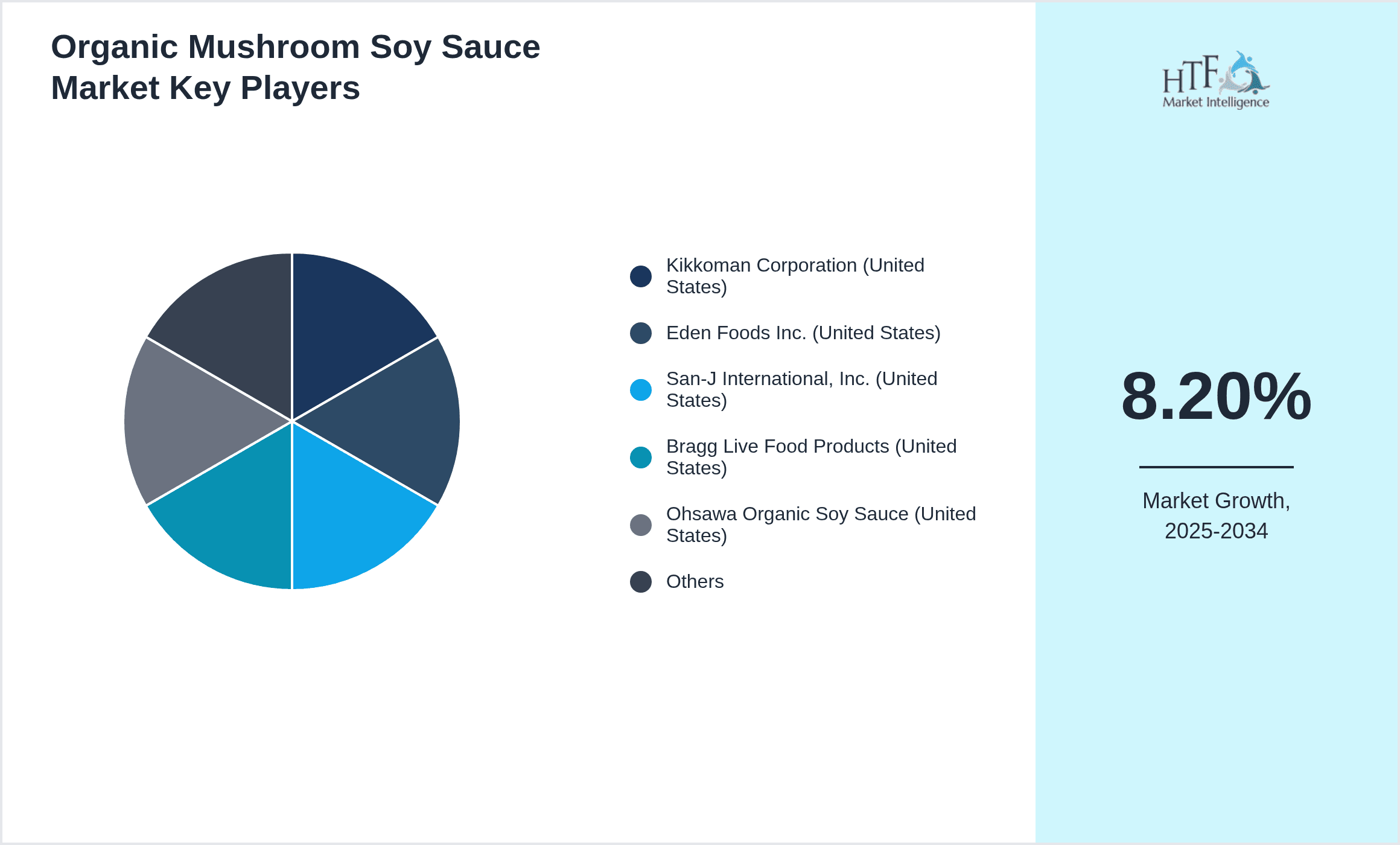
- •Kikkoman Corporation (United States)
- •Eden Foods Inc. (United States)
- •San-J International, Inc. (United States)
- •Bragg Live Food Products (United States)
- •Ohsawa Organic Soy Sauce (United States)
- •Blue Horizon Foods (Canada)
- •Soy Vay International, Inc. (United States)
- •Nature's Charm (Canada)
- •Shan's Organic (United States)
- •Yamasa Corporation (United States)
- •Tamari Pure Nature (Canada)
- •Organicville, Inc. (United States)
- •Triple T Trading Inc. (United States)
- •Mushroom Wisdom, Inc. (United States)
- •Sunshine Mushroom Soy (Canada)
- •Teriyaki House (United States)
- •Amy's Kitchen (United States)
- •Pacific Organic Trading Inc. (Canada)
- •Roots Organic (United States)
- •Sempio Foods Company (United States)
- •Miyoko's Creamery (United States)
- •Sunrise Foods (Canada)
- •Better Soy Sauce Inc. (United States)
- •Earth's Best (United States)
- •Mother Mushroom Foods (Canada)

Market Breakdown
- •By Type
- ◦Light Soy Sauce
- ◦Dark Soy Sauce
- ◦Mushroom Soy Sauce
- ◦Tamari
- ◦Shoyu
- •By Application
- ◦Cooking
- ◦Marinades
- ◦Condiments
- ◦Ready-to-Eat Meals
- ◦Food Processing
- •By Distribution Channel
- ◦Supermarkets & Hypermarkets
- ◦Specialty Organic Stores
- ◦Online Retail
- ◦Foodservice Channels
- •By Packaging Format
- ◦Glass Bottles
- ◦Plastic Bottles
- ◦Bulk Containers
Growth Dynamics
- •Rising consumer preference for organic and natural food products is a key growth driver, with health-conscious individuals increasingly seeking soy sauces made without synthetic chemicals or preservatives, particularly those enhanced with functional ingredients like mushrooms known for their nutritional benefits.
- •The expanding vegan and vegetarian population in North America fuels demand for plant-based, umami-rich condiments such as organic mushroom soy sauce, which offers a flavorful alternative without animal-derived ingredients, supporting diverse dietary lifestyles.
- •Innovations in fermentation technology and organic mushroom extraction methods have improved product quality and consistency, enabling manufacturers to offer premium soy sauce variants that meet organic certification standards and consumer taste expectations.
- •Increased distribution through e-commerce and specialty organic food retailers enhances market accessibility, allowing consumers in remote and urban areas alike to discover and purchase organic mushroom soy sauces with convenience.
- •Growing awareness of the health benefits associated with mushrooms, such as antioxidant and immune-supporting properties, is driving product adoption beyond traditional soy sauce applications into nutraceutical and functional food segments.

Market Trends
- •Premiumization trend is evident with consumers willing to pay higher prices for organic mushroom soy sauces that offer superior taste, health benefits, and sustainable sourcing credentials, prompting brands to emphasize artisanal and small-batch production techniques.
- •Sustainability and eco-friendly packaging are increasingly prioritized, with manufacturers adopting recyclable bottles and reducing plastic usage to align with consumer environmental concerns and regulatory pressures.
- •Collaborations between soy sauce producers and organic mushroom farms have become more common, ensuring ingredient traceability, quality assurance, and stronger supply chain integration.
- •Digital marketing strategies focusing on storytelling around organic farming practices and mushroom health benefits are enhancing brand engagement and consumer trust in this niche market.
- •Product diversification includes blending mushroom soy sauce with other natural flavors such as ginger, garlic, and chili to cater to evolving palate preferences and ethnic cuisine trends.
Market Opportunities
- •Expansion into emerging foodservice sectors such as plant-based restaurants and health-focused cafes presents significant growth potential for organic mushroom soy sauce, offering unique flavor profiles and organic certification advantages.
- •Development of ready-to-use organic mushroom soy sauce marinades and sauces can tap into convenience food trends, targeting busy consumers seeking quick yet healthy meal solutions.
- •Increasing penetration of online retail platforms enables brands to reach niche consumer segments and enhance direct-to-consumer sales, improving margins and customer interaction.
- •Innovation in packaging formats, such as single-serve sachets and eco-friendly refill pouches, can attract environmentally conscious consumers and support on-the-go usage scenarios.
- •Collaboration opportunities with wellness and functional food companies to co-develop hybrid products that combine mushroom soy sauce with other health-promoting ingredients are emerging.
Market Challenges
- •High production costs associated with organic certification and mushroom ingredient sourcing create pricing challenges, limiting market penetration among price-sensitive consumers.
- •Supply chain complexities, including seasonal availability of organic mushrooms and fermentation lead times, can impact timely product delivery and inventory management.
- •Consumer awareness remains limited regarding the unique benefits of mushroom-infused organic soy sauces, necessitating increased marketing investments to educate and build demand.
- •Competition from conventional soy sauce products and other natural umami enhancers like miso and seaweed may constrain growth in certain market segments.
- •Stringent regulatory compliance for organic labeling and food safety across different North American jurisdictions requires continuous monitoring and adherence, adding to operational overhead.
Regulatory Framework
- •Between 2019 and 2024, the USDA National Organic Program (NOP) updated guidelines to reinforce the integrity of organic certifications for fermented products, including soy sauces, mandating stricter control over ingredient sourcing and processing methods to ensure compliance with organic standards.
- •The FDA implemented new labeling requirements in 2022 requiring clearer disclosure of allergens and fermentation agents used in soy sauce products, impacting packaging and marketing strategies for organic mushroom soy sauces in North America.
- •State-level regulations in California and New York introduced incentives for manufacturers using sustainably sourced organic ingredients, facilitating growth opportunities for organic mushroom soy sauce producers focusing on environmental stewardship.
- •The Canadian Food Inspection Agency (CFIA) enhanced organic product verification processes in 2023, requiring periodic audits and enhanced traceability for imported and domestically produced organic soy sauces with mushroom extracts.
- •Mexico enacted updated food safety regulations in 2021 emphasizing microbial safety standards for fermented soy products, prompting manufacturers to invest in advanced quality control and testing protocols to maintain market access.
Market Intelligence
- •15th January 2025, Kikkoman Corporation launched its new line of organic mushroom-infused soy sauces targeting health-conscious consumers in North America. The product features a proprietary fermentation process that enhances umami flavor while maintaining USDA organic certification. This launch aims to capture growing demand in premium condiment segments, leveraging Kikkoman’s extensive distribution network and brand recognition. The new product line includes both light and dark soy sauce variants with mushroom extracts sourced from sustainable farms in the Pacific Northwest. The initiative underscores Kikkoman's commitment to innovation and organic product development in response to evolving consumer preferences. Source: Official Kikkoman Press Release
- •22nd July 2024, Eden Foods Inc. introduced an innovative organic tamari soy sauce blended with shiitake mushroom extract, emphasizing gluten-free and vegan attributes. This product targets specialty organic retailers and online consumers seeking natural flavor enhancers with functional health benefits. Eden Foods’ new offering incorporates cold fermentation techniques to preserve mushroom antioxidants and delivers a robust umami taste. Early market feedback indicates strong acceptance among plant-based diet adherents and culinary professionals. The launch complements Eden’s existing organic portfolio and strengthens its position in the North American natural condiments market. Source: Eden Foods Official Website
- •3rd March 2025, San-J International, Inc. announced a strategic partnership with a leading organic mushroom farm in British Columbia, Canada, to secure high-quality shiitake mushroom supplies for its mushroom soy sauce production. This collaboration focuses on sustainable farming practices and supply chain transparency, enabling San-J to enhance product consistency and meet growing organic certification demands. The partnership supports San-J’s expansion into Canadian and U.S. markets with an emphasis on premium organic condiments favored by health-conscious consumers. This move is expected to strengthen San-J’s competitive edge and foster innovation in organic soy sauce offerings. Source: San-J International Corporate News
- •10th November 2024, Bragg Live Food Products expanded its product lineup with the addition of an organic mushroom soy sauce designed to meet clean-label and functional food trends. The new soy sauce combines organic mushrooms with Bragg’s signature raw, unpasteurized fermentation process to deliver enhanced flavor and health benefits. Available through natural food stores and online channels across North America, this launch aims to capture the growing segment of consumers seeking organic, nutrient-rich condiments. Bragg's innovative approach aligns with its brand identity focused on raw, plant-based nutrition and sustainable sourcing. Source: Bragg Official Announcement
Regional Outlook
The United States currently holds a significant share of the market, primarily due to several key factors: increasing consumption rates, a burgeoning population, and robust economic momentum. These elements collectively drive demand, positioning this region as a leader in the market. On the other hand, Canada is rapidly emerging as the fastest-growing area within the industry. This remarkable growth can be attributed to swift infrastructure development, the expansion of various industrial sectors, and a marked increase in consumer demand. These dynamics make this region a crucial player in shaping future market growth.
In our report, we cover a comprehensive analysis of the following regions and countries:
- United States
- Canada
- Mexico
| Feature | Details |
|---|---|
| Base Year Market Size | USD 0.85 Billion |
| Forecast Year Market Size | USD 1.95 Billion |
| CAGR | 8.2% |
| Forecast Period | 2026 to 2033 |
| YoY Growth | 7.9% |
| Scope of Report | Market is segmented by Type (Light Soy Sauce, Dark Soy Sauce, Mushroom Soy Sauce, Tamari, Shoyu), Application (Cooking, Marinades, Condiments, Ready-to-Eat Meals, Food Processing), Distribution Channel (Supermarkets & Hypermarkets, Specialty Organic Stores, Online Retail, Foodservice Channels), Packaging Format (Glass Bottles, Plastic Bottles, Bulk Containers) |
| Regions Covered | United States, Canada, Mexico |
| Key Companies | Kikkoman Corporation (United States), Eden Foods Inc. (United States), San-J International, Inc. (United States), Bragg Live Food Products (United States), Ohsawa Organic Soy Sauce (United States), Blue Horizon Foods (Canada), Soy Vay International, Inc. (United States), Nature's Charm (Canada), Shan's Organic (United States), Yamasa Corporation (United States), Tamari Pure Nature (Canada), Organicville, Inc. (United States), Triple T Trading Inc. (United States), Mushroom Wisdom, Inc. (United States), Sunshine Mushroom Soy (Canada), Teriyaki House (United States), Amy's Kitchen (United States), Pacific Organic Trading Inc. (Canada), Roots Organic (United States), Sempio Foods Company (United States), Miyoko's Creamery (United States), Sunrise Foods (Canada), Better Soy Sauce Inc. (United States), Earth's Best (United States), Mother Mushroom Foods (Canada) |
North America Organic Mushroom Soy Sauce Market Size, Growth & Revenue 2024-2034 - Table of Contents
Frequently Asked Questions (FAQ):
The Compact Track Loaders market is expected to see value worth 5.3 Billion in 2025.
North America currently leads the market with approximately 45% market share, followed by Europe at 28% and Asia-Pacific at 22%. The remaining regions account for 5% of the global market.
Key growth drivers include increasing construction activities, rising demand for versatile equipment in agriculture, technological advancements in track loader design, and growing preference for compact equipment in urban construction projects.