
Global Pharmaceutical Mixer Machine Market Size, Growth & Revenue 2024-2034
Global Pharmaceutical Mixer Machine Market is segmented by Mixer Type (Ribbon Mixer, Planetary Mixer, High Shear Mixer, V-Blender, Fluidized Bed Mixer), Application Area (Tablet Manufacturing, Capsule Production, Liquid Formulation, Powder Blending, Granulation), End-User Segment (Pharmaceutical Companies, Contract Manufacturing Organizations (CMOs), Biotechnology Firms, Research and Development Laboratories), Distribution Channel (Direct Sales, Distributors, Online Sales), and Geography (North America, LATAM, West Europe, Central & Eastern Europe, Northern Europe, Southern Europe, East Asia, Southeast Asia, South Asia, Central Asia, Oceania, MEA)
Pricing
Report Overview
Executive Summary
- •The Global Pharmaceutical Mixer Machine market is a critical segment within the pharmaceutical manufacturing industry, encompassing a range of equipment specifically designed for the effective and homogeneous blending of pharmaceutical ingredients. These machines are essential in the preparation of various dosage forms, including tablets, capsules, and liquid formulations, ensuring product consistency, quality, and compliance with regulatory standards. The market covers a diverse array of mixer types such as ribbon mixers, planetary mixers, high shear mixers, V-blenders, and fluidized bed mixers, each optimized for specific processing requirements and material characteristics. The industry scope extends globally, serving pharmaceutical manufacturers engaged in drug development, clinical trials, and mass production. Key drivers of this market include increasing pharmaceutical production, demand for process automation, and stringent quality controls mandated by regulatory authorities. The market's evolution is further influenced by technological innovations, rising healthcare expenditure, and emerging markets' expanding pharmaceutical sectors, making it a dynamic and strategically significant industry worldwide.
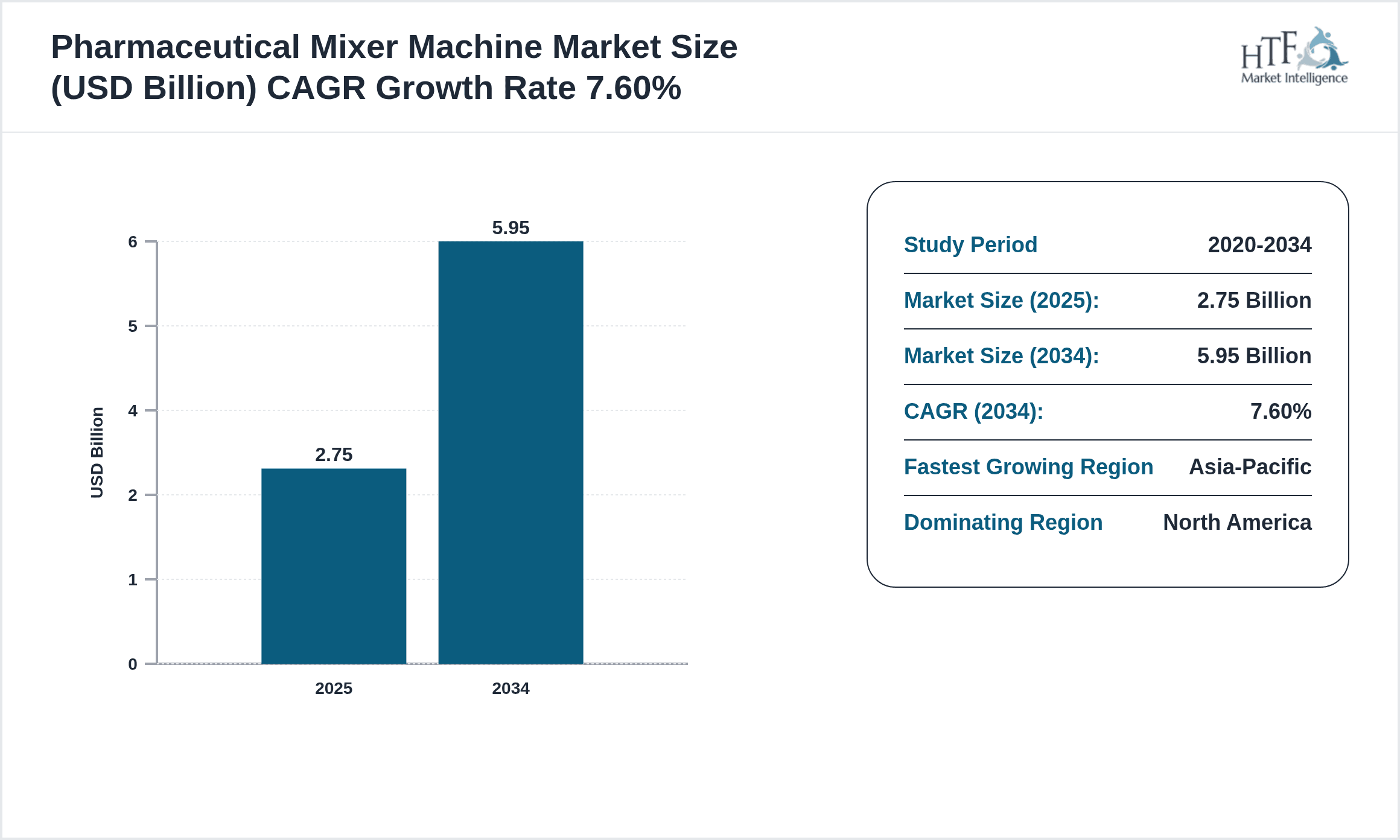
- •The global pharmaceutical mixer machine market is witnessing robust growth, with a CAGR of 7.6% projected from 2024 to 2034, driven by surging demand for efficient drug manufacturing processes and rising investments in pharmaceutical infrastructure. As of 2024, the market is valued at USD 2.75 billion and is forecasted to reach USD 5.95 billion by 2034, reflecting significant expansion opportunities. North America leads with the largest market share of 34%, followed by Europe and Asia-Pacific, while Asia-Pacific exhibits the highest growth rate at 10.2% CAGR, driven by emerging economies and increased pharmaceutical manufacturing capacity. Ribbon mixers dominate the product segment due to their versatility and efficiency, whereas fluidized bed mixers are the fastest-growing type, owing to their advanced mixing capabilities and process integration. Tablet manufacturing remains the leading application, supported by rising demand for solid oral dosage forms worldwide.
- •The pharmaceutical mixer machine market offers substantial value propositions for manufacturers, technology providers, and end-users by enabling enhanced process efficiency, product uniformity, and regulatory compliance. The strategic importance of these machines spans multiple industries, including pharmaceuticals, biotechnology, and contract manufacturing organizations, facilitating scalable and reproducible drug production. Innovations in mixer design and automation improve throughput and reduce contamination risks, aligning with the pharmaceutical industry's shift towards continuous manufacturing and quality-by-design principles. Additionally, the market's growth is propelled by expanding healthcare access and increasing prevalence of chronic diseases globally, necessitating diversified and reliable drug formulations. Stakeholders benefit from ongoing advancements in mixer technologies, integration with digital process controls, and customized solutions tailored to specific pharmaceutical processes, underscoring the market's critical role in advancing global healthcare outcomes.
Competitive Landscape
Competition within the global pharmaceutical mixer machine market is intense, characterized by a mix of well-established multinational corporations and specialized regional manufacturers. Key players focus heavily on innovation, developing advanced mixers that offer enhanced efficiency, scalability, and compliance with evolving pharmaceutical regulations. Competitive strategies include investments in research and development, strategic partnerships, and expanding geographic presence to capture emerging markets. Companies leverage product differentiation through technological advancements such as automation, energy efficiency, and integration with digital monitoring systems to gain market advantage. Pricing strategies balance cost-effectiveness with high product quality, addressing diverse customer needs from large pharmaceutical firms to contract manufacturers. Market rivalry is further intensified by the need for rapid product delivery, customization, and after-sales support. The competitive environment is also shaped by mergers and acquisitions aimed at consolidating market share, expanding product portfolios, and enhancing technological capabilities. Future trends indicate a shift towards smart mixers and IoT-enabled solutions, intensifying competition based on innovation and service quality.
Leading Companies in Pharmaceutical Mixer Machine Market
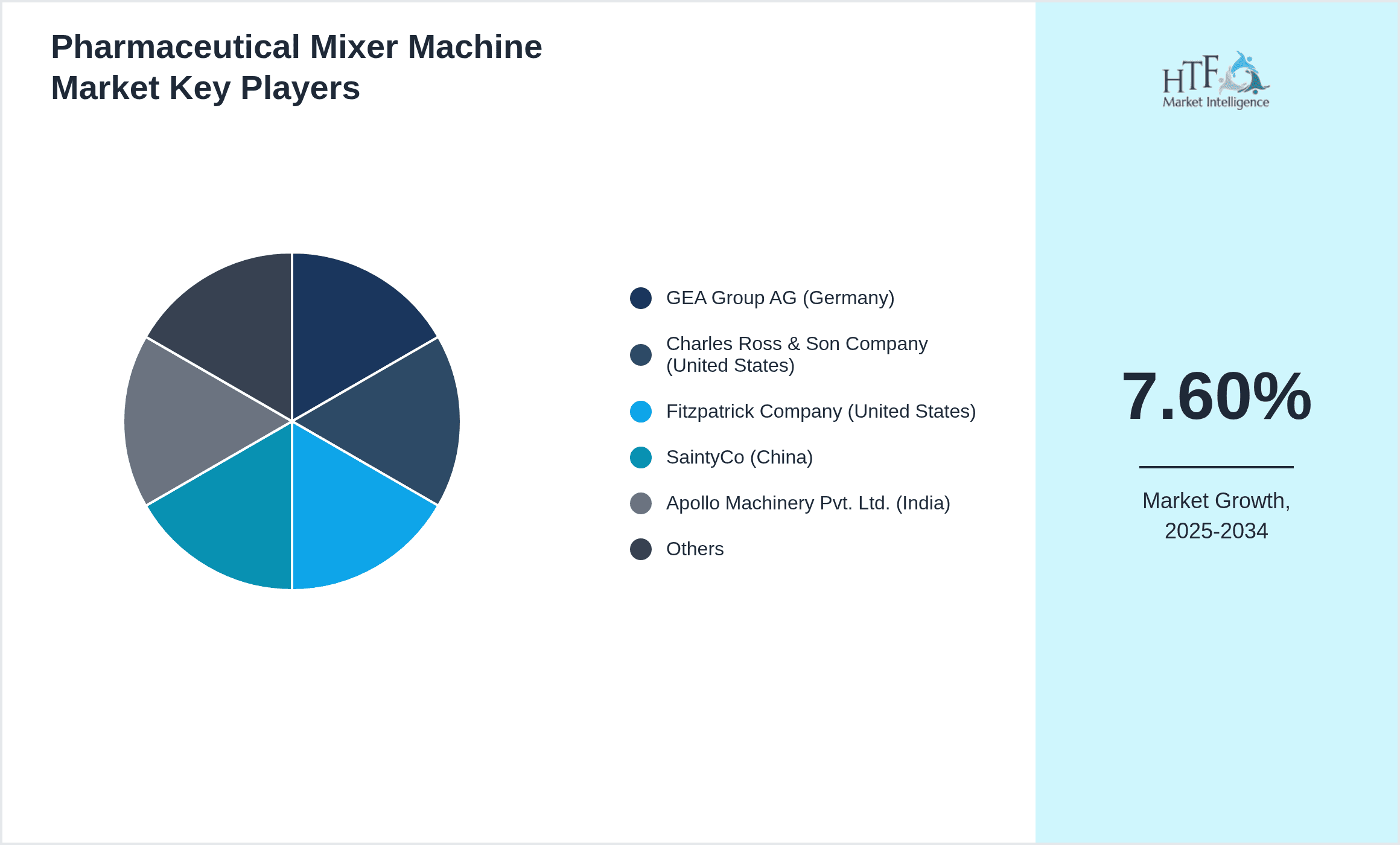
- •GEA Group AG (Germany)
- •Charles Ross & Son Company (United States)
- •Fitzpatrick Company (United States)
- •SaintyCo (China)
- •Apollo Machinery Pvt. Ltd. (India)
- •Vortex Mixing Technology (United States)
- •MTI Corporation (South Korea)
- •Kilian Manufacturing Company (United States)
- •L.B. Bohle Maschinen + Verfahren GmbH (Germany)
- •Schenck Process (Germany)
- •Admix, Inc. (United States)
- •Vortex Engineering (India)
- •Hosokawa Micron Group (Japan)
- •Moulinex Pharma Equipments Pvt Ltd (India)
- •Inventa Technologies (Switzerland)
- •Mecmesin Ltd (United Kingdom)
- •Ishida Co., Ltd. (Japan)
- •Coperion GmbH (Germany)
- •Ystral GmbH (Germany)
- •Buchi Labortechnik AG (Switzerland)
- •Stevens Engineers Pvt Ltd. (India)
- •Nara Machinery Co., Ltd. (Japan)
- •Solida AG (Switzerland)
- •Patterson Kelley (United States)
- •Mecmesin Ltd (United Kingdom)
Market Breakdown
- •By Mixer Type
- ◦Ribbon Mixer
- ◦Planetary Mixer
- ◦High Shear Mixer
- ◦V-Blender
- ◦Fluidized Bed Mixer
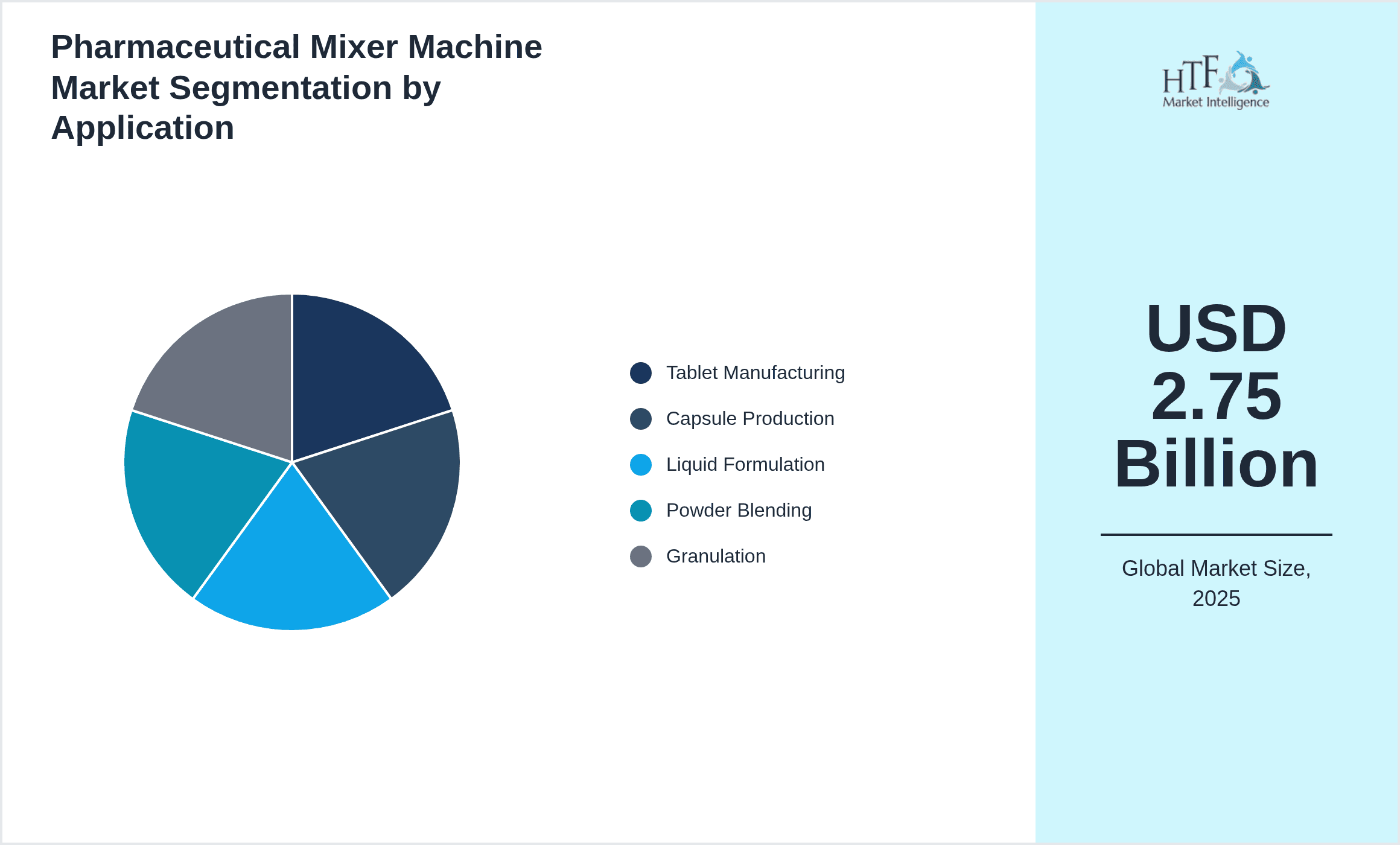
- •By Application Area
- ◦Tablet Manufacturing
- ◦Capsule Production
- ◦Liquid Formulation
- ◦Powder Blending
- ◦Granulation
- •By End-User Segment
- ◦Pharmaceutical Companies
- ◦Contract Manufacturing Organizations (CMOs)
- ◦Biotechnology Firms
- ◦Research and Development Laboratories
- •By Distribution Channel
- ◦Direct Sales
- ◦Distributors
- ◦Online Sales
Growth Dynamics
The global pharmaceutical mixer machine market's growth is propelled by the increasing demand for efficient and precise drug manufacturing processes. As pharmaceutical companies expand production to meet rising healthcare needs, the requirement for high-quality mixers that ensure uniform blend and product consistency becomes paramount. Technological advancements such as automation, improved mixing mechanisms, and integration with digital monitoring systems are enhancing operational efficiency, reducing processing time, and minimizing human error. Additionally, stringent regulatory standards globally necessitate equipment that complies with quality and safety norms, driving investments in advanced mixer machines. The surge in generic drug manufacturing and biosimilar development also fuels demand for versatile mixing equipment. Emerging markets with expanding pharmaceutical industries contribute significantly to market growth, supported by increased healthcare spending and government initiatives. Furthermore, the adoption of continuous manufacturing processes in pharmaceuticals provides additional impetus, positioning mixer machines as crucial enablers of modern drug production.
Market Trends
A prominent trend in the pharmaceutical mixer machine market is the integration of smart technologies, including IoT and Industry 4.0 capabilities, facilitating real-time process monitoring and data analytics. This enables manufacturers to optimize mixing parameters, ensure quality control, and reduce downtime. Additionally, there is a growing preference for flexible and modular mixer designs that can accommodate multiple formulations and batch sizes, enhancing operational versatility. Sustainability and energy-efficient equipment are gaining traction, driven by environmental regulations and cost-saving imperatives. The market is also witnessing increased adoption of continuous mixing processes aligned with the pharmaceutical industry's shift toward continuous manufacturing, improving production efficiency and product consistency. Collaboration between equipment manufacturers and pharmaceutical companies to develop customized solutions tailored to specific process requirements is another key trend. Furthermore, the expansion of contract manufacturing organizations (CMOs) globally is boosting demand for scalable and reliable mixing machines.
Market Opportunities
The pharmaceutical mixer machine market presents significant opportunities in emerging economies across Asia-Pacific and Latin America, where increasing healthcare infrastructure investment and pharmaceutical manufacturing capacity are driving demand. The rising prevalence of chronic diseases in these regions necessitates efficient drug production, creating openings for advanced mixer technologies tailored to local market needs. Additionally, innovations in mixer designs that support continuous manufacturing and multi-functionality offer growth potential by enabling pharmaceutical companies to enhance production flexibility and reduce costs. Expansion opportunities also exist through strategic partnerships with biotechnology firms focusing on novel drug formulations, requiring specialized mixing solutions. The growing trend toward personalized medicine and smaller batch sizes opens avenues for compact, precise mixers designed for niche applications. Moreover, digitalization and Industry 4.0 adoption provide prospects for developing smart mixers with predictive maintenance capabilities, improving equipment uptime and reducing operational expenses.
Market Challenges
Despite promising growth, the pharmaceutical mixer machine market faces challenges such as high capital expenditure and maintenance costs associated with advanced mixing equipment, which can deter smaller manufacturers and startups. The complexity of integrating new technologies like automation and digital monitoring into existing production lines poses operational risks and necessitates skilled labor, which is often scarce in emerging markets. Regulatory compliance remains stringent, requiring continuous updates and validations of equipment, adding to costs and time-to-market delays. Additionally, market fragmentation with numerous small and regional players intensifies price competition, impacting profitability. Supply chain disruptions and raw material shortages can affect manufacturing schedules and delivery timelines. Furthermore, reluctance to adopt novel mixer technologies due to validation and qualification complexities may slow market penetration. The need for customization to address diverse pharmaceutical formulations also complicates standardization efforts, limiting economies of scale and increasing production costs.
Regulatory Framework
Between 2020 and 2024, regulatory authorities globally have intensified focus on pharmaceutical manufacturing equipment to ensure product quality and patient safety. Key updates include enhanced guidelines from agencies like the FDA and EMA on equipment validation, cleaning, and sterilization procedures, mandating stricter adherence to Good Manufacturing Practices (GMP). Regulations emphasize the need for equipment traceability, documentation, and process analytical technologies (PAT) integration to enable real-time monitoring and control. Additionally, environmental regulations targeting energy efficiency and emissions have influenced mixer machine designs, encouraging manufacturers to innovate sustainable solutions. Regional mandates in North America and Europe require compliance with updated ISO standards related to pharmaceutical machinery. Governments in emerging markets have also introduced localized certifications to align with global standards. These regulations collectively drive manufacturers to invest in advanced, compliant mixing technologies, impacting market growth and competitive dynamics.
Market Intelligence
- •15th March 2024, GEA Group AG launched its latest generation of pharmaceutical mixers featuring enhanced automation and IoT connectivity designed to improve batch consistency and reduce downtime. The new machines incorporate advanced sensors and digital interfaces enabling real-time data collection and remote monitoring, addressing industry demands for smart manufacturing solutions. This launch aims to strengthen GEA's market position in North America and Asia-Pacific by catering to pharmaceutical companies' evolving needs for scalable and compliant mixing equipment. The product's modular design allows customization for various pharmaceutical applications, including tablet and capsule production, enhancing operational flexibility. This innovation aligns with global trends of integrating Industry 4.0 technologies within pharmaceutical manufacturing processes to boost efficiency and quality assurance. Source: GEA Official Press Release
- •10th November 2023, Charles Ross & Son Company introduced the Ross Maxx High Shear Mixer, engineered for rapid and thorough mixing of high-viscosity pharmaceutical formulations. This product features energy-efficient motors and optimized impeller designs that reduce processing times and improve product homogeneity. Targeted at large-scale pharmaceutical manufacturers, the mixer supports continuous processing and complies with the latest GMP standards. The innovation enables manufacturers to enhance productivity while minimizing operational costs, a critical factor amid growing global demand for pharmaceutical products. The launch reflects the company's commitment to addressing complex pharmaceutical blending challenges through advanced engineering solutions and expanding its global footprint, particularly in Europe and Asia-Pacific markets. Source: Charles Ross & Son Company Website
- •Recent market developments and strategic initiatives are continuously tracked through industry publications, company announcements, and regulatory filings. For the most current information, stakeholders are advised to monitor official corporate communications and recognized market intelligence platforms.
- •Recent market developments and strategic initiatives are continuously tracked through industry publications, company announcements, and regulatory filings. For the most current information, stakeholders are advised to monitor official corporate communications and recognized market intelligence platforms.
Regional Outlook
The North America currently holds a significant share of the market, primarily due to several key factors: increasing consumption rates, a burgeoning population, and robust economic momentum. These elements collectively drive demand, positioning this region as a leader in the market. On the other hand, Asia-Pacific is rapidly emerging as the fastest-growing area within the industry. This remarkable growth can be attributed to swift infrastructure development, the expansion of various industrial sectors, and a marked increase in consumer demand. These dynamics make this region a crucial player in shaping future market growth.
In our report, we cover a comprehensive analysis of the following regions and countries:
- North America
- LATAM
- West Europe
- Central & Eastern Europe
- Northern Europe
- Southern Europe
- East Asia
- Southeast Asia
- South Asia
- Central Asia
- Oceania
- MEA
| Feature | Details |
|---|---|
| Base Year Market Size | USD 2.75 Billion |
| Forecast Year Market Size | USD 5.95 Billion |
| CAGR | 7.6% |
| Forecast Period | 2026 to 2033 |
| YoY Growth | 7.3% |
| Scope of Report | Market is segmented by Mixer Type (Ribbon Mixer, Planetary Mixer, High Shear Mixer, V-Blender, Fluidized Bed Mixer), Application Area (Tablet Manufacturing, Capsule Production, Liquid Formulation, Powder Blending, Granulation), End-User Segment (Pharmaceutical Companies, Contract Manufacturing Organizations (CMOs), Biotechnology Firms, Research and Development Laboratories), Distribution Channel (Direct Sales, Distributors, Online Sales) |
| Regions Covered | North America, LATAM, West Europe, Central & Eastern Europe, Northern Europe, Southern Europe, East Asia, Southeast Asia, South Asia, Central Asia, Oceania, MEA |
| Key Companies | GEA Group AG (Germany), Charles Ross & Son Company (United States), Fitzpatrick Company (United States), SaintyCo (China), Apollo Machinery Pvt. Ltd. (India), Vortex Mixing Technology (United States), MTI Corporation (South Korea), Kilian Manufacturing Company (United States), L.B. Bohle Maschinen + Verfahren GmbH (Germany), Schenck Process (Germany), Admix, Inc. (United States), Vortex Engineering (India), Hosokawa Micron Group (Japan), Moulinex Pharma Equipments Pvt Ltd (India), Inventa Technologies (Switzerland), Mecmesin Ltd (United Kingdom), Ishida Co., Ltd. (Japan), Coperion GmbH (Germany), Ystral GmbH (Germany), Buchi Labortechnik AG (Switzerland), Stevens Engineers Pvt Ltd. (India), Nara Machinery Co., Ltd. (Japan), Solida AG (Switzerland), Patterson Kelley (United States), Mecmesin Ltd (United Kingdom) |
Global Pharmaceutical Mixer Machine Market Size, Growth & Revenue 2024-2034 - Table of Contents
Frequently Asked Questions (FAQ):
The Compact Track Loaders market is projected to grow at a CAGR of 6.8% from 2025 to 2030, driven by increasing demand in construction and agricultural sectors.
North America currently leads the market with approximately 45% market share, followed by Europe at 28% and Asia-Pacific at 22%. The remaining regions account for 5% of the global market.
Key growth drivers include increasing construction activities, rising demand for versatile equipment in agriculture, technological advancements in track loader design, and growing preference for compact equipment in urban construction projects.