
Japan Door Entry Video Intercom Devices Market - Japan Size & Outlook 2025-2034
Japan Door Entry Video Intercom Devices Market is segmented by Application (Residential Buildings, Commercial Buildings, Industrial Facilities, Healthcare Centers, Educational Institutions), Type (Wired Video Intercoms, Wireless Video Intercoms, IP Video Intercoms, Audio-Only Intercoms, Video Door Phones), and Geography (Hokkaido, Tohoku, Kanto, Chubu, Kansai, Chugoku, Shikoku, Kyushu)
Pricing
Report Overview
Executive Summary
- •The Japan Door Entry Video Intercom Devices market represents a dynamic segment within the broader security and communication technology sector, focusing on devices that enable audio-visual communication between building entrances and internal occupants. This market covers a variety of product types including wired, wireless, IP-based, and audio-only intercom systems, designed primarily for residential, commercial, industrial, healthcare, and educational applications. The growth of this market is influenced by Japan's emphasis on safety, technological advancement, and urban housing trends. These intercom systems enhance security by allowing users to verify visitors remotely, often integrating with digital and IoT platforms to provide real-time monitoring and access control. The market scope also includes associated software and hardware components, reflecting the increasing demand for smart home and smart building solutions. Overall, this industry plays a critical role in safeguarding premises, improving communication efficiency, and supporting broader security infrastructure in Japan.
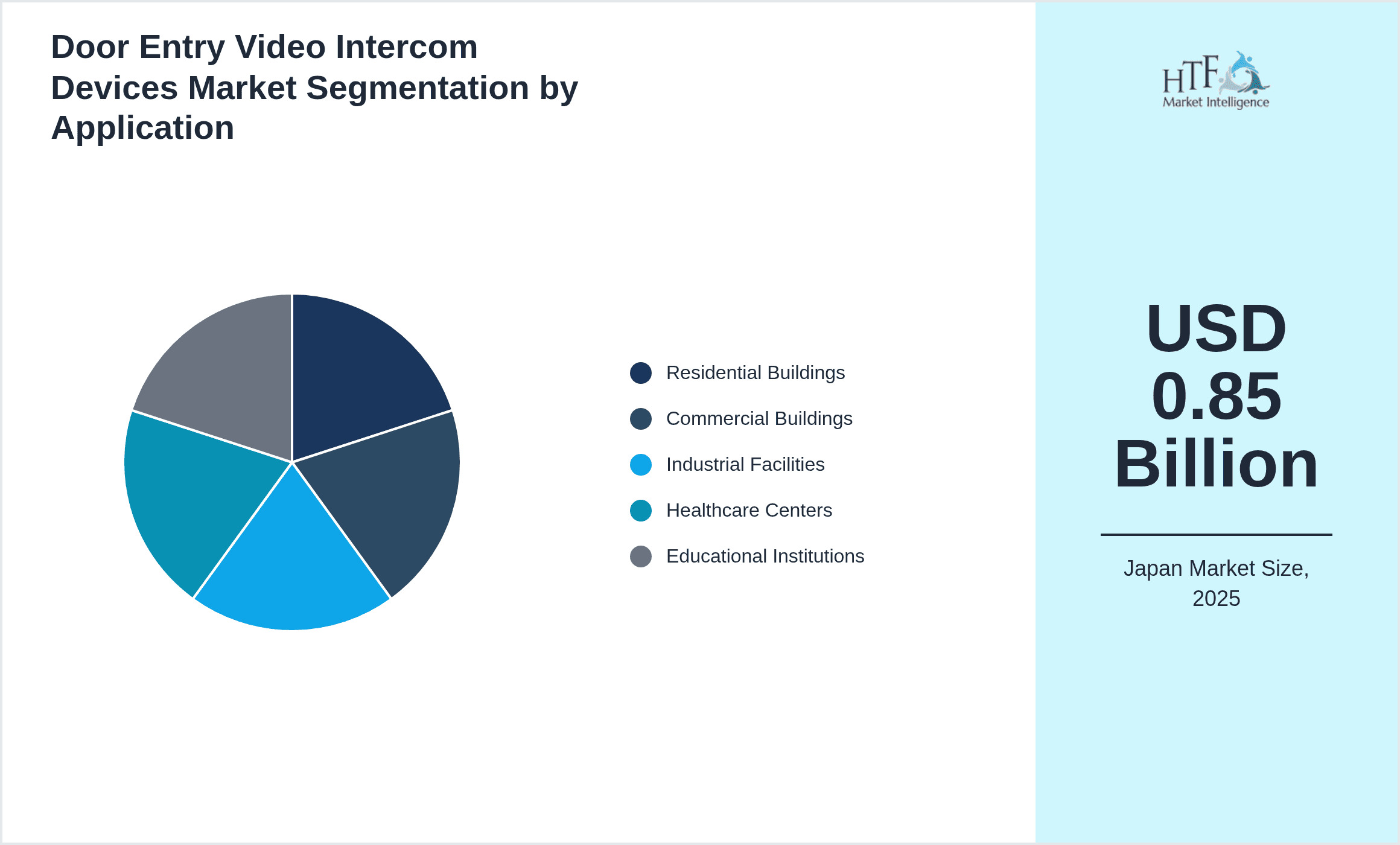
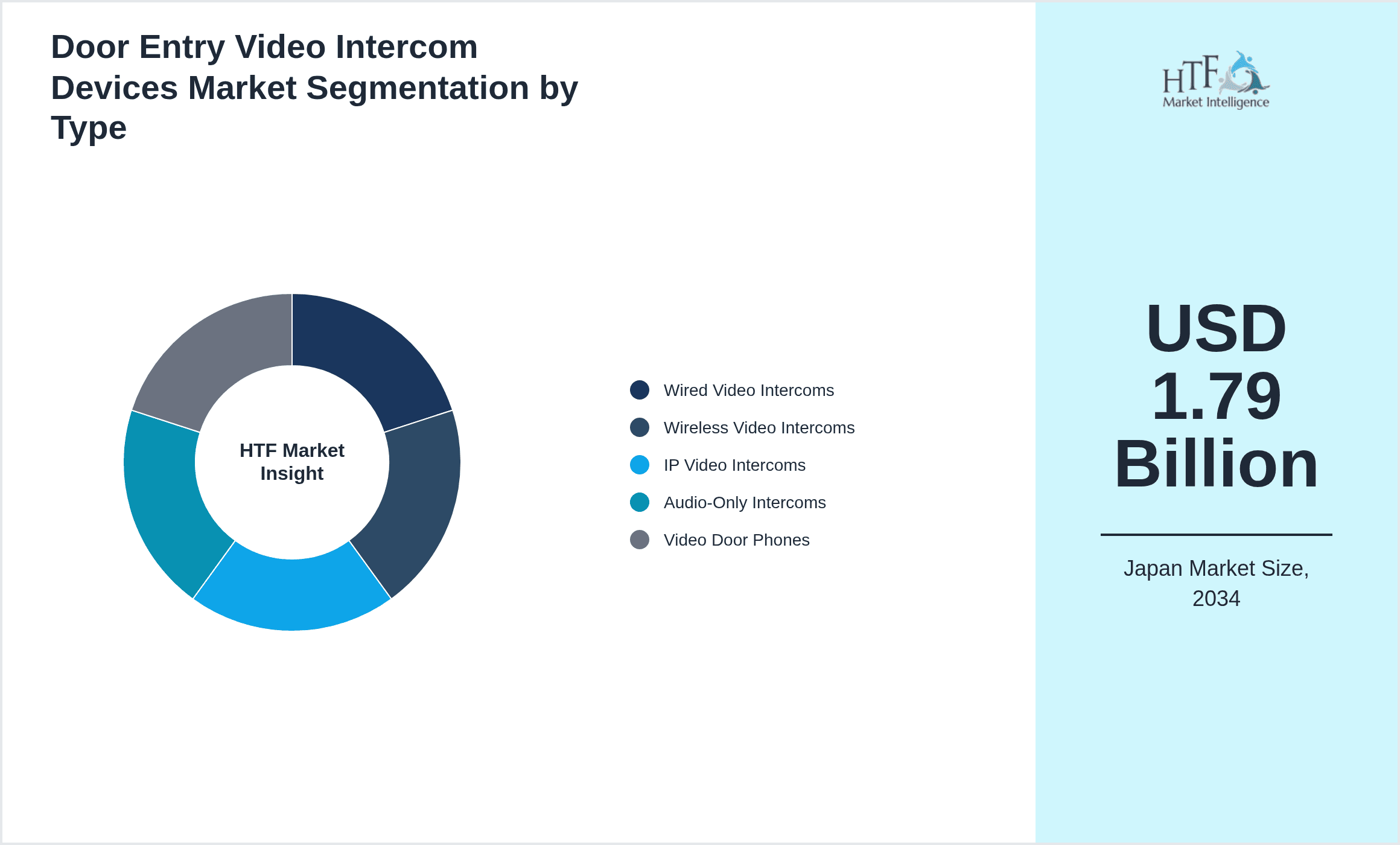
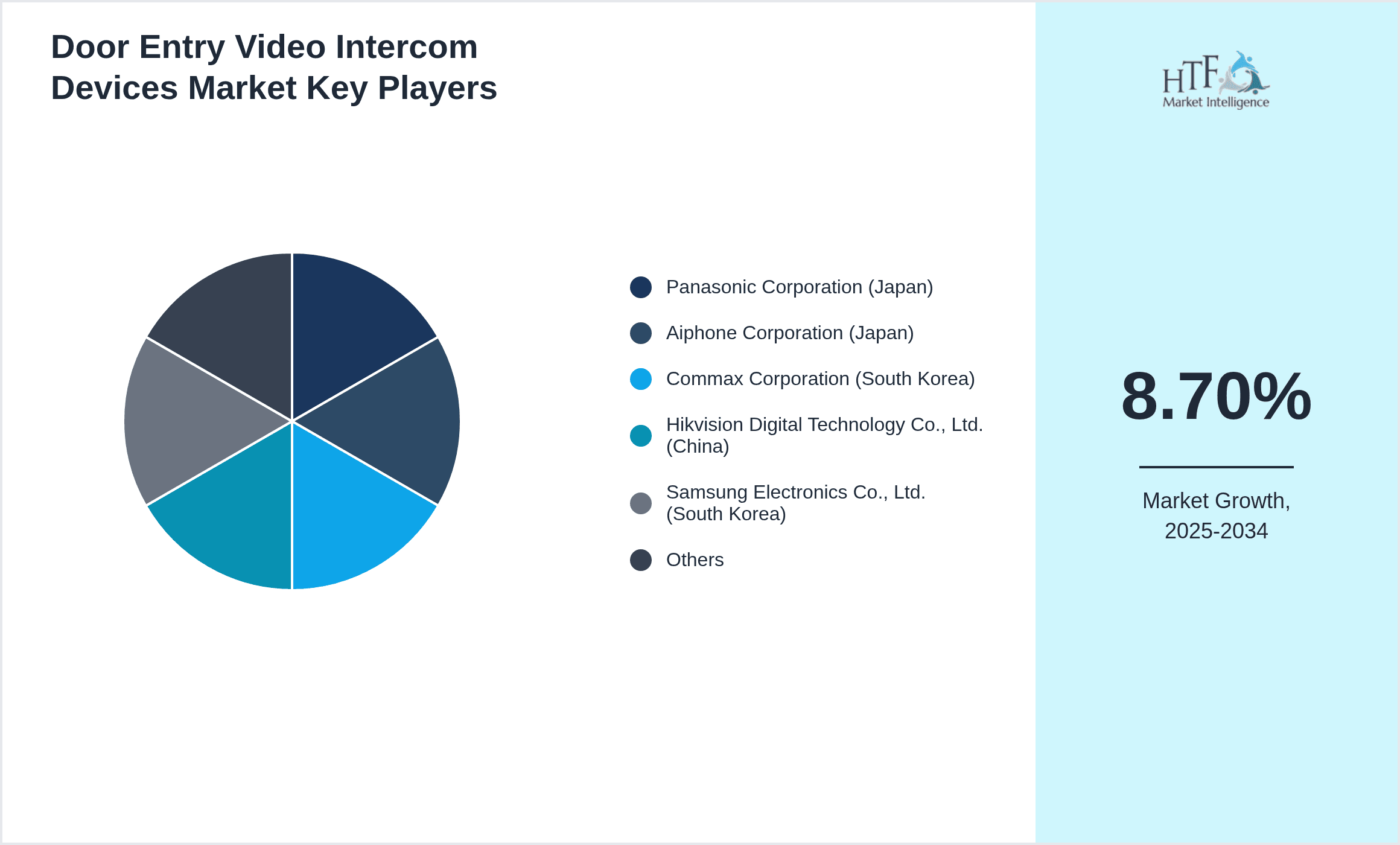
- •Key highlights of the market include a projected CAGR of 8.7% from 2025 to 2034, with the market size expected to grow from USD 0.85 Billion in 2025 to USD 1.79 Billion by 2034. The IP Video Intercom segment dominates the product landscape due to its advanced features and integration capabilities, while Wireless Video Intercoms emerge as the fastest-growing type, propelled by ease of installation and flexibility. The Kanto region leads market share with 28%, reflecting high urban density and infrastructure development, while Kyushu & Okinawa exhibit the highest growth rate at 12.3%, driven by regional modernization efforts. Residential buildings remain the primary application area, supported by rising safety concerns and housing developments, with commercial buildings following closely. These data points underscore the expanding adoption of video intercom technologies across multiple sectors in Japan.
- •The market offers significant value propositions by enhancing security, convenience, and communication efficiency for diverse users. Stakeholders including manufacturers, distributors, and end-users benefit from innovations such as IoT connectivity, AI-powered facial recognition, and cloud integration. Strategic importance is also evident in public safety initiatives and smart city deployments where video intercom devices serve as critical components. Furthermore, the market supports Japan’s regulatory emphasis on building security standards and disaster preparedness. This creates opportunities for technology providers and service integrators to offer tailored solutions that meet evolving consumer demands and compliance requirements. Consequently, the Japan Door Entry Video Intercom Devices market is poised for sustained growth and technological evolution in the coming decade.

Competitive Landscape
The Japan Door Entry Video Intercom Devices market is characterized by intense competition among domestic and international players vying for market share through innovation, quality, and service differentiation. Companies leverage advanced technologies such as IP networking, wireless connectivity, and AI-based video analytics to distinguish their offerings. The competitive environment revolves around product development cycles focused on enhanced security features, ease of installation, and integration with smart home systems. Strategic partnerships and localized solutions tailored to Japan’s stringent regulatory landscape and consumer preferences further intensify rivalry. Manufacturers also adopt competitive pricing strategies and extensive distribution networks to gain footholds in both urban and regional markets. Collaboration with real estate developers and security service providers enables expanded market reach. Overall, competition drives continuous innovation, creating a dynamic landscape where agility and customer-centric solutions offer critical competitive advantages.
Leading Companies in Japan Door Entry Video Intercom Devices Market
- •Panasonic Corporation (Japan)
- •Aiphone Corporation (Japan)
- •Commax Corporation (South Korea)
- •Hikvision Digital Technology Co., Ltd. (China)
- •Samsung Electronics Co., Ltd. (South Korea)
- •Legrand SA (France)
- •Honeywell International Inc. (United States)
- •Toshiba Corporation (Japan)
- •Sony Corporation (Japan)
- •Hitachi Ltd. (Japan)
- •NEC Corporation (Japan)
- •Bosch Security Systems (Germany)
- •Mobotix AG (Germany)
- •VTech Holdings Ltd. (Hong Kong)
- •SimonsVoss Technologies GmbH (Germany)
- •Axis Communications AB (Sweden)
- •Panasonic System Solutions Japan Co., Ltd. (Japan)
- •Ritto GmbH & Co. KG (Germany)
- •Legrand Japan K.K. (Japan)
- •Commend International GmbH (Austria)
- •2N Telekomunikace a.s. (Czech Republic)
- •Vanderbilt Industries (United States)
- •Panasonic Electric Works Co., Ltd. (Japan)
- •Siedle & Söhne Telefon- und Telegrafenwerke OHG (Germany)
- •Leica Microsystems (Germany)
Market Breakdown
- •By Type
- ◦Wired Video Intercoms
- ◦Wireless Video Intercoms
- ◦IP Video Intercoms
- ◦Audio-Only Intercoms
- ◦Video Door Phones
- •By Application
- ◦Residential Buildings
- ◦Commercial Buildings
- ◦Industrial Facilities
- ◦Healthcare Centers
- ◦Educational Institutions
- •By End User
- ◦Individual Homeowners
- ◦Property Management Companies
- ◦Government Buildings
- ◦Corporate Offices
- ◦Hospitality Industry
- •By Technology
- ◦Analog Technology
- ◦Digital Technology
- ◦IP-Based Technology
- ◦Wireless Protocols (Wi-Fi, DECT)
Growth Dynamics
- •Rising urbanization and increasing multi-unit residential developments in metropolitan areas like Kanto drive demand for reliable video intercom systems to enhance building security and visitor management.
- •Integration of IoT and smart home technologies enables remote access and real-time monitoring, expanding market scope and consumer appeal for wireless and IP-based intercom solutions.
- •Government initiatives promoting public safety and building code regulations in Japan encourage installation of advanced security devices, including video intercoms, across residential and commercial infrastructures.
- •Technological advancements such as AI-powered facial recognition and cloud-based video storage are enabling manufacturers to offer differentiated products with enhanced security features.
- •The growing preference for contactless and remote communication solutions post-pandemic has accelerated adoption of video intercom devices, particularly in commercial and healthcare sectors.
Market Trends
- •Wireless video intercoms are gaining traction due to their ease of installation, scalability, and compatibility with mobile apps, reflecting a shift towards flexible security solutions.
- •The increasing adoption of IP technology facilitates seamless integration with other security systems and smart building management platforms, enhancing system interoperability.
- •Manufacturers are incorporating AI and machine learning algorithms for advanced features like automated visitor recognition and anomaly detection, improving security efficacy.
- •Sustainability trends are influencing product design, with companies focusing on energy-efficient devices and durable materials to reduce environmental impact.
- •Strategic collaborations between intercom device makers and telecom providers are expanding service offerings, including cloud storage and remote monitoring, increasing value for end-users.
Market Opportunities
- •Rising demand from healthcare and educational sectors for secure, contactless communication systems offers growth potential for specialized video intercom solutions customized to institutional needs.
- •Expansion into regional zones such as Kyushu & Okinawa presents untapped markets with increasing infrastructure investments and modernization projects.
- •Innovations in AI and cloud integration open avenues for premium product offerings with value-added features like remote diagnostics and predictive maintenance.
- •Growing awareness and adoption of smart homes among individual consumers offer opportunities for wireless and IP intercoms with user-friendly mobile interfaces.
- •Collaborations with property developers and real estate firms can facilitate embedded intercom solutions in new building projects, ensuring early market capture.
Market Challenges
- •High initial investment costs for advanced IP and wireless intercom systems may deter small-scale consumers, limiting market penetration in price-sensitive segments.
- •Technical complexities related to network security and data privacy pose challenges for manufacturers and users, requiring robust cybersecurity measures.
- •Fragmented distribution channels and the dominance of established players create barriers for new entrants seeking market share.
- •Compatibility issues with existing building infrastructure and legacy systems can complicate installation and integration of modern intercom technologies.
- •Stringent regulatory compliance and certification requirements in Japan necessitate continual product adjustments, increasing time-to-market and costs.
Regulatory Framework
- •Between 2020 and 2025, Japan introduced updated building safety standards mandating installation of secure video intercom systems in new residential and commercial constructions, emphasizing IP-based technologies for enhanced monitoring.
- •Data protection regulations enacted in 2023 require manufacturers to implement stringent encryption and user data privacy protocols, influencing product design and operational policies.
- •The Ministry of Internal Affairs and Communications issued guidelines in 2021 to standardize wireless communication frequencies used by intercom devices, ensuring minimal interference and operational reliability.
- •Energy efficiency regulations introduced in 2024 encourage manufacturers to develop low-consumption intercom models eligible for government incentives, promoting sustainable product development.
- •Local government initiatives in major urban zones like Kanto promote smart city integrations, including grants for deploying IoT-enabled security devices, fostering market expansion.
Market Intelligence
- •15th January 2025, Panasonic Corporation launched its latest IP Video Intercom system featuring AI-powered facial recognition and cloud management capabilities aimed at the residential sector in Japan. The product offers seamless smartphone integration and enhanced security protocols to meet rising consumer demand for contactless communication. Panasonic’s strategic focus on integrating AI technologies bolsters its competitive positioning within the Japan market, addressing urban security challenges and smart home trends. The launch is expected to accelerate adoption rates in metropolitan areas, particularly in the Kanto region, reinforcing Panasonic’s leadership status. Source: Panasonic Official Press Release
- •3rd March 2025, Aiphone Corporation introduced a wireless video intercom device designed for multi-unit residential buildings with enhanced encryption and low power consumption. The new product supports integration with existing building automation systems, enabling property managers to remotely monitor and control access points efficiently. Aiphone’s innovation addresses growing demands for scalable, flexible intercom solutions tailored to Japan’s urban housing market. This launch strengthens Aiphone’s market share in regional zones such as Kansai and Chubu, where smart apartment complexes are expanding. Source: Aiphone Corporate News
- •20th November 2024, Sony Corporation announced a strategic partnership with a leading telecom operator to develop cloud-based video intercom services leveraging 5G connectivity. This collaboration aims to deliver high-speed, low-latency video communication solutions for commercial buildings and healthcare facilities across Japan. The initiative aligns with Japan’s smart infrastructure goals and is expected to facilitate rapid deployment of next-generation intercom systems. This move enhances Sony’s portfolio and positions it as a technology innovator in the security device market. Source: Sony Corporate Announcement
- •8th July 2024, NEC Corporation completed the acquisition of a local IoT startup specializing in video analytics software for intercom devices. This acquisition is intended to augment NEC’s AI capabilities and expand its smart security solutions portfolio in Japan. The integration of advanced analytics is projected to improve user experience and operational efficiency in residential and commercial applications. NEC plans to leverage this technology to capitalize on growing demand for intelligent intercom systems throughout regional markets. Source: NEC Press Release
Regional Outlook
The Kanto currently holds a significant share of the market, primarily due to several key factors: increasing consumption rates, a burgeoning population, and robust economic momentum. These elements collectively drive demand, positioning this region as a leader in the market. On the other hand, Kyushu & Okinawa is rapidly emerging as the fastest-growing area within the industry. This remarkable growth can be attributed to swift infrastructure development, the expansion of various industrial sectors, and a marked increase in consumer demand. These dynamics make this region a crucial player in shaping future market growth.
In our report, we cover a comprehensive analysis of the following regions and countries:
- Hokkaido
- Tohoku
- Kanto
- Chubu
- Kansai
- Chugoku
- Shikoku
- Kyushu
| Feature | Details |
|---|---|
| Base Year Market Size | USD 0.85 Billion |
| Forecast Year Market Size | USD 1.79 Billion |
| CAGR | 8.7% |
| Forecast Period | 2026 to 2033 |
| YoY Growth | 8.4% |
| Regions Covered | Hokkaido, Tohoku, Kanto, Chubu, Kansai, Chugoku, Shikoku, Kyushu |
| Key Companies | Panasonic Corporation (Japan), Aiphone Corporation (Japan), Commax Corporation (South Korea), Hikvision Digital Technology Co., Ltd. (China), Samsung Electronics Co., Ltd. (South Korea), Legrand SA (France), Honeywell International Inc. (United States), Toshiba Corporation (Japan), Sony Corporation (Japan), Hitachi Ltd. (Japan), NEC Corporation (Japan), Bosch Security Systems (Germany), Mobotix AG (Germany), VTech Holdings Ltd. (Hong Kong), SimonsVoss Technologies GmbH (Germany), Axis Communications AB (Sweden), Panasonic System Solutions Japan Co., Ltd. (Japan), Ritto GmbH & Co. KG (Germany), Legrand Japan K.K. (Japan), Commend International GmbH (Austria), 2N Telekomunikace a.s. (Czech Republic), Vanderbilt Industries (United States), Panasonic Electric Works Co., Ltd. (Japan), Siedle & Söhne Telefon- und Telegrafenwerke OHG (Germany), Leica Microsystems (Germany) |
Japan Door Entry Video Intercom Devices Market - Japan Size & Outlook 2025-2034 - Table of Contents
Frequently Asked Questions (FAQ):
The Compact Track Loaders market is projected to grow at a CAGR of 6.8% from 2025 to 2030, driven by increasing demand in construction and agricultural sectors.
North America currently leads the market with approximately 45% market share, followed by Europe at 28% and Asia-Pacific at 22%. The remaining regions account for 5% of the global market.
Key growth drivers include increasing construction activities, rising demand for versatile equipment in agriculture, technological advancements in track loader design, and growing preference for compact equipment in urban construction projects.