
Europe Wheeled Rollator Walkers Market - Europe Industry Size & Growth Analysis 2020-2034
Europe Wheeled Rollator Walkers for Elderly Market is segmented by Rollator Walker Type (Three-Wheel Rollator Walkers, Four-Wheel Rollator Walkers, Lightweight Rollators, Bariatric Rollators, Pediatric Rollators), Application Setting (Home Care, Assisted Living Facilities, Hospitals, Rehabilitation Centers, Outdoor Mobility), Material Composition (Aluminum Frame Rollators, Steel Frame Rollators, Carbon Fiber Rollators, Plastic Components), Mobility Assistance Features (Adjustable Height Mechanism, Foldable Design, Integrated Braking System, Seat and Storage Accessories), and Geography (Germany, France, The United Kingdom, BeNeLux, Spain, Italy, NORDIC, CEE, Others)
Pricing
Report Overview
Executive Summary
- •The Europe Wheeled Rollator Walkers for Elderly market is defined by the manufacture and distribution of mobility aids designed to enhance the independence and safety of elderly individuals experiencing mobility impairments. These devices, including three-wheel and four-wheel rollators, lightweight and bariatric models, serve diverse applications such as home care, assisted living, hospitals, rehabilitation, and outdoor use. The market addresses the growing demand driven by an aging population across European countries, increasing prevalence of mobility-related health conditions, and rising awareness of mobility support benefits. The value chain spans from component suppliers and manufacturers to distributors, healthcare providers, and end users, supported by advancements in ergonomic designs, safety features, and material innovation to improve functionality and comfort. European government healthcare policies and reimbursement programs further support market growth by facilitating access to these assistive devices. The market’s strategic importance lies in its contribution to elderly care, improving quality of life, reducing fall risks, and enabling greater community participation for the elderly demographic. With a robust healthcare infrastructure and increasing geriatric population, Europe presents a significant opportunity for innovation and expansion in wheeled rollator walkers, fostering better mobility solutions tailored to the elderly’s diverse needs.
- •Key highlights of the Europe Wheeled Rollator Walkers market include a base market size of USD 1.75 Billion in 2025, growing at a CAGR of 7.4% to reach USD 3.45 Billion by 2034. Germany dominates the regional market with a 25% share and a CAGR of 6.8%, while Italy emerges as the fastest growing market at a CAGR of 9.1% holding an 18% share. Four-wheel rollators remain the leading product type due to their stability and widespread acceptance, whereas lightweight rollators are the fastest growing segment driven by demand for portability and ease of use. The market is characterized by consistent year-on-year growth of 7.2%, reflecting sustained demand from healthcare providers, elderly care facilities, and individual users. Increasing investments in healthcare infrastructure and technological advancements contribute to market momentum, supported by favorable reimbursement policies in key European countries.
- •The value proposition of wheeled rollator walkers in Europe centers on enhancing elderly mobility and safety, which is critical for healthcare providers, caregivers, and end-users. These devices reduce fall risks, increase independence, and improve overall quality of life for elderly populations. For manufacturers and distributors, the market offers opportunities to innovate through ergonomic designs, advanced materials, and integration of smart features. Strategic importance also lies in supporting healthcare systems in managing aging demographics and reducing associated costs. Stakeholders benefit from the growing demand driven by demographic trends, government support, and increasing consumer preference for home-based and assisted mobility solutions. As Europe faces a rising elderly population, wheeled rollator walkers represent a crucial segment of the elderly care and rehabilitation market, underpinning sustained industry growth and investment opportunities.

Competitive Landscape
The competitive environment of the Europe Wheeled Rollator Walkers market is characterized by a mix of multinational corporations and specialized regional manufacturers competing on product innovation, quality, and distribution capabilities. Companies focus on developing ergonomic and lightweight designs to differentiate their offerings while complying with stringent European safety and quality standards. Market players employ strategies including strategic partnerships with healthcare institutions, expansion of distribution networks, and investments in R&D to enhance product features such as adjustable height, foldability, and integrated brakes. Price competitiveness remains critical due to reimbursement policies influencing purchasing decisions by healthcare providers and individuals. M&A activities and collaborations are common to consolidate market presence and expand product portfolios. Additionally, digital technologies and smart mobility solutions are emerging as competitive differentiators. Distribution channels such as direct sales to healthcare providers, online retail, and specialty medical equipment stores play a vital role in reaching diverse end users. The market faces moderate entry barriers due to regulatory compliance and the need for established distribution, but innovation and customer service quality are decisive factors shaping market dynamics. Regional competition varies, with Germany leading in volume and innovation, while Southern and Eastern European markets present growth potential for emerging players. Overall, the market is poised for steady growth supported by evolving consumer needs and technological advancements.
Leading Companies in Wheeled Rollator Walkers Market
- •Invacare Corporation (United States)
- •Drive DeVilbiss Healthcare (United States)
- •GF Health Products, Inc. (United States)
- •Medline Industries, Inc. (United States)
- •Ottobock SE & Co. KGaA (Germany)
- •Stander Inc. (United States)
- •Sunrise Medical (United Kingdom)
- •KARMA Medical Products (Taiwan)
- •Mobiclinic B.V. (Netherlands)
- •Armeve GmbH (Germany)
- •Topro AS (Norway)
- •Drive Medical (United States)
- •Carex Health Brands (United States)
- •Sunrise Medical GmbH & Co. KG (Germany)
- •Kuschall AG (Switzerland)
- •Hugo Mobility (United Kingdom)
- •Medline Europe SARL (France)
- •NOVA Medical Products, Inc. (United States)
- •Rollz International B.V. (Netherlands)
- •Drive DeVilbiss Healthcare Ltd. (United Kingdom)
- •Vermeiren Group (Belgium)
- •Kaye Products (United States)
- •EZ-ACCESS (United States)
- •Invacare Europe GmbH (Germany)
- •Meyra GmbH (Germany)
Market Breakdown
- •By Rollator Walker Type
- ◦Three-Wheel Rollator Walkers
- ◦Four-Wheel Rollator Walkers
- ◦Lightweight Rollators
- ◦Bariatric Rollators
- ◦Pediatric Rollators
- •By Application Setting
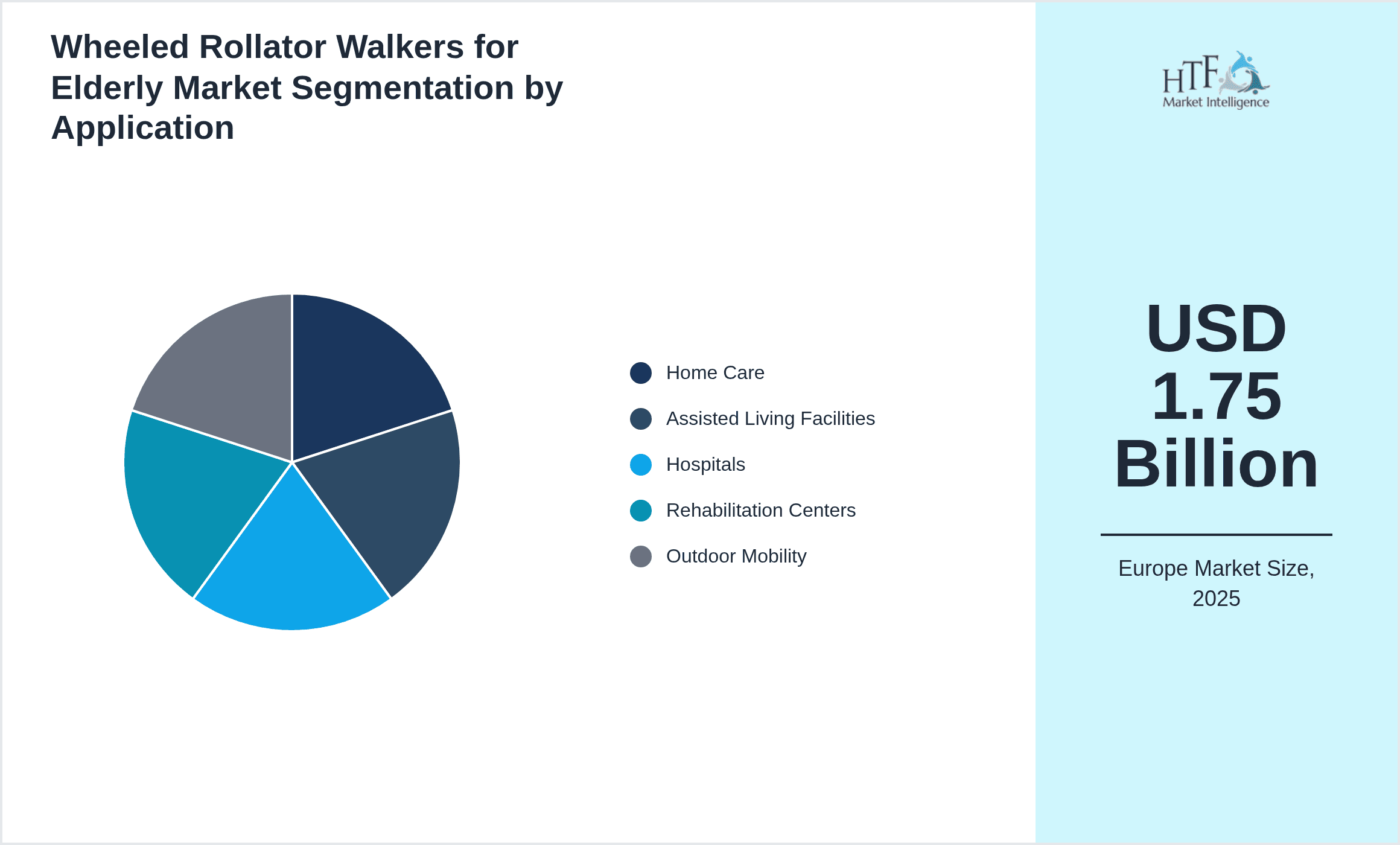
- ◦Home Care
- ◦Assisted Living Facilities
- ◦Hospitals
- ◦Rehabilitation Centers
- ◦Outdoor Mobility
- •By Material Composition
- ◦Aluminum Frame Rollators
- ◦Steel Frame Rollators
- ◦Carbon Fiber Rollators
- ◦Plastic Components
- •By Mobility Assistance Features
- ◦Adjustable Height Mechanism
- ◦Foldable Design
- ◦Integrated Braking System
- ◦Seat and Storage Accessories
Growth Dynamics
- •Rising elderly population across Europe is a primary driver for the wheeled rollator walkers market, as aging increases incidence of mobility impairments requiring assistive devices for daily activities and fall prevention.
- •Growing awareness and increasing preference for home-based care and independent living among elderly individuals drive demand for user-friendly and portable rollator walkers in domestic settings.
- •Technological advancements such as lightweight materials, ergonomic designs, and integrated safety features like brakes and seats are enhancing product appeal and expanding market adoption.
- •Government initiatives and reimbursement policies supporting elderly care and assistive device accessibility boost market growth by reducing cost barriers for end users in public and private healthcare sectors.
- •Increasing prevalence of chronic diseases and disabilities among elderly populations mandates the use of mobility aids, expanding the market scope across hospitals, rehabilitation centers, and assisted living facilities.
- •Rising investments by manufacturers in R&D and expanding distribution networks across Europe facilitate product availability and innovation, contributing to sustained market expansion.
- •Societal focus on healthy aging and quality of life improvements encourages adoption of wheeled rollator walkers as essential mobility aids, further propelling market demand.
Market Trends
- •The trend towards lightweight and foldable wheeled rollator walkers is gaining momentum, driven by consumer preference for portability and ease of storage, particularly in urban European settings.
- •Integration of smart features such as GPS tracking, fall detection sensors, and health monitoring systems represents a growing innovation trend enhancing user safety and caregiver oversight.
- •Sustainability considerations are influencing manufacturers to adopt eco-friendly materials and production processes, aligning with broader European regulations and consumer values.
- •Increasing collaboration between manufacturers and healthcare providers facilitates customization of rollator walkers tailored to specific patient needs, enhancing clinical outcomes and market differentiation.
- •Online sales channels are expanding rapidly, providing greater accessibility and convenience to consumers and healthcare providers, which is reshaping traditional distribution models.
- •Rising demand in emerging European markets such as Eastern Europe is creating new growth avenues, supported by improving healthcare infrastructure and increasing elderly population awareness.
- •Modular and multifunctional rollator designs are emerging, combining mobility assistance with storage and seating functions to enhance user convenience and comfort.

Market Opportunities
- •There is significant growth potential in developing lightweight rollators that cater to active elderly users requiring portability for outdoor activities and travel across Europe.
- •Expansion into emerging Eastern European countries with rising elderly populations and improving healthcare access offers untapped market opportunities for manufacturers and distributors.
- •Technological innovation opportunities exist in integrating digital health monitoring and smart connectivity features to enhance safety and caregiver support functions.
- •Customization services tailored to individual mobility needs and ergonomic preferences can drive differentiation and premium product positioning in competitive European markets.
- •Partnerships with healthcare providers and insurance companies to facilitate reimbursement and subsidized access can broaden user base and market penetration.
- •Product diversification into specialized segments such as bariatric and pediatric rollators can address niche requirements, expanding overall market scope.
- •Sustainability-driven product development using recyclable materials aligns with European regulatory trends and consumer demand for environmentally responsible products.
Market Challenges
- •High manufacturing costs associated with advanced lightweight materials and integrated smart features can limit affordability and market penetration, particularly in price-sensitive regions.
- •Regulatory complexity and varying reimbursement policies across European countries pose challenges for uniform market access and product standardization.
- •Competition from alternative mobility aids such as electric scooters and walking canes can restrict rollator walker adoption, especially among younger elderly demographics.
- •Lack of awareness and limited training on proper use of wheeled rollators among elderly end users can lead to underutilization and safety concerns.
- •Fragmented distribution channels and inconsistent availability across rural and urban areas may limit market reach and consumer access to quality products.
- •Challenges in product customization to meet diverse user needs while maintaining cost efficiency require advanced manufacturing and design capabilities.
- •Supply chain disruptions and raw material price volatility can impact production schedules and profitability, affecting market stability.
Regulatory Framework
- •The European Union Medical Device Regulation (MDR) implemented between 2020 and 2025 mandates stringent safety and performance standards for wheeled rollator walkers, requiring manufacturers to comply with enhanced clinical evaluation and post-market surveillance protocols.
- •Country-specific reimbursement policies, such as Germany’s statutory health insurance coverage for mobility aids, provide financial support to elderly users, positively impacting market accessibility and adoption rates.
- •The EU’s Restriction of Hazardous Substances (RoHS) directive enforces limitations on harmful materials in medical devices, encouraging manufacturers to adopt environmentally friendly materials and production processes.
- •Quality assurance frameworks like ISO 13485 certification for medical device manufacturing ensure product reliability and safety, serving as a prerequisite for market entry across Europe.
- •National regulations governing assistive device labeling, user instructions, and packaging requirements, such as those in France and the UK, ensure informed usage and consumer protection, shaping product design and marketing strategies.
Market Intelligence
- •15th January 2025, Ottobock SE & Co. KGaA launched a new lightweight four-wheel rollator walker designed specifically for urban elderly users, featuring advanced ergonomic handles and foldable frame technology to enhance portability and comfort. The product aims to address the growing demand for mobility aids suited for active lifestyles and small living spaces prevalent in European metropolitan areas. Ottobock's innovation integrates durable yet lightweight aluminum alloys, combined with a user-friendly braking system, improving safety and maneuverability. This launch strengthens Ottobock's market position in Europe and aligns with healthcare providers' increasing focus on patient-centered mobility solutions. Source: Ottobock Official Press Release
- •20th March 2025, Sunrise Medical expanded its distribution network across Southern and Eastern Europe by partnering with key medical equipment suppliers in Italy and Poland. This strategic initiative aims to increase accessibility of their rollator walker product line, including bariatric and pediatric models, to underserved markets with rising elderly populations. The partnership includes training programs for healthcare professionals on device selection and usage, enhancing clinical adoption. Sunrise Medical’s expansion supports anticipated market growth in emerging European regions while reinforcing its competitive edge in established markets. Source: Sunrise Medical Corporate Announcement
- •10th May 2024, Invacare Corporation announced the acquisition of a European mobility aids startup specializing in smart rollator walkers equipped with GPS tracking and fall detection sensors. This acquisition enhances Invacare’s product portfolio by integrating digital health technologies, positioning the company to meet increasing demand for connected mobility solutions. The combined expertise is expected to accelerate innovation and market penetration, particularly in technologically advanced Western European countries. Invacare plans to leverage its extensive distribution channels to scale the startup’s products across Europe efficiently. Source: Invacare Investor Relations
- •5th November 2024, Medline Europe SARL introduced a new range of eco-friendly rollator walkers manufactured using recyclable materials compliant with the EU’s RoHS directive. This initiative responds to the growing consumer demand for sustainable healthcare products and aligns with tightening environmental regulations. Medline’s product line offers competitive pricing while maintaining quality and durability, targeting environmentally conscious healthcare facilities and private users. The launch received positive feedback from European distributors emphasizing sustainability as a key purchasing criterion. Source: Medline Europe Press Release
- •Recent market developments and strategic initiatives are continuously tracked through industry publications, company announcements, and regulatory filings. For the most current information, stakeholders are advised to monitor official corporate communications and recognized market intelligence platforms.
Regional Outlook
The Germany currently holds a significant share of the market, primarily due to several key factors: increasing consumption rates, a burgeoning population, and robust economic momentum. These elements collectively drive demand, positioning this region as a leader in the market. On the other hand, Italy is rapidly emerging as the fastest-growing area within the industry. This remarkable growth can be attributed to swift infrastructure development, the expansion of various industrial sectors, and a marked increase in consumer demand. These dynamics make this region a crucial player in shaping future market growth.
In our report, we cover a comprehensive analysis of the following regions and countries:
- Germany
- France
- The United Kingdom
- BeNeLux
- Spain
- Italy
- NORDIC
- CEE
- Others
| Feature | Details |
|---|---|
| Base Year Market Size | USD 1.75 Billion |
| Forecast Year Market Size | USD 3.45 Billion |
| CAGR | 7.4% |
| Forecast Period | 2026 to 2033 |
| YoY Growth | 7.2% |
| Scope of Report | Market is segmented by Rollator Walker Type (Three-Wheel Rollator Walkers, Four-Wheel Rollator Walkers, Lightweight Rollators, Bariatric Rollators, Pediatric Rollators), Application Setting (Home Care, Assisted Living Facilities, Hospitals, Rehabilitation Centers, Outdoor Mobility), Material Composition (Aluminum Frame Rollators, Steel Frame Rollators, Carbon Fiber Rollators, Plastic Components), Mobility Assistance Features (Adjustable Height Mechanism, Foldable Design, Integrated Braking System, Seat and Storage Accessories) |
| Regions Covered | Germany, France, The United Kingdom, BeNeLux, Spain, Italy, NORDIC, CEE, Others |
| Key Companies | Invacare Corporation (United States), Drive DeVilbiss Healthcare (United States), GF Health Products, Inc. (United States), Medline Industries, Inc. (United States), Ottobock SE & Co. KGaA (Germany) |
Europe Wheeled Rollator Walkers Market - Europe Industry Size & Growth Analysis 2020-2034 - Table of Contents
Frequently Asked Questions (FAQ):
The Compact Track Loaders market is expected to see value worth 5.3 Billion in 2025.
North America currently leads the market with approximately 45% market share, followed by Europe at 28% and Asia-Pacific at 22%. The remaining regions account for 5% of the global market.
Key growth drivers include increasing construction activities, rising demand for versatile equipment in agriculture, technological advancements in track loader design, and growing preference for compact equipment in urban construction projects.