
North America Air Purifier Market Size, Growth & Revenue 2024-2034
North America Air Purifier Market is segmented by Type (High-Efficiency Particulate Air (HEPA) Filters, Activated Carbon Filters, Ultraviolet (UV) Purifiers, Ionic Purifiers, Electrostatic Precipitators), Application (Residential, Commercial, Healthcare, Industrial, Automotive), End User (Households, Offices, Hospitals & Clinics, Factories, Vehicles), Distribution Channel (Online Retail, Specialty Stores, Mass Merchandisers, Direct Sales), and Geography (United States, Canada, Mexico)
Pricing
Report Overview
Executive Summary
- •The North America Air Purifier market comprises the comprehensive ecosystem of products and technologies aimed at improving indoor air quality across residential, commercial, healthcare, industrial, and automotive settings. This market includes various air purification technologies such as HEPA filters, activated carbon filters, UV purifiers, ionic purifiers, and electrostatic precipitators, each designed to target specific pollutants ranging from particulate matter to volatile organic compounds and biological contaminants. The market scope extends from standalone consumer-grade units to integrated commercial systems, reflecting vast product diversity and application breadth. Growing concerns over rising air pollution levels, increasing prevalence of respiratory diseases, and heightened consumer awareness about indoor air safety are key factors driving market expansion. Additionally, regulatory mandates and technological innovations such as smart purification systems and energy-efficient designs further propel adoption. The North American market is characterized by a competitive landscape with numerous global and regional players focusing on product differentiation, strategic collaborations, and expanded distribution networks to capture growing demand. The market serves as a critical enabler for health and wellness in indoor environments, underscoring its strategic importance for stakeholders across sectors.
- •Significant market highlights include a base market size of USD 4.8 Billion in 2024, projected to reach USD 12.6 Billion by 2034, reflecting a robust CAGR of 10.5%. The residential sector dominates demand, driven by increasing consumer health consciousness and adoption of smart air purification solutions. HEPA filters remain the leading product type, commanding the largest market share due to their proven efficacy in particulate filtration. UV purifiers represent the fastest-growing segment, fueled by advancements in germicidal technology and heightened concerns regarding airborne pathogens. The United States holds the largest market share, accounting for 58%, while Canada exhibits the highest growth rate at 12.3%, owing to rising environmental awareness and government incentives. Market dynamics are shaped by evolving regulatory frameworks, technological innovation, and shifting consumer preferences toward cleaner and safer indoor air environments.
- •This market presents a compelling value proposition to manufacturers, distributors, healthcare providers, and end-users by addressing critical health concerns related to air quality. Strategic importance lies in its ability to reduce respiratory ailments, allergies, and infectious disease transmission in enclosed spaces. The integration of IoT-enabled air purifiers enhances user experience through real-time monitoring and automation, creating new revenue streams and business models. Additionally, regulatory compliance and sustainability considerations drive continuous product improvement and innovation. Stakeholders benefit from expanding opportunities in both mature and emerging segments, leveraging technological advancements and rising public awareness to capture market share and foster industry growth in North America.

Competitive Landscape
The North America Air Purifier market exhibits intense competition characterized by rapidly evolving technology, aggressive product innovation, and strategic positioning by key players. Market participants leverage advanced filtration technologies, energy-efficient designs, and smart connectivity features to differentiate themselves and meet rising consumer expectations. Competitive strategies include extensive R&D investments, partnerships with healthcare institutions, and expansion of distribution channels across retail and e-commerce platforms. Mergers and acquisitions have been pivotal in consolidating market presence and broadening product portfolios. Pricing strategies balance affordability with premium feature offerings, catering to diverse customer segments. Regional competition also reflects localized consumer preferences and regulatory compliance requirements. Companies continuously monitor global trends to anticipate shifts in demand and regulatory landscapes, adopting agile business models to sustain growth. The competitive environment fosters innovation, encouraging entrants to introduce novel purification methods and integrated systems, thus enriching the market's technology landscape and enhancing overall industry standards.
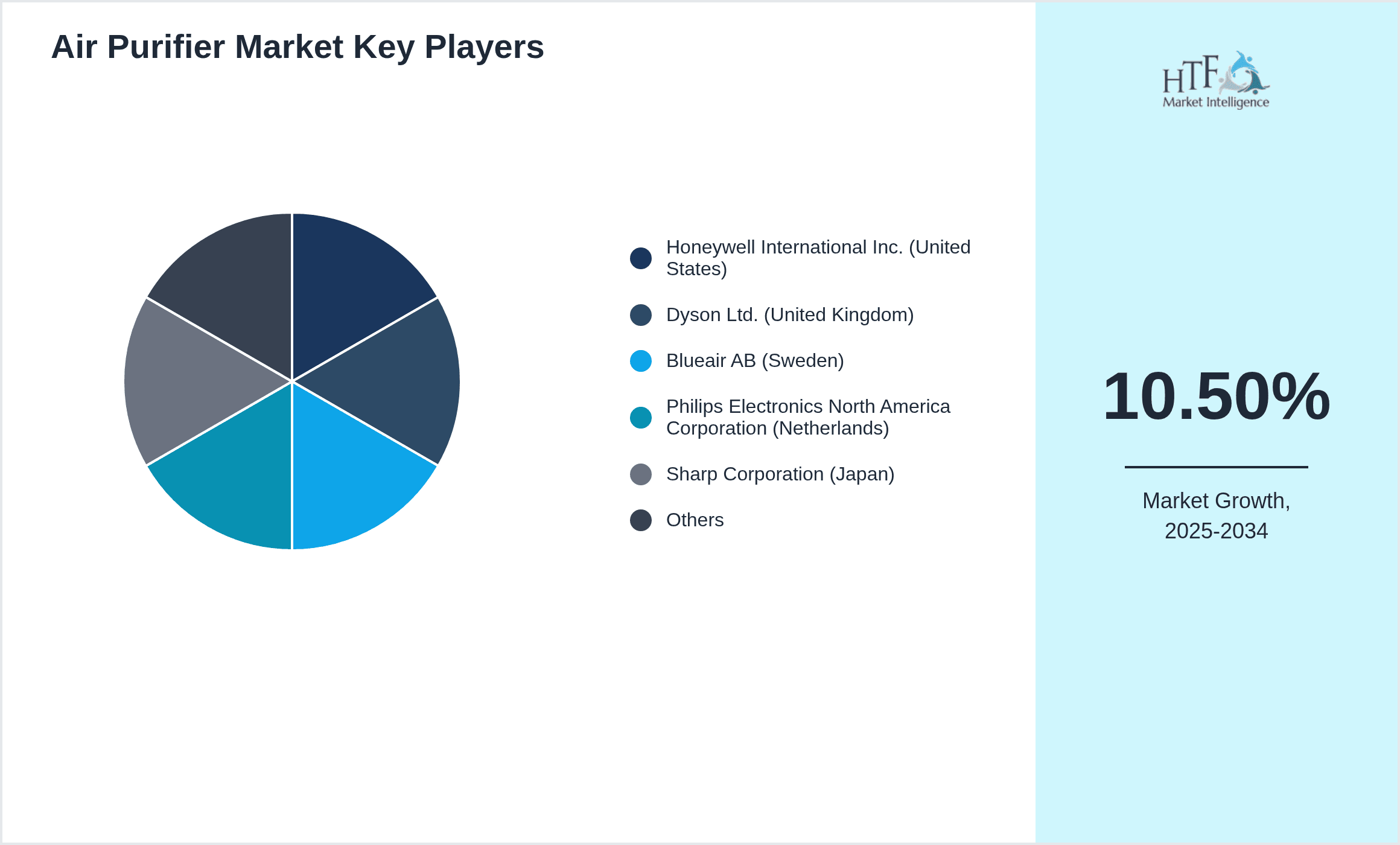
Leading Companies in North America Air Purifier Market
- •Honeywell International Inc. (United States)
- •Dyson Ltd. (United Kingdom)
- •Blueair AB (Sweden)
- •Philips Electronics North America Corporation (Netherlands)
- •Sharp Corporation (Japan)
- •Coway Co. Ltd. (South Korea)
- •Levoit (United States)
- •Winix Inc. (South Korea)
- •Austin Air Systems (United States)
- •Molekule Inc. (United States)
- •Panasonic Corporation (Japan)
- •Alen Corporation (United States)
- •Coway North America (United States)
- •Whirlpool Corporation (United States)
- •Raguso Electronics (Canada)
- •Ecovacs Robotics (China)
- •Ideal Air Purifiers (United States)
- •IQAir AG (Switzerland)
- •Sharp Electronics Corporation (United States)
- •3M Company (United States)
- •Cuckoo Electronics (South Korea)
- •Blueair USA (United States)
- •Envion Products (United States)
- •Honeywell Life Care Solutions (United States)
- •Philips North America (United States)
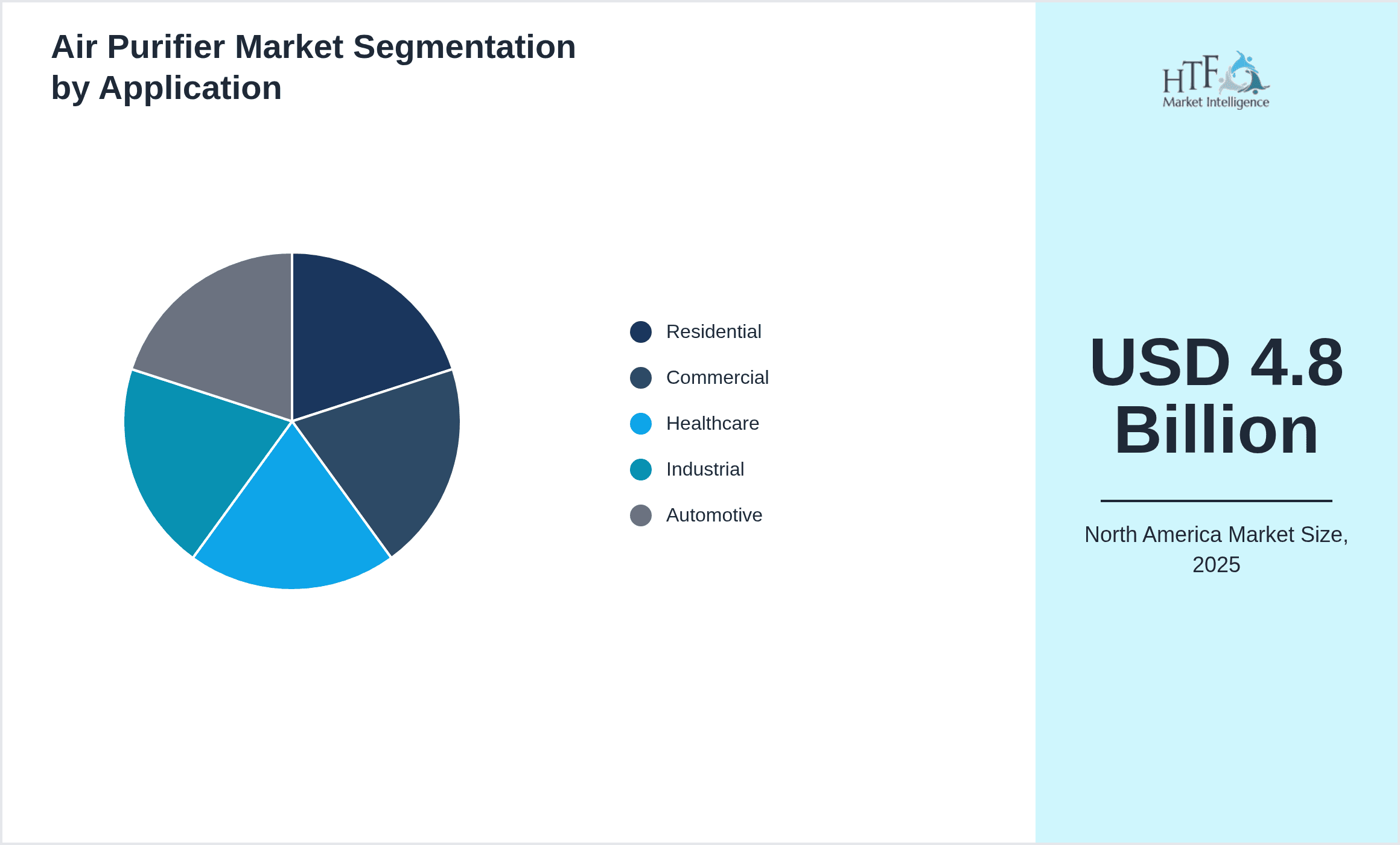
Market Breakdown
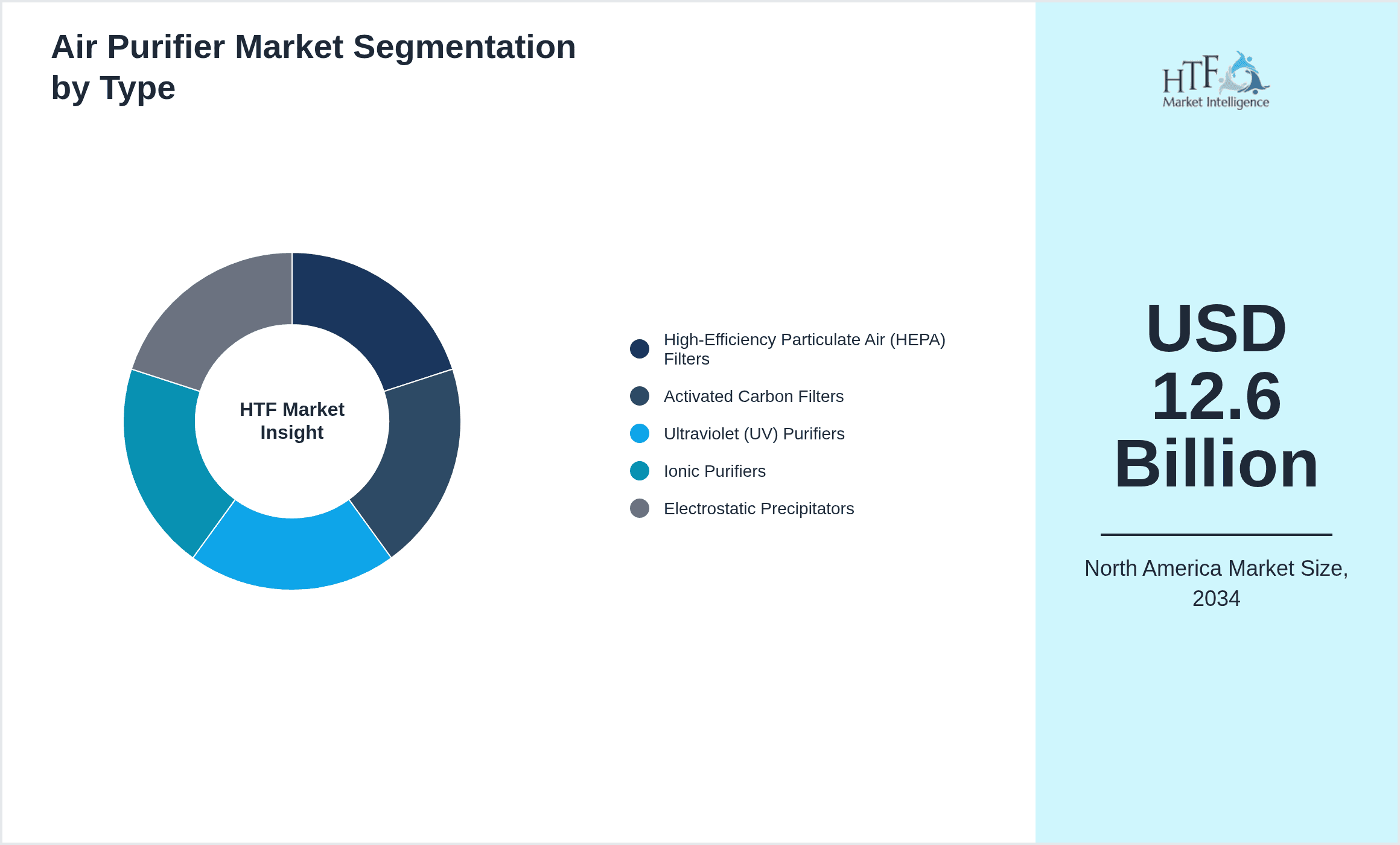
- •By Type
- ◦High-Efficiency Particulate Air (HEPA) Filters
- ◦Activated Carbon Filters
- ◦Ultraviolet (UV) Purifiers
- ◦Ionic Purifiers
- ◦Electrostatic Precipitators
- •By Application
- ◦Residential
- ◦Commercial
- ◦Healthcare
- ◦Industrial
- ◦Automotive
- •By End User
- ◦Households
- ◦Offices
- ◦Hospitals & Clinics
- ◦Factories
- ◦Vehicles
- •By Distribution Channel
- ◦Online Retail
- ◦Specialty Stores
- ◦Mass Merchandisers
- ◦Direct Sales
Growth Dynamics
The North America Air Purifier market is propelled by increasing urban air pollution and rising awareness of indoor air quality's impact on health. Growing respiratory disorders and allergies have accelerated consumer demand for effective air purification solutions. Technological innovations, such as smart air purifiers with IoT integration, enable real-time air quality monitoring and automation, further stimulating adoption. Regulatory initiatives enforcing indoor air quality standards in commercial and healthcare sectors have mandated air purification investments. Additionally, the COVID-19 pandemic heightened awareness of airborne pathogen transmission, spurring demand for UV and HEPA filtration systems. Consumer preferences are shifting toward energy-efficient and eco-friendly devices, encouraging manufacturers to innovate sustainable products. Strategic partnerships between technology providers and healthcare institutions are expanding market reach and credibility. These factors collectively create a robust growth environment, offering ample opportunities for new entrants and established players to capitalize on evolving market needs.
Market Trends
A significant trend in the North America Air Purifier market is the integration of smart technologies enabling remote monitoring and control via mobile applications, enhancing user convenience and engagement. Manufacturers are increasingly incorporating AI-driven sensors for adaptive purification based on air quality fluctuations. Sustainability is gaining prominence, with eco-friendly materials and energy-saving modes being standard features. Cross-industry collaborations are fostering innovative solutions that address specific needs of healthcare and industrial environments. The rise of subscription-based models for filter replacements and maintenance services reflects evolving consumer purchasing behaviors. Additionally, demand for compact and portable air purifiers is surging, particularly in urban residential settings. These trends collectively drive product diversification and intensify competition while aligning with broader digital transformation and environmental sustainability goals.
Market Opportunities
Untapped potential exists in expanding air purifier adoption within emerging commercial sectors such as hospitality and educational institutions, where air quality concerns are increasingly prioritized. Innovations in hybrid purification technologies combining HEPA, UV, and activated carbon filters offer opportunities to capture health-conscious consumers. The growing trend towards smart homes presents avenues for integrating air purifiers with broader home automation ecosystems. Opportunities also arise from government incentives promoting clean air solutions, particularly in regions with high pollution levels. Furthermore, developing portable and vehicle-integrated air purification systems caters to mobile users seeking consistent air quality. Strategic partnerships with healthcare providers for clinical-grade devices can open new revenue streams. These opportunities collectively enable market players to diversify offerings and enhance competitive positioning.
Market Challenges
Challenges in the North America Air Purifier market include high product costs that may restrict penetration among price-sensitive consumers, particularly in lower-income households. Variability in regulatory standards across states complicates compliance and product certification processes. Technical limitations such as noise generation and filter replacement frequency pose consumer convenience issues, affecting repeat purchases. The presence of counterfeit and low-quality products jeopardizes brand reputation and market trust. Additionally, integrating multiple purification technologies while maintaining energy efficiency remains a design challenge. Supply chain disruptions and raw material price volatility can impact manufacturing costs and timelines. Educating consumers about the benefits and proper use of air purifiers is essential to overcome skepticism and misinformation. Addressing these challenges is critical for sustained market growth and consumer confidence.
Regulatory Framework
Between 2019 and 2024, North America has seen the implementation of stricter indoor air quality regulations, including updated guidelines from the Environmental Protection Agency (EPA) and adoption of standards by the American Society of Heating, Refrigerating and Air-Conditioning Engineers (ASHRAE). These regulations mandate minimum air filtration efficiencies for commercial and healthcare facilities, influencing air purifier design and performance criteria. Additionally, California’s Air Resources Board (CARB) has enforced limits on ozone emissions from air purifiers, pushing manufacturers to optimize technologies for safety and compliance. The Occupational Safety and Health Administration (OSHA) has also updated workplace air quality requirements, further expanding market demand. Government incentives promoting energy-efficient appliances and sustainable technologies support market growth. Compliance with these evolving regulations necessitates ongoing innovation and rigorous testing, ensuring product safety and effectiveness across North America.
Market Intelligence
- •15th January 2024, Molekule Inc. introduced the Air Pro RX, a next-generation air purifier featuring enhanced PECO technology designed to eliminate airborne viruses and allergens with medical-grade efficiency. The device incorporates real-time air quality sensors and app connectivity, targeting healthcare and residential users seeking advanced protection. This launch positions Molekule competitively in the growing demand for pathogen-focused air purification solutions, aligning with heightened public health awareness post-pandemic. The company aims to expand its market share in North America by leveraging this innovation. Source: Molekule Official Website.
- •20th June 2023, Honeywell International Inc. expanded its air purifier lineup with the Smart Air Touch, integrating voice control and AI-driven filtration adjustments. Designed for commercial and residential applications, the product emphasizes user convenience and energy efficiency. Honeywell’s strategic investment in smart home technology partnerships enhances product appeal amid growing consumer preference for connected devices. The launch reflects the company’s commitment to innovation and market leadership in North America. Source: Honeywell Press Release.
- •Recent market developments and strategic initiatives are continuously tracked through industry publications, company announcements, and regulatory filings. For the most current information, stakeholders are advised to monitor official corporate communications and recognized market intelligence platforms.
- •Recent market developments and strategic initiatives are continuously tracked through industry publications, company announcements, and regulatory filings. For the most current information, stakeholders are advised to monitor official corporate communications and recognized market intelligence platforms.
Regional Outlook
The United States currently holds a significant share of the market, primarily due to several key factors: increasing consumption rates, a burgeoning population, and robust economic momentum. These elements collectively drive demand, positioning this region as a leader in the market. On the other hand, Canada is rapidly emerging as the fastest-growing area within the industry. This remarkable growth can be attributed to swift infrastructure development, the expansion of various industrial sectors, and a marked increase in consumer demand. These dynamics make this region a crucial player in shaping future market growth.
In our report, we cover a comprehensive analysis of the following regions and countries:
- United States
- Canada
- Mexico
| Feature | Details |
|---|---|
| Base Year Market Size | USD 4.8 Billion |
| Forecast Year Market Size | USD 12.6 Billion |
| CAGR | 10.5% |
| Forecast Period | 2026 to 2033 |
| YoY Growth | 10% |
| Scope of Report | Market is segmented by Type (High-Efficiency Particulate Air (HEPA) Filters, Activated Carbon Filters, Ultraviolet (UV) Purifiers, Ionic Purifiers, Electrostatic Precipitators), Application (Residential, Commercial, Healthcare, Industrial, Automotive), End User (Households, Offices, Hospitals & Clinics, Factories, Vehicles), Distribution Channel (Online Retail, Specialty Stores, Mass Merchandisers, Direct Sales) |
| Regions Covered | United States, Canada, Mexico |
| Key Companies | Honeywell International Inc. (United States), Dyson Ltd. (United Kingdom), Blueair AB (Sweden), Philips Electronics North America Corporation (Netherlands), Sharp Corporation (Japan), Coway Co. Ltd. (South Korea), Levoit (United States), Winix Inc. (South Korea), Austin Air Systems (United States), Molekule Inc. (United States), Panasonic Corporation (Japan), Alen Corporation (United States), Coway North America (United States), Whirlpool Corporation (United States), Raguso Electronics (Canada), Ecovacs Robotics (China), Ideal Air Purifiers (United States), IQAir AG (Switzerland), Sharp Electronics Corporation (United States), 3M Company (United States), Cuckoo Electronics (South Korea), Blueair USA (United States), Envion Products (United States), Honeywell Life Care Solutions (United States), Philips North America (United States) |
North America Air Purifier Market Size, Growth & Revenue 2024-2034 - Table of Contents
Frequently Asked Questions (FAQ):
The Compact Track Loaders market is projected to grow at a CAGR of 6.8% from 2025 to 2030, driven by increasing demand in construction and agricultural sectors.
North America currently leads the market with approximately 45% market share, followed by Europe at 28% and Asia-Pacific at 22%. The remaining regions account for 5% of the global market.
Key growth drivers include increasing construction activities, rising demand for versatile equipment in agriculture, technological advancements in track loader design, and growing preference for compact equipment in urban construction projects.