
Southeast Asia High-flow Nasal Cannula Devices Market Size, Growth & Revenue 2024-2034
Southeast Asia High-flow Nasal Cannula (HFNC) Devices Market is segmented by Type (Standalone High-flow Nasal Cannula Devices, Integrated Ventilator HFNC Systems, Portable High-flow Nasal Cannula Devices, Disposable HFNC Systems, Reusable HFNC Systems), Application (Neonatal Care, Adult Respiratory Care, Pediatric Care, Home Care, Hospital Intensive Care Units), End User Facility (Hospitals, Specialty Clinics, Home Healthcare Providers, Long-term Care Centers), Distribution Channel (Direct Sales, Distributor Sales, Online Channels), and Geography (Singapore, Malaysia, Thailand, Indonesia, Vietnam, Philippines, Others)
Pricing
Report Overview
Executive Summary
- •The Southeast Asia High-flow Nasal Cannula (HFNC) Devices market represents a critical segment within the respiratory care device industry, focusing on advanced oxygen delivery systems designed to treat patients with acute and chronic respiratory insufficiencies. HFNC devices deliver heated, humidified oxygen at high flow rates, improving patient comfort and reducing the need for invasive mechanical ventilation, especially in neonatal intensive care and adult respiratory therapy. The market scope includes standalone and integrated HFNC systems, portable and disposable devices, and covers applications across neonatal care, pediatric care, adult respiratory care, home care, and hospital intensive care units. Geographically, this market spans Indonesia, Malaysia, Philippines, Singapore, and Thailand, driven by increasing respiratory illness prevalence, rising awareness of non-invasive ventilation benefits, and expanding healthcare infrastructure. The market growth is further supported by technological advancements enhancing device portability, safety, and ease of use, alongside regulatory approvals facilitating wider adoption. The market is poised for robust expansion through 2034, reflecting rising demand in both public and private healthcare sectors across Southeast Asia.
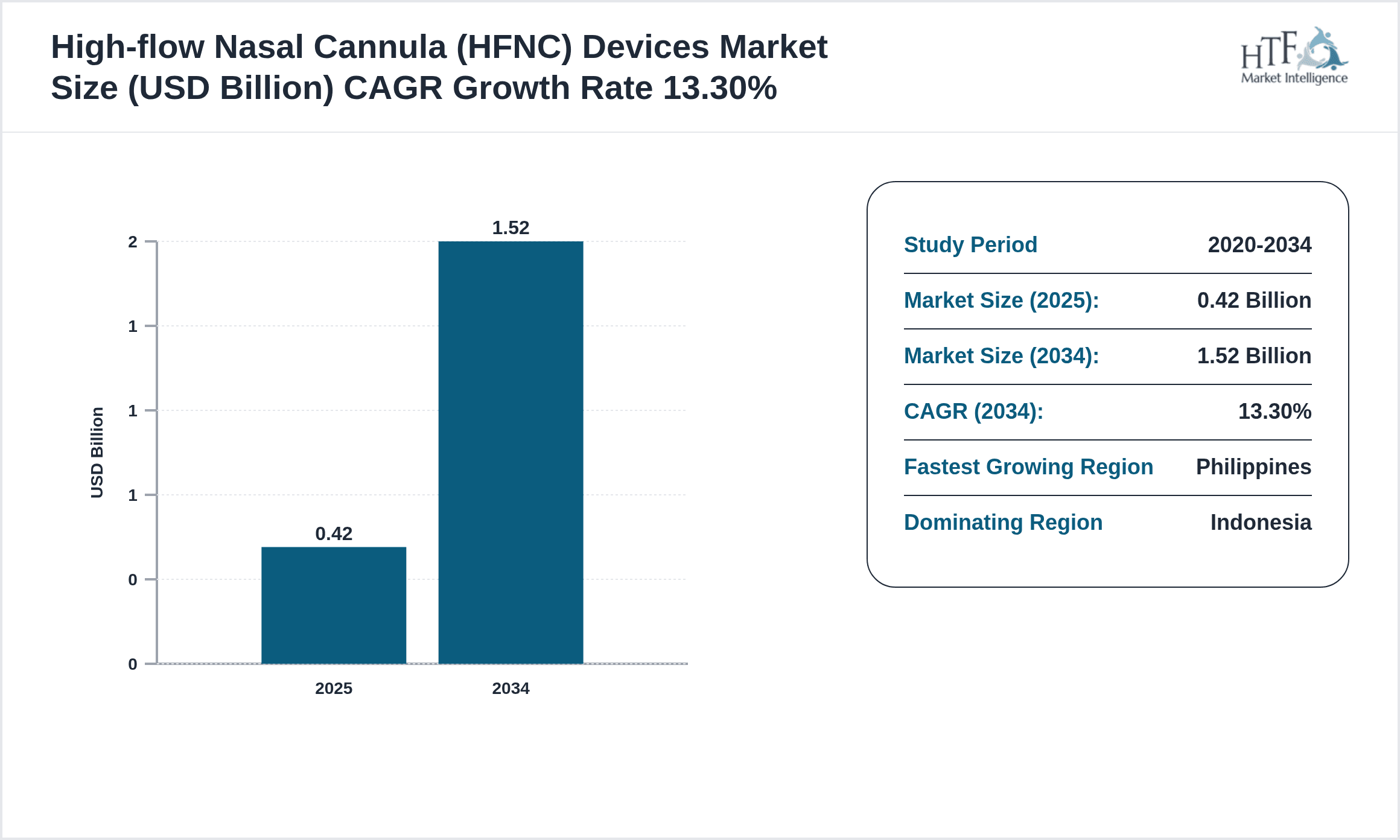
- •Key highlights include a current market valuation of USD 0.42 Billion in 2024, forecasted to reach USD 1.52 Billion by 2034, representing a CAGR of approximately 13.3%. Indonesia leads the regional market share with 28%, followed by Malaysia and Thailand, while the Philippines is identified as the fastest-growing country with a CAGR of 16.7%. Standalone HFNC devices dominate the product type segment, accounting for the majority market share, whereas portable HFNC devices are the fastest growing due to rising home care adoption. Neonatal care remains the primary application segment, closely followed by adult respiratory care, reflecting the high burden of neonatal respiratory distress syndrome and chronic obstructive pulmonary diseases in the region. The market is characterized by increasing investments in healthcare infrastructure, rising government initiatives promoting non-invasive respiratory therapies, and growing awareness among healthcare professionals.
- •For healthcare providers, manufacturers, and investors, the Southeast Asia HFNC devices market offers significant strategic value by addressing unmet respiratory care needs, enhancing patient outcomes, and reducing healthcare costs through non-invasive interventions. The market's expansion aligns with broader trends in healthcare modernization, telemedicine integration, and patient-centric care models, underscoring its importance within the regional medical device landscape. Stakeholders benefit from technological innovations and regulatory advancements facilitating market entry and adoption, while addressing critical respiratory health challenges prevalent in Southeast Asia.
Competitive Landscape
The competitive environment in the Southeast Asia High-flow Nasal Cannula Devices market is shaped by a mix of global medical device giants and regional specialists focusing on respiratory care technology. Market players compete through continuous product innovation, focusing on improving device portability, ease of use, and patient comfort. Strategic partnerships with healthcare providers and distributors enhance market penetration, while investment in regulatory compliance accelerates approvals across diverse Southeast Asian markets. Companies employ differentiated pricing strategies to address varying economic conditions within the region, balancing affordability with technological sophistication. Rivalry intensifies with the introduction of portable and integrated HFNC systems catering to home and hospital care. Research and development efforts emphasize integration of digital health features, such as remote monitoring and data analytics, to create value-added solutions. Market entry barriers include stringent regulatory requirements and the need for localized customer support. Overall, competition fosters innovation while driving down costs, benefiting end users and supporting steady market growth.
Leading Companies in Southeast Asia High-flow Nasal Cannula Devices Market
- •Fisher & Paykel Healthcare Corporation Limited (New Zealand)
- •ResMed Inc. (United States)
- •Philips Healthcare (Netherlands)
- •Drägerwerk AG & Co. KGaA (Germany)
- •Vyaire Medical, Inc. (United States)
- •Teleflex Incorporated (United States)
- •Becton, Dickinson and Company (United States)
- •Smiths Medical (United Kingdom)
- •Nidek Medical Products, Inc. (Japan)
- •Intersurgical Ltd. (United Kingdom)
- •Medtronic plc (Ireland)
- •CareFusion Corporation (United States)
- •Optiflow (Fisher & Paykel Healthcare brand) (New Zealand)
- •Smiths Group plc (United Kingdom)
- •Breas Medical AB (Sweden)
- •Hamilton Medical AG (Switzerland)
- •Air Liquide Healthcare (France)
- •Invacare Corporation (United States)
- •Bunnell Incorporated (United States)
- •GE Healthcare (United States)
- •Carestream Health (United States)
- •OxyGo, Inc. (United States)
- •DeVilbiss Healthcare LLC (United States)
- •Hamilton Medical AG (Switzerland)
- •Teleflex Medical (United States)

Market Breakdown
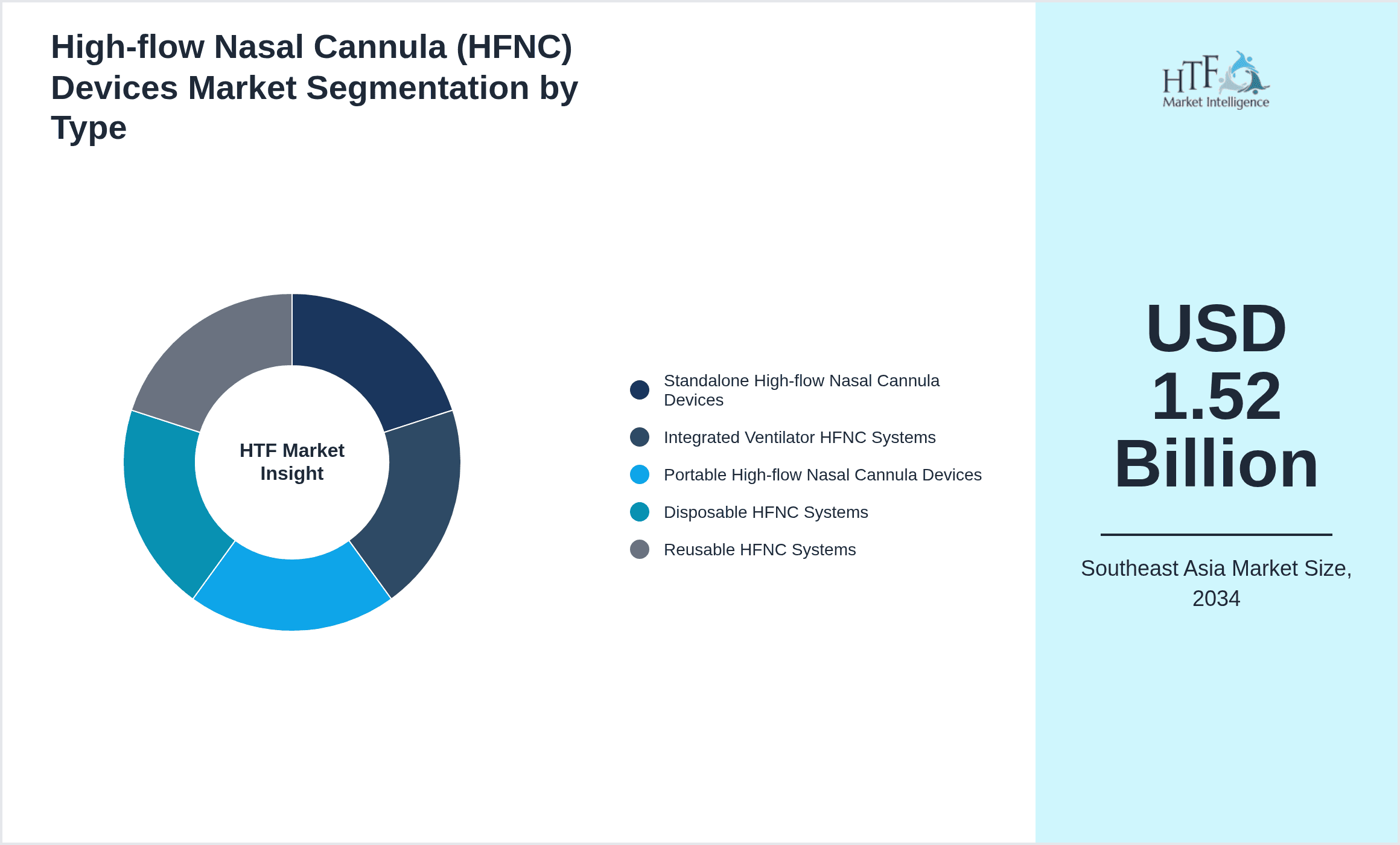
- •By Type
- ◦Standalone High-flow Nasal Cannula Devices
- ◦Integrated Ventilator HFNC Systems
- ◦Portable High-flow Nasal Cannula Devices
- ◦Disposable HFNC Systems
- ◦Reusable HFNC Systems
- •By Application
- ◦Neonatal Care
- ◦Adult Respiratory Care
- ◦Pediatric Care
- ◦Home Care
- ◦Hospital Intensive Care Units
- •By End User Facility
- ◦Hospitals
- ◦Specialty Clinics
- ◦Home Healthcare Providers
- ◦Long-term Care Centers
- •By Distribution Channel
- ◦Direct Sales
- ◦Distributor Sales
- ◦Online Channels
Growth Dynamics
- •The rising prevalence of respiratory illnesses such as chronic obstructive pulmonary disease (COPD), pneumonia, and neonatal respiratory distress syndrome across Southeast Asia fuels demand for effective respiratory support devices like HFNC systems. Increasing patient preference for non-invasive ventilation methods over traditional mechanical ventilation enhances market growth.
- •Government initiatives and rising healthcare expenditure in countries like Indonesia and Malaysia are expanding hospital infrastructure and ICU capacities, thereby driving adoption of advanced respiratory care technologies including HFNC devices.
- •Technological innovations resulting in portable and user-friendly HFNC devices enable expanded use in home care settings, facilitating patient comfort and reducing hospital stays, which is increasingly valued amid rising healthcare costs and COVID-19 aftermath.
- •Enhanced clinical awareness and training programs promoting the benefits of HFNC therapy among healthcare professionals contribute to increased acceptance and integration of these devices in treatment protocols.
- •Collaborations between manufacturers and regional distributors improve market penetration and availability, especially in emerging markets within Southeast Asia, broadening reach beyond metropolitan centers.
Market Trends
- •A significant trend is the integration of HFNC technology with telemedicine platforms, enabling remote monitoring of respiratory patients and timely interventions, which is gaining traction in countries like Singapore and Thailand.
- •The adoption of portable HFNC devices for home respiratory care is increasing as patients seek more flexible treatment options that reduce hospitalization and allow mobility without compromising therapy quality.
- •Manufacturers are focusing on developing eco-friendly disposable nasal cannulas and consumables, responding to growing environmental concerns and regulatory pressures in the healthcare sector.
- •Rising investments in neonatal intensive care units (NICUs) across Southeast Asia drive demand for specialized HFNC systems tailored for neonatal respiratory support, reflecting demographic and healthcare priorities.
- •Collaborative research initiatives between regional hospitals and device manufacturers foster innovation in HFNC therapy protocols and device customization to local clinical needs.

Market Opportunities
- •Expanding home healthcare markets in Indonesia and the Philippines present significant growth opportunities for portable HFNC devices, driven by aging populations and increasing chronic respiratory disease prevalence.
- •Untapped rural healthcare segments offer potential for market expansion through affordable HFNC solutions and mobile respiratory care units, addressing limited access to advanced medical facilities.
- •Integration of digital health technologies with HFNC devices, including AI-driven patient monitoring and predictive analytics, offers avenues for innovation and market differentiation.
- •Strategic partnerships with regional healthcare providers and governments to support large-scale respiratory care programs can enhance market reach and adoption rates.
- •Development of cost-effective, reusable HFNC systems tailored for emerging markets in Southeast Asia can improve affordability and sustainability, creating competitive advantages.
Market Challenges
- •High initial capital investment for advanced HFNC devices and associated infrastructure limits adoption in smaller hospitals and clinics across less developed Southeast Asian countries.
- •Lack of standardized training for healthcare professionals on HFNC device operation and therapy management can hinder effective utilization and clinical outcomes.
- •Regulatory disparities and complex approval processes across Southeast Asian nations increase time-to-market and compliance costs for manufacturers.
- •Competition from alternative respiratory support devices such as CPAP and BiPAP machines, which may be more established or cost-effective in some markets, restrains HFNC device penetration.
- •Supply chain disruptions and limited local manufacturing capabilities affect device availability and pricing stability in the region.
Regulatory Framework
- •Between 2020 and 2024, Southeast Asian countries have enhanced medical device regulations, with agencies such as Singapore's HSA and Malaysia's MDA implementing stricter licensing and quality assurance standards for respiratory devices, including HFNC systems. These regulations ensure device safety, efficacy, and compliance with international standards, facilitating market trust and adoption.
- •The ASEAN Medical Device Directive (AMDD) harmonizes regulatory requirements across member countries, streamlining approval processes and encouraging regional market integration for HFNC devices.
- •Environmental regulations increasingly affect disposable component manufacturing, requiring compliance with waste management and material safety standards to reduce ecological impact.
- •Post-COVID-19 emergency use authorizations accelerated HFNC device approvals, but temporary measures are transitioning to permanent frameworks emphasizing device quality and clinical validation.
- •Government incentives promoting indigenous medical device manufacturing encourage local production of HFNC components to reduce import dependency and enhance supply chain resilience.
Market Intelligence
- •15th February 2025, Fisher & Paykel Healthcare Corporation Limited launched an advanced portable HFNC system designed specifically for emerging Southeast Asian markets. The device features enhanced battery life, compact design, and integrated humidification technology aimed at improving patient mobility and comfort in home care and remote settings. This launch aligns with increasing demand for user-friendly respiratory support solutions outside hospital environments, reflecting the company’s strategic focus on expanding its footprint in the region. The product also incorporates telemonitoring capabilities to facilitate remote clinical supervision. Source: Official Fisher & Paykel Healthcare Press Release
- •10th August 2024, ResMed Inc. introduced a next-generation integrated ventilator HFNC device with AI-enabled respiratory monitoring tools. Targeting Southeast Asia’s growing intensive care units, the device enhances personalized oxygen delivery and patient data analytics, enabling optimized therapy management. The launch supports healthcare providers in improving respiratory care outcomes, reducing ICU stays, and managing resource allocation efficiently. This initiative is part of ResMed’s broader regional expansion strategy focused on innovative respiratory technologies tailored for developing healthcare infrastructures. Source: ResMed Official Website
- •5th January 2025, Philips Healthcare announced a strategic partnership with a leading Indonesian distributor to expand availability of its HFNC devices across secondary and tertiary care hospitals. This collaboration aims to address supply chain challenges and improve access to advanced respiratory therapies in underserved regions. The expanded distribution network will support Philips’ growth objectives in Southeast Asia and enable wider adoption of HFNC technology amid rising respiratory disease prevalence. Source: Philips Healthcare Industry Update
- •20th March 2025, Drägerwerk AG & Co. KGaA completed the acquisition of a local respiratory device manufacturer in Malaysia, enhancing its product portfolio with region-specific HFNC consumables and accessories. The acquisition strengthens Drägerwerk’s manufacturing presence in Southeast Asia, reduces lead times, and supports customization of respiratory care solutions to local clinical needs. This strategic move underscores the importance of regional integration and supply chain localization in maintaining competitive advantage. Source: Dräger Official Announcement
Regional Outlook
The Indonesia currently holds a significant share of the market, primarily due to several key factors: increasing consumption rates, a burgeoning population, and robust economic momentum. These elements collectively drive demand, positioning this region as a leader in the market. On the other hand, Philippines is rapidly emerging as the fastest-growing area within the industry. This remarkable growth can be attributed to swift infrastructure development, the expansion of various industrial sectors, and a marked increase in consumer demand. These dynamics make this region a crucial player in shaping future market growth.
In our report, we cover a comprehensive analysis of the following regions and countries:
- Singapore
- Malaysia
- Thailand
- Indonesia
- Vietnam
- Philippines
- Others
| Feature | Details |
|---|---|
| Base Year Market Size | USD 0.42 Billion |
| Forecast Year Market Size | USD 1.52 Billion |
| CAGR | 13.3% |
| Forecast Period | 2026 to 2033 |
| YoY Growth | 12.5% |
| Scope of Report | Market is segmented by Type (Standalone High-flow Nasal Cannula Devices, Integrated Ventilator HFNC Systems, Portable High-flow Nasal Cannula Devices, Disposable HFNC Systems, Reusable HFNC Systems), Application (Neonatal Care, Adult Respiratory Care, Pediatric Care, Home Care, Hospital Intensive Care Units), End User Facility (Hospitals, Specialty Clinics, Home Healthcare Providers, Long-term Care Centers), Distribution Channel (Direct Sales, Distributor Sales, Online Channels) |
| Regions Covered | Singapore, Malaysia, Thailand, Indonesia, Vietnam, Philippines, Others |
| Key Companies | Fisher & Paykel Healthcare Corporation Limited (New Zealand), ResMed Inc. (United States), Philips Healthcare (Netherlands), Drägerwerk AG & Co. KGaA (Germany), Vyaire Medical, Inc. (United States), Teleflex Incorporated (United States), Becton, Dickinson and Company (United States), Smiths Medical (United Kingdom), Nidek Medical Products, Inc. (Japan), Intersurgical Ltd. (United Kingdom), Medtronic plc (Ireland), CareFusion Corporation (United States), Optiflow (Fisher & Paykel Healthcare brand) (New Zealand), Smiths Group plc (United Kingdom), Breas Medical AB (Sweden), Hamilton Medical AG (Switzerland), Air Liquide Healthcare (France), Invacare Corporation (United States), Bunnell Incorporated (United States), GE Healthcare (United States), Carestream Health (United States), OxyGo, Inc. (United States), DeVilbiss Healthcare LLC (United States), Hamilton Medical AG (Switzerland), Teleflex Medical (United States) |
Southeast Asia High-flow Nasal Cannula Devices Market Size, Growth & Revenue 2024-2034 - Table of Contents
Frequently Asked Questions (FAQ):
The Compact Track Loaders market is projected to grow at a CAGR of 6.8% from 2025 to 2030, driven by increasing demand in construction and agricultural sectors.
North America currently leads the market with approximately 45% market share, followed by Europe at 28% and Asia-Pacific at 22%. The remaining regions account for 5% of the global market.
Key growth drivers include increasing construction activities, rising demand for versatile equipment in agriculture, technological advancements in track loader design, and growing preference for compact equipment in urban construction projects.