
Global Spline Shaft Market Size, Growth & Revenue 2025-2034
Global Spline Shaft Market is segmented by Spline Shaft Type (Involute Spline, Straight Spline, Serrated Spline, Ball Spline, Internal Spline), Application Sector (Automotive, Industrial Machinery, Aerospace, Construction Equipment, Agricultural Machinery), Service Type (Manufacturing, Aftermarket Services, Repair and Maintenance, Custom Engineering Solutions), Manufacturing Technology (CNC Machining, Forging, Additive Manufacturing, Heat Treatment), and Geography (North America, LATAM, West Europe, Central & Eastern Europe, Northern Europe, Southern Europe, East Asia, Southeast Asia, South Asia, Central Asia, Oceania, MEA)
Pricing
Report Overview
Executive Summary
- •The global spline shaft market involves the production and application of precision-engineered mechanical shafts designed to transfer torque between rotating components. These shafts feature multiple splines or teeth that mesh with grooves on mating parts, ensuring efficient power transmission and alignment in complex machinery. The market covers a variety of spline shaft types including involute, straight, serrated, ball, and internal splines, each tailored for specific torque, load, and alignment requirements. It caters primarily to automotive, aerospace, industrial machinery, construction, and agricultural sectors where durability and precision are paramount. The value chain extends from raw material procurement through to manufacturing, assembly, distribution, and aftermarket services, emphasizing innovation in materials such as alloy steels and surface treatments to enhance performance. Increasing industrial automation, the rise in electric and hybrid vehicles, and the expanding aerospace sector are key factors propelling market growth. Furthermore, the demand for high-efficiency transmission systems in heavy machinery and agricultural equipment globally supports continued expansion. The market also witnesses technological advancements in manufacturing techniques including CNC machining and additive manufacturing, improving quality and reducing lead times. This intricate ecosystem contributes to the evolving global spline shaft market, making it a vital component in modern mechanical engineering applications.
- •Market highlights reveal a base market size of USD 3.8 Billion in 2025, expanding to USD 7.6 Billion by 2034 at a robust CAGR of 8.0%. The year-on-year growth rate is calculated at approximately 7.7%, indicating steady and sustainable market expansion. North America currently dominates the market with a 29% share supported by established automotive and aerospace industries, while Asia-Pacific is the fastest growing region with a CAGR of 10.5%, driven by rapid industrialization and infrastructure development. The involute spline segment leads product types due to its widespread use in automotive transmissions, whereas ball spline types are the fastest growing, favored for precision and load-bearing applications in robotics and aerospace. These dynamics highlight the market’s diversification and adaptation to evolving technological demands.
- •The global spline shaft market holds strategic significance across multiple industries by enabling enhanced torque transmission, improved mechanical efficiency, and operational reliability. Its applications in automotive transmissions, aerospace control systems, heavy industrial equipment, and agricultural machinery underpin essential manufacturing and transportation sectors worldwide. Stakeholders, including manufacturers, suppliers, and end-users, benefit from the market’s growth through product innovation, expanded application portfolios, and emerging regional opportunities. Additionally, investments in advanced materials and precision manufacturing techniques offer competitive advantages and support sustainability goals. Consequently, the spline shaft market represents a critical element in the global mechanical components landscape, fostering industrial growth and technological advancement.

Competitive Landscape
The global spline shaft market exhibits a highly competitive landscape marked by a combination of multinational corporations and specialized regional manufacturers. Companies compete through continuous innovation, expanding product portfolios, and strategic partnerships to enhance technological capabilities and market reach. Key competitive strategies include investments in advanced manufacturing processes such as CNC machining, heat treatment, and surface coating technologies to improve product durability and precision. Market players also focus on geographic expansion to tap into emerging markets, particularly in Asia-Pacific where industrial growth is rapid. The competitive environment is further shaped by mergers and acquisitions aimed at consolidating market share and enhancing supply chain efficiencies. Pricing strategies are influenced by raw material costs and demand fluctuations, while product differentiation is achieved through customization and compliance with stringent industry standards. Distribution networks are optimized for timely delivery and aftermarket services, adding value for customers. The market entry barriers include high capital investment, technological expertise, and certification requirements. Looking ahead, competition is expected to intensify with a growing emphasis on sustainability, lightweight materials, and integration with Industry 4.0 technologies, driving future innovation and market consolidation.
Prominent Players in Spline Shaft Market
- •GKN Driveline (United Kingdom)
- •BorgWarner Inc. (United States)
- •Timken Company (United States)
- •Schaeffler Group (Germany)
- •SKF Group (Sweden)
- •JTEKT Corporation (Japan)
- •Dana Incorporated (United States)
- •American Axle & Manufacturing Inc. (United States)
- •NHK Spring Co., Ltd. (Japan)
- •ZF Friedrichshafen AG (Germany)
- •Mubea Group (Germany)
- •FAULHABER Group (Germany)
- •Mitsubishi Heavy Industries (Japan)
- •Rexnord Corporation (United States)
- •Bharat Forge Limited (India)
- •Nachi-Fujikoshi Corp. (Japan)
- •Harbin Dongfang (China)
- •Renold PLC (United Kingdom)
- •Mitsui Kinzoku (Japan)
- •Kongsberg Automotive (Norway)
- •CIE Automotive (Spain)
- •GGB Bearing Technology (Luxembourg)
- •Nabtesco Corporation (Japan)
- •SITI B&T Group (Italy)
- •Meritor, Inc. (United States)
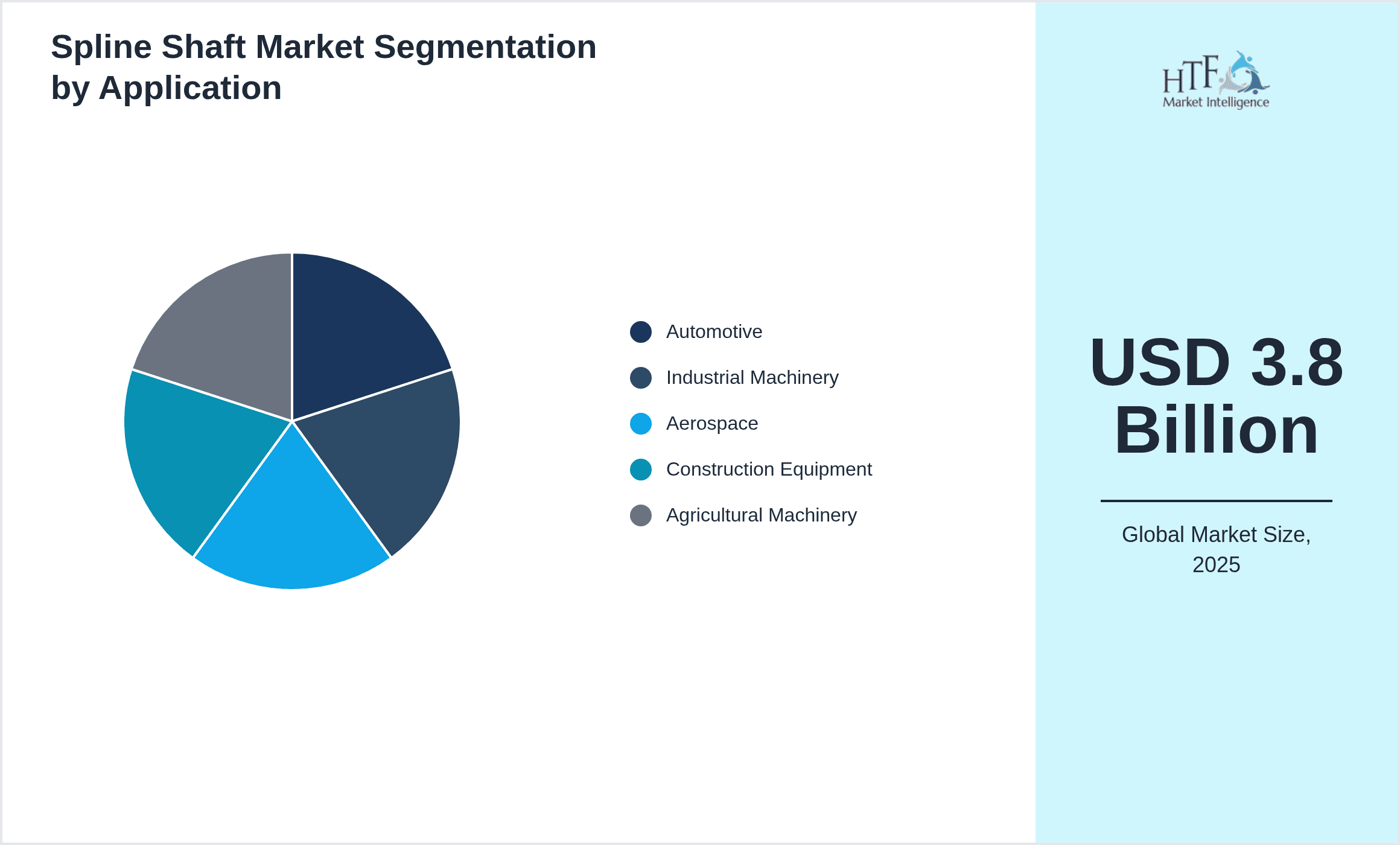
Market Breakdown
- •By Spline Shaft Type
- ◦Involute Spline
- ◦Straight Spline
- ◦Serrated Spline
- ◦Ball Spline
- ◦Internal Spline
- •By Application Sector
- ◦Automotive
- ◦Industrial Machinery
- ◦Aerospace
- ◦Construction Equipment
- ◦Agricultural Machinery
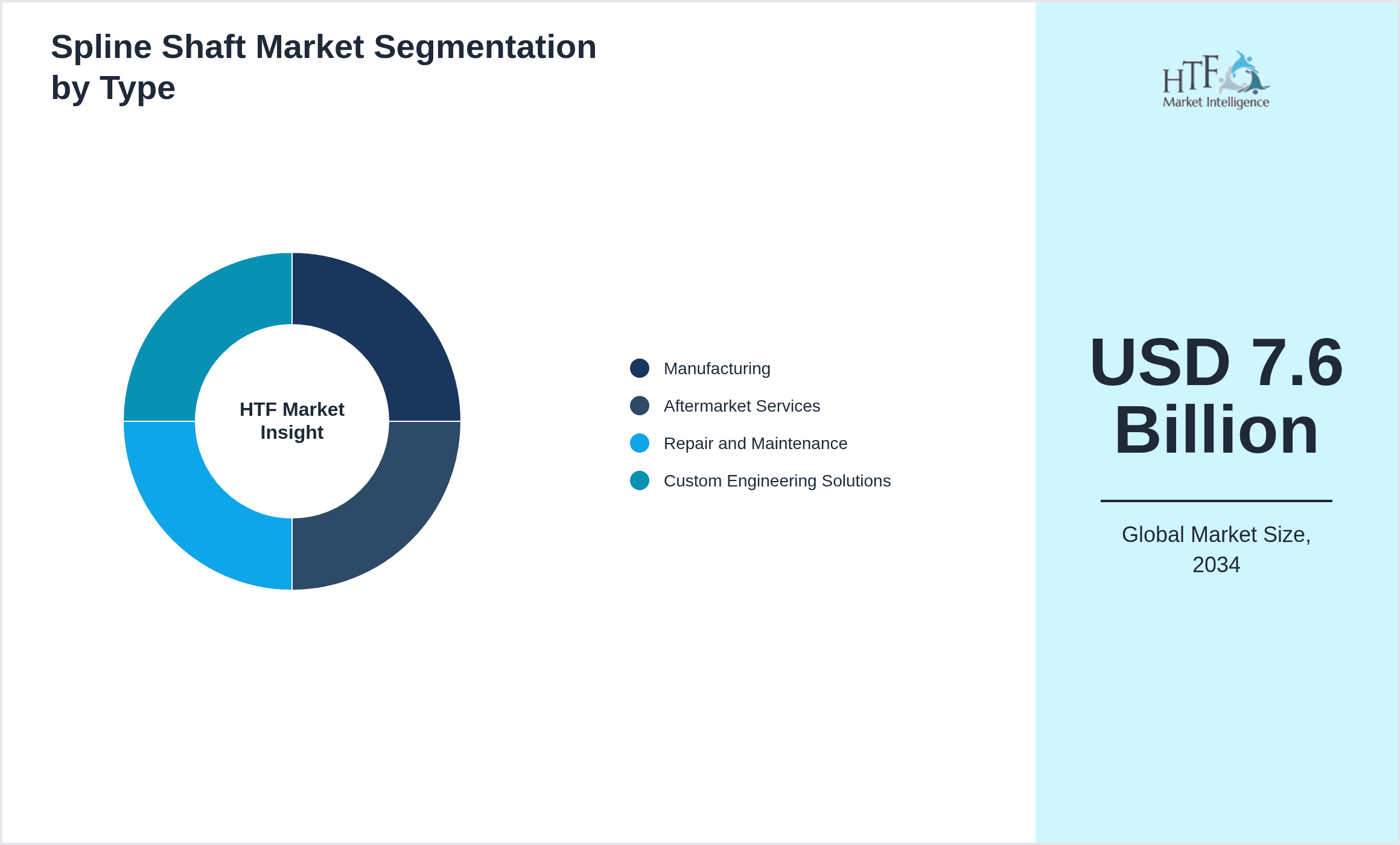
- •By Service Type
- ◦Manufacturing
- ◦Aftermarket Services
- ◦Repair and Maintenance
- ◦Custom Engineering Solutions
- •By Manufacturing Technology
- ◦CNC Machining
- ◦Forging
- ◦Additive Manufacturing
- ◦Heat Treatment
Growth Dynamics
- •The increasing demand for fuel-efficient and high-performance vehicles globally is a primary growth driver for the spline shaft market. Automotive manufacturers are focusing on lightweight yet durable components such as involute spline shafts to improve transmission efficiency and reduce emissions.
- •Rapid industrialization in Asia-Pacific is boosting demand for heavy machinery and construction equipment, which rely heavily on robust spline shafts for torque transmission and operational reliability in harsh environments.
- •Advancements in manufacturing technologies, including CNC machining and additive manufacturing, are enabling the production of complex spline shaft geometries with higher precision and reduced lead times, thereby expanding application possibilities.
- •The rise of automation and robotics in manufacturing sectors is increasing the use of ball spline shafts, which offer smooth linear motion and high load capacity, driving growth in specialized industrial applications.
- •Stringent regulatory standards for mechanical safety and emissions in automotive and aerospace sectors are encouraging adoption of high-quality spline shafts with improved material properties and performance characteristics.
- •Investment in renewable energy and electric vehicles is creating demand for new spline shaft designs tailored to electric drivetrains and wind turbine applications, opening additional market avenues.
- •Increasing aftermarket demand for repair and refurbishment services supports sustained market growth, as aging machinery and vehicles require high-quality replacement spline shafts to maintain operational efficiency.
Market Trends
- •There is a growing trend towards the use of lightweight materials such as aluminum alloys and composites in spline shaft manufacturing, driven by automotive industry efforts to reduce vehicle weight and improve fuel efficiency.
- •Industry 4.0 adoption is influencing spline shaft production with increased integration of IoT-enabled smart manufacturing, enabling real-time monitoring and predictive maintenance of spline shaft components.
- •Customization and precision engineering are becoming increasingly important as manufacturers cater to specialized applications in aerospace and robotics, requiring bespoke spline shaft designs with tight tolerances.
- •Sustainability initiatives are encouraging manufacturers to implement eco-friendly production processes and recycling programs for materials used in spline shaft fabrication, reducing environmental impact.
- •Collaborations between spline shaft manufacturers and automotive OEMs are on the rise to co-develop advanced drivetrain components that enhance vehicle performance and reliability.
- •The integration of advanced surface treatments and coatings to improve wear resistance and corrosion protection in spline shafts is becoming a standard industry practice.
- •The market is witnessing a shift towards modular spline shaft assemblies to facilitate easier maintenance and replacement, reducing downtime in industrial operations.

Market Opportunities
- •Emerging economies in Latin America and the Middle East & Africa present significant opportunities for market expansion due to growing infrastructure development and industrialization driving demand for construction and agricultural machinery spline shafts.
- •The increasing adoption of electric and hybrid vehicles globally creates opportunities for suppliers to innovate spline shaft designs optimized for electric drivetrains and lightweight applications.
- •Technological advancements in additive manufacturing offer opportunities to produce complex spline shaft geometries and customized solutions at reduced costs and lead times, appealing to niche industrial sectors.
- •Expansion of aftermarket services including repair, refurbishment, and custom engineering solutions can drive incremental revenue streams and enhance customer loyalty.
- •Strategic partnerships and joint ventures between component manufacturers and OEMs can accelerate product development and market penetration, particularly in high-growth regions.
- •Investment in research and development for new materials with enhanced strength-to-weight ratios can differentiate products and meet evolving industry standards for performance and sustainability.
- •The increasing need for automation in manufacturing plants worldwide opens avenues for ball spline shaft applications in robotics and precision machinery sectors.
Market Challenges
- •The high cost of advanced materials and precision manufacturing processes limits the adoption of premium spline shaft products, especially in cost-sensitive emerging markets.
- •Complexity in customization and design requirements for specialized applications results in extended lead times and increased production costs, affecting market scalability.
- •Supply chain disruptions, including raw material shortages and logistics challenges, have impacted timely delivery and increased operational costs for spline shaft manufacturers.
- •Stringent regulatory compliance and certification requirements across different regions impose additional burdens on manufacturers to meet diverse standards.
- •Competition from alternative torque transmission technologies such as flexible couplings and constant velocity joints poses a challenge to market growth.
- •Environmental concerns and pressure to reduce manufacturing waste require significant investment in sustainable production technologies, impacting profitability.
- •Limited skilled workforce and technological expertise in emerging markets restrict capacity expansion and innovation pace.
Regulatory Framework
- •Between 2020 and 2025, the implementation of ISO 4156 standards for splines and involute splines provided uniform guidelines for design, quality, and testing, enhancing global market consistency and product interchangeability.
- •The European Union’s Machinery Directive 2006/42/EC was enforced with updates in this period, mandating safety and performance standards for mechanical components including spline shafts used in industrial machinery, increasing compliance costs but improving safety.
- •In the United States, the American Society of Mechanical Engineers (ASME) updated codes related to power transmission components, requiring manufacturers to enhance material traceability and testing protocols for spline shafts.
- •China introduced stricter environmental regulations targeting emissions and waste from metal fabrication industries, compelling spline shaft manufacturers to adopt cleaner production technologies and reduce environmental impact.
- •Government incentives and subsidies in several regions encouraged adoption of advanced manufacturing technologies such as CNC machining and additive manufacturing, indirectly benefiting spline shaft quality and production efficiency.
Market Intelligence
- •15th January 2025, GKN Driveline announced the launch of a new high-precision involute spline shaft series designed for electric vehicle transmissions, featuring enhanced torque capacity and reduced weight through advanced alloy materials. This product aims to support the growing EV market segment by providing improved efficiency and durability, aligning with stringent automotive industry standards. The launch is expected to strengthen GKN's position in the emerging electric drivetrain components market globally. Source: Official GKN Driveline press release.
- •20th March 2025, BorgWarner Inc. introduced an innovative ball spline shaft system for use in industrial robotics, integrating smart sensors for real-time condition monitoring. This technology facilitates predictive maintenance, reducing downtime and operational costs for manufacturing clients. BorgWarner’s new offering is positioned to capture demand in the automation sector, leveraging Industry 4.0 trends and enhancing product reliability. Source: BorgWarner corporate website.
- •7th May 2024, Timken Company completed the acquisition of a European spline shaft manufacturer specializing in custom-engineered shafts for aerospace applications. This strategic move expands Timken’s product portfolio and geographic footprint, enabling access to advanced aerospace markets with high precision requirements. The acquisition is expected to generate synergies in R&D and production capabilities, accelerating innovation and market penetration. Source: Timken official announcement.
- •12th October 2024, Schaeffler Group unveiled a new manufacturing facility equipped with state-of-the-art CNC machining centers for spline shaft production, aiming to increase capacity by 30% and reduce lead times. This investment supports growing demand from automotive and industrial machinery sectors, emphasizing quality and precision. The facility integrates sustainable manufacturing practices to minimize environmental footprint. Source: Schaeffler Group press release.
Regional Outlook
The North America currently holds a significant share of the market, primarily due to several key factors: increasing consumption rates, a burgeoning population, and robust economic momentum. These elements collectively drive demand, positioning this region as a leader in the market. On the other hand, Asia-Pacific is rapidly emerging as the fastest-growing area within the industry. This remarkable growth can be attributed to swift infrastructure development, the expansion of various industrial sectors, and a marked increase in consumer demand. These dynamics make this region a crucial player in shaping future market growth.
In our report, we cover a comprehensive analysis of the following regions and countries:
- North America
- LATAM
- West Europe
- Central & Eastern Europe
- Northern Europe
- Southern Europe
- East Asia
- Southeast Asia
- South Asia
- Central Asia
- Oceania
- MEA
| Feature | Details |
|---|---|
| Base Year Market Size | USD 3.8 Billion |
| Forecast Year Market Size | USD 7.6 Billion |
| CAGR | 8% |
| Forecast Period | 2026 to 2033 |
| YoY Growth | 7.7% |
| Regions Covered | North America, LATAM, West Europe, Central & Eastern Europe, Northern Europe, Southern Europe, East Asia, Southeast Asia, South Asia, Central Asia, Oceania, MEA |
| Key Companies | GKN Driveline (United Kingdom), BorgWarner Inc. (United States), Timken Company (United States), Schaeffler Group (Germany), SKF Group (Sweden), JTEKT Corporation (Japan), Dana Incorporated (United States), American Axle & Manufacturing Inc. (United States), NHK Spring Co., Ltd. (Japan), ZF Friedrichshafen AG (Germany), Mubea Group (Germany), FAULHABER Group (Germany), Mitsubishi Heavy Industries (Japan), Rexnord Corporation (United States), Bharat Forge Limited (India), Nachi-Fujikoshi Corp. (Japan), Harbin Dongfang (China), Renold PLC (United Kingdom), Mitsui Kinzoku (Japan), Kongsberg Automotive (Norway), CIE Automotive (Spain), GGB Bearing Technology (Luxembourg), Nabtesco Corporation (Japan), SITI B&T Group (Italy), Meritor, Inc. (United States) |
Global Spline Shaft Market Size, Growth & Revenue 2025-2034 - Table of Contents
Frequently Asked Questions (FAQ):
The Compact Track Loaders market is expected to see value worth 5.3 Billion in 2025.
North America currently leads the market with approximately 45% market share, followed by Europe at 28% and Asia-Pacific at 22%. The remaining regions account for 5% of the global market.
Key growth drivers include increasing construction activities, rising demand for versatile equipment in agriculture, technological advancements in track loader design, and growing preference for compact equipment in urban construction projects.