
Asia-Pacific Rail Lubricant System Market Size, Growth & Revenue 2025-2034
Asia-Pacific Rail Lubricant System Market is segmented by Type (Solid Lubricants, Liquid Lubricants, Semi-Solid Lubricants, Greases, Dry Film Lubricants), Application (Locomotives, Passenger Trains, Freight Trains, Metro Systems, High-Speed Rail), Rail System Type (Urban Transit, Intercity Rail, Heavy Freight Rail), Distribution Channel (Direct Sales, Distributors and Dealers, Online Platforms), and Geography (Japan, China, Southeast Asia, India, Australia, South Korea, Others)
Pricing
Report Overview
Executive Summary
- •The Asia-Pacific Rail Lubricant System Market plays a critical role in enhancing the performance and longevity of rail transport infrastructure. This market includes diverse lubricant types such as liquid, solid, semi-solid, greases, and dry film variants, applied across various rail applications including locomotives, passenger and freight trains, metro systems, and high-speed rail. These specialized lubricants help reduce friction, wear, and corrosion in key mechanical components, thereby improving safety and operational efficiency. The market is driven by rapid rail network expansions, increasing government investments, and a growing focus on sustainable and cost-efficient rail maintenance solutions across countries like China, India, Japan, and Southeast Asia. Technological advancements in lubricant formulations, tailored to withstand varying climatic conditions and heavy rail usage, further underpin market growth. The Asia-Pacific region's diverse rail infrastructure and ongoing modernization efforts present significant opportunities for lubricant system innovations and adoption over the forecast period.
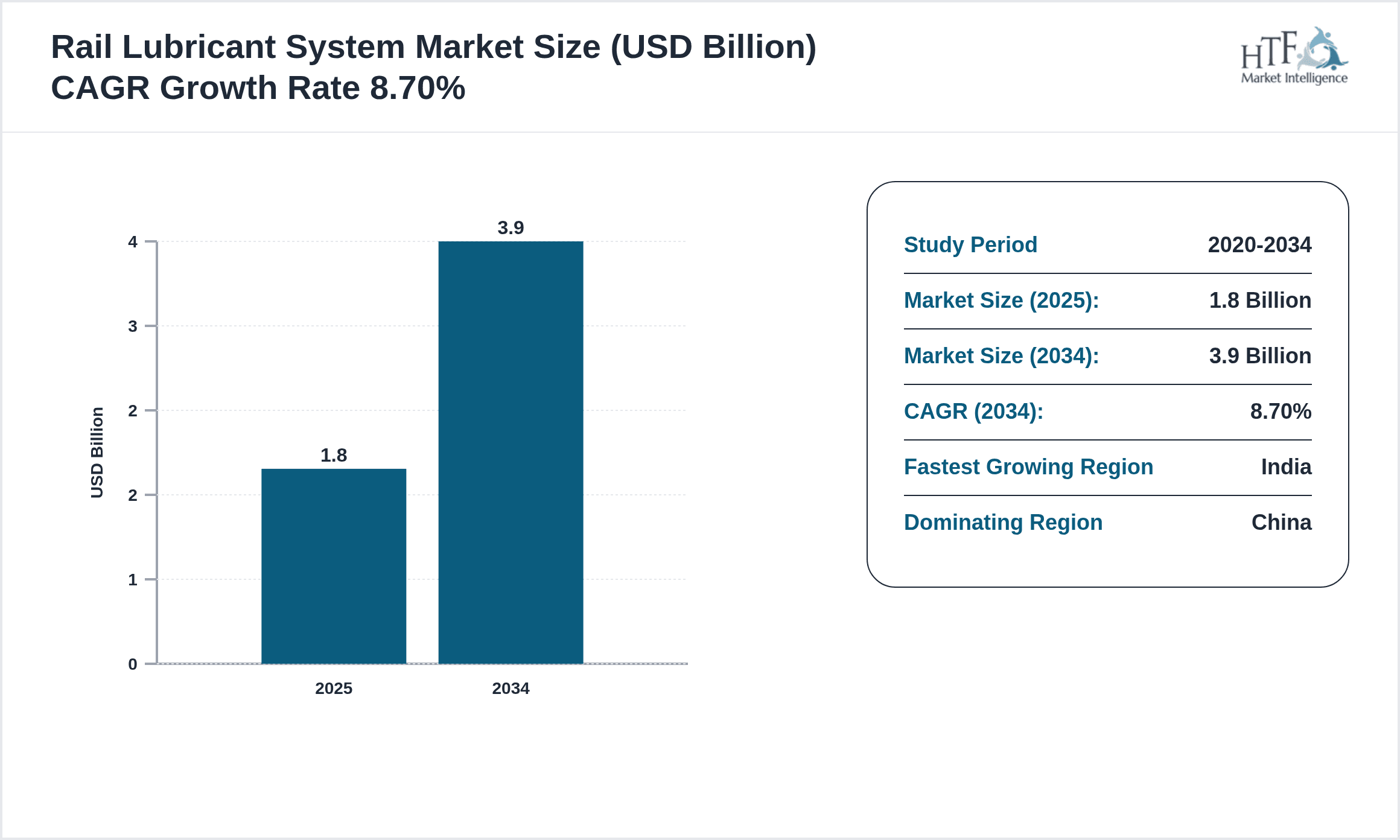
- •The market is currently valued at USD 1.8 billion in 2025, with a robust CAGR of 8.7% anticipated through 2034, reaching USD 3.9 billion. This growth is propelled by expanding urban transit networks and freight transportation demands, alongside rising awareness of the critical role of lubrication in reducing maintenance costs and downtime. Innovation in dry film lubricants and eco-friendly formulations is gaining traction, addressing environmental regulations and operational efficiency. Leading companies are investing in R&D to develop advanced lubricant systems compatible with high-speed and heavy-haul rail applications, reinforcing competitive positioning in the region.
- •The Asia-Pacific Rail Lubricant System Market holds strategic importance for stakeholders including rail operators, lubricant manufacturers, and government agencies. Efficient lubrication reduces rail component failures, ensuring safer and more reliable rail services essential for economic growth and urban mobility. The market's evolution aligns with regional infrastructure modernization policies and sustainability goals, offering substantial value through enhanced asset life cycles and operational cost savings. Stakeholders are thus positioned to capitalize on technological advancements and increased rail investments to drive long-term market expansion.
Competitive Landscape
The Asia-Pacific Rail Lubricant System market is characterized by intense competition among global lubricant manufacturers and regional specialists, emphasizing innovation and strategic partnerships. Companies differentiate through proprietary formulations optimized for diverse rail conditions, including high-speed and heavy freight operations. Competition centers on product efficacy, environmental compliance, and service integration, with firms investing heavily in R&D to develop sustainable, high-performance lubricants. Market players also leverage regional collaborations and long-term supply agreements with rail operators to secure market share. Pricing strategies balance cost-efficiency with premium product positioning, while expanding distribution networks across emerging Asian markets further intensify rivalry. The evolving regulatory landscape and growing demand for eco-friendly solutions continue to shape competitive dynamics, pushing companies towards continuous innovation and strategic expansions.
Leading Companies in Asia-Pacific Rail Lubricant System Market
- •Shell plc (Netherlands): Pioneering advanced synthetic lubricants tailored for Asia-Pacific rail applications, focusing on sustainability and efficiency.
- •TotalEnergies SE (France): Expanding regional footprint through innovative solid and dry film lubricant technologies suited for high-speed rail.
- •Indian Oil Corporation Limited (India): Developing cost-effective, climate-resilient lubricant formulations supporting India’s expanding rail network.
- •ExxonMobil Corporation (United States): Offering a comprehensive portfolio of rail lubricants with emphasis on durability and environmental compliance.
- •JX Nippon Oil & Energy Corporation (Japan): Specializing in high-performance greases and liquid lubricants optimized for metro and freight rail systems.
- •Petronas Lubricants International (Malaysia): Innovating in eco-friendly lubricant solutions tailored for Southeast Asian rail infrastructure.
- •Chevron Corporation (United States): Leveraging global R&D to supply premium rail lubricant systems with enhanced wear protection.
- •Lubrizol Corporation (United States): Developing additive technologies that improve lubricant performance under extreme rail operating conditions.
- •Sinopec Lubricant Company Limited (China): Leading supplier of rail lubricants with focus on large-scale freight and passenger train applications.
- •FUCHS Petrolub SE (Germany): Delivering specialized rail greases and dry film lubricants with strong presence in Asia-Pacific markets.
- •PetroChina Company Limited (China): Innovating in lubricant blends to support China’s high-speed rail expansion and maintenance.
- •China National Petroleum Corporation (China): Providing integrated rail lubrication solutions for extensive national rail infrastructure.
- •Caltex Australia Limited (Australia): Offering tailored lubricant solutions for Australia’s freight and commuter rail systems.
- •Idemitsu Kosan Co., Ltd. (Japan): Focused on developing environmentally compliant lubricants for metro and high-speed rail segments.
- •Petroliam Nasional Berhad (Petronas) (Malaysia): Expanding product portfolio with sustainable lubricants for diverse rail applications.
Market Breakdown
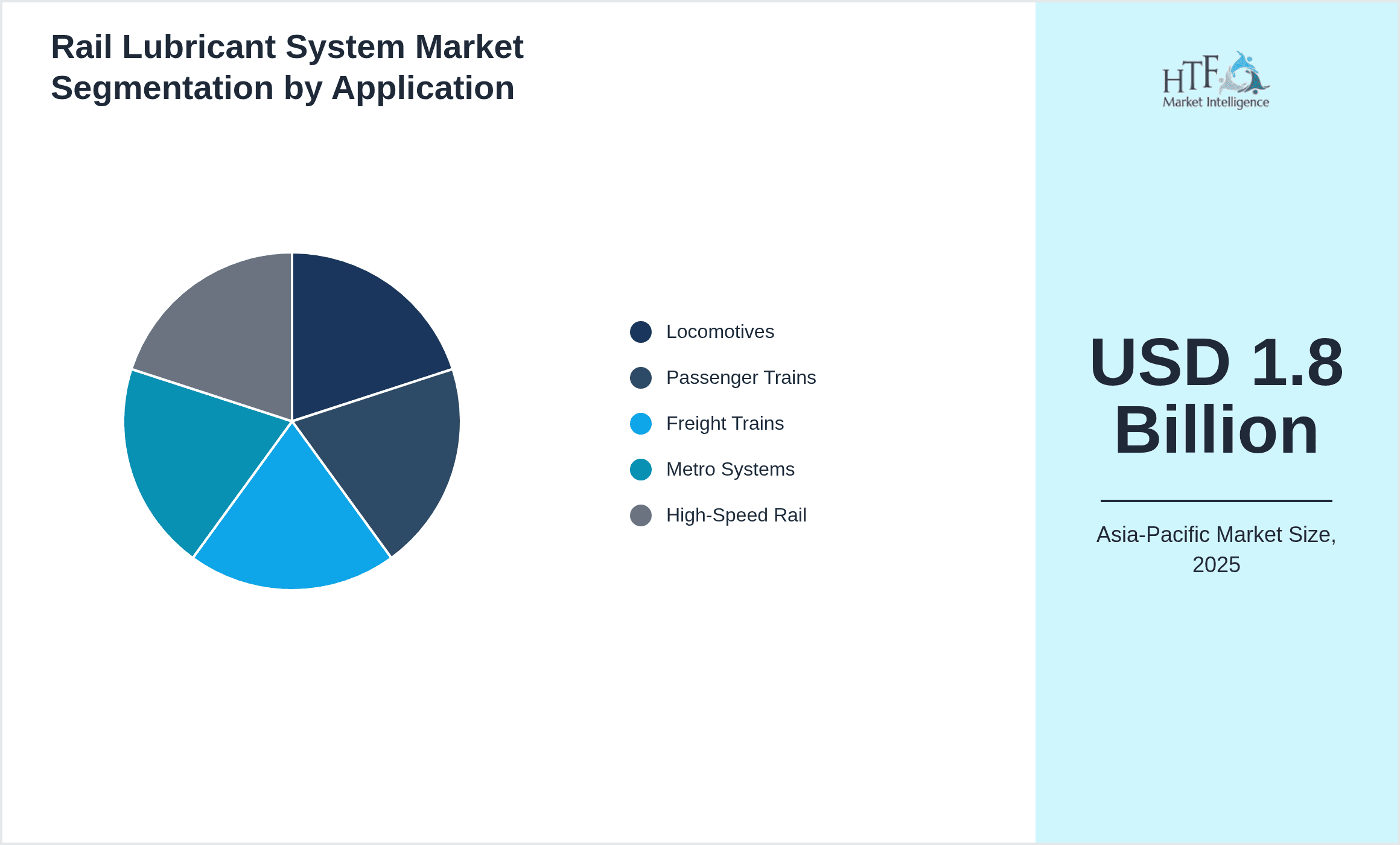
- •By Type
- ◦Solid Lubricants
- ◦Liquid Lubricants
- ◦Semi-Solid Lubricants
- ◦Greases
- ◦Dry Film Lubricants
- •By Application
- ◦Locomotives
- ◦Passenger Trains
- ◦Freight Trains
- ◦Metro Systems
- ◦High-Speed Rail
- •By Rail System Type
- ◦Urban Transit
- ◦Intercity Rail
- ◦Heavy Freight Rail
- •By Distribution Channel
- ◦Direct Sales
- ◦Distributors and Dealers
- ◦Online Platforms
Growth Dynamics
- •Government initiatives in Asia-Pacific countries, particularly China and India, are accelerating rail infrastructure investments, directly boosting demand for advanced rail lubricant systems. Regulatory focus on sustainability drives adoption of eco-friendly lubricants, encouraging innovation in lubricant chemistry and application technologies.
- •Strategic collaborations between lubricant manufacturers and rail operators facilitate tailored solutions and long-term supply agreements, enhancing market penetration and operational efficiencies across diverse rail systems in the region.
- •Technological advancements in lubricant formulations, including synthetic and dry film lubricants, extend maintenance intervals and improve rail component durability, reducing lifecycle costs and downtime for operators.
- •Rising urbanization and expanding metro rail networks in Southeast Asia and India are creating new application segments, increasing lubricant system demand for passenger safety and operational reliability.
- •Investment in high-speed rail projects across Asia-Pacific is stimulating demand for specialized lubricants capable of withstanding extreme operational conditions, promoting product diversification and innovation.

Market Trends
- •Adoption of environmentally sustainable lubricant formulations is becoming a key trend, supported by stringent regional environmental regulations and increasing corporate sustainability commitments.
- •Integration of IoT and sensor technologies in lubrication systems enables predictive maintenance, enhancing operational efficiency and reducing unplanned downtime in rail networks.
- •The shift toward dry film lubricants is gaining momentum due to their low environmental impact and superior performance in high-speed rail applications.
- •Increased focus on reducing maintenance costs drives demand for long-life lubricants that extend service intervals without compromising safety or performance.
- •Collaborations between lubricant producers and rail infrastructure developers accelerate adoption of customized lubrication solutions optimized for local climatic and operational conditions.

Market Opportunities
- •Expanding rail transit projects in emerging Asia-Pacific economies present untapped opportunities for customized lubricant solutions addressing region-specific operational challenges.
- •Development of bio-based and biodegradable lubricants aligns with growing environmental awareness, offering product innovation opportunities and regulatory advantages.
- •Collaborative R&D initiatives with rail operators can lead to next-generation lubricant systems integrating smart monitoring technologies, enhancing predictive maintenance capabilities.
- •Growing freight rail demand due to regional trade growth increases the need for heavy-duty lubricant systems, opening new market segments.
- •Geographical expansion into less penetrated Southeast Asian markets offers growth potential supported by infrastructure modernization and government incentives.
Market Challenges
- •High initial costs for advanced lubricant systems limit adoption among smaller rail operators and in cost-sensitive markets within Asia-Pacific.
- •Lack of standardized regulations and varying environmental compliance requirements across countries complicate lubricant formulation and distribution strategies.
- •Infrastructure limitations in rural and developing regions impede efficient lubricant supply and timely maintenance services, impacting market growth.
- •Competition from traditional lubricant products and reluctance to shift from legacy systems slows market penetration of innovative lubricant technologies.
- •Skilled workforce shortages and limited technical expertise in lubricant application and monitoring present operational challenges for rail operators.
Regulatory Framework
- •Between 2015 and 2025, several Asia-Pacific nations implemented stricter environmental regulations targeting lubricant biodegradability and emissions, compelling manufacturers to innovate eco-friendly formulations with reduced toxicity and enhanced recyclability.
- •Mandatory compliance with railway safety standards, such as those issued by China's Ministry of Railways and India's Ministry of Railways, requires lubricant systems to meet specific performance and durability criteria, affecting product development and certification processes.
- •Regional trade agreements within Asia-Pacific promote harmonization of lubricant quality standards, facilitating cross-border supply chains and technology transfers between countries like Japan, South Korea, and ASEAN members.
- •Government incentive programs supporting sustainable transportation infrastructure encourage adoption of advanced lubrication technologies through subsidies and tax benefits, notably in China and Australia.
- •Operational guidelines established by rail authorities mandate periodic lubricant performance assessments and monitoring, enhancing system reliability and safety but increasing compliance complexity for operators.
Market Intelligence
- •15th February 2025, Shell plc announced the launch of its new synthetic rail lubricant series designed specifically for Asia-Pacific high-speed rail systems. The product promises enhanced thermal stability and reduced wear, targeting extended maintenance intervals and operational reliability. Shell’s innovation addresses increasing demand for eco-friendly lubricants compliant with regional environmental standards. This strategic product introduction aligns with Shell’s regional expansion plans and commitment to sustainable rail infrastructure development. Source: Shell official press release.
- •10th April 2025, Indian Oil Corporation Limited unveiled a climate-resilient rail lubricant formulation tailored for India’s diverse rail network conditions, including extreme heat and monsoon environments. This lubricant enhances corrosion resistance and operational efficiency, supporting India’s ambitious rail modernization projects. The launch is part of Indian Oil’s broader initiative to expand its rail lubricant portfolio and strengthen partnerships with national rail operators. Source: Indian Oil Corporation press statement.
- •22nd March 2024, TotalEnergies SE expanded its Asia-Pacific operations by establishing a dedicated R&D center in Singapore focused on developing dry film lubricants for metro and urban rail systems. The facility aims to accelerate innovation cycles and customize solutions for the region’s rapidly growing urban transit markets. This move complements TotalEnergies’ strategy to lead in sustainable lubrication technologies and deepen client engagement across Asia-Pacific. Source: TotalEnergies corporate news.
- •5th January 2025, ExxonMobil Corporation announced a strategic partnership with a leading Southeast Asian rail operator to supply advanced liquid lubricant systems optimized for heavy freight trains. The collaboration includes joint testing initiatives and technology transfer agreements aimed at improving rail asset longevity and reducing lifecycle costs. ExxonMobil’s involvement underscores growing industry emphasis on tailored lubricant solutions supporting expanding freight corridors. Source: ExxonMobil official announcement.
Regional Outlook
The China currently holds a significant share of the market, primarily due to several key factors: increasing consumption rates, a burgeoning population, and robust economic momentum. These elements collectively drive demand, positioning this region as a leader in the market. On the other hand, India is rapidly emerging as the fastest-growing area within the industry. This remarkable growth can be attributed to swift infrastructure development, the expansion of various industrial sectors, and a marked increase in consumer demand. These dynamics make this region a crucial player in shaping future market growth.
In our report, we cover a comprehensive analysis of the following regions and countries:
- Japan
- China
- Southeast Asia
- India
- Australia
- South Korea
- Others
| Feature | Details |
|---|---|
| Base Year Market Size | USD 1.8 Billion |
| Forecast Year Market Size | USD 3.9 Billion |
| CAGR | 8.7% |
| Forecast Period | 2026 to 2033 |
| YoY Growth | 8.4% |
| Scope of Report | Market is segmented by Type (Solid Lubricants, Liquid Lubricants, Semi-Solid Lubricants, Greases, Dry Film Lubricants), Application (Locomotives, Passenger Trains, Freight Trains, Metro Systems, High-Speed Rail), Rail System Type (Urban Transit, Intercity Rail, Heavy Freight Rail), Distribution Channel (Direct Sales, Distributors and Dealers, Online Platforms) |
| Regions Covered | Japan, China, Southeast Asia, India, Australia, South Korea, Others |
| Key Companies | Shell plc (Netherlands), TotalEnergies SE (France), Indian Oil Corporation Limited (India), ExxonMobil Corporation (United States), JX Nippon Oil & Energy Corporation (Japan), Petronas Lubricants International (Malaysia), Chevron Corporation (United States), Lubrizol Corporation (United States), Sinopec Lubricant Company Limited (China), FUCHS Petrolub SE (Germany), PetroChina Company Limited (China), China National Petroleum Corporation (China), Caltex Australia Limited (Australia), Idemitsu Kosan Co., Ltd. (Japan), Petroliam Nasional Berhad (Petronas) (Malaysia) |
Asia-Pacific Rail Lubricant System Market Size, Growth & Revenue 2025-2034 - Table of Contents
Research enthusiast focused on transforming data uncovering into actionable insights through data-driven decision-making.
Frequently Asked Questions (FAQ):
The Compact Track Loaders market is projected to grow at a CAGR of 6.8% from 2025 to 2030, driven by increasing demand in construction and agricultural sectors.
North America currently leads the market with approximately 45% market share, followed by Europe at 28% and Asia-Pacific at 22%. The remaining regions account for 5% of the global market.
Key growth drivers include increasing construction activities, rising demand for versatile equipment in agriculture, technological advancements in track loader design, and growing preference for compact equipment in urban construction projects.