
Southeast Asia Made-to-Measure Clothing Market Size, Growth & Revenue 2024-2034
Southeast Asia Made-to-Measure Clothing Market is segmented by Type (Fabric-Based, Leather-Based, Synthetic Materials, Blended Fabrics, Others), Application (Business Wear, Casual Wear, Formal Wear, Sportswear, Others), End User Segment (Men, Women, Unisex), Distribution Channel (Online Direct-to-Consumer, Retail Stores, Boutiques, Wholesale), and Geography (Singapore, Malaysia, Thailand, Indonesia, Vietnam, Philippines, Others)
Pricing
Report Overview
Executive Summary
- •The Southeast Asia Made-to-Measure Clothing market is defined by its focus on delivering personalized apparel solutions tailored to the exact measurements and preferences of individual consumers across Indonesia, Thailand, Malaysia, Vietnam, and the Philippines. This market includes a wide array of garment types such as business wear, casual wear, formal wear, and sportswear, produced using traditional and modern tailoring techniques combined with digital measurement technologies. The industry scope extends to diverse material options including fabric-based, leather-based, synthetic, and blended fabrics, catering to evolving consumer demands for comfort, style, and uniqueness. Growth drivers include increasing urbanization, rising disposable incomes, and a surge in fashion consciousness among Southeast Asian consumers. Additionally, the proliferation of online platforms and digital tools has enhanced accessibility to custom clothing services, expanding the customer base beyond metropolitan areas. The market also faces challenges such as supply chain complexities, skilled labor shortages, and competition from ready-to-wear apparel segments, yet opportunities abound in technological integration and regional expansion. Overall, the market holds strategic importance as it blends cultural apparel traditions with contemporary fashion trends to meet the personalized clothing needs of a diverse and growing population.
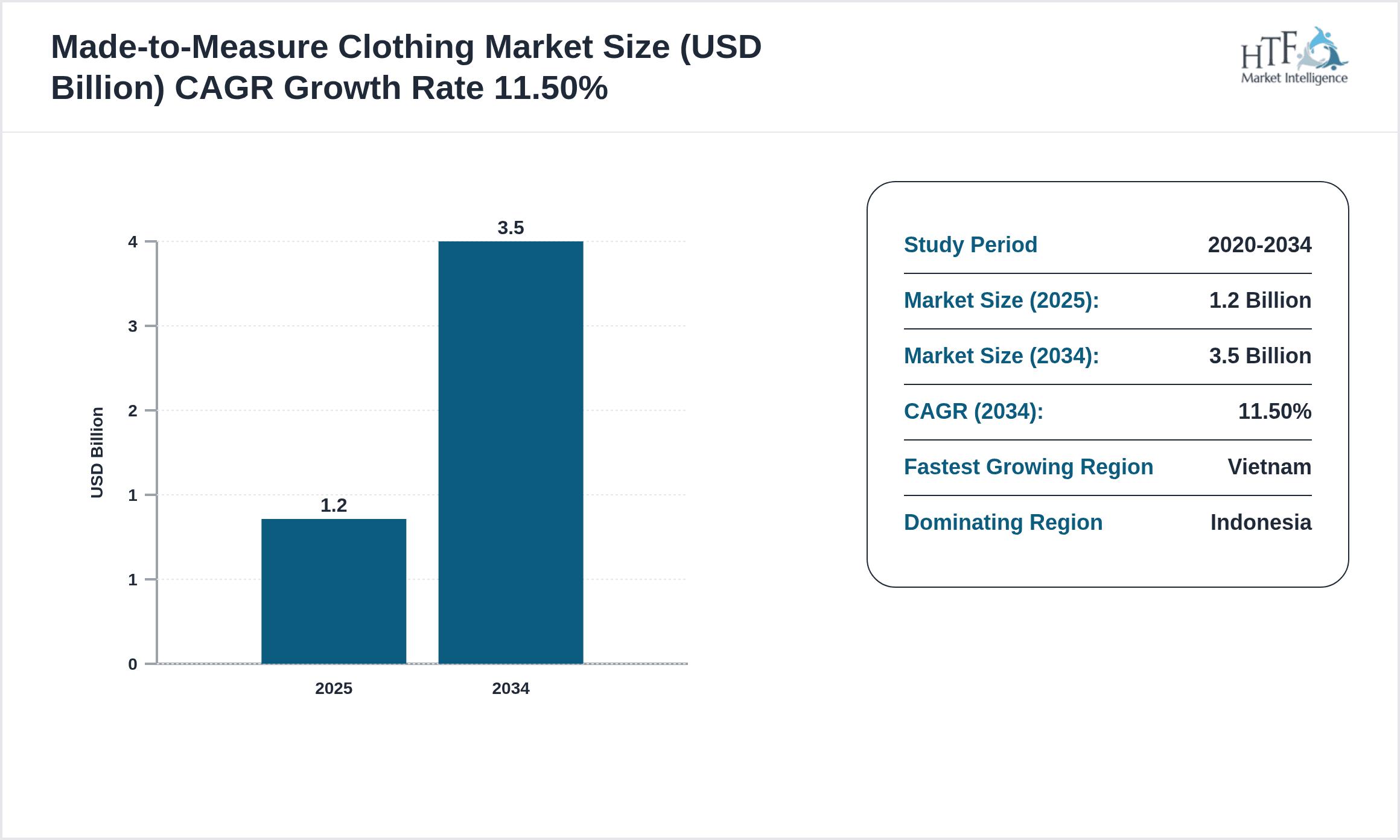
- •Key highlights of the Southeast Asia Made-to-Measure Clothing market include a current valuation of USD 1.2 billion in 2024, projected to reach USD 3.5 billion by 2034, reflecting a robust CAGR of 11.5%. Indonesia dominates the market with a 30% share driven by a large urban consumer base and strong fashion industry presence, while Vietnam is the fastest-growing country, exhibiting a CAGR of 14.7% due to increasing youth population and rising e-commerce penetration. Fabric-based clothing remains the leading product type, supported by consumer preference for traditional textiles, whereas blended fabrics are emerging as the fastest-growing type fueled by innovation in material technology. Business wear leads application segments by market share, followed closely by casual wear, underscoring a balanced demand for both formal and everyday customized attire. The market is witnessing a transition towards digital measurement tools and virtual fitting rooms, which are enhancing customer experience and operational efficiency.
- •The Southeast Asia Made-to-Measure Clothing market offers significant value propositions to fashion retailers, apparel manufacturers, and end consumers by enabling superior garment fit, personalized style, and enhanced customer satisfaction. For manufacturers, the market represents an opportunity to differentiate through innovation, craftsmanship, and customer engagement, driving brand loyalty and premium pricing. Retailers benefit from offering customized solutions that align with shifting consumer preferences towards individualism and sustainability, potentially reducing returns and inventory risks. The strategic importance of this market extends to the regional fashion ecosystem by fostering local craftsmanship, supporting small and medium enterprises, and integrating technology with traditional tailoring. As the market evolves, stakeholders are encouraged to capitalize on digital transformation, expand customer outreach via omnichannel strategies, and collaborate with textile innovators to sustain competitive advantage.
Competitive Landscape
The competitive environment in the Southeast Asia Made-to-Measure Clothing market is characterized by a mix of legacy tailoring ateliers, emerging digital-first custom apparel startups, and regional fashion houses adopting personalization strategies. Market dynamics are shaped by innovation in fabric technology, digital measurement and fitting solutions, and customer experience enhancement, which serve as key differentiators among competitors. Leading firms focus on integrating e-commerce platforms with bespoke tailoring services to reach a broader audience, especially younger consumers who demand convenience alongside customization. Strategic partnerships between fabric suppliers, technology providers, and apparel manufacturers are common to streamline the production cycle and reduce lead times. Rivalry is intensified by increasing market entrants leveraging AI-driven design and virtual fitting rooms, compelling established players to invest in technology and customer service excellence. Pricing strategies vary from premium bespoke offerings targeting high-income consumers to affordable made-to-measure collections aimed at the growing middle class. Distribution channels are diversifying, with omnichannel retailing becoming a norm to capture both urban and suburban markets. Overall, competitive positioning hinges on balancing traditional craftsmanship with scalable technology-enabled solutions while navigating regional market nuances and consumer behaviors.
Prominent Players in Made-to-Measure Clothing Market
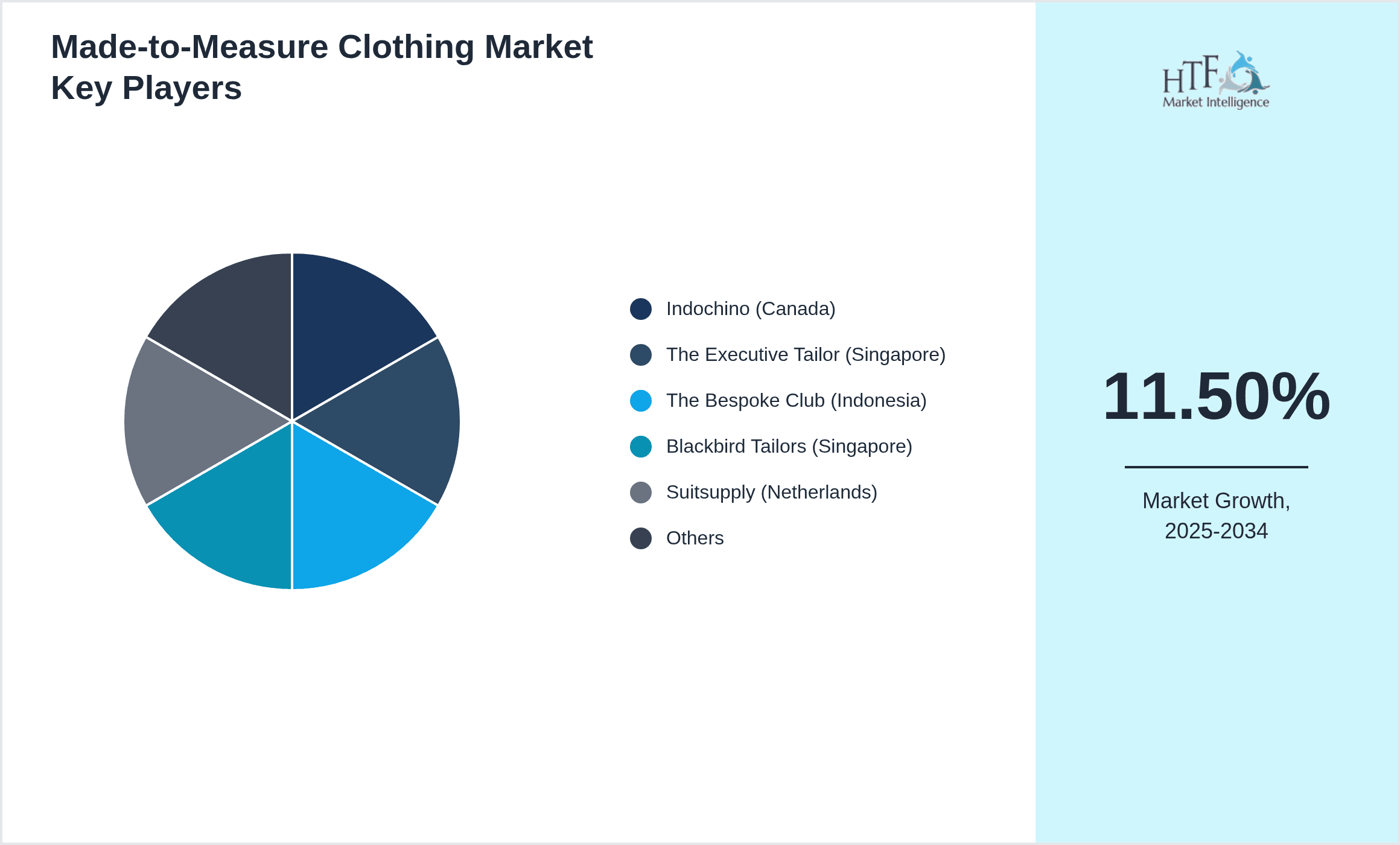
- •Indochino (Canada)
- •The Executive Tailor (Singapore)
- •The Bespoke Club (Indonesia)
- •Blackbird Tailors (Singapore)
- •Suitsupply (Netherlands)
- •Bespoke Studio (Malaysia)
- •Tailor Corner (Vietnam)
- •Proper Cloth (United States)
- •T.M. Lewin (United Kingdom)
- •Raffles Tailor (Singapore)
- •Mott & Bow (United States)
- •Larusmiani (Italy)
- •PT Tailor Indonesia (Indonesia)
- •The Fitting Room (Malaysia)
- •VTailor (Vietnam)
- •Eton Shirts (Sweden)
- •Coozee Tailor (Philippines)
- •Suitopia (Thailand)
- •Customology (Singapore)
- •Bespoke Atelier (Thailand)
- •The Draft House (Malaysia)
- •Oline Workrobe (Indonesia)
- •Sartoria Lab (Vietnam)
- •Luxire (India)
- •J. Hilburn (United States)
Market Breakdown
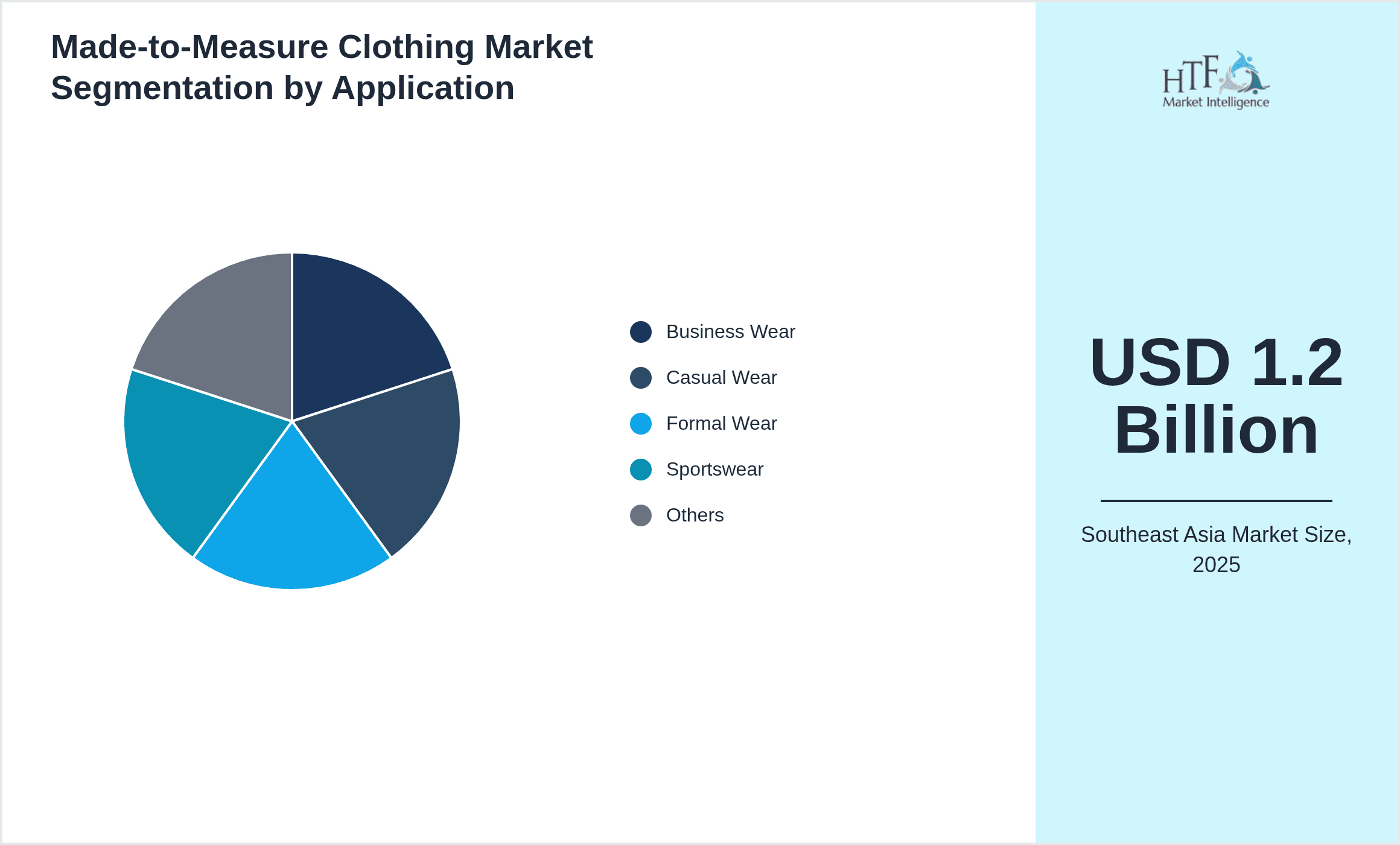
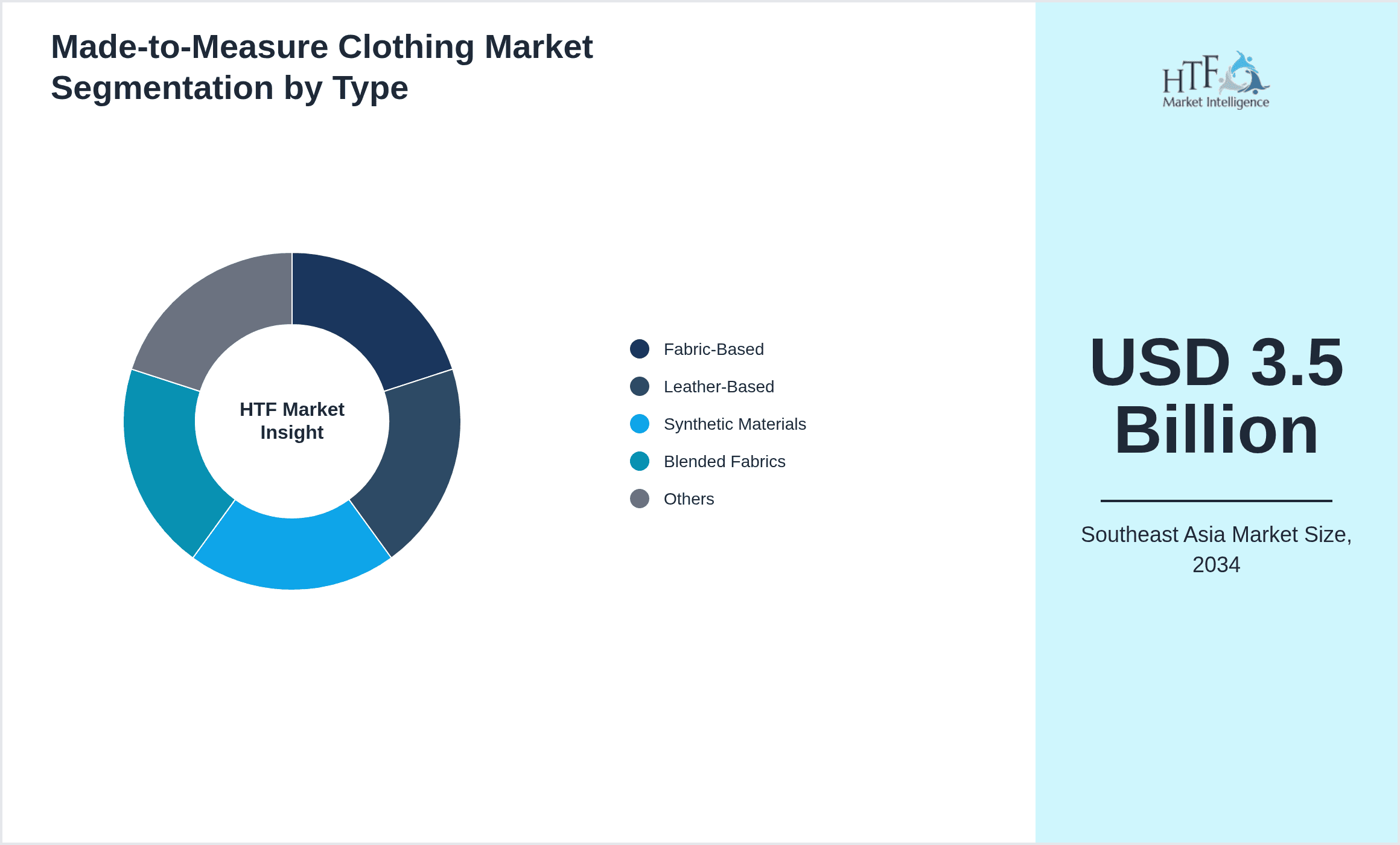
- •By Type
- ◦Fabric-Based
- ◦Leather-Based
- ◦Synthetic Materials
- ◦Blended Fabrics
- ◦Others
- •By Application
- ◦Business Wear
- ◦Casual Wear
- ◦Formal Wear
- ◦Sportswear
- ◦Others
- •By End User Segment
- ◦Men
- ◦Women
- ◦Unisex
- •By Distribution Channel
- ◦Online Direct-to-Consumer
- ◦Retail Stores
- ◦Boutiques
- ◦Wholesale
Growth Dynamics
- •The Southeast Asia Made-to-Measure Clothing market is fueled by rising disposable incomes and expanding middle-class populations across countries like Indonesia and Vietnam, stimulating demand for personalized apparel that combines style and comfort. Increased urbanization facilitates access to premium tailoring services, boosting market growth significantly. Digital transformation, including online measurement tools and virtual fitting rooms, has lowered entry barriers for consumers and enhanced convenience, directly contributing to sales expansion. The growing influence of western fashion trends blended with traditional aesthetics encourages market penetration among younger demographics. Moreover, sustainability concerns are driving consumers toward bespoke clothing, which often promotes longer garment life cycles and reduced waste, aligning with eco-conscious purchasing behaviors.
- •The trend toward integrating technology with traditional tailoring, such as 3D body scanning and AI-driven style recommendations, is reshaping the Southeast Asia Made-to-Measure Clothing market by improving accuracy and customer engagement. Social media platforms and influencer marketing have amplified consumer awareness and preference for custom clothing, creating new demand channels. Collaborative consumption models like made-to-order and limited edition collections are gaining traction, reducing inventory risks and appealing to environmentally conscious buyers. Cross-border e-commerce is also enabling Southeast Asian consumers to access international bespoke brands, intensifying competition and innovation within the regional market. Additionally, hybrid retail models combining physical showrooms with digital consultations are becoming increasingly popular, enhancing the overall customer experience.
- •Despite growth prospects, the market faces restraints such as a limited skilled tailoring workforce in rural areas, which hampers scalability and quality consistency. Supply chain disruptions, particularly in sourcing high-quality fabrics and materials, present operational challenges. High production costs relative to ready-to-wear alternatives can deter price-sensitive consumers, restricting market penetration in lower-income segments. The fragmented nature of the market with numerous small players leads to inconsistent service standards and consumer trust issues. Furthermore, the COVID-19 pandemic has introduced uncertainties in consumer spending patterns and disrupted physical retail channels, necessitating accelerated digital adoption.
- •Opportunities abound in leveraging advanced textile innovations such as performance-enhancing blended fabrics and sustainable materials to attract environmentally conscious consumers. Expansion into emerging urban centers across Southeast Asia offers untapped markets with growing fashion awareness. The rise of mobile commerce and digital measurement technologies enables brands to reach a wider audience efficiently and cost-effectively. Partnerships between local tailors and technology companies can foster skill development and service standardization, enhancing market credibility. Additionally, increasing corporate demand for customized uniforms and promotional apparel represents a lucrative segment for growth.
- •Key challenges include overcoming consumer hesitation around fit accuracy and return policies in online custom clothing purchases, which affects customer acquisition and retention. Regulatory complexities related to textile import tariffs and quality standards differ across Southeast Asian countries, complicating cross-border operations. The need for continuous investment in technology and skilled labor training to maintain competitive advantage imposes financial pressure on smaller players. Intense competition from fast fashion and mass-produced apparel segments limits market share expansion. Lastly, cultural diversity within Southeast Asia requires tailored marketing and product strategies to effectively address varied consumer preferences.
Market Trends
- •The increasing adoption of virtual fitting technologies and AI-powered style assistants is revolutionizing the Southeast Asia Made-to-Measure Clothing market by enhancing customer convenience and reducing fitting errors. Brands employing these innovations have reported higher conversion rates and improved customer satisfaction. This trend is especially pronounced in urban hubs like Singapore and Kuala Lumpur, where tech-savvy consumers demand seamless digital experiences.
- •Sustainability is gaining prominence, with consumers favoring made-to-measure garments that minimize waste and promote durability over fast fashion. This shift is encouraging brands to incorporate eco-friendly fabrics and transparent supply chains, differentiating themselves in a competitive market.
- •Collaborations between local designers and international fashion houses are emerging, blending traditional Southeast Asian textile heritage with contemporary tailoring techniques. This fusion appeals to global consumers and elevates the market’s profile on the international stage.
- •Omnichannel retailing models combining physical showrooms with online customization platforms are becoming standard practice, providing customers with personalized consultations and fitting services both offline and online.
- •The rise of social media influencers promoting bespoke clothing is shaping consumer perception and purchasing behavior, driving higher demand among millennials and Gen Z customers.
Market Opportunities
- •Expanding digital measurement and virtual fitting technology adoption offers significant growth potential by removing traditional barriers to custom garment purchases, particularly in less urbanized regions. This allows brands to scale efficiently while maintaining high customization standards.
- •Increasing demand for sustainable and ethically produced clothing creates an opportunity to differentiate made-to-measure offerings by integrating eco-friendly materials and transparent sourcing practices.
- •Corporate sector growth in Southeast Asia provides avenues to supply custom uniforms and branded apparel, fostering long-term contracts and stable revenue streams.
- •Collaborative ventures with local artisans and textile producers can enhance authenticity and appeal, enabling brands to tap into cultural heritage markets domestically and internationally.
- •The expansion of e-commerce platforms tailored for made-to-measure clothing can unlock new customer segments, especially among younger, tech-savvy consumers seeking convenience and customization.
Market Challenges
- •Ensuring consistent quality and fit across diverse consumer body types remains a technical challenge that affects customer trust and repeat purchase rates, necessitating robust measurement and production protocols.
- •High costs associated with skilled labor and premium materials increase end-product prices, limiting affordability for a significant portion of the Southeast Asian population.
- •Fragmented supply chains and logistics inefficiencies in some countries hinder timely delivery and increase operational complexities for made-to-measure clothing providers.
- •Regulatory variations and import duties across Southeast Asian nations complicate cross-border business expansion and supply procurement.
- •Competition from mass-produced fast fashion brands offering low-cost alternatives challenges the market positioning of made-to-measure clothing as a premium segment.
Regulatory Framework
- •Between 2019 and 2024, Southeast Asian governments implemented stricter textile import regulations aimed at protecting local industries, including higher tariffs on certain synthetic fabrics and mandatory labeling requirements to ensure transparency in garment composition. These regulations have influenced sourcing strategies and encouraged investment in local textile manufacturing capabilities.
- •Several countries in the region have introduced sustainability guidelines mandating eco-friendly production practices and waste reduction targets for apparel manufacturers, impacting made-to-measure clothing producers by necessitating compliance with environmental standards.
- •Safety and labor laws have been reinforced to improve working conditions in garment factories, requiring adherence to fair wage policies and occupational health standards, thereby increasing operational costs but enhancing brand reputation.
- •Digital commerce regulations enacted across Southeast Asia regulate data privacy, online payments, and consumer protection, directly affecting online made-to-measure clothing platforms and their operational compliance.
- •Government initiatives promoting small and medium enterprise (SME) development include grants and technical assistance programs aimed at modernizing traditional tailoring businesses and encouraging adoption of digital technologies.
Market Intelligence
- •15th January 2025, The Executive Tailor (Singapore) launched an AI-powered virtual fitting platform integrated with local tailoring services, enabling customers to create customized suits with precise measurements from home. This innovation reduces fitting errors and streamlines the ordering process, enhancing customer satisfaction and operational efficiency. The platform's launch is expected to accelerate digital adoption across Southeast Asia's bespoke clothing market, positioning the company as a regional technology leader. Source: Official company press release
- •5th April 2025, Bespoke Studio (Malaysia) introduced a sustainable fabric line made from recycled materials tailored specifically for made-to-measure garments. This eco-conscious product launch aligns with growing consumer demand for environmentally friendly apparel, enabling the company to expand its market share among younger, sustainability-minded buyers. The initiative also supports local recycling efforts, reinforcing the company's corporate social responsibility commitments. Source: Industry publication
- •20th July 2025, Tailor Corner (Vietnam) announced a strategic partnership with a leading textile technology firm to co-develop smart fabrics embedded with temperature-regulating properties for custom sportswear. This collaboration aims to enhance product innovation and differentiate Tailor Corner in the competitive Southeast Asian market. The partnership is anticipated to generate new revenue streams and attract tech-savvy consumers seeking functional apparel. Source: Company website
- •12th November 2025, Indochino (Canada) expanded its Southeast Asia footprint by opening flagship bespoke showrooms in Jakarta and Manila, supported by localized marketing campaigns and tailored product offerings. This expansion leverages growing urban demand for premium made-to-measure clothing and strengthens Indochino’s position as a key global player in the region. Source: Industry news outlet
Regional Outlook
The Indonesia currently holds a significant share of the market, primarily due to several key factors: increasing consumption rates, a burgeoning population, and robust economic momentum. These elements collectively drive demand, positioning this region as a leader in the market. On the other hand, Vietnam is rapidly emerging as the fastest-growing area within the industry. This remarkable growth can be attributed to swift infrastructure development, the expansion of various industrial sectors, and a marked increase in consumer demand. These dynamics make this region a crucial player in shaping future market growth.
In our report, we cover a comprehensive analysis of the following regions and countries:
- Singapore
- Malaysia
- Thailand
- Indonesia
- Vietnam
- Philippines
- Others
| Feature | Details |
|---|---|
| Base Year Market Size | USD 1.2 Billion |
| Forecast Year Market Size | USD 3.5 Billion |
| CAGR | 11.5% |
| Forecast Period | 2026 to 2033 |
| YoY Growth | 11% |
| Scope of Report | Market is segmented by Type (Fabric-Based, Leather-Based, Synthetic Materials, Blended Fabrics, Others), Application (Business Wear, Casual Wear, Formal Wear, Sportswear, Others), End User Segment (Men, Women, Unisex), Distribution Channel (Online Direct-to-Consumer, Retail Stores, Boutiques, Wholesale) |
| Regions Covered | Singapore, Malaysia, Thailand, Indonesia, Vietnam, Philippines, Others |
| Key Companies | Indochino (Canada), The Executive Tailor (Singapore), The Bespoke Club (Indonesia), Blackbird Tailors (Singapore), Suitsupply (Netherlands), Bespoke Studio (Malaysia), Tailor Corner (Vietnam), Proper Cloth (United States), T.M. Lewin (United Kingdom), Raffles Tailor (Singapore), Mott & Bow (United States), Larusmiani (Italy), PT Tailor Indonesia (Indonesia), The Fitting Room (Malaysia), VTailor (Vietnam), Eton Shirts (Sweden), Coozee Tailor (Philippines), Suitopia (Thailand), Customology (Singapore), Bespoke Atelier (Thailand), The Draft House (Malaysia), Oline Workrobe (Indonesia), Sartoria Lab (Vietnam), Luxire (India), J. Hilburn (United States) |
Southeast Asia Made-to-Measure Clothing Market Size, Growth & Revenue 2024-2034 - Table of Contents
Frequently Asked Questions (FAQ):
The Compact Track Loaders market is expected to see value worth 5.3 Billion in 2025.
North America currently leads the market with approximately 45% market share, followed by Europe at 28% and Asia-Pacific at 22%. The remaining regions account for 5% of the global market.
Key growth drivers include increasing construction activities, rising demand for versatile equipment in agriculture, technological advancements in track loader design, and growing preference for compact equipment in urban construction projects.