
China Mechanical Timers Market Scope & Changing Dynamics 2024-2034
China Mechanical Timers Market is segmented by Application (Household Appliances, Industrial Automation, Automotive, Consumer Electronics, HVAC), Type (Analog Mechanical Timers, Digital Mechanical Timers, Electromechanical Timers, Programmable Mechanical Timers, Multifunctional Mechanical Timers), and Geography (North China, Northeast China, East China, South Central China, Southwest China, Northwest China)
Pricing
Report Overview
Executive Summary
- •The China Mechanical Timers Market is defined by the production and utilization of devices designed to measure, regulate, and automate time-dependent operations through mechanical mechanisms. This market includes types such as analog, digital, electromechanical, programmable, and multifunctional mechanical timers that serve critical roles across diverse applications including household appliances, industrial automation, automotive systems, consumer electronics, and HVAC sectors. The scope extends to regional deployment within China’s major zones, reflecting varied industrial activity and consumer demand patterns. The industry supports operational efficiency, energy conservation, and process automation by providing reliable timing solutions in both consumer and industrial environments. With ongoing technological advancements and increasing automation in manufacturing and household applications, the market is witnessing evolving demand dynamics. Regulatory frameworks and quality standards further influence product innovation and market penetration strategies. Overall, the China Mechanical Timers Market is strategically positioned to capitalize on the country’s rapid industrialization and the growing need for precise time control solutions across sectors.
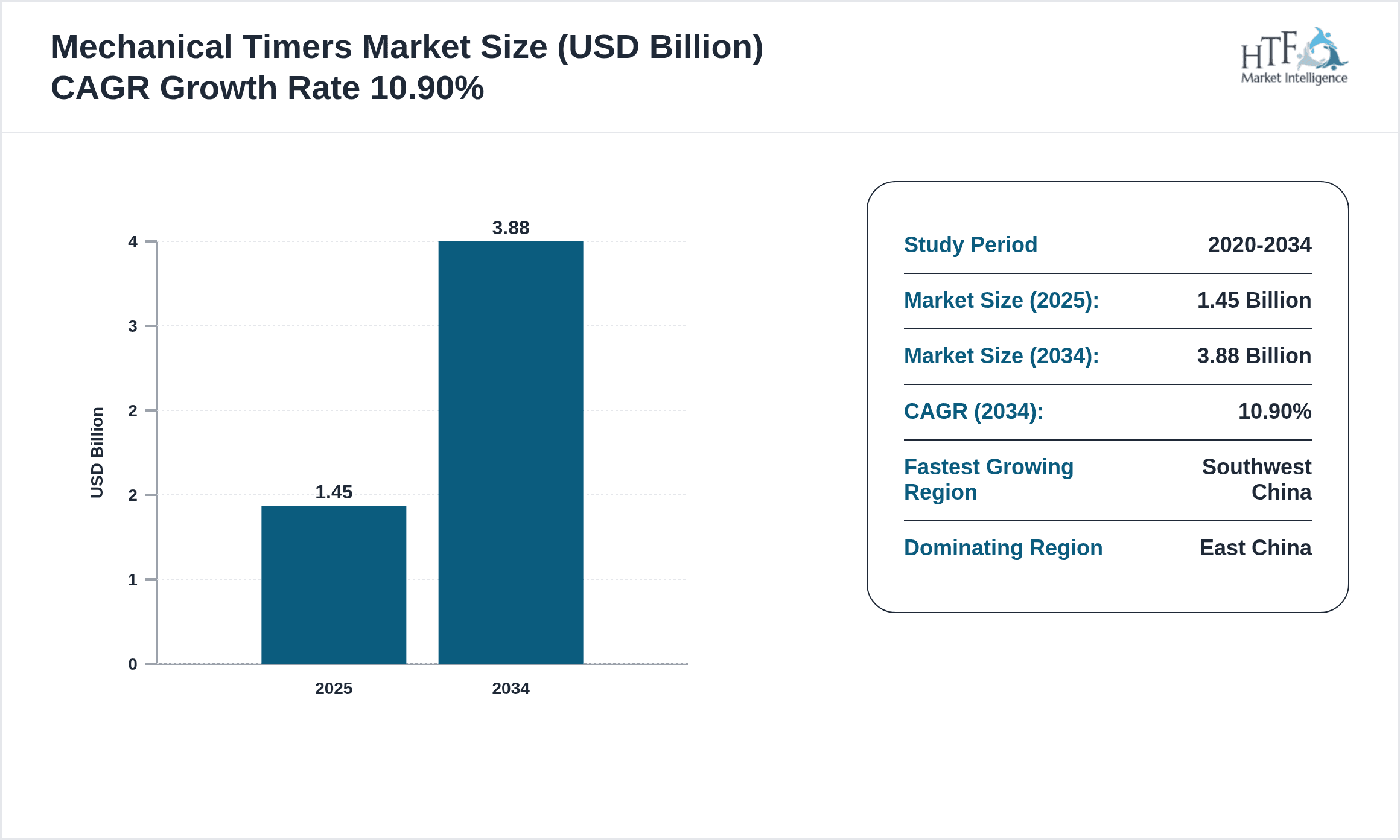
- •Key market highlights reveal a base market size of USD 1.45 Billion in 2024, with projections reaching USD 3.88 Billion by 2034, reflecting a robust CAGR of 10.9%. The dominant regional market share resides in East China at 34%, attributed to its high concentration of manufacturing and industrial activities. Southwest China is identified as the fastest-growing region, with a CAGR of 14.3%, driven by expanding industrial infrastructure and increasing adoption of programmable mechanical timers. Analog mechanical timers continue to lead the product type segment, whereas programmable mechanical timers exhibit the fastest growth due to rising demand for customization and process automation. Applications in household appliances dominate, followed by industrial automation, underscoring the balance between consumer and industrial demand. These market dynamics indicate strong growth potential fueled by technological innovation, regional economic development, and policy support.
- •The value proposition of the China Mechanical Timers Market lies in its ability to deliver reliable, cost-effective, and precise timing solutions that are integral to the functioning of a wide array of industrial and consumer applications. Stakeholders including manufacturers, end-users, and technology developers benefit from enhanced operational efficiencies, reduced energy consumption, and improved automation capabilities enabled by advanced mechanical timer technologies. The market’s strategic importance is amplified by China’s position as a global manufacturing hub and the increasing penetration of smart appliances and automated industrial processes. Continued innovation, regulatory compliance, and expansion into emerging regional zones within China present lucrative opportunities for market participants aiming to capture growth and sustain competitive advantage.
Competitive Landscape
The competitive environment within the China Mechanical Timers Market is characterized by a mix of established domestic manufacturers and emerging regional players striving to enhance their market presence through innovation, quality differentiation, and strategic partnerships. Market leaders focus on product development to integrate multifunctionality and programmability into traditional mechanical timer designs, addressing a broad spectrum of industrial and consumer requirements. Pricing strategies remain competitive, especially with the influx of cost-effective local producers, which intensifies rivalry and drives continuous improvement in production efficiency. Distribution channels span direct industrial sales, retail networks, and e-commerce platforms, facilitating widespread accessibility. Intellectual property and compliance with rigorous Chinese standards serve as key competitive advantages, while regional market specialization influences product customization and service capabilities. The market also witnesses moderate merger and acquisition activity aimed at consolidating technological expertise and expanding geographic reach. Looking forward, competition is expected to heighten with digital transformation trends and increasing demand for smart integration within mechanical timer solutions, necessitating agile innovation and customer-centric strategies.
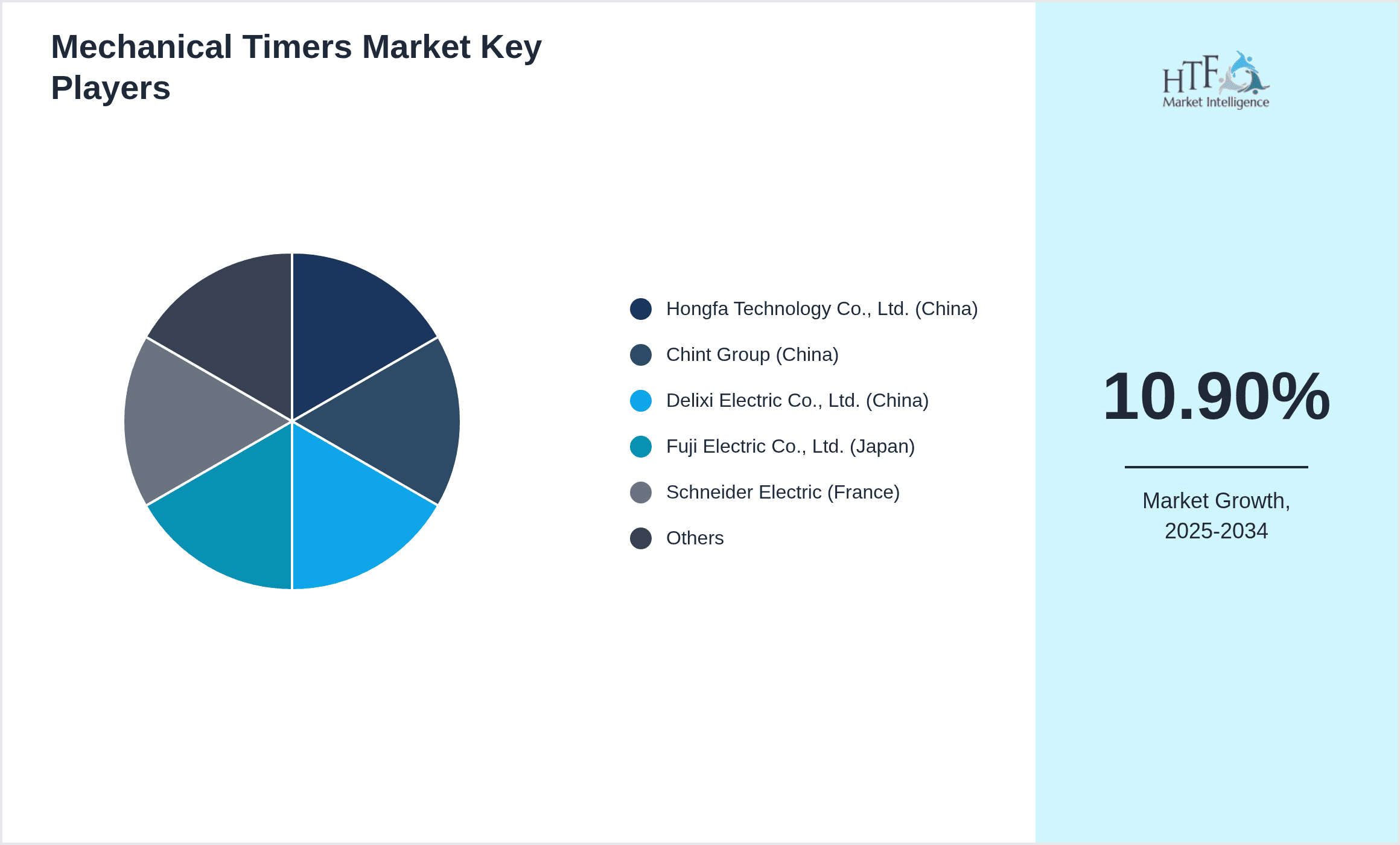
Prominent Players in China Mechanical Timers Market
- •Hongfa Technology Co., Ltd. (China)
- •Chint Group (China)
- •Delixi Electric Co., Ltd. (China)
- •Fuji Electric Co., Ltd. (Japan)
- •Schneider Electric (France)
- •Omron Corporation (Japan)
- •Siemens AG (Germany)
- •Panasonic Corporation (Japan)
- •Hager Group (Germany)
- •ABB Ltd. (Switzerland)
- •Honeywell International Inc. (United States)
- •Tianjin Time Relay Co., Ltd. (China)
- •Shanghai Timer Co., Ltd. (China)
- •Zhejiang Timer Electronics Co., Ltd. (China)
- •Mitsubishi Electric Corporation (Japan)
- •Eaton Corporation (United States)
- •Legrand SA (France)
- •Rockwell Automation (United States)
- •Weidmüller Interface GmbH & Co. KG (Germany)
- •TE Connectivity Ltd. (Switzerland)
- •Crouzet Automatismes SAS (France)
- •Schurter Holding AG (Switzerland)
- •Phoenix Contact GmbH & Co. KG (Germany)
- •Azbil Corporation (Japan)
- •Wenzhou Timer Co., Ltd. (China)
Market Breakdown
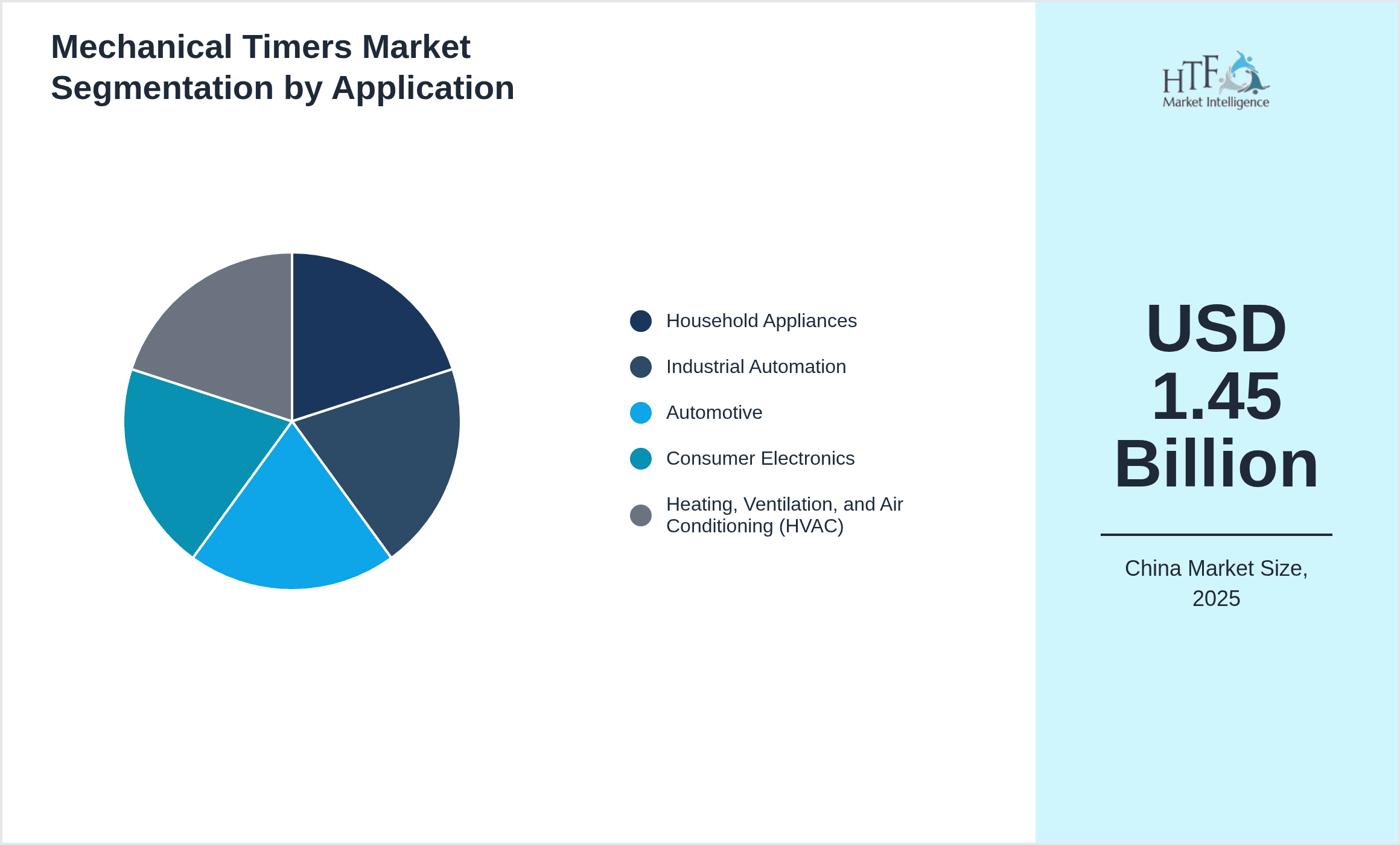
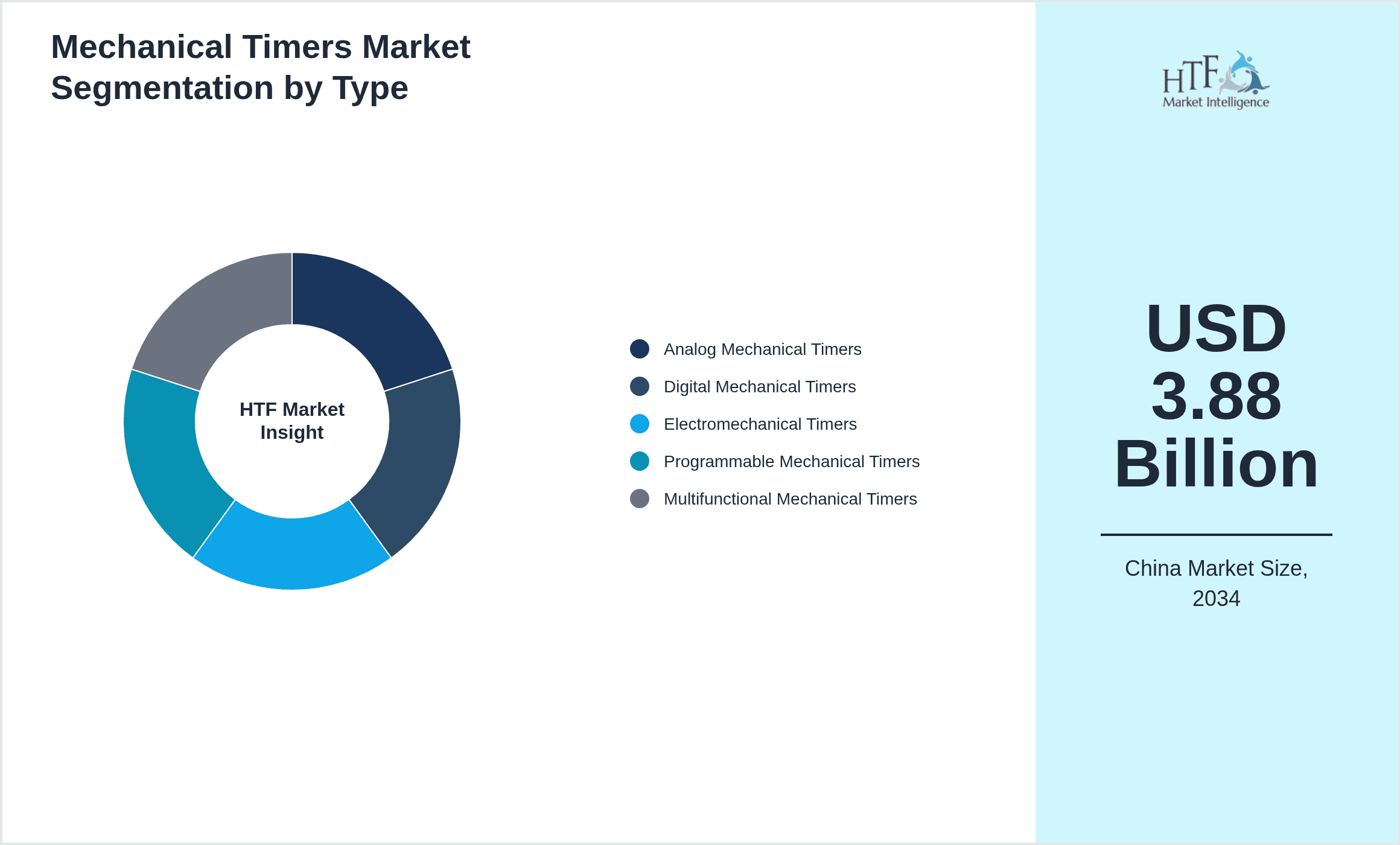
- •By Type
- ◦Analog Mechanical Timers
- ◦Digital Mechanical Timers
- ◦Electromechanical Timers
- ◦Programmable Mechanical Timers
- ◦Multifunctional Mechanical Timers
- •By Application
- ◦Household Appliances
- ◦Industrial Automation
- ◦Automotive
- ◦Consumer Electronics
- ◦Heating, Ventilation, and Air Conditioning (HVAC)
- •By End-Use Industry
- ◦Manufacturing Plants
- ◦Residential Buildings
- ◦Automotive Manufacturing
- ◦Electronics Assembly
- ◦Energy & Utilities
- •By Distribution Channel
- ◦Direct Sales
- ◦Retail Networks
- ◦E-Commerce Platforms
Growth Dynamics
- •The China mechanical timers market is propelled by rapid industrial automation across manufacturing sectors, where precise time control enhances operational efficiency and safety. Increasing adoption in household appliances driven by urbanization and rising disposable income further fuels demand. Government initiatives promoting smart manufacturing and energy-efficient devices incentivize innovation in programmable and multifunctional timers. Additionally, growth in the automotive industry, particularly electric vehicle production, necessitates reliable timing components, broadening application scope. The expansion of regional industrial hubs in East and Southwest China supports localized production and consumption, augmenting overall market growth.
- •Technological advancements are transforming traditional mechanical timers by integrating digital controls and programmability. This allows customization to complex timing needs in industrial processes and consumer devices. The rising trend of smart homes and connected appliances in China drives the demand for advanced mechanical timers that can interface with IoT systems. Manufacturers invest in R&D to develop multifunctional timers with increased durability and energy efficiency, responding to evolving market needs. These innovations also enable compliance with stringent Chinese regulatory standards, fostering widespread adoption across sectors.
- •Consumer awareness of energy conservation and operational reliability is influencing product preferences toward programmable and multifunctional mechanical timers. This shift encourages manufacturers to diversify their product portfolios to include features such as multi-step timing and remote control capabilities. The growing middle-class population in urban centers demands high-quality appliances with advanced timing functions, supporting market expansion. Furthermore, collaborations between timer manufacturers and appliance OEMs accelerate product integration and market penetration, especially in East China’s developed industrial zones.
- •Government policies aimed at upgrading industrial infrastructure and promoting smart manufacturing have a positive impact on the mechanical timers market. Incentives for energy-efficient equipment encourage adoption of advanced timing solutions, especially in sectors like HVAC and automotive manufacturing. Regional development plans for Southwest China are catalyzing local demand, presenting new growth avenues. Investments in automation technologies by SMEs further contribute to market expansion. These dynamics collectively enhance the scalability and technological sophistication of mechanical timer offerings in China.
- •The expanding e-commerce landscape in China facilitates wider distribution and accessibility of mechanical timers, especially in tier 2 and tier 3 cities. This trend complements traditional retail and direct sales channels, enabling manufacturers to reach diverse customer bases efficiently. The rise of after-sales services and customer support platforms improves user experience and product reliability perception, boosting repeat purchases. Additionally, strategic partnerships between timer manufacturers and system integrators enhance solution customization for industrial clients, driving sustained market growth in the forecast period.
Market Trends
- •A notable trend in the China mechanical timers market is the gradual transition from purely analog mechanical timers to hybrid electromechanical and digital mechanical timers, combining traditional reliability with enhanced programmability and precision. This trend is supported by consumer demand for sophisticated timing solutions compatible with smart home ecosystems and industrial automation standards.
- •Integration of IoT and wireless communication capabilities within mechanical timers is gaining traction, enabling remote monitoring and control. This innovation drives new business models including subscription-based maintenance and data-driven operational analytics, expanding market potential beyond conventional product sales.
- •Sustainability and energy efficiency are becoming focal points, prompting manufacturers to design timers that reduce power consumption and extend device longevity. Regulatory pressures and consumer consciousness regarding environmental impact are accelerating these developments.
- •Collaborative initiatives between mechanical timer producers and appliance OEMs are increasing, aimed at co-developing customized solutions that enhance product differentiation and user experience. Such partnerships facilitate quicker time-to-market for innovative timer-enabled products.
- •Regional market diversification within China is evident, with Southwest and Central China emerging as key growth locales due to industrial expansion and infrastructure investments. This geographic trend encourages manufacturers to tailor distribution and marketing strategies to local demands and regulatory conditions.
- •The market is also witnessing increased adoption of multifunctional mechanical timers capable of performing complex timing sequences and integrating multiple control functions, reflecting growing application complexity in industrial and consumer segments.
- •Digitalization of manufacturing processes under China’s Industry 4.0 initiatives is pushing demand for smart mechanical timers with enhanced connectivity and data logging features, enabling predictive maintenance and operational optimization.
Market Opportunities
- •The expanding industrial base in China’s emerging regions such as Southwest China presents untapped potential for mechanical timer manufacturers to introduce tailored products that address local automation needs. Targeting SMEs with affordable, programmable timers can drive market penetration.
- •Increasing adoption of smart home technologies offers significant opportunity for integrated mechanical timers that support wireless control and energy management, appealing to tech-savvy urban consumers and appliance manufacturers.
- •Innovation in multifunctional mechanical timers that combine timing with additional control features such as temperature or humidity sensing can unlock new application areas and create competitive differentiation within the market.
- •Strategic collaborations with automotive manufacturers focusing on electric and hybrid vehicles can expand mechanical timer applications in vehicle control systems, capitalizing on China’s growing EV market.
- •Government incentives supporting energy-efficient and automated systems provide funding and policy support for R&D investments, enabling companies to develop advanced timers aligned with national priorities.
- •Leveraging e-commerce platforms to enhance direct-to-consumer sales and after-sales support services can improve brand visibility and customer loyalty in rapidly urbanizing and digitally connected markets.
- •Expanding service offerings to include timer system integration, maintenance, and customization can generate recurring revenue streams and deepen customer engagement across industrial segments.
Market Challenges
- •The China mechanical timers market faces challenges stemming from intense price competition, particularly from low-cost domestic manufacturers, which pressures profit margins for premium and technologically advanced timer producers. This environment necessitates continuous innovation and cost optimization.
- •Technical limitations persist in fully integrating mechanical timers with digital and IoT platforms, requiring significant R&D investment to develop reliable hybrid solutions that meet evolving industrial and consumer expectations.
- •Regulatory complexity and frequent updates in safety and environmental standards pose compliance challenges, particularly for smaller manufacturers with limited resources, potentially delaying product launches and increasing operational costs.
- •Supply chain disruptions, including shortages of precision mechanical components and electronic parts, can impact production schedules and raise manufacturing costs, affecting market responsiveness and delivery commitments.
- •Market fragmentation with numerous small players complicates standardization efforts and creates barriers for establishing unified quality benchmarks, which can hinder overall market credibility and customer confidence.
- •Limited consumer awareness about advanced mechanical timer functionalities restricts demand growth in certain segments, requiring intensified marketing and educational initiatives by manufacturers and distributors.
- •Competition from alternative timing technologies such as fully electronic and software-based timers challenges the traditional mechanical timer market share, compelling companies to adapt or risk obsolescence.
Regulatory Framework
- •Between 2019 and 2024, the Chinese government implemented the 'Energy Efficiency Labeling Management Measures' requiring mechanical timers used in household appliances to meet minimum energy performance standards, significantly impacting product design and market acceptance.
- •The updated 'GB/T 14048.7' standard for low-voltage switchgear and controlgear, effective from 2021, mandates enhanced safety and performance criteria for electromechanical and programmable mechanical timers used in industrial applications, driving innovation and compliance costs.
- •Environmental regulations introduced in 2022, including restrictions on hazardous substances in electrical and electronic equipment (China RoHS 2.0), require manufacturers to adapt materials and components in mechanical timers to avoid penalties and enable market access.
- •Regional mandates in industrial hubs such as East China enforce stricter factory-level safety inspections and timer device certifications, influencing production process adjustments and quality assurance protocols since 2023.
- •Government incentive programs launched in 2023 to promote smart manufacturing and energy-saving technologies provide subsidies and tax benefits for companies developing advanced mechanical timers with programmable and multifunctional capabilities.
Market Intelligence
- •15th January 2025, Hongfa Technology Co., Ltd. launched a new line of programmable mechanical timers designed specifically for industrial automation applications within China’s manufacturing sector. The product features enhanced precision timing controls, IoT connectivity options, and compliance with the latest Chinese energy efficiency regulations, aiming to improve factory automation and reduce operational energy consumption. This launch reflects Hongfa’s strategic focus on capturing the growing demand in East and Southwest China’s industrial zones by offering customizable timer solutions that integrate seamlessly with existing automation systems. The company anticipates increased adoption driven by government incentives and industry digitization trends. Source: Hongfa Technology Official Release
- •10th March 2025, Chint Group announced the expansion of its mechanical timer production capacity with a new manufacturing facility in South China. The facility is equipped with advanced automation technologies and aims to serve the rising demand from the automotive and consumer electronics industries. This strategic move positions Chint as a key supplier for programmable and multifunctional mechanical timers tailored to regional needs, strengthening its competitive advantage in the domestic market. The expansion also aligns with China’s regional development policies encouraging industrial growth in southern zones. Source: Chint Group Corporate News
- •Recent market developments and strategic initiatives are continuously tracked through industry publications, company announcements, and regulatory filings. For the most current information, stakeholders are advised to monitor official corporate communications and recognized market intelligence platforms.
- •Recent market developments and strategic initiatives are continuously tracked through industry publications, company announcements, and regulatory filings. For the most current information, stakeholders are advised to monitor official corporate communications and recognized market intelligence platforms.
Regional Outlook
The East China currently holds a significant share of the market, primarily due to several key factors: increasing consumption rates, a burgeoning population, and robust economic momentum. These elements collectively drive demand, positioning this region as a leader in the market. On the other hand, Southwest China is rapidly emerging as the fastest-growing area within the industry. This remarkable growth can be attributed to swift infrastructure development, the expansion of various industrial sectors, and a marked increase in consumer demand. These dynamics make this region a crucial player in shaping future market growth.
In our report, we cover a comprehensive analysis of the following regions and countries:
- North China
- Northeast China
- East China
- South Central China
- Southwest China
- Northwest China
| Feature | Details |
|---|---|
| Base Year Market Size | USD 1.45 Billion |
| Forecast Year Market Size | USD 3.88 Billion |
| CAGR | 10.9% |
| Forecast Period | 2026 to 2033 |
| YoY Growth | 10.4% |
| Regions Covered | North China, Northeast China, East China, South Central China, Southwest China, Northwest China |
| Key Companies | Hongfa Technology Co., Ltd. (China), Chint Group (China), Delixi Electric Co., Ltd. (China), Fuji Electric Co., Ltd. (Japan), Schneider Electric (France), Omron Corporation (Japan), Siemens AG (Germany), Panasonic Corporation (Japan), Hager Group (Germany), ABB Ltd. (Switzerland), Honeywell International Inc. (United States), Tianjin Time Relay Co., Ltd. (China), Shanghai Timer Co., Ltd. (China), Zhejiang Timer Electronics Co., Ltd. (China), Mitsubishi Electric Corporation (Japan), Eaton Corporation (United States), Legrand SA (France), Rockwell Automation (United States), Weidmüller Interface GmbH & Co. KG (Germany), TE Connectivity Ltd. (Switzerland), Crouzet Automatismes SAS (France), Schurter Holding AG (Switzerland), Phoenix Contact GmbH & Co. KG (Germany), Azbil Corporation (Japan), Wenzhou Timer Co., Ltd. (China) |
China Mechanical Timers Market Scope & Changing Dynamics 2024-2034 - Table of Contents
Research enthusiast focused on transforming data uncovering into actionable insights through data-driven decision-making.
Frequently Asked Questions (FAQ):
The Compact Track Loaders market is expected to see value worth 5.3 Billion in 2025.
North America currently leads the market with approximately 45% market share, followed by Europe at 28% and Asia-Pacific at 22%. The remaining regions account for 5% of the global market.
Key growth drivers include increasing construction activities, rising demand for versatile equipment in agriculture, technological advancements in track loader design, and growing preference for compact equipment in urban construction projects.