
China Non-steroidal Anti-inflammatory Drugs Market Size, Growth & Revenue 2024-2034
China Non-steroidal Anti-inflammatory Drugs (NSAID) Market is segmented by NSAID Type (Oral NSAIDs (Tablets, Capsules), Topical NSAIDs (Gels, Creams), Injectable NSAIDs (Injections, Infusions), Selective COX-2 Inhibitors, Non-selective NSAIDs), Therapeutic Application (Pain Management, Rheumatoid Arthritis, Osteoarthritis, Fever Reduction, Sports Injuries), End-Use Facility (Hospitals, Clinics, Pharmacies, Online Pharmacies), Distribution Channel (Retail Pharmacies, Hospital Pharmacies, E-commerce Platforms), and Geography (North China, Northeast China, East China, South Central China, Southwest China, Northwest China)
Pricing
Report Overview
Executive Summary
- •The China Non-steroidal Anti-inflammatory Drugs (NSAID) market is a vital pharmaceutical segment dedicated to the development, manufacture, and distribution of drugs that combat inflammation, pain, and fever. This market includes various formulations such as oral tablets, topical gels, injectable solutions, selective COX-2 inhibitors, and non-selective NSAIDs. These products cater to a broad range of clinical applications including pain management, treatment of rheumatoid arthritis, osteoarthritis, fever control, and sports-related injuries. The market scope is defined geographically across China's regional zones including East, South, North, Central, Northeast, Northwest, and Southwest China, reflecting varied healthcare infrastructure and disease prevalence. Key drivers include rising chronic disease incidence, expanding healthcare access, and technological advancements in drug delivery. The market also operates within a complex regulatory environment governed by national health authorities ensuring drug safety and efficacy. Leading domestic and international pharmaceutical companies contribute to innovation and competitive market dynamics, positioning this market for robust growth through 2034.
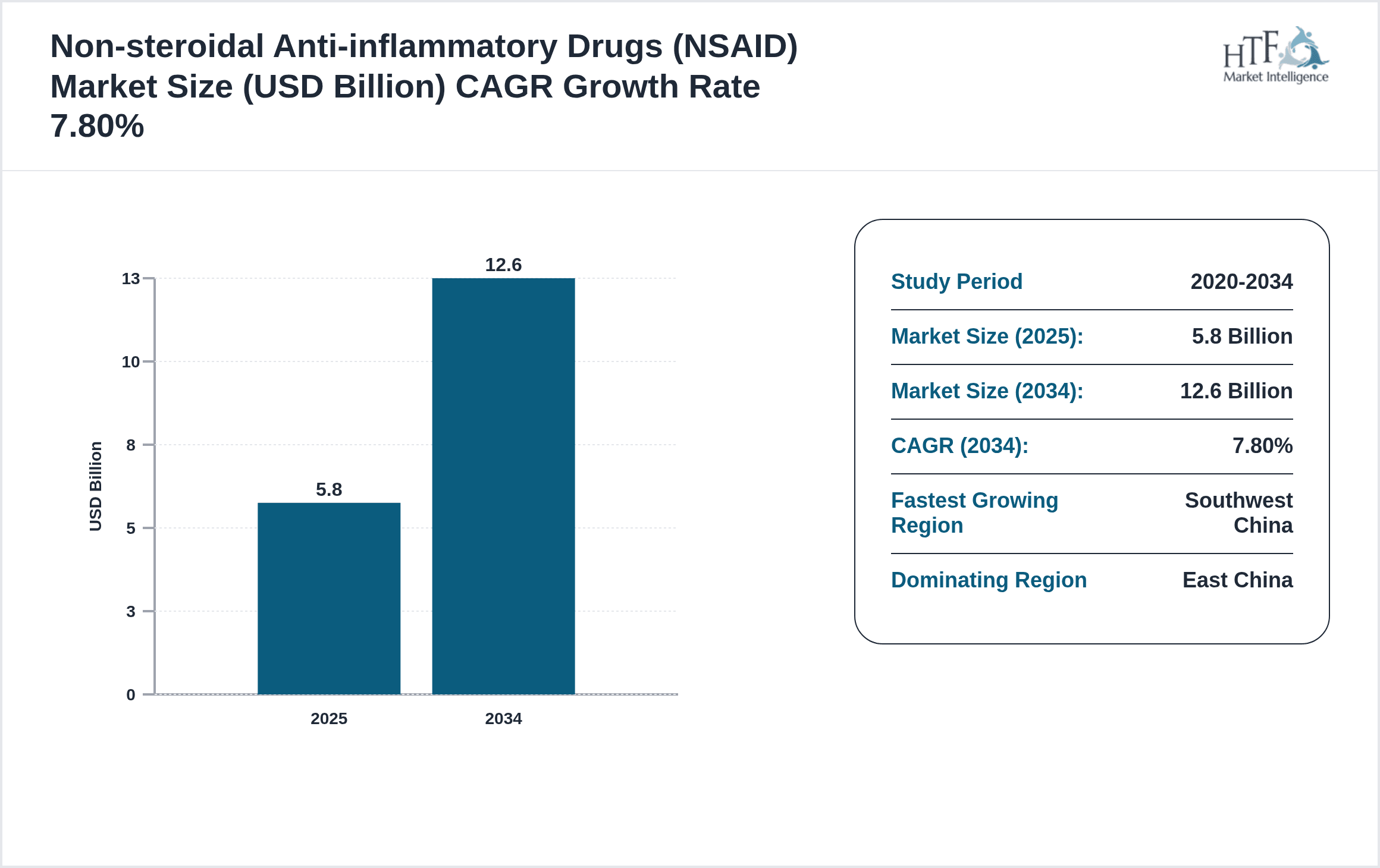
- •Key market highlights include a projected CAGR of 7.8% from 2024 to 2034, with the market expected to grow from USD 5.8 Billion in 2024 to USD 12.6 Billion by 2034. Oral NSAIDs dominate product type share at 40%, closely followed by non-selective NSAIDs at 25%. In terms of application, pain management leads with a 42% market share, while rheumatoid arthritis accounts for 22%. East China is the largest regional market, contributing 30% share, with Southwest China as the fastest-growing sub-region at 9.6% CAGR. Increasing government initiatives promoting access to affordable medicines and rising consumer health awareness underpin market momentum.
- •This market holds strategic importance for pharmaceutical manufacturers, healthcare providers, and policymakers as it addresses widespread inflammatory and pain-related conditions impacting millions in China. The expanding aging population and lifestyle-related diseases increase demand, while innovations such as selective COX-2 inhibitors improve therapeutic outcomes. Stakeholders benefit from growth opportunities across various regional zones, driven by urbanization and healthcare infrastructure development. Additionally, regulatory reforms aimed at streamlining drug approvals and encouraging generics foster competitive market dynamics, enhancing patient access to quality NSAID therapies.
Competitive Landscape
The competitive environment of the China NSAID market is characterized by intense rivalry among domestic pharmaceutical companies and multinational corporations. Market participants focus heavily on product innovation, including development of selective COX-2 inhibitors and novel drug delivery systems to differentiate offerings. Strategic partnerships, licensing agreements, and R&D investments are common approaches to expand product pipelines and market reach. Pricing strategies often reflect the balance between affordability and premium branded products, influenced by regulatory pricing controls and reimbursement policies. Companies leverage strong distribution networks, including hospital procurement channels and growing e-commerce platforms, to maximize accessibility. The market also faces entry barriers such as stringent regulatory approvals and intellectual property considerations, which shape competitive positioning. Overall, the landscape is dynamic, with continuous shifts driven by technological advancements, government policies, and evolving patient needs.
Prominent Players in Non-steroidal Anti-inflammatory Drugs Market
- •Shanghai Pharmaceuticals Holding Co., Ltd. (China)
- •China National Pharmaceutical Group Corporation (Sinopharm) (China)
- •Zhejiang Huahai Pharmaceutical Co., Ltd. (China)
- •Beijing SL Pharmaceutical Co., Ltd. (China)
- •Hengrui Medicine Co., Ltd. (China)
- •Pfizer Inc. (United States)
- •Novartis AG (Switzerland)
- •Bayer AG (Germany)
- •Johnson & Johnson (United States)
- •GlaxoSmithKline plc (United Kingdom)
- •AstraZeneca plc (United Kingdom)
- •Sanofi S.A. (France)
- •Takeda Pharmaceutical Company Limited (Japan)
- •Eli Lilly and Company (United States)
- •Mylan N.V. (United States)
- •Teva Pharmaceutical Industries Ltd. (Israel)
- •Sun Pharmaceutical Industries Ltd. (India)
- •Grünenthal GmbH (Germany)
- •Ipsen S.A. (France)
- •Fosun Pharma Group (China)
- •Luoxin Pharmaceutical Group Co., Ltd. (China)
- •Jiangsu Hengrui Medicine Co., Ltd. (China)
- •Shanghai Fosun Pharmaceutical Group Co., Ltd. (China)
- •WuXi AppTec Co., Ltd. (China)
- •Hainan Poly Pharm Co., Ltd. (China)
Market Breakdown
- •By NSAID Type
- ◦Oral NSAIDs (Tablets, Capsules)
- ◦Topical NSAIDs (Gels, Creams)
- ◦Injectable NSAIDs (Injections, Infusions)
- ◦Selective COX-2 Inhibitors
- ◦Non-selective NSAIDs
- •By Therapeutic Application
- ◦Pain Management
- ◦Rheumatoid Arthritis
- ◦Osteoarthritis
- ◦Fever Reduction
- ◦Sports Injuries
- •By End-Use Facility
- ◦Hospitals
- ◦Clinics
- ◦Pharmacies
- ◦Online Pharmacies
- •By Distribution Channel
- ◦Retail Pharmacies
- ◦Hospital Pharmacies
- ◦E-commerce Platforms
Growth Dynamics
- •Rising prevalence of chronic inflammatory diseases such as arthritis and musculoskeletal disorders in China fuels NSAID demand. Increasing aging population and sedentary lifestyles exacerbate these conditions, driving sustained market growth through 2034.
- •Government healthcare reforms and initiatives improving drug accessibility and affordability stimulate market expansion. National policies promoting generic drug usage and streamlined approval processes encourage wider NSAID adoption across urban and rural areas.
- •Technological advancements in selective COX-2 inhibitors and novel topical formulations enhance therapeutic efficacy while minimizing side effects, attracting patient and provider preference towards innovative NSAID options.
- •Expanding healthcare infrastructure, including increased hospital beds and pharmacy networks in regional zones like East and Southwest China, supports broader NSAID distribution and usage.
- •Growing consumer health awareness and self-medication trends, accelerated by digital health platforms and e-commerce, contribute to rising NSAID sales outside traditional clinical settings.
Market Trends
- •Shift towards personalized medicine and precision dosing in NSAID therapies is emerging, supported by advancements in pharmacogenomics and digital health monitoring tools to optimize patient outcomes.
- •Increased adoption of e-commerce platforms for pharmaceutical purchases is reshaping NSAID distribution channels, enabling consumers in remote regions to access medications conveniently.
- •Rising popularity of combination therapies involving NSAIDs and disease-modifying antirheumatic drugs (DMARDs) for rheumatoid arthritis treatment reflects evolving clinical practice patterns.
- •Sustainability concerns drive pharmaceutical companies to innovate eco-friendly manufacturing processes and biodegradable packaging for NSAID products in China.
- •Collaborations between domestic firms and multinational companies intensify, focusing on R&D and commercialization of novel NSAID molecules tailored to Chinese patient profiles.

Market Opportunities
- •Untapped rural healthcare markets present significant growth potential for NSAID manufacturers through targeted awareness programs and affordable product offerings addressing unmet needs.
- •Development of next-generation selective COX-2 inhibitors with improved safety profiles offers lucrative prospects for product differentiation and market share expansion.
- •Integration of digital health technologies such as mobile apps and telemedicine enables innovative patient engagement and adherence support for NSAID therapies.
- •Strategic partnerships and licensing agreements with international pharmaceutical firms can accelerate access to advanced NSAID formulations and expand geographic reach within China.
- •Increasing demand for topical NSAIDs in sports injury management and localized pain relief provides new avenues for specialized product development and marketing.
Market Challenges
- •Stringent regulatory requirements and prolonged drug approval timelines pose significant barriers to market entry and product launches, particularly affecting novel NSAID compounds.
- •Price sensitivity and reimbursement constraints in the Chinese healthcare system limit profit margins and complicate pricing strategies for branded NSAID products.
- •Concerns regarding gastrointestinal and cardiovascular side effects associated with NSAID use hinder patient compliance and physician prescribing preferences.
- •High competition from generic manufacturers intensifies market saturation, challenging innovation-driven companies to maintain differentiation and market share.
- •Supply chain disruptions and raw material cost fluctuations impact production continuity and increase operational risks for NSAID manufacturers.
Regulatory Framework
- •Between 2019 and 2024, China implemented stricter pharmacovigilance requirements mandating enhanced post-market safety monitoring for NSAIDs, aimed at minimizing adverse drug reactions and improving patient safety.
- •The National Medical Products Administration (NMPA) introduced accelerated approval pathways for generic NSAIDs demonstrating bioequivalence to innovator drugs, expediting market entry and fostering competition.
- •Regulations enforcing Good Manufacturing Practice (GMP) standards were updated to include environmental sustainability criteria, prompting manufacturers to adopt greener production processes.
- •Provincial health authorities in regions such as East China and South China have implemented reimbursement reforms to increase patient access to essential NSAIDs through public insurance schemes.
- •Government initiatives promoting traditional Chinese medicine integration require NSAID manufacturers to demonstrate safety and efficacy when combined with herbal formulations, influencing product development strategies.
Market Intelligence
- •15th February 2025, Shanghai Pharmaceuticals Holding Co., Ltd. launched an innovative selective COX-2 inhibitor tablet targeting osteoarthritis patients with reduced gastrointestinal side effects. This product features enhanced bioavailability and sustained release formulation, aiming to capture significant market share within urban hospitals. The launch aligns with increasing demand for safer NSAID alternatives and addresses unmet clinical needs in China's aging population. The company plans nationwide rollout supported by extensive physician education programs and patient awareness campaigns. Source: Shanghai Pharmaceuticals Official Press Release
- •10th April 2025, Zhejiang Huahai Pharmaceutical Co., Ltd. announced strategic partnership with a European biotech firm to co-develop topical NSAID formulations leveraging advanced nanotechnology for improved skin penetration and efficacy. This collaboration combines Huahai’s local market expertise with innovative delivery platforms to enhance therapeutic outcomes in sports injury treatments. The alliance includes joint clinical trials and shared commercialization rights across China, positioning both companies for accelerated growth in the lucrative topical pain relief segment. Source: Zhejiang Huahai Corporate Announcement
- •5th January 2025, Pfizer Inc. expanded its China footprint by inaugurating a new R&D center focused on developing next-generation NSAID therapies tailored to Chinese genetic profiles. This facility emphasizes precision medicine approaches and biomarker research to optimize drug safety and efficacy. Pfizer aims to leverage this center to strengthen its competitive position while addressing specific local patient needs through innovative pharmaceutical solutions. The investment reflects confidence in China’s growing pharmaceutical market and supportive regulatory environment. Source: Pfizer Corporate News
- •20th March 2025, Fosun Pharma Group successfully completed acquisition of a regional generic NSAID manufacturer, enhancing its portfolio and expanding manufacturing capacity. This strategic move consolidates Fosun’s presence in key Eastern and Southern China markets, enabling cost synergies and improved supply chain integration. The acquisition supports Fosun’s growth strategy focused on broadening product offerings and increasing access to affordable NSAIDs across diverse end-use facilities. Source: Fosun Pharma Investor Relations
Regional Outlook
The East China currently holds a significant share of the market, primarily due to several key factors: increasing consumption rates, a burgeoning population, and robust economic momentum. These elements collectively drive demand, positioning this region as a leader in the market. On the other hand, Southwest China is rapidly emerging as the fastest-growing area within the industry. This remarkable growth can be attributed to swift infrastructure development, the expansion of various industrial sectors, and a marked increase in consumer demand. These dynamics make this region a crucial player in shaping future market growth.
In our report, we cover a comprehensive analysis of the following regions and countries:
- North China
- Northeast China
- East China
- South Central China
- Southwest China
- Northwest China
| Feature | Details |
|---|---|
| Base Year Market Size | USD 5.8 Billion |
| Forecast Year Market Size | USD 12.6 Billion |
| CAGR | 7.8% |
| Forecast Period | 2026 to 2033 |
| YoY Growth | 7.5% |
| Scope of Report | Market is segmented by NSAID Type (Oral NSAIDs (Tablets, Capsules), Topical NSAIDs (Gels, Creams), Injectable NSAIDs (Injections, Infusions), Selective COX-2 Inhibitors, Non-selective NSAIDs), Therapeutic Application (Pain Management, Rheumatoid Arthritis, Osteoarthritis, Fever Reduction, Sports Injuries), End-Use Facility (Hospitals, Clinics, Pharmacies, Online Pharmacies), Distribution Channel (Retail Pharmacies, Hospital Pharmacies, E-commerce Platforms) |
| Regions Covered | North China, Northeast China, East China, South Central China, Southwest China, Northwest China |
| Key Companies | Shanghai Pharmaceuticals Holding Co., Ltd. (China), China National Pharmaceutical Group Corporation (Sinopharm) (China), Zhejiang Huahai Pharmaceutical Co., Ltd. (China), Beijing SL Pharmaceutical Co., Ltd. (China), Hengrui Medicine Co., Ltd. (China), Pfizer Inc. (United States), Novartis AG (Switzerland), Bayer AG (Germany), Johnson & Johnson (United States), GlaxoSmithKline plc (United Kingdom), AstraZeneca plc (United Kingdom), Sanofi S.A. (France), Takeda Pharmaceutical Company Limited (Japan), Eli Lilly and Company (United States), Mylan N.V. (United States), Teva Pharmaceutical Industries Ltd. (Israel), Sun Pharmaceutical Industries Ltd. (India), Grünenthal GmbH (Germany), Ipsen S.A. (France), Fosun Pharma Group (China), Luoxin Pharmaceutical Group Co., Ltd. (China), Jiangsu Hengrui Medicine Co., Ltd. (China), Shanghai Fosun Pharmaceutical Group Co., Ltd. (China), WuXi AppTec Co., Ltd. (China), Hainan Poly Pharm Co., Ltd. (China) |
China Non-steroidal Anti-inflammatory Drugs Market Size, Growth & Revenue 2024-2034 - Table of Contents
Frequently Asked Questions (FAQ):
The Compact Track Loaders market is projected to grow at a CAGR of 6.8% from 2025 to 2030, driven by increasing demand in construction and agricultural sectors.
North America currently leads the market with approximately 45% market share, followed by Europe at 28% and Asia-Pacific at 22%. The remaining regions account for 5% of the global market.
Key growth drivers include increasing construction activities, rising demand for versatile equipment in agriculture, technological advancements in track loader design, and growing preference for compact equipment in urban construction projects.