
EMEA Wind Turbine Non Destructive Testing Market Roadmap to 2034
EMEA Wind Turbine Non Destructive Testing Market is segmented by Type (Ultrasonic Testing, Radiographic Testing, Magnetic Particle Testing, Eddy Current Testing, Visual Inspection), Application (Blade Inspection, Tower Inspection, Rotor Inspection, Foundation Inspection, Electrical Systems Testing), Service Type (On-site Inspection, Remote Inspection, Automated Inspection, Manual Inspection), Inspection Technology (Drone-based Inspection, Robotic Inspection, Handheld Devices), and Geography (Germany, France, Italy, United Kingdom, Nordics, Rest of Europe, South Africa, Egypt, Turkey, United Arab Emirates, Israel, Saudi Arabia, Rest of EMEA)
Pricing
Report Overview
Executive Summary
- •The EMEA Wind Turbine Non Destructive Testing (NDT) market is a critical segment of the renewable energy infrastructure, focused on ensuring the operational reliability and safety of wind turbines through advanced inspection technologies. It encompasses diverse NDT methods such as Ultrasonic Testing, Radiographic Testing, Magnetic Particle Testing, Eddy Current Testing, and Visual Inspection, tailored to evaluate essential turbine components including blades, towers, rotors, foundations, and electrical systems. This market plays a pivotal role in enabling predictive maintenance, reducing unplanned downtime, and extending turbine lifespan, thereby supporting the region’s commitment to expanding clean energy sources. The demand is driven by rapid wind turbine installations across Europe, the Middle East, and Africa, underpinned by government incentives, regulatory mandates, and rising awareness about sustainability. Key applications span blade inspection to electrical system testing, addressing various failure modes and enhancing operational efficiency. Market participants include turbine manufacturers, service providers, and inspection technology companies, all striving to innovate and comply with evolving safety standards. This comprehensive report covers the market dynamics from 2020 historical benchmarks through a 2025 base year and projects growth trends up to 2034, delivering insights on segmentation, competitive landscape, regulatory frameworks, and investment scenarios within the EMEA region.
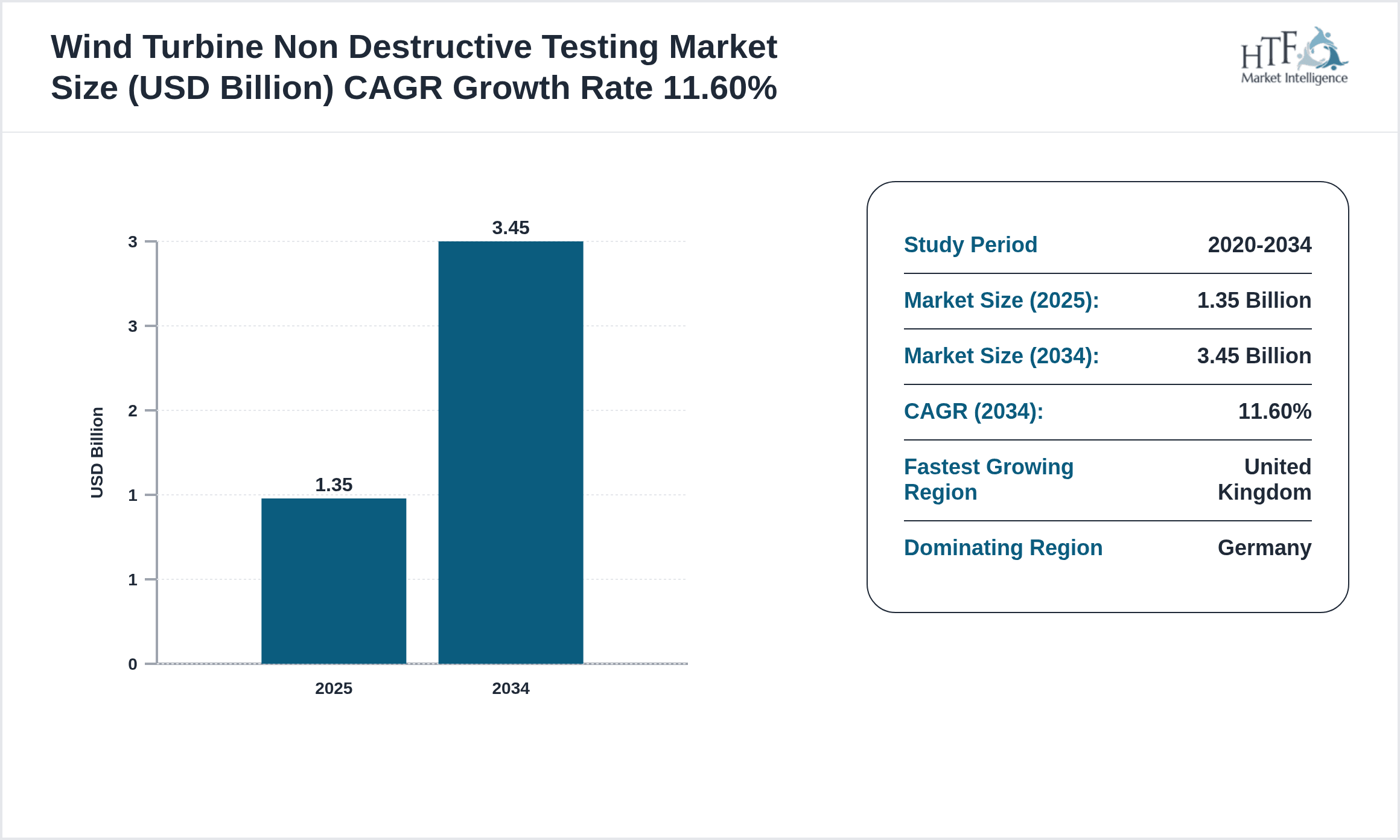
- •Key highlights of the EMEA Wind Turbine NDT market reveal a base market size of USD 1.35 Billion in 2025, anticipated to escalate to USD 3.45 Billion by 2034, reflecting a robust CAGR of 11.6%. Germany dominates the market with a 28% share, benefiting from extensive wind energy capacity and advanced infrastructure. The United Kingdom leads as the fastest growing country with a CAGR of 14.2%, propelled by offshore wind projects and technological adoption. Ultrasonic Testing remains the leading product type due to its precision and versatility, while Eddy Current Testing is emerging rapidly driven by advancements in defect detection in conductive materials. Market growth is influenced by technological innovations, regulatory compliance, and increasing turbine deployments across EMEA, alongside challenges such as high capital costs and skilled labor shortages.
- •The EMEA Wind Turbine NDT market offers significant strategic value to renewable energy stakeholders by enabling efficient asset management and regulatory adherence. The comprehensive testing solutions provided reduce maintenance costs and improve turbine uptime, crucial for maximizing energy output and return on investment. This market aligns with global decarbonization goals and regional clean energy targets, facilitating sustainable growth. Industry players benefit from opportunities in emerging application areas and technological enhancements, while addressing challenges through innovation and partnerships. Overall, the market’s evolution is central to supporting the expanding wind energy sector within the EMEA region, attracting investments from private and public entities aiming to enhance the reliability and longevity of wind power infrastructure.
Competitive Landscape
The competitive environment of the EMEA Wind Turbine Non Destructive Testing market is characterized by intense rivalry among established inspection technology providers, service companies, and turbine manufacturers with integrated testing capabilities. Market players adopt diverse strategies including innovation in NDT technologies, strategic partnerships with turbine operators, and expansion of service portfolios to capture growing demand. Product differentiation is achieved through advancements in sensor accuracy, automation, and integration with digital monitoring platforms. Pricing strategies balance cost competitiveness with high-quality service delivery, supported by robust distribution networks and local presence across key European and Middle Eastern countries. Mergers and acquisitions serve as a tool for consolidating market share and enhancing technological capabilities, although regulatory compliance and certification remain significant entry barriers. Competitive advantages arise from strong R&D investment, comprehensive service offerings, and ability to adapt to evolving regional standards. Future trends indicate increasing adoption of drone-based inspections, AI-driven analytics, and real-time monitoring, intensifying competition and innovation dynamics within the EMEA market.
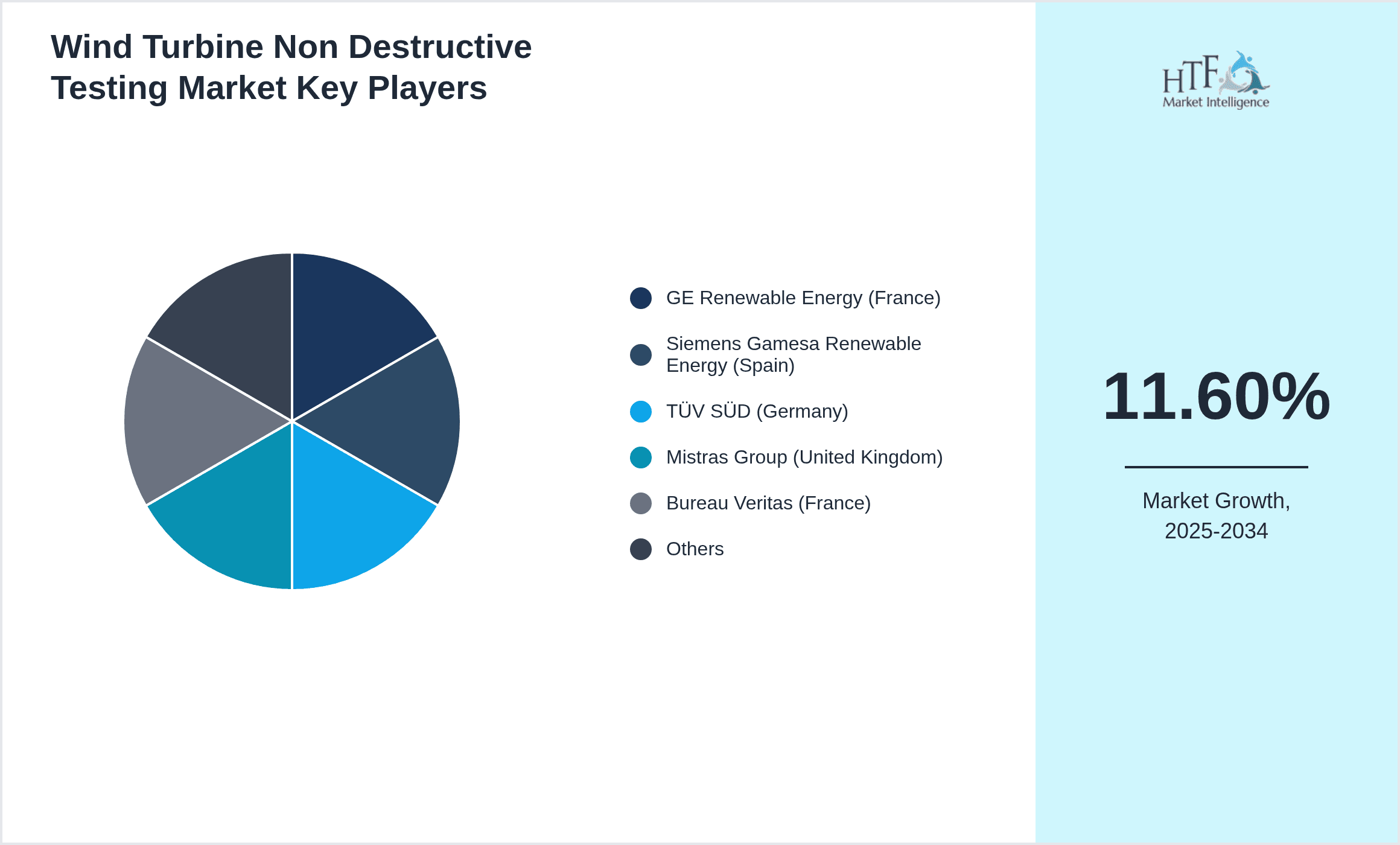
Leading Companies in Wind Turbine Non Destructive Testing Market
- •GE Renewable Energy (France)
- •Siemens Gamesa Renewable Energy (Spain)
- •TÜV SÜD (Germany)
- •Mistras Group (United Kingdom)
- •Bureau Veritas (France)
- •DNV (Norway)
- •SGS SA (Switzerland)
- •Intertek Group plc (United Kingdom)
- •Applus+ (Spain)
- •RINA S.p.A. (Italy)
- •Element Materials Technology (United Kingdom)
- •Fugro N.V. (Netherlands)
- •Baker Hughes (United Kingdom)
- •Alstom (France)
- •TÜV Rheinland (Germany)
- •SGS Inspection Services (Switzerland)
- •Wood Group (United Kingdom)
- •Lloyd’s Register (United Kingdom)
- •DNV GL (Norway)
- •WSP Global Inc. (Sweden)
- •TWI Ltd (United Kingdom)
- •Applus RTD (Spain)
- •Arup Group (United Kingdom)
- •COWI A/S (Denmark)
- •UL LLC (United Kingdom)
Market Breakdown
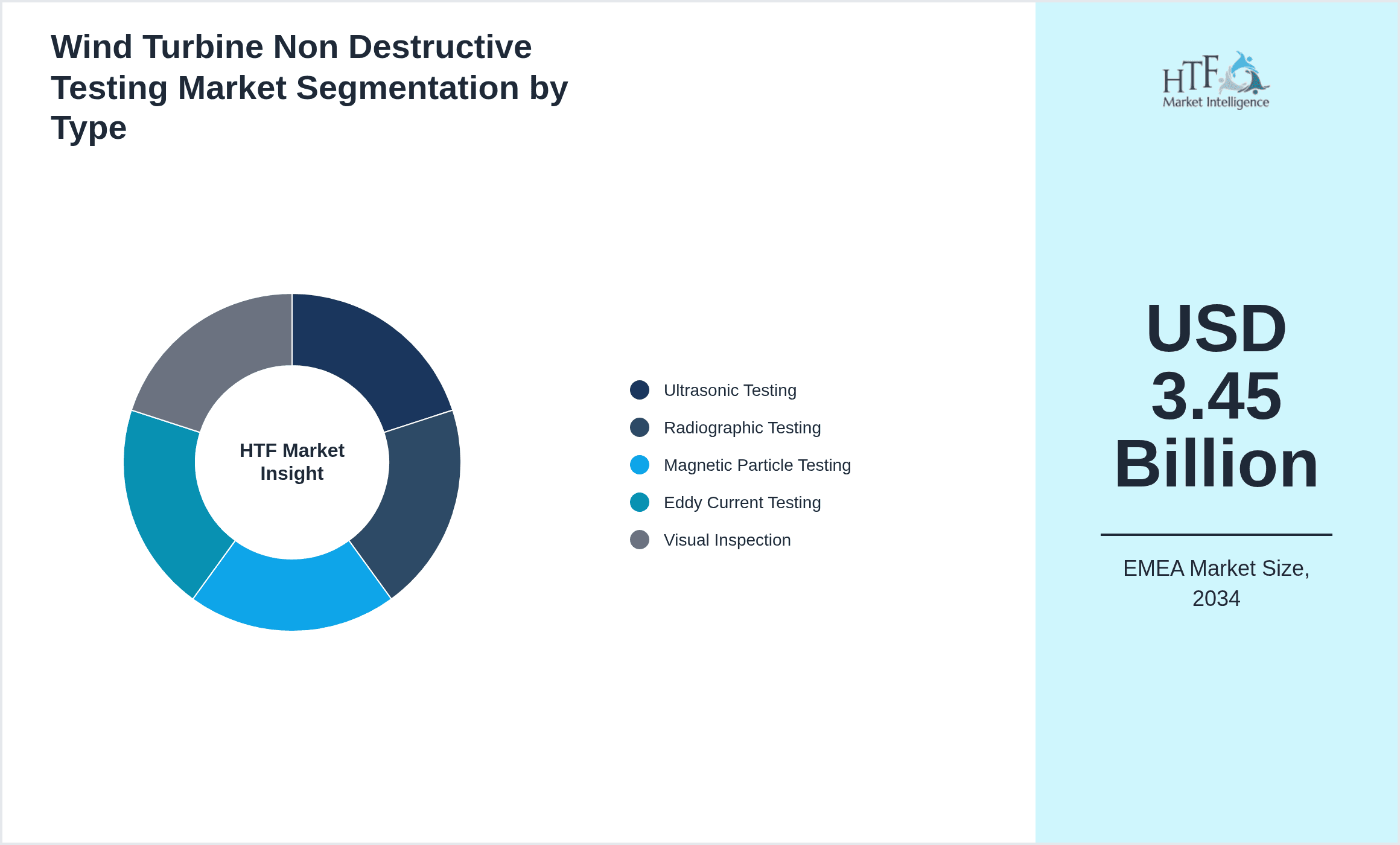
- •By Type
- ◦Ultrasonic Testing
- ◦Radiographic Testing
- ◦Magnetic Particle Testing
- ◦Eddy Current Testing
- ◦Visual Inspection
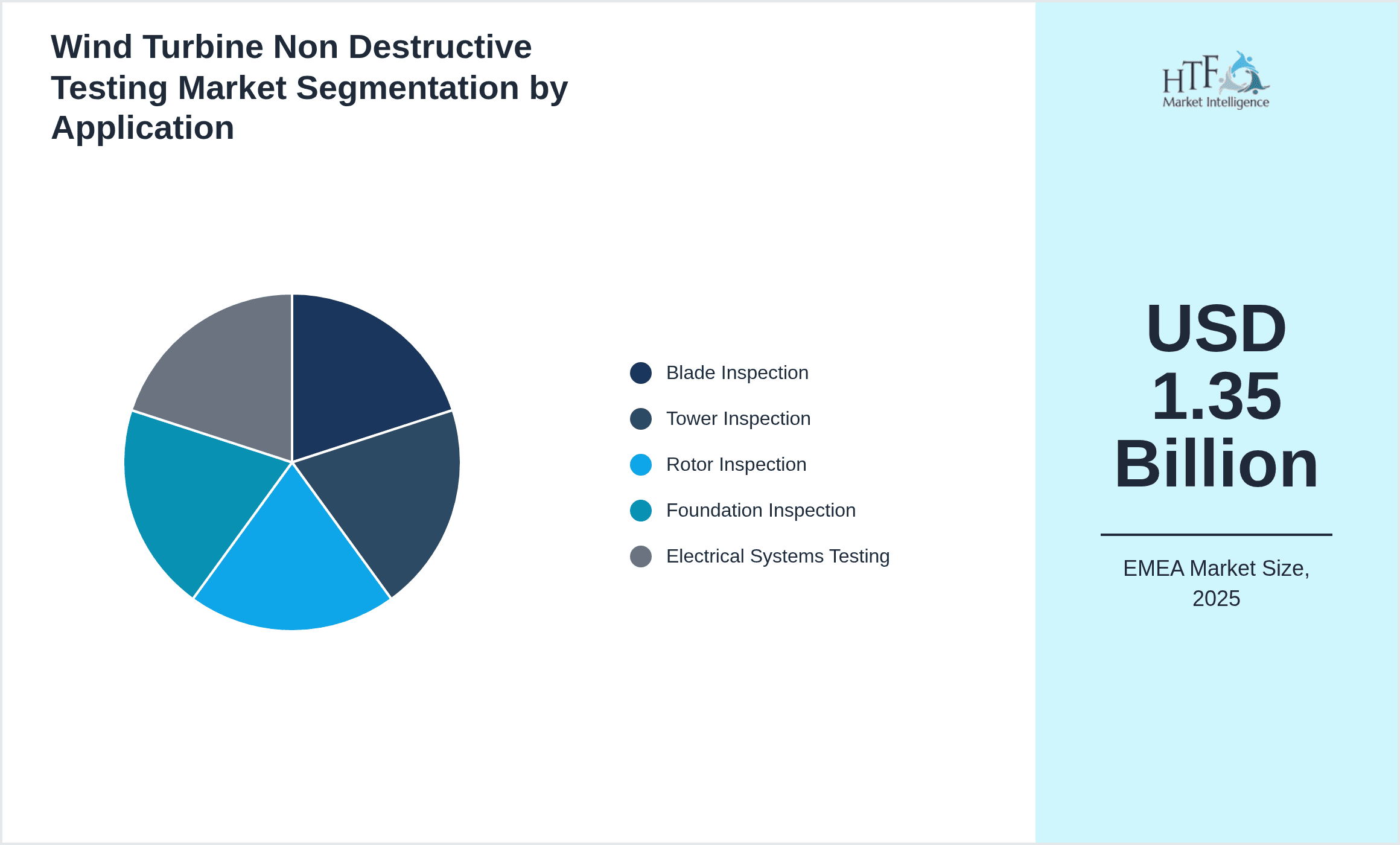
- •By Application
- ◦Blade Inspection
- ◦Tower Inspection
- ◦Rotor Inspection
- ◦Foundation Inspection
- ◦Electrical Systems Testing
- •By Service Type
- ◦On-site Inspection
- ◦Remote Inspection
- ◦Automated Inspection
- ◦Manual Inspection
- •By Inspection Technology
- ◦Drone-based Inspection
- ◦Robotic Inspection
- ◦Handheld Devices
Growth Dynamics
The growth of the EMEA Wind Turbine Non Destructive Testing market is primarily driven by the region's aggressive push towards renewable energy generation, with governments implementing stringent policies and incentives to expand wind power capacity. Increasing turbine installations, particularly offshore projects in the North Sea and Mediterranean, necessitate reliable inspection solutions to ensure operational safety and efficiency. Technological advancements such as drone-based inspections and AI integration are enhancing detection accuracy and reducing downtime, further fueling market expansion. Additionally, growing awareness of lifecycle management and predictive maintenance practices among operators is increasing demand for comprehensive NDT services. Investments in upgrading aging wind farms and retrofitting turbines with advanced monitoring systems also contribute to sustained market growth.
Market Trends
A prominent trend in the EMEA Wind Turbine NDT market is the adoption of unmanned aerial vehicles (UAVs) equipped with high-resolution sensors, enabling faster and safer blade inspections in challenging offshore environments. Integration of data analytics and machine learning algorithms is becoming standard to predict failure modes and optimize maintenance schedules. Increasing collaboration between NDT service providers and turbine manufacturers is fostering innovation and customized inspection protocols. Furthermore, the market is witnessing a shift towards automated and robotic inspection systems to minimize human error and enhance precision. Sustainability considerations are driving demand for environmentally friendly inspection technologies with minimal ecological footprint.
Market Opportunities
The EMEA market presents significant opportunities in expanding offshore wind installations, especially in countries like the United Kingdom and Germany, where large-scale projects require sophisticated NDT solutions. Emerging technologies such as AI-powered defect recognition and real-time condition monitoring open new avenues for service differentiation and value-added offerings. There is also potential in developing specialized inspection services tailored for novel turbine designs and materials, including composite blades. Geographic expansion into underpenetrated markets within the Middle East and Africa offers growth prospects, supported by increasing renewable energy adoption. Additionally, partnerships between technology providers and energy firms can accelerate innovation and market penetration.
Market Challenges
Despite promising growth, the EMEA Wind Turbine Non Destructive Testing market faces challenges including high capital expenditure associated with advanced NDT equipment and technologies. Skilled labor shortages and the need for specialized training impede rapid adoption across the region. Complex regulatory requirements and varying standards among countries in EMEA create compliance difficulties for service providers. The harsh offshore environment poses logistical and operational risks that affect inspection scheduling and costs. Furthermore, the integration of new digital technologies requires significant investments in IT infrastructure and cybersecurity measures, creating barriers for smaller market participants.
Regulatory Framework
Between 2020 and 2025, the EMEA Wind Turbine Non Destructive Testing market has been shaped by several regulatory developments aimed at enhancing wind turbine safety and environmental compliance. The European Union’s Machinery Directive (2006/42/EC) and relevant harmonized standards such as EN ISO 9712 for NDT personnel certification have been rigorously enforced, mandating certified inspections and qualified technicians. The Offshore Safety Directive has introduced stricter safety management requirements for offshore wind farms, impacting inspection frequencies and methodologies. Additionally, country-specific regulations in Germany and the United Kingdom require periodic structural integrity assessments aligned with national energy policies. These regulations have driven market demand by necessitating regular, documented inspection processes. Compliance with environmental protection laws and emissions standards also influences inspection protocols, ensuring sustainable operations. The evolving regulatory landscape continues to encourage technological advancements and standardized practices within the EMEA NDT market.
Market Intelligence
- •15th February 2025, Siemens Gamesa Renewable Energy announced the launch of its new ultrasonic phased array inspection system tailored for offshore wind turbine blades. The system enhances defect detection capabilities with real-time data transmission and AI-assisted analysis, targeting improved maintenance efficiency and reduced downtime for clients across EMEA. This innovation supports Siemens Gamesa’s strategic objective to lead in digitalized wind turbine maintenance services and aligns with growing offshore wind projects in Europe. The product is expected to significantly impact the market by enabling predictive maintenance and lowering operational costs for turbine operators. Source: Siemens Gamesa official press release.
- •7th June 2025, Mistras Group expanded its footprint in the EMEA region by acquiring a regional NDT service provider specialized in drone-based inspection technologies. This acquisition strengthens Mistras’ position in the wind energy sector, allowing enhanced service offerings including high-precision inspections of turbine blades and towers. The strategic move is expected to accelerate adoption of automated inspection methods within the region, leveraging Mistras’ global expertise and local market knowledge. The transaction aligns with increasing demand for advanced NDT solutions in offshore wind projects. Source: Mistras Group corporate announcement.
- •22nd October 2024, TÜV SÜD launched a comprehensive remote inspection service utilizing robotic technologies and cloud-based data analytics for wind turbine operators in Germany and neighboring countries. This service enables continuous condition monitoring and reduces the need for manual inspections, improving safety and lowering operational expenditures. TÜV SÜD’s initiative reflects industry trends towards digital transformation and demonstrates the company’s commitment to innovative testing solutions. Early adopters have reported enhanced reliability and faster issue resolution, positioning TÜV SÜD as a key player in the evolving EMEA NDT market. Source: TÜV SÜD official website.
- •Recent market developments and strategic initiatives are continuously tracked through industry publications, company announcements, and regulatory filings. For the most current information, stakeholders are advised to monitor official corporate communications and recognized market intelligence platforms.
Regional Outlook
The Germany currently holds a significant share of the market, primarily due to several key factors: increasing consumption rates, a burgeoning population, and robust economic momentum. These elements collectively drive demand, positioning this region as a leader in the market. On the other hand, United Kingdom is rapidly emerging as the fastest-growing area within the industry. This remarkable growth can be attributed to swift infrastructure development, the expansion of various industrial sectors, and a marked increase in consumer demand. These dynamics make this region a crucial player in shaping future market growth.
In our report, we cover a comprehensive analysis of the following regions and countries:
- Germany
- France
- Italy
- United Kingdom
- Nordics
- Rest of Europe
- South Africa
- Egypt
- Turkey
- United Arab Emirates
- Israel
- Saudi Arabia
- Rest of EMEA
| Feature | Details |
|---|---|
| Base Year Market Size | USD 1.35 Billion |
| Forecast Year Market Size | USD 3.45 Billion |
| CAGR | 11.6% |
| Forecast Period | 2026 to 2033 |
| YoY Growth | 11.1% |
| Scope of Report | Market is segmented by Type (Ultrasonic Testing, Radiographic Testing, Magnetic Particle Testing, Eddy Current Testing, Visual Inspection), Application (Blade Inspection, Tower Inspection, Rotor Inspection, Foundation Inspection, Electrical Systems Testing), Service Type (On-site Inspection, Remote Inspection, Automated Inspection, Manual Inspection), Inspection Technology (Drone-based Inspection, Robotic Inspection, Handheld Devices) |
| Regions Covered | Germany, France, Italy, United Kingdom, Nordics, Rest of Europe, South Africa, Egypt, Turkey, United Arab Emirates, Israel, Saudi Arabia, Rest of EMEA |
| Key Companies | GE Renewable Energy (France), Siemens Gamesa Renewable Energy (Spain), TÜV SÜD (Germany), Mistras Group (United Kingdom), Bureau Veritas (France), DNV (Norway), SGS SA (Switzerland), Intertek Group plc (United Kingdom), Applus+ (Spain), RINA S.p.A. (Italy), Element Materials Technology (United Kingdom), Fugro N.V. (Netherlands), Baker Hughes (United Kingdom), Alstom (France), TÜV Rheinland (Germany), SGS Inspection Services (Switzerland), Wood Group (United Kingdom), Lloyd’s Register (United Kingdom), DNV GL (Norway), WSP Global Inc. (Sweden), TWI Ltd (United Kingdom), Applus RTD (Spain), Arup Group (United Kingdom), COWI A/S (Denmark), UL LLC (United Kingdom) |
EMEA Wind Turbine Non Destructive Testing Market Roadmap to 2034 - Table of Contents
Frequently Asked Questions (FAQ):
The Compact Track Loaders market is projected to grow at a CAGR of 6.8% from 2025 to 2030, driven by increasing demand in construction and agricultural sectors.
North America currently leads the market with approximately 45% market share, followed by Europe at 28% and Asia-Pacific at 22%. The remaining regions account for 5% of the global market.
Key growth drivers include increasing construction activities, rising demand for versatile equipment in agriculture, technological advancements in track loader design, and growing preference for compact equipment in urban construction projects.