
North America Agricultural Baling Press Machine Market Size, Growth & Revenue 2025-2034
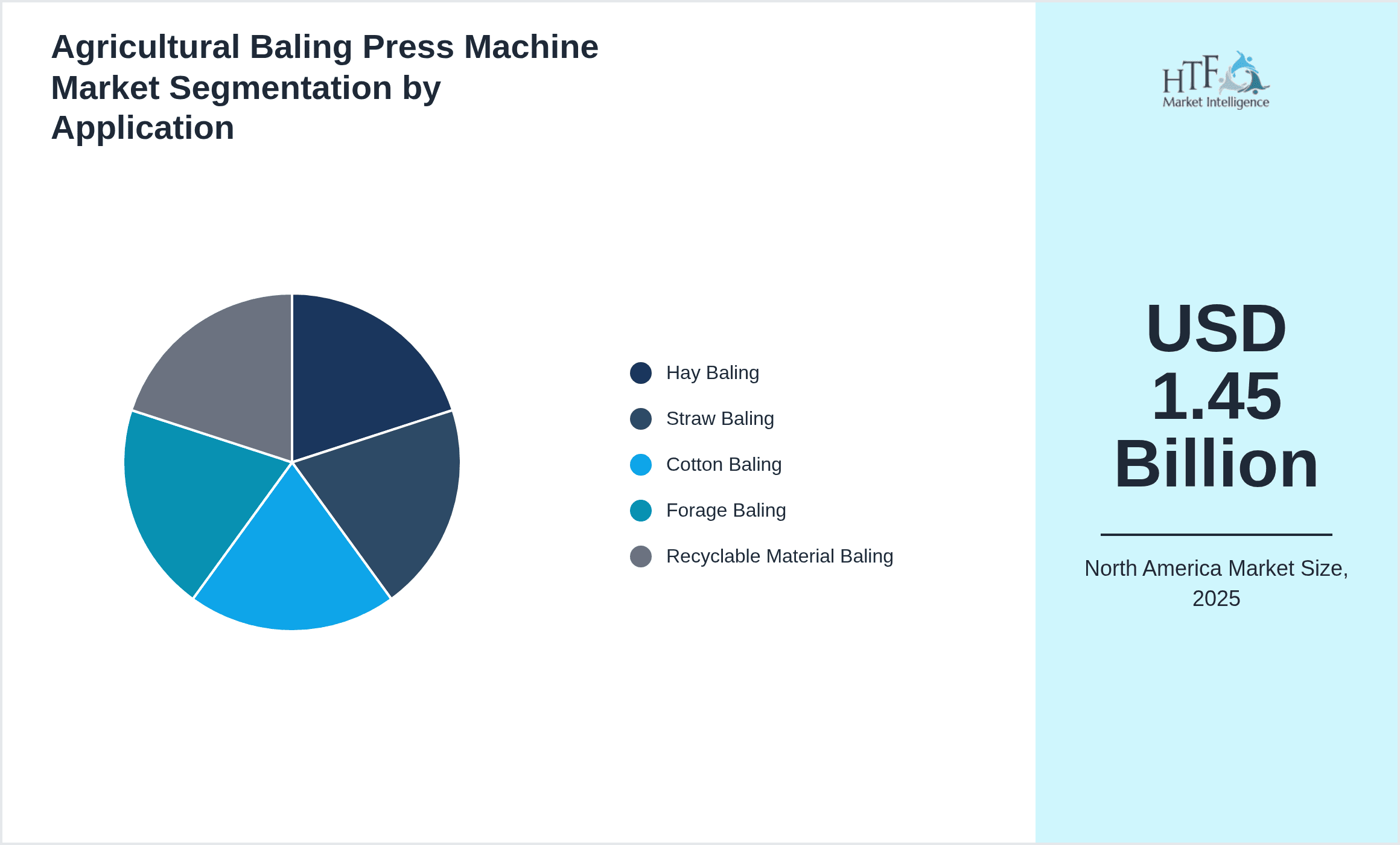
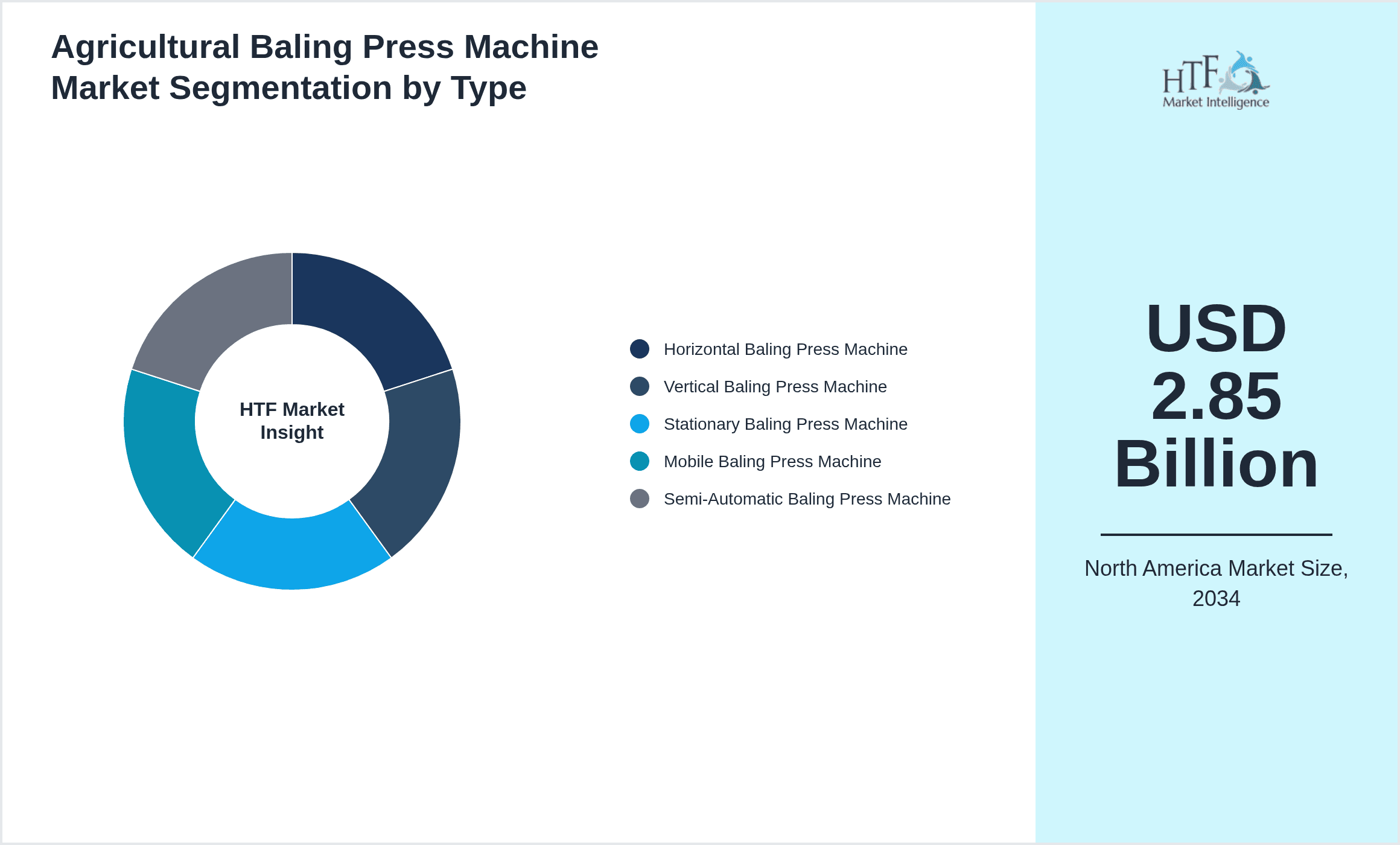
North America Agricultural Baling Press Machine Market is segmented by Application (Hay Baling, Straw Baling, Cotton Baling, Forage Baling, Recyclable Material Baling), Type (Horizontal Baling Press Machine, Vertical Baling Press Machine, Stationary Baling Press Machine, Mobile Baling Press Machine, Semi-Automatic Baling Press Machine), and Geography (United States, Canada, Mexico)
Pricing
Report Overview
Executive Summary
- •The North America Agricultural Baling Press Machine market encompasses machinery designed for compressing agricultural raw materials such as hay, straw, cotton, and forage into compact bales, facilitating storage, handling, and transportation. This market includes various types of baling press machines that differ by operational mechanism and mobility, including horizontal and vertical balers, stationary and mobile units, and semi-automatic models, each serving specific farming and industrial requirements. These machines are crucial for enhancing agricultural productivity, reducing labor intensity, and supporting sustainable practices by enabling efficient biomass management. The primary applications span hay baling for livestock feed, straw baling for bedding and bioenergy, cotton baling for textile manufacturing, forage baling for animal nutrition, and recyclable material baling to support environmental objectives. The North American market is predominantly driven by the United States, with significant contributions from Canada and emerging growth in Mexico. Key factors influencing market growth include increasing mechanization in agriculture, rising labor costs, and growing demand for efficient biomass management solutions. Technological innovations focus on automation, energy-efficient designs, and enhanced compression capabilities, which improve operational efficiency and reduce downtime. Regulatory frameworks around equipment safety and environmental compliance also impact market development. This report provides an in-depth analysis of market size, growth dynamics, segmentation by type and application, competitive landscape, and regional performance. It presents actionable insights and strategic recommendations for stakeholders, including manufacturers, distributors, and investors aiming to leverage growth opportunities in the North American agricultural baling press machine sector.
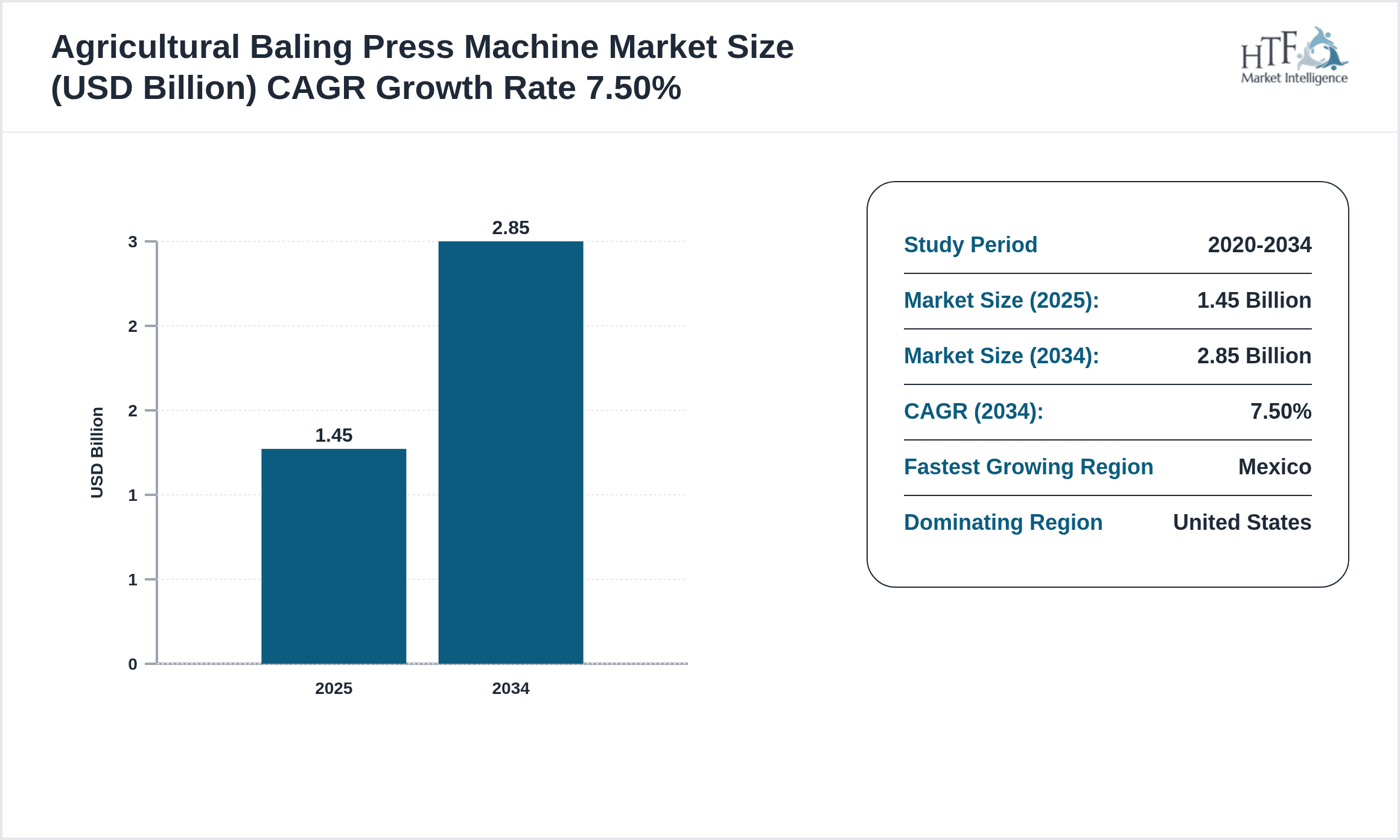
- •Key market highlights for North America Agricultural Baling Press Machine include a base market size valued at USD 1.45 Billion in 2025, with a projected growth to USD 2.85 Billion by 2034, representing a robust CAGR of 7.5%. The market exhibits a year-on-year growth rate of 7.3%, driven by technological advancements and increasing adoption of mechanized farming practices. The United States dominates the market with a 62% share, while Mexico is the fastest growing country with a CAGR of 9.2% and an 18% market share. Horizontal baling press machines lead product types due to their efficiency in handling large-scale baling operations, whereas mobile baling press machines are witnessing the fastest growth owing to their versatility and ease of deployment across diverse farming conditions. These dynamics underscore the expanding mechanization trend and increasing demand for efficient biomass processing solutions in the region.
- •The North America Agricultural Baling Press Machine market holds significant strategic importance for various stakeholders including agricultural equipment manufacturers, farming enterprises, biomass processors, and investors. The market’s growth facilitates enhanced productivity and operational efficiency in agriculture, reducing labor dependency and minimizing post-harvest losses. For manufacturers, it presents avenues for innovation in automation and energy efficiency, while farmers benefit from increased yield management and cost savings. Additionally, the market supports environmental sustainability initiatives by enabling effective recyclable material baling and bioenergy feedstock preparation. Investors and industry players can capitalize on growing demand across the United States, Canada, and Mexico, driven by favorable government policies and rising awareness of sustainable farming practices. Overall, this market serves as a critical enabler for modern agriculture and biomass industries across North America.
Competitive Landscape
The competitive environment in the North America Agricultural Baling Press Machine market is characterized by a mix of established global manufacturers and regional players who emphasize technological innovation, product differentiation, and strategic partnerships to secure market share. Companies focus on developing advanced baling machines featuring automation, enhanced compression efficiency, and user-friendly interfaces to address the diverse needs of agricultural operations. Pricing strategies are tailored to balance affordability with premium feature offerings, targeting various customer segments from small-scale farmers to large agribusinesses. Distribution channels leverage dealer networks, direct sales, and after-sales service capabilities to strengthen customer relationships and brand loyalty. Mergers and acquisitions serve as strategic tools for market consolidation, technology acquisition, and geographic expansion, while collaborations with technology providers enhance product innovation. Regional competition is influenced by localized demand patterns and regulatory compliance requirements which necessitate customization of machines and services. The competitive landscape is also shaped by emerging entrants focusing on mobile and semi-automatic baling solutions, responding to evolving customer preferences. Future trends point towards increased integration of IoT and sensor technologies to enable predictive maintenance and operational optimization, fostering competitive advantages in the market.
Leading Companies in Agricultural Baling Press Machine Market
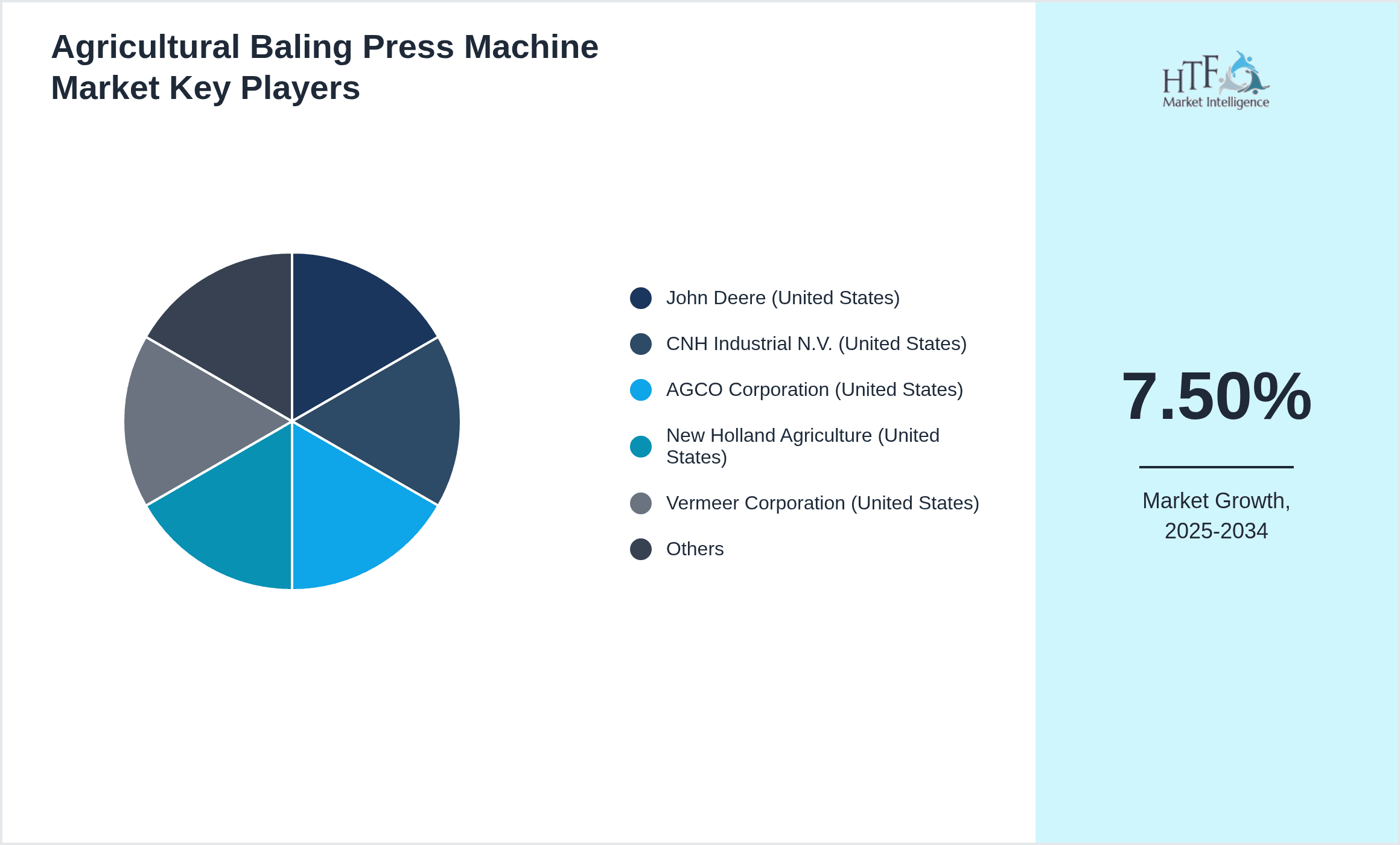
- •John Deere (United States)
- •CNH Industrial N.V. (United States)
- •AGCO Corporation (United States)
- •New Holland Agriculture (United States)
- •Vermeer Corporation (United States)
- •CLAAS KGaA mbH (Germany)
- •Kubota Corporation (Japan)
- •Kuhn Group (France)
- •Pottinger Holding GmbH (Austria)
- •Massey Ferguson (United States)
- •AGRALE S.A. (Brazil)
- •Hesston by Massey Ferguson (United States)
- •Mahindra & Mahindra Ltd. (India)
- •SIP Šempeter d.o.o. (Slovenia)
- •Bush Hog (United States)
- •Lely Group (Netherlands)
- •Kverneland Group (Norway)
- •AG Leader Technology (United States)
- •Bale Tech (United States)
- •AGI - Ag Growth International (Canada)
- •JCB (United Kingdom)
- •Lely North America (United States)
- •Haybuster Manufacturing, Inc. (United States)
- •Shredder Baler Technologies (Canada)
- •Fortress Technologies (Canada)
Market Breakdown
- •By Product Type
- ◦Horizontal Baling Press Machine
- ◦Vertical Baling Press Machine
- ◦Stationary Baling Press Machine
- ◦Mobile Baling Press Machine
- ◦Semi-Automatic Baling Press Machine
- •By Application
- ◦Hay Baling
- ◦Straw Baling
- ◦Cotton Baling
- ◦Forage Baling
- ◦Recyclable Material Baling
- •By Service Type
- ◦Installation and Commissioning
- ◦Maintenance and Repair
- ◦Spare Parts Supply
- ◦Consulting and Training Services
- •By Deployment Model
- ◦Stationary Deployment
- ◦Mobile Deployment
- ◦Semi-Mobile Deployment
Growth Dynamics
The North America agricultural baling press machine market growth is primarily driven by increasing mechanization in agriculture, which boosts operational efficiency and reduces labor dependency. Technological advancements in baling press design, such as automation and energy-efficient compression systems, are facilitating adoption by large-scale and smallholder farmers alike. Rising demand for sustainable farming practices and biomass utilization further accelerates market expansion by increasing the need for reliable baling machines capable of handling diverse crop residues. Additionally, growing livestock populations create higher demand for hay and forage baling, supporting steady market growth. Government incentives promoting modern agricultural equipment adoption and infrastructure development contribute to favorable market conditions. The integration of IoT and sensor technology enables predictive maintenance and real-time monitoring, enhancing machine uptime and productivity. Furthermore, the growing bioenergy sector's focus on baled biomass as feedstock opens new application segments. Collectively, these factors underpin a strong growth trajectory for the North America agricultural baling press machine market through 2034.
Market Trends
The North America market is witnessing a rising trend toward mobile baling press machines, which offer greater flexibility and ease of use in varied agricultural environments. Increasing adoption of semi-automatic and fully automated balers enhances operational efficiency and reduces labor costs. There is growing emphasis on developing energy-efficient machines that minimize power consumption while maximizing bale density and quality. Integration of smart technologies, including IoT-enabled sensors for monitoring machine performance and bale moisture levels, is becoming increasingly prevalent. Additionally, sustainable farming trends drive demand for balers capable of handling recyclable agricultural and organic waste materials effectively. Manufacturers are also focusing on modular designs that enable easy customization and maintenance. These evolving trends reflect the market’s shift toward innovation-driven and sustainable agricultural practices in North America.
Market Opportunities
Significant opportunities exist in the expansion of baling press machines designed specifically for small and medium-sized farms, particularly in Mexico where agriculture modernization is accelerating. There is potential for product innovation through the development of hybrid baling machines that combine mobility with high compression capacity. Growing interest in biomass energy generation creates demand for balers optimized for energy crop residues, opening new application avenues. Additionally, digital transformation offers opportunities for developing smart balers with predictive maintenance and remote diagnostics capabilities, enhancing customer value. Strategic partnerships between manufacturers and agricultural service providers can facilitate market penetration and after-sales service improvement. Furthermore, government subsidies and financing schemes for agricultural mechanization in North America can stimulate demand. Expanding into recyclable material baling segments also presents sustainability-driven growth prospects.
Market Challenges
The North America agricultural baling press machine market faces challenges including high initial capital expenditure, which can deter small-scale farmers from investing in advanced machinery. Maintenance complexities and the need for skilled operators limit adoption in certain regions. Regulatory compliance with safety standards and environmental norms requires ongoing adaptation and can increase production costs. Supply chain disruptions affecting raw materials and components pose risks to manufacturing continuity and delivery schedules. Additionally, competition from low-cost imports pressures pricing strategies of established manufacturers. Variability in crop types and farming practices across the region demands product customization, complicating design and inventory management. Lastly, fluctuations in commodity prices and agricultural income affect capital investment cycles, impacting market stability.
Regulatory Framework
Between 2020 and 2025, North America has seen the implementation of key regulations impacting the agricultural baling press machine market. The Occupational Safety and Health Administration (OSHA) updated machinery safety standards requiring enhanced guarding, emergency stop functions, and operator training protocols, increasing compliance costs for manufacturers and users. Environmental protection regulations, particularly concerning emissions and noise levels from agricultural machinery, have been reinforced by the Environmental Protection Agency (EPA), encouraging the adoption of energy-efficient and low-emission baling machines. Canada introduced updated safety codes mandating certification and inspection of agricultural equipment to ensure operator safety and reduce workplace accidents. Mexico’s Secretariat of Agriculture has implemented mechanization support programs coupled with equipment safety guidelines to promote modern machinery adoption. Additionally, cross-border trade regulations under USMCA influence component sourcing and manufacturing practices. These regulatory developments have collectively shaped product design, manufacturing practices, and market access strategies, prompting manufacturers to innovate and comply while maintaining competitiveness in the North American market.
Market Intelligence
- •15th March 2025, John Deere launched its next-generation horizontal baling press machine designed for enhanced automation and energy efficiency, targeting large-scale agricultural operations across North America. The new model features integrated IoT sensors that provide real-time bale density monitoring and predictive maintenance alerts, minimizing downtime and operational disruptions. With improved compression technology, the machine delivers higher bale density, reducing transportation costs and storage space requirements. The launch aligns with growing demand for smart farming equipment and supports sustainable biomass management. John Deere aims to strengthen its market leadership and respond to evolving customer needs with this innovative product. Source: John Deere Official Press Release
- •22nd July 2025, Vermeer Corporation introduced a mobile baling press machine tailored for small and medium-sized farms in Mexico and southern United States. This model emphasizes portability, ease of operation, and low maintenance requirements, enabling farmers with limited resources to access mechanized baling solutions. Equipped with user-friendly controls and efficient power consumption, the product addresses challenges related to labor shortages and operational costs. Vermeer’s strategic focus on the Mexico market is part of its expansion plan to capture the fastest-growing segment in North America. Source: Vermeer Corporation Website
- •30th October 2025, CNH Industrial announced a strategic partnership with a technology company to integrate AI-powered diagnostics into its semi-automatic baling press machines. This initiative aims to enhance machine reliability and reduce maintenance overheads by enabling remote troubleshooting and performance optimization. The collaboration is expected to accelerate product innovation and improve customer service experiences across the United States and Canada. CNH Industrial plans to roll out these enhanced models by early 2026, reinforcing its commitment to digital transformation in agriculture. Source: CNH Industrial Press Release
- •Recent market developments and strategic initiatives are continuously tracked through industry publications, company announcements, and regulatory filings. For the most current information, stakeholders are advised to monitor official corporate communications and recognized market intelligence platforms.
Regional Outlook
The United States currently holds a significant share of the market, primarily due to several key factors: increasing consumption rates, a burgeoning population, and robust economic momentum. These elements collectively drive demand, positioning this region as a leader in the market. On the other hand, Mexico is rapidly emerging as the fastest-growing area within the industry. This remarkable growth can be attributed to swift infrastructure development, the expansion of various industrial sectors, and a marked increase in consumer demand. These dynamics make this region a crucial player in shaping future market growth.
In our report, we cover a comprehensive analysis of the following regions and countries:
- United States
- Canada
- Mexico
| Feature | Details |
|---|---|
| Base Year Market Size | USD 1.45 Billion |
| Forecast Year Market Size | USD 2.85 Billion |
| CAGR | 7.5% |
| Forecast Period | 2026 to 2033 |
| YoY Growth | 7.3% |
| Regions Covered | United States, Canada, Mexico |
| Key Companies | John Deere (United States), CNH Industrial N.V. (United States), AGCO Corporation (United States), New Holland Agriculture (United States), Vermeer Corporation (United States), CLAAS KGaA mbH (Germany), Kubota Corporation (Japan), Kuhn Group (France), Pottinger Holding GmbH (Austria), Massey Ferguson (United States), AGRALE S.A. (Brazil), Hesston by Massey Ferguson (United States), Mahindra & Mahindra Ltd. (India), SIP Šempeter d.o.o. (Slovenia), Bush Hog (United States), Lely Group (Netherlands), Kverneland Group (Norway), AG Leader Technology (United States), Bale Tech (United States), AGI - Ag Growth International (Canada), JCB (United Kingdom), Lely North America (United States), Haybuster Manufacturing, Inc. (United States), Shredder Baler Technologies (Canada), Fortress Technologies (Canada) |
North America Agricultural Baling Press Machine Market Size, Growth & Revenue 2025-2034 - Table of Contents
Research enthusiast focused on transforming data uncovering into actionable insights through data-driven decision-making.
Frequently Asked Questions (FAQ):
The Compact Track Loaders market is expected to see value worth 5.3 Billion in 2025.
North America currently leads the market with approximately 45% market share, followed by Europe at 28% and Asia-Pacific at 22%. The remaining regions account for 5% of the global market.
Key growth drivers include increasing construction activities, rising demand for versatile equipment in agriculture, technological advancements in track loader design, and growing preference for compact equipment in urban construction projects.