
Global 5-Aminolevulinic Acid Hydrochloride Market Size, Growth & Revenue 2024-2034
Global 5-Aminolevulinic Acid Hydrochloride Market is segmented by Type (Pharmaceutical Grade 5-Aminolevulinic Acid Hydrochloride, Agricultural Grade 5-Aminolevulinic Acid Hydrochloride, Cosmetic Grade 5-Aminolevulinic Acid Hydrochloride, Technical Grade 5-Aminolevulinic Acid Hydrochloride, Pure Grade 5-Aminolevulinic Acid Hydrochloride), Application (Pharmaceuticals, Agriculture, Cosmetics, Food Additives, Research and Development), End-Use Industry (Healthcare Facilities, Agricultural Farms, Cosmetic Manufacturers, Food Processing Units, Research Laboratories), Distribution Channel (Direct Sales, Distributors and Wholesalers, Online Retail, Pharmaceutical Supply Chains), and Geography (North America, LATAM, West Europe, Central & Eastern Europe, Northern Europe, Southern Europe, East Asia, Southeast Asia, South Asia, Central Asia, Oceania, MEA)
Pricing
Report Overview
Executive Summary
- •The Global 5-Aminolevulinic Acid Hydrochloride market involves the production and application of 5-ALA hydrochloride, a vital compound used extensively in pharmaceuticals, agriculture, cosmetics, food additives, and research. This market covers multiple product grades including pharmaceutical, agricultural, cosmetic, technical, and pure grades, each tailored to specific end-use requirements. The compound's unique photosensitizing and growth-regulating properties enable its use in photodynamic therapy for cancer treatment, as a plant growth enhancer, and in cosmetic formulations for skin health. The scope extends globally, with significant market activity across North America, Europe, Asia-Pacific, Latin America, and the Middle East & Africa. Market growth is propelled by the rising incidence of chronic diseases, increasing agricultural productivity demands, and growing consumer preference for natural cosmetic ingredients. Technological advancements in biosynthesis and chemical manufacturing methods further expand the market potential. Regulatory frameworks and environmental concerns shape production and application standards worldwide, ensuring product safety and efficacy in diverse applications. The market’s evolution is influenced by strategic collaborations, technological innovations, and expanding application areas, positioning 5-ALA hydrochloride as a critical ingredient across multiple industries.
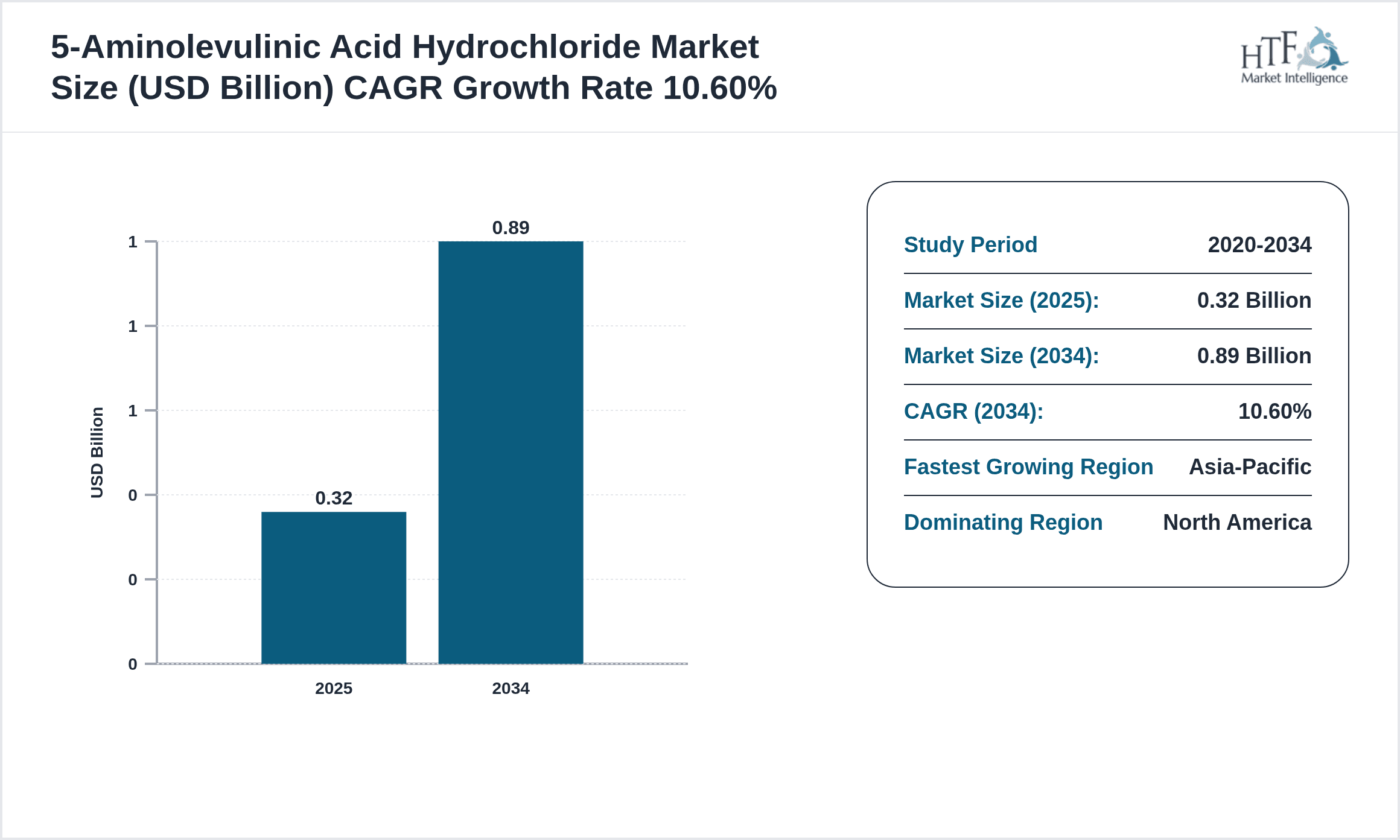
- •Key highlights in the market include a robust CAGR of 10.6% projected from 2024 to 2034, driven by increasing pharmaceutical applications and agricultural adoption of 5-ALA hydrochloride. The pharmaceutical grade dominates the market share, supported by advancements in photodynamic therapy and rising healthcare expenditure globally. Asia-Pacific stands out as the fastest growing region owing to expanding agricultural activities and increasing investments in pharmaceutical research. The market size was valued at USD 320 Million in 2024 and is expected to reach USD 890 Million by 2034. Emerging trends include the integration of 5-ALA hydrochloride in cosmetic products for anti-aging benefits and enhanced plant growth formulations. These factors collectively underscore the expanding scope and dynamic nature of the global market.
- •The value proposition of the 5-Aminolevulinic Acid Hydrochloride market lies in its multifaceted utility across critical sectors such as healthcare, agriculture, and cosmetics. For pharmaceutical companies, it offers a targeted approach in photodynamic therapy, enhancing treatment efficacy with minimal side effects. Agricultural stakeholders benefit from improved crop yields and pest resistance through its application as a plant growth regulator. Cosmetic manufacturers leverage its skin-enhancing properties to meet consumer demands for natural and effective products. Stakeholders including manufacturers, distributors, and end-users gain strategic insights from market trends, regulatory updates, and competitive movements, enabling informed decision-making and innovation. The market’s strategic importance is underscored by its contribution to sustainable agriculture, advanced medical treatments, and evolving consumer preferences globally.
Competitive Landscape
The market competition for 5-Aminolevulinic Acid Hydrochloride is characterized by a blend of established multinational corporations and emerging regional players focusing on innovation, product differentiation, and strategic partnerships. Companies compete through advancements in biotechnological synthesis methods, enhancing purity and reducing production costs to capture larger market shares. Market players emphasize research and development to expand application scopes, particularly in pharmaceuticals and agriculture. Pricing strategies and global distribution networks are critical competitive factors, with firms striving to optimize supply chains and meet regional regulatory standards. Collaborative ventures and mergers have become prevalent as companies seek to consolidate expertise and technology. The competitive landscape is dynamic, with continuous investments in expanding production capacities and entering untapped markets, fostering a robust rivalry that accelerates technological progress and market penetration globally.
Companies Shaping the 5-Aminolevulinic Acid Hydrochloride Market
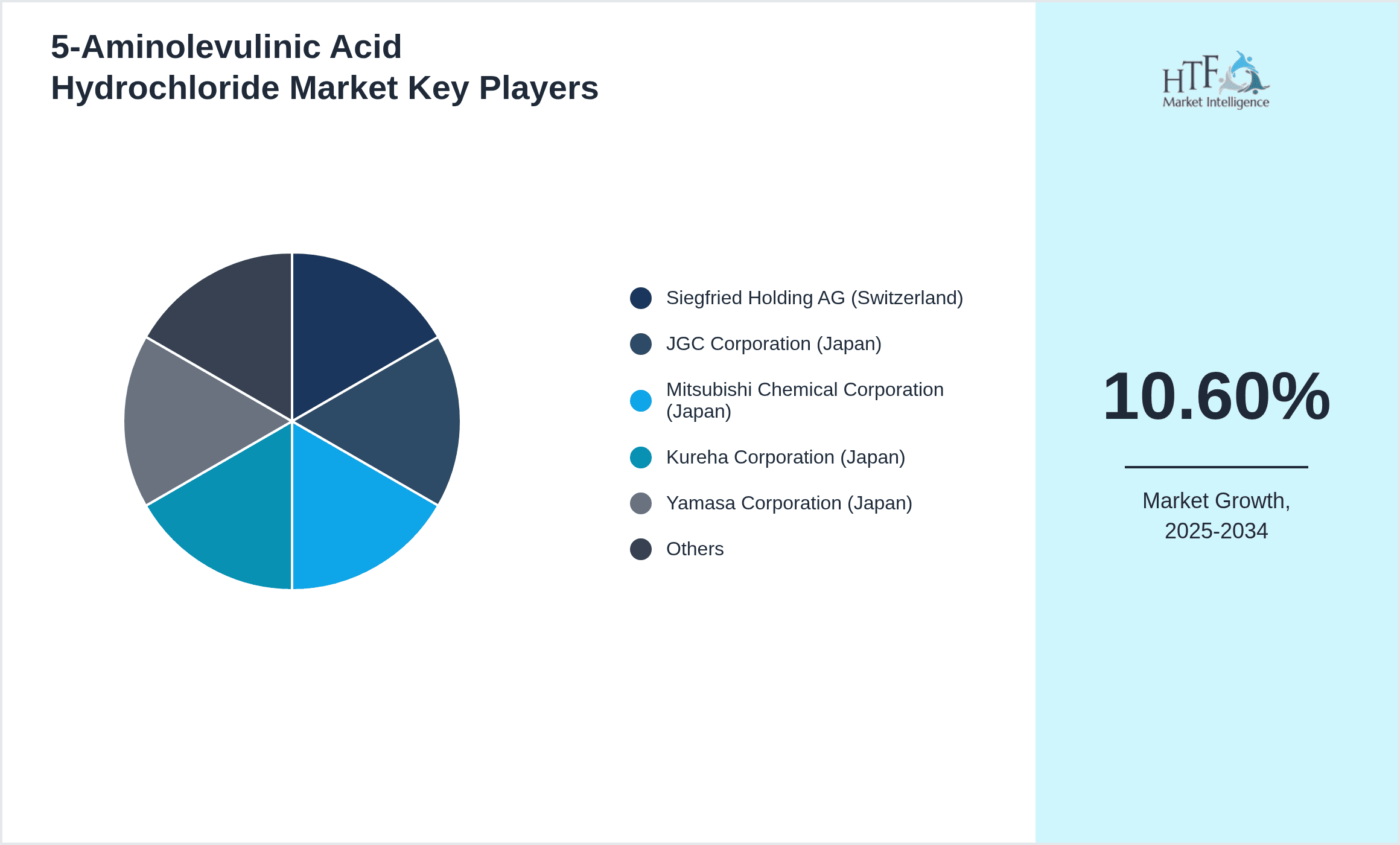
- •Siegfried Holding AG (Switzerland)
- •JGC Corporation (Japan)
- •Mitsubishi Chemical Corporation (Japan)
- •Kureha Corporation (Japan)
- •Yamasa Corporation (Japan)
- •BASF SE (Germany)
- •Evonik Industries AG (Germany)
- •Jiangsu Fengshan Group Co., Ltd. (China)
- •Hangzhou Zhengda Biological Technology Co., Ltd. (China)
- •Changzhou Huarui Biological Technology Co., Ltd. (China)
- •Beijing Deyuan Biotechnology Co., Ltd. (China)
- •Sigma-Aldrich Corporation (United States)
- •Merck KGaA (Germany)
- •Wuhan Yuancheng Technology Development Co., Ltd. (China)
- •Hubei Yalijing Biological Technology Co., Ltd. (China)
- •LGC Standard (United Kingdom)
- •Hangzhou Tianyuan Biotechnology Co., Ltd. (China)
- •Shanghai Acebright Pharmaceutical Co., Ltd. (China)
- •Evonik Nutrition & Care GmbH (Germany)
- •Kyowa Hakko Kirin Co., Ltd. (Japan)
- •DSM Nutritional Products AG (Switzerland)
- •Mitsui Chemicals, Inc. (Japan)
- •Wuhan Boren Pharm Co., Ltd. (China)
- •Tianjin Bodi Chemical Co., Ltd. (China)
- •Nippon Soda Co., Ltd. (Japan)
Market Breakdown
- •By Type
- ◦Pharmaceutical Grade 5-Aminolevulinic Acid Hydrochloride
- ◦Agricultural Grade 5-Aminolevulinic Acid Hydrochloride
- ◦Cosmetic Grade 5-Aminolevulinic Acid Hydrochloride
- ◦Technical Grade 5-Aminolevulinic Acid Hydrochloride
- ◦Pure Grade 5-Aminolevulinic Acid Hydrochloride
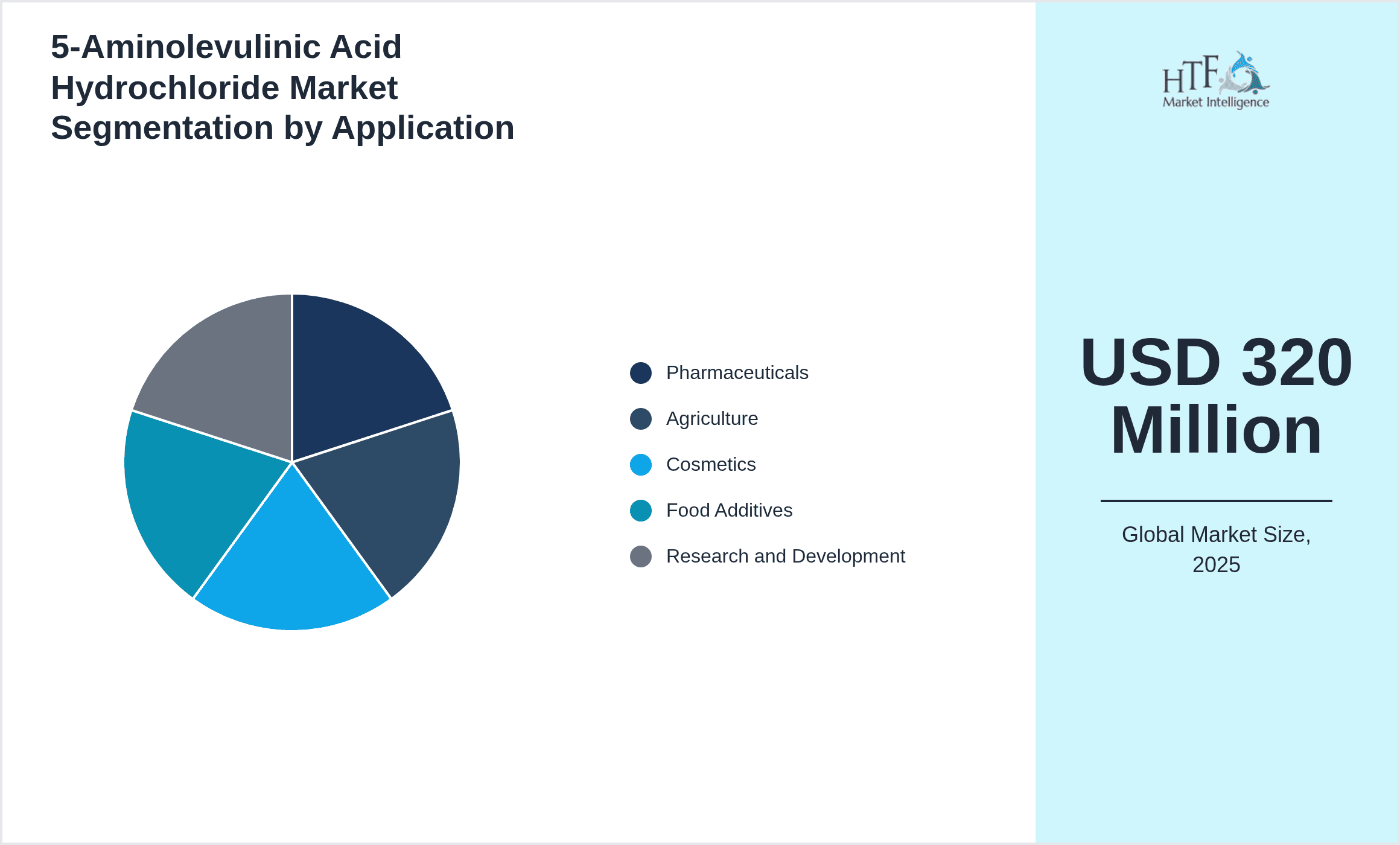
- •By Application
- ◦Pharmaceuticals
- ◦Agriculture
- ◦Cosmetics
- ◦Food Additives
- ◦Research and Development
- •By End-Use Industry
- ◦Healthcare Facilities
- ◦Agricultural Farms
- ◦Cosmetic Manufacturers
- ◦Food Processing Units
- ◦Research Laboratories
- •By Distribution Channel
- ◦Direct Sales
- ◦Distributors and Wholesalers
- ◦Online Retail
- ◦Pharmaceutical Supply Chains
Growth Dynamics
- •The increasing prevalence of skin cancer and other chronic diseases has accelerated the adoption of 5-Aminolevulinic Acid Hydrochloride in photodynamic therapy, significantly driving pharmaceutical-grade demand globally. Enhanced treatment efficacy and minimal side effects make it a preferred compound in oncology applications.
- •Agricultural advancements focusing on sustainable and organic farming practices have propelled the use of 5-ALA hydrochloride as a bio-stimulant, improving crop yield and resistance to environmental stress. Government subsidies and environmental regulations further support this growth trend.
- •Technological innovations in biosynthetic production methods have lowered manufacturing costs and improved product purity, enabling broader market penetration across pharmaceutical and cosmetic industries worldwide.
- •Rising consumer preference for natural and effective cosmetic ingredients has increased the incorporation of cosmetic-grade 5-ALA hydrochloride in anti-aging and skin health formulations, boosting market demand in the personal care sector.
- •Expansion of research activities into novel applications of 5-ALA hydrochloride, such as in food preservation and diagnostics, presents new growth avenues, attracting investments and fostering innovation across industries.
- •Strategic collaborations between biotechnology firms and pharmaceutical companies enhance product development pipelines, facilitating faster commercialization and improved market responsiveness globally.
- •Increasing global healthcare expenditure and awareness about innovative cancer treatments contribute to the sustained growth momentum of the pharmaceutical segment of the 5-ALA hydrochloride market.

Market Trends
- •The trend towards green and sustainable agriculture is fostering widespread adoption of 5-ALA hydrochloride as an eco-friendly plant growth regulator, replacing traditional chemical fertilizers and pesticides.
- •Product innovation focusing on enhanced formulation stability and bioavailability is gaining traction, with companies investing in advanced drug delivery systems for pharmaceutical applications.
- •Integration of digital technologies and AI in R&D processes accelerates the discovery of new therapeutic uses of 5-ALA hydrochloride, broadening its application scope.
- •Cosmetic industry adoption of 5-ALA hydrochloride for skin brightening and anti-aging benefits is increasing, driven by consumer demand for effective natural ingredients.
- •Collaborative partnerships between research institutions and manufacturers are shaping innovation trajectories, enabling rapid market introduction of novel 5-ALA hydrochloride based products.
- •Regulatory harmonization across regions facilitates smoother market entry and product approvals, enhancing global trade and market fluidity for 5-ALA hydrochloride products.
- •Emerging markets in Asia-Pacific show growing acceptance due to increasing healthcare infrastructure investments and expanding agricultural modernization programs.
Market Opportunities
- •Untapped potential in emerging economies where agricultural modernization is accelerating offers opportunities for increased adoption of agricultural-grade 5-ALA hydrochloride, supported by favorable government policies.
- •Expansion into novel pharmaceutical applications such as antimicrobial photodynamic therapy could open new revenue streams for market participants.
- •Development of hybrid product formulations combining 5-ALA hydrochloride with other bioactive compounds presents innovation opportunities in cosmetics and nutraceuticals sectors.
- •Increasing consumer awareness of the benefits of natural cosmetic ingredients fosters market penetration for cosmetic-grade 5-ALA hydrochloride products.
- •Strategic alliances with research institutes can accelerate product development and commercialization, enhancing competitive positioning.
- •Leveraging digital marketing and e-commerce platforms can expand distribution channels, facilitating direct-to-consumer sales and wider market reach.
- •Investments in sustainable production technologies could reduce environmental footprint and appeal to eco-conscious consumers and regulators.
Market Challenges
- •Stringent regulatory requirements across different regions pose challenges in product approval and compliance, potentially delaying market entry and increasing costs.
- •High production costs due to complex synthesis and purification processes limit price competitiveness, especially in price-sensitive emerging markets.
- •Limited awareness and technical knowledge among end-users in agriculture and cosmetics can hinder market adoption and growth.
- •Competition from alternative compounds and synthetic analogs offering similar functionalities impacts market share and pricing power.
- •Supply chain disruptions, including raw material availability and logistics challenges, may affect consistent product delivery and market stability.
- •Intellectual property disputes related to synthesis technologies and formulations can create legal uncertainties and affect innovation.
- •Environmental concerns regarding chemical manufacturing processes necessitate investment in greener technologies, increasing capital expenditure.
Regulatory Framework
- •Between 2019 and 2024, multiple regions implemented stricter purity and safety standards for pharmaceutical-grade 5-Aminolevulinic Acid Hydrochloride, mandating enhanced quality control and documentation to ensure patient safety and efficacy.
- •Regulations introduced in 2021 require agricultural-grade 5-ALA hydrochloride products to comply with environmental safety protocols, including biodegradability assessments and reduced ecotoxicity thresholds, to minimize ecological impact.
- •Cosmetic-grade 5-ALA hydrochloride formulations are subject to updated ingredient disclosure and allergen labeling requirements since 2022, improving consumer transparency and product trust.
- •Regional mandates in Europe and North America enacted in 2023 enforce stricter import-export controls and certification for 5-ALA hydrochloride, ensuring compliance with international trade and safety standards.
- •Government incentives and subsidy programs for bio-based agricultural products encourage manufacturers to adopt sustainable 5-ALA hydrochloride production methods, promoting market growth and environmental responsibility.
Market Intelligence
- •15th January 2025, Siegfried Holding AG announced the launch of a new high-purity pharmaceutical grade 5-Aminolevulinic Acid Hydrochloride product designed specifically for photodynamic therapy applications. This product features enhanced stability and bioavailability, targeting oncology treatment centers worldwide to improve therapeutic outcomes. The strategic initiative aims to expand Siegfried’s portfolio in oncology-focused compounds, leveraging advanced biosynthesis technology to reduce production costs while maintaining stringent quality standards. This launch is expected to strengthen the company’s competitive positioning in the global pharmaceutical ingredients market. Source: Siegfried Holding AG Official Press Release
- •20th March 2025, Mitsubishi Chemical Corporation introduced an innovative agricultural-grade 5-ALA hydrochloride bio-stimulant formulation aimed at increasing crop resistance to abiotic stressors such as drought and salinity. The product utilizes proprietary encapsulation technology to enhance delivery efficiency and reduce environmental runoff. Mitsubishi Chemical’s move aligns with global sustainability goals and rising farmer demand for eco-friendly inputs, positioning the company as a leader in sustainable agriculture solutions. This launch is expected to create significant market traction in Asia-Pacific and Latin America. Source: Mitsubishi Chemical Corporation Newsroom
- •10th May 2025, BASF SE announced a strategic partnership with a leading biotech firm to co-develop next-generation cosmetic-grade 5-Aminolevulinic Acid Hydrochloride formulations for anti-aging skincare. The collaboration focuses on integrating advanced delivery systems to improve skin penetration and efficacy. This alliance aims to accelerate product innovation and expand BASF’s presence in the personal care ingredient market, catering to growing consumer demand for natural and effective cosmetic solutions globally. Source: BASF SE Corporate Announcement
- •5th August 2025, JGC Corporation completed the expansion of its 5-Aminolevulinic Acid Hydrochloride production facility in Japan, increasing annual capacity by 30%. This expansion incorporates cutting-edge green chemistry processes to enhance sustainability and reduce emissions. The facility upgrade is expected to meet rising global demand, particularly in pharmaceutical and agricultural sectors, and strengthen supply chain resilience. JGC’s investment underscores its commitment to innovation and environmental stewardship in the specialty chemicals market. Source: JGC Corporation Investor Relations
Regional Outlook
The North America currently holds a significant share of the market, primarily due to several key factors: increasing consumption rates, a burgeoning population, and robust economic momentum. These elements collectively drive demand, positioning this region as a leader in the market. On the other hand, Asia-Pacific is rapidly emerging as the fastest-growing area within the industry. This remarkable growth can be attributed to swift infrastructure development, the expansion of various industrial sectors, and a marked increase in consumer demand. These dynamics make this region a crucial player in shaping future market growth.
In our report, we cover a comprehensive analysis of the following regions and countries:
- North America
- LATAM
- West Europe
- Central & Eastern Europe
- Northern Europe
- Southern Europe
- East Asia
- Southeast Asia
- South Asia
- Central Asia
- Oceania
- MEA
| Feature | Details |
|---|---|
| Base Year Market Size | USD 320 Million |
| Forecast Year Market Size | USD 890 Million |
| CAGR | 10.6% |
| Forecast Period | 2026 to 2033 |
| YoY Growth | 10.1% |
| Scope of Report | Market is segmented by Type (Pharmaceutical Grade 5-Aminolevulinic Acid Hydrochloride, Agricultural Grade 5-Aminolevulinic Acid Hydrochloride, Cosmetic Grade 5-Aminolevulinic Acid Hydrochloride, Technical Grade 5-Aminolevulinic Acid Hydrochloride, Pure Grade 5-Aminolevulinic Acid Hydrochloride), Application (Pharmaceuticals, Agriculture, Cosmetics, Food Additives, Research and Development), End-Use Industry (Healthcare Facilities, Agricultural Farms, Cosmetic Manufacturers, Food Processing Units, Research Laboratories), Distribution Channel (Direct Sales, Distributors and Wholesalers, Online Retail, Pharmaceutical Supply Chains) |
| Regions Covered | North America, LATAM, West Europe, Central & Eastern Europe, Northern Europe, Southern Europe, East Asia, Southeast Asia, South Asia, Central Asia, Oceania, MEA |
| Key Companies | Siegfried Holding AG (Switzerland), JGC Corporation (Japan), Mitsubishi Chemical Corporation (Japan), Kureha Corporation (Japan), Yamasa Corporation (Japan), BASF SE (Germany), Evonik Industries AG (Germany), Jiangsu Fengshan Group Co., Ltd. (China), Hangzhou Zhengda Biological Technology Co., Ltd. (China), Changzhou Huarui Biological Technology Co., Ltd. (China), Beijing Deyuan Biotechnology Co., Ltd. (China), Sigma-Aldrich Corporation (United States), Merck KGaA (Germany), Wuhan Yuancheng Technology Development Co., Ltd. (China), Hubei Yalijing Biological Technology Co., Ltd. (China), LGC Standard (United Kingdom), Hangzhou Tianyuan Biotechnology Co., Ltd. (China), Shanghai Acebright Pharmaceutical Co., Ltd. (China), Evonik Nutrition & Care GmbH (Germany), Kyowa Hakko Kirin Co., Ltd. (Japan), DSM Nutritional Products AG (Switzerland), Mitsui Chemicals, Inc. (Japan), Wuhan Boren Pharm Co., Ltd. (China), Tianjin Bodi Chemical Co., Ltd. (China), Nippon Soda Co., Ltd. (Japan) |
Global 5-Aminolevulinic Acid Hydrochloride Market Size, Growth & Revenue 2024-2034 - Table of Contents
Frequently Asked Questions (FAQ):
The Compact Track Loaders market is projected to grow at a CAGR of 6.8% from 2025 to 2030, driven by increasing demand in construction and agricultural sectors.
North America currently leads the market with approximately 45% market share, followed by Europe at 28% and Asia-Pacific at 22%. The remaining regions account for 5% of the global market.
Key growth drivers include increasing construction activities, rising demand for versatile equipment in agriculture, technological advancements in track loader design, and growing preference for compact equipment in urban construction projects.