
Japan Mobile Games Market Size, Growth & Revenue 2024-2034
Japan Mobile Games Market is segmented by Application (Casual Games, Role-Playing Games, Strategy Games, Puzzle Games, Simulation Games), Type (Free-to-Play, Pay-to-Play, Subscription-based, Ad-Supported, Hybrid Models), and Geography (Hokkaido, Tohoku, Kanto, Chubu, Kansai, Chugoku, Shikoku, Kyushu)
Pricing
Report Overview
Executive Summary
- •The Japan Mobile Games market is a robust segment of the country's digital entertainment industry, centered on mobile-optimized gaming applications that cater to diverse player preferences. It includes a variety of game types and monetization models, ranging from free-to-play games with microtransactions to subscription-based services, reflecting the evolving consumption patterns of Japanese gamers. The market's scope spans product development, distribution via app stores, and technology integrations such as augmented reality and cloud gaming, which enhance user experience and retention. Key applications include casual games favored by broad demographics, immersive role-playing games with deep narratives, and strategic games requiring tactical skills. Japan's high smartphone penetration and strong gaming culture underpin market growth, supported by innovative business models and partnerships. Regulatory compliance and user data protection remain critical to sustainable expansion. This market represents significant value creation through digital content, advertising, and in-app purchases, contributing substantially to Japan's entertainment economy.
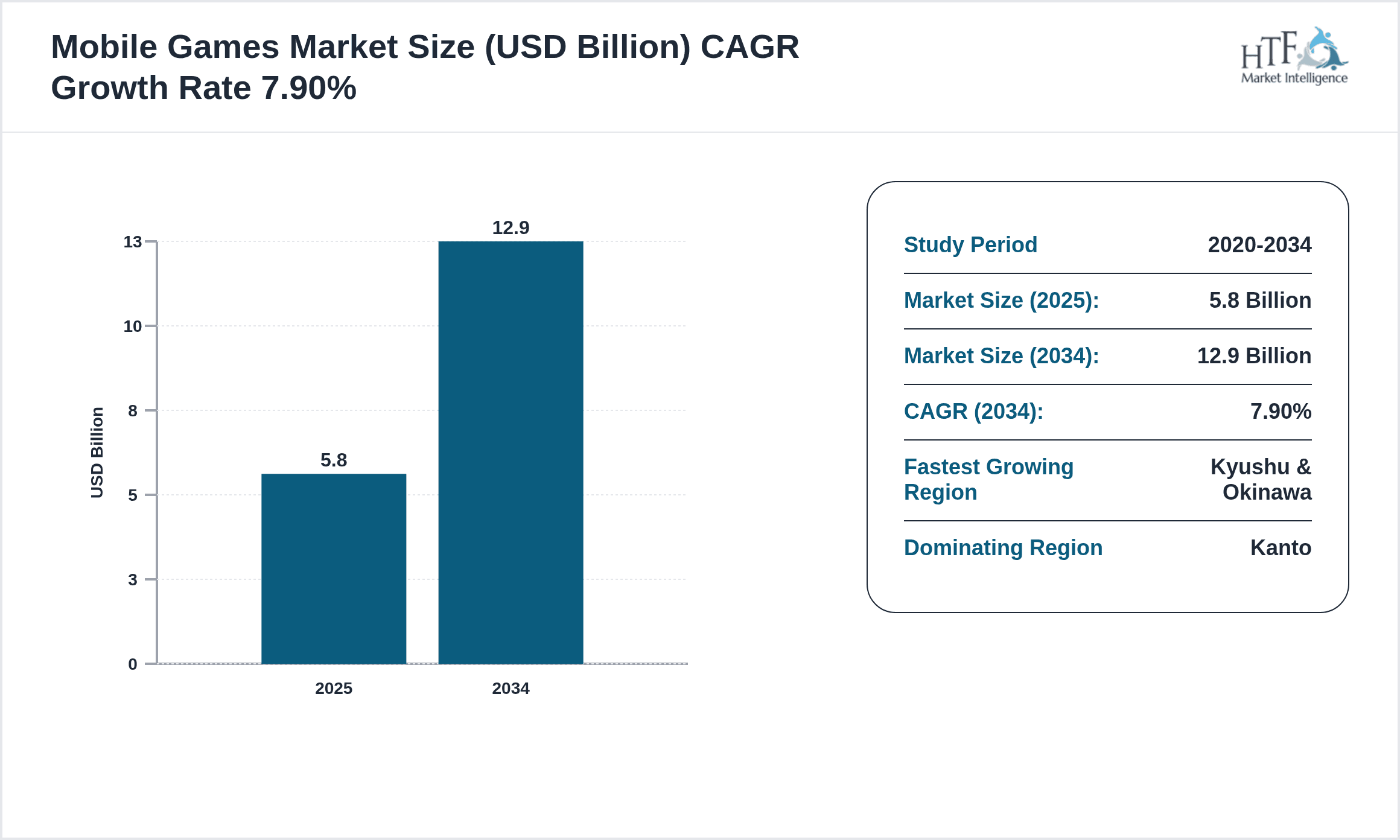
- •The Japan Mobile Games market is projected to grow from USD 5.8 Billion in 2024 to USD 12.9 Billion by 2034, exhibiting a compound annual growth rate (CAGR) of 7.9%. This growth is driven by increasing smartphone adoption, expanding internet infrastructure, and rising consumer spending on mobile entertainment. Key segments such as free-to-play and role-playing games dominate revenue, while subscription-based models are rapidly gaining traction. Regional dynamics highlight Kanto as the dominant market zone, contributing over one-third of the market share. Emerging regions like Kyushu & Okinawa show the highest growth rates, reflecting increasing penetration and localized content strategies. Technological advancements like 5G and AI-powered gaming experiences further accelerate adoption. The market's year-over-year growth rate is estimated at 7.6%, signaling sustained momentum.
- •The Japan Mobile Games market offers strategic value to game developers, publishers, advertisers, and technology providers by enabling access to a highly engaged and tech-savvy consumer base. Its diverse monetization frameworks allow stakeholders to optimize revenue streams through in-app purchases, subscriptions, and advertising. The market's emphasis on innovation and localized content supports differentiation and brand loyalty. Additionally, mobile gaming serves as a critical platform for cultural expression and social interaction among Japanese users. Investments in emerging technologies and regional market expansion present lucrative opportunities for new entrants and established players alike. Furthermore, the industry's alignment with Japan’s digital transformation initiatives ensures ongoing support and regulatory facilitation, making it a cornerstone of the country's digital economy.
Competitive Landscape
The competitive environment of the Japan Mobile Games market is characterized by intense rivalry among both domestic and international developers and publishers striving to capture market share through innovation, content variety, and effective monetization. Companies leverage advanced technologies such as artificial intelligence and augmented reality to create immersive gaming experiences tailored to Japanese cultural preferences. Strategic partnerships between content creators and platform operators are common to enhance distribution and user acquisition. Pricing strategies vary from free-to-play models with microtransactions to premium and subscription-based offerings, catering to diverse user segments. Market entry barriers include high consumer expectations, regulatory compliance, and the need for consistent content updates. Regional competition within Japan is also notable, with the Kanto region commanding significant market influence due to its large consumer base and technological infrastructure. Future trends point toward increased consolidation, cross-platform integration, and the adoption of cloud gaming services to maintain competitive advantage.
Leading Companies in Japan Mobile Games Market
- •Sony Interactive Entertainment (Japan)
- •Nintendo Co., Ltd. (Japan)
- •Square Enix Holdings Co., Ltd. (Japan)
- •Bandai Namco Entertainment Inc. (Japan)
- •GREE, Inc. (Japan)
- •DeNA Co., Ltd. (Japan)
- •KLab Inc. (Japan)
- •Mixi, Inc. (Japan)
- •Cygames, Inc. (Japan)
- •LINE Corporation (Japan)
- •Capcom Co., Ltd. (Japan)
- •Konami Holdings Corporation (Japan)
- •CyberAgent, Inc. (Japan)
- •Colopl, Inc. (Japan)
- •Square Enix Co., Ltd. (Japan)
- •SEGA Corporation (Japan)
- •Fuji Games Co., Ltd. (Japan)
- •Netmarble Corp. (South Korea)
- •Tencent Holdings Ltd. (China)
- •Nexon Co., Ltd. (Japan)
- •GungHo Online Entertainment, Inc. (Japan)
- •Activision Blizzard, Inc. (United States)
- •Ubisoft Entertainment SA (France)
- •Epic Games, Inc. (United States)
- •Electronic Arts Inc. (United States)
Japan Mobile Games Market Segmentation
- •By Type
- ◦Free-to-Play (with in-app purchases)
- ◦Pay-to-Play (premium games)
- ◦Subscription-based
- ◦Ad-Supported
- ◦Hybrid Models (combination of monetization types)
- •By Application
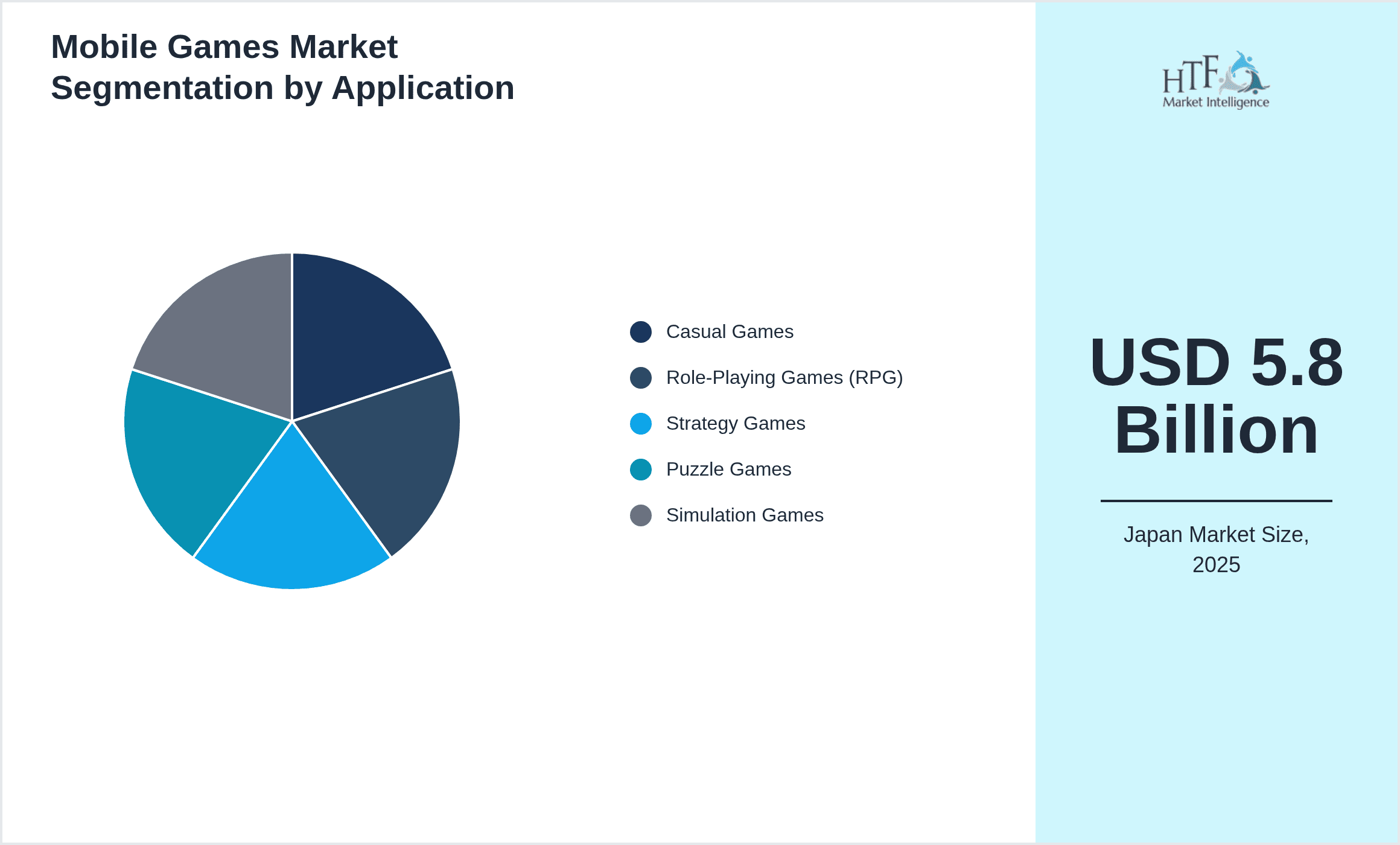
- ◦Casual Games
- ◦Role-Playing Games (RPG)
- ◦Strategy Games
- ◦Puzzle Games
- ◦Simulation Games
- •By Distribution Channel
- ◦App Stores (Google Play, Apple App Store)
- ◦Direct Downloads
- ◦Pre-installed Games
- ◦Third-party Platforms
- •By Regional Zone
- ◦Hokkaido
- ◦Tohoku
- ◦Kanto
- ◦Chubu
- ◦Kansai
- ◦Chugoku
- ◦Shikoku
- ◦Kyushu & Okinawa
Growth Dynamics
- •The growing penetration of smartphones and high-speed internet across Japan has significantly expanded the mobile games user base, enabling more frequent and diverse gaming sessions among consumers of all ages and demographics.
- •Innovative monetization strategies like free-to-play with in-app purchases and emerging subscription-based models drive revenue growth by enhancing user engagement and providing continuous content updates that retain players over longer periods.
- •Integration of cutting-edge technologies such as 5G, augmented reality (AR), and artificial intelligence (AI) enhances gameplay experience and personalization, attracting new users and increasing time spent in mobile games.
- •Strong cultural affinity for role-playing and casual games in Japan supports sustained demand, while local developers tailor content to regional preferences, increasing adoption in key zones like Kanto and Kansai.
- •Collaborations between telecom operators and game developers to offer bundled subscription services and exclusive content promote wider market penetration and diversified revenue streams.

Emerging Market Trends
- •Japan’s mobile games market is witnessing a rise in cloud gaming services, enabling users to stream high-quality games without hardware limitations, which is expected to redefine accessibility and user convenience.
- •The growing preference for social and multiplayer game formats is fostering community-driven engagement, leading to increased in-app spending and long-term user retention.
- •Sustainability and ethical gaming practices are gaining traction, with developers focusing on responsible monetization and data privacy to align with consumer expectations and regulatory standards.
- •Localization strategies are evolving with regional content customization and collaborations with popular franchises to enhance cultural relevance and market appeal in specific Japanese zones.
- •Cross-platform integration trends allow seamless gameplay across mobile, console, and PC, broadening the user base and increasing engagement through synchronized progress and shared rewards.

Market Restraints
- •Stringent regulatory frameworks concerning data privacy, age restrictions, and in-app purchase disclosures impose compliance challenges and potential barriers to rapid content deployment.
- •High competition within the mobile games market leads to significant marketing costs and user acquisition expenses, which can erode profitability for smaller developers.
- •User fatigue due to game saturation and repetitive content may reduce engagement and limit lifetime value of players, necessitating continuous innovation.
- •Monetization backlash from consumers sensitive to aggressive in-app purchase models and advertisements can negatively impact brand reputation and retention.
- •Technological barriers, including device compatibility and network variability in certain regional zones, restrict accessibility for some segments of the population.
Expanding Market Opportunities
- •The rise of subscription-based gaming services presents new revenue opportunities by offering curated content libraries and exclusive benefits to dedicated user segments.
- •Expansion into underpenetrated regional zones such as Kyushu & Okinawa through localized content and targeted marketing campaigns can drive incremental user growth.
- •Partnerships with popular anime and manga franchises enable developers to leverage established fan bases, creating synergistic content appeal and boosting downloads.
- •Integration of blockchain technology and non-fungible tokens (NFTs) introduces novel gameplay elements and ownership models, attracting tech-savvy users and investors.
- •The growing female gamer demographic in Japan offers opportunities for tailored game genres and monetization models that cater to diverse preferences.
Market Challenges
- •Navigating complex and evolving regulatory requirements demands significant resources and can delay product launches or updates, impacting competitiveness.
- •Maintaining user engagement in a market saturated with alternatives requires continuous innovation, high-quality content, and effective community management.
- •Balancing monetization with user experience is challenging, as aggressive revenue models risk alienating players and reducing long-term loyalty.
- •Securing talent with expertise in emerging technologies like AR, AI, and blockchain is increasingly competitive, affecting development cycles and innovation capacity.
- •Cybersecurity threats targeting mobile platforms necessitate robust protection measures, increasing operational costs and complexity for developers and publishers.
Regulatory Framework
- •In 2019, Japan implemented stricter data privacy regulations aligning with global GDPR standards, requiring mobile game companies to enhance user consent processes and data handling practices, significantly impacting user data management.
- •The 2021 introduction of the Act on Specified Commercial Transactions mandates clear disclosure of in-app purchase terms and refunds policies, increasing transparency and consumer protection in mobile gaming transactions.
- •Safety standards for age-appropriate content were reinforced in 2022, compelling developers to integrate parental controls and age verification mechanisms to comply with youth protection laws.
- •In 2023, Japan’s Video Game Rating Organization updated guidelines on loot box disclosures, requiring explicit probability disclosures and limiting certain monetization practices to reduce gambling-like elements.
- •Government incentives launched in 2020 support innovation in digital entertainment, providing grants and tax benefits to companies developing AR/VR and AI-driven mobile gaming solutions.
Market Intelligence
- •15th January 2025, Nintendo Co., Ltd. launched a new mobile RPG titled 'Eternal Quest: Sakura Chronicles' featuring enhanced AR integration and multiplayer modes tailored for the Japanese market. The game leverages advanced AI-driven NPC behavior to deliver immersive gameplay, targeting both casual and core gamers. Strategic marketing campaigns in Kanto and Kansai regions have driven rapid adoption, with initial downloads surpassing 2 million within the first month, positioning the title as a key growth driver in Nintendo's mobile portfolio. This launch underscores Nintendo’s commitment to innovation and regional market customization, strengthening its leadership position amid increasing competition. Source: Nintendo Official Press Release
- •20th March 2025, Sony Interactive Entertainment announced the expansion of its mobile gaming subscription service, 'PlayStation Mobile Plus,' incorporating cloud gaming capabilities and exclusive content partnerships with leading Japanese developers. This initiative aims to enhance user retention through seamless cross-platform access and premium gaming experiences. The service rollout prioritizes high-density regions such as Kanto and Chubu, supported by collaborations with telecom providers to optimize 5G connectivity. Sony projects a significant increase in subscription revenues driven by enhanced user engagement and diversified content offerings. This strategic move reflects broader industry shifts towards subscription-based monetization and technological convergence. Source: Sony Interactive Entertainment Website
- •10th February 2024, CyberAgent, Inc. unveiled a new AI-driven game development platform enabling rapid prototyping and personalized content creation for mobile games. The platform integrates deep learning algorithms to analyze player preferences and adapt game narratives in real-time, enhancing user engagement. Early adoption by mid-sized developers in the Kansai region has demonstrated improved retention rates and monetization efficiency. CyberAgent plans to expand platform access nationwide, fostering innovation within Japan’s mobile gaming ecosystem and supporting smaller studios in competing with industry giants. This development aligns with market trends emphasizing AI and personalized gaming experiences. Source: CyberAgent Corporate Announcement
- •5th April 2025, Bandai Namco Entertainment launched 'Puzzle Masters Online,' a multiplayer puzzle game optimized for mobile devices with integrated social features and seasonal content updates. The title achieved rapid popularity particularly in Southern Japan regions such as Kyushu & Okinawa, supported by influencer marketing and community-building activities. The game’s hybrid monetization model combining ad-support and in-app purchases has delivered strong early revenue streams, contributing to Bandai Namco's diversified mobile portfolio. This launch exemplifies the effectiveness of blending social engagement with innovative revenue models in Japan's competitive mobile games market. Source: Bandai Namco Press Release
Regional Outlook
The Kanto currently holds a significant share of the market, primarily due to several key factors: increasing consumption rates, a burgeoning population, and robust economic momentum. These elements collectively drive demand, positioning this region as a leader in the market. On the other hand, Kyushu & Okinawa is rapidly emerging as the fastest-growing area within the industry. This remarkable growth can be attributed to swift infrastructure development, the expansion of various industrial sectors, and a marked increase in consumer demand. These dynamics make this region a crucial player in shaping future market growth.
In our report, we cover a comprehensive analysis of the following regions and countries:
- Hokkaido
- Tohoku
- Kanto
- Chubu
- Kansai
- Chugoku
- Shikoku
- Kyushu
| Feature | Details |
|---|---|
| Base Year Market Size | USD 5.8 Billion |
| Forecast Year Market Size | USD 12.9 Billion |
| CAGR | 7.9% |
| Forecast Period | 2026 to 2033 |
| YoY Growth | 7.6% |
| Regions Covered | Hokkaido, Tohoku, Kanto, Chubu, Kansai, Chugoku, Shikoku, Kyushu |
| Key Companies | Sony Interactive Entertainment (Japan), Nintendo Co., Ltd. (Japan), Square Enix Holdings Co., Ltd. (Japan), Bandai Namco Entertainment Inc. (Japan), GREE, Inc. (Japan), DeNA Co., Ltd. (Japan), KLab Inc. (Japan), Mixi, Inc. (Japan), Cygames, Inc. (Japan), LINE Corporation (Japan), Capcom Co., Ltd. (Japan), Konami Holdings Corporation (Japan), CyberAgent, Inc. (Japan), Colopl, Inc. (Japan), Square Enix Co., Ltd. (Japan), SEGA Corporation (Japan), Fuji Games Co., Ltd. (Japan), Netmarble Corp. (South Korea), Tencent Holdings Ltd. (China), Nexon Co., Ltd. (Japan), GungHo Online Entertainment, Inc. (Japan), Activision Blizzard, Inc. (United States), Ubisoft Entertainment SA (France), Epic Games, Inc. (United States), Electronic Arts Inc. (United States) |
Japan Mobile Games Market Size, Growth & Revenue 2024-2034 - Table of Contents
Frequently Asked Questions (FAQ):
The Compact Track Loaders market is expected to see value worth 5.3 Billion in 2025.
North America currently leads the market with approximately 45% market share, followed by Europe at 28% and Asia-Pacific at 22%. The remaining regions account for 5% of the global market.
Key growth drivers include increasing construction activities, rising demand for versatile equipment in agriculture, technological advancements in track loader design, and growing preference for compact equipment in urban construction projects.