
South America Smart Wearables Market Scope & Changing Dynamics 2025-2034
South America Smart Wearables Market is segmented by Product Type (Smartwatches, Fitness Bands, Smart Glasses, Smart Clothing, Earwear), Application (Fitness Tracking, Health Monitoring, Entertainment, Communication, Navigation), Distribution Channel (Online Retail, Specialty Stores, Electronics Retailers, Telecom Operators), Technology (Bluetooth-enabled Devices, Wi-Fi-enabled Devices, GPS-enabled Devices), and Geography (Brazil, Argentina, Chile, Peru, Colombia, Rest of South America)
Pricing
Report Overview
Executive Summary
- •The South America Smart Wearables Market is a rapidly evolving landscape encompassing wearable electronic devices such as smartwatches, fitness bands, smart glasses, smart clothing, and earwear. These devices are engineered to provide functionalities including fitness tracking, health monitoring, entertainment, communication, and navigation, leveraging advanced sensors and connectivity technologies like Bluetooth and Wi-Fi. The market serves a diverse consumer base from fitness enthusiasts, healthcare patients, and tech-savvy users to enterprise sectors seeking operational efficiencies. Geographically, the market spans key countries including Brazil, Argentina, Chile, Peru, and Colombia, each demonstrating unique adoption trends driven by economic growth, digital infrastructure expansion, and rising health awareness. The industry is supported by innovations in AI, IoT, and miniaturization, enabling devices to become more functional and user-friendly. Increasing smartphone penetration and the shift towards personalized healthcare are also pivotal. This dynamic ecosystem is influenced by evolving consumer preferences, regulatory frameworks, and competitive strategies, positioning the market for substantial growth from 2025 to 2034.
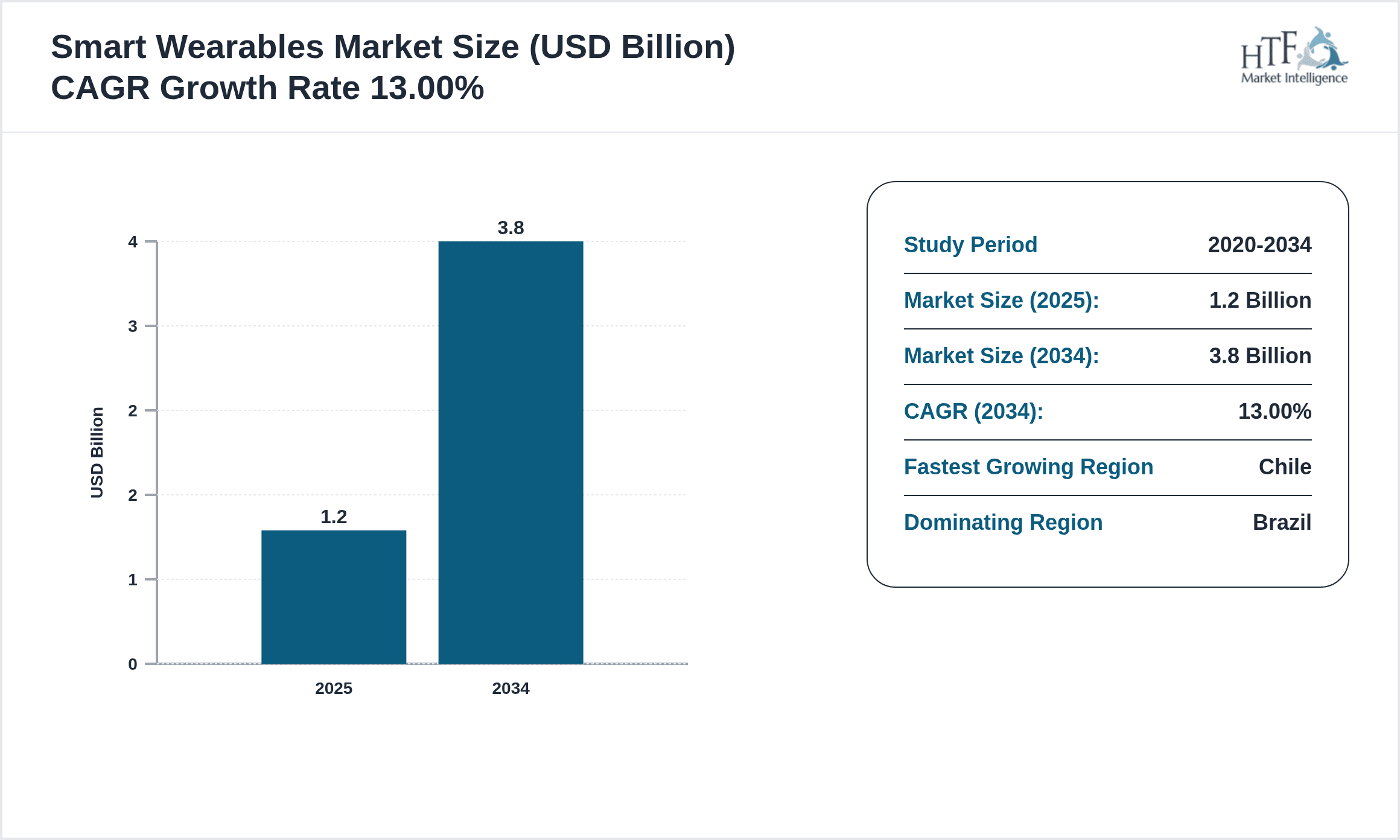
- •Key highlights of the South America Smart Wearables Market include a base market size of USD 1.2 Billion in 2025, forecasted to reach USD 3.8 Billion by 2034, reflecting a robust CAGR of 13.0%. Smartwatches dominate the product segment, capitalizing on multifunctionality and integration with smartphones, while smart glasses represent the fastest-growing type due to emerging AR applications. Fitness tracking remains the leading application, underpinned by growing health consciousness and active lifestyles, with health monitoring rapidly gaining traction driven by chronic disease management. Brazil stands as the dominating market, contributing 40% share with a CAGR of 12.0%, while Chile is the fastest-growing country at 16.5% CAGR. Market dynamics are propelled by technological advancements, increasing consumer adoption, and expanding e-commerce channels, making South America a critical growth frontier in the global smart wearables landscape.
- •The South America Smart Wearables Market offers significant value propositions by enhancing personal health management, enabling real-time fitness tracking, and augmenting communication capabilities. For healthcare providers, these devices facilitate remote patient monitoring and data-driven interventions, improving treatment outcomes. For consumers, smart wearables provide convenience, motivation, and lifestyle enhancements through seamless integration with mobile and cloud platforms. Strategic importance is evident across sectors such as fitness, healthcare, entertainment, and telecommunications, where these devices serve as gateways to digital ecosystems. The market's growth is further supported by government initiatives promoting digital health, investments in wearable technology startups, and partnerships between technology firms and local distributors. Stakeholders benefit from the expanding consumer base, rising disposable incomes, and innovative product launches tailored to regional preferences, positioning South America as a vibrant and promising market for smart wearables over the coming decade.
Competitive Landscape
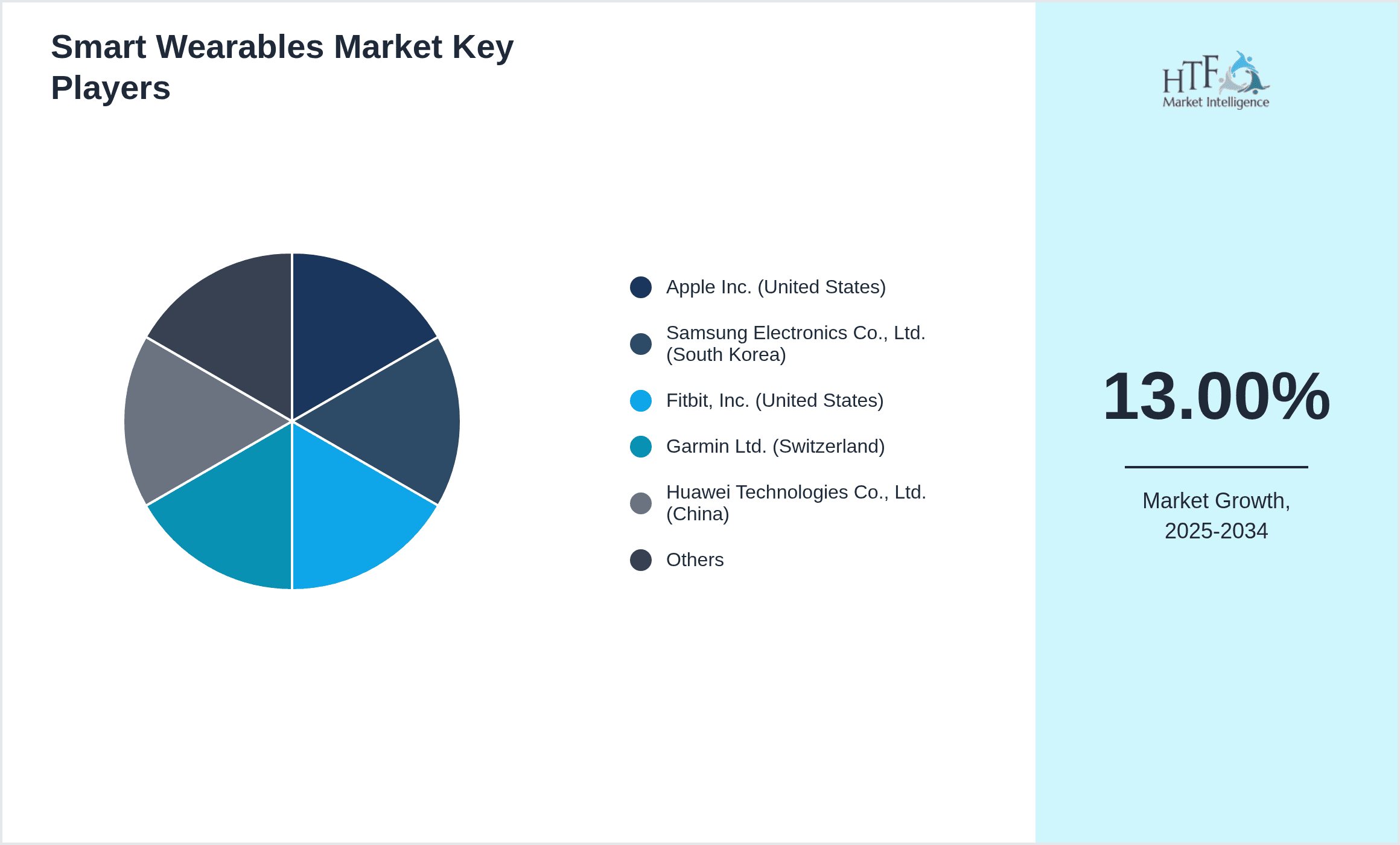
The competitive environment of the South America Smart Wearables Market is characterized by intense rivalry among global technology giants and agile regional players striving for market share through continuous innovation and strategic partnerships. Key competitive strategies include product differentiation via enhanced sensor accuracy, battery life improvements, and integration of AI-enabled health analytics to meet consumer demands for personalized experiences. Companies aggressively invest in R&D to develop cutting-edge wearables with unique features such as augmented reality capabilities and seamless smartphone synchronization. Market positioning often leverages brand loyalty, localized marketing campaigns, and competitive pricing to capture diverse consumer segments across urban and rural areas. Strategic alliances with telecom operators and e-commerce platforms enhance distribution reach and service offerings. Mergers and acquisitions remain pivotal for consolidation and expansion of technological capabilities. The competitive landscape is also influenced by evolving regulatory compliance and data privacy standards, pushing firms to adopt robust security protocols. Looking ahead, innovation pace, ecosystem partnerships, and customer-centric approaches will define leadership in this dynamic market.
Leading Companies in South America Smart Wearables Market
- •Apple Inc. (United States)
- •Samsung Electronics Co., Ltd. (South Korea)
- •Fitbit, Inc. (United States)
- •Garmin Ltd. (Switzerland)
- •Huawei Technologies Co., Ltd. (China)
- •Xiaomi Corporation (China)
- •Sony Corporation (Japan)
- •Polar Electro Oy (Finland)
- •Fossil Group, Inc. (United States)
- •Amazfit (China)
- •Suunto Oy (Finland)
- •Withings (France)
- •Mobvoi Information Technology Co., Ltd. (China)
- •Bose Corporation (United States)
- •Oura Health Ltd. (Finland)
- •Garmin Brasil Ltda. (Brazil)
- •Positivo Tecnologia S.A. (Brazil)
- •Multilaser Industrial S.A. (Brazil)
- •Movile (Brazil)
- •Linio (Chile)
- •MercadoLibre, Inc. (Argentina)
- •Telefónica S.A. (Spain)
- •Claro Brasil (Brazil)
- •TIM Participações S.A. (Brazil)
- •Natura &Co (Brazil)
Market Breakdown
- •By Product Type
- ◦Smartwatches
- ◦Fitness Bands
- ◦Smart Glasses
- ◦Smart Clothing
- ◦Earwear
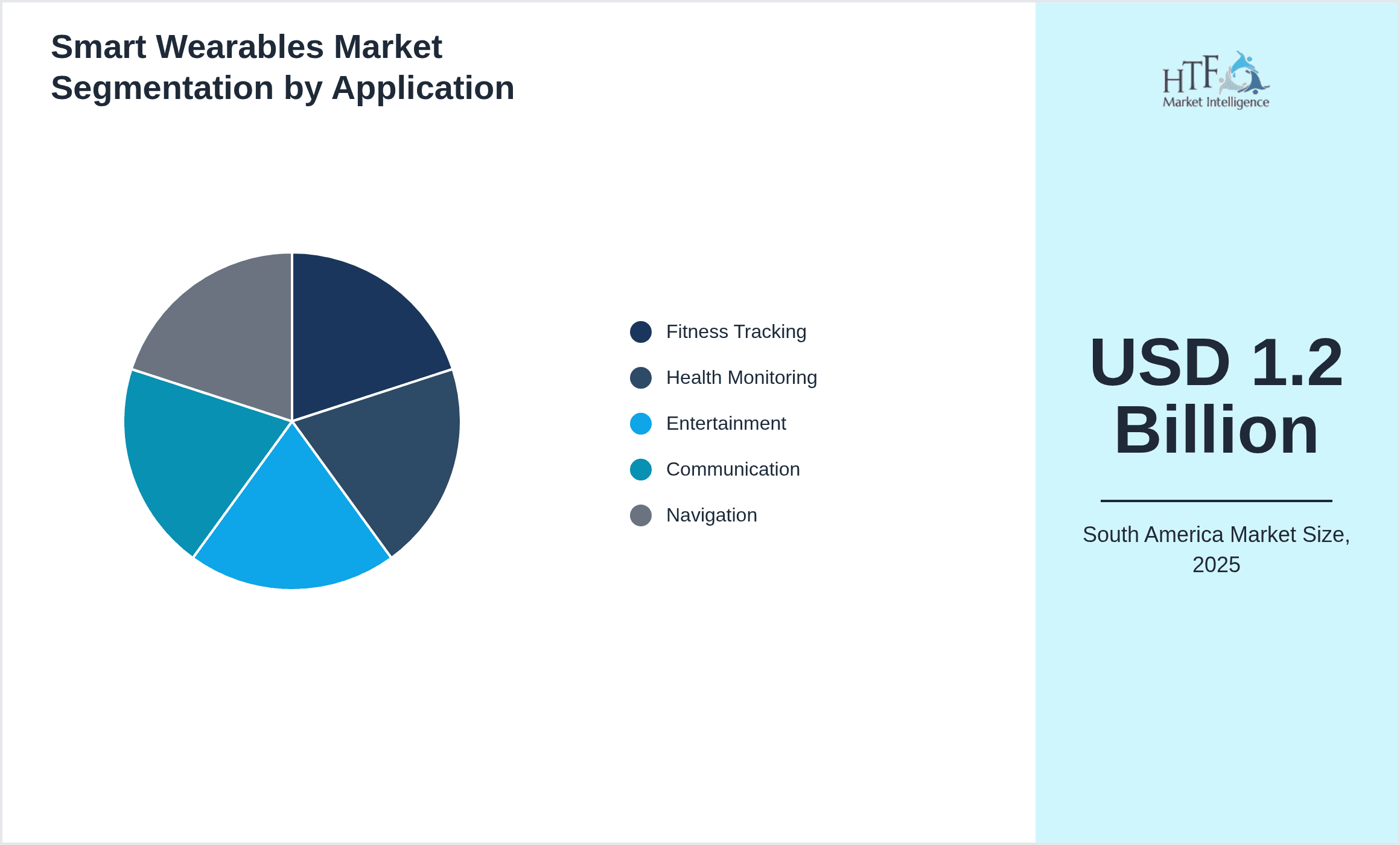
- •By Application
- ◦Fitness Tracking
- ◦Health Monitoring
- ◦Entertainment
- ◦Communication
- ◦Navigation
- •By Distribution Channel
- ◦Online Retail
- ◦Specialty Stores
- ◦Electronics Retailers
- ◦Telecom Operators
- •By Technology
- ◦Bluetooth-enabled Devices
- ◦Wi-Fi-enabled Devices
- ◦GPS-enabled Devices
Growth Dynamics
- •The South America Smart Wearables Market is driven significantly by the rising health consciousness among consumers seeking real-time fitness and wellness monitoring. Increasing prevalence of lifestyle diseases such as diabetes and cardiovascular conditions has amplified demand for health monitoring wearables, aiding early diagnosis and continuous tracking. Moreover, expanding smartphone penetration and affordable internet connectivity in countries like Brazil and Argentina have fueled adoption. Government initiatives promoting digital health infrastructure and telemedicine services further catalyze growth. Additionally, the integration of AI and machine learning technologies enhances device capabilities, providing personalized user experiences and predictive analytics, thereby attracting a wider user base. The youthful demographic and growing fitness culture in metropolitan centers contribute to sustained market expansion. Corporate wellness programs incorporating wearables also boost demand. Collectively, these factors create a favorable environment for rapid market growth projected through 2034.
- •Technological innovations play a pivotal role in propelling market growth by enabling advanced functionalities such as blood oxygen monitoring, ECG tracking, and augmented reality experiences. Companies are investing heavily in R&D to miniaturize sensors and improve battery life, enhancing user convenience. The convergence of IoT and wearable technology facilitates seamless device connectivity and data synchronization with smartphones and cloud platforms. Enhanced software ecosystems offering health insights and remote monitoring capabilities attract healthcare providers and consumers alike. The rise of 5G networks across South America is expected to improve data transmission speeds, fostering real-time analytics and interactive applications. Moreover, the adoption of eco-friendly materials and sustainable manufacturing practices addresses consumer demand for environmentally responsible products, adding a competitive edge to market participants. Collectively, these advancements drive increased adoption and market penetration.
- •Expanding e-commerce platforms and growing digital literacy across South America significantly contribute to market growth by improving product accessibility and consumer awareness. Online retail channels offer a wide product range, competitive pricing, and convenient delivery options, attracting tech-savvy millennials and urban consumers. Social media marketing and influencer endorsements enhance brand visibility and product education. Additionally, distribution partnerships between global brands and local telecom operators facilitate bundled offerings, increasing affordability and reach. The COVID-19 pandemic accelerated digital transformation, prompting consumers to explore health monitoring wearables as preventive tools. Market players also benefit from regional trade agreements that streamline import-export processes, reducing costs. Furthermore, urbanization and rising disposable incomes support consumer spending on lifestyle and health-enhancing gadgets, reinforcing the growth trajectory.
- •The increasing demand for personalized healthcare solutions and remote patient monitoring is a catalyst for the South America Smart Wearables Market. Healthcare providers leverage wearable devices to monitor chronic conditions and promote preventive care, reducing hospital visits and healthcare costs. Insurance companies incentivize wearable adoption through wellness programs, enhancing customer engagement. Integration with telehealth platforms further expands use cases. Moreover, the growing elderly population requires continuous health tracking, creating niche market segments. Collaborations between technology firms and healthcare institutions foster innovation and tailored product development. These dynamics position smart wearables as essential tools in the evolving healthcare landscape, offering improved patient outcomes and operational efficiencies, thereby driving market expansion.
- •Rising awareness about mental health and wellness in South America presents new growth avenues for smart wearables equipped with stress and sleep monitoring features. Consumers increasingly seek holistic health management tools that track physiological and psychological parameters. The integration of mindfulness apps and biofeedback functionalities enhances product appeal. Educational campaigns and wellness initiatives by governments and NGOs promote adoption. Additionally, sports and entertainment sectors utilize wearables for performance analytics and immersive experiences, expanding market reach. The burgeoning startup ecosystem fosters innovative solutions addressing regional needs, supported by venture capital investments. Together, these factors contribute to a robust growth environment, ensuring sustained market momentum through the forecast period.

Market Trends
- •An evident trend in the South America Smart Wearables Market is the convergence of health monitoring and fashion, with manufacturers collaborating with apparel brands to create aesthetically appealing devices. This fusion caters to consumer demand for multifunctional wearables that complement personal style while delivering advanced health insights. Companies are launching customizable watch faces, straps, and smart clothing integrating biometric sensors, enhancing user engagement. This trend expands the market beyond traditional fitness enthusiasts to lifestyle-conscious consumers, driving broader adoption.
- •The adoption of augmented reality (AR) and virtual reality (VR) technologies in smart glasses is shaping a new frontier within the market. Enhanced by 5G connectivity, AR-enabled wearables facilitate immersive gaming, navigation, and remote collaboration experiences. Technology firms in South America are investing in localized content development and partnerships to tailor AR applications for education and enterprise sectors, signaling a strategic shift towards experiential technology integration.
- •Sustainability and eco-conscious manufacturing have become critical trends, with brands introducing wearables made from recycled materials and adopting energy-efficient production methods. This initiative resonates strongly with environmentally aware consumers in South America, influencing purchasing behavior and brand loyalty. The trend also aligns with regional regulations promoting sustainable product life cycles, fostering industry-wide adoption.
- •Integration of AI-driven health analytics and predictive insights in smart wearables is gaining traction. Devices now offer personalized coaching, anomaly detection, and early warning systems for health conditions, elevating their utility beyond basic tracking. Collaborative ventures between tech companies and healthcare providers in South America are accelerating to validate and expand these capabilities, reinforcing the role of wearables in preventive medicine.
- •Expansion of omni-channel retail strategies combining online and offline experiences is enhancing consumer engagement. Brands are leveraging digital platforms for product demonstrations, virtual try-ons, and customer support, while maintaining physical retail presence for tactile experiences. This hybrid approach addresses diverse consumer preferences and increases market penetration across urban and semi-urban regions.
Market Opportunities
- •Significant opportunity lies in expanding smart wearables’ integration with healthcare ecosystems, enabling seamless data sharing between devices and medical providers. This integration supports remote diagnostics, chronic disease management, and personalized treatment plans, opening avenues in telemedicine and health insurance collaborations. South America's developing healthcare infrastructure and rising digital health investments present fertile ground for such advancements.
- •Emerging markets within South America, notably Peru and Colombia, offer untapped potential due to improving economic conditions and increasing smartphone penetration. Targeted marketing and affordable product lines tailored to local consumer needs could accelerate adoption rates in these countries, diversifying regional market shares.
- •Innovation in smart clothing incorporating biometric sensors and flexible electronics provides new product development horizons. These wearables offer continuous health and activity monitoring with enhanced comfort, appealing to fitness and medical segments alike. Collaborations with textile manufacturers and technology firms can expedite commercialization.
- •Growth in corporate wellness programs across South America creates demand for bulk wearable deployments to monitor employee health and productivity. Partnerships with enterprises and government agencies to implement such initiatives present scalable revenue streams for market players.
- •Advancements in battery technology enabling longer device usage and faster charging address key consumer pain points, improving user experience and retention. Investment in research for sustainable power sources aligns with environmental priorities and market expectations.
Market Challenges
- •High costs associated with advanced smart wearables limit affordability for large segments of South America’s population, particularly in lower-income countries. This economic barrier restricts widespread adoption and necessitates cost-effective product strategies without compromising quality or features.
- •Data privacy and security concerns pose significant challenges, as consumers and regulatory bodies demand stringent protection of sensitive health and location information collected by wearables. Compliance with diverse national regulations increases operational complexity for manufacturers and service providers.
- •Limited digital literacy and inconsistent internet connectivity in rural and remote areas hamper the penetration of smart wearables. These infrastructural constraints reduce the effective user base and require targeted educational and connectivity enhancement initiatives to unlock market potential.
- •Fragmented regulatory environments across South American countries create hurdles in product certification, market entry, and cross-border distribution. Companies face challenges navigating varying standards and approval processes, delaying time-to-market and increasing compliance costs.
- •Rapid technological obsolescence and short product life cycles necessitate continuous innovation and substantial R&D investment, putting pressure on profitability and strategic planning, especially for smaller players competing against global giants.
Regulatory Framework
- •Between 2022 and 2025, South American countries have progressively implemented data protection laws aligned with global standards such as the GDPR, necessitating enhanced data security and privacy controls for smart wearable manufacturers and service providers. Compliance mandates include explicit user consent for data collection, secure data storage, and breach notification protocols, impacting device design and software architecture.
- •Brazil's National Health Surveillance Agency (ANVISA) updated its regulations in 2023 to classify certain smart wearables as medical devices when used for diagnostic or therapeutic purposes, imposing stricter certification and quality control requirements. This regulatory development has increased market entry barriers but also elevated product credibility in healthcare applications.
- •Argentina and Chile have introduced updated telecommunications standards governing wireless communication frequencies and device interoperability between 2022 and 2024, ensuring network compatibility and reducing interference, which benefits smart wearable performance and user experience.
- •Regional trade agreements such as Mercosur have facilitated streamlined customs procedures and harmonized technical standards for electronic devices since 2023, reducing import/export complexities and lowering costs for smart wearable distributors and manufacturers operating across member countries.
- •Government initiatives promoting digital health and innovation ecosystems, including grants and tax incentives launched from 2022 onwards, support research and development activities within the smart wearables sector, encouraging startups and established companies to accelerate product advancement and market expansion.
Market Intelligence
- •15th January 2025, Garmin Ltd. launched its cutting-edge fitness smartwatch in Brazil, featuring enhanced GPS accuracy, extended battery life up to 14 days, and integrated health monitoring sensors capable of real-time ECG and blood oxygen level measurement. The launch targets fitness enthusiasts and healthcare-conscious consumers, aiming to expand Garmin’s footprint in South America’s dynamic wearable market. This product represents a strategic push leveraging regional partnerships with telecom providers to offer bundled data plans, enhancing consumer accessibility and adoption rates. The introduction aligns with growing demand for multifunctional smartwatches that blend lifestyle and medical functionalities, positioning Garmin competitively against established players. Source: Garmin Official Press Release
- •20th March 2025, Xiaomi Corporation announced the expansion of its smart glasses lineup with augmented reality capabilities tailored for urban mobility and navigation in Santiago, Chile. The glasses integrate real-time mapping, voice commands, and smartphone notifications, targeting tech-savvy consumers and professionals requiring hands-free connectivity. Xiaomi’s strategic collaboration with local app developers aims to customize AR content to regional languages and cultural preferences, enhancing user engagement. This innovation signifies Xiaomi’s commitment to diversifying its South American product portfolio and capitalizing on emerging AR trends facilitated by increasing 5G network deployments. The launch is expected to stimulate consumer interest in next-generation wearable technologies beyond traditional fitness applications. Source: Xiaomi Corporate Communications
- •10th February 2025, Positivo Tecnologia S.A., a leading Brazilian electronics manufacturer, announced a partnership with a major telecom operator to roll out affordable fitness bands bundled with mobile data plans targeting middle-income consumers across urban centers. The initiative focuses on democratizing access to health tracking technologies and promoting preventive healthcare through digital engagement. Positivo’s localized manufacturing capabilities enable cost-effective production tailored to regional preferences, while the telecom collaboration ensures widespread distribution and service support. This strategic move addresses affordability barriers and strengthens Positivo’s positioning in the competitive smart wearables market. The partnership exemplifies synergistic approaches to expand market reach and consumer adoption in South America. Source: Positivo Tecnologia Press Release
- •5th April 2025, Apple Inc. introduced a new version of the Apple Watch with advanced health monitoring features including blood glucose estimation and enhanced sleep analysis, launching simultaneously in major South American markets such as Brazil and Argentina. The product emphasizes integration with Apple’s Health ecosystem and telemedicine platforms, supporting remote patient monitoring services. Apple’s local retail expansion and marketing campaigns highlight the device’s role in personalized healthcare and fitness, targeting affluent urban populations. This launch consolidates Apple’s leadership in premium smart wearables and underscores its commitment to addressing regional health challenges through technology innovation. The update is anticipated to influence competitor strategies and consumer expectations in the South American market. Source: Apple Newsroom
Regional Outlook
The Brazil currently holds a significant share of the market, primarily due to several key factors: increasing consumption rates, a burgeoning population, and robust economic momentum. These elements collectively drive demand, positioning this region as a leader in the market. On the other hand, Chile is rapidly emerging as the fastest-growing area within the industry. This remarkable growth can be attributed to swift infrastructure development, the expansion of various industrial sectors, and a marked increase in consumer demand. These dynamics make this region a crucial player in shaping future market growth.
In our report, we cover a comprehensive analysis of the following regions and countries:
- Brazil
- Argentina
- Chile
- Peru
- Colombia
- Rest of South America
| Feature | Details |
|---|---|
| Base Year Market Size | USD 1.2 Billion |
| Forecast Year Market Size | USD 3.8 Billion |
| CAGR | 13% |
| Forecast Period | 2026 to 2033 |
| YoY Growth | 12.3% |
| Scope of Report | Market is segmented by Product Type (Smartwatches, Fitness Bands, Smart Glasses, Smart Clothing, Earwear), Application (Fitness Tracking, Health Monitoring, Entertainment, Communication, Navigation), Distribution Channel (Online Retail, Specialty Stores, Electronics Retailers, Telecom Operators), Technology (Bluetooth-enabled Devices, Wi-Fi-enabled Devices, GPS-enabled Devices) |
| Regions Covered | Brazil, Argentina, Chile, Peru, Colombia, Rest of South America |
| Key Companies | Apple Inc. (United States), Samsung Electronics Co., Ltd. (South Korea), Fitbit, Inc. (United States), Garmin Ltd. (Switzerland), Huawei Technologies Co., Ltd. (China), Xiaomi Corporation (China), Sony Corporation (Japan), Polar Electro Oy (Finland), Fossil Group, Inc. (United States), Amazfit (China), Suunto Oy (Finland), Withings (France), Mobvoi Information Technology Co., Ltd. (China), Bose Corporation (United States), Oura Health Ltd. (Finland), Garmin Brasil Ltda. (Brazil), Positivo Tecnologia S.A. (Brazil), Multilaser Industrial S.A. (Brazil), Movile (Brazil), Linio (Chile), MercadoLibre, Inc. (Argentina), Telefónica S.A. (Spain), Claro Brasil (Brazil), TIM Participações S.A. (Brazil), Natura &Co (Brazil) |
South America Smart Wearables Market Scope & Changing Dynamics 2025-2034 - Table of Contents
Frequently Asked Questions (FAQ):
The Compact Track Loaders market is expected to see value worth 5.3 Billion in 2025.
North America currently leads the market with approximately 45% market share, followed by Europe at 28% and Asia-Pacific at 22%. The remaining regions account for 5% of the global market.
Key growth drivers include increasing construction activities, rising demand for versatile equipment in agriculture, technological advancements in track loader design, and growing preference for compact equipment in urban construction projects.