
Global Low Lactose Formula Milk Powder For Pregnant Women Market Size, Growth & Revenue 2025-2034
Global Low Lactose Formula Milk Powder For Pregnant Women Market is segmented by Product Type (Powder Low Lactose Formula Milk Powder, Ready-to-Drink Low Lactose Formula Milk, Concentrate Low Lactose Formula Milk, Organic Low Lactose Formula Milk Powder, Hydrolyzed Low Lactose Formula Milk Powder), Application (Morning Nutrition, Evening Nutrition, Medical Use for Lactose Intolerance, Dietary Supplement, Other Prenatal Uses), Distribution Channel (Supermarkets & Hypermarkets, Pharmacies & Health Stores, Online Retail, Specialty Stores), Packaging Type (Single Serve Packs, Multi-Serve Containers, Bottles, Tetra Pak Cartons), and Geography (North America, LATAM, West Europe, Central & Eastern Europe, Northern Europe, Southern Europe, East Asia, Southeast Asia, South Asia, Central Asia, Oceania, MEA)
Pricing
Report Overview
Executive Summary
- •The global low lactose formula milk powder for pregnant women market is a specialized segment focusing on lactose-reduced dairy nutritional products catering to pregnant women with lactose intolerance or sensitivity. These products are developed to provide essential micronutrients such as calcium, iron, folic acid, and omega-3 fatty acids that support maternal health and fetal development while minimizing symptoms associated with lactose intolerance. The market offers a variety of formulations including powders, ready-to-drink beverages, and concentrates designed for convenience and enhanced nutrient absorption. Increasing prevalence of lactose intolerance alongside rising awareness of prenatal nutrition is fueling demand worldwide. Technological innovations in lactose hydrolysis and enzymatic treatment have enhanced product efficacy and consumer acceptance. The market serves diverse applications such as daily nutritional supplementation, medical dietary management, and targeted prenatal health support. Regulatory frameworks globally emphasize stringent quality, safety, and nutritional guidelines, which have driven product standardization. North America currently dominates due to high consumer awareness and established dairy product infrastructure, while Asia-Pacific is the fastest growing region propelled by increasing maternal health awareness and growing middle-class populations. Overall, the market is expected to witness robust growth through 2034, driven by evolving consumer preferences, product innovation, and expanding geographic reach.
- •Key market highlights include a base market size estimated at USD 1.85 Billion in 2025, with forecasts projecting growth to USD 4.32 Billion by 2034 at a CAGR of 9.8%. The year-on-year growth rate is approximately 9.4%, reflecting steady demand increases worldwide. The dominant product type remains powder formulations, attributed to ease of storage and preparation, while ready-to-drink types exhibit the fastest growth due to convenience and rising on-the-go consumption trends. North America holds the largest market share at 35%, supported by advanced healthcare infrastructure and consumer education, whereas Asia-Pacific is poised for fastest growth at a CAGR of 13.2%, driven by expanding prenatal care initiatives and rising disposable incomes. Emerging markets in Latin America and Middle East & Africa present additional growth avenues due to improving healthcare access and nutritional awareness. The market is witnessing increasing investment in R&D and product innovation, enhancing nutrient profiles and taste, which further propels adoption.
- •The strategic importance of the low lactose formula milk powder market lies in its capacity to address the nutritional needs of pregnant women who are lactose intolerant, a condition affecting a significant global population segment. This niche market supports maternal and fetal health outcomes, reducing pregnancy-related complications associated with nutritional deficiencies and digestive discomfort. It offers value to multiple stakeholders including dairy manufacturers, healthcare providers, nutritionists, and consumers by bridging the gap between lactose intolerance and prenatal nutrition. Additionally, evolving consumer awareness and increasing demand for clean-label, specialized nutrition products underscore its relevance in the growing maternal nutrition industry. Companies investing in product innovation, quality assurance, and geographic expansion stand to capitalize on rising prenatal health consciousness globally, making this market a critical component of the broader dairy and maternal health nutrition sectors.

Competitive Landscape
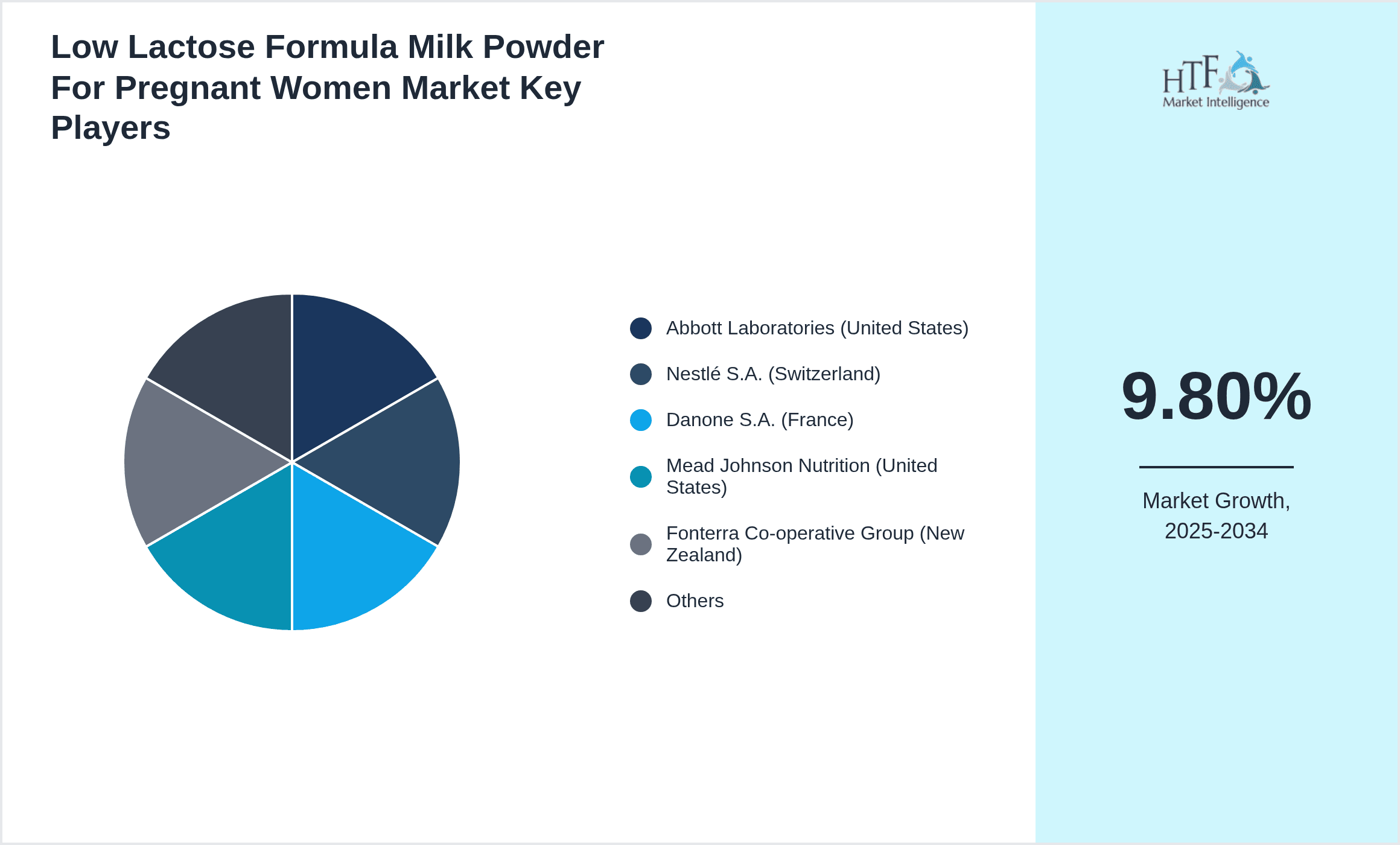
The global low lactose formula milk powder for pregnant women market is characterized by a competitive environment involving multinational dairy corporations, specialized nutritional companies, and emerging regional players. Market dynamics are shaped by continuous product innovation focusing on lactose reduction technologies, enhanced nutrient fortification, and improved taste profiles to meet consumer preferences. Competitive strategies include strategic partnerships with healthcare providers, investment in R&D to develop clean-label and organic formulations, and expansion into emerging markets through localized products and distribution networks. Market positioning revolves around brand reputation, product quality, and compliance with stringent regulatory standards governing prenatal nutrition products. Pricing strategies are influenced by raw material costs, technological complexity, and premium positioning for specialized formulations. Distribution channels span modern retail, online platforms, and healthcare institutions, enabling broad consumer reach. Technological adoption includes enzymatic lactose hydrolysis and fermentation processes, providing competitive advantages. Barriers to entry include high R&D costs, regulatory compliance, and established brand loyalty. Future trends suggest consolidation through mergers and acquisitions, increased focus on sustainability, and digital marketing innovations to enhance consumer engagement.
Leading Companies in Low Lactose Formula Milk Powder For Pregnant Women Market
- •Abbott Laboratories (United States)
- •Nestlé S.A. (Switzerland)
- •Danone S.A. (France)
- •Mead Johnson Nutrition (United States)
- •Fonterra Co-operative Group (New Zealand)
- •FrieslandCampina (Netherlands)
- •Arla Foods (Denmark)
- •Hero Group (Switzerland)
- •Morinaga Milk Industry Co., Ltd. (Japan)
- •Royal FrieslandCampina N.V. (Netherlands)
- •Kraft Heinz Company (United States)
- •Bongrain SA (France)
- •Tatua Co-operative Dairy Company (New Zealand)
- •Yili Group (China)
- •Mengniu Dairy Company Limited (China)
- •Bright Dairy & Food Co., Ltd. (China)
- •Hilmar Cheese Company (United States)
- •Dean Foods (United States)
- •Meiji Holdings Co., Ltd. (Japan)
- •Nestlé Health Science (Switzerland)
- •Danone Nutricia Early Life Nutrition (France)
- •Archer Daniels Midland Company (United States)
- •Lactalis Group (France)
- •Saputo Inc. (Canada)
- •Glanbia plc (Ireland)

Market Breakdown
- •By Product Type
- ◦Powder Low Lactose Formula Milk Powder
- ◦Ready-to-Drink Low Lactose Formula Milk
- ◦Concentrate Low Lactose Formula Milk
- ◦Organic Low Lactose Formula Milk Powder
- ◦Hydrolyzed Low Lactose Formula Milk Powder
- •By Application
- ◦Morning Nutrition
- ◦Evening Nutrition
- ◦Medical Use for Lactose Intolerance
- ◦Dietary Supplement
- ◦Other Prenatal Uses
- •By Distribution Channel
- ◦Supermarkets & Hypermarkets
- ◦Pharmacies & Health Stores
- ◦Online Retail
- ◦Specialty Stores
- •By Packaging Type
- ◦Single Serve Packs
- ◦Multi-Serve Containers
- ◦Bottles
- ◦Tetra Pak Cartons
Growth Dynamics
The global low lactose formula milk powder for pregnant women market is propelled by increasing prevalence of lactose intolerance among women of childbearing age, creating demand for specialized prenatal nutrition products that reduce digestive discomfort while ensuring adequate nutrient intake. Rising awareness of maternal health and fetal development benefits associated with tailored nutrition further drives market expansion. Additionally, technological advancements in lactose hydrolysis and enzymatic treatment enhance product quality and consumer acceptance by improving taste and digestibility. Growing penetration of organized retail and online channels improves accessibility, especially in emerging economies. Furthermore, government initiatives promoting maternal nutrition and prenatal care create a supportive environment for market growth. The convergence of health-conscious consumer behavior, rising disposable income, and expanding middle-class populations in regions such as Asia-Pacific accelerates adoption. Strategic partnerships and product innovation by key players targeting convenience and clean-label trends also sustain momentum. Economic recovery post-pandemic and improved healthcare infrastructure globally contribute to positive growth trajectories. Collectively, these factors underpin a robust CAGR and expanding market size forecasted through 2034.

Market Trends
A prominent trend in the market is the rising consumer preference for ready-to-drink low lactose formula milk options, driven by increasing demand for convenience and portability among pregnant women. There is also a growing shift towards organic and clean-label formulations, reflecting heightened awareness of ingredient transparency and food safety. Technological innovation in lactose removal processes and fortification with plant-based nutrients is gaining traction, supporting product differentiation. Digital marketing and e-commerce platforms have become critical for brand engagement and expanding consumer reach, especially among younger demographics. Additionally, collaborations between dairy manufacturers and healthcare professionals are enhancing product credibility. Rising interest in personalized nutrition and maternal wellness programs further shapes product development and marketing strategies, contributing to dynamic market evolution.
Market Opportunities
Expanding prenatal healthcare infrastructure and increasing government support for maternal nutrition programs in developing regions present significant growth opportunities. Untapped markets in Latin America and Middle East & Africa with rising awareness of lactose intolerance and prenatal care offer potential for market penetration. Innovations focused on enhancing nutrient bioavailability and taste can attract new consumer segments. The integration of digital health platforms and tele-nutrition services provides avenues for product promotion and personalized consumer engagement. Collaborations with healthcare institutions to endorse low lactose formulas as part of standard prenatal care can boost adoption. Additionally, expanding distribution through online channels and specialty stores enables wider accessibility and convenience, further enhancing market prospects.
Market Challenges
The market faces challenges including high production costs associated with lactose reduction technologies and specialized nutrient fortification, which can limit affordability in price-sensitive regions. Regulatory complexities and varying standards across countries complicate product approval and market entry, increasing time to commercialization. Consumer skepticism regarding product efficacy and taste preferences poses barriers to adoption, especially in markets with traditional dietary habits. Competition from alternative prenatal nutrition products such as plant-based supplements and non-dairy milk alternatives intensifies market rivalry. Supply chain disruptions and raw material price volatility further impact manufacturing and pricing strategies. Additionally, limited awareness of lactose intolerance during pregnancy in certain regions restrains market expansion. Addressing these challenges requires strategic innovation, education, and regulatory harmonization efforts.
Regulatory Framework
Between 2020 and 2025, global regulatory bodies including the FDA, EFSA, and Codex Alimentarius Commission have implemented stringent guidelines focused on the safety, labeling, and nutritional adequacy of formula milk products for pregnant women. These regulations mandate comprehensive ingredient disclosure, lactose content limits, and fortification standards to ensure consumer protection and product efficacy. Compliance with Good Manufacturing Practices (GMP) and Hazard Analysis Critical Control Points (HACCP) is compulsory to maintain quality across production and supply chains. Regional mandates require specific nutritional compositions, including minimum levels of folic acid, iron, calcium, and DHA, critical for fetal development and maternal health. Additionally, regulations increasingly emphasize allergen labeling and consumer education to mitigate risks associated with lactose intolerance. Countries are progressively harmonizing standards to facilitate international trade, though some variations remain, requiring tailored regulatory strategies. Enforcement mechanisms include regular audits, product testing, and penalties for non-compliance, which have driven manufacturers to invest in quality assurance and certification. Government programs promoting maternal nutrition often include subsidies or incentives for compliant products, further shaping market dynamics and fostering innovation in formulation and packaging.
Market Intelligence
- •15th January 2025, Nestlé S.A. launched a new line of organic low lactose formula milk powder specifically formulated for pregnant women, incorporating enhanced DHA and folic acid levels to support fetal brain development. The product leverages advanced enzymatic lactose removal technology to improve digestibility and palatability. Targeting health-conscious consumers in North America and Europe, Nestlé aims to strengthen its prenatal nutrition portfolio and respond to growing lactose intolerance awareness. The launch includes an extensive digital marketing campaign and partnerships with healthcare providers to promote product benefits. This strategic introduction is expected to expand Nestlé’s market share and reinforce its position as a leader in maternal nutrition products. Source: Nestlé Official Press Release.
- •3rd March 2025, Abbott Laboratories introduced a ready-to-drink low lactose formula milk beverage for pregnant women in the Asia-Pacific market, designed for on-the-go consumption. The product features a unique blend of essential vitamins and minerals, including calcium, iron, and vitamin D, and is marketed through both traditional retail and e-commerce platforms. Abbott’s innovation addresses convenience trends and rising prenatal health awareness in rapidly urbanizing Asian cities. The launch is supported by clinical studies demonstrating improved nutrient absorption and tolerance among lactose-sensitive pregnant women. Abbott’s initiative aligns with its global strategy to diversify product formats and enhance consumer engagement in emerging markets. Source: Abbott Laboratories Corporate News.
- •20th May 2025, Danone S.A. announced a strategic partnership with a leading maternal health organization to develop educational programs promoting low lactose formula milk powder benefits during pregnancy. This collaboration aims to increase consumer awareness about lactose intolerance and the importance of specialized prenatal nutrition. The initiative includes workshops, digital content, and healthcare provider training across Europe and Latin America. Danone’s approach integrates product innovation with community outreach to drive market adoption and establish trust. The partnership is expected to support Danone’s growth objectives and enhance its corporate social responsibility profile. Source: Danone Press Release.
- •10th September 2025, FrieslandCampina expanded its production capacity for low lactose formula milk powders at its European facility to meet rising demand driven by increased prenatal health awareness. The company invested in state-of-the-art lactose hydrolysis technology and enhanced quality control systems to ensure product consistency and safety. FrieslandCampina’s expansion aims to improve supply chain efficiency and reduce lead times across key markets including North America and Asia-Pacific. This development enables the company to respond swiftly to market trends and scale operations sustainably. Strategic capacity enhancements position FrieslandCampina competitively amid growing global demand for specialized maternal nutrition products. Source: FrieslandCampina Corporate Announcement.
Regional Outlook
The North America currently holds a significant share of the market, primarily due to several key factors: increasing consumption rates, a burgeoning population, and robust economic momentum. These elements collectively drive demand, positioning this region as a leader in the market. On the other hand, Asia-Pacific is rapidly emerging as the fastest-growing area within the industry. This remarkable growth can be attributed to swift infrastructure development, the expansion of various industrial sectors, and a marked increase in consumer demand. These dynamics make this region a crucial player in shaping future market growth.
In our report, we cover a comprehensive analysis of the following regions and countries:
- North America
- LATAM
- West Europe
- Central & Eastern Europe
- Northern Europe
- Southern Europe
- East Asia
- Southeast Asia
- South Asia
- Central Asia
- Oceania
- MEA
| Feature | Details |
|---|---|
| Base Year Market Size | USD 1.85 Billion |
| Forecast Year Market Size | USD 4.32 Billion |
| CAGR | 9.8% |
| Forecast Period | 2026 to 2033 |
| YoY Growth | 9.4% |
| Scope of Report | Market is segmented by Product Type (Powder Low Lactose Formula Milk Powder, Ready-to-Drink Low Lactose Formula Milk, Concentrate Low Lactose Formula Milk, Organic Low Lactose Formula Milk Powder, Hydrolyzed Low Lactose Formula Milk Powder), Application (Morning Nutrition, Evening Nutrition, Medical Use for Lactose Intolerance, Dietary Supplement, Other Prenatal Uses), Distribution Channel (Supermarkets & Hypermarkets, Pharmacies & Health Stores, Online Retail, Specialty Stores), Packaging Type (Single Serve Packs, Multi-Serve Containers, Bottles, Tetra Pak Cartons) |
| Regions Covered | North America, LATAM, West Europe, Central & Eastern Europe, Northern Europe, Southern Europe, East Asia, Southeast Asia, South Asia, Central Asia, Oceania, MEA |
| Key Companies | Abbott Laboratories (United States), Nestlé S.A. (Switzerland), Danone S.A. (France), Mead Johnson Nutrition (United States), Fonterra Co-operative Group (New Zealand), FrieslandCampina (Netherlands), Arla Foods (Denmark), Hero Group (Switzerland), Morinaga Milk Industry Co., Ltd. (Japan), Royal FrieslandCampina N.V. (Netherlands), Kraft Heinz Company (United States), Bongrain SA (France), Tatua Co-operative Dairy Company (New Zealand), Yili Group (China), Mengniu Dairy Company Limited (China), Bright Dairy & Food Co., Ltd. (China), Hilmar Cheese Company (United States), Dean Foods (United States), Meiji Holdings Co., Ltd. (Japan), Nestlé Health Science (Switzerland), Danone Nutricia Early Life Nutrition (France), Archer Daniels Midland Company (United States), Lactalis Group (France), Saputo Inc. (Canada), Glanbia plc (Ireland) |
Global Low Lactose Formula Milk Powder For Pregnant Women Market Size, Growth & Revenue 2025-2034 - Table of Contents
Frequently Asked Questions (FAQ):
The Compact Track Loaders market is expected to see value worth 5.3 Billion in 2025.
North America currently leads the market with approximately 45% market share, followed by Europe at 28% and Asia-Pacific at 22%. The remaining regions account for 5% of the global market.
Key growth drivers include increasing construction activities, rising demand for versatile equipment in agriculture, technological advancements in track loader design, and growing preference for compact equipment in urban construction projects.