
Global -86℃ Ultra-low Temperature Freezers Market Size, Growth & Revenue 2025-2034
Global -86℃ Ultra-low Temperature Freezers Market is segmented by Product Type (Chest Freezers, Upright Freezers, Portable Freezers, Modular Freezers, Customized Freezers), Application Area (Biomedical Research, Clinical Diagnostics, Pharmaceuticals, Biotechnology, Food Industry), Service Model (Installation Services, Maintenance & Repair, Remote Monitoring Services, Calibration Services), Deployment Model (On-premise, Cloud-assisted Monitoring, Hybrid Systems), and Geography (North America, LATAM, West Europe, Central & Eastern Europe, Northern Europe, Southern Europe, East Asia, Southeast Asia, South Asia, Central Asia, Oceania, MEA)
Pricing
Report Overview
Executive Summary
- •The global -86℃ ultra-low temperature freezers market is a critical segment of the refrigeration industry focused on highly specialized cooling equipment designed to preserve temperature-sensitive materials at ultra-low levels, primarily minus 86 degrees Celsius or below. These freezers serve a vital role in biomedical research, clinical diagnostics, pharmaceutical production, and biotechnology, where maintaining sample integrity is essential for accurate testing, vaccine storage, and biological preservation. The market features diverse product types including chest, upright, portable, modular, and customized freezers, each tailored to specific storage needs and operational environments. Technological advancements such as improved insulation, energy-efficient compressors, and digital monitoring systems have enhanced freezer performance, safety, and reliability, reinforcing their indispensability in critical applications. Growth is propelled by expanding biobanking activities, increasing vaccine production, and the rising need for cold chain solutions across emerging and developed markets. Regional demand varies with North America leading due to established healthcare infrastructure and stringent regulatory standards, while Asia-Pacific is the fastest growing owing to rapid healthcare modernization and research investments. The market's trajectory is influenced by factors such as regulatory compliance, technological innovation, and evolving application landscapes, positioning it as a growth-oriented sector with extensive opportunities for manufacturers and end-users alike.
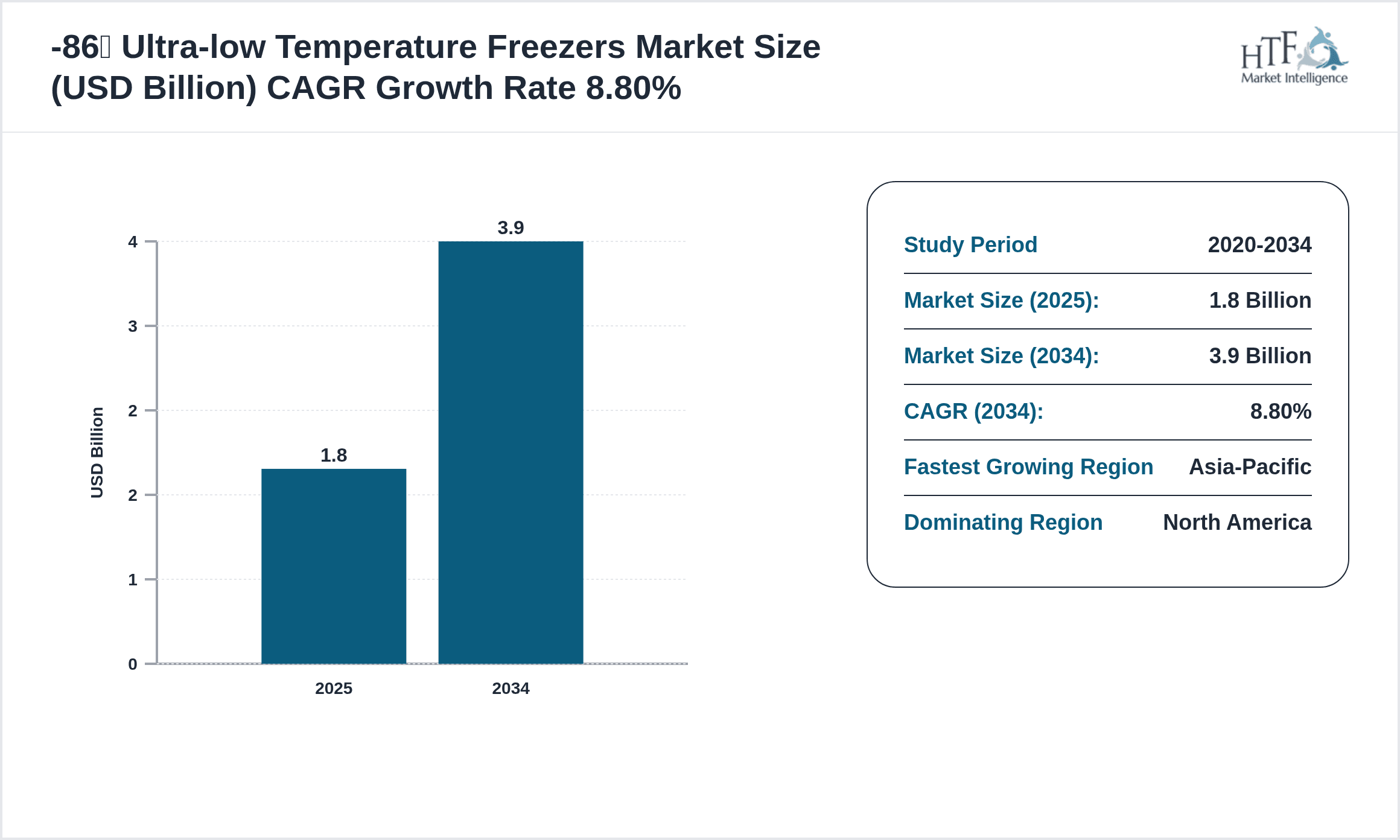
- •Key highlights of the market include a base market size of USD 1.8 billion in 2025 with a forecast to reach USD 3.9 billion by 2034, reflecting a robust CAGR of 8.8%. The year-on-year growth stands at approximately 8.5%, underscoring steady expansion driven by increasing demand for ultra-low temperature preservation solutions globally. North America dominates with a market share of 35%, benefiting from advanced healthcare facilities and regulatory frameworks, while Asia-Pacific emerges as the fastest growing region at a CAGR of 12.3%, fueled by rising healthcare expenditures and biotechnological advancements. Chest freezers represent the leading product type due to their widespread usage in laboratories and medical centers, whereas portable freezers are the fastest growing segment, meeting the needs of remote sample storage and field research. The market landscape is characterized by continuous innovation, increasing adoption across diverse applications, and evolving regional dynamics.
- •This market offers substantial value propositions to healthcare providers, research institutes, pharmaceutical companies, and food industries by ensuring reliable ultra-low temperature storage that safeguards critical materials. The strategic importance lies in enhancing sample viability, supporting vaccine cold chains, and enabling compliance with stringent regulatory standards. Manufacturers benefit from technological advancements and growing demand across emerging economies, while end-users gain from improved freezer efficiencies and operational cost savings. The market’s significance is further amplified by global health initiatives, biopharmaceutical innovations, and the expansion of personalized medicine, reinforcing the necessity for ultra-low temperature freezers as foundational equipment in scientific and medical ecosystems worldwide.
Competitive Landscape
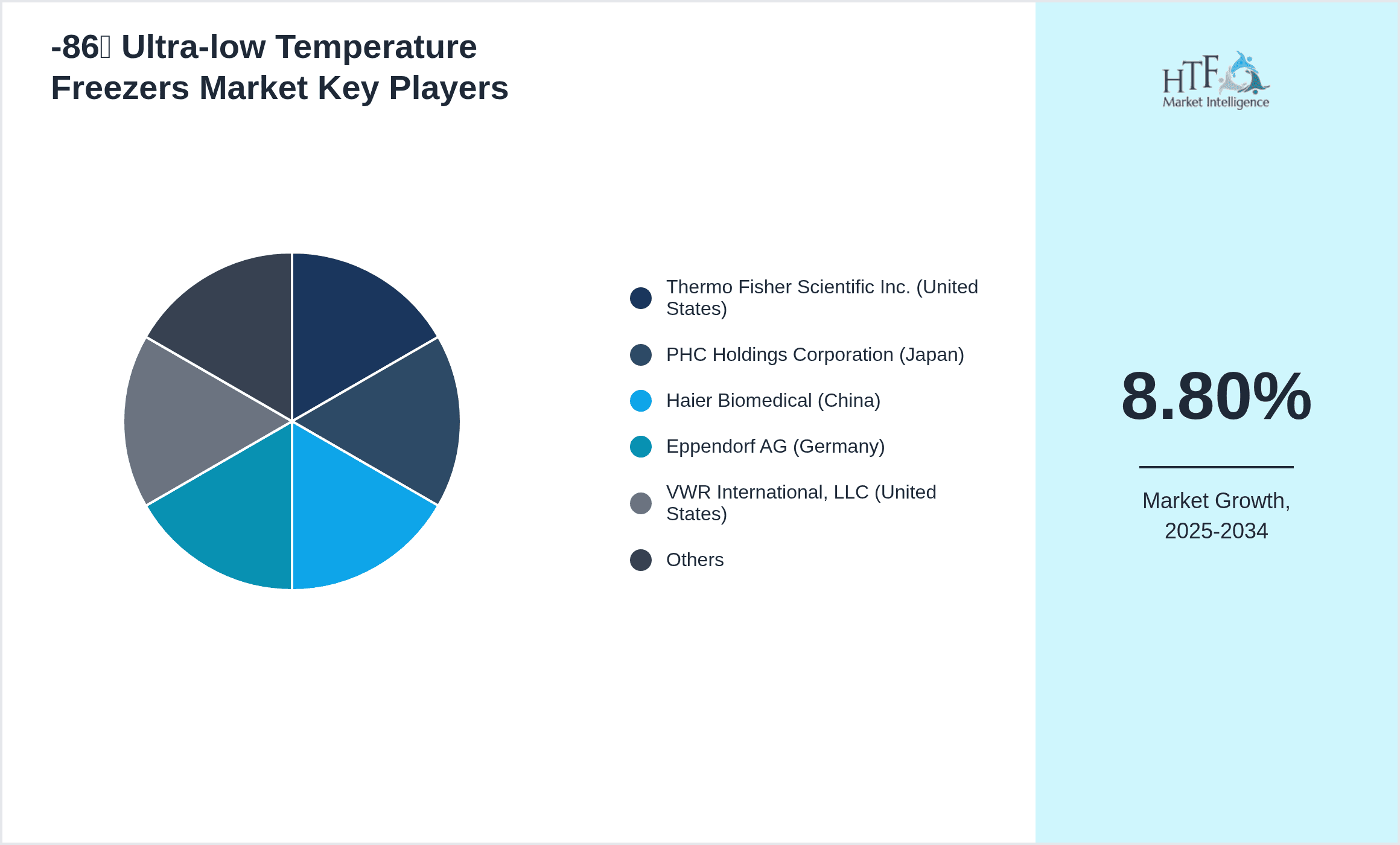
The competitive landscape of the global -86℃ ultra-low temperature freezers market is shaped by a mix of established multinational corporations and emerging regional players focusing on innovation, product differentiation, and strategic partnerships. Key competitive strategies include investment in R&D for energy-efficient and environmentally sustainable technologies, expansion of product portfolios to address diverse end-user needs, and enhancement of digital monitoring and control systems. Companies emphasize compliance with international standards and certifications to strengthen their market positioning. Pricing strategies vary regionally, influenced by local manufacturing capabilities and demand dynamics. Distribution channels encompass direct sales, authorized dealers, and online platforms, facilitating broad market penetration. Mergers and acquisitions, joint ventures, and collaborations are pivotal for technology acquisition and market expansion, particularly in emerging regions. Market entry barriers include high capital requirements and regulatory compliances, while emerging trends such as modular and portable freezers provide new avenues for competitive advantage. The ongoing focus on innovation, operational excellence, and customer-centric solutions is expected to intensify competition and drive market evolution over the forecast period.
Leading Companies in -86℃ Ultra-low Temperature Freezers Market
- •Thermo Fisher Scientific Inc. (United States)
- •PHC Holdings Corporation (Japan)
- •Haier Biomedical (China)
- •Eppendorf AG (Germany)
- •VWR International, LLC (United States)
- •SANYO Electric Co., Ltd. (Japan)
- •Liebherr-International AG (Switzerland)
- •Helmer Scientific (United States)
- •Arctiko A/S (Denmark)
- •B Medical Systems (Luxembourg)
- •Panasonic Healthcare Co., Ltd. (Japan)
- •China Haier (China)
- •Dometic Group AB (Sweden)
- •So-Low Environmental Equipment Company (United States)
- •Revco (United States)
- •Binder GmbH (Germany)
- •Baker Company (United States)
- •Scinics Corporation (Japan)
- •Nuaire Ltd (United Kingdom)
- •Vestfrost Solutions (Denmark)
- •Haier Group Corporation (China)
- •Sanyo Biomedical Co., Ltd. (Japan)
- •PHCbi (Japan)
- •Mirus Bio LLC (United States)
- •Fisher Scientific (United States)
Market Breakdown
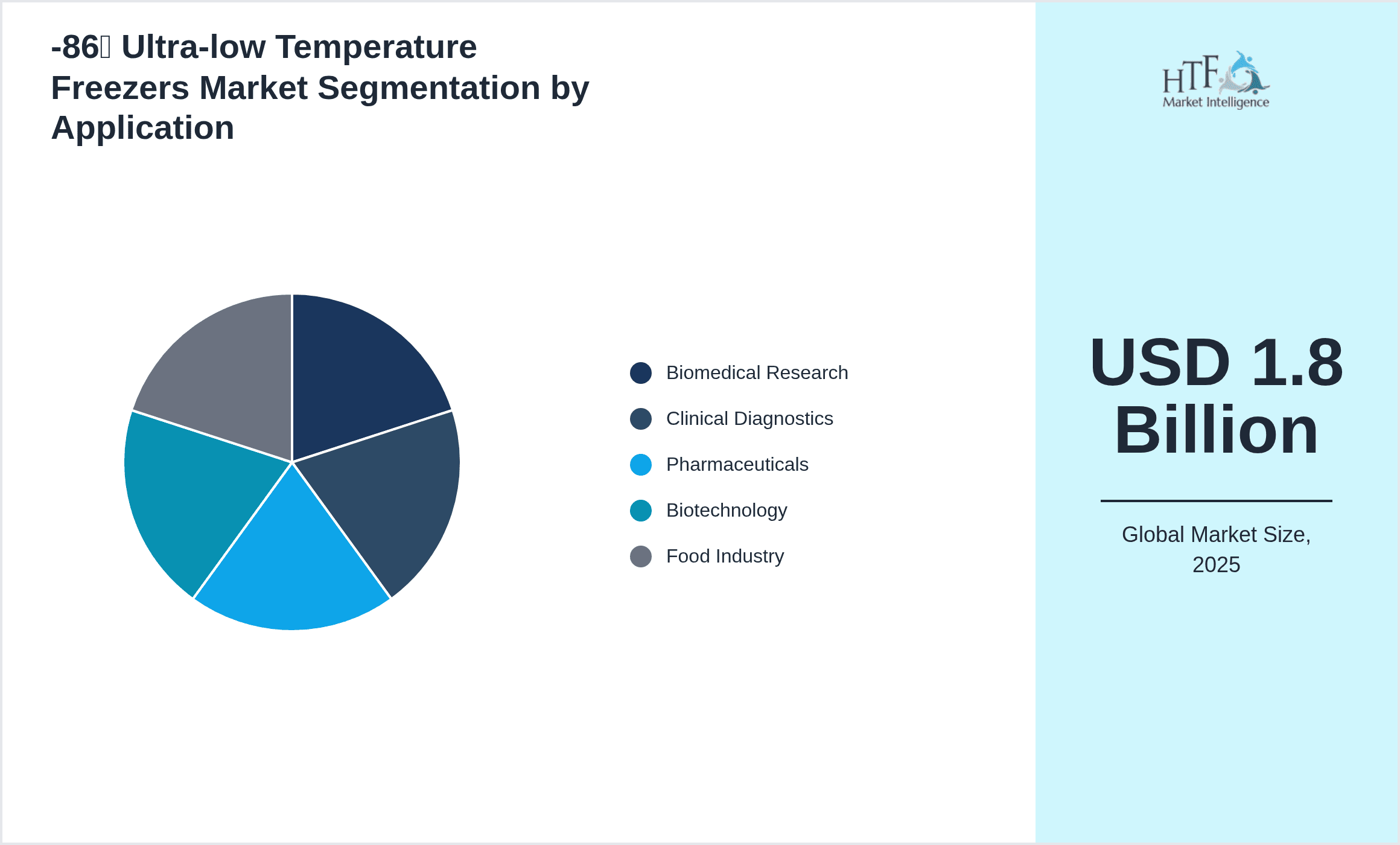
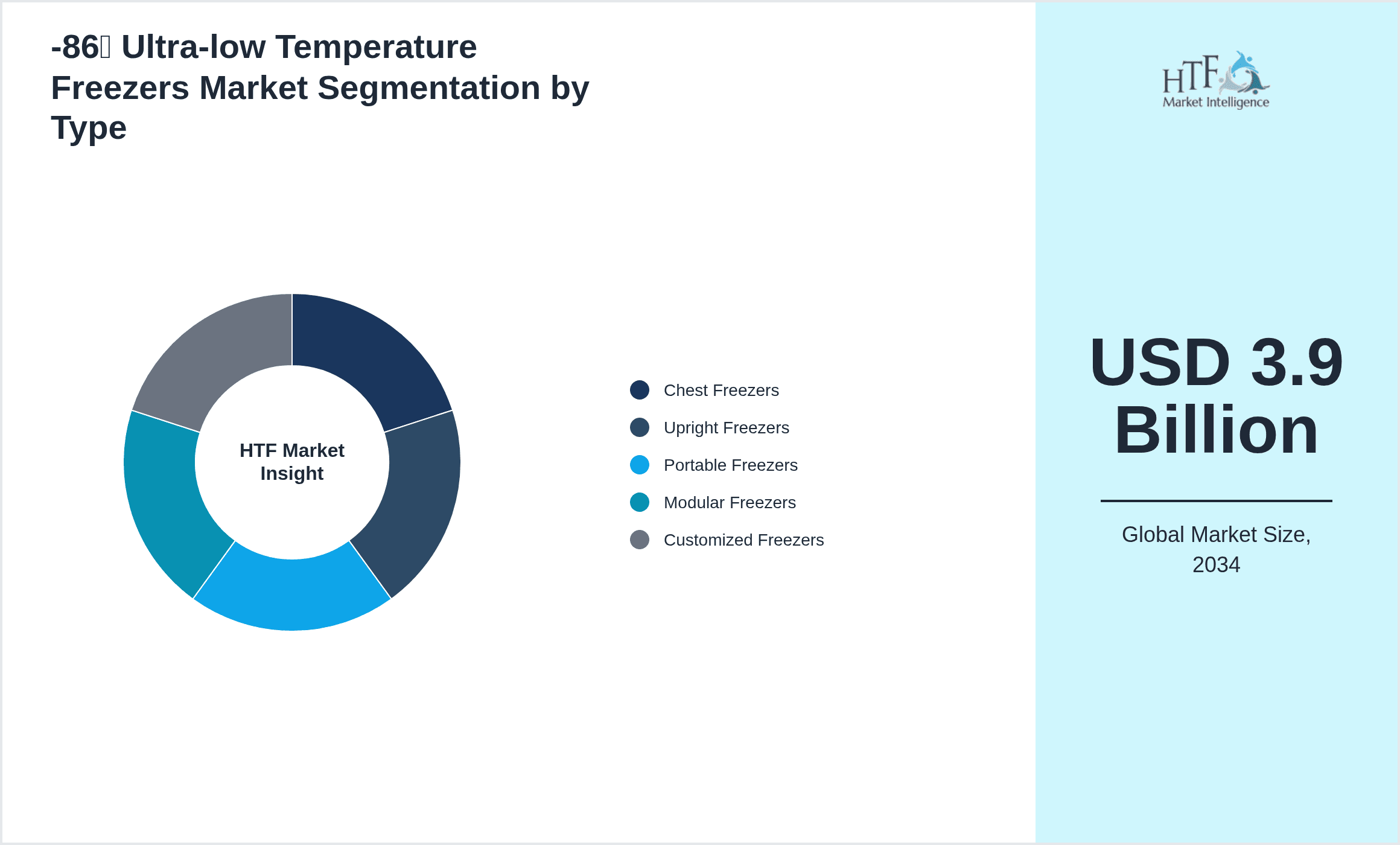
- •By Product Type
- ◦Chest Freezers
- ◦Upright Freezers
- ◦Portable Freezers
- ◦Modular Freezers
- ◦Customized Freezers
- •By Application Area
- ◦Biomedical Research
- ◦Clinical Diagnostics
- ◦Pharmaceuticals
- ◦Biotechnology
- ◦Food Industry
- •By Service Model
- ◦Installation Services
- ◦Maintenance & Repair
- ◦Remote Monitoring Services
- ◦Calibration Services
- •By Deployment Model
- ◦On-premise
- ◦Cloud-assisted Monitoring
- ◦Hybrid Systems
Growth Dynamics
The global -86℃ ultra-low temperature freezers market is primarily driven by the rising demand for vaccine storage solutions, especially in light of recent global health initiatives and pandemic preparedness efforts. Biomedical research institutions and pharmaceutical companies require reliable ultra-low temperature storage to preserve biological samples, which fuels continuous investment in advanced freezer technologies. Additionally, increasing government funding for healthcare infrastructure in emerging economies supports market growth by enabling modernization of diagnostic and research facilities. Technological innovations focusing on energy efficiency, reduced carbon footprint, and enhanced temperature uniformity also stimulate adoption by reducing operational costs and ensuring sample integrity. The growing prevalence of chronic diseases and expansion of personalized medicine further boost the need for biobanking and ultra-low temperature storage. Furthermore, the integration of digital monitoring systems improves operational reliability and compliance with regulatory standards, enhancing end-user confidence. These growth dynamics collectively contribute to significant market expansion throughout the forecast period.
Market Trends
One prominent trend in the -86℃ ultra-low temperature freezers market is the increasing adoption of portable and modular freezer systems that facilitate field research and remote clinical applications, enabling sample preservation outside traditional laboratory settings. Advances in IoT-enabled monitoring and control systems allow real-time temperature tracking and predictive maintenance, improving reliability and reducing downtime. Another significant trend is the shift towards environmentally friendly refrigerants and energy-efficient compressors to comply with global sustainability goals and reduce operational expenses. Additionally, manufacturers are focusing on designing ergonomic and space-saving freezer models to optimize laboratory footprint. The market also witnesses consolidation through strategic collaborations and partnerships aimed at integrating complementary technologies and expanding geographic reach. These trends reflect evolving customer demands, technological progress, and environmental considerations shaping the market.
Market Opportunities
There exists significant opportunity for market players to capitalize on the expanding biobanking sector fueled by genomics research and personalized medicine, which necessitates advanced ultra-low temperature storage solutions. Emerging economies in Asia-Pacific and Latin America present untapped markets where increasing healthcare investments and infrastructure development create demand for reliable freezers. Integration of AI and machine learning for predictive maintenance and temperature anomaly detection offers innovative service models with enhanced value propositions. Furthermore, collaborations with vaccine manufacturers and public health agencies to provide tailored freezer solutions for cold chain logistics can unlock new revenue streams. Continuous development of energy-efficient and eco-friendly freezer technologies can also address growing environmental regulations, enhancing market acceptance and sustainability credentials. These opportunities position the market for robust growth and technological evolution in the coming decade.
Market Challenges
The market faces challenges related to the high initial capital expenditure required for ultra-low temperature freezers, which can limit adoption especially in resource-constrained regions. Maintenance complexity and operational costs due to specialized components and consumables pose barriers for smaller laboratories and clinics. The stringent regulatory environment governing temperature-sensitive storage demands compliance with multiple international standards, increasing certification costs and time to market for new products. Supply chain disruptions and sourcing constraints for critical components can affect manufacturing continuity and delivery timelines. Additionally, the market contends with competition from alternative preservation technologies such as liquid nitrogen storage, which may offer cost advantages in certain scenarios. Addressing these challenges requires strategic investments in cost optimization, supply chain resilience, and regulatory navigation.
Regulatory Framework
Between 2020 and 2025, key regulatory developments have shaped the ultra-low temperature freezer market by imposing stringent safety, environmental, and performance standards. The U.S. Food and Drug Administration (FDA) updated guidelines for storage of biological products, emphasizing temperature monitoring and alarm systems to prevent sample degradation. The European Union introduced the Ecodesign Directive revisions mandating energy efficiency standards and use of eco-friendly refrigerants in refrigeration equipment. Additionally, the International Electrotechnical Commission (IEC) promulgated updated safety standards (IEC 61010 series) for laboratory equipment including ultra-low temperature freezers to ensure operator and sample safety. Countries in Asia-Pacific have harmonized local regulations with global standards to facilitate export and maintain quality benchmarks. Furthermore, data integrity regulations by agencies such as EMA and Health Canada require enhanced digital record keeping and audit trails for storage equipment. These regulations collectively drive manufacturers to innovate and comply, impacting product design, certification processes, and market entry strategies.
Market Intelligence
- •15th January 2025, Thermo Fisher Scientific Inc. launched the latest model of their ultra-low temperature freezer featuring an advanced energy-efficient compressor system that reduces power consumption by 30%. This model integrates advanced IoT-enabled remote monitoring allowing real-time temperature alerts and predictive maintenance capabilities, targeting pharmaceutical and biobanking customers. The company aims to enhance sample safety while reducing operational costs, supporting large-scale vaccine storage requirements globally. This innovation aligns with increasing regulatory demands for continuous temperature control and digital compliance. Source: Thermo Fisher Scientific Official Press Release
- •10th March 2025, PHC Holdings Corporation unveiled a modular ultra-low temperature freezer platform designed for scalability in biomedical research facilities. The system allows users to customize freezer capacity and configuration, facilitating optimized laboratory space utilization and flexible sample management. The introduction addresses growing demand from Asia-Pacific markets where research infrastructure is rapidly expanding. PHC's strategy focuses on combining energy efficiency with user-friendly design to capture emerging market segments. Source: PHC Holdings Annual Report 2025
- •5th May 2025, Haier Biomedical announced a strategic partnership with a leading vaccine manufacturer to supply portable ultra-low temperature freezers for field distribution and remote storage. This collaboration aims to enhance vaccine cold chain logistics in underserved regions, leveraging Haier’s expertise in portable refrigeration technology. The initiative supports global immunization programs and addresses challenges in maintaining vaccine potency during transportation. The partnership is expected to expand Haier’s footprint in the cold chain segment and foster innovation in portable freezer design. Source: Haier Biomedical Corporate Announcement
- •20th July 2025, Eppendorf AG completed the acquisition of a niche manufacturer specializing in eco-friendly ultra-low freezers using natural refrigerants. This acquisition strengthens Eppendorf’s product portfolio with environmentally sustainable solutions that meet evolving regulatory requirements and customer demands for green technologies. The move is anticipated to accelerate market penetration in Europe and North America, where environmental compliance is increasingly prioritized. Eppendorf aims to leverage synergies in R&D and distribution to enhance competitive advantage. Source: Eppendorf AG Press Release
Regional Outlook
The North America currently holds a significant share of the market, primarily due to several key factors: increasing consumption rates, a burgeoning population, and robust economic momentum. These elements collectively drive demand, positioning this region as a leader in the market. On the other hand, Asia-Pacific is rapidly emerging as the fastest-growing area within the industry. This remarkable growth can be attributed to swift infrastructure development, the expansion of various industrial sectors, and a marked increase in consumer demand. These dynamics make this region a crucial player in shaping future market growth.
In our report, we cover a comprehensive analysis of the following regions and countries:
- North America
- LATAM
- West Europe
- Central & Eastern Europe
- Northern Europe
- Southern Europe
- East Asia
- Southeast Asia
- South Asia
- Central Asia
- Oceania
- MEA
| Feature | Details |
|---|---|
| Base Year Market Size | USD 1.8 Billion |
| Forecast Year Market Size | USD 3.9 Billion |
| CAGR | 8.8% |
| Forecast Period | 2026 to 2033 |
| YoY Growth | 8.5% |
| Scope of Report | Market is segmented by Product Type (Chest Freezers, Upright Freezers, Portable Freezers, Modular Freezers, Customized Freezers), Application Area (Biomedical Research, Clinical Diagnostics, Pharmaceuticals, Biotechnology, Food Industry), Service Model (Installation Services, Maintenance & Repair, Remote Monitoring Services, Calibration Services), Deployment Model (On-premise, Cloud-assisted Monitoring, Hybrid Systems) |
| Regions Covered | North America, LATAM, West Europe, Central & Eastern Europe, Northern Europe, Southern Europe, East Asia, Southeast Asia, South Asia, Central Asia, Oceania, MEA |
| Key Companies | Thermo Fisher Scientific Inc. (United States), PHC Holdings Corporation (Japan), Haier Biomedical (China), Eppendorf AG (Germany), VWR International, LLC (United States), SANYO Electric Co., Ltd. (Japan), Liebherr-International AG (Switzerland), Helmer Scientific (United States), Arctiko A/S (Denmark), B Medical Systems (Luxembourg), Panasonic Healthcare Co., Ltd. (Japan), China Haier (China), Dometic Group AB (Sweden), So-Low Environmental Equipment Company (United States), Revco (United States), Binder GmbH (Germany), Baker Company (United States), Scinics Corporation (Japan), Nuaire Ltd (United Kingdom), Vestfrost Solutions (Denmark), Haier Group Corporation (China), Sanyo Biomedical Co., Ltd. (Japan), PHCbi (Japan), Mirus Bio LLC (United States), Fisher Scientific (United States) |
Global -86℃ Ultra-low Temperature Freezers Market Size, Growth & Revenue 2025-2034 - Table of Contents
Frequently Asked Questions (FAQ):
The Compact Track Loaders market is expected to see value worth 5.3 Billion in 2025.
North America currently leads the market with approximately 45% market share, followed by Europe at 28% and Asia-Pacific at 22%. The remaining regions account for 5% of the global market.
Key growth drivers include increasing construction activities, rising demand for versatile equipment in agriculture, technological advancements in track loader design, and growing preference for compact equipment in urban construction projects.