
South America Digital Motion Picture Camera Market - Outlook 2020-2034
South America Digital Motion Picture Camera Market is segmented by Type (Cinema Cameras, Broadcast Cameras, DSLR Cameras, Mirrorless Cameras, Action Cameras), Application (Feature Films, Television Production, Advertising, Documentary, Independent Films), Deployment Model (Studio-Based Production, On-Location Shooting, Mobile Production Units), Service Type (Sales, Rental, Maintenance and Support, Training and Workshops), and Geography (Brazil, Argentina, Chile, Peru, Colombia, Rest of South America)
Pricing
Report Overview
Executive Summary
- •The South America Digital Motion Picture Camera market represents a niche yet rapidly expanding segment within the broader audiovisual equipment industry, primarily serving the film, television, advertising, and documentary sectors. This market includes a diverse portfolio of digital cameras optimized for motion picture capture, ranging from high-end cinema cameras that support ultra-high-definition video and advanced color science, to versatile DSLR and mirrorless models favored by independent filmmakers for their portability and cost-effectiveness. The proliferation of content creation platforms, increasing demand for regional storytelling, and rising investments in media infrastructure across South America have propelled growth in this market. Brazil dominates the region’s market share, driven by a robust film production ecosystem and government incentives supporting audiovisual projects. Concurrently, emerging markets such as Chile and Argentina are experiencing accelerated adoption of advanced digital camera technologies, fostering a competitive environment and innovation. The market is characterized by significant technological evolution, including higher resolution sensors, improved low-light performance, and seamless integration with post-production workflows, which collectively enhance production quality and workflow efficiency. Challenges include high equipment costs, technical skill requirements, and infrastructural limitations in some regions. However, opportunities abound in digital transformation, growing independent film sectors, and increasing demand for localized content. This report provides a detailed analysis of market size, growth trends, competitive landscape, regulatory influences, and key regional dynamics for the period 2020-2034, delivering actionable insights for industry stakeholders and investors.
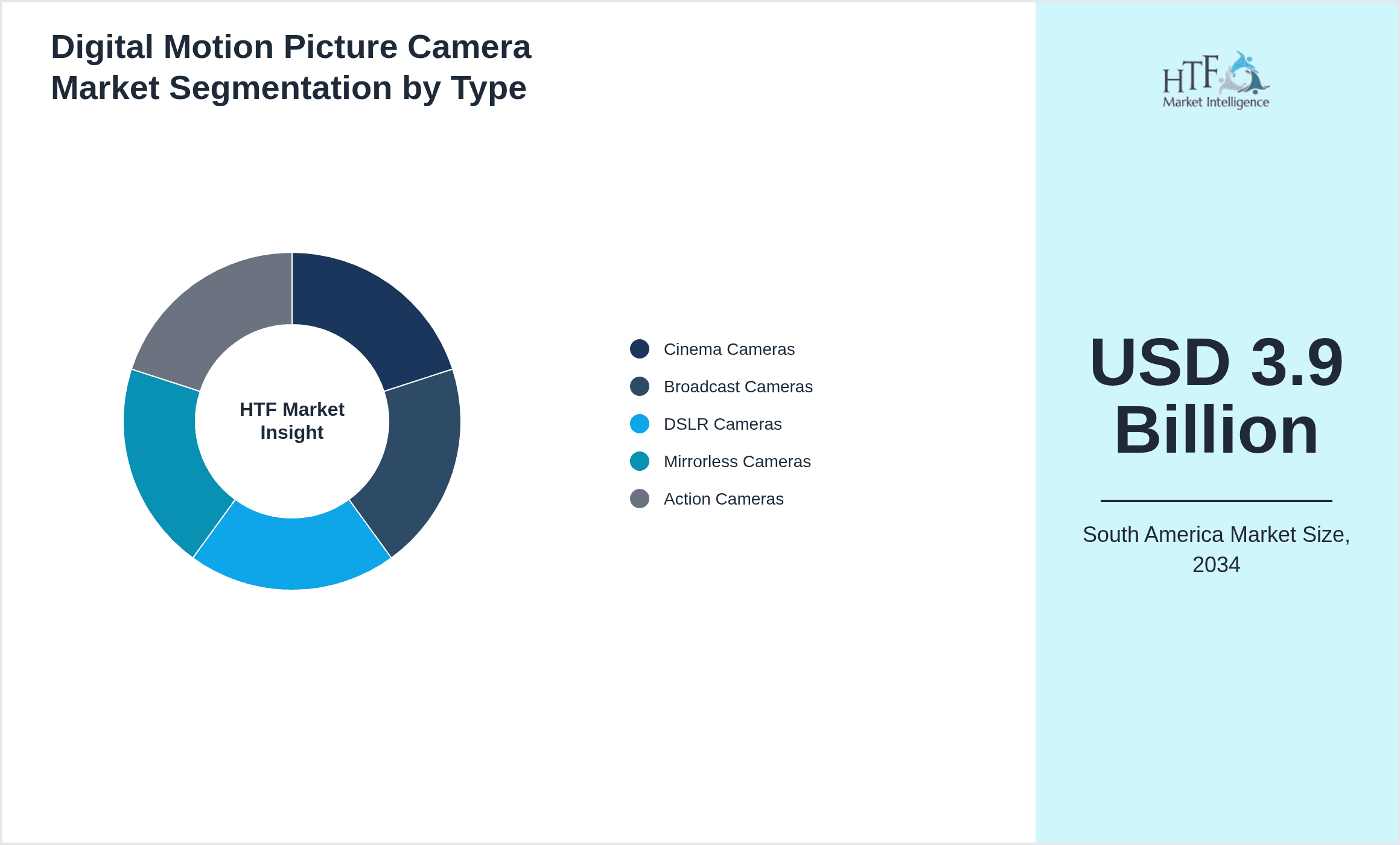
- •Key market highlights include a base market size of USD 1.8 Billion in 2025, projected to grow to USD 3.9 Billion by 2034, reflecting a compound annual growth rate (CAGR) of 8.5%. Brazil holds the dominant position with approximately 42% market share, while Chile is identified as the fastest growing country with an anticipated CAGR of 11.2%. Leading product types such as cinema cameras maintain technological leadership, whereas mirrorless cameras exhibit the fastest growth due to their adaptability and cost efficiency. Year-on-year growth remains robust at 8.4%, supported by increasing media production activities and technology adoption.
- •The value proposition of this market lies in its critical role in enabling high-quality content production that meets global cinematic standards while supporting local storytelling. Digital motion picture cameras empower filmmakers and media producers with advanced imaging capabilities, fostering creative expression and enhancing content competitiveness. Strategically, the market is essential to South America’s growing media and entertainment ecosystem, influencing employment, cultural exports, and technological innovation. Stakeholders including camera manufacturers, content producers, and technology vendors benefit from understanding regional market dynamics, regulatory frameworks, and investment trends to capture emerging opportunities and mitigate challenges.

Competitive Landscape
The South America Digital Motion Picture Camera market is highly competitive, characterized by the presence of global technology leaders and regional distributors who continuously innovate to address the evolving demands of filmmakers and content creators. Competitive strategies revolve around technological differentiation, including sensor resolution, dynamic range, and connectivity features, enabling seamless integration with post-production pipelines. Market players invest heavily in research and development to launch advanced models with superior image quality, ergonomics, and enhanced low-light capabilities. Pricing strategies vary, with premium cinema cameras commanding high price points targeted at professional production houses, while more affordable DSLR and mirrorless cameras cater to independent filmmakers and small studios. Distribution channels blend direct sales, authorized dealers, and emerging e-commerce platforms, expanding market reach. Strategic partnerships with content producers and rental houses enhance market penetration and brand loyalty. Additionally, mergers and acquisitions focus on consolidating technology portfolios and expanding geographic presence within South America. Despite rising competition, barriers such as high capital expenditure, technical expertise demands, and infrastructure disparities influence market entry and expansion. Future competitive trends indicate increasing emphasis on wireless connectivity, AI-driven camera functionalities, and environmentally sustainable manufacturing processes.
Leading Companies in South America Digital Motion Picture Camera Market
- •Arri AG (Germany)
- •RED Digital Cinema Camera Company (United States)
- •Sony Corporation (Japan)
- •Canon Inc. (Japan)
- •Panasonic Corporation (Japan)
- •Blackmagic Design Pty Ltd. (Australia)
- •Fujifilm Holdings Corporation (Japan)
- •GoPro, Inc. (United States)
- •JVC Kenwood Corporation (Japan)
- •Ikegami Tsushinki Co., Ltd. (Japan)
- •Samsung Electronics Co., Ltd. (South Korea)
- •Panavision Holdings, Inc. (United States)
- •Canon Latin America Inc. (Brazil)
- •Sony Latin America (Brazil)
- •Arri Brazil Ltda. (Brazil)
- •RED Digital Cinema Latin America (Chile)
- •Blackmagic Design Latin America (Argentina)
- •GoPro Latin America (Brazil)
- •Fujifilm Latin America (Colombia)
- •Panasonic Latin America (Brazil)
- •Ikegami Latin America (Chile)
- •Samsung Latin America (Argentina)
- •JVC Latin America (Peru)
- •Canon Argentina S.A. (Argentina)
- •Sony Argentina S.A. (Argentina)

Market Breakdown
- •By Type
- ◦Cinema Cameras
- ◦Broadcast Cameras
- ◦DSLR Cameras
- ◦Mirrorless Cameras
- ◦Action Cameras
- •By Application
- ◦Feature Films
- ◦Television Production
- ◦Advertising
- ◦Documentary
- ◦Independent Films
- •By Deployment Model
- ◦Studio-Based Production
- ◦On-Location Shooting
- ◦Mobile Production Units
- •By Service Type
- ◦Sales
- ◦Rental
- ◦Maintenance and Support
- ◦Training and Workshops
Growth Dynamics
The South America Digital Motion Picture Camera market growth is driven primarily by the robust expansion of the regional film and television production sectors, particularly in Brazil and Argentina, where government incentives and tax breaks have bolstered content creation. This has led to increased demand for high-performance digital cameras that support cinematic storytelling and high-resolution broadcast quality. Additionally, the rise of independent filmmakers and digital content creators leveraging mirrorless and DSLR cameras has expanded the market base beyond traditional production houses, fostering innovation and diversified product adoption. Technological advancements such as integration of 4K and 8K video capture, enhanced sensor sensitivity, and improved connectivity features have further fueled market expansion by enabling superior image quality and streamlined post-production workflows. Moreover, the growing popularity of streaming platforms and regional content consumption has created new avenues for camera utilization, driving investments in equipment upgrades and rentals. Demand is also propelled by the increasing prevalence of mobile production units and on-location shooting, which require versatile and portable camera systems. Finally, evolving consumer preferences towards immersive visual experiences and interactive media are expected to sustain long-term growth, encouraging manufacturers to introduce innovative, user-friendly camera solutions.
Market Trends
A notable trend shaping the South America Digital Motion Picture Camera market is the rising adoption of mirrorless cameras, which offer a compelling balance of high image quality, compact form factor, and affordability, making them increasingly popular among independent filmmakers and content creators. This shift is supported by technological improvements such as faster autofocus, superior video capabilities, and enhanced battery life. Additionally, there is an increasing integration of wireless technologies that facilitate remote camera control and live streaming, reflecting the growing demand for real-time content delivery. The region is also witnessing a gradual replacement of traditional film cameras with digital alternatives, driven by cost efficiencies and workflow simplicity. Moreover, partnerships between camera manufacturers and local production houses to provide customized solutions and training workshops are boosting market penetration. Sustainability is gaining attention, with manufacturers exploring eco-friendly materials and energy-efficient designs. These trends collectively signal a maturing market that balances innovation with accessibility, catering to a broad spectrum of users from large studios to emerging digital creators.

Market Opportunities
The South America Digital Motion Picture Camera market presents significant opportunities driven by the expanding independent film sector and the growing demand for localized content across diverse cultural markets. Investment in training programs and workshops aimed at developing technical expertise among emerging filmmakers can unlock untapped segments and enhance camera adoption. Furthermore, the increasing penetration of streaming platforms and digital distribution channels creates avenues for content producers to experiment with advanced filming techniques, fueling demand for high-end digital cameras. Geographical expansion into underpenetrated countries such as Peru and Colombia offers growth potential supported by improving media infrastructure and rising economic stability. The integration of artificial intelligence and machine learning for automated focus, exposure, and color grading represents a technological frontier that manufacturers can leverage to differentiate their products. Additionally, expanding rental services provide cost-effective access to premium camera equipment, attracting smaller production houses and freelancers. These opportunities underscore the market's dynamic nature and the potential for sustained growth through innovation and strategic market development.
Market Challenges
Despite growth prospects, the South America Digital Motion Picture Camera market faces challenges including the high initial investment required for premium cinema camera equipment, which limits accessibility for smaller production houses and independent creators. Technical skill shortages in operating advanced digital cameras and post-production workflows constrain market expansion, emphasizing the need for enhanced training and educational initiatives. Infrastructure limitations, such as inconsistent power supply and inadequate studio facilities in certain countries, hinder optimal equipment utilization and production quality. Additionally, economic volatility and currency fluctuations in the region can impact procurement budgets and investment confidence. Regulatory complexities, including import tariffs and customs procedures, pose logistical barriers affecting equipment availability and pricing. Intellectual property concerns and piracy also threaten content monetization, indirectly influencing investment in camera technology. These challenges necessitate coordinated efforts from manufacturers, government agencies, and industry stakeholders to create enabling environments that support market growth and technology adoption.
Regulatory Framework
Between 2020 and 2025, South American countries implemented several regulations affecting the digital motion picture camera market, focusing on content production standards, import regulations, and intellectual property protection. Brazil introduced the Audiovisual Law enhancement in 2021, mandating certification requirements for digital production equipment to ensure quality and safety compliance, which impacted camera importers and distributors. Argentina enforced stricter customs regulations in 2023 to streamline import procedures of high-tech equipment, aiming to reduce delays and tariffs for film production tools. Regional agreements such as MERCOSUR have facilitated reduced tariffs among member states, supporting cross-border equipment trade. Environmental regulations promoting energy efficiency in electronic products have prompted manufacturers to align with South American standards by 2024. Intellectual property laws have been strengthened to safeguard content creators’ rights, indirectly encouraging investment in high-quality camera technologies. Additionally, government incentives and tax rebates for local content production in countries like Chile and Colombia have stimulated demand for advanced filming equipment. Compliance with these regulatory frameworks requires manufacturers and distributors to maintain rigorous documentation, quality assurance, and after-sales support to sustain market presence and growth.
Market Intelligence
- •15th February 2025, Sony Latin America launched the FX6 mirrorless digital motion picture camera tailored for the South American independent film market. This model features enhanced low-light capabilities, 4K 120fps recording, and integrated wireless streaming, providing filmmakers with flexible and high-quality content creation tools. Sony’s initiative aims to strengthen its position in emerging markets by offering affordable yet professional-grade equipment, supporting local filmmakers’ creative demands. This launch is part of a broader strategy to expand service offerings including training programs and technical support across Brazil, Argentina, and Chile. Market analysts anticipate this product to accelerate mirrorless camera adoption, contributing to the market’s projected CAGR of 8.5%. Source: Sony Press Release
- •10th March 2025, RED Digital Cinema Latin America announced the expansion of its rental services in Chile and Colombia, offering state-of-the-art cinema cameras including the RED KOMODO 6K. This strategic move addresses the growing demand for high-end filming equipment among feature film and documentary producers who prefer rental models due to budget constraints. The new rental centers are equipped with technical support and training staff, enhancing customer experience and equipment utilization rates. RED’s expansion is aligned with increasing film production activities in these countries, contributing to the region’s fastest-growing market status. Industry observers expect this to improve accessibility to premium digital motion picture cameras and stimulate local content quality improvements. Source: RED Digital Cinema Official Website
- •22nd April 2025, Canon Latin America introduced the EOS C70 cinema camera with advanced autofocus and lightweight design, targeting the growing documentary and advertising production sectors in South America. The product’s compatibility with RF lenses and superior image stabilization features cater to on-location shooting demands prevalent in the region. Canon’s launch is supported by regional marketing campaigns, educational workshops, and distributor partnerships to enhance market penetration. This initiative reflects Canon’s commitment to addressing diverse production needs while fostering technological innovation within South America’s digital motion picture camera market. Analysts project this product to gain significant market share, particularly in Brazil and Argentina, over the coming years. Source: Canon Latin America Official News
- •Recent market developments and strategic initiatives are continuously tracked through industry publications, company announcements, and regulatory filings. For the most current information, stakeholders are advised to monitor official corporate communications and recognized market intelligence platforms.
Regional Outlook
The Brazil currently holds a significant share of the market, primarily due to several key factors: increasing consumption rates, a burgeoning population, and robust economic momentum. These elements collectively drive demand, positioning this region as a leader in the market. On the other hand, Chile is rapidly emerging as the fastest-growing area within the industry. This remarkable growth can be attributed to swift infrastructure development, the expansion of various industrial sectors, and a marked increase in consumer demand. These dynamics make this region a crucial player in shaping future market growth.
In our report, we cover a comprehensive analysis of the following regions and countries:
- Brazil
- Argentina
- Chile
- Peru
- Colombia
- Rest of South America
| Feature | Details |
|---|---|
| Base Year Market Size | USD 1.8 Billion |
| Forecast Year Market Size | USD 3.9 Billion |
| CAGR | 8.5% |
| Forecast Period | 2026 to 2033 |
| YoY Growth | 8.4% |
| Scope of Report | Market is segmented by Type (Cinema Cameras, Broadcast Cameras, DSLR Cameras, Mirrorless Cameras, Action Cameras), Application (Feature Films, Television Production, Advertising, Documentary, Independent Films), Deployment Model (Studio-Based Production, On-Location Shooting, Mobile Production Units), Service Type (Sales, Rental, Maintenance and Support, Training and Workshops) |
| Regions Covered | Brazil, Argentina, Chile, Peru, Colombia, Rest of South America |
| Key Companies | Arri AG (Germany), RED Digital Cinema Camera Company (United States), Sony Corporation (Japan), Canon Inc. (Japan), Panasonic Corporation (Japan), Blackmagic Design Pty Ltd. (Australia), Fujifilm Holdings Corporation (Japan), GoPro, Inc. (United States), JVC Kenwood Corporation (Japan), Ikegami Tsushinki Co., Ltd. (Japan), Samsung Electronics Co., Ltd. (South Korea), Panavision Holdings, Inc. (United States), Canon Latin America Inc. (Brazil), Sony Latin America (Brazil), Arri Brazil Ltda. (Brazil), RED Digital Cinema Latin America (Chile), Blackmagic Design Latin America (Argentina), GoPro Latin America (Brazil), Fujifilm Latin America (Colombia), Panasonic Latin America (Brazil), Ikegami Latin America (Chile), Samsung Latin America (Argentina), JVC Latin America (Peru), Canon Argentina S.A. (Argentina), Sony Argentina S.A. (Argentina) |
South America Digital Motion Picture Camera Market - Outlook 2020-2034 - Table of Contents
Frequently Asked Questions (FAQ):
The Compact Track Loaders market is expected to see value worth 5.3 Billion in 2025.
North America currently leads the market with approximately 45% market share, followed by Europe at 28% and Asia-Pacific at 22%. The remaining regions account for 5% of the global market.
Key growth drivers include increasing construction activities, rising demand for versatile equipment in agriculture, technological advancements in track loader design, and growing preference for compact equipment in urban construction projects.