
Asia-Pacific Super Automatic Espresso Machines Market Scope & Changing Dynamics 2025-2034
Asia-Pacific Super Automatic Espresso Machines Market is segmented by Application (Household, Commercial Cafes, Offices, Hotels & Restaurants, Others), Type (Bean-to-Cup, Capsule-Based, Grinder Integrated, Milk Frothing, Touchscreen Interface), and Geography (Japan, China, Southeast Asia, India, Australia, South Korea, Others)
Pricing
Report Overview
Executive Summary
- •The Asia-Pacific Super Automatic Espresso Machines market is defined by its fully automated devices that streamline the espresso-making process, offering convenience and consistency to a broad consumer base. The market includes a variety of product types such as bean-to-cup, capsule-based, grinder integrated, milk frothing, and touchscreen interface machines, addressing both household and commercial needs including cafes, offices, hotels, and restaurants. Key factors driving market expansion include rising coffee culture, increasing disposable incomes, and urbanization, especially in countries like China, India, and Japan. The value chain ranges from component suppliers and manufacturers to distributors and end-users, with significant focus on technological innovation and user-friendly features. This market facilitates enhanced coffee experiences with minimal manual effort and contributes to the growth of the coffee ecosystem across the Asia-Pacific region. Emerging trends like IoT integration and sustainable designs are further shaping market dynamics, positioning the region for substantial growth through 2034.
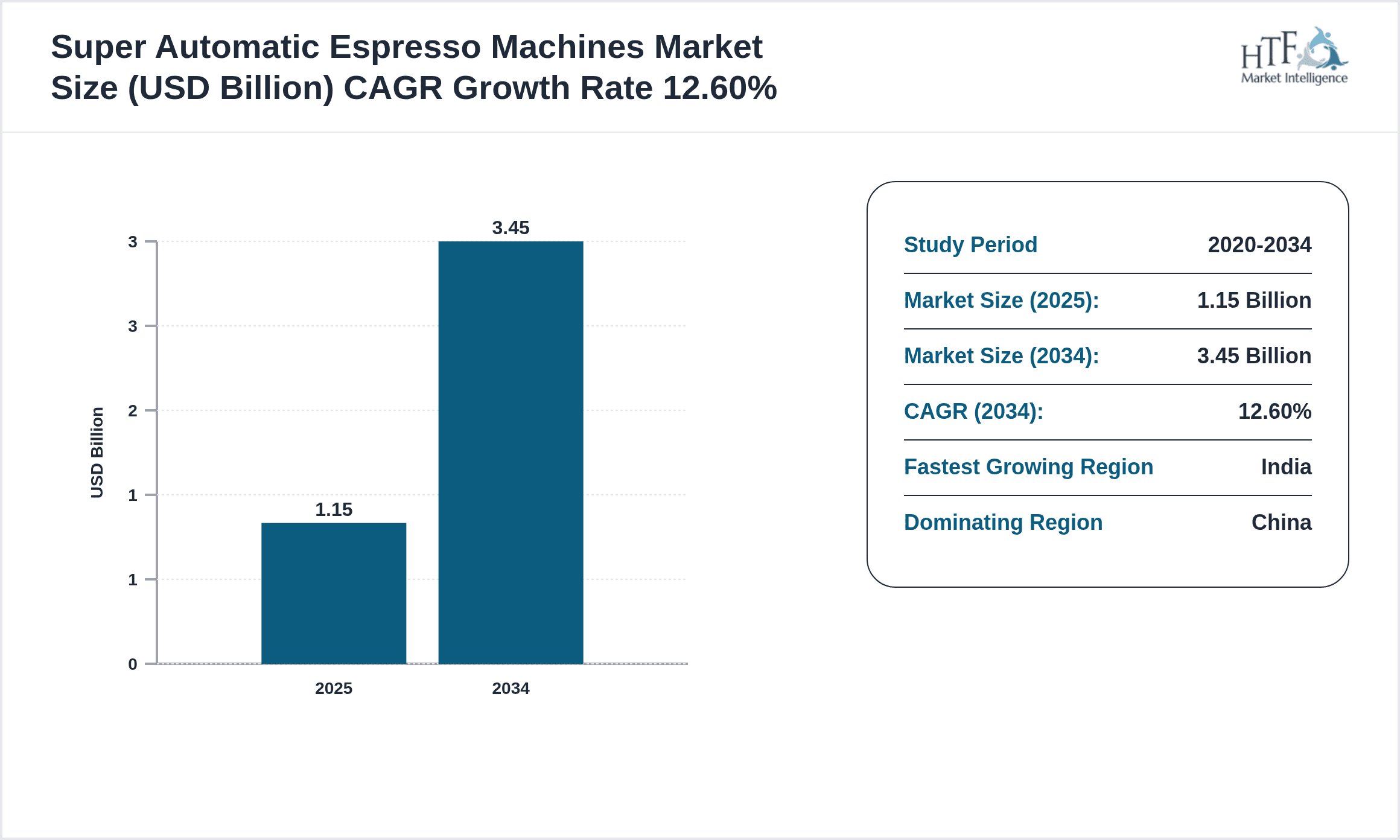
- •Market highlights indicate a base market size of USD 1.15 Billion in 2025, growing to an expected USD 3.45 Billion by 2034, reflecting a robust CAGR of 12.6%. China dominates the regional landscape, accounting for approximately 40% market share, whereas India is the fastest-growing market with a CAGR of 16.3% and an 18% share forecast. The leading product type is bean-to-cup machines, favored for their comprehensive automation and quality output, while capsule-based machines are gaining rapid traction due to ease of use and convenience. The market growth is underpinned by expanding coffee culture, digitalization, and increased commercial coffee shop penetration across Asia-Pacific.
- •The Asia-Pacific Super Automatic Espresso Machines market presents significant strategic importance to manufacturers, distributors, and investors due to its rising demand from both household and commercial sectors. For stakeholders, the market offers opportunities to capitalize on growing urban coffee consumption trends, technological advancements such as smart and connected devices, and the increasing preference for premium and specialty coffee. The market also benefits from supportive government initiatives promoting small and medium enterprises and the food service industry. Consequently, this market segment is poised to deliver substantial value and innovation, driving competitive differentiation and sustainable growth across the Asia-Pacific coffee appliance sector.
Competitive Landscape
The competitive environment of the Asia-Pacific Super Automatic Espresso Machines market is characterized by intense rivalry among established global brands and emerging regional players. Market participants are leveraging technological innovation, product differentiation, and strategic partnerships to gain competitive advantage. Key strategies include the introduction of advanced features such as IoT-enabled controls, energy-efficient components, and user-friendly interfaces to enhance customer experience. Companies focus on expanding distribution networks and after-sales services to strengthen market presence across diverse Asia-Pacific countries. Mergers and acquisitions are selectively used to consolidate market share and access new customer bases. Pricing strategies vary from premium to mid-tier segments, reflecting the wide spectrum of consumer preferences. The competitive landscape also sees investment in sustainability initiatives, aiming to reduce environmental impact and comply with evolving regulations. Regional competition is influenced by local consumer behavior, economic conditions, and infrastructure development, shaping future competitive trends toward innovation-led growth and market expansion.
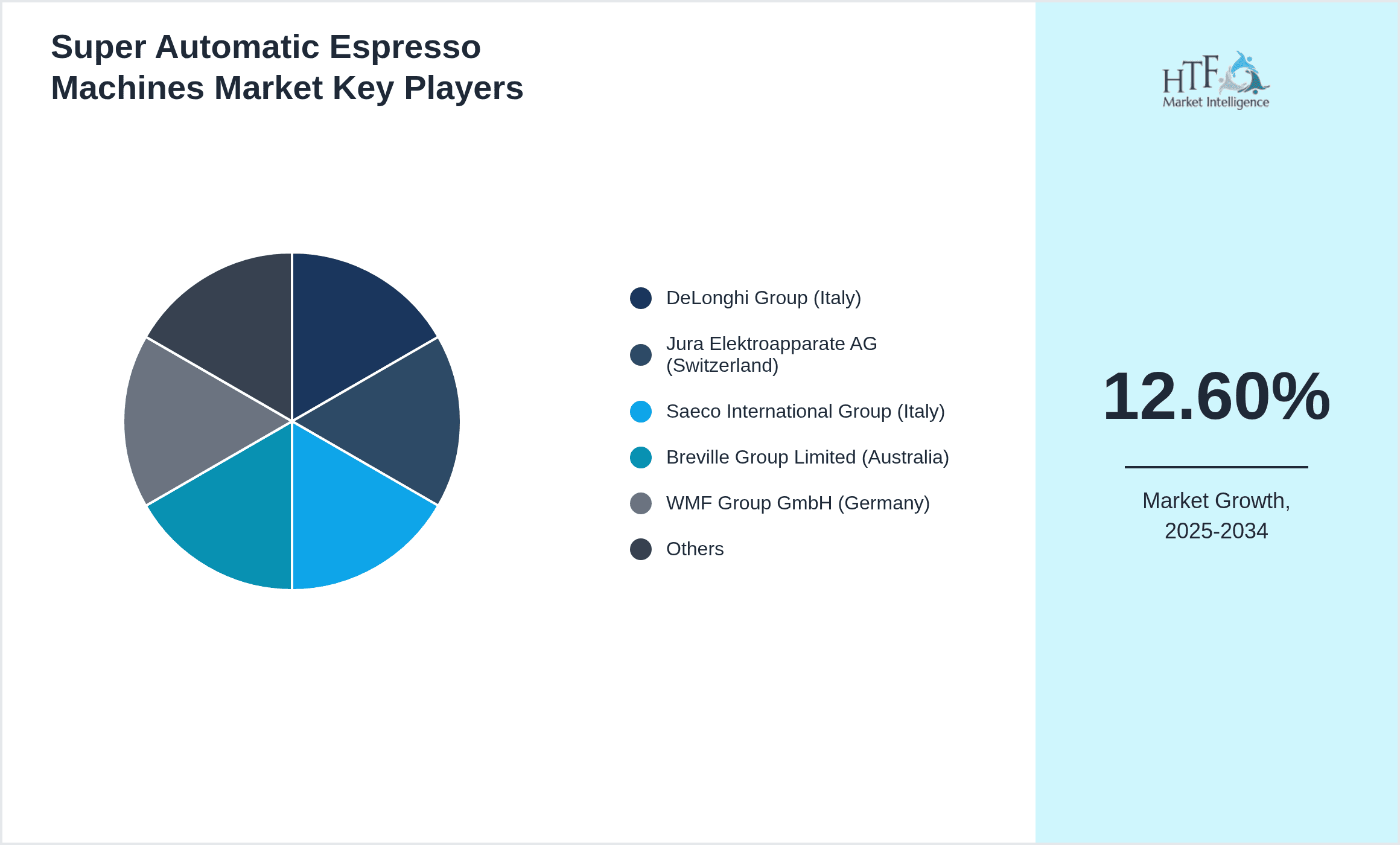
Prominent Players in Super Automatic Espresso Machines Market
- •DeLonghi Group (Italy)
- •Jura Elektroapparate AG (Switzerland)
- •Saeco International Group (Italy)
- •Breville Group Limited (Australia)
- •WMF Group GmbH (Germany)
- •Rancilio Group (Italy)
- •Nespresso S.A. (Switzerland)
- •Gaggia (Italy)
- •Philips Domestic Appliances (Netherlands)
- •Siemens AG (Germany)
- •Electrolux AB (Sweden)
- •Miele & Cie. KG (Germany)
- •Melitta Group (Germany)
- •Krups (France)
- •BWT Group (Austria)
- •Tassimo (Germany)
- •Philips India Limited (India)
- •Sunbeam Products (Australia)
- •FMI Corporation (Japan)
- •Casadio (Italy)
- •Lelit S.r.l (Italy)
- •La Marzocco (Italy)
- •Cimbali Group S.p.A. (Italy)
- •Eversys (Switzerland)
- •Sanremo Coffee Machines (Italy)
Market Breakdown
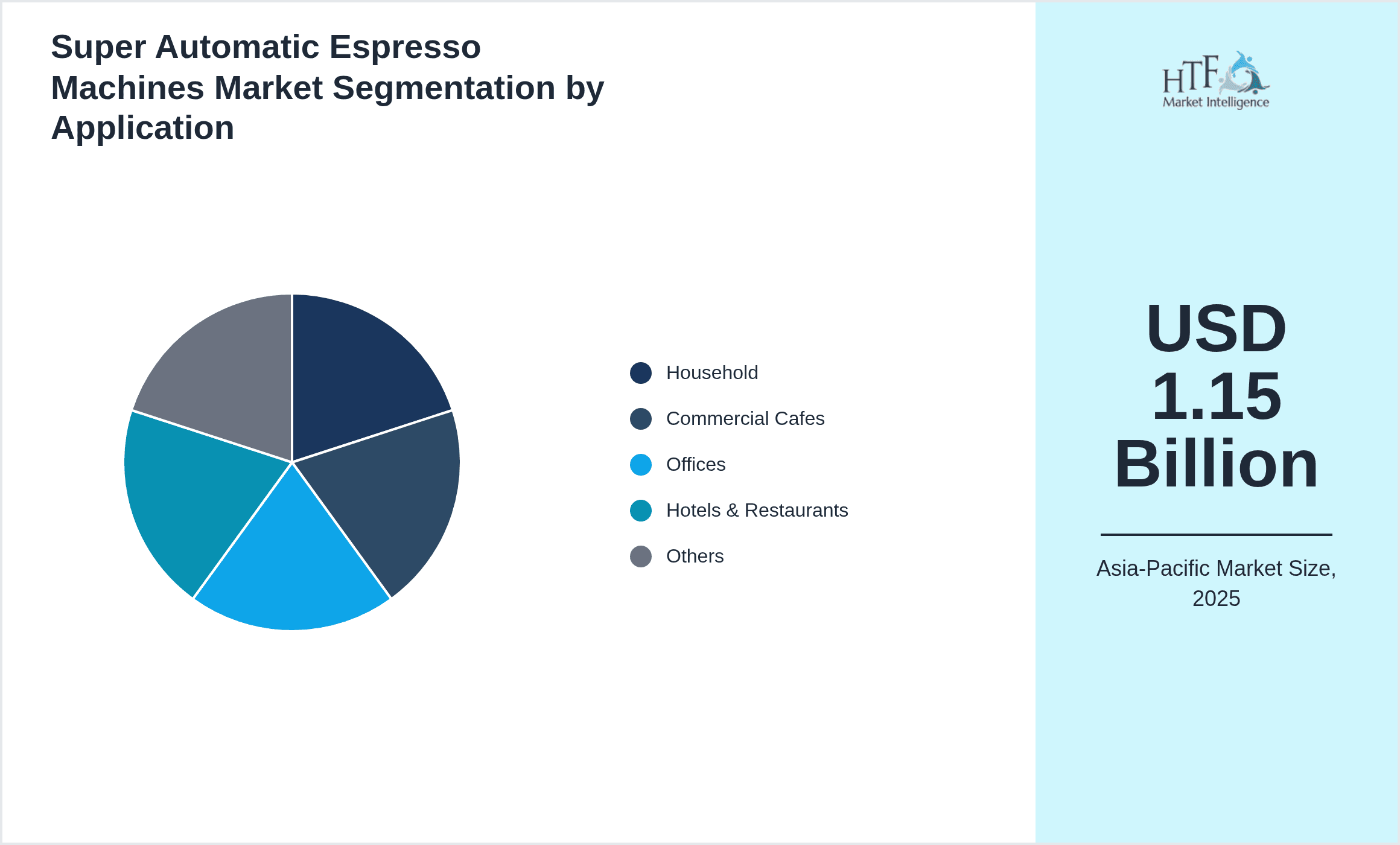
- •By Product Type
- ◦Bean-to-Cup Espresso Machines
- ◦Capsule-Based Espresso Machines
- ◦Grinder Integrated Espresso Machines
- ◦Milk Frothing Espresso Machines
- ◦Touchscreen Interface Espresso Machines
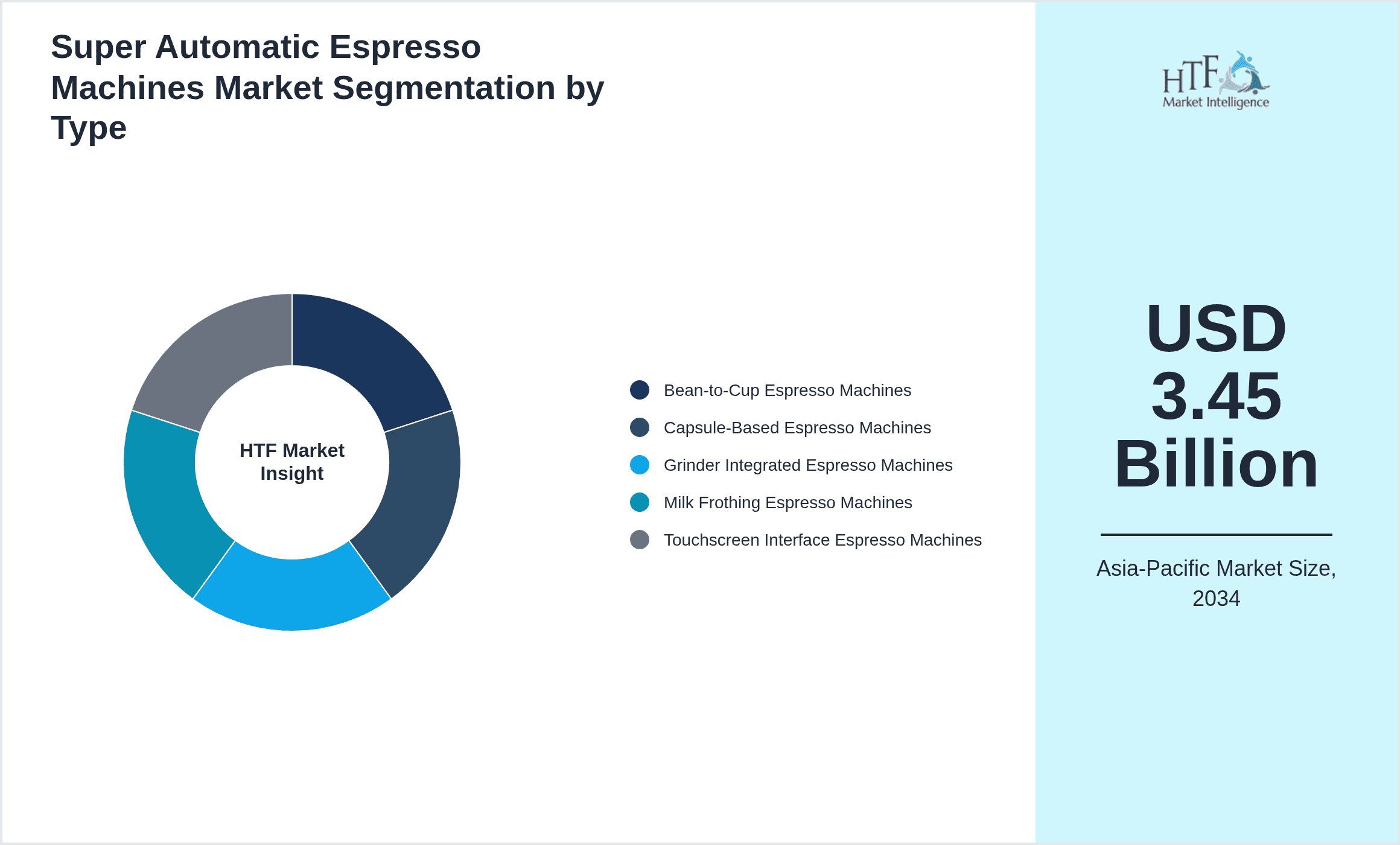
- •By Application
- ◦Household
- ◦Commercial Cafes
- ◦Offices
- ◦Hotels & Restaurants
- ◦Others
- •By Service Type
- ◦Installation & Setup
- ◦Maintenance & Repair
- ◦Extended Warranty Services
- ◦Customer Support & Training
- •By Deployment Model
- ◦Standalone Machines
- ◦Integrated Coffee Solutions
- ◦Smart Connected Devices
Growth Dynamics
- •The rising coffee culture across urban centers in Asia-Pacific is a primary growth driver, supported by increasing disposable incomes and Western lifestyle adoption, especially in China, India, and Japan.
- •Technological advancements, including IoT integration and smartphone connectivity, enhance user convenience and machine functionality, stimulating demand among tech-savvy consumers and commercial establishments.
- •Expansion of the hospitality sector, including cafes, hotels, and restaurants, drives commercial adoption of super automatic espresso machines, boosting market penetration and recurring service demand.
- •Government initiatives promoting entrepreneurship and food service industry growth in emerging Asia-Pacific economies create favorable conditions for market expansion and investments.
- •Increasing preference for premium and specialty coffee at home and workspaces encourages consumers to invest in high-end super automatic espresso machines, propelling market growth.
- •Rising environmental awareness compels manufacturers to develop energy-efficient and eco-friendly machines, aligning with consumer expectations and regulatory requirements.
- •Online retail growth and digital marketing strategies expand product accessibility and consumer reach, facilitating faster adoption of super automatic espresso machines across diverse demographics.
Market Trends
- •The trend towards smart, connected coffee machines with app control and customization options is rapidly gaining traction, offering personalized brewing experiences and remote management.
- •Capsule-based super automatic espresso machines are becoming more popular due to their ease of use and convenience, especially in office and household segments seeking quick coffee solutions.
- •Sustainability is influencing machine design, with manufacturers adopting recyclable capsules, energy-saving modes, and environmentally friendly materials to meet consumer and regulatory demands.
- •The rise of specialty coffee culture in Asia-Pacific is driving demand for machines capable of producing diverse coffee styles and high-quality espresso, influencing product innovation.
- •Collaborations between coffee machine manufacturers and coffee bean suppliers or baristas are becoming common to enhance product appeal and deliver curated coffee experiences.
- •Growing e-commerce penetration is transforming purchasing patterns, with consumers increasingly preferring online channels for researching and buying espresso machines.
- •Emerging markets within Asia-Pacific, such as Southeast Asia and India, are witnessing rapid adoption due to rising middle-class populations and evolving consumer lifestyles.
Market Opportunities
- •The untapped rural and tier-2/3 city markets in Asia-Pacific offer significant growth potential as coffee culture spreads beyond metropolitan areas.
- •Integration of AI and machine learning can create intelligent coffee machines that adapt brewing parameters to user preferences, opening new product development avenues.
- •Expansion of commercial coffee chains and boutique cafes presents opportunities for partnerships and bulk supply contracts for super automatic espresso machines.
- •Rising health consciousness can drive demand for machines with customizable beverage options, including low-calorie and alternative milk choices.
- •Growing interest in sustainable and zero-waste coffee solutions encourages manufacturers to innovate in recyclable capsules and waste reduction technologies.
- •Offering subscription-based maintenance and servicing packages can enhance customer retention and provide steady revenue streams.
- •Developing multi-functional machines that combine coffee brewing with other beverage preparations can attract diverse consumer segments.
Market Challenges
- •High initial purchase cost and maintenance expenses limit affordability and adoption in price-sensitive markets within Asia-Pacific, impacting market penetration.
- •Complexity of machines and lack of consumer awareness about features and benefits pose educational challenges for manufacturers and retailers.
- •Supply chain disruptions, including component shortages and logistics delays, affect timely product availability and market responsiveness.
- •Variability in regional regulatory standards creates compliance challenges and increases operational costs for manufacturers operating across multiple Asia-Pacific countries.
- •Intense competition from traditional coffee machines and alternative brewing methods may limit market share growth for super automatic machines.
- •Environmental concerns related to capsule waste and energy consumption require addressing to meet evolving consumer and governmental expectations.
- •Limited after-sales service infrastructure in emerging markets can negatively impact customer satisfaction and brand loyalty.
Regulatory Framework
- •Between 2020 and 2025, Asia-Pacific countries implemented stricter energy efficiency standards for household and commercial appliances, compelling manufacturers to design compliant super automatic espresso machines with reduced power consumption.
- •Regulations concerning electronic waste management, particularly in India and China, have mandated proper disposal and recycling of coffee machine components, influencing manufacturers’ product lifecycle strategies.
- •Safety certifications such as IEC and CCC standards have become mandatory for electronic coffee machines sold in several Asia-Pacific markets, ensuring consumer protection and product reliability.
- •Some nations like Japan and Australia have introduced labeling requirements for appliances detailing energy consumption and environmental impact, enhancing consumer awareness and encouraging eco-friendly purchases.
- •Government incentives promoting local manufacturing and innovation in smart appliances in countries such as South Korea and India have stimulated investment and product development in super automatic espresso machines.
Market Intelligence
- •15th January 2025, DeLonghi Group announced the launch of its latest bean-to-cup super automatic espresso machine featuring IoT connectivity, enabling users to customize and control brewing parameters remotely through a dedicated smartphone app. This product aims to capture the growing demand for smart coffee solutions in Asia-Pacific households and commercial setups. The machine incorporates energy-saving features and supports multiple beverage types, enhancing consumer convenience and promoting sustainable use. DeLonghi's strategic focus on innovation and regional expansion underscores its commitment to strengthening market leadership in fast-growing Asia-Pacific economies. Source: DeLonghi Official Press Release
- •22nd March 2025, Breville Group Limited expanded its distribution network in Southeast Asia by partnering with leading retail chains and e-commerce platforms. This initiative enhances accessibility of its super automatic espresso machines, particularly capsule-based models popular among young professionals. The company also launched an online customer support portal offering virtual demonstrations and maintenance guidance, improving user experience and brand loyalty. Breville aims to leverage digital transformation and regional consumer trends to boost sales and market share in key Asia-Pacific countries. Source: Breville Group Investor Update
- •10th June 2025, Philips Domestic Appliances introduced a new range of eco-friendly super automatic espresso machines incorporating recyclable capsules and low energy consumption technology. Targeting environmentally conscious consumers in India and China, this product line aligns with emerging regulatory mandates and sustainability trends. Philips also initiated a consumer awareness campaign highlighting the environmental benefits and cost savings associated with these machines. This strategic move positions Philips as a front-runner in promoting green coffee solutions within Asia-Pacific markets. Source: Philips Corporate Communications
- •5th September 2025, Jura Elektroapparate AG announced a strategic collaboration with a major coffee bean supplier in Japan to offer integrated coffee experiences combining premium beans with advanced super automatic espresso machines. The partnership facilitates co-branded marketing efforts and exclusive product bundles tailored to discerning coffee enthusiasts. Jura’s approach emphasizes product differentiation and customer engagement, supporting its growth objectives in the competitive Asia-Pacific landscape. This collaboration highlights the importance of ecosystem partnerships in capturing market share and enhancing consumer loyalty. Source: Jura Annual Report
Regional Outlook
The China currently holds a significant share of the market, primarily due to several key factors: increasing consumption rates, a burgeoning population, and robust economic momentum. These elements collectively drive demand, positioning this region as a leader in the market. On the other hand, India is rapidly emerging as the fastest-growing area within the industry. This remarkable growth can be attributed to swift infrastructure development, the expansion of various industrial sectors, and a marked increase in consumer demand. These dynamics make this region a crucial player in shaping future market growth.
In our report, we cover a comprehensive analysis of the following regions and countries:
- Japan
- China
- Southeast Asia
- India
- Australia
- South Korea
- Others
| Feature | Details |
|---|---|
| Base Year Market Size | USD 1.15 Billion |
| Forecast Year Market Size | USD 3.45 Billion |
| CAGR | 12.6% |
| Forecast Period | 2026 to 2033 |
| YoY Growth | 12% |
| Regions Covered | Japan, China, Southeast Asia, India, Australia, South Korea, Others |
| Key Companies | DeLonghi Group (Italy), Jura Elektroapparate AG (Switzerland), Saeco International Group (Italy), Breville Group Limited (Australia), WMF Group GmbH (Germany), Rancilio Group (Italy), Nespresso S.A. (Switzerland), Gaggia (Italy), Philips Domestic Appliances (Netherlands), Siemens AG (Germany), Electrolux AB (Sweden), Miele & Cie. KG (Germany), Melitta Group (Germany), Krups (France), BWT Group (Austria), Tassimo (Germany), Philips India Limited (India), Sunbeam Products (Australia), FMI Corporation (Japan), Casadio (Italy), Lelit S.r.l (Italy), La Marzocco (Italy), Cimbali Group S.p.A. (Italy), Eversys (Switzerland), Sanremo Coffee Machines (Italy) |
Asia-Pacific Super Automatic Espresso Machines Market Scope & Changing Dynamics 2025-2034 - Table of Contents
Frequently Asked Questions (FAQ):
The Compact Track Loaders market is projected to grow at a CAGR of 6.8% from 2025 to 2030, driven by increasing demand in construction and agricultural sectors.
North America currently leads the market with approximately 45% market share, followed by Europe at 28% and Asia-Pacific at 22%. The remaining regions account for 5% of the global market.
Key growth drivers include increasing construction activities, rising demand for versatile equipment in agriculture, technological advancements in track loader design, and growing preference for compact equipment in urban construction projects.