
China Pharmaceutical Grade Polyethylene Glycol Market - China Size & Outlook 2020-2034
China Pharmaceutical Grade Polyethylene Glycol Market is segmented by Application (Pharmaceutical Formulations, Drug Delivery Systems, Medical Devices, Biotechnology, Diagnostics), Type (PEG 400, PEG 6000, PEG 8000, PEG 20000, PEG Derivatives), and Geography (North China, Northeast China, East China, South Central China, Southwest China, Northwest China)
Pricing
Report Overview
Executive Summary
- •The China Pharmaceutical Grade Polyethylene Glycol (PEG) market is a specialized segment of the chemical and pharmaceutical industries, focusing on high-purity PEG polymers used extensively as excipients, drug delivery agents, and biomedical materials. This market covers a range of molecular weight grades including PEG 400, PEG 6000, PEG 8000, PEG 20000, and various PEG derivatives that are integral to pharmaceutical formulations such as tablets, capsules, injectables, and topical applications. PEG’s unique properties such as water solubility, biocompatibility, and low immunogenicity make it indispensable in modern pharmaceutical manufacturing and biotechnology innovations. The market’s growth is strongly influenced by rising healthcare expenditure in China, increasing demand for advanced drug delivery systems, and stringent regulations mandating high-quality pharmaceutical excipients. Additionally, the expansion of China’s domestic pharmaceutical production and export capabilities fuels demand for pharmaceutical grade PEG. Key regional hubs like East China dominate production and consumption due to strong industrial infrastructure and pharmaceutical clusters. Emerging zones such as Southwest China are witnessing rapid growth supported by government incentives and rising pharmaceutical manufacturing activity. The competitive landscape features both domestic chemical manufacturers and multinational corporations focusing on product innovation and capacity expansion. The forecast period 2025-2034 is expected to see robust growth driven by technological advancements in PEG derivatives, growing biotech applications, and sustained pharmaceutical market expansion in China.
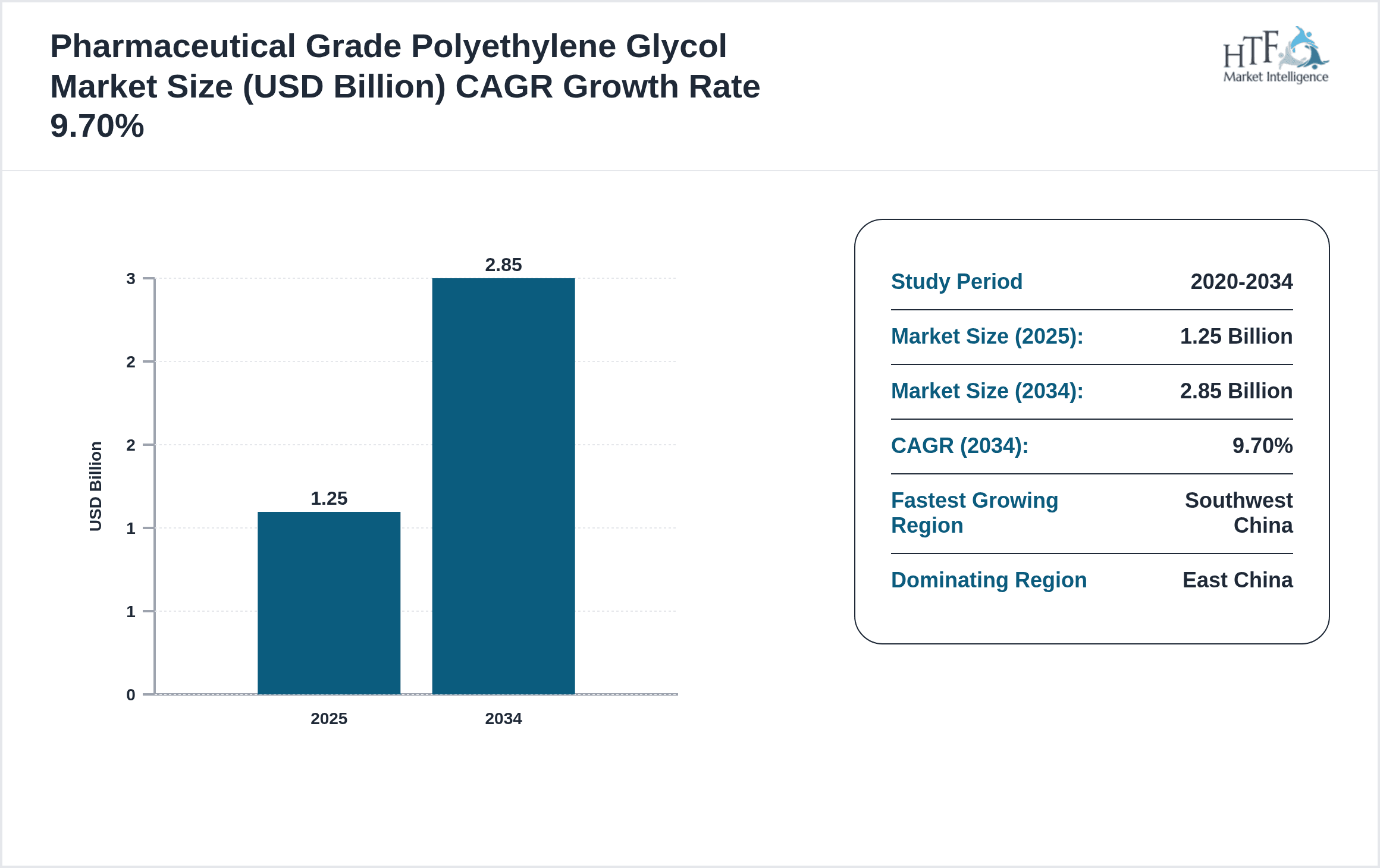
- •Key market highlights include a base market size of USD 1.25 billion in 2025, with projections reaching USD 2.85 billion by 2034, reflecting a CAGR of approximately 9.7%. The East China region holds the largest market share at 38%, while Southwest China is the fastest-growing sub-region with a CAGR of 12.5%, driven by increased pharmaceutical manufacturing investments and R&D activities. PEG 6000 is the leading product type due to its widespread use in oral and topical formulations, while PEG derivatives represent the fastest-growing product segment, propelled by innovations in targeted drug delivery and biomedical coatings. Regulatory compliance and quality assurance remain critical factors shaping market dynamics. The pharmaceutical industry's ongoing shift towards biologics and personalized medicine further propels demand for specialized PEG products. Year-on-year growth averages around 9.3%, underscoring steady market expansion amidst evolving healthcare needs and technological progress.
- •This market offers strategic value to pharmaceutical manufacturers, chemical producers, biotechnology firms, and healthcare stakeholders by providing essential excipients and enabling advanced drug delivery platforms. The evolving landscape, shaped by regulatory rigor and innovation, presents opportunities for capacity expansion, product differentiation, and technological partnerships. Investors and companies focusing on pharmaceutical polymers are positioned to benefit from China’s expanding healthcare infrastructure, growing pharmaceutical exports, and increased emphasis on quality and safety in pharmaceutical excipients. The market's trajectory aligns with China's broader healthcare modernization and pharmaceutical industry development goals, making it a critical segment for long-term strategic planning and investment.
Competitive Landscape
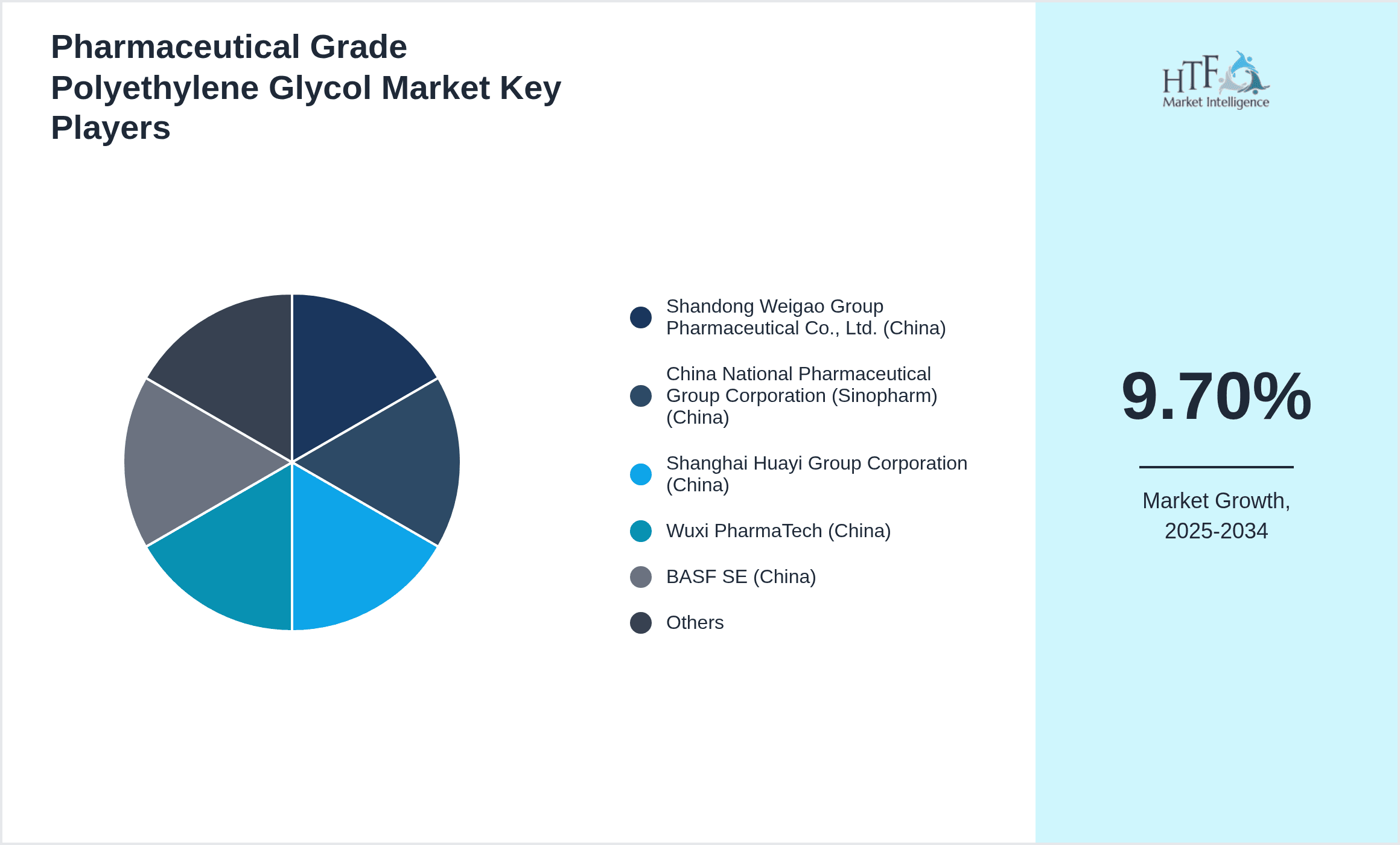
The competitive environment of the China Pharmaceutical Grade Polyethylene Glycol market is characterized by a mix of domestic chemical conglomerates and international specialty chemical firms. Companies compete through technological innovation, product quality, and regulatory compliance to meet stringent pharmaceutical standards. Strategic partnerships and joint ventures are common, facilitating access to advanced manufacturing technologies and expanded distribution networks within China’s pharmaceutical industry. Market leaders focus on product differentiation by developing PEG derivatives tailored for novel drug delivery systems and biopharmaceutical applications, enhancing their competitive edge. Pricing strategies are influenced by raw material costs and regulatory requirements, while companies invest heavily in quality assurance and supply chain robustness to maintain market position. Regional competition is intensified by the presence of industrial clusters in East and South China, which offer logistical advantages and skilled labor pools. Mergers and acquisitions, although limited recently, remain a strategic tool for capacity enhancement and technology acquisition, with future consolidation expected as the market matures. Overall, innovation-driven competition and regulatory adherence are key to sustaining growth and market share in this specialized sector.
Leading Companies in Pharmaceutical Grade Polyethylene Glycol Market
- •Shandong Weigao Group Pharmaceutical Co., Ltd. (China)
- •China National Pharmaceutical Group Corporation (Sinopharm) (China)
- •Shanghai Huayi Group Corporation (China)
- •Wuxi PharmaTech (China)
- •BASF SE (China)
- •Dow Chemical Company (China)
- •Croda International Plc (China)
- •Evonik Industries AG (China)
- •Clariant AG (China)
- •Kraton Corporation (China)
- •Shandong Dongyue Chemical Co., Ltd. (China)
- •Luye Pharma Group Ltd. (China)
- •Jiangsu Hengrui Medicine Co., Ltd. (China)
- •Shandong Xinhua Pharmaceutical Company Limited (China)
- •Zhejiang NHU Co., Ltd. (China)
- •Hubei Xingfa Chemicals Group Co., Ltd. (China)
- •Jiangsu Kanion Pharmaceutical Co., Ltd. (China)
- •Nanjing King-Friend Biochemical Pharmaceutical Co., Ltd. (China)
- •Sinochem Group Co., Ltd. (China)
- •Sinopec Shanghai Petrochemical Company Limited (China)
- •Wanhua Chemical Group Co., Ltd. (China)
- •LyondellBasell Industries Holdings B.V. (China)
- •Mitsubishi Chemical Corporation (China)
- •Shenzhen Hepalink Pharmaceutical Group Co., Ltd. (China)
- •Jiangsu Yabang Dyestuff Co., Ltd. (China)
Market Breakdown
- •By Pharmaceutical Grade Polyethylene Glycol Type
- ◦PEG 400 - Low Molecular Weight PEG
- ◦PEG 6000 - Medium Molecular Weight PEG
- ◦PEG 8000 - High Molecular Weight PEG
- ◦PEG 20000 - Ultra High Molecular Weight PEG
- ◦Specialized PEG Derivatives
- •By Pharmaceutical Application Area
- ◦Pharmaceutical Formulations
- ◦Drug Delivery Systems
- ◦Medical Devices
- ◦Biotechnology Applications
- ◦Diagnostics
- •By Production Process
- ◦Ethylene Oxide Polymerization
- ◦PEG Derivatization
- ◦Purification and Refinement
- •By Packaging Type
- ◦Bulk Packaging
- ◦Intermediate Bulk Containers (IBC)
- ◦Consumer-Ready Packaging
Growth Dynamics
The China pharmaceutical grade polyethylene glycol market is propelled by the rapid expansion of the domestic pharmaceutical industry, driven by increasing investments in drug development and healthcare infrastructure. The growing demand for advanced drug delivery systems utilizing PEG polymers facilitates enhanced bioavailability and controlled release, underpinning market growth. Additionally, rising prevalence of chronic diseases in China stimulates the need for innovative pharmaceutical excipients like PEG to improve therapeutic efficacy. Government policies promoting pharmaceutical manufacturing and export capabilities further support market expansion. The development of PEG derivatives tailored for biopharmaceutical and medical device applications introduces new growth avenues. Increasing awareness about safety and regulatory compliance among pharmaceutical companies ensures sustained demand for high-quality pharmaceutical grade PEG. Moreover, technological advancements in PEG synthesis and purification processes improve product performance and cost efficiency, boosting adoption. The growth is also catalyzed by collaborations between chemical manufacturers and pharmaceutical companies to develop customized PEG solutions. Overall, the market’s growth dynamics reflect a confluence of healthcare modernization, technological innovation, and supportive regulatory frameworks in China.
Market Trends
A significant trend in the China pharmaceutical grade polyethylene glycol market is the increasing integration of PEG derivatives in targeted drug delivery and nanoparticle formulations, enhancing therapeutic precision. The market also witnesses growing adoption of high molecular weight PEGs in biologics and biosimilar formulations, reflecting the shift towards advanced pharmaceuticals. Enhanced regulatory scrutiny in China ensures consistent quality and purity of pharmaceutical excipients, driving manufacturers to invest in certifications and quality systems. Sustainability and green chemistry initiatives are influencing production methods, with a focus on reducing environmental impact. Additionally, digitalization of supply chains and manufacturing processes enables improved traceability and efficiency. Increasing collaborations between domestic and international companies foster innovation and technology transfer. The market is also seeing a rise in contract manufacturing and outsourcing of PEG products to specialized producers in China, reflecting cost optimization trends.
Market Opportunities
The China pharmaceutical grade polyethylene glycol market presents opportunities in developing novel PEG derivatives tailored for emerging biopharmaceuticals and personalized medicine, addressing unmet therapeutic needs. Expansion in less penetrated regional markets such as Southwest and Northwest China offers potential due to increasing pharmaceutical manufacturing investments. Growing export demand for pharmaceutical excipients from China to global markets provides avenues for scaling up production capacities. Innovations in PEG-based drug delivery systems, including sustained-release and targeted therapies, open new application segments. The rising biotechnology sector in China creates demand for high-purity PEG used in diagnostics and medical devices. Strategic partnerships between chemical producers and pharmaceutical companies to co-develop customized PEG products enhance market penetration. Furthermore, government initiatives supporting pharmaceutical innovation and industrial upgrading encourage investments into PEG production technology and quality improvement. These opportunities position the market for sustained growth and diversification over the forecast period.
Market Challenges
The market faces challenges including stringent regulatory compliance requirements that necessitate high investment in quality control and certification, impacting smaller manufacturers. Fluctuations in raw material prices, particularly ethylene oxide, introduce cost volatility affecting profitability. Competition from low-cost generic PEG suppliers domestically and internationally pressures pricing strategies. Technical complexities in manufacturing high-purity pharmaceutical grade PEG and derivatives require advanced infrastructure and specialized expertise, limiting new entrants. The market’s sensitivity to environmental regulations mandates sustainable production practices, increasing operational costs. Additionally, intellectual property rights and patent protections on innovative PEG derivatives create barriers for generic manufacturers. Supply chain disruptions, especially related to logistics within China’s vast geography, pose risks to timely delivery. Lastly, market adoption of novel PEG derivatives depends on pharmaceutical companies’ willingness to invest in R&D and regulatory approvals, which can be time-consuming and costly.
Regulatory Framework
Between 2020 and 2025, China implemented several key regulations impacting the pharmaceutical grade polyethylene glycol market. The National Medical Products Administration (NMPA) enhanced pharmaceutical excipient quality guidelines mandating stringent purity, safety, and traceability standards for PEG products used in drug formulations. The 2021 revision of the Chinese Pharmacopoeia included updated monographs on polyethylene glycol, emphasizing molecular weight specifications and impurity limits. Environmental protection laws enforced in manufacturing zones require chemical producers to adopt cleaner technologies and reduce emissions, influencing PEG production processes. Additionally, the Drug Administration Law of China was amended in 2020 to strengthen oversight on excipient suppliers, ensuring compliance with Good Manufacturing Practices (GMP). Regional authorities in East and South China introduced localized compliance audits for pharmaceutical raw materials, enhancing quality assurance. The regulatory landscape also includes import-export controls affecting PEG raw materials and finished products to safeguard domestic industry and ensure international trade compliance. Overall, the evolving regulatory framework fosters higher product standards and promotes industry modernization within China’s pharmaceutical grade polyethylene glycol sector.
Market Intelligence
- •15th January 2025, Shandong Weigao Group Pharmaceutical Co., Ltd. announced the launch of a new high-purity PEG 6000 product specifically designed for injectable drug formulations. This product features enhanced solubility and low endotoxin levels, targeting the growing injectable biologics market in China. The launch is aligned with increasing demand for pharmaceutical grade excipients that meet stringent NMPA and international regulatory standards. Shandong Weigao’s strategic objective is to capture market share in the high-end pharmaceutical excipient segment by leveraging advanced purification technology and expanding production capacity at its East China facility. The company aims to support domestic pharmaceutical manufacturers enhancing formulation quality and bioavailability. Source: Shandong Weigao Official Press Release
- •10th March 2025, BASF SE China introduced an innovative PEG derivative optimized for nanoparticle drug delivery systems. This advanced polymer offers targeted release properties and improved biocompatibility, catering to the rising biotechnology sector in China. BASF’s product development reflects global trends toward precision medicine and personalized therapeutics. The initiative includes strategic collaborations with leading Chinese pharmaceutical firms to integrate the PEG derivative into novel drug platforms. Market analysts expect this innovation to stimulate demand for specialized excipients and reinforce BASF’s position in the Chinese pharmaceutical supply chain. Source: BASF China Corporate Communications
- •5th June 2025, Wuxi PharmaTech expanded its contract manufacturing services to include pharmaceutical grade polyethylene glycol production, targeting domestic and export markets. The expansion involves a new state-of-the-art facility in South China equipped with advanced polymerization and purification technologies. This strategic move responds to increasing outsourcing trends among pharmaceutical companies seeking high-quality excipients with regulatory compliance. Wuxi PharmaTech aims to enhance supply chain reliability and meet growing demand for customized PEG products, supporting China’s pharmaceutical manufacturing growth. The development is part of a broader investment plan to strengthen the company’s role in pharmaceutical materials innovation. Source: Wuxi PharmaTech Press Release
- •12th August 2025, Evonik Industries AG announced a partnership with Jiangsu Hengrui Medicine Co., Ltd. to co-develop PEG-based drug delivery systems for oncology therapeutics. The collaboration focuses on leveraging Evonik’s proprietary PEGylation technologies and Jiangsu Hengrui’s drug development expertise to optimize biologic drug profiles. This strategic alliance aims to accelerate product development cycles and improve therapeutic outcomes in China’s expanding oncology market. Both companies anticipate regulatory approvals and market launches within the next three years, enhancing their competitive positioning in pharmaceutical ingredients. Source: Evonik Corporate News
Regional Outlook
The East China currently holds a significant share of the market, primarily due to several key factors: increasing consumption rates, a burgeoning population, and robust economic momentum. These elements collectively drive demand, positioning this region as a leader in the market. On the other hand, Southwest China is rapidly emerging as the fastest-growing area within the industry. This remarkable growth can be attributed to swift infrastructure development, the expansion of various industrial sectors, and a marked increase in consumer demand. These dynamics make this region a crucial player in shaping future market growth.
In our report, we cover a comprehensive analysis of the following regions and countries:
- North China
- Northeast China
- East China
- South Central China
- Southwest China
- Northwest China
| Feature | Details |
|---|---|
| Base Year Market Size | USD 1.25 Billion |
| Forecast Year Market Size | USD 2.85 Billion |
| CAGR | 9.7% |
| Forecast Period | 2026 to 2033 |
| YoY Growth | 9.3% |
| Regions Covered | North China, Northeast China, East China, South Central China, Southwest China, Northwest China |
| Key Companies | Shandong Weigao Group Pharmaceutical Co., Ltd. (China), China National Pharmaceutical Group Corporation (Sinopharm) (China), Shanghai Huayi Group Corporation (China), Wuxi PharmaTech (China), BASF SE (China), Dow Chemical Company (China), Croda International Plc (China), Evonik Industries AG (China), Clariant AG (China), Kraton Corporation (China), Shandong Dongyue Chemical Co., Ltd. (China), Luye Pharma Group Ltd. (China), Jiangsu Hengrui Medicine Co., Ltd. (China), Shandong Xinhua Pharmaceutical Company Limited (China), Zhejiang NHU Co., Ltd. (China), Hubei Xingfa Chemicals Group Co., Ltd. (China), Jiangsu Kanion Pharmaceutical Co., Ltd. (China), Nanjing King-Friend Biochemical Pharmaceutical Co., Ltd. (China), Sinochem Group Co., Ltd. (China), Sinopec Shanghai Petrochemical Company Limited (China), Wanhua Chemical Group Co., Ltd. (China), LyondellBasell Industries Holdings B.V. (China), Mitsubishi Chemical Corporation (China), Shenzhen Hepalink Pharmaceutical Group Co., Ltd. (China), Jiangsu Yabang Dyestuff Co., Ltd. (China) |
China Pharmaceutical Grade Polyethylene Glycol Market - China Size & Outlook 2020-2034 - Table of Contents
Frequently Asked Questions (FAQ):
The Compact Track Loaders market is expected to see value worth 5.3 Billion in 2025.
North America currently leads the market with approximately 45% market share, followed by Europe at 28% and Asia-Pacific at 22%. The remaining regions account for 5% of the global market.
Key growth drivers include increasing construction activities, rising demand for versatile equipment in agriculture, technological advancements in track loader design, and growing preference for compact equipment in urban construction projects.