
Europe Navigation Grade Quartz Accelerometer Market Size, Growth & Revenue 2024-2034
Europe Navigation Grade Quartz Accelerometer Market is segmented by Type (Single-Axis Quartz Accelerometers, Dual-Axis Quartz Accelerometers, Tri-Axis Quartz Accelerometers, MEMS Quartz Accelerometers, Fiber Optic Accelerometers), Application (Aerospace & Defense, Automotive, Industrial Automation, Marine, Consumer Electronics), Sensor Technology (Quartz Crystal Technology, MEMS Technology, Fiber Optic Technology), End-Use Sector (Commercial Aerospace, Military & Defense, Automotive OEMs, Industrial Machinery, Marine Navigation Systems), and Geography (Germany, France, The United Kingdom, BeNeLux, Spain, Italy, NORDIC, CEE, Others)
Pricing
Report Overview
Executive Summary
- •The Europe Navigation Grade Quartz Accelerometer Market is a specialized segment focused on high-precision quartz accelerometers designed for navigation and motion sensing in critical applications spanning aerospace, defense, automotive, marine, and industrial automation. These devices employ quartz crystal technology to deliver exceptional sensitivity, stability, and low noise, enabling accurate inertial navigation and vibration measurement essential for advanced navigation systems. The market covers a variety of product types including single-axis, dual-axis, tri-axis, MEMS quartz accelerometers, and fiber optic accelerometers, each tailored to meet stringent performance and reliability standards demanded by European industries. Key applications driving demand include aerospace navigation, automotive safety and autonomous driving, industrial machinery monitoring, and marine navigation systems. Europe’s technological expertise, coupled with increasing investments in defense modernization and automotive innovation, underpins market growth. The market is influenced by regulatory compliance, technological advancements, and the growing need for precise navigation and control systems across multiple sectors, positioning it as a critical component of Europe's sensor technology landscape.
- •Key highlights of the Europe Navigation Grade Quartz Accelerometer Market include a robust CAGR of 10.5% forecast from 2024 to 2034, driven by rising aerospace and automotive sector investments. The market size is projected to grow from USD 0.95 Billion in 2024 to USD 2.45 Billion by 2034. Germany dominates the market with a 27% share, reflecting its strong manufacturing base and aerospace industry presence, while France is the fastest-growing country with a CAGR of 13.2%, fueled by expanding defense and automotive applications. Tri-Axis Quartz Accelerometers lead product demand due to their multi-dimensional sensing capabilities, but MEMS Quartz Accelerometers exhibit the fastest growth given their miniaturization and integration advantages. These dynamics highlight Europe's strategic position in producing advanced navigation-grade sensors catering to diverse and evolving industrial needs.
- •The Europe Navigation Grade Quartz Accelerometer Market offers significant value to stakeholders by enabling precision navigation and motion detection critical to aerospace safety, defense operations, and the automotive industry's shift toward autonomy. Its strategic importance lies in enhancing system reliability, operational efficiency, and compliance with stringent European standards. For manufacturers and technology developers, the market presents opportunities for innovation in MEMS technology and fiber optic accelerometers to meet emerging application requirements. Additionally, the market supports Europe's broader goals of technological leadership and industrial competitiveness, contributing to advancements in sensor technology and system integration across multiple high-growth sectors.

Competitive Landscape
The Europe Navigation Grade Quartz Accelerometer Market is characterized by intense competition among established sensor manufacturers, aerospace component suppliers, and innovative MEMS technology developers. Market leaders focus heavily on research and development to enhance product precision, reduce size, and improve robustness against environmental factors. Differentiation is achieved through innovation in sensor technology, integration capabilities, and customization for specific applications such as aerospace inertial navigation or automotive safety systems. Companies engage in strategic partnerships and collaborations to expand their product portfolios and geographic reach within Europe. Competitive strategies also include mergers and acquisitions to consolidate market position and accelerate technology adoption. Pricing pressure exists due to increasing competition from emerging MEMS-based accelerometers, driving continuous cost optimization. Regional competition is influenced by Germany’s strong industrial base, France’s defense sector growth, and the UK’s innovation ecosystem, with future trends pointing toward increased adoption of hybrid accelerometer technologies and digital integration for enhanced functionality.
Leading Companies in Europe Navigation Grade Quartz Accelerometer Market
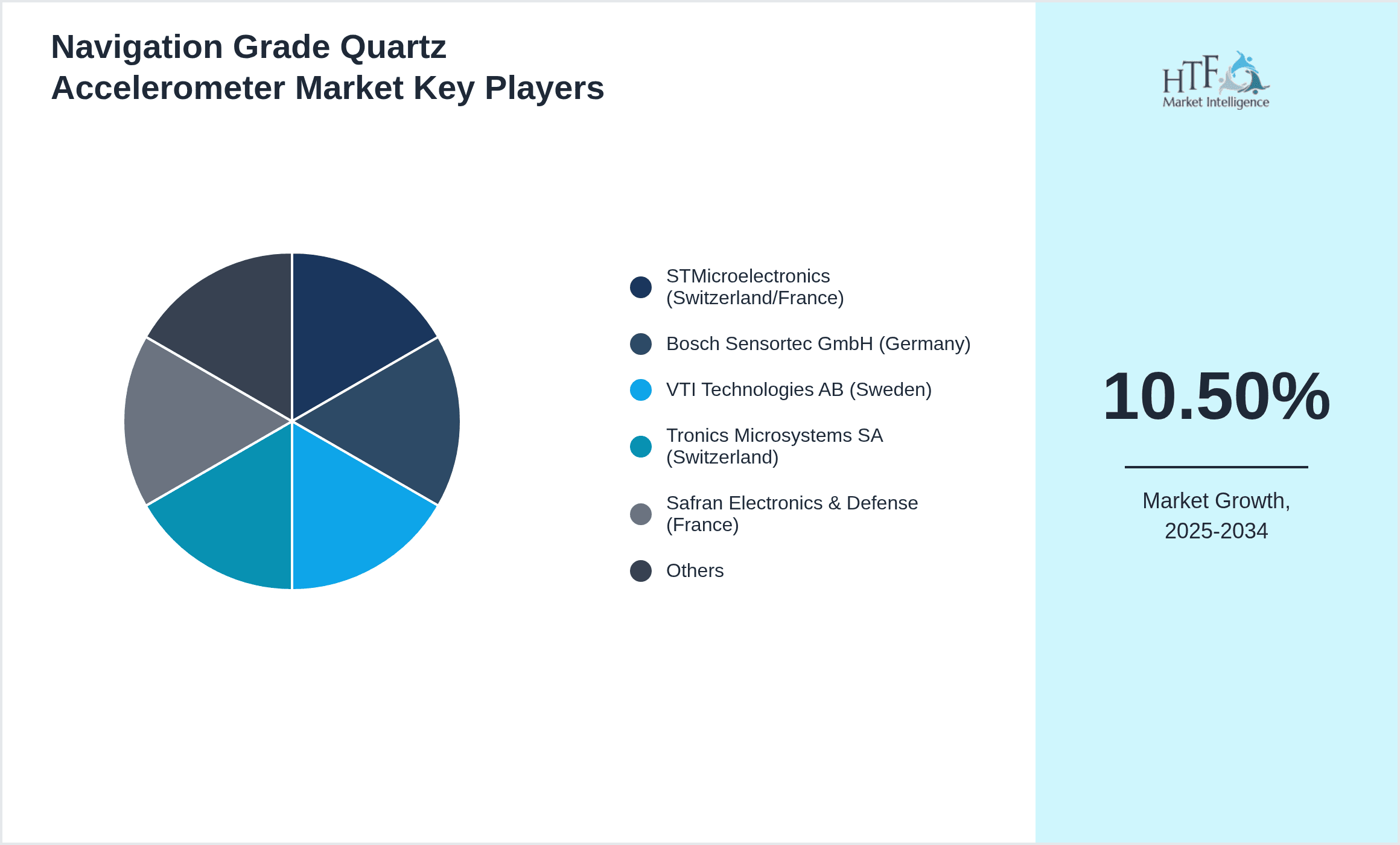
- •STMicroelectronics (Switzerland/France)
- •Bosch Sensortec GmbH (Germany)
- •VTI Technologies AB (Sweden)
- •Tronics Microsystems SA (Switzerland)
- •Safran Electronics & Defense (France)
- •Thales Group (France)
- •Honeywell International Inc. (Germany)
- •Kistler Group (Switzerland)
- •Analog Devices Inc. (Germany)
- •Sensonor AS (Norway)
- •NXP Semiconductors (Netherlands)
- •Infineon Technologies AG (Germany)
- •Siemens AG (Germany)
- •Deltronic SA (France)
- •Leica Geosystems AG (Switzerland)
- •MBDA Missile Systems (France)
- •Elmos Semiconductor SE (Germany)
- •Amphenol Advanced Sensors (Germany)
- •Murata Manufacturing Co., Ltd. (Germany)
- •Nolato AB (Sweden)
- •Zyfer (Finland)
- •Sensonor AS (Norway)
- •TE Connectivity Ltd. (Switzerland)
- •Nokia (Finland)
- •Jenoptik AG (Germany)
Market Breakdown
- •By Type
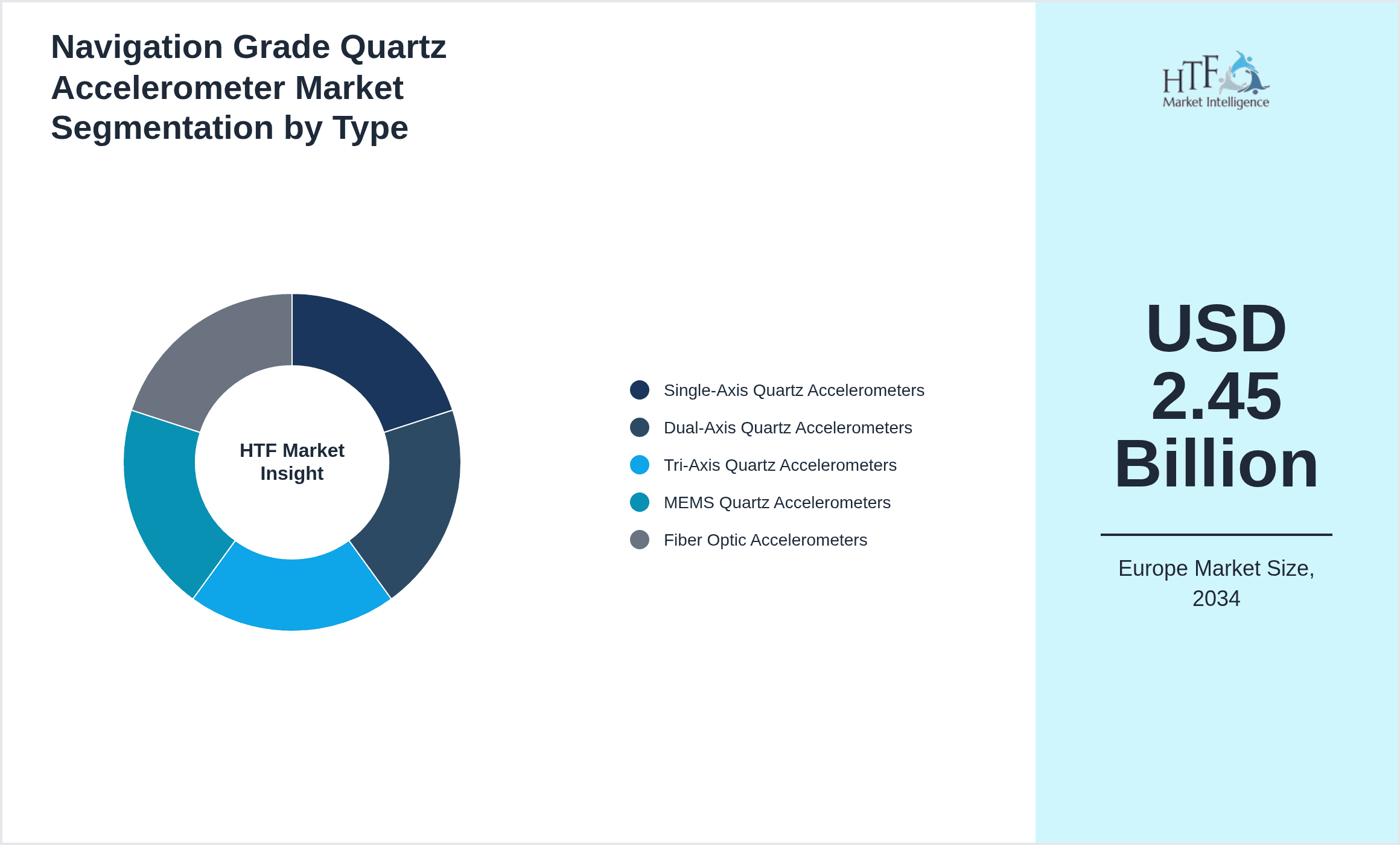
- ◦Single-Axis Quartz Accelerometers
- ◦Dual-Axis Quartz Accelerometers
- ◦Tri-Axis Quartz Accelerometers
- ◦MEMS Quartz Accelerometers
- ◦Fiber Optic Accelerometers
- •By Application
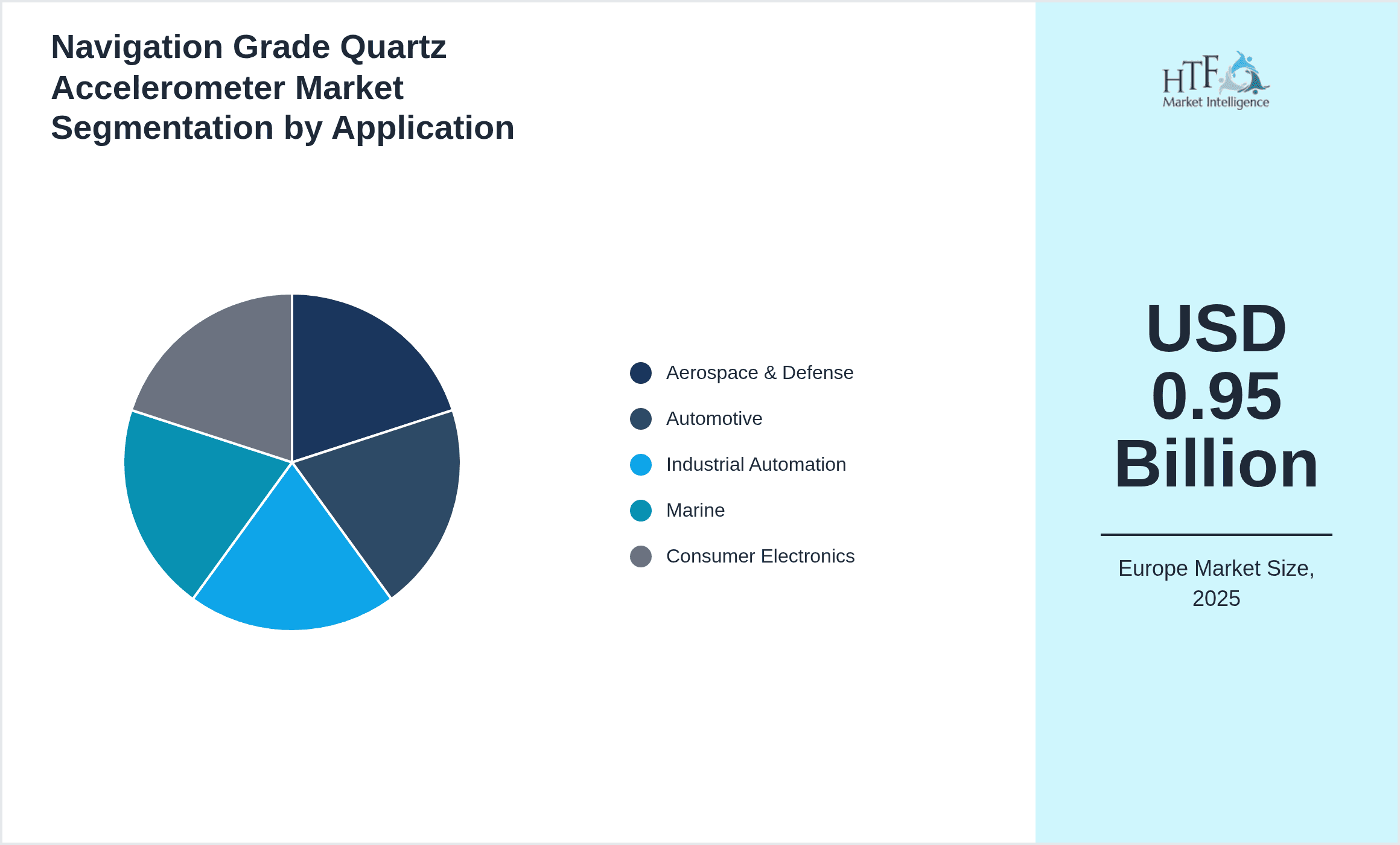
- ◦Aerospace & Defense
- ◦Automotive
- ◦Industrial Automation
- ◦Marine
- ◦Consumer Electronics
- •By Sensor Technology
- ◦Quartz Crystal Technology
- ◦MEMS Technology
- ◦Fiber Optic Technology
- •By End-Use Sector
- ◦Commercial Aerospace
- ◦Military & Defense
- ◦Automotive OEMs
- ◦Industrial Machinery
- ◦Marine Navigation Systems
Growth Dynamics
- •Rising aerospace and defense investments in Europe are driving demand for navigation grade quartz accelerometers due to their critical role in inertial navigation systems, enhancing mission accuracy and safety. Governments’ modernization programs fuel procurement of advanced sensor technologies across multiple countries.
- •The automotive sector's shift towards autonomy and advanced driver-assistance systems (ADAS) is boosting adoption of quartz accelerometers to ensure precise vehicle motion detection and safety-critical functionalities, creating significant growth opportunities in Europe’s automotive hubs.
- •Technological advancements such as miniaturization of MEMS quartz accelerometers and integration with fiber optic sensors are enabling enhanced performance in harsh environments, expanding their applicability in industrial automation and marine navigation.
- •Increasing demand for reliable vibration monitoring and condition-based maintenance in heavy industrial machinery across Europe is driving growth, as quartz accelerometers provide highly accurate acceleration data critical for predictive maintenance.
- •Strategic partnerships between sensor manufacturers and system integrators are accelerating innovation and market penetration, facilitating tailored solutions that meet specific European regulatory and application requirements.
Market Trends
- •There is a growing trend towards hybrid accelerometer systems combining quartz and MEMS technologies to leverage both high precision and cost-effectiveness, driven by increasing demand in aerospace and automotive sectors.
- •Sustainability and energy efficiency are influencing design trends, with manufacturers focusing on low-power quartz accelerometers to support battery-operated navigation and monitoring devices within Europe’s eco-conscious markets.
- •The integration of accelerometers with IoT platforms is enabling real-time data analytics for predictive maintenance and enhanced operational efficiency, particularly in industrial automation and smart marine navigation systems.
- •Customization and modularity in product offerings are becoming prevalent as customers demand accelerometers tailored to specific environmental and application challenges across diverse European industries.
- •Advances in packaging technologies are improving accelerometer durability and resistance to temperature extremes, crucial for aerospace and defense applications operating in harsh European climates.
Market Opportunities
- •Expansion into emerging markets within Eastern and Southern Europe presents significant growth potential as aerospace and automotive industries develop regional manufacturing and R&D centers.
- •Development of next-generation MEMS quartz accelerometers with enhanced sensitivity and integration capability offers opportunities to capture growing demand from autonomous vehicle and drone navigation applications.
- •Collaborations with European defense agencies to co-develop customized accelerometer technologies can unlock high-value contracts and strengthen market position.
- •Increased focus on condition-based maintenance in industrial sectors provides a lucrative avenue for quartz accelerometer suppliers to offer integrated sensing and analytics solutions.
- •Leveraging digital twin technologies and sensor fusion approaches can create differentiated products that meet evolving European standards for navigation and motion sensing accuracy.
Market Challenges
- •High manufacturing complexity and costs associated with precision quartz accelerometers limit rapid market penetration among cost-sensitive applications, posing challenges for scaling production.
- •Stringent regulatory standards and certification requirements in aerospace and defense sectors increase time-to-market and compliance costs, impacting smaller manufacturers disproportionately.
- •Competition from alternative sensor technologies such as purely MEMS-based accelerometers and emerging optical sensors exerts pricing and innovation pressure on traditional quartz accelerometer suppliers.
- •Supply chain disruptions and raw material availability, particularly high-purity quartz crystals, create risks for consistent production and delivery schedules.
- •Technical challenges related to miniaturizing quartz accelerometers without compromising accuracy or reliability constrain product development efforts for portable and compact applications.
Regulatory Framework
- •Between 2019 and 2024, the European Union introduced updated standards for aerospace navigation equipment mandating enhanced sensor performance and reliability, requiring compliance with EN 9100 and DO-254 guidelines.
- •The EU’s General Data Protection Regulation (GDPR) indirectly affects sensor manufacturers by enforcing strict rules on data collected via integrated accelerometers in connected vehicles and industrial IoT systems, ensuring user privacy and security.
- •New environmental directives, such as RoHS and REACH updates, impose restrictions on hazardous substances, influencing material composition and manufacturing processes for quartz accelerometers sold in Europe.
- •European defense procurement policies increasingly favor indigenous suppliers complying with strict cybersecurity and operational standards, impacting market access and certification requirements for accelerometer manufacturers.
- •Recent EU initiatives promoting Industry 4.0 and smart manufacturing emphasize the adoption of advanced sensor technologies, including navigation grade quartz accelerometers, supported by funding and innovation grants.
Market Intelligence
- •15th February 2025, STMicroelectronics announced the launch of its latest MEMS quartz accelerometer series designed for aerospace and automotive navigation applications, featuring enhanced sensitivity and ultra-low noise performance. This product line aims to support autonomous vehicle systems and precision inertial navigation, with integration capabilities supporting IoT-enabled platforms. The launch reflects STMicroelectronics’ strategic focus on expanding its presence in Europe’s navigation sensor market and addressing growing demand for compact, reliable accelerometers. The new devices comply with stringent European aerospace standards and target both commercial and defense sectors, positioning the company competitively within this specialized market segment. Source: Official STMicroelectronics press release
- •20th April 2024, Bosch Sensortec GmbH unveiled an innovative fiber optic accelerometer optimized for marine navigation and industrial vibration monitoring. This product leverages advanced photonic sensing technologies to deliver high precision in harsh environments, addressing critical needs in Europe’s maritime industry. The launch supports Bosch’s expansion strategy into niche accelerometer segments, combining robustness with digital connectivity for condition-based maintenance solutions. This initiative aligns with Europe’s growing emphasis on sustainable and efficient marine operations, providing customers with reliable, low-maintenance sensor options. Bosch’s development underscores the increasing convergence of optical and quartz accelerometer technologies in the region. Source: Bosch official newsroom
- •10th January 2025, Safran Electronics & Defense entered a strategic partnership with a leading European aerospace integrator to co-develop navigation grade accelerometer systems for next-generation military aircraft. The collaboration focuses on enhancing inertial navigation accuracy and resilience against electronic warfare, leveraging Safran’s expertise in quartz accelerometer technology. This partnership aims to secure long-term contracts within Europe’s defense modernization programs, strengthening Safran’s market leadership and technological edge. The joint venture also explores integration of MEMS accelerometers to complement traditional quartz devices, addressing diverse operational scenarios and reducing system weight. Source: Safran corporate announcement
- •5th March 2025, Analog Devices Inc. expanded its European manufacturing footprint with a new facility dedicated to high-precision quartz accelerometer production. This expansion aims to meet increasing demand from aerospace, automotive, and industrial sectors, reducing lead times and enhancing supply chain resilience. The facility incorporates cutting-edge cleanroom technologies and automated assembly processes, enabling scalable production of tri-axis and MEMS quartz accelerometers. Analog Devices’ investment reflects confidence in Europe’s growing sensor market and commitment to localizing production in compliance with EU regulations. This move is expected to boost regional availability of advanced accelerometer solutions and support customer-specific customization. Source: Analog Devices press release
- •Recent market developments and strategic initiatives are continuously tracked through industry publications, company announcements, and regulatory filings. For the most current information, stakeholders are advised to monitor official corporate communications and recognized market intelligence platforms.
Regional Outlook
The Germany currently holds a significant share of the market, primarily due to several key factors: increasing consumption rates, a burgeoning population, and robust economic momentum. These elements collectively drive demand, positioning this region as a leader in the market. On the other hand, France is rapidly emerging as the fastest-growing area within the industry. This remarkable growth can be attributed to swift infrastructure development, the expansion of various industrial sectors, and a marked increase in consumer demand. These dynamics make this region a crucial player in shaping future market growth.
In our report, we cover a comprehensive analysis of the following regions and countries:
- Germany
- France
- The United Kingdom
- BeNeLux
- Spain
- Italy
- NORDIC
- CEE
- Others
| Feature | Details |
|---|---|
| Base Year Market Size | USD 0.95 Billion |
| Forecast Year Market Size | USD 2.45 Billion |
| CAGR | 10.5% |
| Forecast Period | 2026 to 2033 |
| YoY Growth | 10% |
| Scope of Report | Market is segmented by Type (Single-Axis Quartz Accelerometers, Dual-Axis Quartz Accelerometers, Tri-Axis Quartz Accelerometers, MEMS Quartz Accelerometers, Fiber Optic Accelerometers), Application (Aerospace & Defense, Automotive, Industrial Automation, Marine, Consumer Electronics), Sensor Technology (Quartz Crystal Technology, MEMS Technology, Fiber Optic Technology), End-Use Sector (Commercial Aerospace, Military & Defense, Automotive OEMs, Industrial Machinery, Marine Navigation Systems) |
| Regions Covered | Germany, France, The United Kingdom, BeNeLux, Spain, Italy, NORDIC, CEE, Others |
| Key Companies | STMicroelectronics (Switzerland/France), Bosch Sensortec GmbH (Germany), VTI Technologies AB (Sweden), Tronics Microsystems SA (Switzerland), Safran Electronics & Defense (France), Thales Group (France), Honeywell International Inc. (Germany), Kistler Group (Switzerland), Analog Devices Inc. (Germany), Sensonor AS (Norway), NXP Semiconductors (Netherlands), Infineon Technologies AG (Germany), Siemens AG (Germany), Deltronic SA (France), Leica Geosystems AG (Switzerland), MBDA Missile Systems (France), Elmos Semiconductor SE (Germany), Amphenol Advanced Sensors (Germany), Murata Manufacturing Co., Ltd. (Germany), Nolato AB (Sweden), Zyfer (Finland), Sensonor AS (Norway), TE Connectivity Ltd. (Switzerland), Nokia (Finland), Jenoptik AG (Germany) |
Europe Navigation Grade Quartz Accelerometer Market Size, Growth & Revenue 2024-2034 - Table of Contents
Frequently Asked Questions (FAQ):
The Compact Track Loaders market is expected to see value worth 5.3 Billion in 2025.
North America currently leads the market with approximately 45% market share, followed by Europe at 28% and Asia-Pacific at 22%. The remaining regions account for 5% of the global market.
Key growth drivers include increasing construction activities, rising demand for versatile equipment in agriculture, technological advancements in track loader design, and growing preference for compact equipment in urban construction projects.