
Europe Particle Automotive Cabin Air Filter Market Size, Growth & Revenue 2025-2034
Europe Particle Automotive Cabin Air Filter Market is segmented by Type (HEPA Filters, Activated Carbon Filters, Electrostatic Filters, Ionic Filters, Cabin Air Purifiers), Application (Passenger Cars, Commercial Vehicles, Electric Vehicles, Hybrid Vehicles, SUVs), Distribution Channel (OEM, Aftermarket, Online Retail, Automotive Service Centers), Filter Material Technology (Nanofiber Media, Multi-layer Composite, Activated Carbon Media, Electrostatic Media), and Geography (Germany, France, The United Kingdom, BeNeLux, Spain, Italy, NORDIC, CEE, Others)
Pricing
Report Overview
Executive Summary
- •The Europe Particle Automotive Cabin Air Filter market focuses on products that purify and enhance the quality of air inside vehicle cabins by capturing particulate matter such as dust, pollen, and harmful pollutants. This market includes a variety of filters like HEPA, activated carbon, electrostatic, and ionic filters, which serve different vehicle types including passenger cars, commercial vehicles, electric and hybrid models. The market boundary spans original equipment manufacturers (OEMs) and aftermarket suppliers delivering solutions across major European countries such as Germany, France, and Italy. Increasing urban pollution, stringent EU emission regulations, and growing consumer health consciousness are key drivers shaping this market. Technological advancements in filter materials and design further expand application scopes, including smart and adaptive filtration systems, creating significant opportunities for manufacturers and stakeholders.
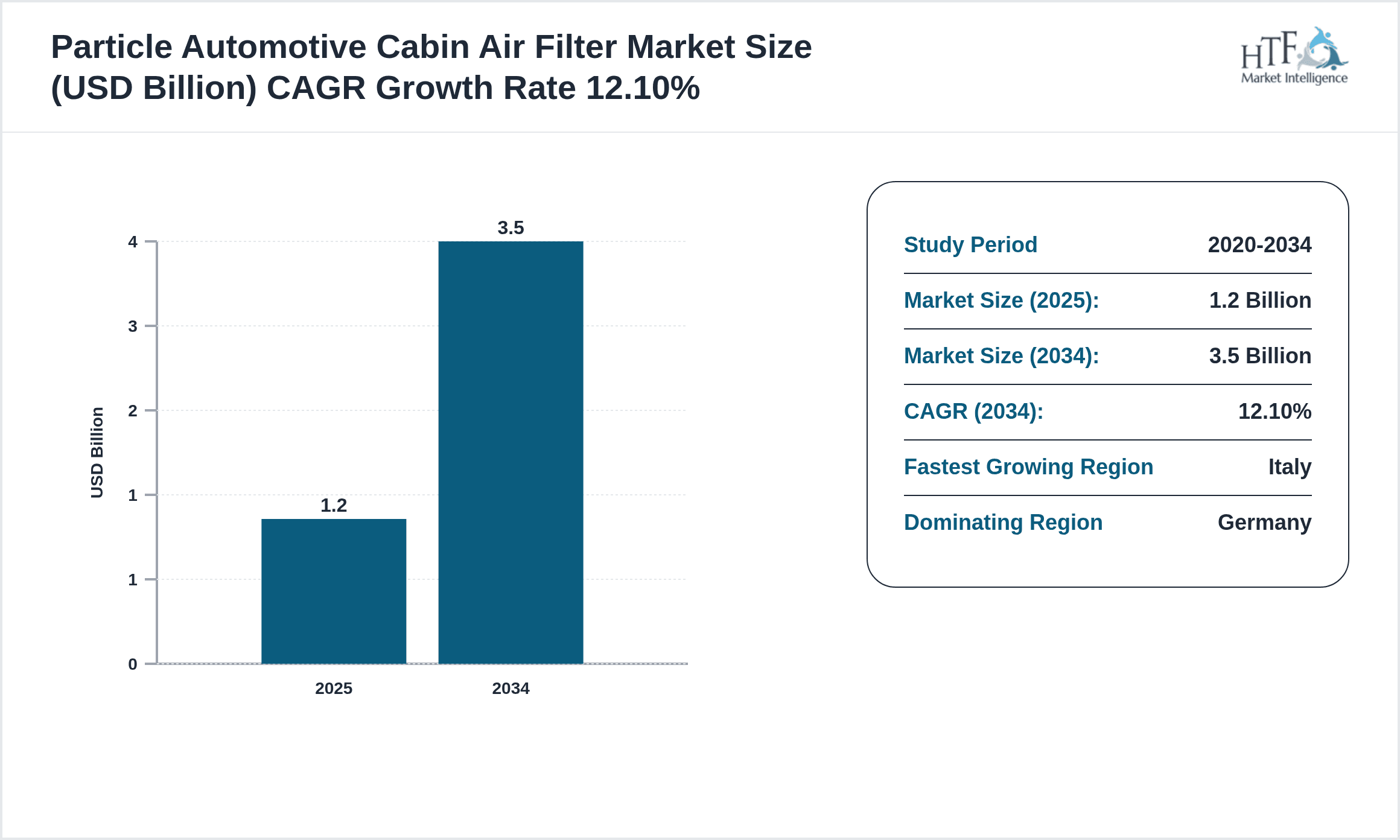
- •The market is currently valued at USD 1.2 billion in 2025 and is forecasted to reach USD 3.5 billion by 2034, growing at a CAGR of 12.1%. Germany dominates the market with a 28% share, while Italy is the fastest-growing country with an anticipated CAGR of 14.8%. HEPA filters lead in volume and revenue due to their superior efficiency, whereas electrostatic filters are emerging rapidly given their cost and performance advantages. Key players such as Mann+Hummel, Bosch, and Mahle are driving innovation with advanced filtration technologies and expanding their footprint across Europe. The market’s strategic importance is emphasized by its role in improving vehicle occupant health and compliance with evolving environmental standards.
- •This market holds substantial value for automotive OEMs, filter manufacturers, and aftermarket suppliers who aim to capitalize on evolving air quality standards and vehicle electrification trends. The increasing integration of cabin air filters with vehicle HVAC systems and IoT technologies highlights the growing complexity and demand for sophisticated filtration solutions. Stakeholders benefit from expanding regulatory frameworks across European countries and rising consumer awareness about in-cabin air quality. The market’s future is shaped by innovation-led growth, strategic partnerships, and regional expansion, positioning it as a critical component of sustainable automotive ecosystem development.
Competitive Landscape
The Europe Particle Automotive Cabin Air Filter market is characterized by intense competition among established global manufacturers and regional specialists. Market players compete through continuous innovation, focusing on high-efficiency filter media, durability, and integration with vehicle systems. Strategic collaborations with automotive OEMs and investments in research and development are common competitive strategies. Pricing is competitive but balanced with quality and compliance with European environmental standards. Additionally, companies are increasingly adopting sustainable materials and manufacturing processes to differentiate in a market driven by regulatory and consumer pressures. The rivalry is further intensified by emerging entrants focusing on new technologies such as electrostatic and ionic filters, leading to a diversified product portfolio and enhanced market segmentation. Overall, competitive dynamics emphasize technological leadership, regional presence, and supply chain optimization.
Leading Companies in Europe Particle Automotive Cabin Air Filter Market
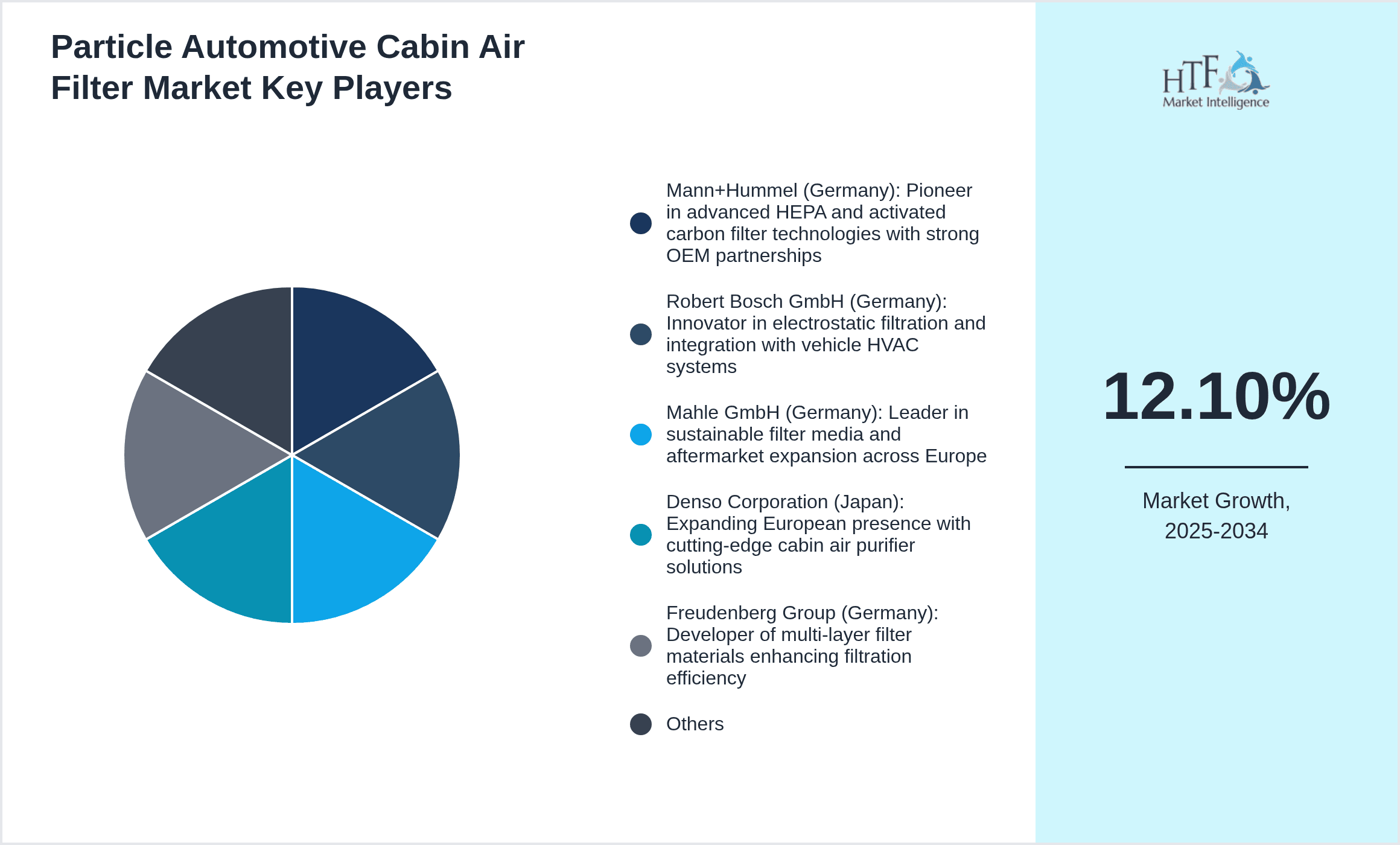
- •Mann+Hummel (Germany): Pioneer in advanced HEPA and activated carbon filter technologies with strong OEM partnerships
- •Robert Bosch GmbH (Germany): Innovator in electrostatic filtration and integration with vehicle HVAC systems
- •Mahle GmbH (Germany): Leader in sustainable filter media and aftermarket expansion across Europe
- •Denso Corporation (Japan): Expanding European presence with cutting-edge cabin air purifier solutions
- •Freudenberg Group (Germany): Developer of multi-layer filter materials enhancing filtration efficiency
- •3M Company (USA): Provider of high-performance nanofiber filters for automotive applications
- •Ahlstrom-Munksjö (Finland): Specialist in eco-friendly filter media with growing European market share
- •Donaldson Company, Inc. (USA): Known for durable filters and aftermarket aftermarket distribution networks
- •Clarcor (USA): Focused on innovative filter designs and automotive filtration solutions
- •Valeo SA (France): Integrated cabin air filtration systems for electric and hybrid vehicles
- •UFI Filters (Italy): Rapidly growing with electrostatic and ionic filter technologies
- •Sogefi Group (Italy): Expanding product portfolio with activated carbon and HEPA filters
- •Filtration Group (USA): Diversified filtration solutions tailored to European automotive needs
- •Camfil AB (Sweden): Developing sustainable and smart filter solutions for automotive cabins
- •K&N Engineering (USA): Leader in aftermarket cabin air filters with high filtration efficiency
- •Parker Hannifin Corporation (USA): Innovator in filtration technology with growing European OEM contracts
- •Hengst SE (Germany): Supplier of customized cabin air filter solutions emphasizing sustainability
- •LG Chem Ltd. (South Korea): Introducing nanotechnology-based cabin air filters in Europe
- •TSI Incorporated (USA): Developer of advanced testing and filtration validation technologies
- •Clarcor (USA): Offering modular and scalable filtration systems for commercial vehicles
- •Mitsubishi Chemical Corporation (Japan): Innovator in activated carbon filter materials
- •Sekisui Chemical Co., Ltd. (Japan): Advanced filter media manufacturer targeting European automotive
- •Sakura Filter Products Co., Ltd. (Japan): Expanding aftermarket cabin air filters in Europe
- •Nisshinbo Holdings Inc. (Japan): Developing high-performance electrostatic and HEPA filters
- •Ahlstrom-Munksjö (Finland): Leader in biodegradable and eco-friendly cabin air filter media
Market Breakdown
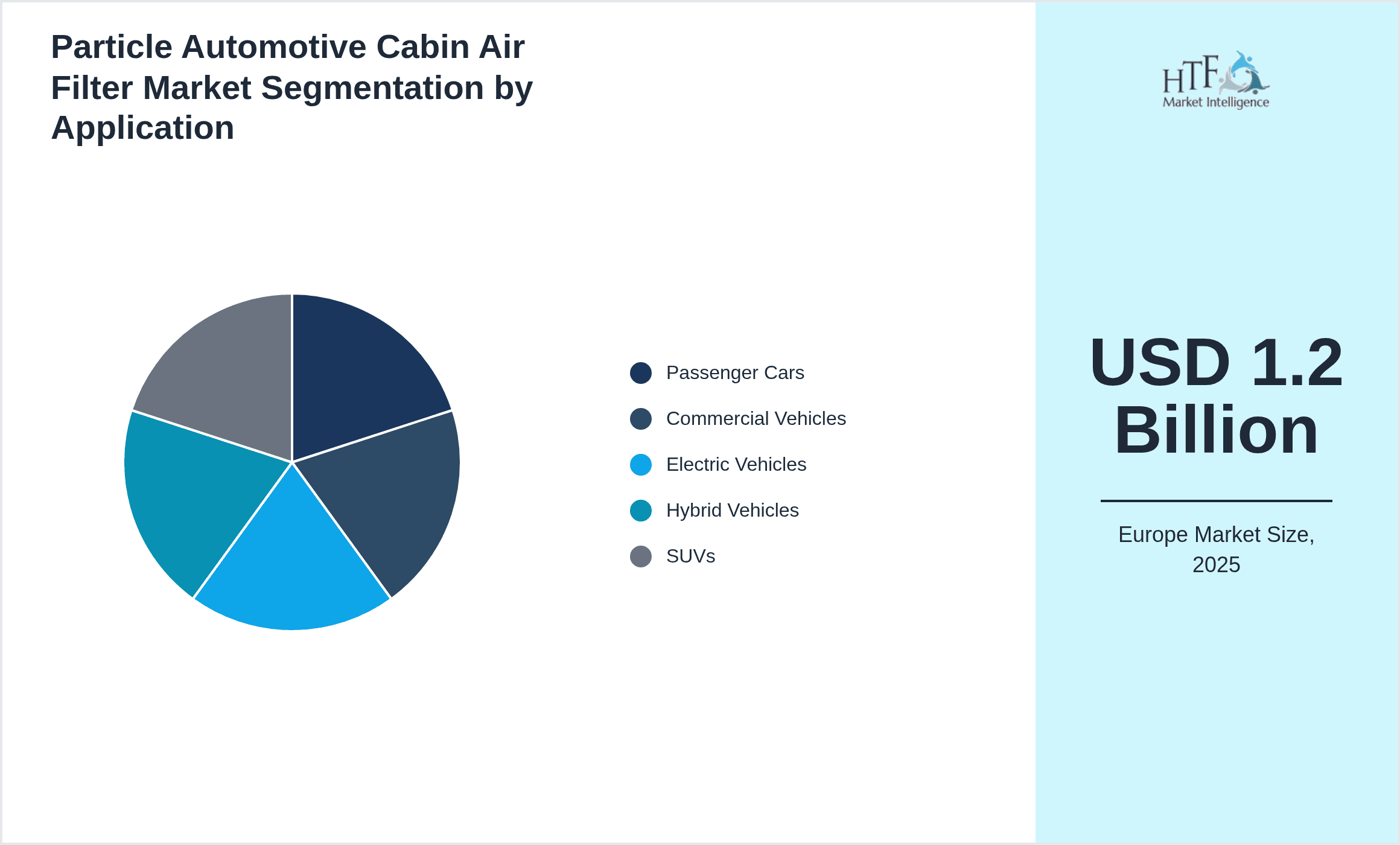
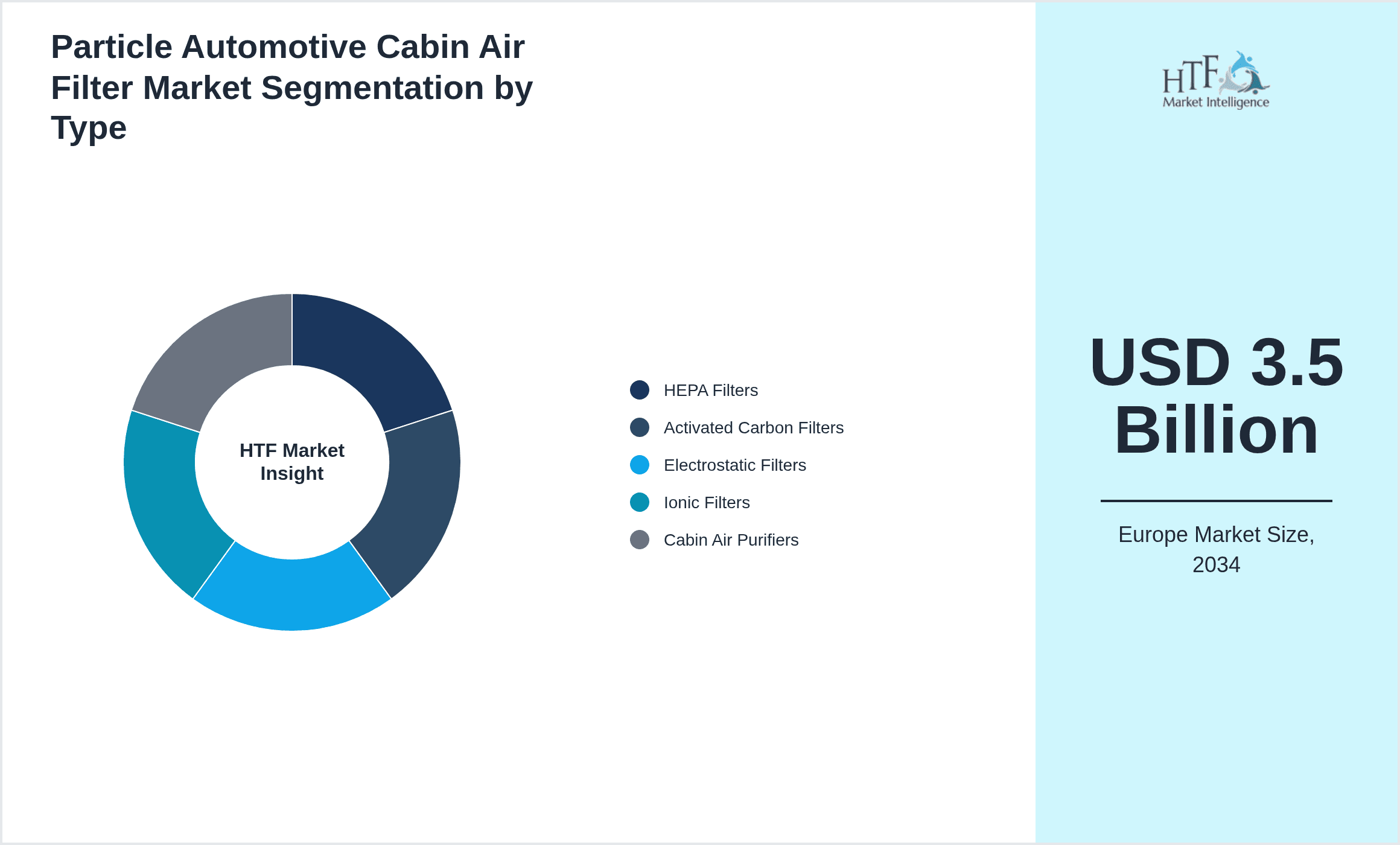
- •By Type
- ◦HEPA Filters
- ◦Activated Carbon Filters
- ◦Electrostatic Filters
- ◦Ionic Filters
- ◦Cabin Air Purifiers
- •By Application
- ◦Passenger Cars
- ◦Commercial Vehicles
- ◦Electric Vehicles
- ◦Hybrid Vehicles
- ◦SUVs
- •By Distribution Channel
- ◦OEM
- ◦Aftermarket
- ◦Online Retail
- ◦Automotive Service Centers
- •By Filter Material Technology
- ◦Nanofiber Media
- ◦Multi-layer Composite
- ◦Activated Carbon Media
- ◦Electrostatic Media
Growth Dynamics
- •Government regulations across Europe, such as Euro 7 emission standards and in-cabin air quality mandates, are driving widespread adoption of advanced cabin air filters, significantly boosting market growth.
- •Strategic partnerships between filter manufacturers and automotive OEMs facilitate seamless integration of innovative filtration technologies into new vehicle models, accelerating market penetration and customer trust.
- •Technological innovations such as electrostatic and nanofiber filter media enhance filtration efficiency and reduce energy consumption, offering cost-effective solutions that meet stringent regulatory requirements.
- •Rising consumer awareness on health impacts of air pollution inside vehicles is fueling demand for premium cabin air filters, particularly in urban and industrial regions across Europe.
- •Increasing production of electric and hybrid vehicles, which require specialized cabin air filtration systems due to different HVAC configurations, is creating new market opportunities for filter suppliers.
- •Investment in research and development by key players to develop sustainable, biodegradable filter materials aligns with Europe's environmental goals, attracting eco-conscious consumers and regulators alike.
- •Expansion of aftermarket distribution channels, including online platforms and automotive service centers, is improving accessibility and driving incremental sales growth across European countries.
Market Trends
- •Integration of smart sensors within cabin air filters is becoming prevalent, enabling real-time air quality monitoring and adaptive filtration performance tailored to environmental conditions.
- •Sustainability is a core trend, with manufacturers adopting biodegradable and recyclable materials to reduce environmental footprint and comply with EU circular economy directives.
- •Electrostatic filter technology is gaining traction due to its ability to capture finer particles efficiently while maintaining lower pressure drops, making it popular in premium vehicle segments.
- •Growth of electric vehicle production in Europe is influencing filter design, emphasizing compact, energy-efficient systems compatible with battery-powered HVAC units.
- •Aftermarket demand is rising steadily as vehicle owners increasingly replace cabin air filters for enhanced in-cabin air quality, driven by growing health awareness.
- •Collaborations between filter manufacturers and automotive HVAC system providers are enhancing product integration and driving innovation in filtration system architectures.
- •Regulatory pressures on air pollution and indoor air quality in vehicles have prompted development of multi-functional filters that remove VOCs and odors alongside particulate matter.
Market Opportunities
- •Expanding electric and hybrid vehicle markets across Europe offer scalable opportunities for customized cabin air filters designed specifically for these vehicle architectures.
- •Emerging demand for smart filtration systems integrated with IoT and AI for predictive maintenance and enhanced user experience presents a significant growth avenue.
- •Increasing urbanization and air pollution levels in Southern and Eastern European countries create untapped markets for premium air filtration solutions.
- •Development of biodegradable and eco-friendly filter media aligns with EU sustainability targets, opening new product lines and customer segments.
- •Growth in aftermarket sales through digital platforms offers cost-effective channels to reach end-users and expand market penetration.
- •Collaborative ventures between European filter manufacturers and automotive OEMs can accelerate innovation and adoption of next-generation filtration technologies.
- •Regulatory tightening on in-cabin air quality can drive mandatory adoption of advanced filters, expanding market size and improving health outcomes.
Market Challenges
- •High production costs for advanced filtration media limit price competitiveness especially in cost-sensitive vehicle segments and aftermarket.
- •Complex regulatory landscape across different European countries creates compliance challenges for manufacturers and suppliers.
- •Lack of consumer awareness about the importance of regular cabin air filter replacement hampers aftermarket growth potential.
- •Technological barriers remain in scaling up novel filter materials such as nanofiber media while maintaining durability and performance.
- •Competition from low-cost imports and counterfeit products impacts brand reputation and market pricing dynamics.
- •Integration challenges with vehicle HVAC systems require close collaboration between filter makers and automakers, which can slow product development.
- •Supply chain disruptions and raw material volatility pose risks to consistent manufacturing and delivery schedules.
Regulatory Framework
- •The Euro 6 and upcoming Euro 7 emission standards (enforced 2014-2025) mandate reductions in vehicular emissions, indirectly increasing demand for effective cabin air filtration systems to meet in-cabin air quality norms.
- •European Union’s General Product Safety Directive (GPSD) requires automotive components, including cabin air filters, to comply with strict safety and performance criteria, influencing product design and quality assurance.
- •REACH (Registration, Evaluation, Authorization, and Restriction of Chemicals) regulation (effective 2007 onwards) governs the use of chemicals in filter media, encouraging the adoption of non-toxic and eco-friendly materials.
- •National mandates in Germany and France set specific air quality thresholds for vehicles, requiring the integration of high-efficiency particulate filters in OEM vehicle models since 2020.
- •The EU Circular Economy Action Plan drives manufacturers to develop recyclable and biodegradable cabin air filters, promoting sustainable production and waste reduction within the automotive sector.
Market Intelligence
- •15th March 2025, Mann+Hummel launched a next-generation HEPA cabin air filter featuring enhanced particulate capture efficiency and lower pressure drop, targeting premium European passenger cars. The new filter integrates smart sensor compatibility for real-time air quality monitoring, aligning with evolving regulatory requirements and consumer health concerns. This innovation positions Mann+Hummel to strengthen its OEM partnerships and expand its market share across Germany and neighboring countries. Source: Official Mann+Hummel Press Release
- •10th January 2025, Robert Bosch GmbH introduced an electrostatic cabin air filter designed specifically for electric vehicles, offering improved filtration at reduced energy consumption. This product supports the automotive industry's shift towards sustainable mobility and meets stringent EU in-cabin air quality standards. Bosch aims to leverage this technology in collaboration with major European OEMs for the upcoming electric vehicle models launching through 2026. Source: Bosch Annual Innovation Report 2025
- •22nd February 2025, Mahle GmbH announced expansion of its European aftermarket operations by opening new distribution centers in Italy and Spain, enhancing supply chain efficiency and customer reach. The company also revealed plans to introduce biodegradable filter media to comply with EU sustainability regulations and meet growing consumer demand for green products. This strategic move is expected to boost Mahle’s market penetration in Southern Europe. Source: Mahle Corporate News
- •5th April 2024, Valeo SA unveiled a smart cabin air purification system integrating multi-layer filtration with IoT connectivity, enabling predictive maintenance and adaptive air quality control. This development targets the luxury electric vehicle segment in Europe, aiming to enhance passenger health and comfort. The product launch marks a significant step in combining filtration technology with digital innovation, positioning Valeo as a leader in next-gen automotive cabin air solutions. Source: Valeo Innovation Press Release
Regional Outlook
The Germany currently holds a significant share of the market, primarily due to several key factors: increasing consumption rates, a burgeoning population, and robust economic momentum. These elements collectively drive demand, positioning this region as a leader in the market. On the other hand, Italy is rapidly emerging as the fastest-growing area within the industry. This remarkable growth can be attributed to swift infrastructure development, the expansion of various industrial sectors, and a marked increase in consumer demand. These dynamics make this region a crucial player in shaping future market growth.
In our report, we cover a comprehensive analysis of the following regions and countries:
- Germany
- France
- The United Kingdom
- BeNeLux
- Spain
- Italy
- NORDIC
- CEE
- Others
| Feature | Details |
|---|---|
| Base Year Market Size | USD 1.2 Billion |
| Forecast Year Market Size | USD 3.5 Billion |
| CAGR | 12.1% |
| Forecast Period | 2026 to 2033 |
| YoY Growth | 11.5% |
| Scope of Report | Market is segmented by Type (HEPA Filters, Activated Carbon Filters, Electrostatic Filters, Ionic Filters, Cabin Air Purifiers), Application (Passenger Cars, Commercial Vehicles, Electric Vehicles, Hybrid Vehicles, SUVs), Distribution Channel (OEM, Aftermarket, Online Retail, Automotive Service Centers), Filter Material Technology (Nanofiber Media, Multi-layer Composite, Activated Carbon Media, Electrostatic Media) |
| Regions Covered | Germany, France, The United Kingdom, BeNeLux, Spain, Italy, NORDIC, CEE, Others |
| Key Companies | Mann+Hummel (Germany), Robert Bosch GmbH (Germany), Mahle GmbH (Germany), Denso Corporation (Japan), Freudenberg Group (Germany), 3M Company (USA), Ahlstrom-Munksjö (Finland), Donaldson Company, Inc. (USA), Clarcor (USA), Valeo SA (France), UFI Filters (Italy), Sogefi Group (Italy), Filtration Group (USA), Camfil AB (Sweden), K&N Engineering (USA), Parker Hannifin Corporation (USA), Hengst SE (Germany), LG Chem Ltd. (South Korea), TSI Incorporated (USA), Clarcor (USA), Mitsubishi Chemical Corporation (Japan), Sekisui Chemical Co., Ltd. (Japan), Sakura Filter Products Co., Ltd. (Japan), Nisshinbo Holdings Inc. (Japan), Ahlstrom-Munksjö (Finland) |
Europe Particle Automotive Cabin Air Filter Market Size, Growth & Revenue 2025-2034 - Table of Contents
Frequently Asked Questions (FAQ):
The Compact Track Loaders market is projected to grow at a CAGR of 6.8% from 2025 to 2030, driven by increasing demand in construction and agricultural sectors.
North America currently leads the market with approximately 45% market share, followed by Europe at 28% and Asia-Pacific at 22%. The remaining regions account for 5% of the global market.
Key growth drivers include increasing construction activities, rising demand for versatile equipment in agriculture, technological advancements in track loader design, and growing preference for compact equipment in urban construction projects.