
Global DCO Platform Market Size, Growth & Revenue 2024-2034
Global DCO Platform Market is segmented by Type (Cloud-based DCO Platforms, On-premise DCO Platforms, Hybrid DCO Platforms, AI-driven DCO Platforms, API-based DCO Platforms), Application (Advertising, Marketing Automation, Content Management, E-commerce, Analytics), Deployment Model (Public Cloud, Private Cloud, Hybrid Cloud), End User Industry (Retail & E-commerce, Media & Entertainment, Financial Services, Healthcare, Travel & Hospitality), and Geography (North America, LATAM, West Europe, Central & Eastern Europe, Northern Europe, Southern Europe, East Asia, Southeast Asia, South Asia, Central Asia, Oceania, MEA)
Pricing
Report Overview
Executive Summary
- •The Global Dynamic Creative Optimization (DCO) Platform market represents a pivotal segment of the digital advertising ecosystem, focusing on the delivery of personalized and real-time creative content to target audiences. These platforms leverage machine learning, AI algorithms, and data analytics to continuously optimize ad creatives, enhancing user engagement and marketing ROI. The market spans multiple deployment types including cloud-based, on-premise, hybrid, AI-driven, and API-based solutions, supporting applications such as advertising, marketing automation, content management, e-commerce, and analytics. Driven by the accelerating digitization of marketing channels and increasing demand for tailored consumer experiences, the industry is witnessing rapid technological advancements and strategic collaborations. The scope extends globally, with significant market activity across North America, Europe, Asia-Pacific, Latin America, and Middle East & Africa. Enterprises ranging from large multinational corporations to SMBs are adopting DCO platforms to streamline campaign execution and maximize conversion efficacy. Overall, the market is marked by dynamic innovation, competitive intensity, and expanding use cases, establishing DCO as a cornerstone of contemporary digital marketing strategies.
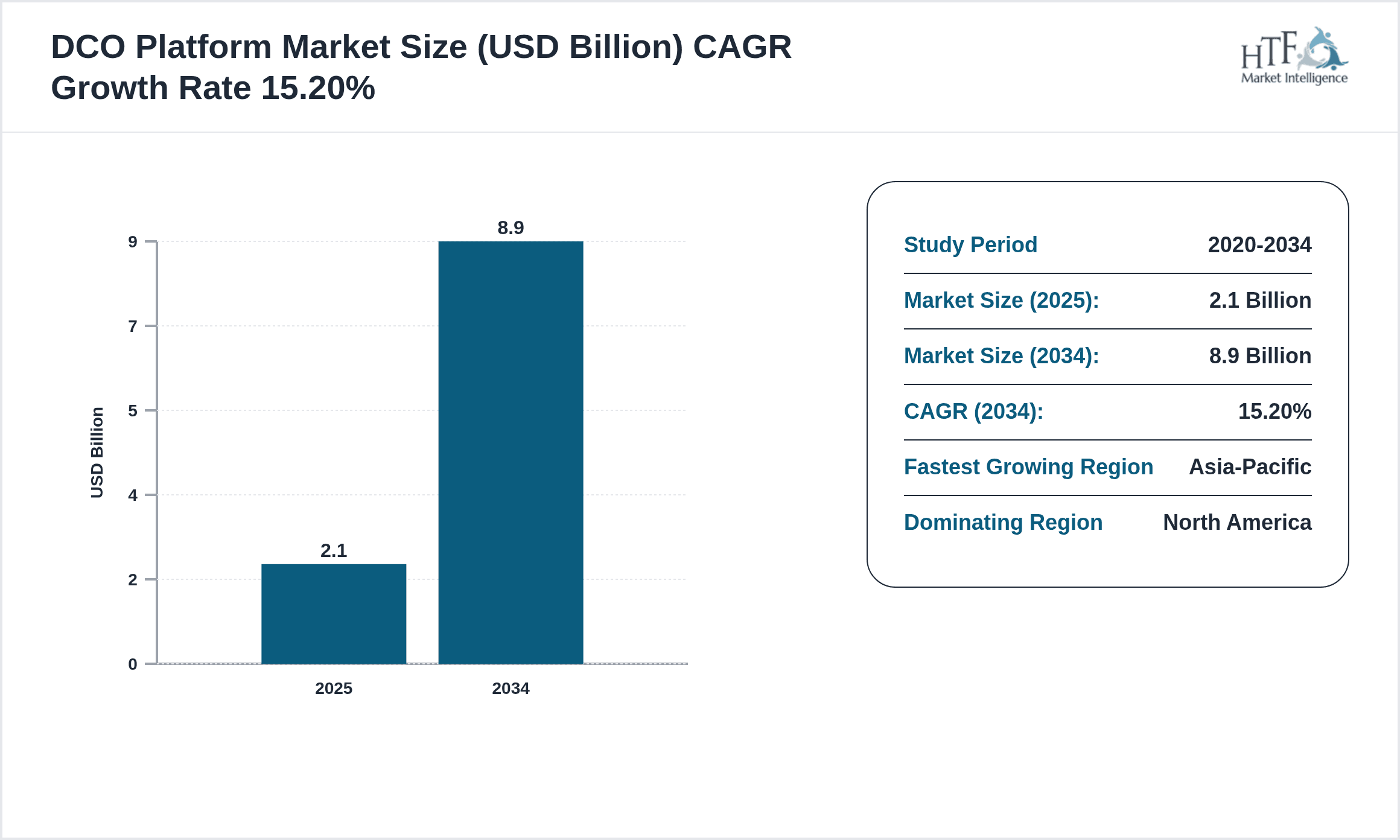
- •Key market highlights include a robust CAGR of 15.2% from 2024 to 2034, reflecting strong adoption and technological integration worldwide. The base market size of USD 2.1 Billion in 2024 is projected to reach USD 8.9 Billion by 2034, underscoring significant growth potential. North America currently dominates with a 38% market share, attributed to early technology adoption and mature digital infrastructure, while Asia-Pacific is emerging as the fastest-growing region with a CAGR of 19.5%, fueled by rapid digital transformation and increasing internet penetration. Cloud-based platforms lead the product segmentation, offering scalability and flexibility, whereas AI-driven solutions are gaining traction as the fastest growing type due to their advanced personalization capabilities. Advertising remains the dominant application, closely followed by marketing automation, both driving substantial market demand.
- •The Global DCO Platform market holds strategic importance for digital marketing, enabling organizations to enhance consumer engagement and optimize campaign spending effectively. By automating creative personalization, these platforms empower marketers to deliver contextually relevant messaging at scale, transforming customer experiences and driving business outcomes. The market’s growth trajectory is aligned with evolving marketing paradigms emphasizing data-centric strategies and omnichannel presence, offering numerous opportunities for technology providers, advertisers, and end-users. As enterprises increasingly prioritize agile and intelligent marketing solutions, the DCO platform market is positioned as a critical enabler of competitive advantage in the digital economy.
Competitive Landscape
The Global DCO Platform market exhibits a highly competitive environment characterized by rapid innovation and strategic positioning among key technology providers. Market players emphasize continuous development of AI and machine learning capabilities to enhance creative automation, real-time data integration, and cross-channel campaign management. Competitive strategies include extensive partnerships with digital advertising agencies, integration with major demand-side platforms (DSPs), and expansions into emerging regional markets to capture growing demand. Companies differentiate through proprietary algorithms, user-friendly interfaces, and scalable cloud infrastructure, aiming to deliver superior personalization and analytics features. Pricing strategies vary, with subscription-based models and tiered service offerings catering to diverse customer segments. Market rivalry is intensified by the presence of both established incumbents and agile startups, driving technological advancements and feature-rich product portfolios. Barriers to entry include the need for significant R&D investment and data security compliance, reinforcing the competitive advantage of leading firms. Looking ahead, the landscape will likely witness consolidation, increased focus on AI-driven innovation, and expansion into underserved markets.
Prominent Players in DCO Platform Market
- •Adobe Inc. (United States)
- •Google LLC (United States)
- •Sizmek by Amazon (United States)
- •Celtra Inc. (United States)
- •Thunder Experience Cloud (United States)
- •Flashtalking (United States)
- •Jivox Inc. (United States)
- •Innovid (United States)
- •Adform (Denmark)
- •Mediaocean (United States)
- •Zeta Global (United States)
- •Quantcast Corporation (United States)
- •Criteo S.A. (France)
- •The Trade Desk (United States)
- •Adacado (Canada)
- •Bidalgo (Israel)
- •Adgorithms (Hungary)
- •Kenshoo (United States)
- •Smartly.io (Finland)
- •Rocket Fuel (United States)
- •Adverity (Austria)
- •TapClicks (United States)
- •Dataxu (United States)
- •Centro (United States)
- •Simpli.fi (United States)

Market Breakdown
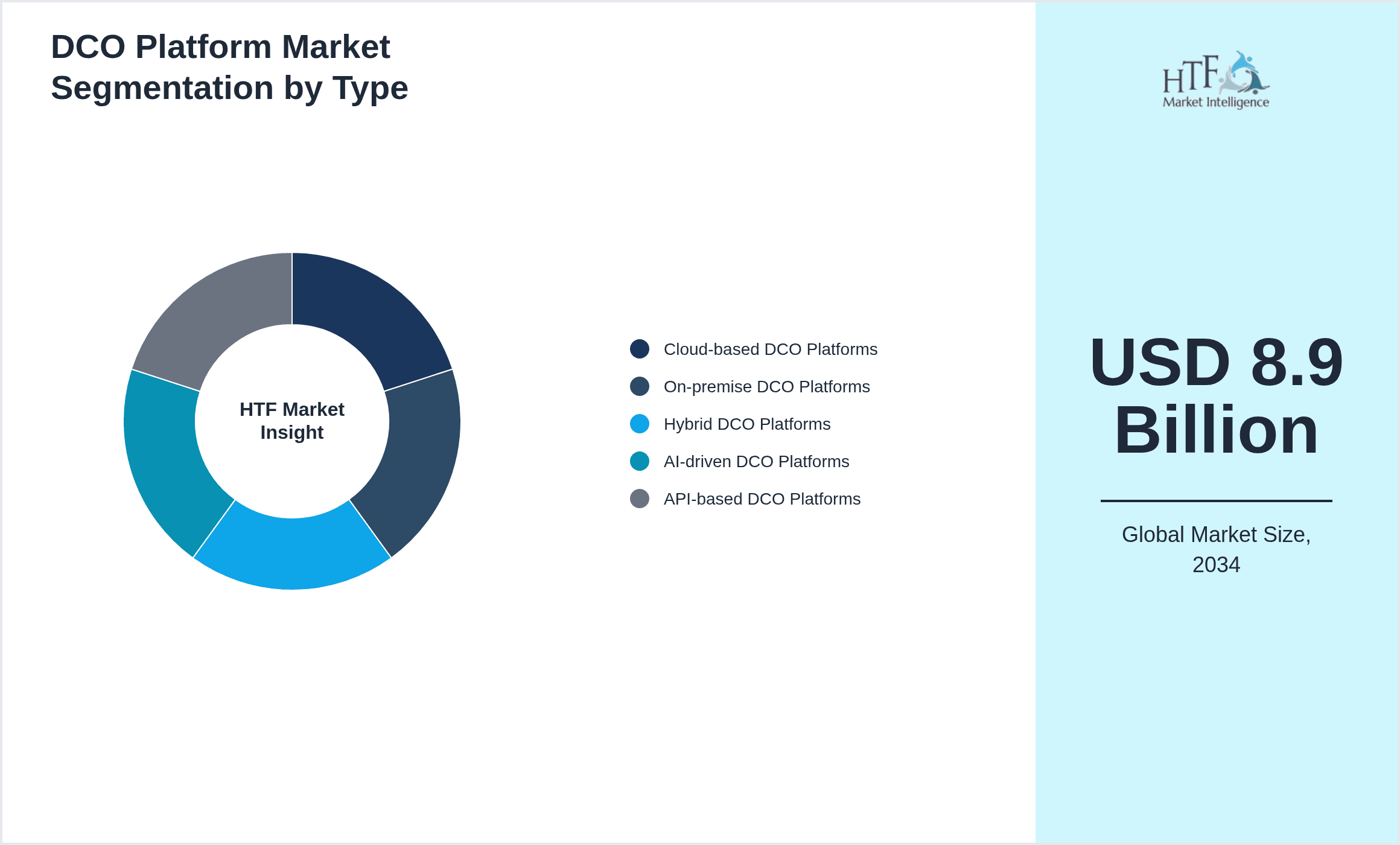
- •By Type
- ◦Cloud-based DCO Platforms
- ◦On-premise DCO Platforms
- ◦Hybrid DCO Platforms
- ◦AI-driven DCO Platforms
- ◦API-based DCO Platforms
- •By Application
- ◦Advertising
- ◦Marketing Automation
- ◦Content Management
- ◦E-commerce
- ◦Analytics
- •By Deployment Model
- ◦Public Cloud
- ◦Private Cloud
- ◦Hybrid Cloud
- •By End User Industry
- ◦Retail & E-commerce
- ◦Media & Entertainment
- ◦Financial Services
- ◦Healthcare
- ◦Travel & Hospitality
Growth Dynamics
The Global DCO Platform market growth is primarily driven by the increasing demand for personalized advertising experiences fueled by advancements in AI and machine learning technologies. Organizations are focusing on improving customer engagement and conversion rates through real-time content customization, which necessitates sophisticated DCO solutions. The expansion of digital marketing budgets globally and the proliferation of multi-channel campaigns further accelerate adoption. Additionally, cloud-based DCO platforms offer scalability and ease of integration, attracting enterprises seeking flexible deployment models. The rise of e-commerce and mobile advertising also contributes significantly by creating new avenues for dynamic content optimization. Furthermore, regulatory emphasis on data privacy and compliance is encouraging the development of secure and transparent platforms, enhancing market trust and adoption. These factors collectively support sustained market expansion and innovation over the forecast period.
Market Trends
The DCO Platform market is witnessing a growing trend towards AI-driven automation, enabling more precise audience targeting and creative personalization. Integration of big data analytics and customer journey mapping is becoming standard, enhancing campaign effectiveness. Marketers are increasingly adopting hybrid deployment models to balance control with scalability. Cloud-native architectures and API-based platforms facilitate seamless integration with broader MarTech stacks, promoting interoperability. Sustainability and ethical advertising practices are emerging priorities, influencing platform development. Additionally, increased adoption of programmatic advertising and cross-device targeting reflects evolving digital marketing strategies. These trends collectively reshape the market landscape by fostering innovation, efficiency, and consumer-centric approaches.

Market Opportunities
The Global DCO Platform market offers significant opportunities in emerging economies where digital advertising penetration is rapidly increasing. Expansion into underpenetrated sectors such as healthcare and financial services presents new growth avenues. Incorporating augmented reality (AR) and virtual reality (VR) technologies can enhance creative engagement, opening innovative product development pathways. Strategic partnerships with social media platforms and demand-side platforms (DSPs) enable broader market reach and enhanced service offerings. Additionally, development of advanced AI models for hyper-personalization and predictive analytics can differentiate providers. Regulatory frameworks promoting data privacy also encourage trust-based adoption, allowing market participants to capitalize on compliance-driven demand. These opportunities together create a promising outlook for market entrants and incumbents.
Market Challenges
Challenges in the Global DCO Platform market include complex integration with legacy systems, limiting seamless deployment in some organizations. High initial costs and technical expertise requirements for AI-driven platforms can hinder adoption, especially among SMEs. Data privacy concerns and evolving regulatory landscapes impose compliance burdens, necessitating ongoing platform updates and secure data handling. Market fragmentation with numerous competing solutions complicates customer decision-making and intensifies pricing pressures. Additionally, rapid technological changes demand continuous innovation, posing risks for companies unable to adapt swiftly. These challenges collectively restrain market growth, requiring strategic focus on user-friendly solutions, cost optimization, and regulatory alignment to overcome barriers effectively.
Regulatory Framework
From 2020 to 2024, the Global DCO Platform market has been influenced by stringent data protection regulations such as the GDPR in Europe, CCPA in California, and similar frameworks worldwide. These regulations mandate robust data privacy, user consent management, and transparent data usage, compelling DCO providers to implement advanced compliance features. Additionally, ad industry standards developed by bodies like the Interactive Advertising Bureau (IAB) have introduced guidelines for acceptable data use and ad quality. Emerging regulations targeting AI ethics and algorithmic transparency are shaping platform development, ensuring responsible automation and bias mitigation. Governments are increasingly focusing on cross-border data flows and cybersecurity standards, impacting deployment models and vendor selection. Collectively, these regulatory frameworks drive innovation in secure, compliant DCO solutions while ensuring user trust and market integrity.
Market Intelligence
- •15th June 2024, Adobe Inc. launched an enhanced AI-driven DCO platform integrating advanced machine learning algorithms to deliver hyper-personalized ad experiences. This new release focuses on real-time data processing and cross-channel orchestration, targeting improved ROI for enterprise clients. Adobe’s strategic objective is to consolidate its leadership in the digital marketing software space by offering scalable, cloud-native solutions that support complex campaign workflows. The platform supports seamless integration with other Adobe Experience Cloud products, enabling unified marketing operations. This innovation addresses growing demand for automation and creative flexibility, positioning Adobe strongly against competitors in a rapidly evolving market. Source: Adobe Official Press Release
- •10th November 2023, Google LLC introduced an API-based DCO solution designed to facilitate integration with various third-party marketing tools and DSPs. The platform leverages AI to optimize creatives dynamically based on user behavior and contextual signals, enhancing targeting precision. Google aims to expand its footprint in programmatic advertising by enabling advertisers to customize and scale campaigns efficiently. The solution supports multi-format creatives and offers robust analytics for campaign performance tracking. This launch represents Google’s commitment to innovation in digital advertising technology and reflects market demand for interoperable, data-driven marketing solutions. Source: Google Marketing Blog
- •Market Intelligence: Recent developments and industry insights are being monitored. For latest updates, consult official company announcements and industry publications.
- •Market Intelligence: Recent developments and industry insights are being monitored. For latest updates, consult official company announcements and industry publications.
Regional Outlook
The North America currently holds a significant share of the market, primarily due to several key factors: increasing consumption rates, a burgeoning population, and robust economic momentum. These elements collectively drive demand, positioning this region as a leader in the market. On the other hand, Asia-Pacific is rapidly emerging as the fastest-growing area within the industry. This remarkable growth can be attributed to swift infrastructure development, the expansion of various industrial sectors, and a marked increase in consumer demand. These dynamics make this region a crucial player in shaping future market growth.
In our report, we cover a comprehensive analysis of the following regions and countries:
- North America
- LATAM
- West Europe
- Central & Eastern Europe
- Northern Europe
- Southern Europe
- East Asia
- Southeast Asia
- South Asia
- Central Asia
- Oceania
- MEA
| Feature | Details |
|---|---|
| Base Year Market Size | USD 2.1 Billion |
| Forecast Year Market Size | USD 8.9 Billion |
| CAGR | 15.2% |
| Forecast Period | 2026 to 2033 |
| YoY Growth | 14% |
| Scope of Report | Market is segmented by Type (Cloud-based DCO Platforms, On-premise DCO Platforms, Hybrid DCO Platforms, AI-driven DCO Platforms, API-based DCO Platforms), Application (Advertising, Marketing Automation, Content Management, E-commerce, Analytics), Deployment Model (Public Cloud, Private Cloud, Hybrid Cloud), End User Industry (Retail & E-commerce, Media & Entertainment, Financial Services, Healthcare, Travel & Hospitality) |
| Regions Covered | North America, LATAM, West Europe, Central & Eastern Europe, Northern Europe, Southern Europe, East Asia, Southeast Asia, South Asia, Central Asia, Oceania, MEA |
| Key Companies | Adobe Inc. (United States), Google LLC (United States), Sizmek by Amazon (United States), Celtra Inc. (United States), Thunder Experience Cloud (United States), Flashtalking (United States), Jivox Inc. (United States), Innovid (United States), Adform (Denmark), Mediaocean (United States), Zeta Global (United States), Quantcast Corporation (United States), Criteo S.A. (France), The Trade Desk (United States), Adacado (Canada), Bidalgo (Israel), Adgorithms (Hungary), Kenshoo (United States), Smartly.io (Finland), Rocket Fuel (United States), Adverity (Austria), TapClicks (United States), Dataxu (United States), Centro (United States), Simpli.fi (United States) |
Global DCO Platform Market Size, Growth & Revenue 2024-2034 - Table of Contents
Frequently Asked Questions (FAQ):
The Compact Track Loaders market is projected to grow at a CAGR of 6.8% from 2025 to 2030, driven by increasing demand in construction and agricultural sectors.
North America currently leads the market with approximately 45% market share, followed by Europe at 28% and Asia-Pacific at 22%. The remaining regions account for 5% of the global market.
Key growth drivers include increasing construction activities, rising demand for versatile equipment in agriculture, technological advancements in track loader design, and growing preference for compact equipment in urban construction projects.