
Japan Air Conditioning Health Comfort Customization Market Roadmap to 2034
Japan Air Conditioning Health Comfort Customization Market is segmented by Air Conditioning Health Comfort Product Type (Smart Thermostats, Air Purifiers, HVAC Filters, UV-C Light Systems, Humidity Controllers), Application Area (Residential, Commercial, Industrial, Healthcare, Hospitality), Installation Service Type (New Installation, Replacement & Retrofit, Maintenance & Repair, Consultation & Customization), Deployment Model (Centralized HVAC Systems, Decentralized Systems, Hybrid Systems), and Geography (Hokkaido, Tohoku, Kanto, Chubu, Kansai, Chugoku, Shikoku, Kyushu)
Pricing
Report Overview
Executive Summary
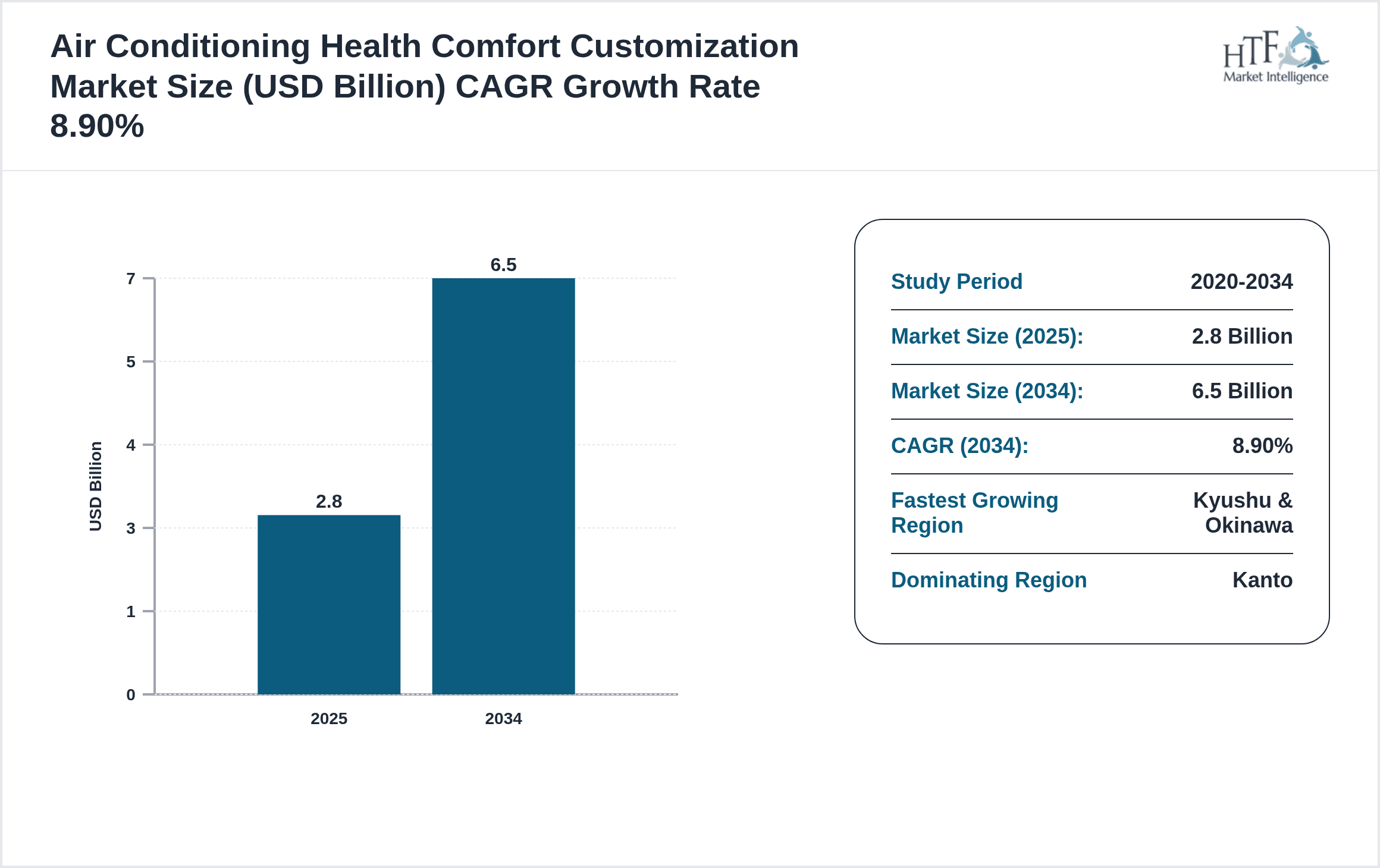
- •The Japan Air Conditioning Health Comfort Customization market focuses on delivering HVAC solutions that prioritize health, comfort, and energy efficiency tailored to Japan’s unique climatic and demographic conditions. This market includes innovative products such as smart thermostats, air purifiers, HVAC filters, UV-C light sterilization systems, and humidity controllers that collectively enhance indoor air quality and thermal comfort across residential, commercial, industrial, healthcare, and hospitality applications. The value chain includes design, manufacturing, integration, and maintenance services, emphasizing customization according to regional climatic zones like Kanto and Kyushu & Okinawa. Growing awareness of indoor air pollution, increasing prevalence of respiratory ailments, and stringent government regulations on air quality drive demand. Technological advancements, including IoT integration and AI-based controls, enable precise environment management, improving occupant well-being and energy utilization. The market has demonstrated robust growth since 2020, with a base size of USD 2.8 billion in 2025 and is forecasted to reach USD 6.5 billion by 2034, reflecting strong CAGR amid rising urbanization and health consciousness. Key stakeholders include global HVAC manufacturers, technology innovators, building contractors, and regulatory bodies, all collaborating to meet evolving customer expectations and sustainability goals in Japan’s complex market landscape.
- •Notable market highlights include a steady CAGR of 8.9% between 2025 and 2034, driven by demand for smart thermostats and UV-C sterilization technologies. The Kanto region dominates market share due to dense urbanization and commercial infrastructure, holding 35% market share, while Kyushu & Okinawa represent the fastest-growing zone with an 11.2% CAGR fueled by increasing residential modernization and hospitality sector investments. Product innovation focusing on health-oriented HVAC solutions and integration with IoT platforms has enhanced user experience and operational efficiency. Market penetration is further supported by government incentives promoting energy-efficient and pollution-reducing equipment, aligning with Japan’s environmental policies and public health objectives.
- •This market offers significant value proposition by combining health-centric air quality management with customized thermal comfort solutions, essential for industries like healthcare and hospitality where indoor environment quality is critical. The integration of smart technologies facilitates remote monitoring and adaptive control, reducing energy consumption and operational costs. For manufacturers and service providers, this translates into opportunities for differentiation, long-term customer engagement, and compliance with evolving regulatory frameworks. Investors and policymakers benefit from understanding market trends and regional dynamics to promote sustainable urban development and improve population health outcomes in Japan.
Competitive Landscape
The competitive environment in Japan's Air Conditioning Health Comfort Customization market is characterized by a mix of global HVAC giants and specialized local manufacturers focusing on health-centric and smart customization solutions. Companies adopt strategies such as product innovation, expansion of service networks, and strategic partnerships to strengthen market presence. Emphasis on R&D drives the development of IoT-enabled HVAC systems, UV-C sterilization, and energy-efficient devices, which are critical for differentiation in a technologically advanced market. Pricing strategies balance premium products with energy-saving benefits to appeal to both commercial and residential segments. Distribution channels include direct sales, authorized dealers, and digital platforms facilitating faster market penetration. Market entry barriers like stringent regulatory compliance and consumer trust requirements favor established players but also encourage innovation. Regional competition is influenced by localized climatic needs and consumer preferences, leading to tailored product offerings for zones such as Kanto and Kansai. Future trends include increased convergence of HVAC with smart building management systems and rising investments in clean air technologies, positioning the market for sustained competitive evolution.
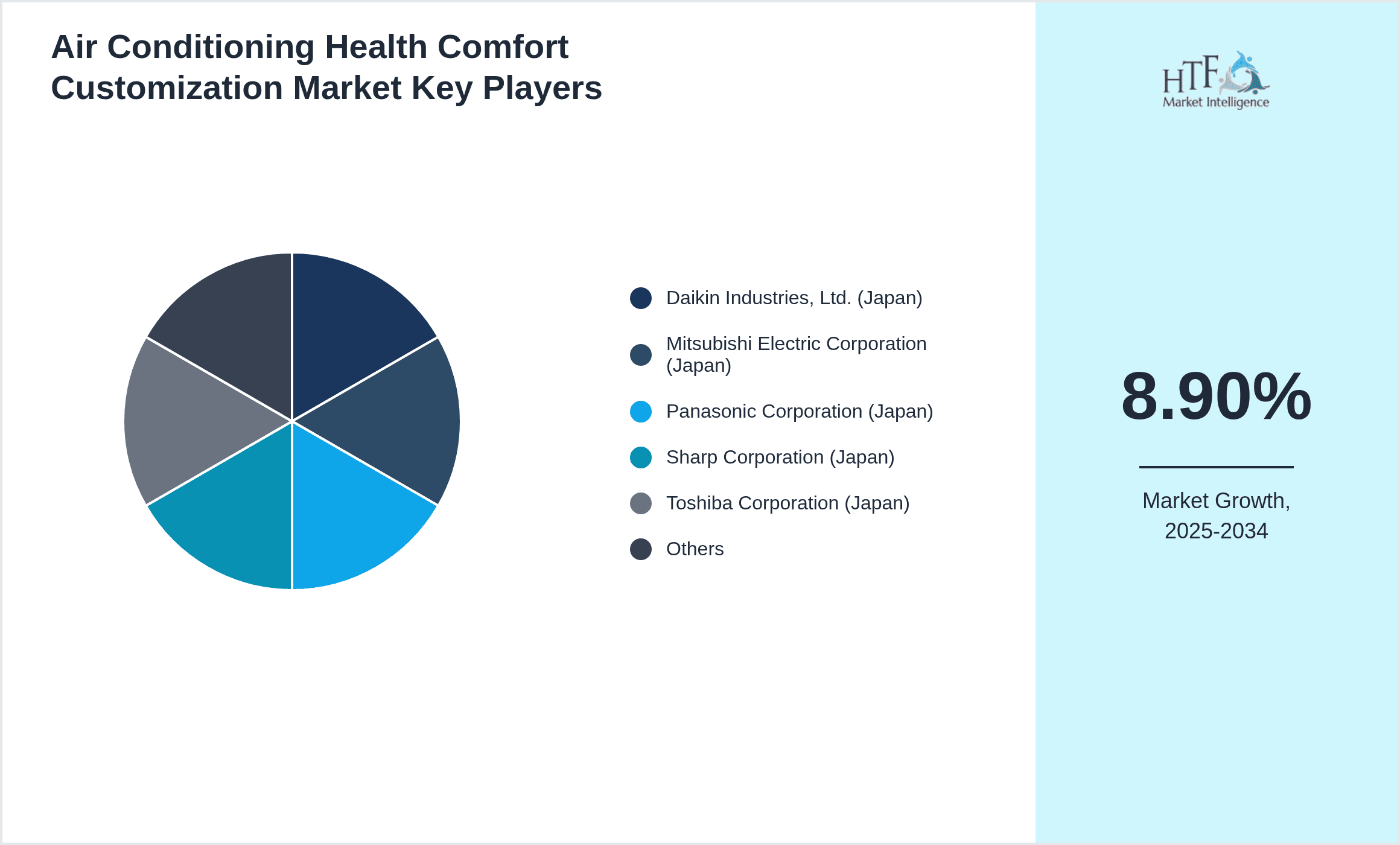
Leading Companies in Japan Air Conditioning Health Comfort Customization Market
- •Daikin Industries, Ltd. (Japan)
- •Mitsubishi Electric Corporation (Japan)
- •Panasonic Corporation (Japan)
- •Sharp Corporation (Japan)
- •Toshiba Corporation (Japan)
- •Hitachi, Ltd. (Japan)
- •Fujitsu General Limited (Japan)
- •Samsung Electronics Co., Ltd. (South Korea)
- •LG Electronics Inc. (South Korea)
- •Carrier Corporation (United States)
- •Honeywell International Inc. (United States)
- •Johnson Controls International plc (Ireland)
- •Blueair AB (Sweden)
- •Molekule, Inc. (United States)
- •LIXIL Corporation (Japan)
- •Nihon Denki Co., Ltd. (Japan)
- •Sanden Holdings Corporation (Japan)
- •Yanmar Co., Ltd. (Japan)
- •Dyson Ltd. (United Kingdom)
- •Electrolux AB (Sweden)
- •Sharp Corporation (Japan)
- •Panasonic Corporation (Japan)
- •Mitsubishi Heavy Industries, Ltd. (Japan)
- •Hitachi Appliances, Inc. (Japan)
- •Johnson Controls (Japan Branch) (United States)
Market Breakdown
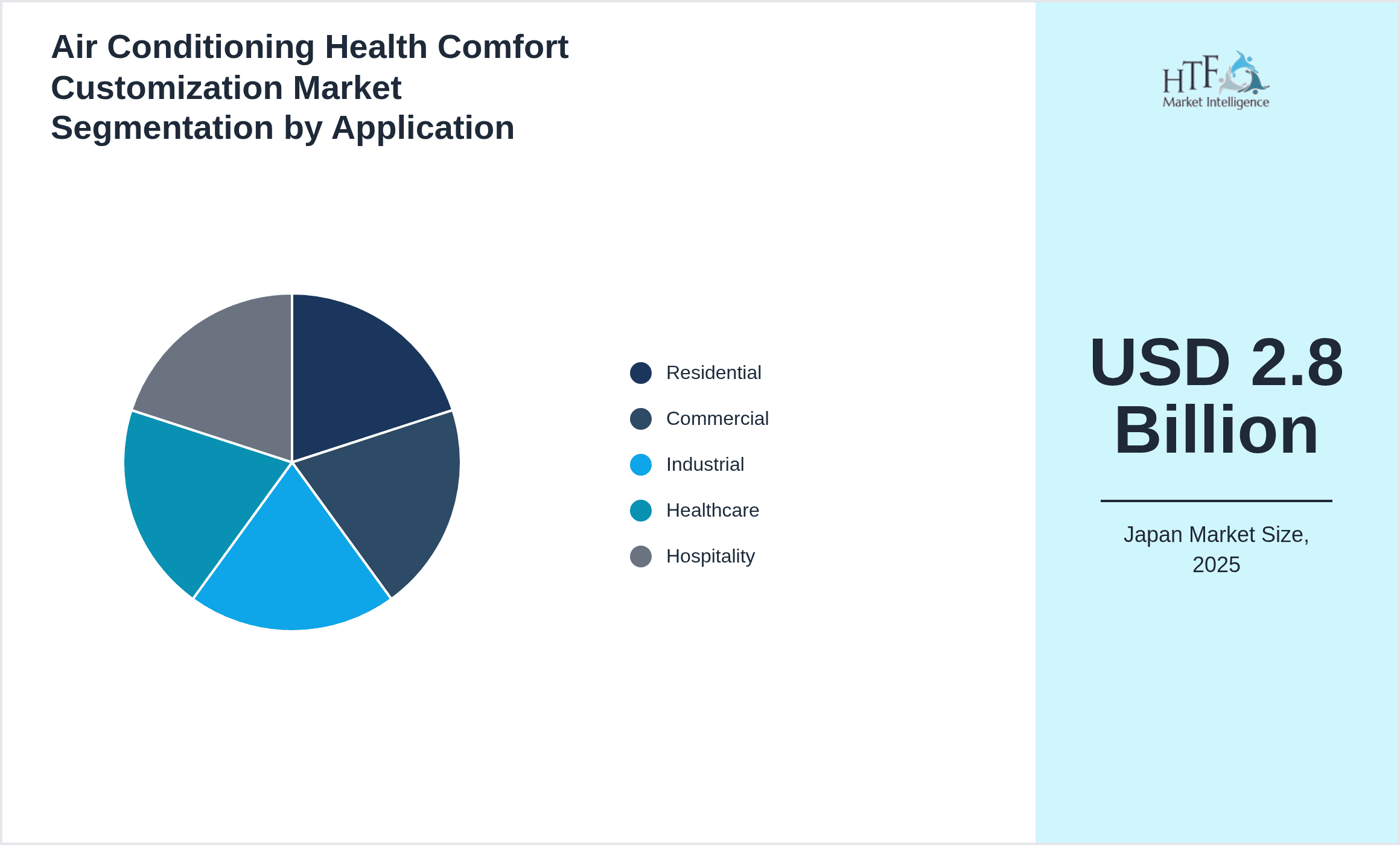
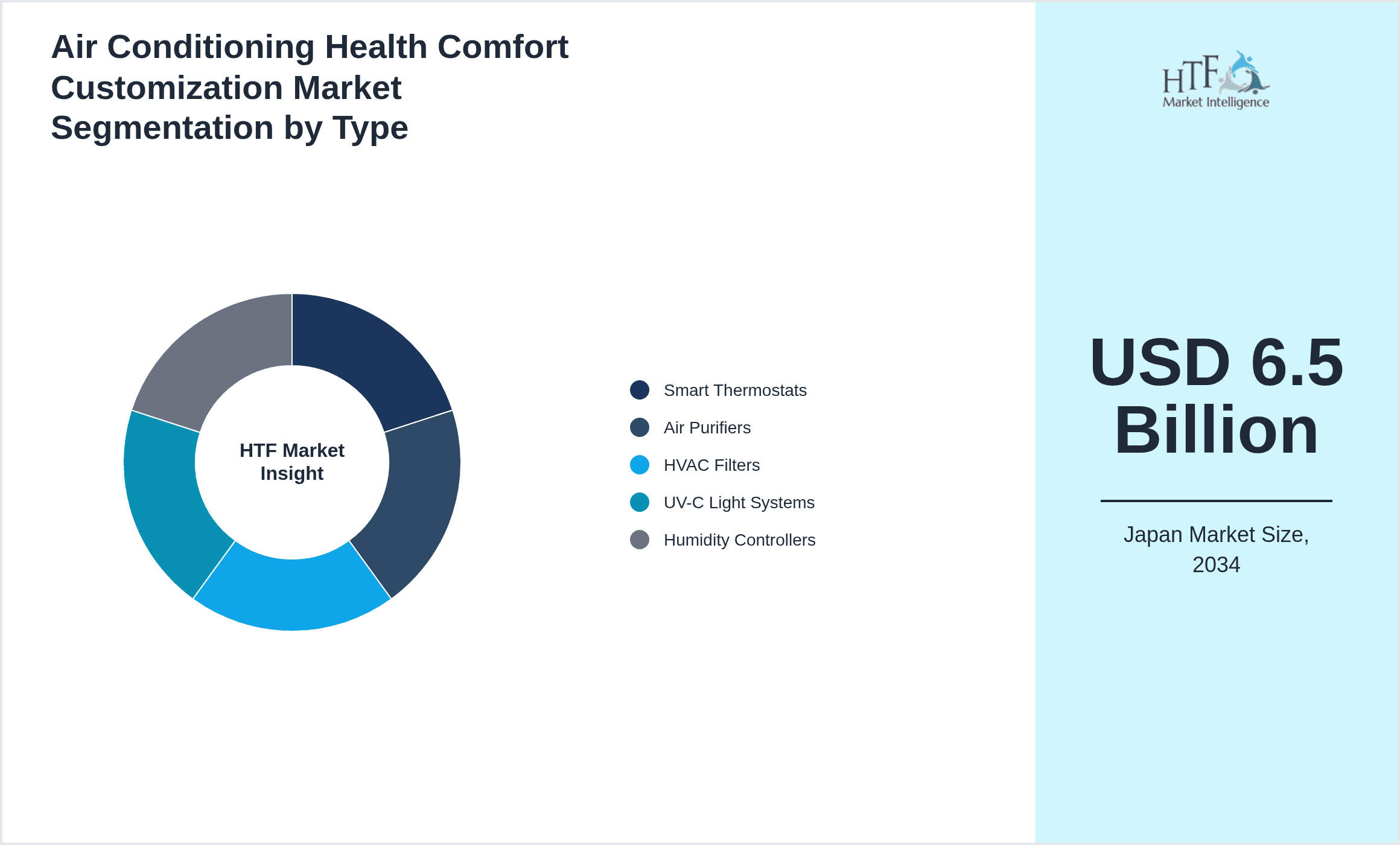
- •By Air Conditioning Health Comfort Product Type
- ◦Smart Thermostats
- ◦Air Purifiers
- ◦HVAC Filters
- ◦UV-C Light Systems
- ◦Humidity Controllers
- •By Application Area
- ◦Residential
- ◦Commercial
- ◦Industrial
- ◦Healthcare
- ◦Hospitality
- •By Installation Service Type
- ◦New Installation
- ◦Replacement & Retrofit
- ◦Maintenance & Repair
- ◦Consultation & Customization
- •By Deployment Model
- ◦Centralized HVAC Systems
- ◦Decentralized Systems
- ◦Hybrid Systems
Growth Dynamics
- •Rising health awareness among Japanese consumers, particularly post-pandemic, has led to increased adoption of air purification and UV-C sterilization technologies integrated within air conditioning systems, driving market growth.
- •Technological advancements such as IoT-enabled smart thermostats and AI-driven climate control facilitate precise indoor environment customization, enhancing user comfort and energy savings, which boosts product demand in residential and commercial segments.
- •Government policies and incentives promoting energy-efficient and environmentally friendly HVAC solutions, aligned with Japan’s Sustainable Development Goals, encourage manufacturers and end-users to invest in health-focused air conditioning customization.
- •Growing urbanization and modernization of infrastructure in regions like Kyushu & Okinawa create new markets for customized air conditioning solutions tailored to local climatic conditions, accelerating regional market expansion.
- •Increasing investments by key players in R&D and strategic collaborations with technology firms enable continuous innovation in product offerings, enhancing market competitiveness and consumer appeal.
- •Consumer preference shifts towards integrated HVAC systems that combine air quality management with comfort customization drive demand, especially in healthcare and hospitality sectors where indoor environment quality is critical.
- •The expansion of smart home and smart building initiatives across Japan fuels demand for advanced air conditioning customization solutions that can be remotely monitored and managed, offering convenience and efficiency.
Market Trends
- •Integration of AI and machine learning in air conditioning systems is enabling predictive maintenance and adaptive comfort customization, reducing downtime and energy consumption in commercial buildings.
- •Growing adoption of UV-C light sterilization within HVAC units has become a prominent trend to mitigate airborne pathogens, driven by heightened hygiene standards in healthcare and public spaces.
- •Increasing consumer demand for eco-friendly refrigerants and energy-efficient HVAC components aligns with Japan’s commitment to reducing greenhouse gas emissions, influencing product development strategies.
- •Expansion of smart thermostat usage in residential segments is driven by convenience features such as voice control and smartphone integration, enhancing user engagement and energy management.
- •Collaborations between HVAC manufacturers and technology companies to develop IoT platforms are shaping a connected ecosystem for air quality and comfort customization, creating competitive advantages.
- •Customization of HVAC solutions based on regional climatic variations within Japan, such as higher humidity control in Kyushu & Okinawa, reflects the growing trend of localized product offerings.
- •Rising demand for retrofit and replacement services in aging commercial infrastructures is boosting market activity, with emphasis on upgrading to health-focused air conditioning solutions.
Market Opportunities
- •Expanding the residential smart HVAC segment by integrating health-centric features like air quality sensors and humidity control presents significant growth potential in Japan’s urban households.
- •Untapped commercial sectors such as co-working spaces and boutique hotels offer opportunities for customized air conditioning solutions emphasizing health and comfort to attract clientele.
- •Leveraging government subsidies and incentives for energy-efficient and health-promoting HVAC technologies can accelerate adoption and expand market penetration across all regions.
- •Development of modular and scalable HVAC systems tailored to small and medium-sized enterprises allows flexible deployment and cost optimization, enhancing market accessibility.
- •Investments in R&D to improve UV-C light system efficacy and affordability can open new applications in public transportation and educational institutions, broadening market scope.
- •Strategic partnerships with IoT and AI technology providers enable the creation of advanced integrated solutions, enhancing value propositions for end-users and service providers alike.
- •Regional expansion focusing on growing urban centers outside Kanto, such as Kansai and Chubu, can capture emerging demand for health comfort air conditioning customization in commercial and residential projects.
Market Challenges
- •High initial investment costs for advanced HVAC customization technologies may limit adoption among small and medium-sized enterprises and cost-sensitive residential customers in Japan.
- •Complex regulatory compliance related to energy efficiency and safety standards imposes barriers for new entrants and requires continuous adaptation by existing players.
- •Technical challenges in integrating multiple health comfort technologies seamlessly into existing HVAC infrastructure can increase installation time and service complexity.
- •Consumer awareness gaps regarding the benefits of health-focused air conditioning customization limit market growth potential, necessitating educational campaigns and demonstrations.
- •Supply chain disruptions and component shortages, exacerbated by global events, pose risks to timely product delivery and maintenance service availability.
- •Competition from low-cost imported HVAC products may pressure pricing and impact the profitability of domestic manufacturers focused on high-tech customization solutions.
- •Rapid technological advances require continuous investments in R&D, which may strain smaller players lacking sufficient capital and expertise.
Regulatory Framework
- •The Act on Rationalizing Energy Use (revised 2020) mandates energy efficiency standards for HVAC equipment, promoting the adoption of energy-saving and health-enhancing technologies in Japan’s air conditioning market.
- •Japan’s Building Energy Efficiency Act (2019 revision) requires new commercial and residential buildings to incorporate advanced HVAC systems with improved indoor air quality controls, impacting market demand and product specifications.
- •The Air Pollution Control Act enforces limits on emissions from HVAC refrigerants and encourages the use of eco-friendly alternatives, influencing manufacturers’ product development strategies.
- •Certification programs such as Top Runner and Eco Mark encourage manufacturers to develop high-performance, environmentally sustainable air conditioning products, enhancing market competitiveness.
- •Regional regulations in zones like Kanto impose stricter indoor air quality standards for healthcare and hospitality facilities, driving customized HVAC solutions adoption in these sectors.
Market Intelligence
- •15th February 2025, Daikin Industries, Ltd. launched its next-generation smart thermostat integrated with AI-driven predictive analytics designed for Japanese residential and commercial buildings. The device enhances energy efficiency by learning occupant behavior and adjusting temperature settings accordingly. It also features real-time air quality monitoring and remote control via smartphone apps, aligning with increasing health comfort customization demands. This launch strengthens Daikin’s market leadership in Japan and supports government goals for energy conservation. Source: Daikin Industries Official Press Release
- •10th May 2025, Mitsubishi Electric Corporation introduced a comprehensive UV-C light sterilization system compatible with existing HVAC units, targeting healthcare and hospitality sectors in Japan. This innovation reduces airborne pathogens effectively while maintaining energy efficiency and low maintenance costs. The system received certifications from Japanese health authorities, facilitating rapid adoption in hospitals and hotels prioritizing enhanced hygiene standards post-pandemic. This product expansion positions Mitsubishi Electric as a key player in health comfort customization. Source: Mitsubishi Electric Corporate News
- •22nd August 2025, Panasonic Corporation announced a strategic partnership with a leading Japanese IoT platform provider to develop integrated air conditioning solutions with real-time air quality analytics and automated humidity control. This collaboration aims to deliver tailored comfort experiences for urban residential complexes in the Kanto region. The initiative aligns with Japan’s smart city development policies and is expected to enhance Panasonic’s competitive edge in the health comfort HVAC market. Source: Panasonic Corporation Press Release
- •5th November 2025, Hitachi, Ltd. completed acquisition of a specialized air purification technology firm focused on UV-C and advanced filtration solutions. This move expands Hitachi’s product portfolio in Japan’s growing health comfort customization segment and strengthens innovation capabilities. The acquisition is anticipated to accelerate the introduction of integrated HVAC systems with superior air quality management, catering to the increasing demand in commercial and healthcare applications. Source: Hitachi Ltd. Investor Relations
Regional Outlook
The Kanto currently holds a significant share of the market, primarily due to several key factors: increasing consumption rates, a burgeoning population, and robust economic momentum. These elements collectively drive demand, positioning this region as a leader in the market. On the other hand, Kyushu & Okinawa is rapidly emerging as the fastest-growing area within the industry. This remarkable growth can be attributed to swift infrastructure development, the expansion of various industrial sectors, and a marked increase in consumer demand. These dynamics make this region a crucial player in shaping future market growth.
In our report, we cover a comprehensive analysis of the following regions and countries:
- Hokkaido
- Tohoku
- Kanto
- Chubu
- Kansai
- Chugoku
- Shikoku
- Kyushu
| Feature | Details |
|---|---|
| Base Year Market Size | USD 2.8 Billion |
| Forecast Year Market Size | USD 6.5 Billion |
| CAGR | 8.9% |
| Forecast Period | 2026 to 2033 |
| YoY Growth | 8.5% |
| Regions Covered | Hokkaido, Tohoku, Kanto, Chubu, Kansai, Chugoku, Shikoku, Kyushu |
| Key Companies | Daikin Industries, Ltd. (Japan), Mitsubishi Electric Corporation (Japan), Panasonic Corporation (Japan), Sharp Corporation (Japan), Toshiba Corporation (Japan), Hitachi, Ltd. (Japan), Fujitsu General Limited (Japan), Samsung Electronics Co., Ltd. (South Korea), LG Electronics Inc. (South Korea), Carrier Corporation (United States), Honeywell International Inc. (United States), Johnson Controls International plc (Ireland), Blueair AB (Sweden), Molekule, Inc. (United States), LIXIL Corporation (Japan), Nihon Denki Co., Ltd. (Japan), Sanden Holdings Corporation (Japan), Yanmar Co., Ltd. (Japan), Dyson Ltd. (United Kingdom), Electrolux AB (Sweden), Sharp Corporation (Japan), Panasonic Corporation (Japan), Mitsubishi Heavy Industries, Ltd. (Japan), Hitachi Appliances, Inc. (Japan), Johnson Controls (Japan Branch) (United States) |
Japan Air Conditioning Health Comfort Customization Market Roadmap to 2034 - Table of Contents
Frequently Asked Questions (FAQ):
The Compact Track Loaders market is projected to grow at a CAGR of 6.8% from 2025 to 2030, driven by increasing demand in construction and agricultural sectors.
North America currently leads the market with approximately 45% market share, followed by Europe at 28% and Asia-Pacific at 22%. The remaining regions account for 5% of the global market.
Key growth drivers include increasing construction activities, rising demand for versatile equipment in agriculture, technological advancements in track loader design, and growing preference for compact equipment in urban construction projects.