
China Electromagnetic Shock Wave Therapy Apparatus Market Size, Growth & Revenue 2024-2034
China Electromagnetic Shock Wave Therapy Apparatus Market is segmented by Type (Focused Shock Wave Therapy Devices, Radial Shock Wave Therapy Devices, Combination Devices, Portable Shock Wave Devices, Stationary Shock Wave Devices), Application (Orthopedics, Urology, Sports Medicine, Physiotherapy, Pain Management), End-User Setting (Hospitals, Clinics, Rehabilitation Centers, Outpatient Facilities), Distribution Channel (Direct Sales, Third-Party Distributors, Online Platforms), and Geography (North China, Northeast China, East China, South Central China, Southwest China, Northwest China)
Pricing
Report Overview
Executive Summary
- •The China Electromagnetic Shock Wave Therapy Apparatus market is defined by the production and utilization of advanced electromagnetic devices that generate shock waves for therapeutic medical treatments. These devices are designed to address a variety of clinical indications including musculoskeletal disorders, chronic pain relief, urological conditions such as kidney stones, and sports injuries. The market scope extends to multiple device types, predominantly focused and radial shock wave therapies, which differ in energy delivery and treatment depth. With increasing healthcare awareness and technological improvements, these apparatuses have gained traction across hospital orthopedics departments, physiotherapy centers, and outpatient clinics in China. The industry encompasses product development, regulatory compliance, clinical adoption, and distribution within a highly competitive environment. Continuous innovation aims to improve treatment efficiency, patient comfort, and portability of devices, expanding their application range. The market is bounded by factors including government healthcare initiatives, reimbursement policies, and rising chronic disease incidence. Consequently, it plays a vital role in the modernization of China's therapeutic medical equipment segment, reflecting robust growth potential driven by demographic and economic trends.
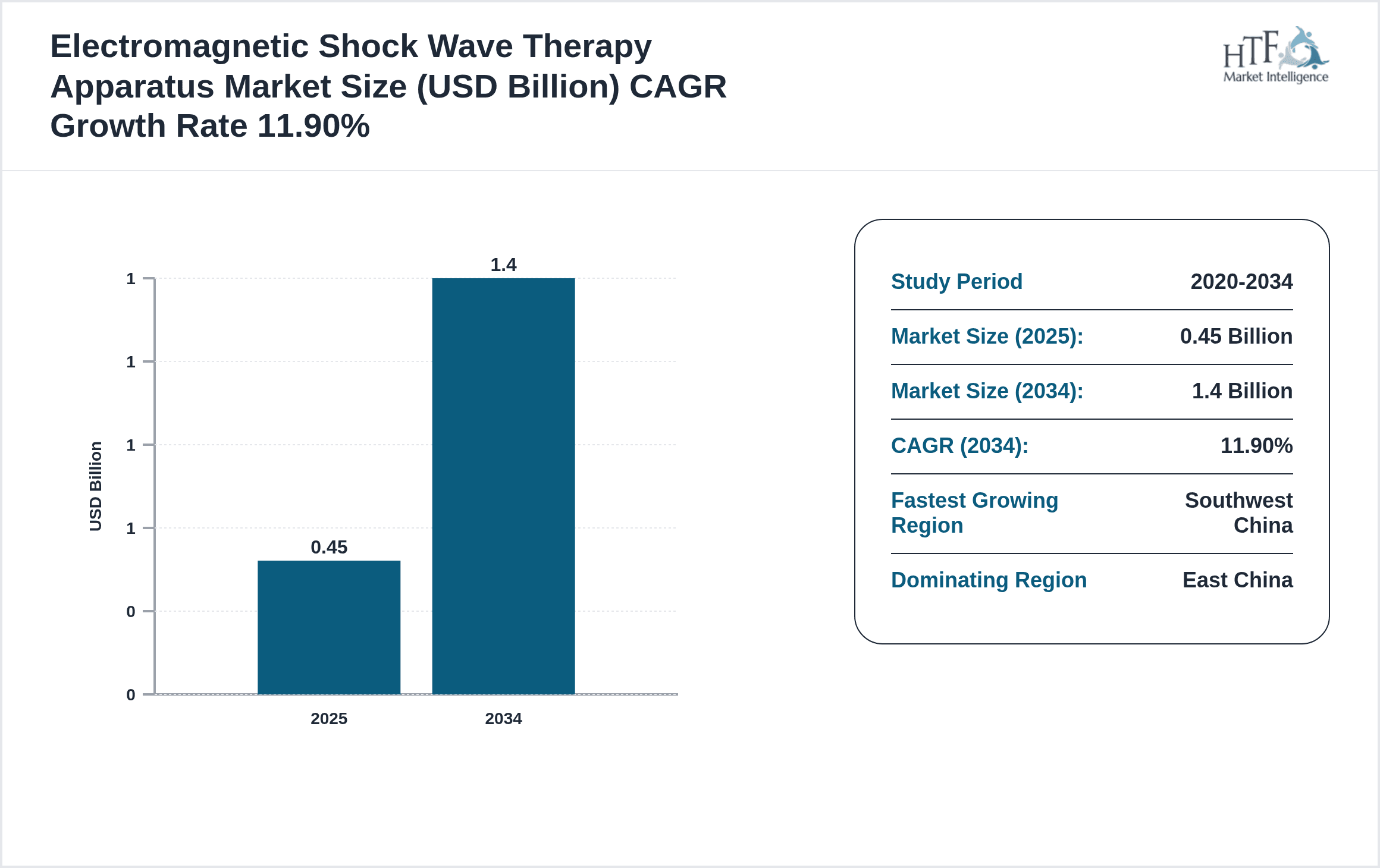
- •Key market highlights indicate a base market size of USD 0.45 Billion in 2024, projected to reach USD 1.40 Billion by 2034, reflecting a strong CAGR of 11.9%. The East China region dominates with a 35% market share, while Southwest China is the fastest growing sub-region with a CAGR of 15.2%. Focused shock wave therapy devices lead the type segment, supported by rising clinical preference, with radial shock wave therapy devices exhibiting the fastest growth. Orthopedics remains the primary application area due to increasing orthopedic disorders and sports injuries. The market also benefits from government healthcare reforms and rising investment in advanced medical technologies. Year-on-year growth is estimated at 11.3%, underscoring sustained demand and expanded adoption across multiple healthcare settings.
- •The value proposition of electromagnetic shock wave therapy apparatus lies in their non-invasive treatment capability offering effective pain management and accelerated healing, which is highly relevant for aging populations and active individuals. Strategically, these devices cater to diverse medical specialties, enhancing multi-disciplinary treatment protocols. For stakeholders including manufacturers, healthcare providers, and investors, the market offers opportunities driven by increasing chronic disease prevalence, favorable reimbursement policies, and continuous technological innovation. The apparatuses' integration into conventional and alternative therapies fosters improved patient outcomes and operational efficiencies. Moreover, China's expanding healthcare infrastructure and rising medical tourism further reinforce market importance. Overall, the market is positioned as a transformative segment within China’s medical device industry, aligning with national priorities for advanced healthcare solutions and patient-centric care delivery.
Competitive Landscape
The competitive environment of the China Electromagnetic Shock Wave Therapy Apparatus market is characterized by a dynamic mix of domestic manufacturers and international players striving for technological leadership and market share. Companies compete through innovation in device efficacy, safety features, and portability, aiming to differentiate their product offerings. Strategic partnerships and collaborations with healthcare institutions facilitate clinical validations and enhance market penetration. Pricing strategies are calibrated to balance affordability with advanced capabilities, critical in a price-sensitive yet quality-demanding market. Distribution channel optimization, including direct sales and third-party partnerships, plays a vital role in broadening reach across urban and tier-2/3 cities. Intense rivalry drives continuous R&D investment, fostering rapid introduction of next-generation devices featuring AI integration and enhanced user interfaces. Market entry barriers include stringent regulatory compliance and high capital requirements, which favor established players. Regional competition within China’s sub-markets further influences product positioning and customer engagement strategies, with future trends likely to emphasize personalized therapy solutions and digital health integration.
Prominent Players in China Electromagnetic Shock Wave Therapy Apparatus Market
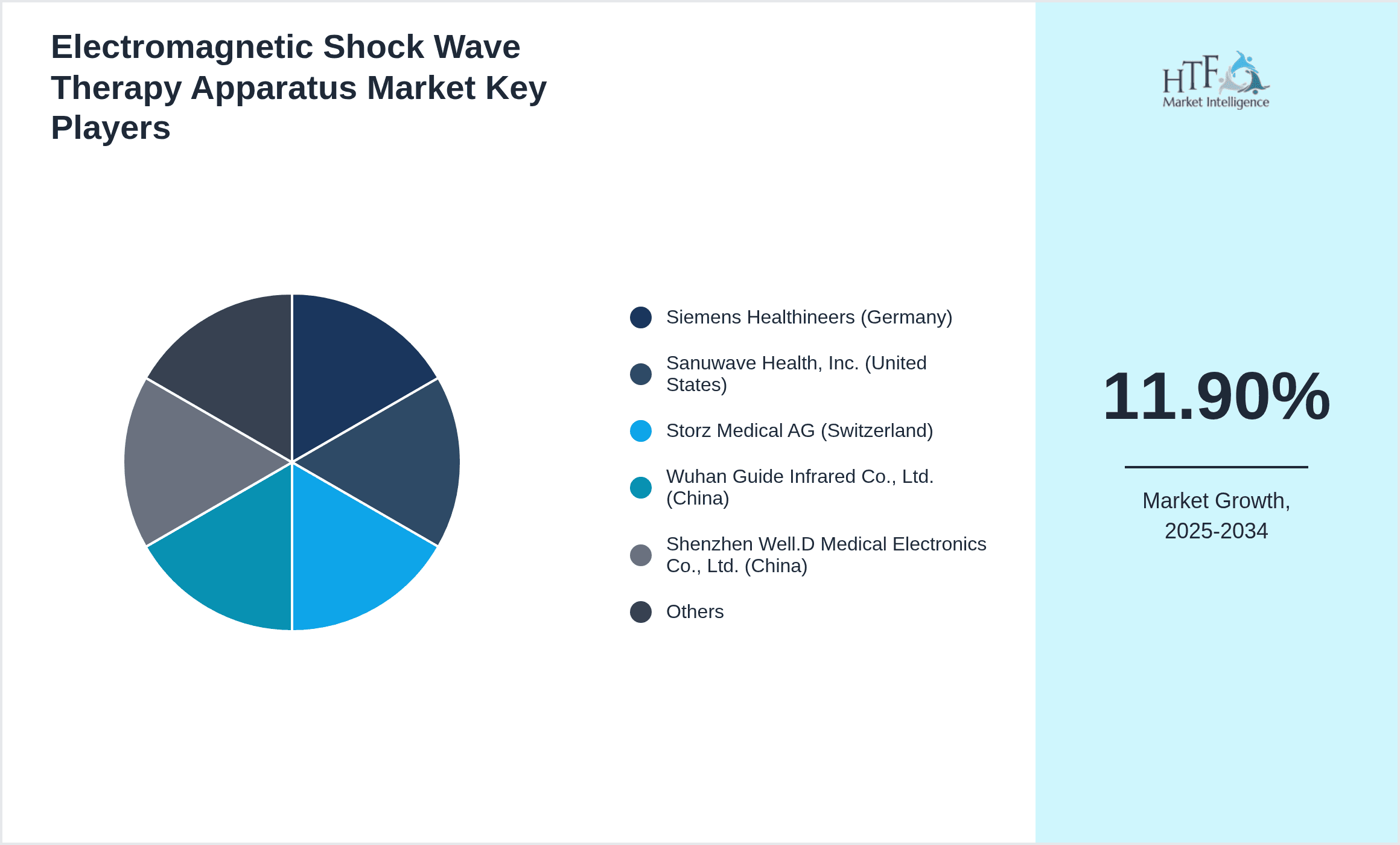
- •Siemens Healthineers (Germany)
- •Sanuwave Health, Inc. (United States)
- •Storz Medical AG (Switzerland)
- •Wuhan Guide Infrared Co., Ltd. (China)
- •Shenzhen Well.D Medical Electronics Co., Ltd. (China)
- •Dongguan Yiji Medical Equipment Co., Ltd. (China)
- •Hironic Co., Ltd. (South Korea)
- •BioSonics Inc. (United States)
- •Richard Wolf GmbH (Germany)
- •Zhejiang Haizhuo Medical Instrument Co., Ltd. (China)
- •PiezoWave AG (Switzerland)
- •Olympus Corporation (Japan)
- •Zimmer MedizinSysteme GmbH (Germany)
- •Guangzhou Kangjie Medical Equipment Co., Ltd. (China)
- •Medispec Ltd. (Israel)
- •Chattanooga Group (United States)
- •Beijing Jisheng Medical Technology Co., Ltd. (China)
- •Hunan Huajian Medical Equipment Co., Ltd. (China)
- •Electro Medical Systems SA (Switzerland)
- •Guangdong Dymed Medical Technology Co., Ltd. (China)
- •Chongqing Huizhi Medical Equipment Co., Ltd. (China)
- •Hielscher Ultrasonics GmbH (Germany)
- •Guangzhou Hengya Medical Equipment Co., Ltd. (China)
- •Shenzhen Bonss Medical Technology Co., Ltd. (China)
- •Suzhou Mingjie Medical Device Co., Ltd. (China)

Market Breakdown
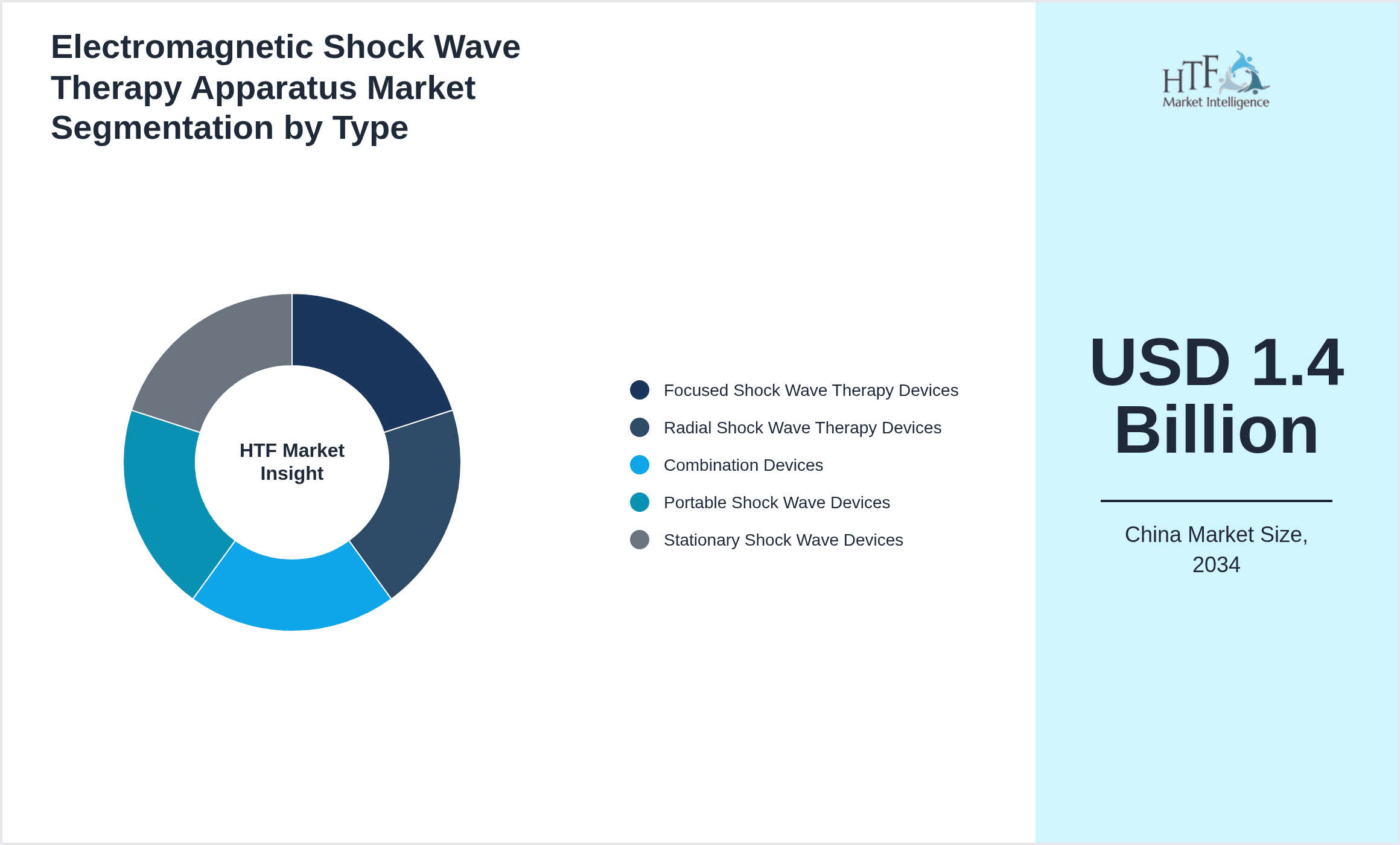
- •By Type
- ◦Focused Shock Wave Therapy Devices
- ◦Radial Shock Wave Therapy Devices
- ◦Combination Devices
- ◦Portable Shock Wave Devices
- ◦Stationary Shock Wave Devices
- •By Application
- ◦Orthopedics
- ◦Urology
- ◦Sports Medicine
- ◦Physiotherapy
- ◦Pain Management
- •By End-User Setting
- ◦Hospitals
- ◦Clinics
- ◦Rehabilitation Centers
- ◦Outpatient Facilities
- •By Distribution Channel
- ◦Direct Sales
- ◦Third-Party Distributors
- ◦Online Platforms
Growth Dynamics
- •The China Electromagnetic Shock Wave Therapy Apparatus market benefits from rising prevalence of orthopedic and musculoskeletal disorders, driven by an aging population and increased sports injury incidence. This demographic shift fuels demand for non-invasive treatment options, positioning electromagnetic shock wave devices as preferred therapeutic solutions. Government initiatives promoting advanced medical technologies and expanding healthcare infrastructure further accelerate market adoption. Technological advancements enhancing device precision and patient comfort amplify clinical acceptance. Additionally, rising awareness among healthcare professionals and patients about shock wave therapy efficacy boosts market growth. These factors collectively contribute to robust expansion, with increasing installations across hospitals and outpatient clinics, especially in economically advanced regions like East China. Growing reimbursement schemes and favorable regulatory frameworks also support increased utilization, signaling promising growth prospects through 2034.
- •The market is witnessing a trend towards miniaturization and portability of electromagnetic shock wave therapy apparatuses, facilitating home-based and outpatient treatments. Integration of digital interfaces and AI-driven treatment protocols enhances therapy customization and monitoring, improving patient outcomes. Collaborations between manufacturers and research institutes have accelerated innovation cycles, introducing combination devices that deliver both focused and radial shock waves for versatile clinical applications. Moreover, enhanced marketing efforts and educational programs increase physician adoption rates. Expansion of e-commerce and digital distribution channels streamlines product availability, especially in Tier 2 and Tier 3 cities. These trends reflect the market’s evolution towards patient-centric, technology-enabled healthcare solutions, driving competitive differentiation and broader market penetration.
- •Market growth faces restraints from regulatory complexities inherent in China’s medical device approval processes, which can delay product launches and increase compliance costs. High initial investment in advanced electromagnetic shock wave apparatus technology and associated training for healthcare providers limits adoption in lower-tier cities. Additionally, price sensitivity among end-users restricts widespread acceptance of premium devices. Limited awareness in rural regions and scarcity of trained professionals hinder market expansion. Furthermore, competition from alternative therapies such as ultrasound and laser treatments poses challenges. These factors collectively slow market penetration rates despite favorable clinical outcomes, necessitating strategic efforts to overcome barriers and optimize cost-effectiveness.
- •Opportunities abound in expanding applications of electromagnetic shock wave therapy beyond traditional orthopedic uses into areas such as chronic wound healing, dermatology, and neurological rehabilitation. Increasing investments in R&D to develop multifunctional devices offer potential to capture untapped therapeutic segments. Regional expansion into underserved areas like Southwest and Northwest China with growing healthcare infrastructure presents significant growth avenues. Strategic partnerships between domestic manufacturers and global technology firms facilitate knowledge transfer and product localization, enhancing competitiveness. Moreover, digital health integration and telemedicine adoption provide channels for remote therapy monitoring and management. Government incentives promoting innovation and medical device exports further enable market diversification and international collaboration.
- •Challenges include navigating stringent regulatory standards and lengthy approval timelines which can impede timely market entry. Supply chain disruptions, particularly in component sourcing amid geopolitical tensions, impact production stability. Ensuring quality control and device standardization across domestic manufacturers remains complex, affecting market trust. Intellectual property protection challenges may deter innovation investments. Additionally, educating healthcare providers and patients about shock wave therapy benefits requires sustained efforts to overcome skepticism. Pricing pressures from generic device entrants and increasing competition heighten margin constraints. Addressing these challenges requires robust compliance frameworks, enhanced quality assurance, and strategic stakeholder engagement to sustain market momentum.
Market Trends
- •A significant trend in the China market is the rising adoption of portable and combination electromagnetic shock wave therapy devices, which enable broader clinical applications and facilitate home healthcare services. This shift aligns with patients’ preference for convenient and non-invasive treatments, supported by technological miniaturization and battery advancements. Manufacturers are increasingly incorporating smart features such as treatment data tracking and remote operation, enhancing therapy personalization and adherence. The trend is especially pronounced in urban centers where digital health ecosystems are maturing, influencing market growth trajectories.
- •Integration of artificial intelligence and machine learning algorithms into shock wave therapy devices represents an emerging innovation, enabling adaptive treatment protocols based on patient response and real-time data analytics. This trend improves therapeutic efficacy and reduces treatment times, appealing to healthcare providers seeking optimized clinical outcomes. Pilot programs and clinical trials are underway in leading Chinese medical centers, signaling potential widespread adoption.
- •Strategic collaborations between Chinese manufacturers and global technology leaders have accelerated product innovation and regulatory navigation. For example, joint ventures have led to the development of hybrid devices combining electromagnetic and ultrasound therapies, diversifying treatment options. These partnerships enable rapid scaling and localized customization, critical for meeting China’s diverse clinical needs.
- •Sustainability initiatives are influencing device design, with manufacturers focusing on energy-efficient components and recyclable materials to align with China’s environmental regulations. This trend fosters corporate responsibility and appeals to increasingly eco-conscious healthcare institutions, positioning companies competitively.
- •The expansion of digital distribution channels and telehealth platforms facilitates easier access to shock wave therapy apparatuses, especially in remote and underserved regions. This digital transformation enhances market reach and supports ongoing patient management, reflecting a broader healthcare digitization trend.
Market Opportunities
- •The growing prevalence of chronic musculoskeletal conditions and sports-related injuries in China presents significant opportunities for electromagnetic shock wave therapy apparatus adoption. Targeting rehabilitation centers and sports medicine clinics can enhance market penetration. Additionally, expanding device applications into emerging therapeutic areas like dermatology and neurological recovery offers new revenue streams. Regional expansion into developing provinces such as Southwest and Northwest China, which are witnessing healthcare infrastructure upgrades, provides untapped potential. Investment in portable and home-use devices meets rising demand for outpatient and at-home care solutions. Furthermore, leveraging government support for medical device innovation and exports can catalyze growth and international market access.
- •The integration of digital health technologies such as AI-driven treatment customization and remote monitoring opens avenues to differentiate product offerings and improve patient outcomes. Collaborations with telemedicine providers enable seamless therapy management and follow-up, enhancing customer engagement. Developing affordable device variants adapted for price-sensitive markets expands the customer base. Strategic alliances with hospitals and rehabilitation centers facilitate clinical validation and broader adoption. Additionally, exploring opportunities in medical tourism hubs within China can attract international patients seeking advanced therapies, boosting demand.
- •Investing in R&D to develop multifunctional devices combining shock wave with other therapeutic modalities, such as ultrasound or laser therapy, can capture a wider clinical spectrum. This innovation not only diversifies product portfolios but also strengthens competitive positioning. Addressing the rural healthcare gap through mobile therapy units and training programs for local clinicians creates sustainable market expansion. Government incentives aimed at healthcare modernization can be leveraged to enhance product accessibility and affordability. Finally, building robust after-sales service networks ensures customer loyalty and supports long-term growth.
Market Challenges
- •Regulatory complexities pose a significant challenge, with lengthy approval processes and evolving compliance standards delaying product introductions. Navigating these requirements demands considerable resources and expertise, impacting time-to-market. Price sensitivity in secondary and rural markets limits adoption of high-end devices, necessitating cost-effective solutions without compromising quality. Limited awareness and training among healthcare professionals impede therapy acceptance, requiring sustained educational initiatives. Supply chain vulnerabilities, exacerbated by global disruptions, threaten production continuity and increase costs. Competition from alternative therapeutic technologies such as laser and ultrasound treatments further pressures market share. Ensuring intellectual property protection amid a competitive landscape is also challenging, deterring innovation. Addressing these obstacles requires strategic investments in regulatory affairs, market education, and supply chain resilience to sustain growth momentum.
- •The scarcity of skilled operators for electromagnetic shock wave therapy in less developed regions restricts the market’s geographical expansion. Additionally, inconsistencies in device quality among domestic manufacturers may undermine clinician confidence. Pricing pressures from generic imports and counterfeit products create market distortion, affecting profitability. Integration of digital features raises concerns over data security and patient privacy, requiring robust safeguards. Furthermore, reimbursement limitations and variable healthcare coverage across provinces hinder uniform market growth. These challenges necessitate coordinated efforts among stakeholders to enhance quality standards, regulatory enforcement, and training infrastructure to realize the market’s full potential.
Regulatory Framework
Between 2019 and 2024, China has implemented stringent regulations governing medical device safety and efficacy, including the revised Medical Device Supervision and Administration Regulations (MDSAR) enacted in 2021. This regulatory framework mandates comprehensive clinical evaluations, quality management systems certification, and post-market surveillance for electromagnetic shock wave therapy apparatus manufacturers. The National Medical Products Administration (NMPA) enforces strict compliance requirements, including device registration and approval processes that align with international standards, ensuring patient safety and product reliability. These regulations have increased transparency and accountability within the industry, raising barriers for low-quality entrants but facilitating trust in certified products. Additionally, government incentives support innovation, particularly targeting domestic development of advanced therapeutic devices. Regional mandates in provinces like East China emphasize expedited review pathways for innovative devices, fostering faster market access. Compliance with environmental and electronic waste disposal standards also forms part of the regulatory landscape, underscoring China’s commitment to sustainable medical device management.
Market Intelligence
- •15th April 2024, Shenzhen Well.D Medical Electronics Co., Ltd. launched a next-generation portable electromagnetic shock wave therapy device designed for outpatient and home use. The device features AI-powered adaptive treatment protocols, real-time monitoring capabilities, and enhanced battery life, targeting the expanding home healthcare market in China. This launch reflects the company’s strategic focus on innovation and digital health integration, aiming to capture growing demand in Tier 2 and Tier 3 cities. The product received positive clinical feedback during pilot trials, emphasizing improved patient compliance and therapy outcomes. Shenzhen Well.D plans to expand distribution through e-commerce platforms and hospital partnerships to accelerate market penetration. Source: Shenzhen Well.D official press release.
- •10th November 2023, Wuhan Guide Infrared Co., Ltd. announced a strategic collaboration with Storz Medical AG to co-develop hybrid shock wave therapy devices combining electromagnetic and radial technologies. This partnership aims to leverage Storz Medical’s advanced engineering expertise and Wuhan Guide’s strong domestic market presence. The joint venture focuses on localizing new product designs to meet specific clinical needs in China, enhancing treatment versatility and cost-effectiveness. The collaboration is expected to facilitate regulatory approvals and accelerate time-to-market, strengthening competitive positioning amidst rising domestic demand. Future plans include expanding R&D capabilities and establishing training centers to support clinical adoption nationwide. Source: Wuhan Guide Infrared Co., Ltd. news bulletin.
- •5th August 2022, Beijing Jisheng Medical Technology Co., Ltd. expanded its manufacturing facility to increase production capacity of electromagnetic shock wave therapy apparatuses. The expansion includes incorporation of automated quality control systems and compliance enhancements aligned with updated NMPA regulations. This move addresses rising domestic and export demand, particularly targeting rehabilitation hospitals and sports medicine clinics in East and South China. The company anticipates a 25% increase in annual output, positioning itself to meet rapidly growing market needs. Additionally, Beijing Jisheng is investing in R&D to improve device portability and user interface design. Source: Beijing Jisheng Medical Technology corporate update.
- •20th March 2023, Guangdong Dymed Medical Technology Co., Ltd. secured a distribution agreement with a leading online medical device platform to enhance nationwide accessibility of its electromagnetic shock wave therapy devices. The partnership aims to streamline procurement for clinics and rehabilitation centers across China, especially in underserved regions. The agreement includes integrated customer support and training services to improve device utilization effectiveness. This initiative aligns with the company’s growth strategy focusing on digital sales channels and customer service excellence, responding to evolving healthcare delivery models accelerated by the COVID-19 pandemic. Source: Guangdong Dymed Medical Technology press release.
Regional Outlook
The East China currently holds a significant share of the market, primarily due to several key factors: increasing consumption rates, a burgeoning population, and robust economic momentum. These elements collectively drive demand, positioning this region as a leader in the market. On the other hand, Southwest China is rapidly emerging as the fastest-growing area within the industry. This remarkable growth can be attributed to swift infrastructure development, the expansion of various industrial sectors, and a marked increase in consumer demand. These dynamics make this region a crucial player in shaping future market growth.
In our report, we cover a comprehensive analysis of the following regions and countries:
- North China
- Northeast China
- East China
- South Central China
- Southwest China
- Northwest China
| Feature | Details |
|---|---|
| Base Year Market Size | USD 0.45 Billion |
| Forecast Year Market Size | USD 1.4 Billion |
| CAGR | 11.9% |
| Forecast Period | 2026 to 2033 |
| YoY Growth | 11.3% |
| Scope of Report | Market is segmented by Type (Focused Shock Wave Therapy Devices, Radial Shock Wave Therapy Devices, Combination Devices, Portable Shock Wave Devices, Stationary Shock Wave Devices), Application (Orthopedics, Urology, Sports Medicine, Physiotherapy, Pain Management), End-User Setting (Hospitals, Clinics, Rehabilitation Centers, Outpatient Facilities), Distribution Channel (Direct Sales, Third-Party Distributors, Online Platforms) |
| Regions Covered | North China, Northeast China, East China, South Central China, Southwest China, Northwest China |
| Key Companies | Siemens Healthineers (Germany), Sanuwave Health, Inc. (United States), Storz Medical AG (Switzerland), Wuhan Guide Infrared Co., Ltd. (China), Shenzhen Well.D Medical Electronics Co., Ltd. (China), Dongguan Yiji Medical Equipment Co., Ltd. (China), Hironic Co., Ltd. (South Korea), BioSonics Inc. (United States), Richard Wolf GmbH (Germany), Zhejiang Haizhuo Medical Instrument Co., Ltd. (China), PiezoWave AG (Switzerland), Olympus Corporation (Japan), Zimmer MedizinSysteme GmbH (Germany), Guangzhou Kangjie Medical Equipment Co., Ltd. (China), Medispec Ltd. (Israel), Chattanooga Group (United States), Beijing Jisheng Medical Technology Co., Ltd. (China), Hunan Huajian Medical Equipment Co., Ltd. (China), Electro Medical Systems SA (Switzerland), Guangdong Dymed Medical Technology Co., Ltd. (China), Chongqing Huizhi Medical Equipment Co., Ltd. (China), Hielscher Ultrasonics GmbH (Germany), Guangzhou Hengya Medical Equipment Co., Ltd. (China), Shenzhen Bonss Medical Technology Co., Ltd. (China), Suzhou Mingjie Medical Device Co., Ltd. (China) |
China Electromagnetic Shock Wave Therapy Apparatus Market Size, Growth & Revenue 2024-2034 - Table of Contents
Frequently Asked Questions (FAQ):
The Compact Track Loaders market is projected to grow at a CAGR of 6.8% from 2025 to 2030, driven by increasing demand in construction and agricultural sectors.
North America currently leads the market with approximately 45% market share, followed by Europe at 28% and Asia-Pacific at 22%. The remaining regions account for 5% of the global market.
Key growth drivers include increasing construction activities, rising demand for versatile equipment in agriculture, technological advancements in track loader design, and growing preference for compact equipment in urban construction projects.