
Global External Weather Louvre Market - Outlook 2025-2034
Global External Weather Louvre Market is segmented by Type (Fixed Louvre, Adjustable Louvre, Operable Louvre, Sliding Louvre, Motorized Louvre), Application (Commercial Buildings, Residential Buildings, Industrial Facilities, Institutional Buildings, Infrastructure), Material Type (Aluminum, Steel, Wood, Composite Materials), Deployment Model (Pre-fabricated Installation, On-site Custom Installation, Modular Louvre Systems), and Geography (North America, LATAM, West Europe, Central & Eastern Europe, Northern Europe, Southern Europe, East Asia, Southeast Asia, South Asia, Central Asia, Oceania, MEA)
Pricing
Report Overview
Executive Summary
- •The Global External Weather Louvre market constitutes a vital segment of building envelope components engineered to shield structures from adverse weather conditions such as rain, wind, and direct sunlight, while simultaneously facilitating ventilation. This market comprises a broad spectrum of products including fixed, adjustable, operable, sliding, and motorized louvers tailored to diverse applications spanning commercial, residential, industrial, institutional, and infrastructure sectors. The external weather louvers improve indoor air quality and energy efficiency by controlling airflow and mitigating environmental impact. Rising urbanization, stringent energy efficiency regulations, and increasing demand for sustainable building solutions propel market growth globally. The integration of smart technologies and innovative materials enhances product functionality, enabling dynamic control of environmental exposure. This market plays a crucial role in architectural aesthetics, building performance, and occupant comfort, thereby driving adoption across developed and emerging economies worldwide.
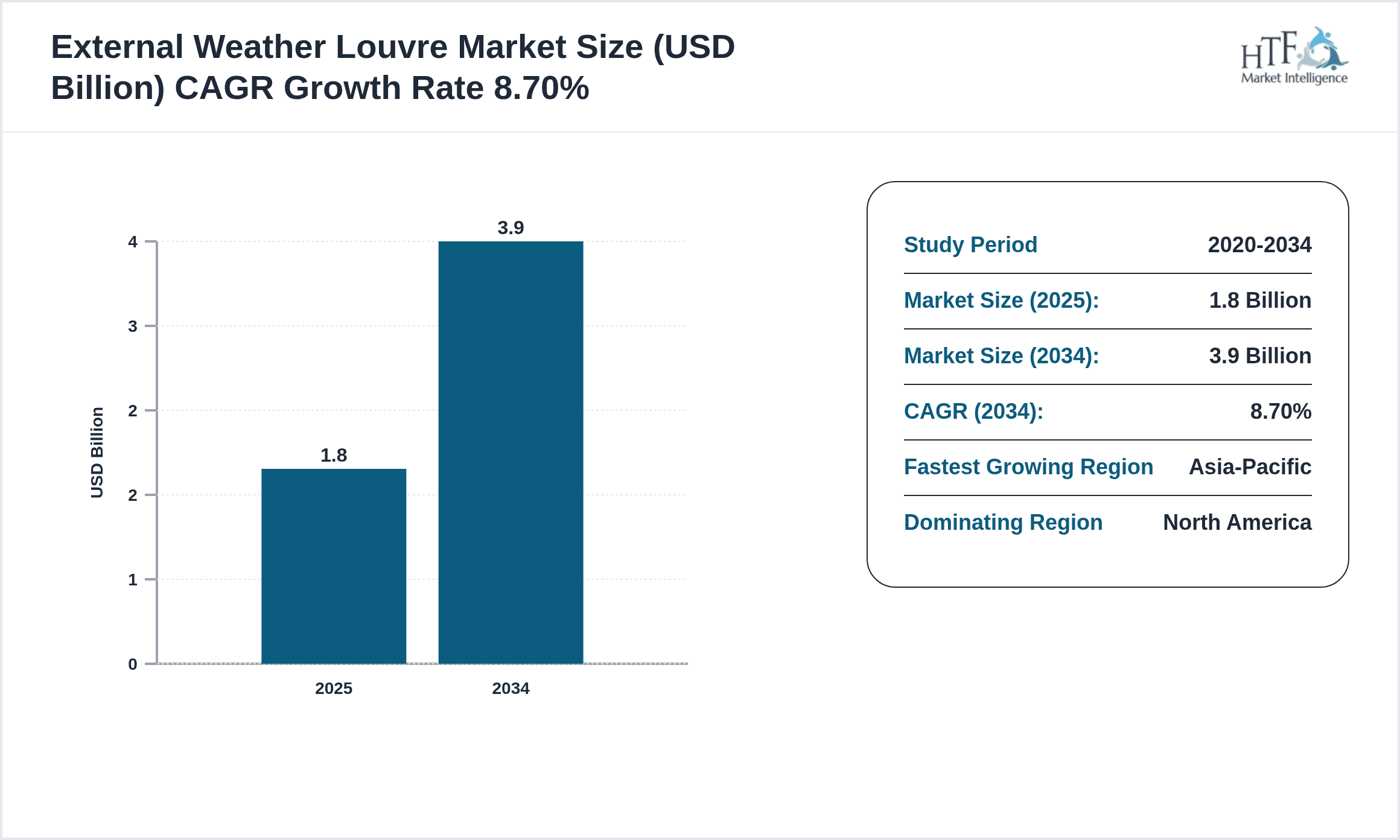
- •The Global External Weather Louvre market is projected to grow from USD 1.8 Billion in 2025 to USD 3.9 Billion by 2034, exhibiting a robust CAGR of 8.7% during the forecast period. North America holds the largest market share at 35%, attributed to advanced construction technologies and regulatory compliance, while Asia-Pacific leads in growth with a CAGR of 12.1%, fueled by rapid urban development and infrastructure expansion. Fixed louvers dominate the product landscape, whereas motorized louvers register the fastest growth due to their automation capabilities. Commercial buildings remain the primary application segment, driven by modernization initiatives and green building certifications. Year-over-year growth stands at 8.4%, reflecting consistent demand across global regions and sectors.
- •The strategic importance of external weather louvers lies in their ability to optimize building energy consumption, enhance occupant comfort, and contribute to sustainability goals. These products enable architects and engineers to meet evolving environmental standards and client expectations for intelligent building designs. Market stakeholders benefit from expanding opportunities in emerging markets, technological advancements in motorization and material science, and increasing investments in smart infrastructure. The external weather louvre market supports manufacturers, construction companies, and system integrators by providing scalable, efficient solutions tailored to diverse climatic conditions and regulatory frameworks globally.
Competitive Landscape
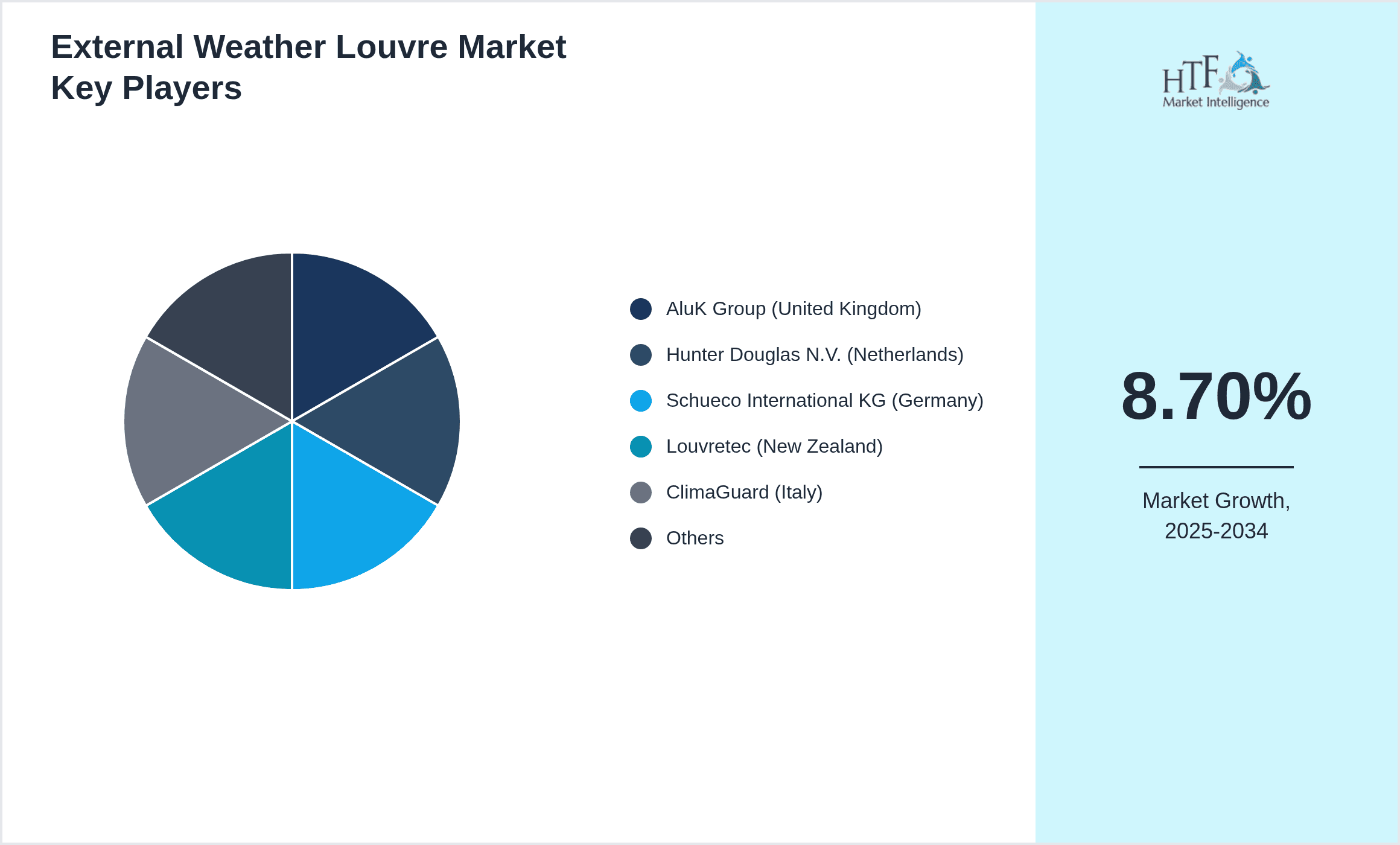
Companies operating in the Global External Weather Louvre market implement multifaceted strategies to sustain and enhance market presence. These include forming strategic partnerships with construction firms and architects to integrate products into large-scale projects, facilitating global expansion through regional subsidiaries and distribution networks, and investing heavily in research and development to innovate product designs and incorporate smart automation technologies. Emphasis on sustainability and compliance with evolving building codes drives continuous improvement in product materials and performance. Mergers and acquisitions serve as critical pathways to consolidate market share and diversify portfolios. Competitive pricing strategies and customization options address varied client needs across regions. Digital marketing and participation in international trade events further strengthen brand visibility and customer engagement. Collectively, these strategies enable companies to navigate market challenges and capitalize on growth opportunities effectively.
Leading Companies in External Weather Louvre Market
- •AluK Group (United Kingdom)
- •Hunter Douglas N.V. (Netherlands)
- •Schueco International KG (Germany)
- •Louvretec (New Zealand)
- •ClimaGuard (Italy)
- •WindowMaster A/S (Denmark)
- •Kingspan Group plc (Ireland)
- •Gretsch-Unitas GmbH (Germany)
- •Zhejiang Yulun Building Materials Co., Ltd. (China)
- •Renson Group (Belgium)
- •Solar Innovations Inc. (United States)
- •Bristol External Louvers (United States)
- •SAPA Building Systems (Norway)
- •Alcoa Corporation (United States)
- •Mitsubishi Electric Corporation (Japan)
- •C.R. Laurence Co., Inc. (United States)
- •Bekaert SA (Belgium)
- •Technal (France)
- •Eclisse Spa (Italy)
- •Saint-Gobain (France)
- •GKD - Gebr. Kufferath AG (Germany)
- •Aluminium Louver Systems Pvt. Ltd. (India)
- •Sun Louvers Inc. (United States)
- •Fakro (Poland)
- •Aereco Group (France)
Market Breakdown
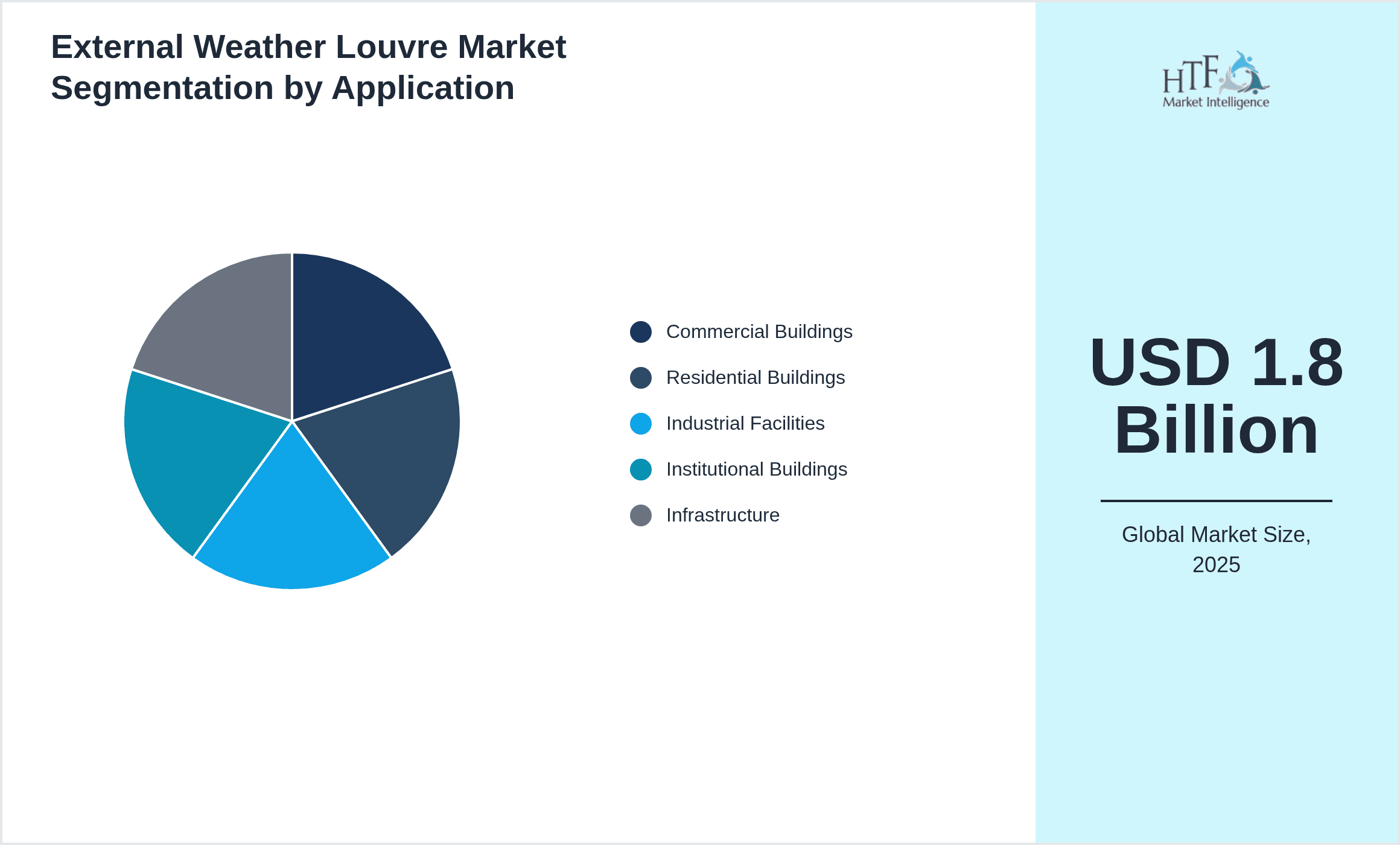
- •By Type
- ◦Fixed Louvre
- ◦Adjustable Louvre
- ◦Operable Louvre
- ◦Sliding Louvre
- ◦Motorized Louvre
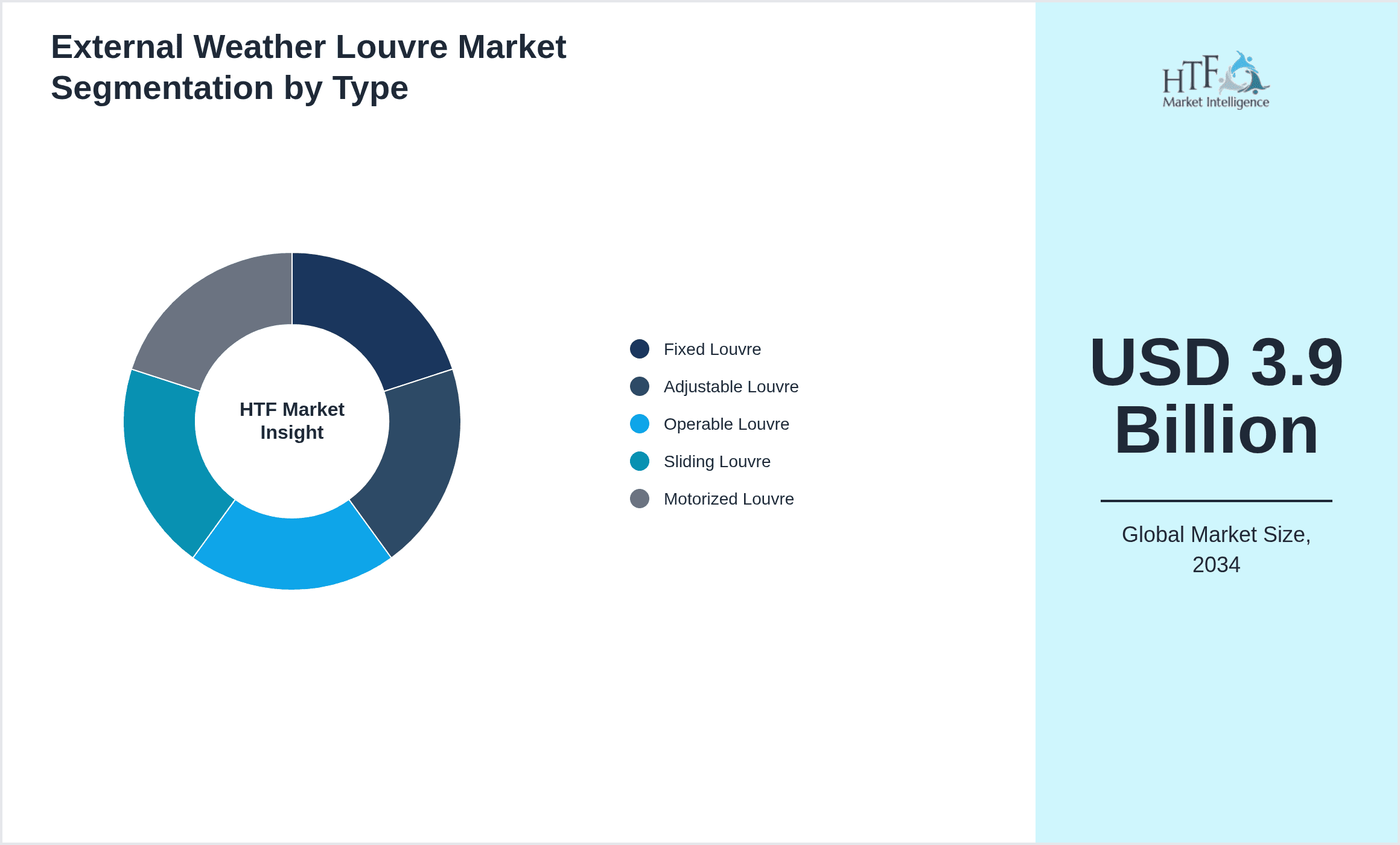
- •By Application
- ◦Commercial Buildings
- ◦Residential Buildings
- ◦Industrial Facilities
- ◦Institutional Buildings
- ◦Infrastructure
- •By Material Type
- ◦Aluminum
- ◦Steel
- ◦Wood
- ◦Composite Materials
- •By Deployment Model
- ◦Pre-fabricated Installation
- ◦On-site Custom Installation
- ◦Modular Louvre Systems
Growth Dynamics
Global demand for external weather louvres surges due to increasing urbanization and the rising need for energy-efficient buildings. Governments worldwide enforce stringent energy codes and sustainability standards, compelling architects and builders to adopt advanced facade solutions. Recent infrastructural developments in Asia-Pacific and Latin America bolster market expansion, with motorized louvres gaining traction for their adaptability and smart control features. Technological innovations such as IoT integration enable real-time environmental monitoring, enhancing operational efficiency. The adoption of eco-friendly materials aligns with green building certifications, further stimulating growth. For instance, North America's LEED-certified projects increasingly specify external weather louvres to optimize ventilation and reduce HVAC load. Additionally, growth in smart cities and smart building initiatives across Europe and Asia-Pacific creates substantial demand. Together, these factors establish a compelling growth trajectory for the Global External Weather Louvre market through 2034.
Market Trends
The Global External Weather Louvre market exhibits a pronounced trend towards automation and smart technology integration. Motorized and sensor-driven louvers that adjust dynamically to weather changes improve building performance and occupant comfort. Sustainability considerations drive the use of recyclable and lightweight materials such as aluminum composites that reduce environmental impact without compromising durability. Modular and customizable designs facilitate rapid installation and retrofit applications, catering to the evolving architectural needs globally. Emerging markets experience increased infrastructure investments, fostering demand for innovative weather protection solutions. Urban planners emphasize aesthetics combined with functionality, leading to an upsurge in architecturally integrated louvre systems. Furthermore, digital twin technologies enable predictive maintenance and enhanced lifecycle management of louvre systems. Companies actively collaborate with IoT providers to embed smart controls, positioning the market for transformative growth aligned with Industry 4.0 trends.
Market Opportunities
Significant opportunities arise from the growing focus on green building certifications and net-zero energy targets. The integration of external weather louvers with renewable energy systems such as solar shading optimizes building energy usage. Expanding infrastructure projects in emerging economies present untapped markets, particularly in Asia-Pacific and Latin America. Customization capabilities to cater to diverse climatic zones and architectural styles enable market players to differentiate their offerings. Advancements in material science, including corrosion-resistant and self-cleaning surfaces, enhance product longevity and reduce maintenance costs, appealing to commercial and institutional clients. Strategic partnerships with construction technology firms and smart building solution providers open new revenue streams. Additionally, retrofit projects in developed regions provide recurring business opportunities. Continuous innovation in automation and sensor technology broadens application scope, enabling players to capture value from evolving market demands.
Market Challenges
High initial installation costs and complex integration with existing building systems pose significant challenges for widespread adoption of advanced external weather louvers. Variability in regional building codes and standards complicates product design and certification processes, increasing compliance costs. Supply chain disruptions and raw material price volatility, especially for aluminum and steel, impact production timelines and profitability. Lack of awareness among small-scale builders and contractors about the benefits of weather louvers limits market penetration in certain regions. Maintenance requirements and operational reliability of motorized systems raise concerns among end-users, particularly in harsh climatic conditions. Recent incidents of delayed infrastructure projects due to regulatory approvals highlight procedural barriers. Furthermore, competition from alternative facade technologies such as smart glass and external shading devices intensifies market pressure, necessitating continuous innovation and cost optimization by manufacturers.
Regulatory Framework
Recent regulations emphasize energy efficiency and environmental impact reduction in building designs, directly influencing the external weather louvre market. The International Energy Conservation Code updates between 2020 and 2025 mandate improved facade ventilation and shading solutions to reduce heating, ventilation, and air conditioning energy consumption globally. The European Union’s Energy Performance of Buildings Directive enforces strict compliance on sustainable building envelopes, requiring louvre systems to meet thermal performance and durability standards. In North America, updated ASHRAE standards incorporate louvre performance metrics addressing airflow and weather resistance. Emerging markets in Asia have introduced national green building codes promoting the use of ventilated facades and external shading devices to mitigate climate effects. These regulatory frameworks drive innovation, product certification, and adoption, fostering market growth while ensuring environmental compliance across regions.
Market Intelligence
Recent market developments and strategic initiatives are continuously tracked through industry publications, company announcements, and regulatory filings. For the most current information, stakeholders are advised to monitor official corporate communications and recognized market intelligence platforms.
Regional Outlook
The North America currently holds a significant share of the market, primarily due to several key factors: increasing consumption rates, a burgeoning population, and robust economic momentum. These elements collectively drive demand, positioning this region as a leader in the market. On the other hand, Asia-Pacific is rapidly emerging as the fastest-growing area within the industry. This remarkable growth can be attributed to swift infrastructure development, the expansion of various industrial sectors, and a marked increase in consumer demand. These dynamics make this region a crucial player in shaping future market growth.
In our report, we cover a comprehensive analysis of the following regions and countries:
- North America
- LATAM
- West Europe
- Central & Eastern Europe
- Northern Europe
- Southern Europe
- East Asia
- Southeast Asia
- South Asia
- Central Asia
- Oceania
- MEA
| Feature | Details |
|---|---|
| Base Year Market Size | USD 1.8 Billion |
| Forecast Year Market Size | USD 3.9 Billion |
| CAGR | 8.7% |
| Forecast Period | 2026 to 2033 |
| YoY Growth | 8.4% |
| Scope of Report | Market is segmented by Type (Fixed Louvre, Adjustable Louvre, Operable Louvre, Sliding Louvre, Motorized Louvre), Application (Commercial Buildings, Residential Buildings, Industrial Facilities, Institutional Buildings, Infrastructure), Material Type (Aluminum, Steel, Wood, Composite Materials), Deployment Model (Pre-fabricated Installation, On-site Custom Installation, Modular Louvre Systems) |
| Regions Covered | North America, LATAM, West Europe, Central & Eastern Europe, Northern Europe, Southern Europe, East Asia, Southeast Asia, South Asia, Central Asia, Oceania, MEA |
| Key Companies | AluK Group (United Kingdom), Hunter Douglas N.V. (Netherlands), Schueco International KG (Germany), Louvretec (New Zealand), ClimaGuard (Italy), WindowMaster A/S (Denmark), Kingspan Group plc (Ireland), Gretsch-Unitas GmbH (Germany), Zhejiang Yulun Building Materials Co., Ltd. (China), Renson Group (Belgium), Solar Innovations Inc. (United States), Bristol External Louvers (United States), SAPA Building Systems (Norway), Alcoa Corporation (United States), Mitsubishi Electric Corporation (Japan), C.R. Laurence Co., Inc. (United States), Bekaert SA (Belgium), Technal (France), Eclisse Spa (Italy), Saint-Gobain (France), GKD - Gebr. Kufferath AG (Germany), Aluminium Louver Systems Pvt. Ltd. (India), Sun Louvers Inc. (United States), Fakro (Poland), Aereco Group (France) |
Global External Weather Louvre Market - Outlook 2025-2034 - Table of Contents
Frequently Asked Questions (FAQ):
The Compact Track Loaders market is expected to see value worth 5.3 Billion in 2025.
North America currently leads the market with approximately 45% market share, followed by Europe at 28% and Asia-Pacific at 22%. The remaining regions account for 5% of the global market.
Key growth drivers include increasing construction activities, rising demand for versatile equipment in agriculture, technological advancements in track loader design, and growing preference for compact equipment in urban construction projects.