
North America Towable RVs Chassis Market Size, Growth & Revenue 2025-2034
North America Towable RVs Chassis Market is segmented by Type (Steel Chassis, Aluminum Chassis, Fiberglass Chassis, Composite Chassis, Modular Chassis), Application (Travel Trailers, Fifth-Wheel Trailers, Pop-up Campers, Toy Haulers, Hybrid Trailers), Frame Design (Ladder Frame, Perimeter Frame, Tubular Frame), Suspension Type (Leaf Spring Suspension, Torsion Axle Suspension, Air Suspension), and Geography (United States, Canada, Mexico)
Pricing
Report Overview
Executive Summary
- •The North America Towable RVs Chassis market encompasses the design, manufacture, and distribution of chassis systems specifically engineered for towable recreational vehicles including travel trailers, fifth-wheel trailers, pop-up campers, toy haulers, and hybrid trailers. These chassis form the critical structural base that supports the RV body and incorporates essential components such as suspension, axles, braking systems, and towing mechanisms. The market includes various chassis materials and construction types, notably steel, aluminum, fiberglass, composite, and modular chassis, each offering unique strengths in terms of weight, durability, and cost effectiveness. The scope covers the entire value chain from original equipment manufacturers (OEMs) to aftermarket suppliers, emphasizing innovations aimed at enhancing safety, reducing overall vehicle weight, and improving towing ease. Consumer demand driven by increasing recreational vehicle usage and outdoor lifestyle trends fuels market growth. Regional dynamics in the United States, Canada, and Mexico shape the market, influenced by regulatory frameworks, infrastructure development, and cultural preferences. Emerging technologies such as advanced lightweight composites and modular designs further propel the market toward higher efficiency and customization. Safety regulations and emission standards also drive chassis innovation, while the rising popularity of eco-friendly materials aligns with sustainability trends. The market outlook to 2034 forecasts steady expansion, supported by rising disposable incomes, growing travel and tourism sectors, and enhanced manufacturing capabilities across North America.
- •Key market highlights include a 2025 base market size of USD 4.2 billion projected to reach USD 7.1 billion by 2034, reflecting a robust CAGR of 6.4%. The United States dominates the market with a 58% share, while Canada is the fastest growing country at a CAGR of 7.8%. Steel chassis remain the leading product type due to their durability and cost-effectiveness, whereas composite chassis are the fastest-growing segment, driven by demand for lightweight and corrosion-resistant solutions. Growth is supported by rising RV sales, increasing consumer interest in outdoor recreation, and technological advancements focused on chassis weight reduction and improved towing safety. Market participants are investing in R&D to develop modular and composite chassis that offer enhanced customization and performance benefits.
- •The North America Towable RVs Chassis market presents significant strategic value to manufacturers, suppliers, dealers, and investors due to its alignment with broader mobility and lifestyle trends. The market serves as a critical enabler for the recreational vehicle industry, which is integral to leisure travel and tourism. Innovations in chassis technology drive product differentiation and operational efficiencies, offering competitive advantages to early adopters. Regulatory compliance and sustainability considerations are shaping investment priorities and product development strategies. Stakeholders benefit from understanding regional variations in consumer preferences, infrastructure readiness, and regulatory environments to tailor offerings effectively. The growing emphasis on lightweight materials and modular design enhances market attractiveness, enabling scalability and cost savings. Overall, the market represents a dynamic sector with strong growth potential driven by evolving consumer lifestyles, technological progress, and supportive market conditions across North America.

Competitive Landscape
The competitive environment of the North America Towable RVs Chassis market is characterized by established manufacturers and emerging innovators focusing on product differentiation through material technology, design innovation, and enhanced safety features. Key competitive strategies include investments in research and development to produce lightweight and durable chassis that meet stringent regulatory standards. Companies engage in strategic partnerships with OEMs and suppliers to optimize supply chains and improve customization capabilities. Market positioning is heavily influenced by the ability to deliver cost-effective solutions without compromising structural integrity or compliance. Pricing strategies reflect competitive pressures from new entrants and alternative materials such as composites and modular chassis systems. Distribution channels are diversified, encompassing direct sales to RV manufacturers, aftermarket distributors, and specialized dealers. Technology adoption, including automation in manufacturing and advanced material science, plays a pivotal role in gaining competitive advantages. Barriers to entry include high capital investment requirements, technical expertise, and regulatory compliance complexities. Regional competition is pronounced, with U.S.-based firms dominating production while Canadian and Mexican players focus on niche segments and innovation. Future trends point toward increased consolidation, cross-border collaborations, and sustainable product development as companies seek to enhance market share and profitability in an evolving market landscape.
Leading Companies in Towable RVs Chassis Market
- •Lippert Components, Inc. (United States)
- •Dexter Axle Company (United States)
- •AL-KO Vehicle Technology (United States)
- •DexKo Global Inc. (United States)
- •Reyco Granning (United States)
- •Kinedyne LLC (United States)
- •Forest River, Inc. (United States)
- •Thule Group (United States)
- •Hendrickson International (United States)
- •Camco Manufacturing, Inc. (United States)
- •Fastec Manufacturing (United States)
- •Curt Manufacturing (United States)
- •Dexter Canada (Canada)
- •Aluminum Trailer Company (Canada)
- •Wabash National Corporation (United States)
- •Monroe Truck Equipment (United States)
- •Interstate Trailers (United States)
- •Pace American (United States)
- •Big Tex Trailers (United States)
- •Load Trail (United States)
- •PJ Trailers (United States)
- •Trail King Industries (United States)
- •Canada Trailers Sales Ltd. (Canada)
- •Cargo Mate Trailers (United States)
- •Featherlite Trailers, Inc. (United States)
Market Breakdown
- •By Type
- ◦Steel Chassis
- ◦Aluminum Chassis
- ◦Fiberglass Chassis
- ◦Composite Chassis
- ◦Modular Chassis
- •By Application
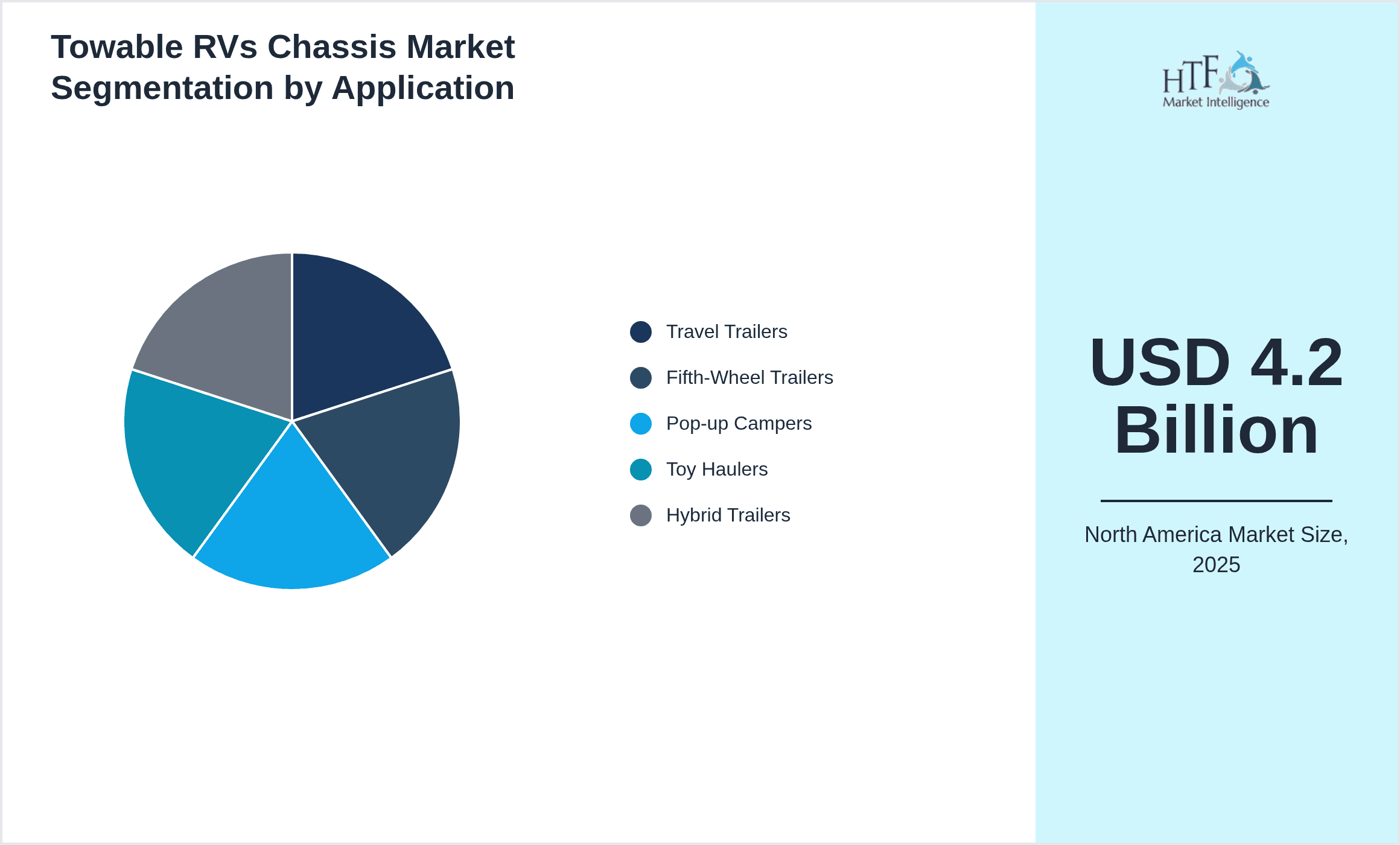
- ◦Travel Trailers
- ◦Fifth-Wheel Trailers
- ◦Pop-up Campers
- ◦Toy Haulers
- ◦Hybrid Trailers
- •By Frame Design
- ◦Ladder Frame
- ◦Perimeter Frame
- ◦Tubular Frame
- •By Suspension Type
- ◦Leaf Spring Suspension
- ◦Torsion Axle Suspension
- ◦Air Suspension
Growth Dynamics
The North America Towable RVs Chassis market growth is primarily driven by rising consumer interest in outdoor recreational activities and increasing disposable incomes, which fuel demand for travel trailers and fifth-wheel trailers. Technological advancements in lightweight materials such as composites and aluminum enhance chassis performance by reducing weight and improving fuel efficiency, encouraging adoption among manufacturers and consumers. Additionally, stringent safety and emission regulations have compelled manufacturers to innovate chassis designs that comply with evolving standards, thereby boosting market growth. The growing popularity of modular chassis systems allows for customization and faster production cycles, addressing diverse consumer preferences. Moreover, the expansion of RV rental services and the rise in domestic tourism post-pandemic have also stimulated demand for towable RVs, further propelling chassis market growth through increased production volumes and aftermarket sales.

Market Trends
The market is witnessing a significant trend toward the adoption of composite and modular chassis that offer superior weight reduction without compromising structural integrity. Manufacturers are increasingly investing in research to develop corrosion-resistant materials and designs that enhance durability and reduce maintenance costs. Sustainability is becoming a key focus, with companies exploring eco-friendly manufacturing processes and recyclable materials. Additionally, digitalization in production, including automation and precision engineering, is improving chassis quality and reducing lead times. The trend of integrating smart sensors for real-time monitoring of chassis health and performance is gaining traction, enhancing safety and predictive maintenance capabilities for end users.

Market Opportunities
The North America Towable RVs Chassis market presents opportunities in expanding lightweight composite chassis adoption, which can cater to growing consumer demand for fuel-efficient and easy-to-tow RVs. There is significant potential in developing modular chassis platforms that enable customization and faster manufacturing, appealing to niche market segments. Growth in RV rental and sharing economies opens avenues for aftermarket chassis upgrades and maintenance services. Geographic expansion into underserved areas with emerging RV culture can drive incremental growth. Furthermore, innovations in suspension systems and integration of smart technologies provide opportunities to differentiate offerings and capture premium market segments.
Market Challenges
The market faces challenges including the high cost of advanced lightweight materials such as composites, which can limit their widespread adoption among cost-sensitive manufacturers and consumers. Regulatory compliance with increasingly stringent safety and environmental standards imposes significant development and testing expenses. Supply chain disruptions, especially in raw materials like steel and aluminum, create volatility in pricing and availability. Additionally, the competitive pressure to balance durability, weight, and cost while meeting diverse consumer preferences complicates product design and development. The aftermarket segment also faces fragmentation, posing challenges for standardized service and parts availability across North America.
Regulatory Framework
Between 2020 and 2025, North America has seen the implementation of several key regulations impacting the Towable RVs Chassis market. The National Highway Traffic Safety Administration (NHTSA) updated Federal Motor Vehicle Safety Standards (FMVSS) to enhance braking performance and chassis stability requirements, mandating upgrades in chassis design and testing. Environmental Protection Agency (EPA) regulations have tightened emissions norms affecting chassis material selection to reduce overall vehicle weight and improve fuel efficiency. Canada introduced provincial-level safety regulations harmonized with federal standards, requiring manufacturers to ensure compliance across multiple jurisdictions. Mexico’s NOM standards for vehicle safety and emissions have been progressively aligned with U.S. and Canadian frameworks, facilitating cross-border trade but requiring manufacturers to adapt chassis designs accordingly. These regulations have driven innovation in lightweight and modular chassis designs while increasing compliance costs. Ongoing updates in safety testing protocols and environmental standards continue to shape market dynamics, compelling manufacturers to invest in research and development to meet evolving requirements.
Market Intelligence
- •15th January 2025, Lippert Components, Inc. announced the launch of its next-generation composite chassis platform designed to reduce weight by 25% compared to traditional steel chassis. The new chassis incorporates corrosion-resistant materials and modular design elements to facilitate faster assembly and enhanced customization options for travel trailers and fifth-wheel models. This innovation is targeted at improving towing efficiency and extending vehicle lifespan, aligning with increasing consumer demand for lightweight and durable RV chassis in North America. The company also highlighted strategic partnerships with leading RV manufacturers to integrate the chassis across multiple product lines. Source: Lippert Components Official Press Release.
- •10th March 2025, Dexter Axle Company introduced an advanced torsion axle suspension system integrating smart sensor technology for real-time chassis health monitoring. This system enhances safety by providing predictive maintenance alerts and improving ride comfort across diverse terrain conditions. The product launch addresses growing market trends toward digitalization and smart vehicle components in the towable RV segment. Dexter Axle's innovation positions the company to capture premium market share and meet regulatory safety requirements effectively. Source: Dexter Axle Company Newsroom.
- •5th June 2024, AL-KO Vehicle Technology completed its acquisition of a Canadian lightweight chassis manufacturer specializing in modular aluminum frames. The acquisition expands AL-KO's product portfolio and manufacturing footprint in North America, enabling accelerated innovation and enhanced supply chain capabilities. This strategic move supports AL-KO’s objective to lead in lightweight chassis solutions for growing RV markets in the United States and Canada. The deal is expected to strengthen competitive positioning and foster R&D synergies focused on sustainability and customization. Source: AL-KO Vehicle Technology Press Release.
- •20th November 2024, Forest River, Inc. announced a strategic initiative to integrate eco-friendly materials and manufacturing processes into its chassis production. The initiative includes investment in recycled composite materials and energy-efficient fabrication techniques aimed at reducing the carbon footprint of its towable RV chassis. This move is driven by increasing regulatory pressures and consumer preference for sustainable products. Forest River’s commitment signals a broader industry trend towards environmental responsibility and innovation in chassis design. Source: Forest River Corporate Sustainability Report.
Regional Outlook
The United States currently holds a significant share of the market, primarily due to several key factors: increasing consumption rates, a burgeoning population, and robust economic momentum. These elements collectively drive demand, positioning this region as a leader in the market. On the other hand, Canada is rapidly emerging as the fastest-growing area within the industry. This remarkable growth can be attributed to swift infrastructure development, the expansion of various industrial sectors, and a marked increase in consumer demand. These dynamics make this region a crucial player in shaping future market growth.
In our report, we cover a comprehensive analysis of the following regions and countries:
- United States
- Canada
- Mexico
| Feature | Details |
|---|---|
| Base Year Market Size | USD 4.2 Billion |
| Forecast Year Market Size | USD 7.1 Billion |
| CAGR | 6.4% |
| Forecast Period | 2026 to 2033 |
| YoY Growth | 6.2% |
| Scope of Report | Market is segmented by Type (Steel Chassis, Aluminum Chassis, Fiberglass Chassis, Composite Chassis, Modular Chassis), Application (Travel Trailers, Fifth-Wheel Trailers, Pop-up Campers, Toy Haulers, Hybrid Trailers), Frame Design (Ladder Frame, Perimeter Frame, Tubular Frame), Suspension Type (Leaf Spring Suspension, Torsion Axle Suspension, Air Suspension) |
| Regions Covered | United States, Canada, Mexico |
| Key Companies | Lippert Components, Inc. (United States), Dexter Axle Company (United States), AL-KO Vehicle Technology (United States), DexKo Global Inc. (United States), Reyco Granning (United States) |
North America Towable RVs Chassis Market Size, Growth & Revenue 2025-2034 - Table of Contents
Frequently Asked Questions (FAQ):
The Compact Track Loaders market is projected to grow at a CAGR of 6.8% from 2025 to 2030, driven by increasing demand in construction and agricultural sectors.
North America currently leads the market with approximately 45% market share, followed by Europe at 28% and Asia-Pacific at 22%. The remaining regions account for 5% of the global market.
Key growth drivers include increasing construction activities, rising demand for versatile equipment in agriculture, technological advancements in track loader design, and growing preference for compact equipment in urban construction projects.