
Asia-Pacific New Energy Vehicle Motor Core Market Size, Growth & Revenue 2025-2034
Asia-Pacific New Energy Vehicle Motor Core Market is segmented by Type (Permanent Magnet Synchronous Motors, Induction Motors, Brushless DC Motors, Switched Reluctance Motors, Axial Flux Motors), Application (Passenger Electric Vehicles, Commercial Electric Vehicles, Hybrid Vehicles, Two-wheelers, Off-road Vehicles), Motor Core Material (Silicon Steel, Amorphous Steel, Soft Magnetic Composite, Copper Wire, Rare Earth Magnets), Deployment Model (OEM Integrated, Aftermarket Replacement, Retrofit Solutions), and Geography (Asia-Pacfic)
Pricing
Report Overview
Executive Summary
- •The Asia-Pacific New Energy Vehicle Motor Core market defines the production and application of motor cores that are fundamental to electric and hybrid vehicle propulsion systems in the region. This market spans various motor types including permanent magnet synchronous motors, induction motors, brushless DC motors, switched reluctance motors, and axial flux motors, used across passenger EVs, commercial EVs, hybrid vehicles, two-wheelers, and off-road vehicles. The motor core is an essential component that determines the efficiency, performance, and reliability of new energy vehicles. This industry has gained strategic importance due to rising environmental concerns, government policies promoting clean energy transportation, and technological innovations enhancing motor efficiency and cost-effectiveness. The market scope covers material innovations, manufacturing processes, and integration with advanced vehicle systems, thereby supporting the transition towards sustainable mobility in Asia-Pacific economies. Continued investments and expanding vehicle electrification initiatives underscore the market's critical role in reshaping the automotive landscape in Asia-Pacific.
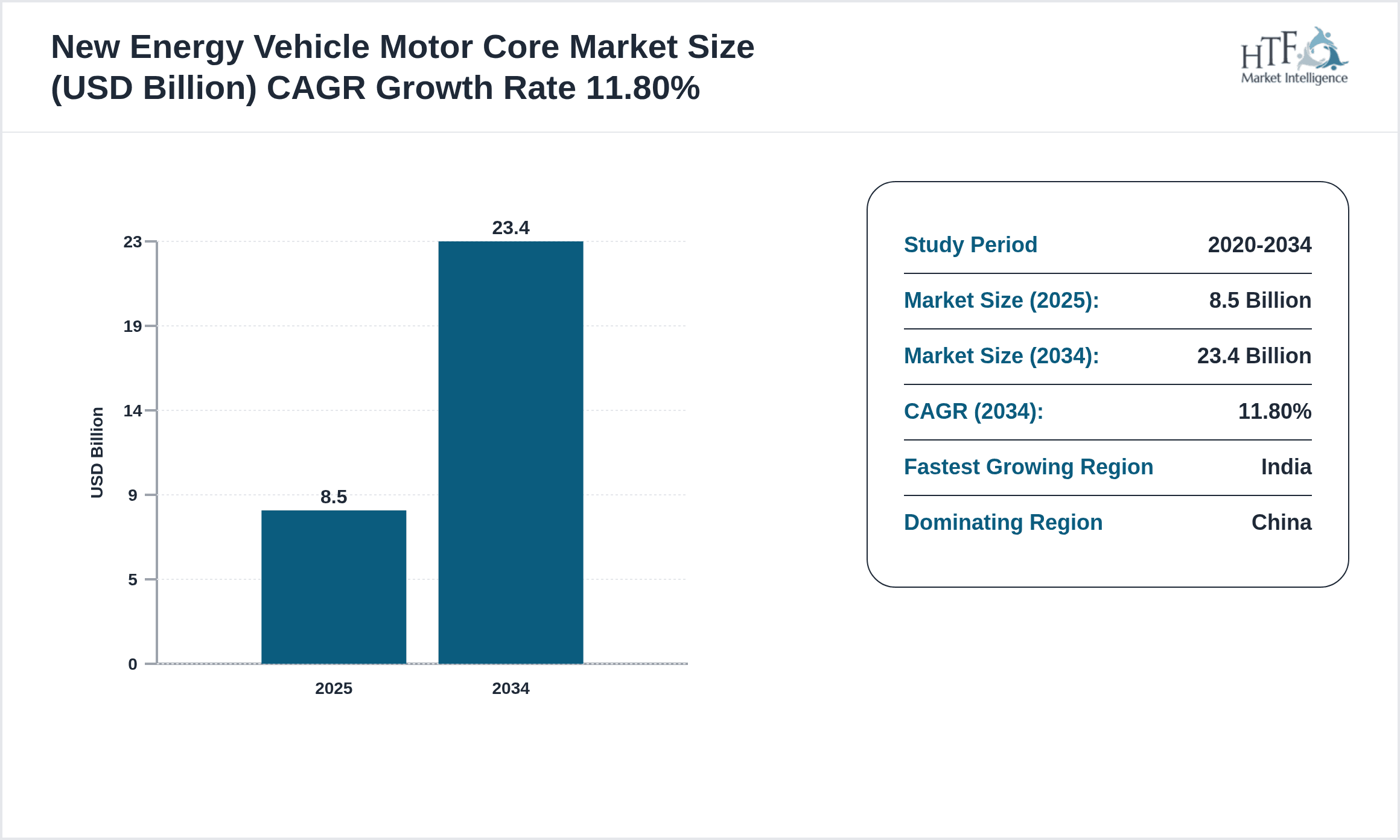
- •The Asia-Pacific New Energy Vehicle Motor Core market is expected to grow from USD 8.5 billion in 2025 to USD 23.4 billion by 2034, exhibiting a robust CAGR of 11.8%. China dominates the market with a 48% share driven by substantial production capacity and government subsidies, while India emerges as the fastest growing country with a CAGR of 16.3%. Permanent magnet synchronous motors remain the leading product type due to their efficiency and power density, whereas axial flux motors experience the fastest growth owing to advancements in compact design and performance. Passenger EVs represent the dominant application segment, supported by increasing consumer adoption and urban mobility initiatives. The market growth is propelled by stringent emission regulations, rising fuel prices, and supportive policies encouraging EV adoption throughout Asia-Pacific.
- •The Asia-Pacific New Energy Vehicle Motor Core market offers significant value propositions for automotive manufacturers, motor core suppliers, and technology developers. It enables cost reduction, enhanced vehicle performance, and compliance with environmental regulations, thereby supporting the regional shift towards sustainable transportation. The strategic importance of this market lies in its capacity to foster innovation in motor design and materials, which directly impacts the range, efficiency, and affordability of new energy vehicles. Investments in R&D, manufacturing infrastructure, and supply chain integration strengthen stakeholder positions. Moreover, this market catalyzes the development of a robust EV ecosystem, including charging infrastructure and vehicle connectivity, contributing to economic growth and environmental sustainability across Asia-Pacific economies.
Competitive Landscape
The Asia-Pacific New Energy Vehicle Motor Core market is characterized by intense competition driven by rapid technological innovation and expanding production capacities. Companies focus on strategic collaborations and partnerships with vehicle manufacturers to co-develop advanced motor cores tailored for specific applications. Global expansion efforts target emerging markets within Asia-Pacific, leveraging localized manufacturing to optimize costs and supply chain efficiency. Continuous product innovation emphasizes improving motor efficiency, thermal management, and integration with vehicle electronics. Technological adoption includes the use of rare earth materials and advanced magnet designs to enhance performance. Market players engage in mergers and acquisitions to consolidate technological capabilities and expand their product portfolios. Pricing strategies are carefully balanced against quality and performance attributes to capture varying market segments. Distribution channels increasingly incorporate direct supply agreements with OEMs alongside aftermarket services. Future competitive trends point to increased focus on sustainable materials and digitalization of manufacturing processes to maintain leadership in this dynamic market.
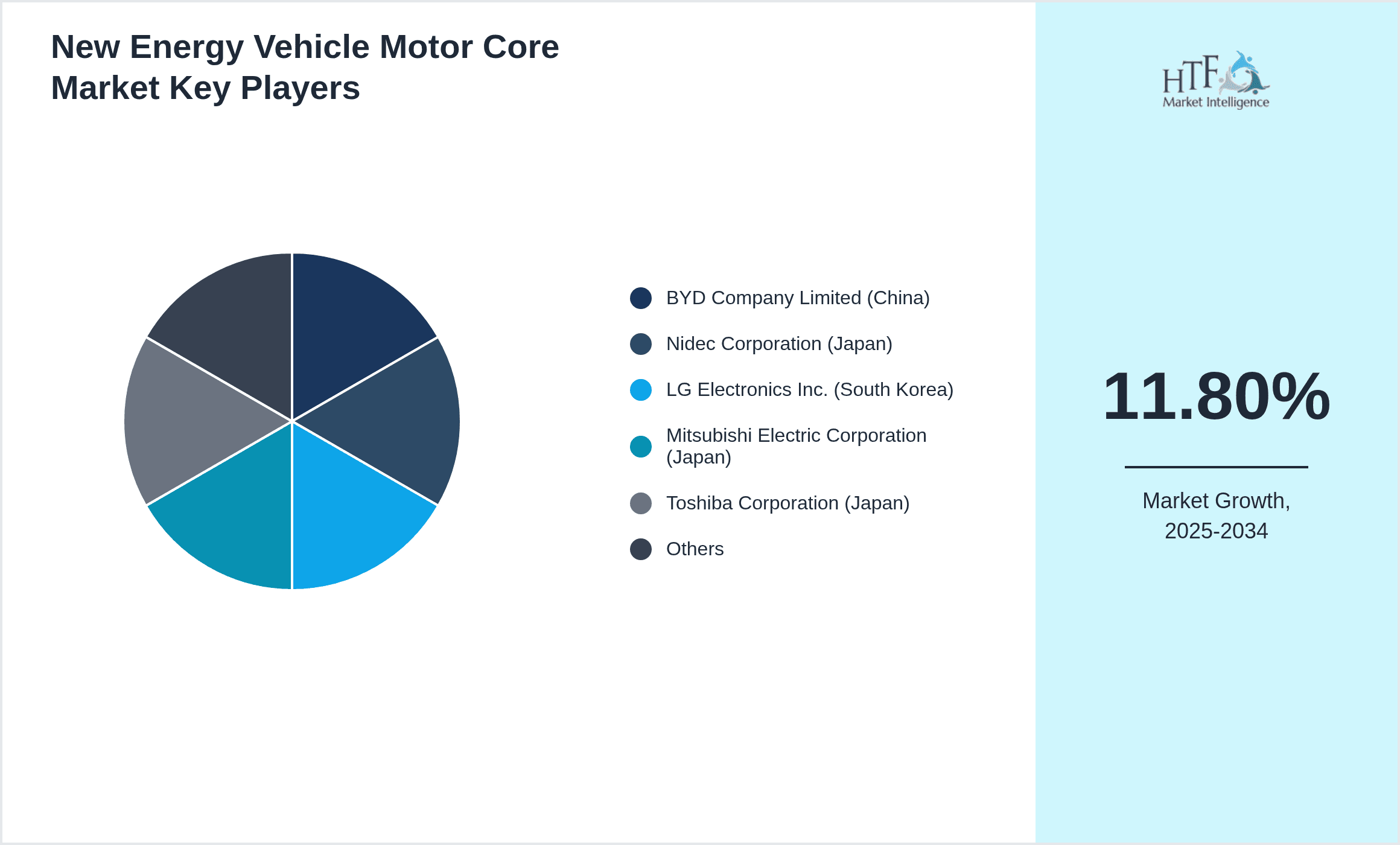
Leading Companies in New Energy Vehicle Motor Core Market
- •BYD Company Limited (China)
- •Nidec Corporation (Japan)
- •LG Electronics Inc. (South Korea)
- •Mitsubishi Electric Corporation (Japan)
- •Toshiba Corporation (Japan)
- •Hitachi Automotive Systems, Ltd. (Japan)
- •Tianjin FAW Xiali Motor Co., Ltd. (China)
- •Hyundai Motor Company (South Korea)
- •Taiwan Motor Corporation (Taiwan)
- •Suzuki Motor Corporation (Japan)
- •Panasonic Corporation (Japan)
- •China Electric Motor Co., Ltd. (China)
- •Bosch Automotive Service Solutions (China)
- •Johnson Electric Holdings Limited (Hong Kong)
- •Denso Corporation (Japan)
- •Kawasaki Heavy Industries, Ltd. (Japan)
- •Yaskawa Electric Corporation (Japan)
- •Samsung SDI Co., Ltd. (South Korea)
- •Toyota Motor Corporation (Japan)
- •Honda Motor Co., Ltd. (Japan)
Market Breakdown
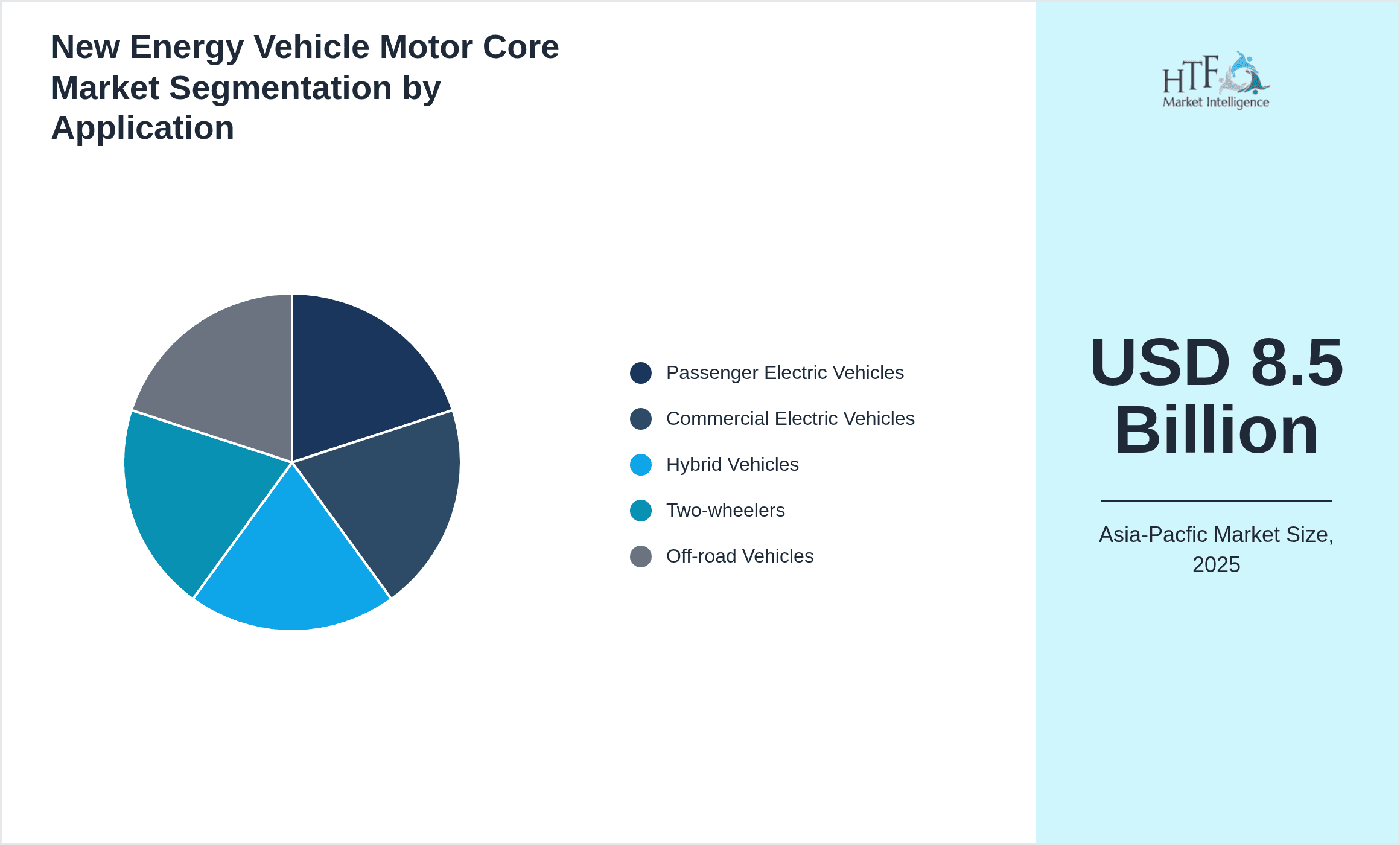
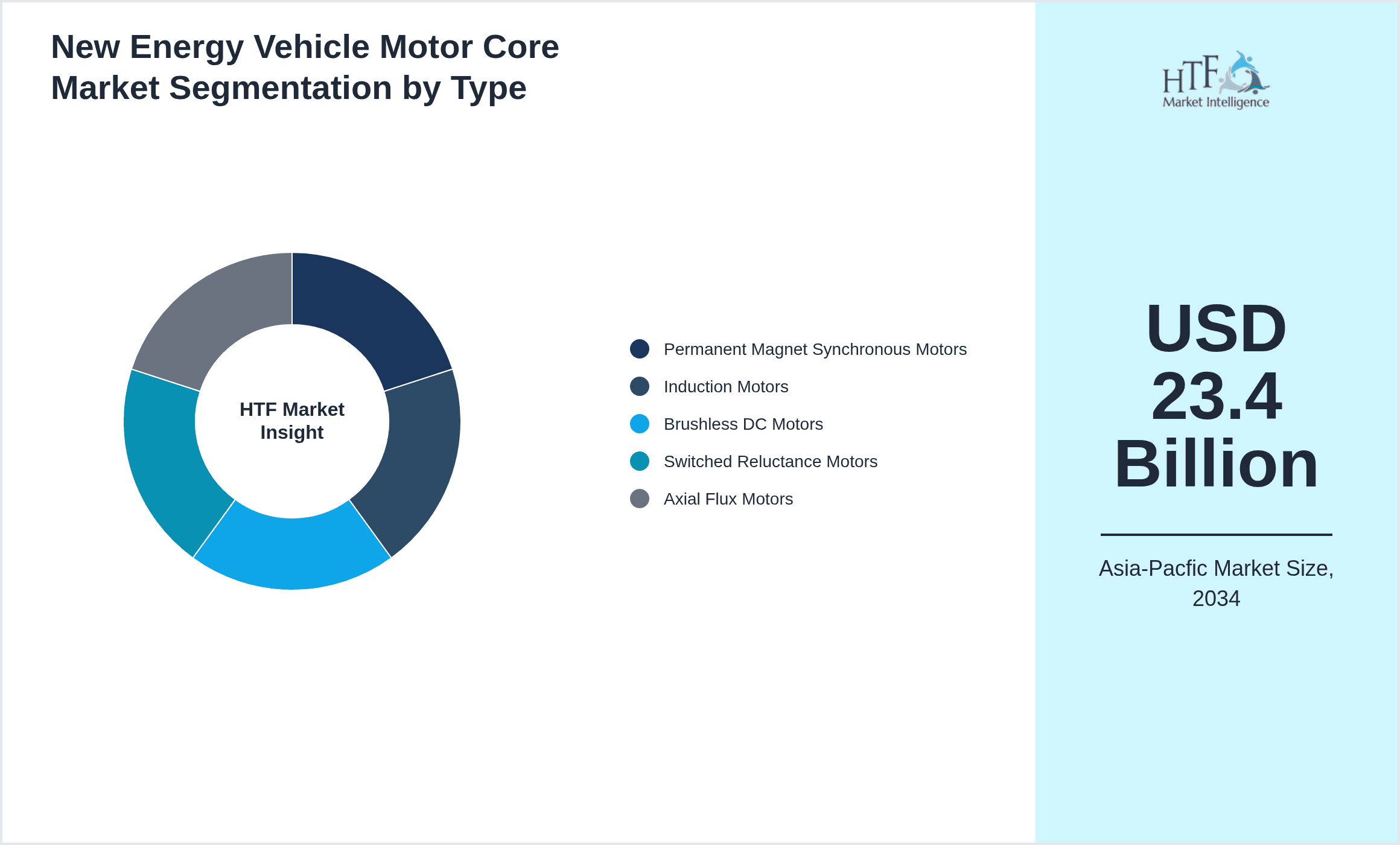
- •By Type
- ◦Permanent Magnet Synchronous Motors
- ◦Induction Motors
- ◦Brushless DC Motors
- ◦Switched Reluctance Motors
- ◦Axial Flux Motors
- •By Application
- ◦Passenger Electric Vehicles
- ◦Commercial Electric Vehicles
- ◦Hybrid Vehicles
- ◦Two-wheelers
- ◦Off-road Vehicles
- •By Motor Core Material
- ◦Silicon Steel
- ◦Amorphous Steel
- ◦Soft Magnetic Composite
- ◦Copper Wire
- ◦Rare Earth Magnets
- •By Deployment Model
- ◦OEM Integrated
- ◦Aftermarket Replacement
- ◦Retrofit Solutions
Growth Dynamics
Asia-Pacific's New Energy Vehicle Motor Core market experiences rapid growth fueled by aggressive government policies promoting electric vehicles to curb pollution and reduce oil dependency. China's subsidy programs and infrastructure investments have accelerated EV adoption, prompting motor core manufacturers to boost production capacities. India’s focus on electric two-wheelers and commercial EVs introduces new demand streams supporting market expansion. Technological advancements in permanent magnet materials and motor design improve energy efficiency and vehicle range, attracting OEM partnerships. The emergence of axial flux motors offers significant weight and size reduction, enabling their deployment in compact vehicles. Rising consumer awareness and declining battery costs complement motor core demand, creating a robust ecosystem. Strategic alliances between motor core producers and vehicle manufacturers facilitate customized solutions, further driving growth. Recent initiatives like South Korea’s investment in rare earth magnet supply chains and Japan’s innovation in motor cooling technologies exemplify the region's dynamic growth factors.
Market Trends
The Asia-Pacific New Energy Vehicle Motor Core market trends indicate a shift towards high-efficiency permanent magnet synchronous motors integrated with advanced power electronics for enhanced vehicle performance. Increasing adoption of axial flux motors reflects industry focus on lightweight and compact designs, improving vehicle range and efficiency. Digitalization of manufacturing processes through Industry 4.0 technologies allows precise motor core fabrication, reducing defects and enhancing quality. Collaborative research programs among Japanese and South Korean companies accelerate innovation in magnet materials, addressing supply chain and cost challenges. Growth in electric commercial vehicles and two-wheelers diversifies application demand, prompting product portfolio expansion. The trend of modular motor core designs supports flexible integration across vehicle platforms. Sustainability considerations drive development of recyclable motor core materials and reduction of rare earth dependency. Market players progressively incorporate AI-driven design optimization tools to meet evolving performance standards and regulatory compliance in Asia-Pacific.
Market Opportunities
The Asia-Pacific New Energy Vehicle Motor Core market presents significant opportunities in expanding production for electric two-wheelers and commercial EV segments, particularly in India and Southeast Asia, where urbanization and government electrification schemes accelerate demand. Innovations in axial flux motor technology offer potential for improved power density and reduced motor weight, catering to compact EVs and enhancing market penetration. Growing investments in local rare earth magnet production reduce supply chain vulnerabilities, enabling cost-effective motor core manufacturing. Emerging markets within the region provide white spaces for OEM partnerships and aftermarket services, fostering business expansion. Integration of smart motor cores with vehicle connectivity systems unlocks value-added services such as predictive maintenance and performance optimization. The trend towards sustainable materials and circular economy practices creates avenues for new product development. Collaboration between motor core manufacturers and battery producers to deliver integrated propulsion solutions also represents a lucrative growth path in the Asia-Pacific context.
Market Challenges
The Asia-Pacific New Energy Vehicle Motor Core market faces challenges including raw material price volatility, especially for rare earth elements crucial for permanent magnet motors, impacting production costs and supply stability. Geopolitical tensions disrupt supply chains, notably affecting magnet material availability from China, the dominant supplier. High capital expenditure for advanced motor core manufacturing limits entry and expansion for smaller players, intensifying market consolidation. Technical complexities in scaling axial flux motor production pose manufacturing hurdles. Regulatory compliance across diverse Asia-Pacific countries requires continuous adaptation and investment, complicating market operations. Recent recalls linked to motor core defects highlight quality control challenges. Competition from alternative propulsion technologies such as fuel cells introduces uncertainty. Market players must also navigate intellectual property disputes and evolving standards, which can delay product launches and increase costs. These factors collectively constrain growth and necessitate robust strategic planning.
Regulatory Framework
In the Asia-Pacific region, regulatory frameworks over the past five years have intensified to support new energy vehicle adoption and ensure motor core quality. China’s New Energy Vehicle Industry Development Plan enforces stringent efficiency and emission standards for electric motors, compelling manufacturers to innovate and comply with performance benchmarks. India’s Automotive Industry Standards mandate testing and certification of motor components to enhance safety and reliability. Japan’s Ministry of Economy, Trade and Industry introduced guidelines promoting sustainable material usage in motor cores. South Korea’s government regulations incentivize local production of rare earth magnets to reduce import dependency. These regulations collectively drive the market towards higher quality, sustainability, and localization, fostering a competitive environment aligned with environmental and economic objectives.
Market Intelligence
Recent market developments and strategic initiatives are continuously tracked through industry publications, company announcements, and regulatory filings. For the most current information, stakeholders are advised to monitor official corporate communications and recognized market intelligence platforms.
Regional Outlook
The China currently holds a significant share of the market, primarily due to several key factors: increasing consumption rates, a burgeoning population, and robust economic momentum. These elements collectively drive demand, positioning this region as a leader in the market. On the other hand, India is rapidly emerging as the fastest-growing area within the industry. This remarkable growth can be attributed to swift infrastructure development, the expansion of various industrial sectors, and a marked increase in consumer demand. These dynamics make this region a crucial player in shaping future market growth.
In our report, we cover a comprehensive analysis of the following regions and countries:
| Feature | Details |
|---|---|
| Base Year Market Size | USD 8.5 Billion |
| Forecast Year Market Size | USD 23.4 Billion |
| CAGR | 11.8% |
| Forecast Period | 2026 to 2033 |
| YoY Growth | 11.2% |
| Scope of Report | Market is segmented by Type (Permanent Magnet Synchronous Motors, Induction Motors, Brushless DC Motors, Switched Reluctance Motors, Axial Flux Motors), Application (Passenger Electric Vehicles, Commercial Electric Vehicles, Hybrid Vehicles, Two-wheelers, Off-road Vehicles), Motor Core Material (Silicon Steel, Amorphous Steel, Soft Magnetic Composite, Copper Wire, Rare Earth Magnets), Deployment Model (OEM Integrated, Aftermarket Replacement, Retrofit Solutions) |
| Key Companies | BYD Company Limited (China), Nidec Corporation (Japan), LG Electronics Inc. (South Korea), Mitsubishi Electric Corporation (Japan), Toshiba Corporation (Japan), Hitachi Automotive Systems, Ltd. (Japan), Tianjin FAW Xiali Motor Co., Ltd. (China), Hyundai Motor Company (South Korea), Taiwan Motor Corporation (Taiwan), Suzuki Motor Corporation (Japan), Panasonic Corporation (Japan), China Electric Motor Co., Ltd. (China), Bosch Automotive Service Solutions (China), Johnson Electric Holdings Limited (Hong Kong), Denso Corporation (Japan), Kawasaki Heavy Industries, Ltd. (Japan), Yaskawa Electric Corporation (Japan), Samsung SDI Co., Ltd. (South Korea), Toyota Motor Corporation (Japan), Honda Motor Co., Ltd. (Japan) |
Asia-Pacific New Energy Vehicle Motor Core Market Size, Growth & Revenue 2025-2034 - Table of Contents
Frequently Asked Questions (FAQ):
The Compact Track Loaders market is projected to grow at a CAGR of 6.8% from 2025 to 2030, driven by increasing demand in construction and agricultural sectors.
North America currently leads the market with approximately 45% market share, followed by Europe at 28% and Asia-Pacific at 22%. The remaining regions account for 5% of the global market.
Key growth drivers include increasing construction activities, rising demand for versatile equipment in agriculture, technological advancements in track loader design, and growing preference for compact equipment in urban construction projects.