
Asia-Pacific School Uniform Market Size, Growth & Revenue 2024-2034
Asia-Pacific School Uniform Market is segmented by Type (Blazers, Shirts & Trousers, Skirts, Sportswear, Others), Application (Primary Schools, Secondary Schools, Higher Education, Private Institutions, Public Institutions), Distribution Channel (Direct Institutional Supply, Retail Outlets, Online Platforms), Fabric Technology (Cotton-Based, Polyester-Based, Blended Fabrics), and Geography (Japan, China, Southeast Asia, India, Australia, South Korea, Others)
Pricing
Report Overview
Executive Summary
- •The Asia-Pacific School Uniform market is a dynamic sector focused on providing standardized educational apparel across diverse countries such as China, India, Japan, South Korea, Australia, and Southeast Asia. This market includes a variety of uniform types like blazers, shirts, trousers, skirts, and sportswear, tailored to applications spanning primary and secondary schools, higher education, private, and public institutions. Rising student enrollment, government mandates on uniform policies, and cultural emphasis on discipline and identity drive demand. The adoption of sustainable fabrics and innovative designs reflects evolving consumer preferences and regulatory pressures. Distribution channels range from direct institutional contracts to retail and e-commerce platforms, facilitating broad market reach. Key players engage in product diversification and strategic partnerships to capture growth opportunities. Competitive dynamics are shaped by regional economic conditions, education reforms, and technological advancements influencing production and supply chain efficiency. The market is poised for robust growth, underpinned by demographic trends and increasing institutional focus on uniformity and branding.
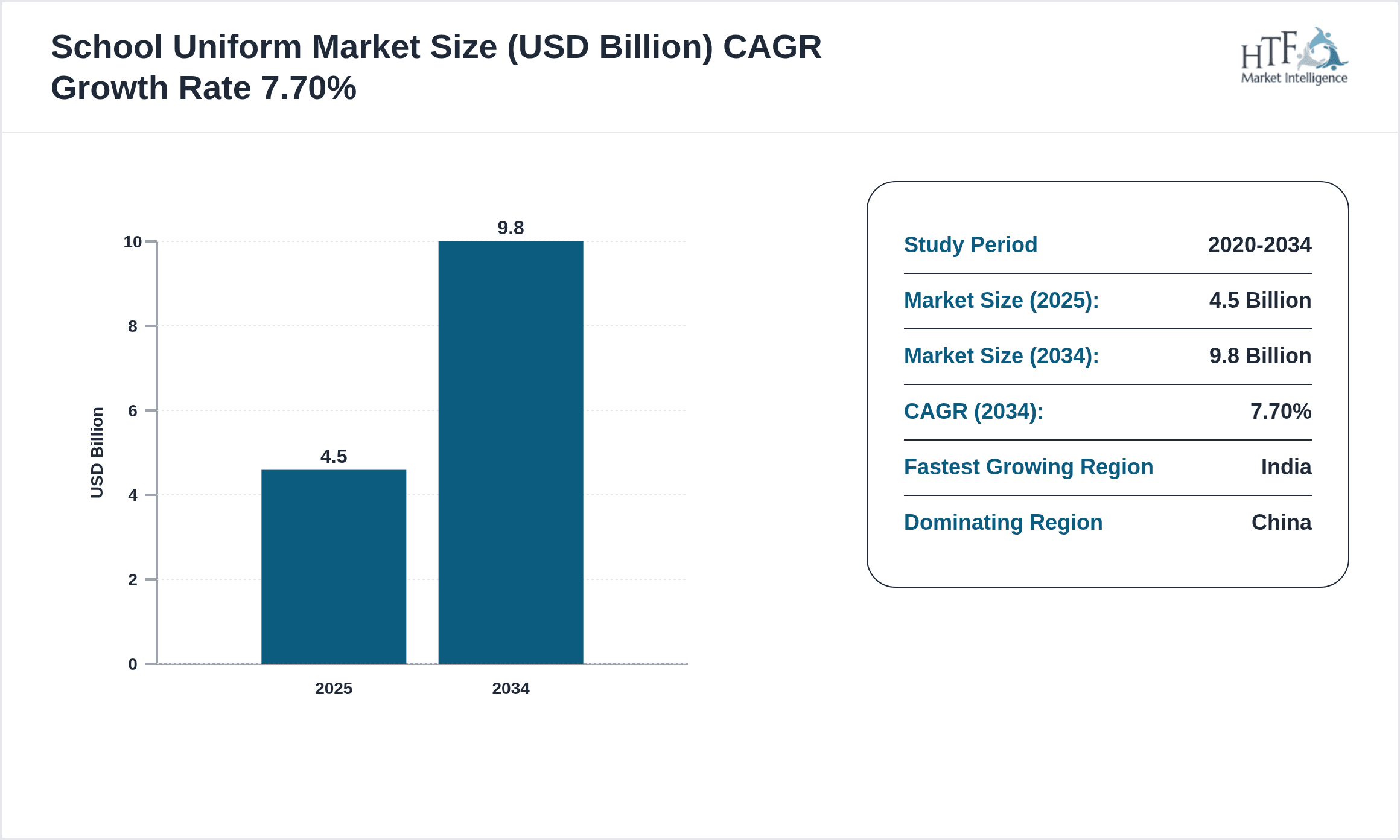
- •Key market highlights include a base market size of USD 4.5 Billion in 2024, projected to reach USD 9.8 Billion by 2034, exhibiting a CAGR of 7.7%. China dominates with a 35% market share, while India is the fastest growing country at a CAGR of 10.2%, driven by expanding school enrollments and rising disposable incomes. Blazers lead the product segment followed by shirts & trousers, whereas primary schools hold the largest application share with secondary schools as the next significant segment. Increasing adoption of sportswear uniforms reflects shifting preferences towards comfort and activewear. The market benefits from government initiatives promoting education and standardized uniforms, alongside rising awareness of brand identity, safety, and discipline among educational institutions.
- •The Asia-Pacific School Uniform market presents significant value propositions for manufacturers, educational institutions, and retailers. For manufacturers, the growing demand offers avenues for innovation in fabric technology and sustainable production. Educational institutions leverage uniforms to foster student identity, discipline, and equality, enhancing institutional branding and security. Retailers and distributors benefit from expanding e-commerce platforms and direct procurement from schools. The strategic importance of this market is amplified by demographic growth, urbanization, and rising education expenditure across Asia-Pacific countries. Stakeholders are encouraged to focus on customized solutions, regional preferences, and compliance with regulatory frameworks to capitalize on emerging opportunities and sustain competitive advantage.
Competitive Landscape
The Asia-Pacific School Uniform market is characterized by intense competition among both established multinational corporations and regional manufacturers. Market players pursue differentiation through product innovation, quality enhancement, and sustainable fabric integration to meet stringent institutional requirements and consumer expectations. Competitive strategies include strategic partnerships with educational institutions, expansion of distribution networks, and digital transformation initiatives such as online customization platforms. Pricing competition is moderated by quality benchmarks and institutional contracts, creating a balance between cost-effectiveness and product value. The rivalry is further intensified by emerging entrants leveraging local manufacturing advantages and cost efficiencies. Companies invest heavily in branding and customer service to enhance loyalty among schools and parents. Regulatory compliance and adaptation to regional cultural nuances form critical competitive factors. Future competition is likely to focus on technological advancements in textiles, eco-friendly materials, and enhanced supply chain responsiveness to sustain growth and market share.
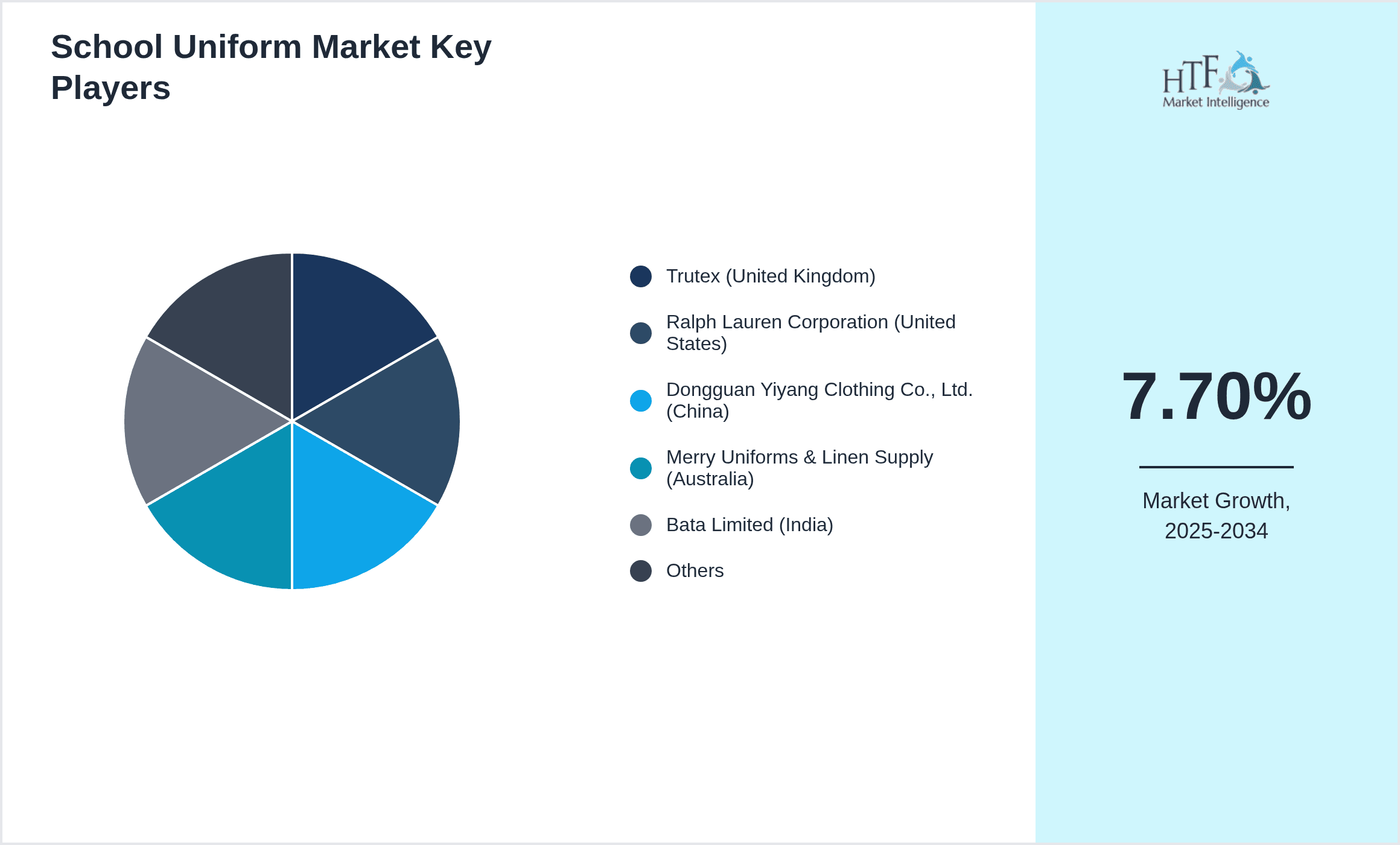
Leading Companies in Asia-Pacific School Uniform Market
- •Trutex (United Kingdom)
- •Ralph Lauren Corporation (United States)
- •Dongguan Yiyang Clothing Co., Ltd. (China)
- •Merry Uniforms & Linen Supply (Australia)
- •Bata Limited (India)
- •Nishat Mills Limited (Pakistan)
- •Shenzhen Homie Garment Co., Ltd. (China)
- •Kukoo Uniforms (India)
- •Sekolah Uniforms Pvt Ltd (India)
- •Kowloon Garment Manufacturing Co. Ltd. (Hong Kong)
- •Uniqlo Co., Ltd. (Japan)
- •C&A (Netherlands)
- •Fengyi Apparel Co., Ltd. (China)
- •Sakura Uniforms (Japan)
- •Macpac (New Zealand)
- •Beximco Textiles Ltd. (Bangladesh)
- •Yupoong Inc. (South Korea)
- •H&M Hennes & Mauritz AB (Sweden)
- •Samson Garments (Sri Lanka)
- •Jiangsu Guotai International Group (China)
- •Adidas AG (Germany)
- •Marks & Spencer Plc (United Kingdom)
- •Orient Craft Ltd. (India)
- •New Era Cap Co., Inc. (United States)
- •Global Schoolwear (Australia)
Market Breakdown
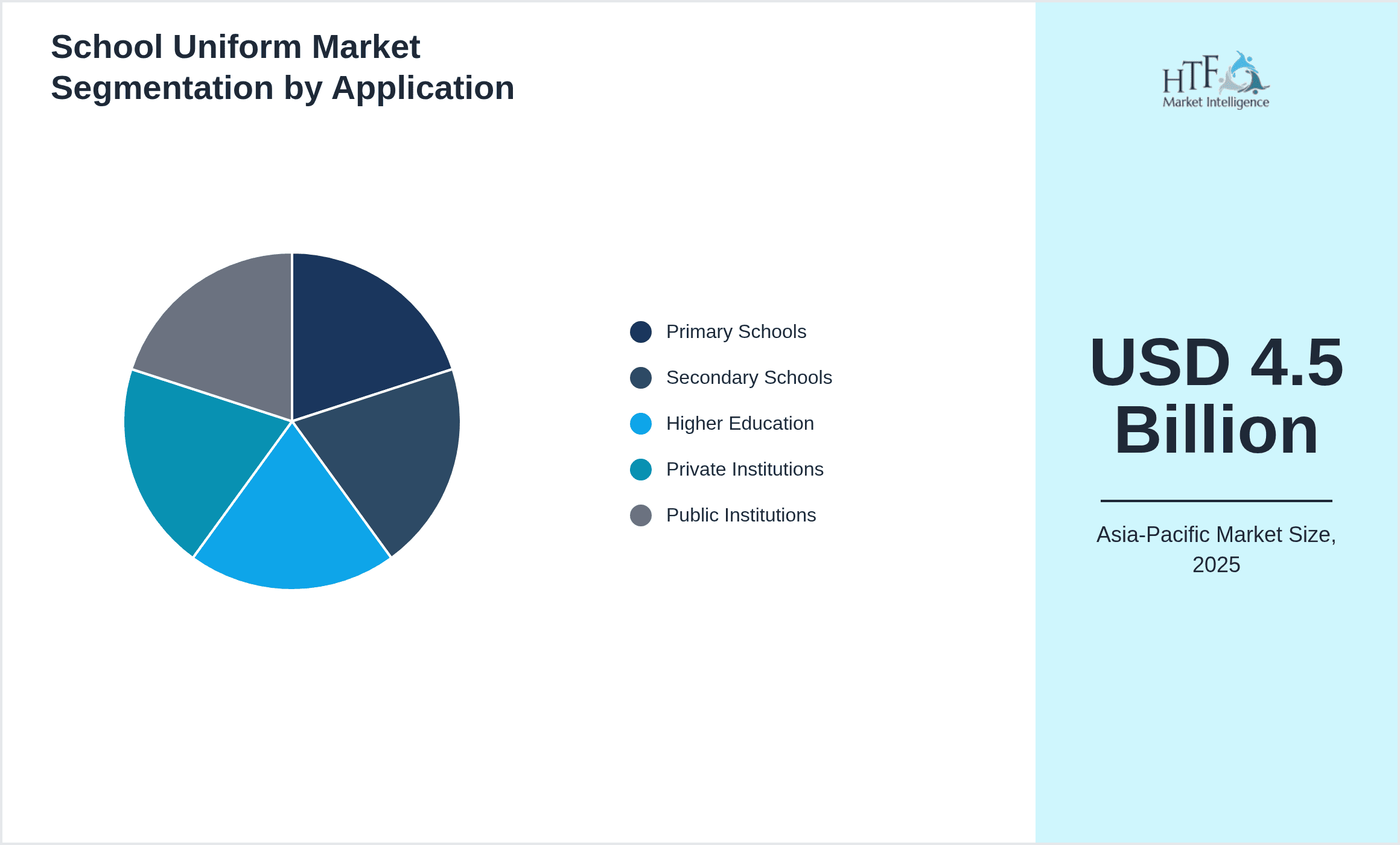
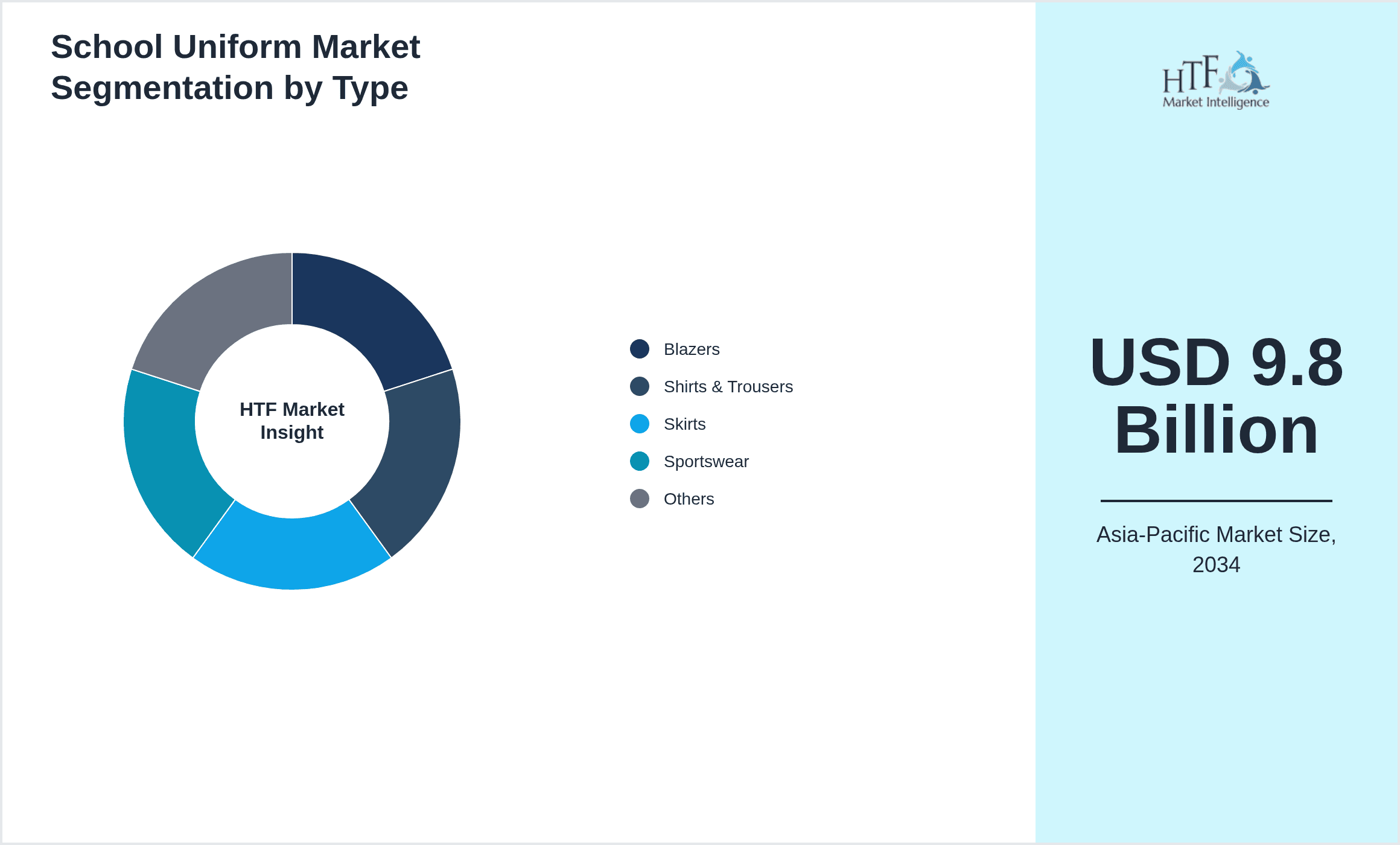
- •By Type
- ◦Blazers
- ◦Shirts & Trousers
- ◦Skirts
- ◦Sportswear
- ◦Others
- •By Application
- ◦Primary Schools
- ◦Secondary Schools
- ◦Higher Education
- ◦Private Institutions
- ◦Public Institutions
- •By Distribution Channel
- ◦Direct Institutional Supply
- ◦Retail Outlets
- ◦Online Platforms
- •By Fabric Technology
- ◦Cotton-Based
- ◦Polyester-Based
- ◦Blended Fabrics
Growth Dynamics
The Asia-Pacific School Uniform market is propelled by rising student enrollments fueled by increasing population and government initiatives promoting universal education access. Growing urbanization and rising disposable incomes enable parents and institutions to invest more in quality uniforms. Mandates enforcing uniform policies in schools across countries like China and India ensure consistent demand. Additionally, increasing awareness of the benefits of uniforms in fostering discipline and equality among students drives market growth. Manufacturers are innovating with sustainable fabrics and ergonomic designs to cater to evolving consumer preferences. Expansion of organized retail and e-commerce platforms further facilitates market penetration and accessibility. The synergy of demographic trends, policy frameworks, and technological advancements collectively accelerates market expansion across the region.
Market Trends
Recent trends in the Asia-Pacific School Uniform market include a marked shift toward sustainable and eco-friendly fabrics, driven by environmental concerns and regulatory pressures. There is growing adoption of sportswear as school uniforms, reflecting a preference for comfort and flexibility among students. Digital customization platforms enabling personalized uniform fittings and styles are gaining traction, enhancing customer engagement. Additionally, integration of smart textiles with antimicrobial and moisture-wicking properties is emerging, offering functional benefits. Collaborative partnerships between uniform manufacturers and educational institutions are increasingly common to co-develop institution-specific uniform lines. These trends indicate a maturation of the market toward innovation-led differentiation and sustainability-focused growth.
Market Opportunities
Significant opportunities exist in untapped rural and semi-urban areas where rising school enrollments are creating new demand pockets. Expansion of online sales channels offers manufacturers and retailers the ability to reach broader customer bases with lower distribution costs. Innovations in fabric technology, including sustainable and smart textiles, present avenues for product differentiation and premium pricing. Collaborations with private educational institutions to develop exclusive uniform lines can enhance brand visibility and loyalty. Additionally, growing awareness about the importance of standardized uniforms for student safety and identity in emerging economies creates demand for customized solutions. These opportunities, combined with favorable government policies and rising disposable incomes, position the Asia-Pacific School Uniform market for accelerated growth.
Market Challenges
The Asia-Pacific School Uniform market faces challenges including fluctuating raw material prices, which impact manufacturing costs and pricing strategies. Diverse cultural preferences and regional variations in school uniform requirements complicate product standardization and inventory management. The presence of unorganized players offering low-cost alternatives intensifies price competition, affecting profitability for established manufacturers. Compliance with varying regulatory standards across countries adds complexity to market operations. Additionally, logistical challenges in reaching remote and rural areas impede market penetration. Resistance to uniform policies from some stakeholders due to comfort or individuality concerns can limit adoption. These challenges require strategic planning, innovation, and efficient supply chain management to sustain growth and competitive positioning.
Regulatory Framework
Between 2019 and 2024, several Asia-Pacific countries implemented updated regulations impacting the school uniform market. For example, China introduced guidelines promoting eco-friendly textiles and sustainable manufacturing practices, compelling manufacturers to adopt greener processes. India reinforced mandatory uniform policies in public schools with standardized appearance guidelines, increasing demand for compliant products. Japan updated textile safety regulations, emphasizing non-toxic dyes and hypoallergenic materials. Australia enhanced labor laws affecting garment production, encouraging ethical sourcing and fair labor practices. These regulatory developments necessitate continuous compliance and adaptation by market participants, influencing material selection, production methods, and certification processes. Government incentives supporting sustainable textile innovation further drive market transformation in the region.
Market Intelligence
- •15th February 2024, Trutex launched an eco-friendly school uniform line in collaboration with sustainable fabric producers, targeting environmentally conscious institutions across Asia-Pacific. The new collection features recycled polyester blends and organic cotton, reducing carbon footprint while maintaining durability and comfort. This initiative aligns with increasing regulatory emphasis on sustainability and rising consumer demand for green products. Trutex aims to expand its market share in China, India, and Southeast Asia through direct institutional partnerships and online retail channels, solidifying its position as an innovator in the school uniform segment. Source: Official Trutex press release.
- •10th August 2023, Uniqlo Co., Ltd. introduced a new functional sportswear uniform range for schools in Japan and South Korea, incorporating moisture-wicking and antibacterial technology. The product line addresses growing preferences for comfort and hygiene in educational apparel amidst post-pandemic health concerns. Uniqlo's strategic focus on fabric innovation and region-specific customization enhances its competitive positioning in the Asia-Pacific market. The brand plans phased rollouts across Southeast Asia, leveraging its extensive retail network and e-commerce platforms to capture expanding customer segments. Source: Uniqlo corporate announcement.
- •Recent market developments and strategic initiatives are continuously tracked through industry publications, company announcements, and regulatory filings. For the most current information, stakeholders are advised to monitor official corporate communications and recognized market intelligence platforms.
- •Recent market developments and strategic initiatives are continuously tracked through industry publications, company announcements, and regulatory filings. For the most current information, stakeholders are advised to monitor official corporate communications and recognized market intelligence platforms.
Regional Outlook
The China currently holds a significant share of the market, primarily due to several key factors: increasing consumption rates, a burgeoning population, and robust economic momentum. These elements collectively drive demand, positioning this region as a leader in the market. On the other hand, India is rapidly emerging as the fastest-growing area within the industry. This remarkable growth can be attributed to swift infrastructure development, the expansion of various industrial sectors, and a marked increase in consumer demand. These dynamics make this region a crucial player in shaping future market growth.
In our report, we cover a comprehensive analysis of the following regions and countries:
- Japan
- China
- Southeast Asia
- India
- Australia
- South Korea
- Others
| Feature | Details |
|---|---|
| Base Year Market Size | USD 4.5 Billion |
| Forecast Year Market Size | USD 9.8 Billion |
| CAGR | 7.7% |
| Forecast Period | 2026 to 2033 |
| YoY Growth | 7.5% |
| Scope of Report | Market is segmented by Type (Blazers, Shirts & Trousers, Skirts, Sportswear, Others), Application (Primary Schools, Secondary Schools, Higher Education, Private Institutions, Public Institutions), Distribution Channel (Direct Institutional Supply, Retail Outlets, Online Platforms), Fabric Technology (Cotton-Based, Polyester-Based, Blended Fabrics) |
| Regions Covered | Japan, China, Southeast Asia, India, Australia, South Korea, Others |
| Key Companies | Trutex (United Kingdom), Ralph Lauren Corporation (United States), Dongguan Yiyang Clothing Co., Ltd. (China), Merry Uniforms & Linen Supply (Australia), Bata Limited (India) |
Asia-Pacific School Uniform Market Size, Growth & Revenue 2024-2034 - Table of Contents
Multidisciplinary researcher with 10+ years of experience uncovering insights across diverse domains focused on uncovering insights that drive informed decisions.
Frequently Asked Questions (FAQ):
The Market market is projected to grow at a steady CAGR from 2025 to 2030, driven by increasing demand and expansion in various applications.
North America currently leads the market, followed by Europe and Asia-Pacific.
Key growth drivers include increasing activities, rising demand for innovative solutions, technological advancements, and growing preference for efficient products.