
Southeast Asia Fitness Equipment Market Size, Growth & Revenue 2025-2034
Southeast Asia Fitness Equipment Market is segmented by Fitness Equipment Type (Cardio Equipment (Treadmills, Ellipticals, Stationary Bikes), Strength Training Equipment (Free Weights, Resistance Machines), Flexibility & Balance Equipment (Yoga Mats, Balance Trainers), Accessories (Fitness Balls, Bands, Dumbbells), Smart Fitness Devices (Wearables, Connected Equipment)), Application (Home Gym, Commercial Gym, Rehabilitation Centers, Corporate Wellness Programs, Sports Training Facilities), Distribution Channel (Specialty Retail Stores, E-commerce Platforms, Direct Sales, Fitness Centers & Clubs), Technology Integration (Non-connected Equipment, Partially Connected Equipment, Fully Connected Smart Devices), and Geography (Singapore, Malaysia, Thailand, Indonesia, Vietnam, Philippines, Others)
Pricing
Report Overview
Executive Summary
- •The Southeast Asia Fitness Equipment market is defined by a comprehensive array of products designed to support physical health and exercise regimes across diverse settings. It includes cardio equipment such as treadmills, ellipticals, and stationary bikes; strength training devices like weight machines, free weights, and resistance bands; flexibility and balance apparatus; fitness accessories; and emerging smart fitness devices that incorporate wearable technology and IoT connectivity. Applications cover home gyms for personal use, commercial gyms servicing fitness enthusiasts, rehabilitation centers for therapeutic exercise, corporate wellness programs promoting employee health, and sports training facilities focused on professional and amateur athletes. The market’s value chain comprises manufacturers who design and produce equipment, distributors managing supply logistics, retailers including specialty stores and e-commerce platforms, and end-users encompassing individual consumers, commercial entities, and healthcare organizations. Increasing health consciousness, rising urban population, and adoption of digital fitness solutions are key drivers shaping market dynamics. The region’s heterogeneous demographic profile and economic growth foster demand, while challenges such as high upfront costs and fragmented supply chains persist. Nevertheless, the integration of technology and government health initiatives provide significant growth potential through 2034.
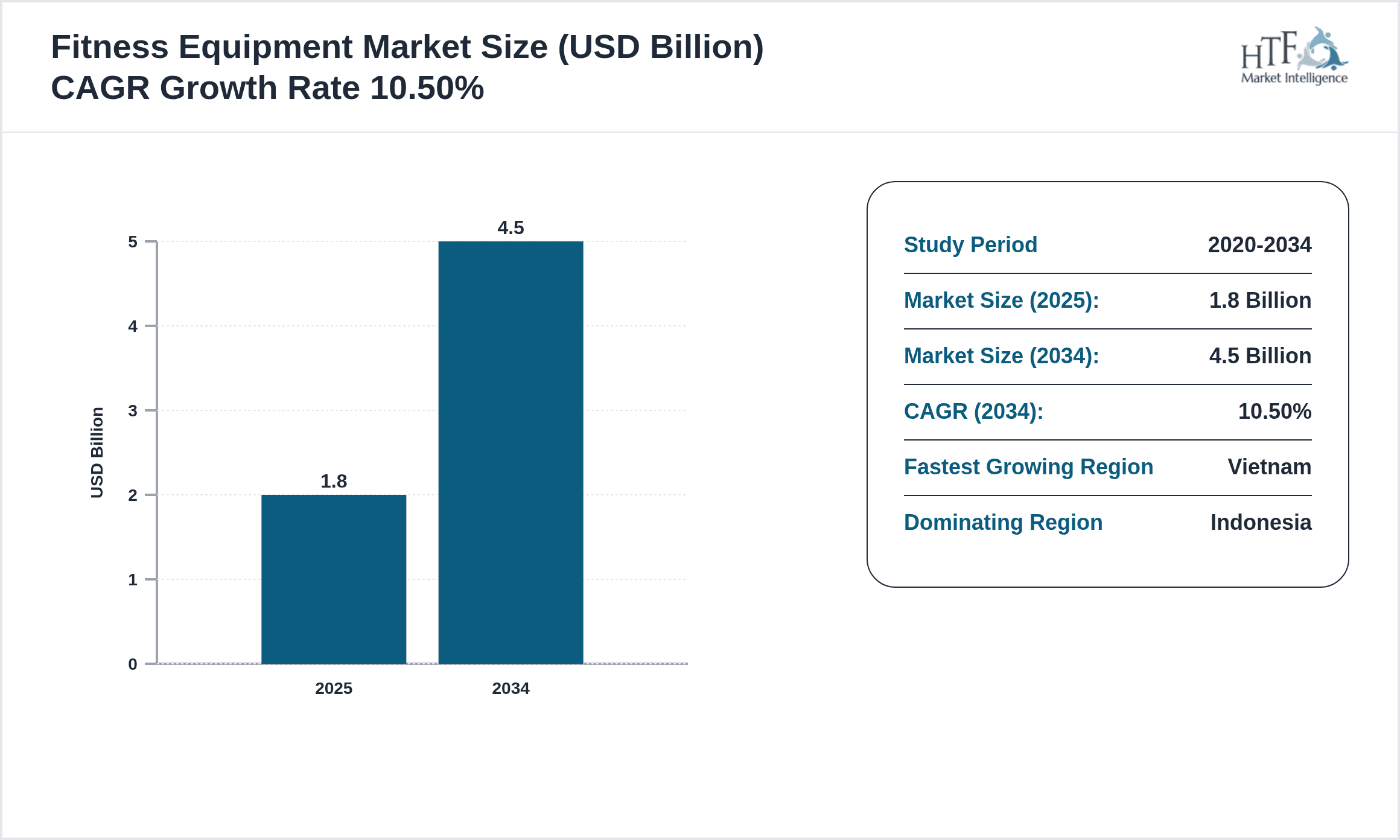
- •Key highlights indicate the market size grew to USD 1.8 Billion in 2025 from USD 1.1 Billion in 2020, with a projected CAGR of 10.5% to reach USD 4.5 Billion by 2034. Cardio equipment remains the leading product segment, driven by affordability and broad consumer appeal, while smart fitness devices are the fastest growing due to increasing digital adoption. Indonesia dominates the market with a 30% share, attributed to its large population and growing fitness culture, whereas Vietnam is the fastest growing country with a CAGR of 14.2%, supported by rising disposable incomes and urbanization. The year-on-year growth rate averages around 10%, reflecting steady expansion fueled by both commercial and home fitness sectors.
- •The market offers significant value propositions to stakeholders, including manufacturers, distributors, fitness service providers, and end-users. For manufacturers and investors, Southeast Asia’s accelerating fitness trend and rising health awareness present lucrative opportunities for product innovation and market penetration. Retailers and gyms benefit from expanding consumer bases and diversified product portfolios. End-users gain access to a broad spectrum of fitness equipment tailored for various fitness levels and preferences, enhanced by the rise of smart devices enabling personalized training. This market’s strategic importance is underscored by demographic shifts, governmental wellness programs, and increased digital connectivity, collectively driving sustainable growth and shaping the future of fitness in Southeast Asia.
Competitive Landscape
The Southeast Asia Fitness Equipment market is characterized by a competitive environment where global and regional players vie to capture market share through product innovation, strategic partnerships, and expansive distribution channels. Companies focus on differentiating through advanced technology integration, such as smart fitness devices with IoT connectivity and AI-driven personalized training. Pricing strategies vary widely to cater to diverse socio-economic consumer segments, from affordable home-use equipment to premium commercial-grade products. Mergers and acquisitions, although limited in the region, are leveraged to consolidate supply chains and enhance product portfolios. Distribution channels combine traditional retail with growing e-commerce platforms, expanding market reach. Regional competition is intensified by local manufacturers adapting products to specific cultural preferences and climatic conditions. Market entry barriers include high capital investment requirements and regulatory compliance complexities. Future trends suggest increasing emphasis on sustainability and digital transformation as key competitive levers, with companies investing heavily in R&D and customer engagement to maintain leadership positions.
Leading Companies in Southeast Asia Fitness Equipment Market
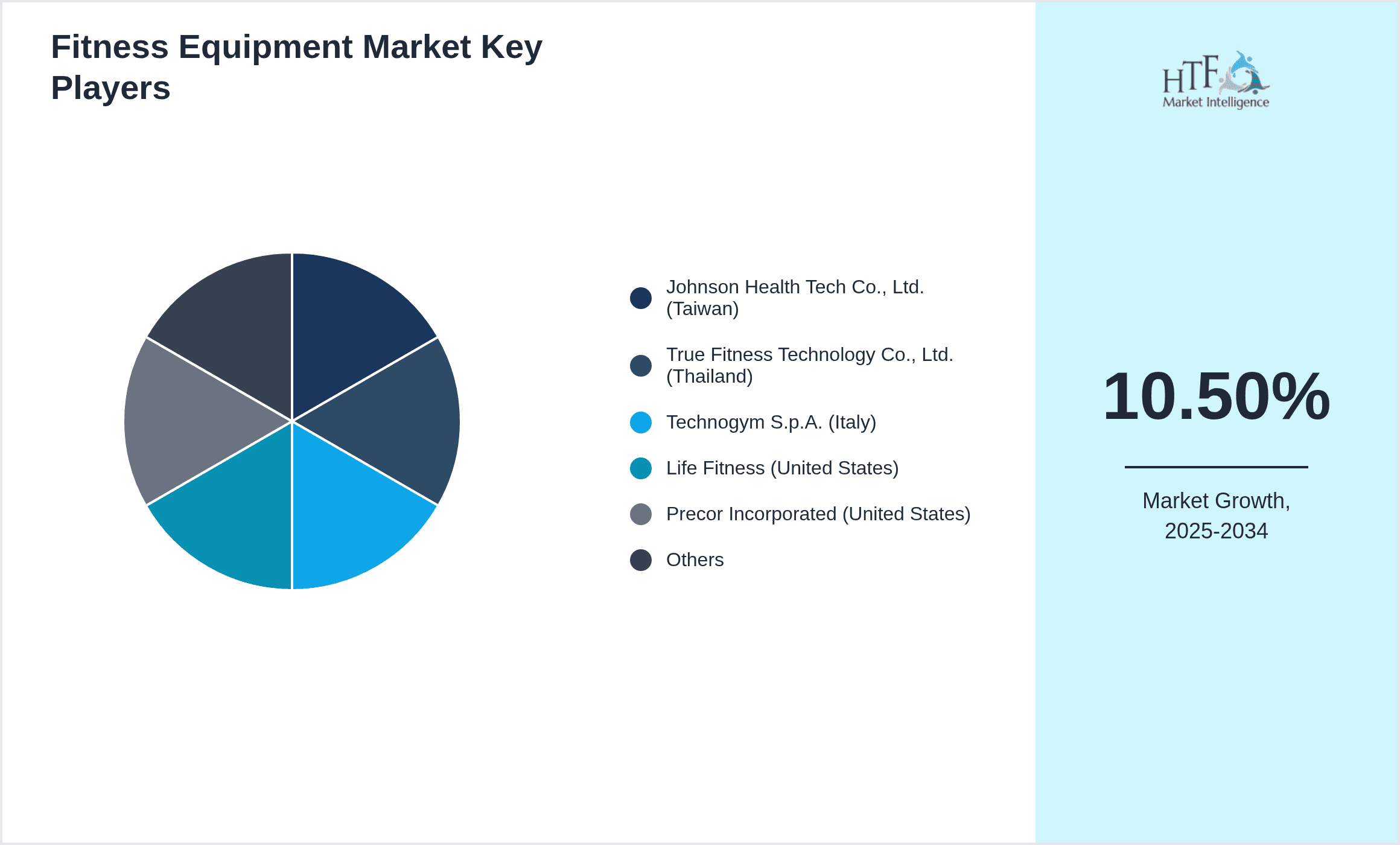
- •Johnson Health Tech Co., Ltd. (Taiwan)
- •True Fitness Technology Co., Ltd. (Thailand)
- •Technogym S.p.A. (Italy)
- •Life Fitness (United States)
- •Precor Incorporated (United States)
- •Nautilus, Inc. (United States)
- •Dyaco International Inc. (Taiwan)
- •Impulse Fitness (China)
- •Matrix Fitness (United States)
- •ICON Health & Fitness, Inc. (United States)
- •SportsArt Fitness, Inc. (United States)
- •BH Fitness (Spain)
- •Gym80 International GmbH (Germany)
- •Star Trac (United States)
- •Cybex International, Inc. (United States)
- •Johnson Health Tech (Singapore)
- •Spirit Fitness (United States)
- •Sole Fitness (United States)
- •Kettler International GmbH (Germany)
- •Reebok International Limited (United States)
- •Xterra Fitness (United States)
- •Octane Fitness (United States)
- •BH Group (Spain)
- •True Fitness (Singapore)
- •Impulse Fitness (Vietnam)
Market Breakdown
- •By Fitness Equipment Type
- ◦Cardio Equipment (Treadmills, Ellipticals, Stationary Bikes)
- ◦Strength Training Equipment (Free Weights, Resistance Machines)
- ◦Flexibility & Balance Equipment (Yoga Mats, Balance Trainers)
- ◦Accessories (Fitness Balls, Bands, Dumbbells)
- ◦Smart Fitness Devices (Wearables, Connected Equipment)
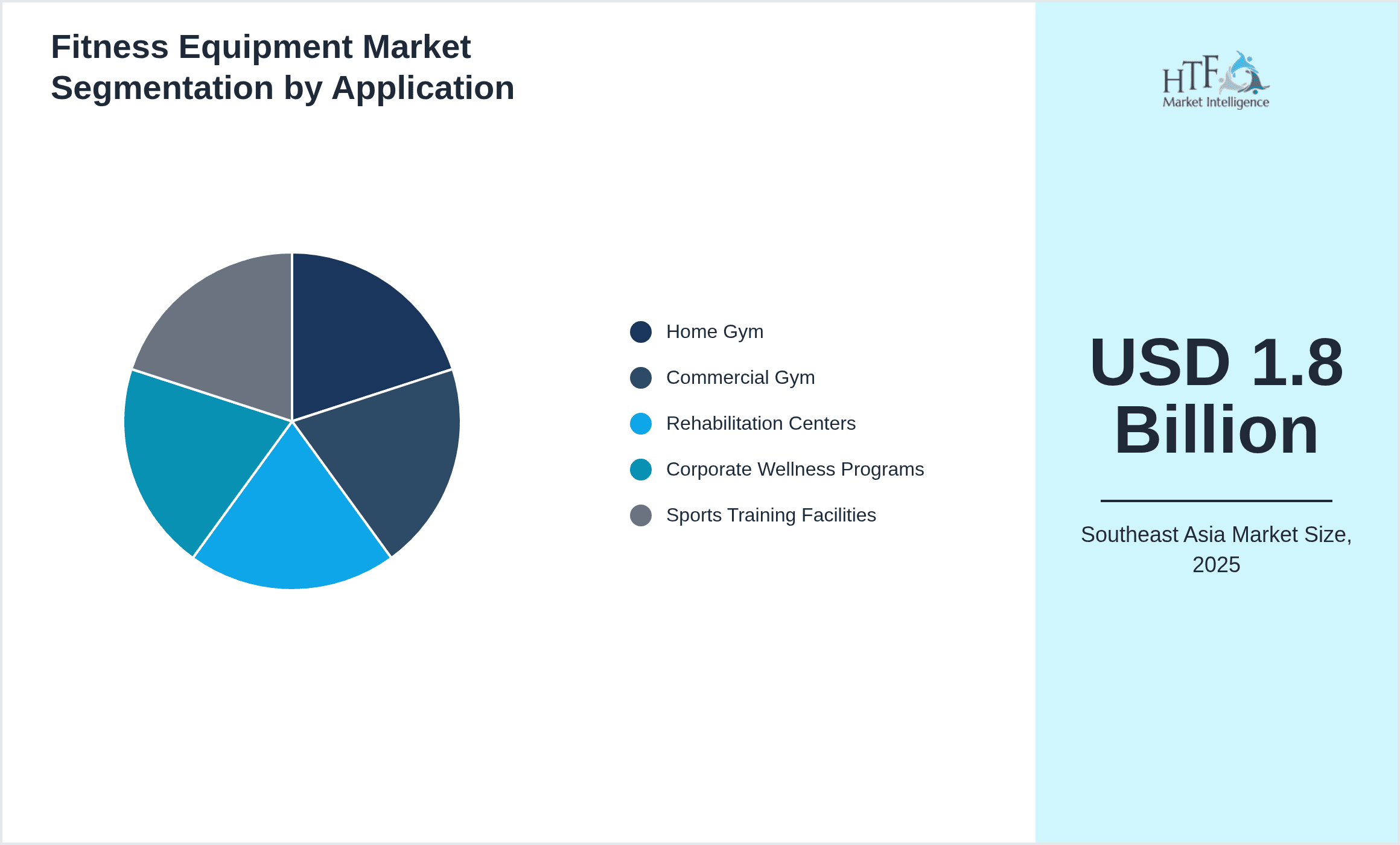
- •By Application
- ◦Home Gym
- ◦Commercial Gym
- ◦Rehabilitation Centers
- ◦Corporate Wellness Programs
- ◦Sports Training Facilities
- •By Distribution Channel
- ◦Specialty Retail Stores
- ◦E-commerce Platforms
- ◦Direct Sales
- ◦Fitness Centers & Clubs
- •By Technology Integration
- ◦Non-connected Equipment
- ◦Partially Connected Equipment
- ◦Fully Connected Smart Devices
Growth Dynamics
- •Increasing health awareness and lifestyle diseases in Southeast Asia are driving demand for fitness equipment, with consumers seeking preventive health measures and active lifestyles. Market players are capitalizing on this trend by expanding product portfolios tailored to these health-conscious consumers.
- •Rapid urbanization and rising disposable incomes in countries like Indonesia and Vietnam support increased spending on fitness equipment for both home and commercial use. This economic upliftment is enabling more consumers to invest in quality fitness products.
- •Technological advancements, particularly the integration of IoT and AI in smart fitness devices, are transforming user experiences by offering personalized workout programs and real-time health tracking, fostering higher adoption rates.
- •Government initiatives promoting fitness and wellness through public awareness campaigns and infrastructure development are creating favorable environments for market growth, encouraging participation across all age groups.
- •The COVID-19 pandemic accelerated the shift toward home-based fitness solutions, prompting increased investment in home gym equipment and online fitness subscriptions, which is expected to sustain growth post-pandemic.
Market Trends
- •The rising popularity of connected fitness equipment and smart wearables is a key trend, with consumers preferring devices that provide interactive and data-driven workout experiences. This trend is supported by improved internet penetration and smartphone usage in Southeast Asia.
- •Commercial gyms are increasingly adopting hybrid business models combining in-person and virtual training, driving demand for advanced fitness equipment compatible with digital platforms and remote monitoring.
- •Sustainability is gaining traction, with manufacturers focusing on eco-friendly materials and energy-efficient equipment designs to meet growing consumer and regulatory expectations regarding environmental responsibility.
- •Collaborations between fitness equipment manufacturers and technology firms are fostering innovation in product features and user engagement, exemplifying the convergence of fitness and digital health sectors.
Market Opportunities
- •Expanding the home gym segment offers significant growth potential, especially with rising urban middle-class populations seeking convenient fitness options amid increasing health consciousness.
- •Emerging markets within Southeast Asia, such as Vietnam and the Philippines, present untapped opportunities due to rapid urbanization, economic growth, and increasing fitness awareness among younger demographics.
- •Integration of AI and machine learning in fitness equipment to deliver customized workout plans and predictive health analytics can drive differentiation and customer loyalty for manufacturers.
- •Strategic partnerships with digital fitness platforms and wellness apps can expand product ecosystems, providing bundled solutions that enhance user engagement and recurring revenue streams.
Market Challenges
- •High upfront costs of advanced fitness equipment limit adoption among price-sensitive consumers, necessitating cost-effective solutions and financing options to broaden market reach.
- •Fragmented supply chains and logistical complexities in Southeast Asia pose challenges to consistent product availability and cost management for manufacturers and distributors.
- •Lack of standardized regulatory frameworks across countries complicates compliance and increases operational risks for market entrants and existing players.
- •Competition from low-cost, unbranded fitness equipment and counterfeit products undermines market integrity and affects consumer trust in established brands.
Regulatory Framework
- •The ASEAN Harmonized Standards for Fitness Equipment, implemented between 2018 and 2025, establish safety and performance benchmarks to ensure product quality and user safety across member states, facilitating regional trade and consumer protection.
- •Country-specific regulations, such as Singapore’s Consumer Protection (Fitness Equipment) Rules 2023, mandate certification and labeling requirements to enhance transparency and regulatory compliance in retail and distribution channels.
- •Environmental regulations focusing on material sustainability and energy efficiency, enforced in Malaysia and Thailand since 2020, compel manufacturers to adopt eco-friendly production processes and equipment designs.
- •Import tariffs and customs duties vary across Southeast Asian countries, influencing pricing strategies and supply chain decisions for multinational fitness equipment manufacturers and distributors.
- •Government health policies promoting physical activity and wellness, such as Indonesia’s National Fitness Campaign launched in 2022, incentivize market growth through subsidies and awareness programs targeting fitness adoption.
Market Intelligence
- •15th January 2025, Johnson Health Tech Co., Ltd. announced the launch of its latest smart treadmill series in Southeast Asia featuring AI-powered workout personalization, real-time health monitoring, and seamless integration with fitness apps, targeting home and commercial gym users. This launch aims to leverage rising digital fitness trends and enhance user engagement through advanced technology, positioning the company as a leader in smart fitness innovation within the region. Source: Johnson Health Tech Official Press Release
- •10th March 2025, Technogym S.p.A. introduced an innovative line of eco-friendly strength training equipment in Singapore and Malaysia, emphasizing recycled materials and energy-efficient manufacturing processes. The initiative aligns with growing sustainability trends and government regulations, bolstering the brand’s commitment to environmental responsibility while expanding its market share in Southeast Asia’s commercial gym segment. Source: Technogym Corporate News
- •5th June 2025, Life Fitness announced a strategic partnership with a leading Southeast Asian digital wellness platform to offer integrated fitness solutions combining hardware and virtual coaching services. This collaboration aims to enhance customer experience across home and commercial users by providing personalized fitness programs supported by connected devices, driving higher retention and cross-selling opportunities. Source: Life Fitness Investor Relations
- •20th September 2025, Dyaco International Inc. completed the acquisition of a regional fitness equipment distributor in Vietnam, strengthening its supply chain network and market penetration capabilities. The acquisition is expected to improve distribution efficiency, expand product availability, and accelerate growth in the rapidly expanding Vietnamese fitness equipment market. Source: Dyaco International Press Release
Regional Outlook
The Indonesia currently holds a significant share of the market, primarily due to several key factors: increasing consumption rates, a burgeoning population, and robust economic momentum. These elements collectively drive demand, positioning this region as a leader in the market. On the other hand, Vietnam is rapidly emerging as the fastest-growing area within the industry. This remarkable growth can be attributed to swift infrastructure development, the expansion of various industrial sectors, and a marked increase in consumer demand. These dynamics make this region a crucial player in shaping future market growth.
In our report, we cover a comprehensive analysis of the following regions and countries:
- Singapore
- Malaysia
- Thailand
- Indonesia
- Vietnam
- Philippines
- Others
| Feature | Details |
|---|---|
| Base Year Market Size | USD 1.8 Billion |
| Forecast Year Market Size | USD 4.5 Billion |
| CAGR | 10.5% |
| Forecast Period | 2026 to 2033 |
| YoY Growth | 10% |
| Scope of Report | Market is segmented by Fitness Equipment Type (Cardio Equipment (Treadmills, Ellipticals, Stationary Bikes), Strength Training Equipment (Free Weights, Resistance Machines), Flexibility & Balance Equipment (Yoga Mats, Balance Trainers), Accessories (Fitness Balls, Bands, Dumbbells), Smart Fitness Devices (Wearables, Connected Equipment)), Application (Home Gym, Commercial Gym, Rehabilitation Centers, Corporate Wellness Programs, Sports Training Facilities), Distribution Channel (Specialty Retail Stores, E-commerce Platforms, Direct Sales, Fitness Centers & Clubs), Technology Integration (Non-connected Equipment, Partially Connected Equipment, Fully Connected Smart Devices) |
| Regions Covered | Singapore, Malaysia, Thailand, Indonesia, Vietnam, Philippines, Others |
| Key Companies | Johnson Health Tech Co., Ltd. (Taiwan), True Fitness Technology Co., Ltd. (Thailand), Technogym S.p.A. (Italy), Life Fitness (United States), Precor Incorporated (United States), Nautilus, Inc. (United States), Dyaco International Inc. (Taiwan), Impulse Fitness (China), Matrix Fitness (United States), ICON Health & Fitness, Inc. (United States), SportsArt Fitness, Inc. (United States), BH Fitness (Spain), Gym80 International GmbH (Germany), Star Trac (United States), Cybex International, Inc. (United States), Johnson Health Tech (Singapore), Spirit Fitness (United States), Sole Fitness (United States), Kettler International GmbH (Germany), Reebok International Limited (United States), Xterra Fitness (United States), Octane Fitness (United States), BH Group (Spain), True Fitness (Singapore), Impulse Fitness (Vietnam) |
Southeast Asia Fitness Equipment Market Size, Growth & Revenue 2025-2034 - Table of Contents
Frequently Asked Questions (FAQ):
The Compact Track Loaders market is expected to see value worth 5.3 Billion in 2025.
North America currently leads the market with approximately 45% market share, followed by Europe at 28% and Asia-Pacific at 22%. The remaining regions account for 5% of the global market.
Key growth drivers include increasing construction activities, rising demand for versatile equipment in agriculture, technological advancements in track loader design, and growing preference for compact equipment in urban construction projects.