
Europe Live Virtual Receptionist Service Market Size, Growth & Revenue 2025-2034
Europe Live Virtual Receptionist Service Market is segmented by Virtual Receptionist Service Type (Automated Receptionist, Human Virtual Receptionist, Hybrid Receptionist, AI-Powered Receptionist, Cloud-Based Receptionist), Application Segment (Small Businesses, Medium Enterprises, Large Enterprises, Healthcare, Financial Services), Deployment Model (Cloud-based, On-premise, Hybrid), Service Offering Type (Inbound Call Management, Appointment Scheduling, Customer Support, Lead Generation), and Geography (Germany, France, The United Kingdom, BeNeLux, Spain, Italy, NORDIC, CEE, Others)
Pricing
Report Overview
Executive Summary
- •The Europe Live Virtual Receptionist Service market is defined by its provision of telecommunication services that enable businesses to manage customer interactions remotely through virtual receptionist solutions. These services include human-operated answering, AI-driven automated responses, and hybrid service models that combine both elements. The market serves a broad range of applications such as small, medium, and large enterprises across multiple industries, including healthcare and financial services. The value chain integrates technology providers, service vendors, and end users, allowing organizations to enhance operational efficiency, reduce costs associated with on-site reception staff, and improve customer engagement. The market has witnessed accelerated adoption of cloud-based and AI-powered receptionists, reflecting the ongoing digital transformation in Europe. The increasing need for scalable, flexible communication solutions amid rising remote work trends further boosts market demand. This report comprehensively analyzes the market's segmentation by application and service type, regional dynamics across key European countries, and competitive landscape to deliver actionable intelligence for stakeholders.
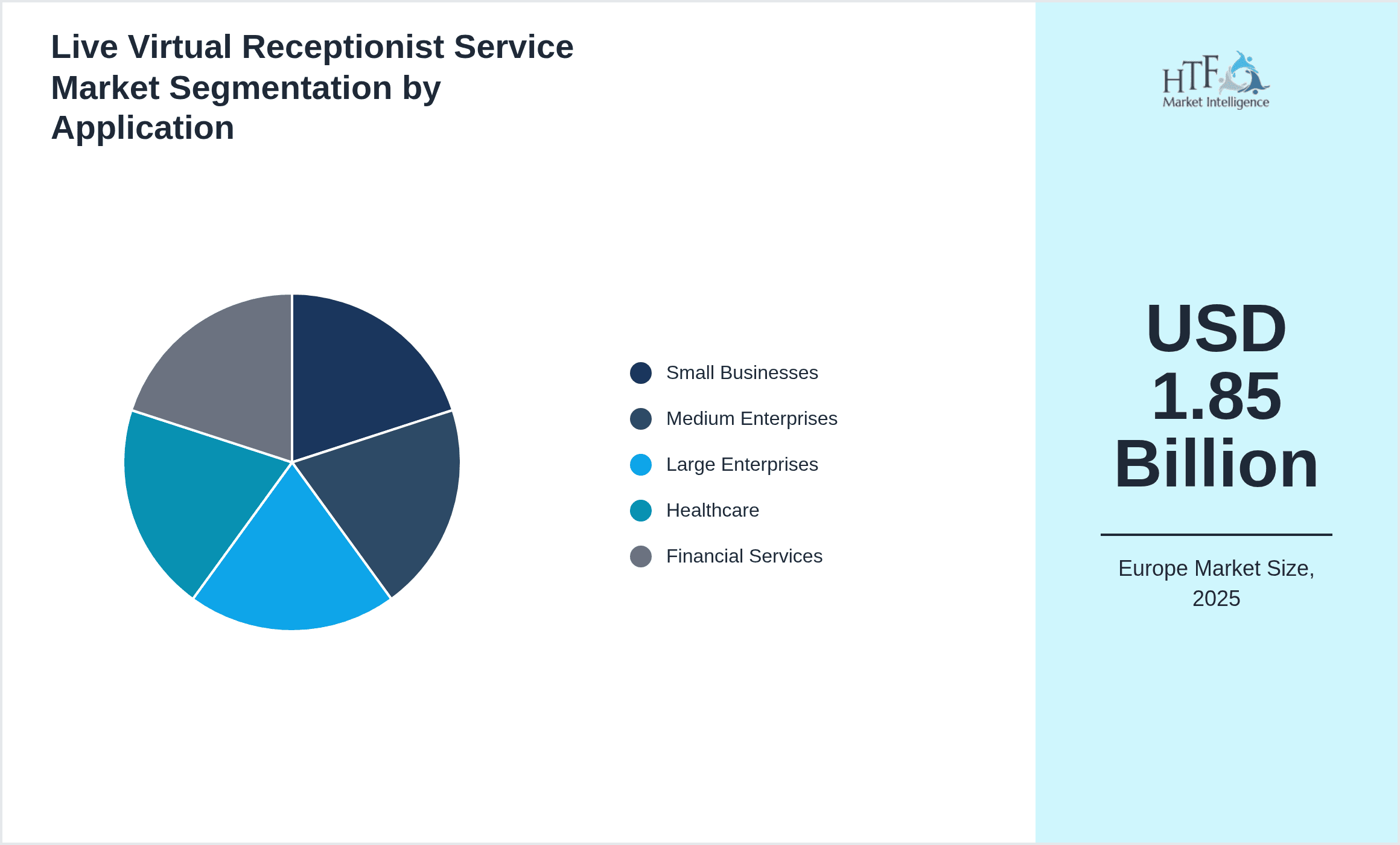
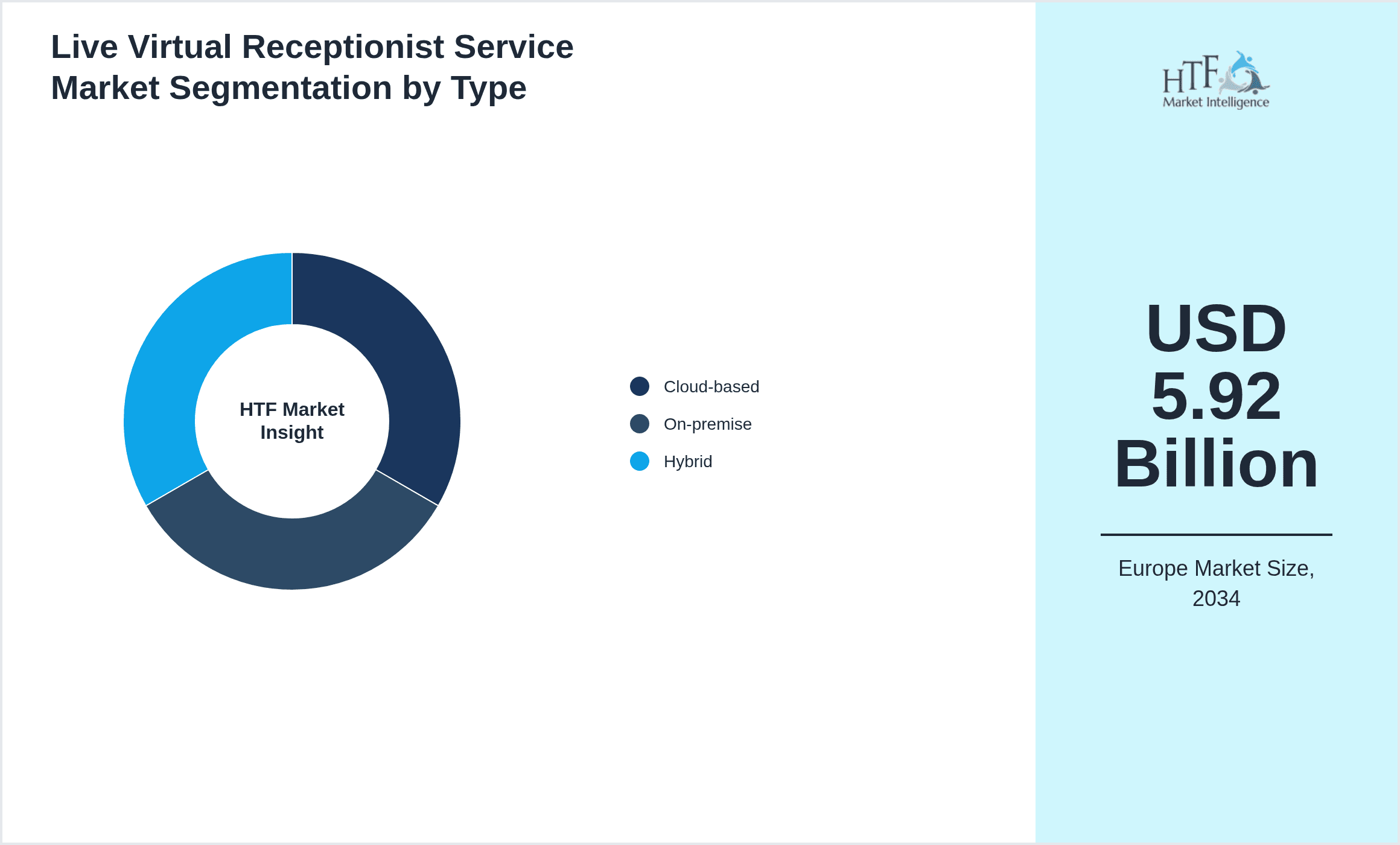
- •Key highlights include a base market size of USD 1.85 Billion in 2025, with a forecast to reach USD 5.92 Billion by 2034, reflecting a CAGR of 13.3%. The United Kingdom currently dominates the market with a 25% share, while France is the fastest growing country with an estimated CAGR of 16.2%. Human Virtual Receptionists remain the leading product type, but AI-Powered Receptionists are emerging as the fastest growing segment due to advancements in natural language processing and machine learning. The market is characterized by rapid technological innovation, increasing adoption among SMEs, and growing demand for enhanced customer experience services.
- •This market presents significant strategic opportunities for technology providers, telecom operators, and service companies aiming to capitalize on Europe's evolving digital infrastructure. Enhanced AI capabilities and cloud deployment models enable service providers to offer cost-efficient and scalable solutions tailored to diverse business needs. The integration of these services supports industries in optimizing communication workflows, improving business continuity, and delivering superior customer engagement. Thus, the Europe Live Virtual Receptionist Service market is positioned as a critical enabler of digital transformation across multiple sectors.

Competitive Landscape
The Europe Live Virtual Receptionist Service market exhibits a robust competitive environment characterized by a mix of established multinational telecommunications companies, innovative technology startups, and specialized virtual receptionist service providers. Market players compete by investing heavily in AI research, cloud infrastructure, and user experience enhancements to differentiate their offerings. Strategic partnerships and collaborations with cloud service providers and CRM platforms are common to expand service capabilities and customer reach. Competitive pricing, flexible subscription models, and comprehensive service portfolios are key factors influencing market positioning. Barriers to entry are moderate due to the need for technological expertise and compliance with regional regulations on data privacy, such as GDPR. The market also witnesses frequent launches of AI-powered features to automate call handling and improve conversational accuracy, fostering continuous innovation. Overall, the competitive landscape is dynamic, with companies focusing on innovation, regional expansion, and customer-centric solutions to maintain and grow market share.
Leading Companies in Live Virtual Receptionist Service Market
- •RingCentral, Inc. (United States)
- •Grasshopper Group, Inc. (United States)
- •Moneypenny (United Kingdom)
- •AnswerConnect (United States)
- •Davinci Virtual (United States)
- •Ruby Receptionists (United States)
- •Teleperformance SE (France)
- •GoTo Connect (United States)
- •VoiceNation (United States)
- •Virtual Receptionist (United Kingdom)
- •Baker Communications (United Kingdom)
- •BPO International (Germany)
- •ICS Group (Germany)
- •TeleDirect (France)
- •Answering Service Care (United Kingdom)
- •PACT (United Kingdom)
- •CallHero (Germany)
- •CallAnswer (United Kingdom)
- •Virtual Assistant UK (United Kingdom)
- •eReceptionist (United Kingdom)
- •Reception HQ (United Kingdom)
- •LiveAnswer (Ireland)
- •Teleservice Group (Italy)
- •Telus International Europe (Poland)
- •Sitel Group (France)
Market Breakdown
- •By Virtual Receptionist Service Type
- ◦Automated Receptionist
- ◦Human Virtual Receptionist
- ◦Hybrid Receptionist
- ◦AI-Powered Receptionist
- ◦Cloud-Based Receptionist
- •By Application Segment
- ◦Small Businesses
- ◦Medium Enterprises
- ◦Large Enterprises
- ◦Healthcare
- ◦Financial Services
- •By Deployment Model
- ◦Cloud-based
- ◦On-premise
- ◦Hybrid
- •By Service Offering Type
- ◦Inbound Call Management
- ◦Appointment Scheduling
- ◦Customer Support
- ◦Lead Generation
Growth Dynamics
- •The rising adoption of cloud computing across European enterprises has significantly propelled the demand for live virtual receptionist services, enabling scalable and flexible communication solutions that reduce reliance on physical infrastructure.
- •Increasing focus on enhancing customer experience through personalized and prompt responses drives companies to integrate AI-powered virtual receptionists, improving efficiency and reducing operational costs.
- •The surge in remote work culture, intensified by the COVID-19 pandemic, has accelerated the uptake of virtual receptionist services as businesses seek to maintain seamless communication without physical receptionists.
- •Regulatory emphasis on data protection and privacy, such as GDPR compliance, encourages providers to innovate secure solutions, fostering trust and wider adoption among privacy-conscious European clients.
- •Small and medium-sized enterprises (SMEs) increasingly invest in virtual receptionist services to optimize costs and improve customer engagement, expanding the market base across Europe.
- •Technological advancements in natural language processing and machine learning enable more sophisticated and human-like AI receptionists, attracting diverse industry applications and fueling market growth.
- •Government initiatives promoting digital transformation and smart business infrastructure in Europe provide a favorable environment for the expansion of virtual receptionist services.
Market Trends
- •Adoption of AI-driven chatbots and virtual receptionists is becoming mainstream, enhancing real-time customer interaction capabilities and reducing dependence on human operators.
- •Integration of virtual receptionist services with CRM and enterprise communication platforms is increasing, enabling seamless customer data management and improved service personalization.
- •The shift towards hybrid receptionist models combining human and AI services is gaining traction, balancing cost efficiency with quality customer experience.
- •Sustainability considerations lead providers to promote virtual receptionist services as green alternatives to traditional on-site reception operations, aligning with corporate social responsibility goals.
- •Expansion of multilingual virtual receptionist services caters to Europe's diverse linguistic landscape, improving accessibility and customer satisfaction.
- •Rising demand for 24/7 virtual receptionist availability supports businesses in global markets and different time zones, driving continuous service improvements.
- •Emerging use of voice biometrics and advanced security features in virtual receptionist platforms enhances authentication and fraud prevention, increasing enterprise adoption.

Market Opportunities
- •Expanding cloud infrastructure and digitalization initiatives across Europe offer significant opportunities for service providers to penetrate untapped SME segments requiring cost-effective communication solutions.
- •Development of AI capabilities tailored for specific industries such as healthcare and finance can open new vertical markets with specialized virtual receptionist applications.
- •Geographic expansion into emerging European economies like Eastern Europe presents growth potential due to increasing digital adoption and rising business setups.
- •Collaborations between virtual receptionist providers and telecom operators can leverage existing networks to deliver bundled communication services, enhancing market reach and customer retention.
- •Integration with emerging technologies such as augmented reality and IoT could create innovative virtual receptionist experiences, driving future market differentiation.
- •Rising demand for multilingual and culturally adaptive virtual receptionist services enables providers to target diverse customer bases across Europe effectively.
- •Increasing adoption of subscription-based pricing models allows providers to attract a broader customer base with flexible payment options, accelerating market growth.
Market Challenges
- •Stringent data privacy regulations like GDPR require substantial compliance efforts and investment, posing challenges especially for smaller service providers in ensuring secure virtual receptionist solutions.
- •High initial setup costs and technology integration complexities may deter SMEs from adopting advanced AI-powered virtual receptionist services despite long-term benefits.
- •Resistance from traditional businesses preferring human-operated receptionists limits the adoption of fully automated virtual receptionist solutions in certain sectors.
- •Language and cultural diversity across Europe present challenges in developing virtual receptionist services that adequately address localized customer interaction preferences.
- •Maintaining high service quality and minimizing errors in AI-based receptionists requires continuous technological refinement and skilled oversight, impacting operational costs.
- •Competition from numerous small and regional service providers fragments the market, resulting in pricing pressure and reduced profit margins for key players.
- •Integration issues with legacy communication systems in some enterprises hinder smooth deployment of virtual receptionist services, slowing market penetration.
Regulatory Framework
- •The General Data Protection Regulation (GDPR) enacted in 2018 imposes strict data privacy and security requirements on virtual receptionist service providers, mandating robust data handling and user consent protocols across Europe.
- •The ePrivacy Directive governs electronic communications privacy, requiring providers to ensure confidentiality and security of communications handled through virtual receptionist services.
- •Telecom regulations in the European Electronic Communications Code (EECC) establish standards for service quality, interoperability, and consumer rights relevant to virtual receptionist offerings.
- •Country-specific mandates, such as Germany’s Federal Data Protection Act (BDSG), complement EU regulations by imposing additional compliance obligations affecting data processing activities.
- •European Union initiatives promoting digital single market and cloud adoption provide regulatory support and incentives that facilitate innovation and deployment of virtual receptionist services.
Market Intelligence
- •15th March 2025, Teleperformance SE announced the launch of an advanced AI-powered virtual receptionist platform tailored for financial and healthcare sectors in Europe. The platform integrates natural language processing with machine learning to deliver personalized and multilingual customer interactions, supporting 24/7 availability. This strategic initiative aims to enhance Teleperformance's service offerings and expand its footprint in the European virtual receptionist market, targeting increased operational efficiency and customer satisfaction. The solution complies with GDPR and other regional data privacy standards, addressing key regulatory concerns. Source: Teleperformance Official Press Release
- •10th July 2025, Moneypenny introduced a hybrid virtual receptionist service combining human agents and AI automation to better serve SMEs across the UK and Western Europe. The service offers flexible subscription plans with cloud deployment, enabling clients to customize call handling and appointment scheduling functionalities. Moneypenny emphasized enhanced customer experience and cost optimization as key benefits, aiming to capture growing demand from remote working businesses. The company plans further geographic expansion and integration with popular CRM platforms. Source: Moneypenny Corporate Announcement
- •22nd November 2024, RingCentral, Inc. expanded its virtual receptionist service portfolio in Europe by acquiring a German-based AI startup specializing in voice recognition and chatbot technologies. The acquisition aims to accelerate innovation in AI-powered receptionist solutions and strengthen RingCentral's competitive position in the European market. The integration is expected to enhance product capabilities, including improved conversational accuracy and multi-language support, driving increased adoption among enterprise clients. This move reflects ongoing consolidation trends in the virtual receptionist industry. Source: RingCentral Press Release
- •5th January 2025, TeleDirect (France) completed a strategic partnership with Microsoft Azure to leverage cloud infrastructure for scalable virtual receptionist services across Europe. This collaboration enables TeleDirect to provide secure, high-availability solutions with advanced AI analytics and real-time monitoring. The partnership supports compliance with EU data sovereignty laws, enhancing customer trust. TeleDirect aims to utilize this alliance to target sectors with complex communication needs, such as healthcare and finance. Source: TeleDirect Official Website
Regional Outlook
The United Kingdom currently holds a significant share of the market, primarily due to several key factors: increasing consumption rates, a burgeoning population, and robust economic momentum. These elements collectively drive demand, positioning this region as a leader in the market. On the other hand, France is rapidly emerging as the fastest-growing area within the industry. This remarkable growth can be attributed to swift infrastructure development, the expansion of various industrial sectors, and a marked increase in consumer demand. These dynamics make this region a crucial player in shaping future market growth.
In our report, we cover a comprehensive analysis of the following regions and countries:
- Germany
- France
- The United Kingdom
- BeNeLux
- Spain
- Italy
- NORDIC
- CEE
- Others
| Feature | Details |
|---|---|
| Base Year Market Size | USD 1.85 Billion |
| Forecast Year Market Size | USD 5.92 Billion |
| CAGR | 13.3% |
| Forecast Period | 2026 to 2033 |
| YoY Growth | 12.6% |
| Regions Covered | Germany, France, The United Kingdom, BeNeLux, Spain, Italy, NORDIC, CEE, Others |
| Key Companies | RingCentral, Inc. (United States), Grasshopper Group, Inc. (United States), Moneypenny (United Kingdom), AnswerConnect (United States), Davinci Virtual (United States), Ruby Receptionists (United States), Teleperformance SE (France), GoTo Connect (United States), VoiceNation (United States), Virtual Receptionist (United Kingdom), Baker Communications (United Kingdom), BPO International (Germany), ICS Group (Germany), TeleDirect (France), Answering Service Care (United Kingdom), PACT (United Kingdom), CallHero (Germany), CallAnswer (United Kingdom), Virtual Assistant UK (United Kingdom), eReceptionist (United Kingdom), Reception HQ (United Kingdom), LiveAnswer (Ireland), Teleservice Group (Italy), Telus International Europe (Poland), Sitel Group (France) |
Europe Live Virtual Receptionist Service Market Size, Growth & Revenue 2025-2034 - Table of Contents
Frequently Asked Questions (FAQ):
The Compact Track Loaders market is expected to see value worth 5.3 Billion in 2025.
North America currently leads the market with approximately 45% market share, followed by Europe at 28% and Asia-Pacific at 22%. The remaining regions account for 5% of the global market.
Key growth drivers include increasing construction activities, rising demand for versatile equipment in agriculture, technological advancements in track loader design, and growing preference for compact equipment in urban construction projects.