
DACH Smart Scenic Spot Solution Market - Outlook 2020-2034
DACH Smart Scenic Spot Solution Market is segmented by Application (Visitor Management, Real-Time Monitoring, Interactive Displays, Security & Surveillance, Analytics & Reporting), Type (Hardware Solutions, Software Solutions, Connectivity Solutions, Integrated Systems, Services), and Geography (Germany, Austria, Switzerland)
Pricing
Report Overview
Executive Summary
- •The DACH Smart Scenic Spot Solution market is a dynamic and rapidly evolving sector focused on deploying integrated technological solutions to enhance the management, safety, and visitor experience at key scenic locations across Germany, Austria, and Switzerland. This market integrates a mix of hardware components such as sensors, interactive displays, and surveillance cameras with software platforms that enable real-time monitoring, visitor flow management, and data analytics. Connectivity solutions facilitate seamless communication across systems, supporting centralized control and rapid response capabilities. Increasing tourism activities in the DACH region, coupled with government policies promoting smart infrastructure and sustainable tourism practices, have accelerated market adoption. Key use cases include improving visitor engagement, ensuring safety through advanced surveillance, optimizing resource allocation, and providing analytics-driven insights for operational efficiency. The market is segmented by type into hardware solutions, software platforms, connectivity technologies, integrated systems, and service offerings, catering to diverse applications such as visitor management, real-time monitoring, security, interactive engagement, and analytics reporting. This comprehensive approach addresses the unique challenges of scenic spot management in the DACH region’s diverse landscapes and cultural sites. As the market progresses toward 2034, the emphasis on digital transformation, IoT integration, and AI-driven analytics is expected to further propel growth, making smart scenic spot solutions essential for sustainable tourism development and enhanced visitor satisfaction in the region.
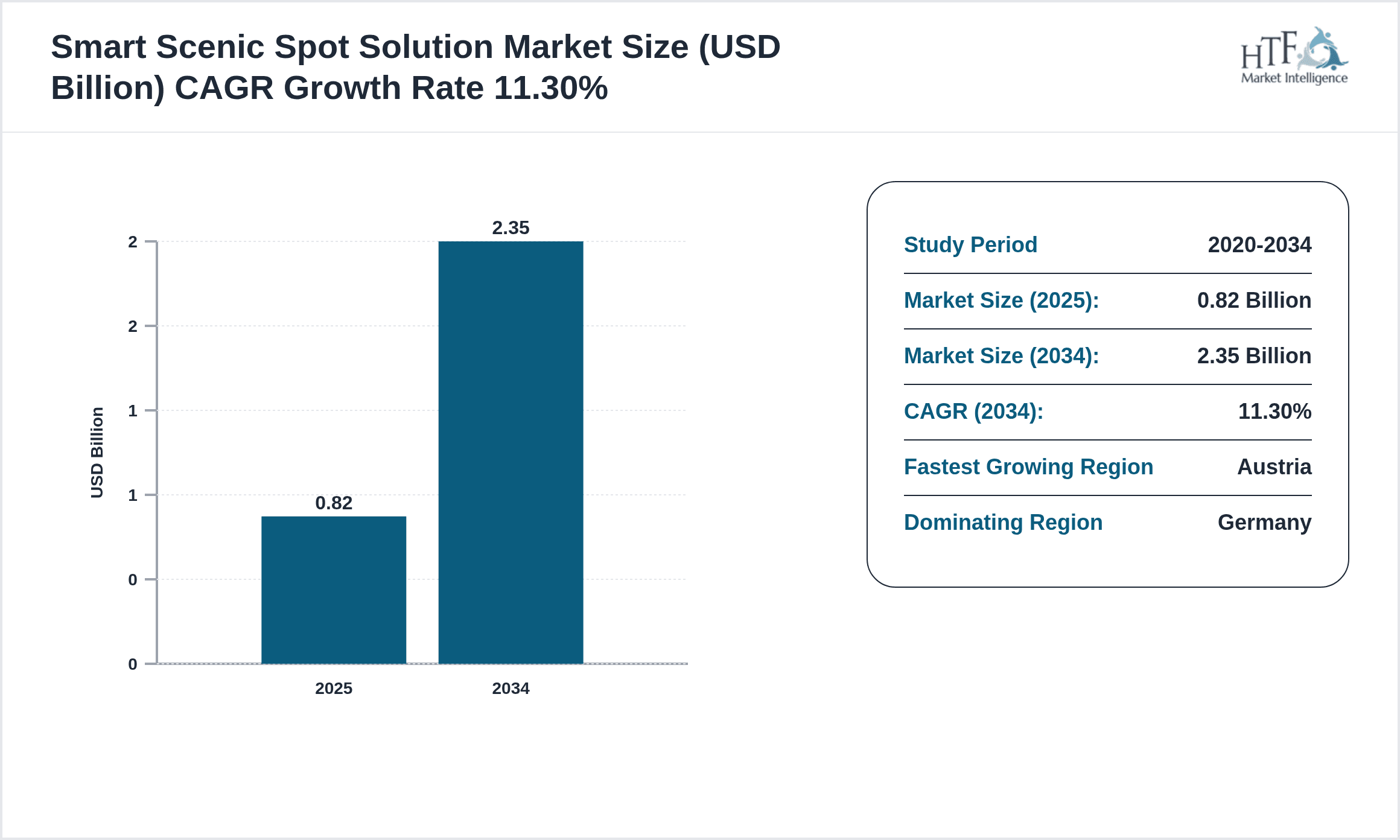
- •Key highlights of the DACH Smart Scenic Spot Solution market include a base market size valued at USD 0.82 Billion in 2025, with a projected growth to USD 2.35 Billion by 2034, reflecting a robust CAGR of 11.3%. Germany dominates the regional market with a 48% share, driven by its extensive tourism infrastructure and early adoption of smart technologies. Austria is identified as the fastest-growing country with a CAGR of 13.2%, benefiting from targeted investments in smart tourism and connectivity enhancements. The leading product type is integrated systems that combine hardware and software for comprehensive management, while connectivity solutions represent the fastest growing segment, capitalizing on advances in IoT and communication technologies. Market growth is underpinned by rising visitor numbers, increasing demand for efficient crowd management, and growing awareness of the benefits of digital transformation in scenic spot operations.
- •The value proposition of smart scenic spot solutions in the DACH market lies in their ability to enhance operational efficiency, improve visitor safety and satisfaction, and support sustainable tourism development. These solutions offer stakeholders including government bodies, tourism operators, and technology providers strategic benefits such as real-time data insights, automated incident response, and interactive visitor experiences. The integration of advanced technologies aligns with broader smart city initiatives prevalent in the DACH region, fostering innovation and economic growth. The market’s strategic importance is amplified by increasing environmental regulations and the necessity to balance tourism growth with conservation efforts. As a result, smart scenic spot solutions represent a critical investment area for stakeholders aiming to maintain competitive advantage and meet evolving visitor expectations in the DACH region.
Competitive Landscape
The competitive landscape of the DACH Smart Scenic Spot Solution market is characterized by a mix of multinational corporations, regional technology providers, and specialized service firms, all striving to capitalize on the region’s growing demand for smart tourism technologies. Key competitive strategies include innovation in integrated hardware-software platforms, strategic partnerships with tourism authorities and local governments, and investments in R&D to develop AI and IoT-enabled solutions. Market players emphasize product differentiation through enhanced analytics capabilities, user-friendly interfaces, and scalable deployment models tailored to diverse scenic spot environments. Pricing strategies vary, with premium solutions targeting large-scale scenic spots and cost-effective offerings for smaller attractions. Distribution channels focus on direct government contracts, collaborations with tourism boards, and partnerships with infrastructure developers. The market faces moderate entry barriers due to the technological complexity and regulatory compliance requirements in the DACH region. Regional competition is intensified by local firms leveraging deep market knowledge and established networks. Future competitive trends include increased adoption of cloud-based solutions, expansion into adjacent smart city applications, and consolidation through mergers and acquisitions aimed at broadening product portfolios and geographic reach.
Leading Companies in DACH Smart Scenic Spot Solution Market
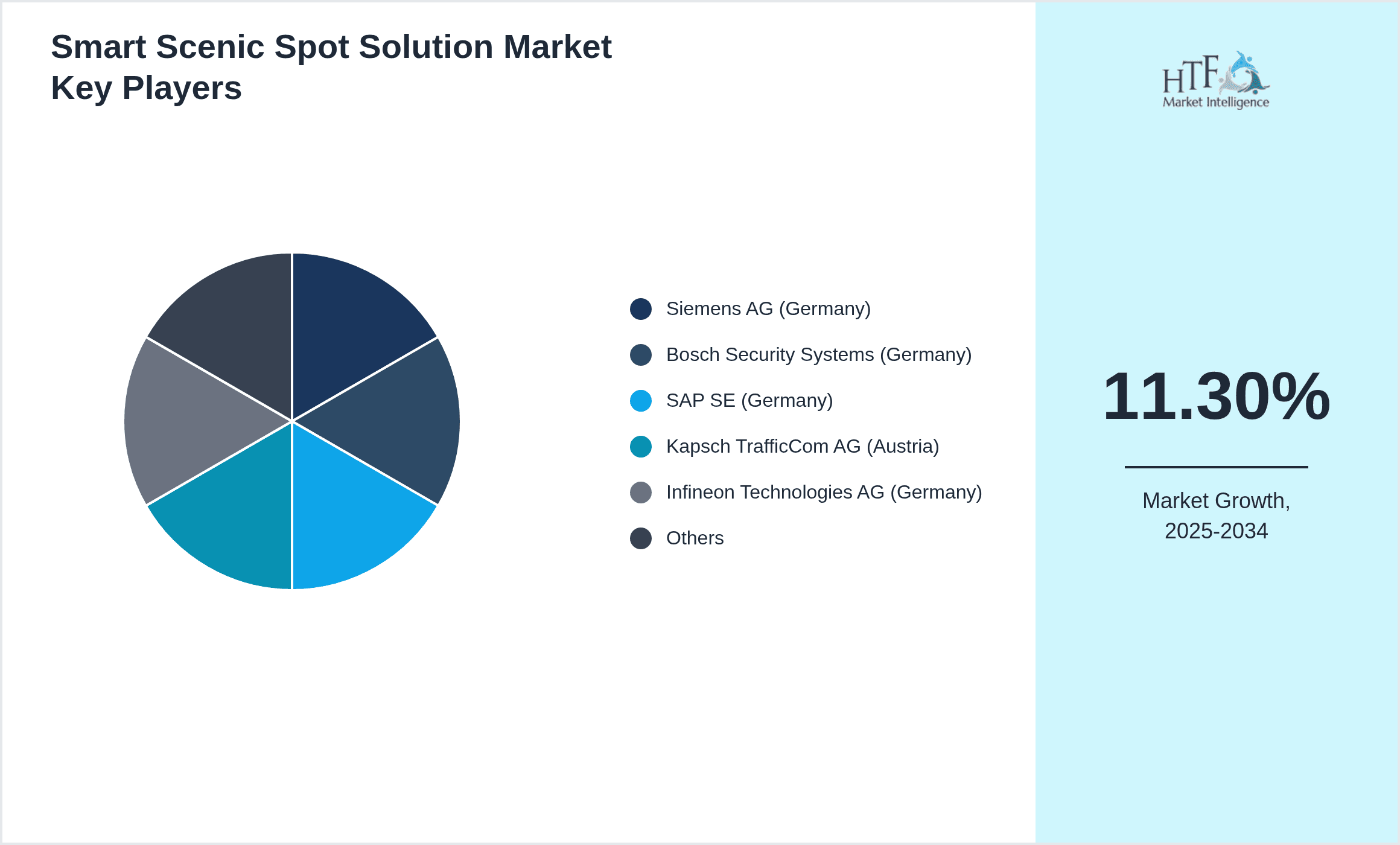
- •Siemens AG (Germany)
- •Bosch Security Systems (Germany)
- •SAP SE (Germany)
- •Kapsch TrafficCom AG (Austria)
- •Infineon Technologies AG (Germany)
- •SICK AG (Germany)
- •Schindler Group (Switzerland)
- •Swisscom AG (Switzerland)
- •Rohde & Schwarz GmbH & Co KG (Germany)
- •Atos Information Technology GmbH (Germany)
- •T-Systems International GmbH (Germany)
- •AVL List GmbH (Austria)
- •Infoniqa IT Solutions AG (Switzerland)
- •CISCO Systems GmbH (Germany)
- •Alten Technology Services GmbH (Germany)
- •Mobotix AG (Germany)
- •Trivadis AG (Switzerland)
- •KUKA Deutschland GmbH (Germany)
- •NXP Semiconductors Germany GmbH (Germany)
- •Adnovum Informatik AG (Switzerland)
- •TQ-Systems GmbH (Germany)
- •RailTec AG (Switzerland)
- •AVL Digital GmbH (Austria)
- •Digicom GmbH (Austria)
- •Eurocom GmbH (Germany)
Market Breakdown
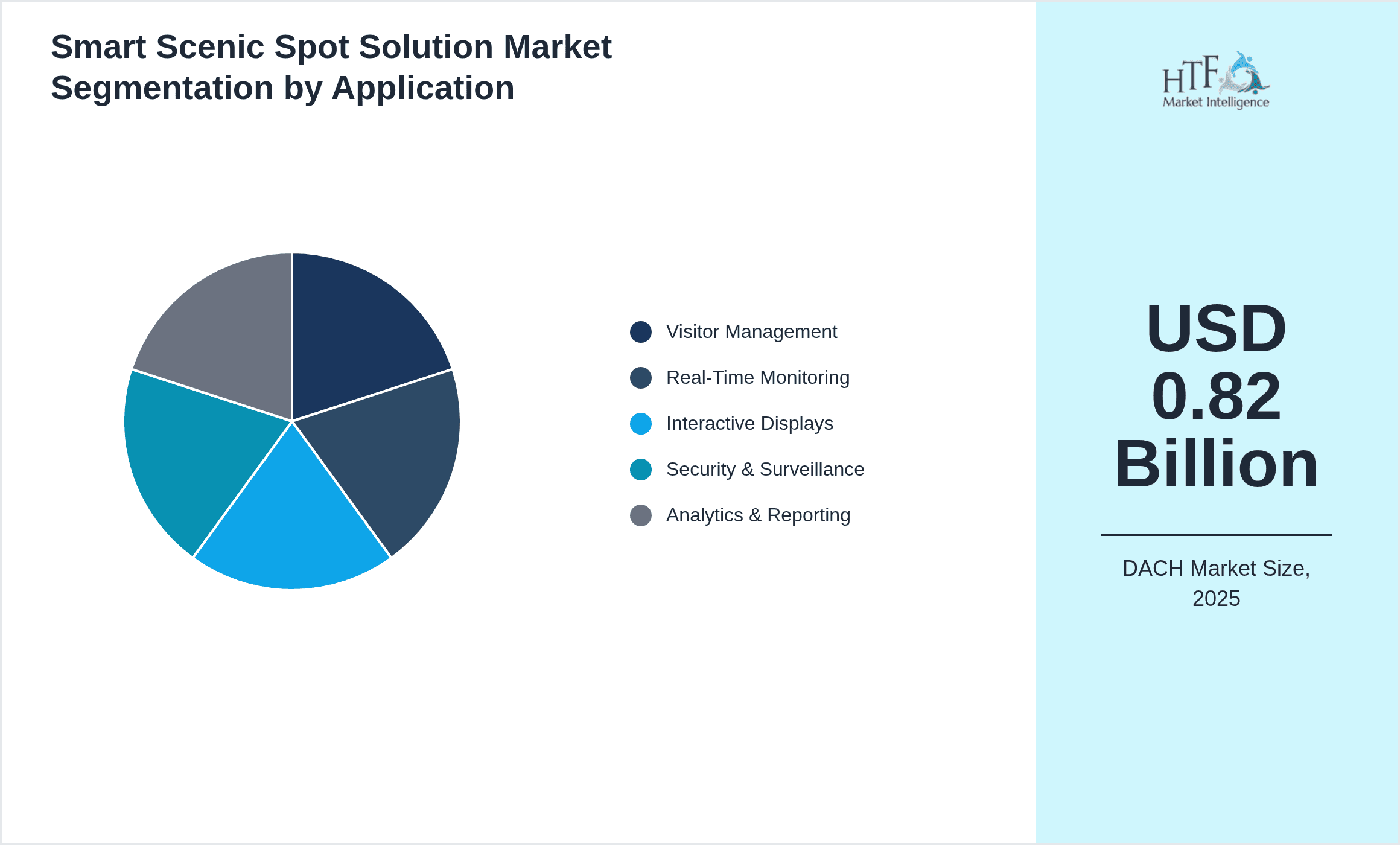
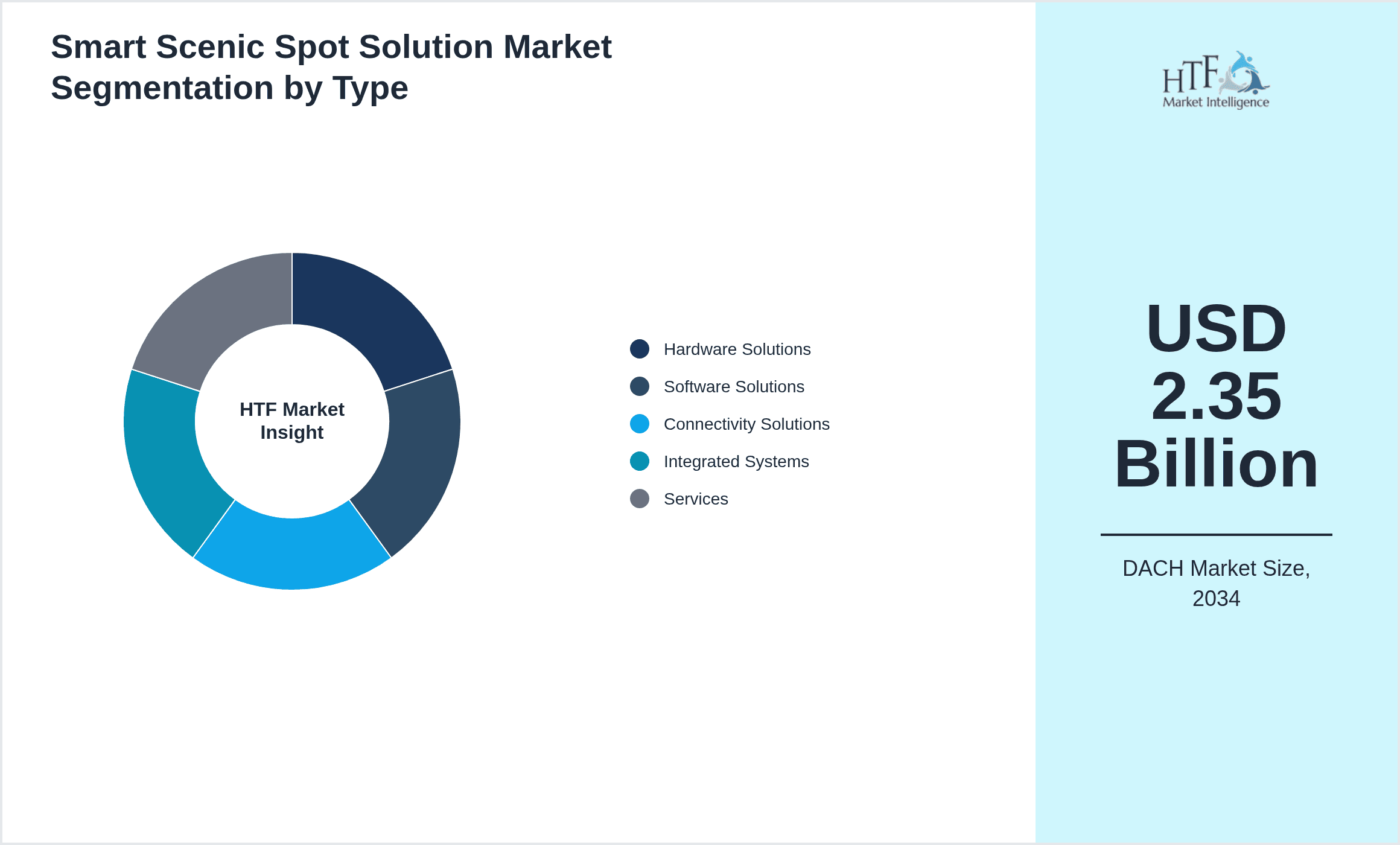
- •By Type
- ◦Hardware Solutions
- ◦Software Solutions
- ◦Connectivity Solutions
- ◦Integrated Systems
- ◦Services
- •By Application
- ◦Visitor Management
- ◦Real-Time Monitoring
- ◦Interactive Displays
- ◦Security & Surveillance
- ◦Analytics & Reporting
- •By Deployment Model
- ◦Cloud-Based
- ◦On-Premise
- ◦Hybrid
- •By Service Offering
- ◦Installation & Integration
- ◦Maintenance & Support
- ◦Consulting Services
- ◦Training & Education
Growth Dynamics
The DACH Smart Scenic Spot Solution market growth is propelled by increasing government initiatives aimed at digitalizing tourism infrastructure and promoting sustainable practices. Investments in smart city projects across Germany, Austria, and Switzerland have created a favorable environment for deploying advanced scenic spot technologies. Rising tourist footfall in iconic locations demands efficient visitor management and enhanced safety measures, driving adoption. Technological advancements in IoT, AI, and connectivity solutions facilitate real-time monitoring and predictive analytics, improving operational efficiency. Furthermore, growing awareness among stakeholders of the benefits of data-driven decision-making supports market expansion. The integration of interactive displays and personalized visitor engagement tools enhances the tourist experience, encouraging longer stays and repeat visits. Additionally, the rising focus on environmental conservation necessitates smart solutions that optimize resource usage and minimize ecological impact. Collectively, these factors create a robust growth trajectory for the market through 2034.
Market Trends
The DACH market is witnessing a significant trend toward the integration of AI-driven analytics within smart scenic spot solutions, enabling predictive visitor flow management and enhanced security protocols. Adoption of cloud-based platforms is increasing due to their scalability and cost-effectiveness, facilitating seamless updates and remote management. There is also a growing emphasis on sustainable tourism, with technologies designed to minimize environmental footprints and support conservation efforts. Interactive and immersive visitor experiences are gaining popularity, leveraging augmented reality and digital signage to enrich tourist engagement. Collaborations between technology providers and local tourism authorities are strengthening, fostering ecosystem development and innovation. Furthermore, the market is seeing a shift toward modular and customizable solutions, allowing scenic spots to tailor deployments to specific needs and budgets. These evolving trends underscore the market’s focus on technology innovation, operational efficiency, and enhanced visitor satisfaction.
Market Opportunities
Significant opportunities exist in expanding smart scenic spot solutions to secondary and emerging tourist destinations within the DACH region, where digital infrastructure is still developing. The increasing adoption of 5G connectivity offers potential for more robust real-time data transmission and remote monitoring capabilities. Integration of AI and machine learning for predictive maintenance and personalized visitor services presents avenues for innovation and differentiation. Additionally, partnerships with local governments and tourism boards can facilitate wider deployment and funding opportunities. The growing consumer demand for contactless and safe tourism experiences post-pandemic further accelerates market potential. Development of multilingual and accessible platforms can also open new customer segments, including international tourists and special needs visitors. These opportunities collectively support market expansion and diversification through strategic investments and collaborations.
Market Challenges
The DACH Smart Scenic Spot Solution market faces challenges including high initial capital expenditure for deploying integrated systems, which can deter smaller scenic spots from adoption. Data privacy and security concerns are paramount given the extensive collection of visitor data, requiring compliance with stringent GDPR regulations. Technological complexity and interoperability issues between legacy infrastructure and new solutions pose implementation hurdles. Additionally, the fragmented nature of the tourism sector, with multiple stakeholders and varying levels of digital maturity, complicates coordinated deployments. Skills shortages in IoT and AI technologies limit rapid scaling and innovation. Furthermore, economic uncertainties and fluctuating tourism patterns, particularly due to global events, add unpredictability to market demand. Addressing these challenges requires strategic planning, regulatory adherence, and investment in capacity building.
Regulatory Framework
- •Between 2020 and 2025, the DACH region has seen the implementation of several critical regulations impacting the Smart Scenic Spot Solution market. The EU General Data Protection Regulation (GDPR) enacted in 2018 has necessitated strict compliance frameworks for data collection, storage, and processing, affecting solution design and deployment. Germany’s Federal Data Protection Act (BDSG) supplements GDPR with specific national requirements, influencing local implementations. Austria and Switzerland have introduced regulations focusing on cybersecurity standards and digital infrastructure resilience, requiring vendors to ensure robust system security. Environmental compliance mandates encourage solutions that support sustainable tourism and reduce ecological impact. Furthermore, smart city policies across the region promote the integration of IoT and digital solutions, providing incentives and funding mechanisms for smart scenic spot projects. These regulations collectively shape the market by enforcing data security, privacy, and environmental stewardship, while encouraging technological innovation and standardized practices across the DACH region.
- •Additional regulatory considerations include adherence to telecommunications standards for connectivity solutions and certifications related to hardware safety and interoperability. Governments in Germany, Austria, and Switzerland are actively updating policies to support digital transformation in the tourism sector, including grants and public-private partnerships. Compliance with accessibility laws ensures that smart scenic spot solutions cater to diverse visitor needs, enhancing inclusivity. The regulatory landscape fosters a balanced approach between innovation and protection, requiring continuous monitoring and adaptation by market participants to maintain compliance and leverage emerging opportunities. This evolving framework is critical for sustaining market growth and ensuring stakeholder confidence in smart scenic spot technologies.
Market Intelligence
- •12th January 2025, Siemens AG launched an advanced integrated smart scenic spot management platform designed to enhance visitor experience through AI-driven analytics and real-time monitoring. The platform features IoT-enabled sensor networks, interactive digital kiosks, and cloud-based analytics dashboards that optimize crowd flow and safety protocols. Targeted primarily at large-scale scenic spots across Germany and Austria, Siemens aims to leverage its expertise in smart infrastructure to capture significant market share. This solution emphasizes scalability and modular deployment, enabling customized configurations for diverse site requirements. Strategic partnerships with regional tourism boards have been established to facilitate pilot projects and accelerate adoption. Source: Siemens Official Press Release
- •18th March 2025, Bosch Security Systems introduced a next-generation security and surveillance suite incorporating AI-enabled video analytics and edge computing capabilities. This offering enhances real-time threat detection and automated incident response at scenic locations in Switzerland and Germany. The system integrates seamlessly with existing smart city infrastructure, supporting multi-layered security architecture. Bosch’s innovation focuses on minimizing false alarms and improving operational efficiency through intelligent data processing. The launch aligns with increasing demand for sophisticated safety solutions amidst rising tourism activity. Extensive field trials have demonstrated improved situational awareness and visitor satisfaction. Source: Bosch Corporate News
- •5th May 2025, SAP SE announced a strategic collaboration with Austrian tourism authorities to develop a cloud-based analytics platform tailored for smart scenic spot management. The platform consolidates visitor data, environmental metrics, and operational parameters to provide actionable insights for sustainable tourism planning. Leveraging SAP’s expertise in enterprise software, the initiative aims to enhance resource optimization and visitor engagement across Austria’s popular destinations. The collaboration includes capacity-building programs and integration support for local stakeholders. This initiative is expected to set new standards for smart tourism management in the DACH region. Source: SAP Press Release
- •22nd July 2025, Swisscom AG completed the acquisition of a regional IoT solutions provider specializing in connectivity technologies for smart scenic spots. This strategic move expands Swisscom’s portfolio and strengthens its position in the growing smart tourism market within Switzerland and neighboring countries. The acquired company’s expertise in low-power wide-area networks and edge computing complements Swisscom’s existing infrastructure, enabling enhanced service offerings. The acquisition is expected to accelerate innovation and deployment of connectivity solutions critical for real-time data transmission and device integration. Swisscom plans integration and expansion activities through 2026 to maximize synergies. Source: Swisscom Corporate Announcement
Regional Outlook
The Germany currently holds a significant share of the market, primarily due to several key factors: increasing consumption rates, a burgeoning population, and robust economic momentum. These elements collectively drive demand, positioning this region as a leader in the market. On the other hand, Austria is rapidly emerging as the fastest-growing area within the industry. This remarkable growth can be attributed to swift infrastructure development, the expansion of various industrial sectors, and a marked increase in consumer demand. These dynamics make this region a crucial player in shaping future market growth.
In our report, we cover a comprehensive analysis of the following regions and countries:
- Germany
- Austria
- Switzerland
| Feature | Details |
|---|---|
| Base Year Market Size | USD 0.82 Billion |
| Forecast Year Market Size | USD 2.35 Billion |
| CAGR | 11.3% |
| Forecast Period | 2026 to 2033 |
| YoY Growth | 11% |
| Regions Covered | Germany, Austria, Switzerland |
| Key Companies | Siemens AG (Germany), Bosch Security Systems (Germany), SAP SE (Germany), Kapsch TrafficCom AG (Austria), Infineon Technologies AG (Germany), SICK AG (Germany), Schindler Group (Switzerland), Swisscom AG (Switzerland), Rohde & Schwarz GmbH & Co KG (Germany), Atos Information Technology GmbH (Germany), T-Systems International GmbH (Germany), AVL List GmbH (Austria), Infoniqa IT Solutions AG (Switzerland), CISCO Systems GmbH (Germany), Alten Technology Services GmbH (Germany), Mobotix AG (Germany), Trivadis AG (Switzerland), KUKA Deutschland GmbH (Germany), NXP Semiconductors Germany GmbH (Germany), Adnovum Informatik AG (Switzerland), TQ-Systems GmbH (Germany), RailTec AG (Switzerland), AVL Digital GmbH (Austria), Digicom GmbH (Austria), Eurocom GmbH (Germany) |
DACH Smart Scenic Spot Solution Market - Outlook 2020-2034 - Table of Contents
Frequently Asked Questions (FAQ):
The Compact Track Loaders market is projected to grow at a CAGR of 6.8% from 2025 to 2030, driven by increasing demand in construction and agricultural sectors.
North America currently leads the market with approximately 45% market share, followed by Europe at 28% and Asia-Pacific at 22%. The remaining regions account for 5% of the global market.
Key growth drivers include increasing construction activities, rising demand for versatile equipment in agriculture, technological advancements in track loader design, and growing preference for compact equipment in urban construction projects.