
Asia-Pacific Compression Ankle Sleeve Market Size, Growth & Revenue 2024-2034
Asia-Pacific Compression Ankle Sleeve Market is segmented by Compression Ankle Sleeve Type (Knitted Compression Sleeves, Neoprene Compression Sleeves, Elastic Bandage Compression Sleeves, Hybrid Compression Sleeves, Adjustable Compression Sleeves), Application Usage (Sports & Athletics, Medical Therapy, Travel, Daily Wear, Post-Surgery Recovery), Distribution Channel (Online Retail, Pharmacies & Drugstores, Specialty Sports Stores, Hospitals & Clinics), Material Technology (Cotton Blend, Neoprene, Nylon/Spandex, Polyester, Hybrid Fabrics), and Geography (Japan, China, Southeast Asia, India, Australia, South Korea, Others)
Pricing
Report Overview
Executive Summary
- •The Asia-Pacific Compression Ankle Sleeve Market includes a variety of products designed to provide targeted ankle support using compression technology that aids in injury prevention, improved blood circulation, and faster recovery. This market covers products such as knitted, neoprene, elastic bandage, hybrid, and adjustable sleeves, which are utilized across applications including sports and athletics, medical therapy, travel, daily wear, and post-surgery recovery. The compression ankle sleeves serve both preventive and therapeutic functions, catering to athletes, patients with chronic ailments, travelers, and elderly populations. The scope extends through multiple countries within Asia-Pacific, including China, India, Japan, South Korea, Australia, and Southeast Asia, each contributing unique demand drivers such as increasing health consciousness, rising sports participation, and expanding healthcare infrastructure. Market growth is fueled by product innovation, expanding distribution channels, and rising adoption in emerging economies. The report provides a comprehensive evaluation of market segmentation, competitive landscape, growth drivers, challenges, regulatory frameworks, and future opportunities, offering valuable insights for stakeholders across the value chain.
- •Key highlights reveal the market size valued at USD 0.85 Billion in 2024, projected to reach USD 2.25 Billion by 2034, growing at a CAGR of 10.4%. China dominates with a 35% market share, while India represents the fastest-growing country with a CAGR of 13.2%. Knitted compression sleeves hold the largest product segment, with hybrid sleeves emerging as the fastest-growing type due to their multifunctional benefits. The sports and athletics segment leads in applications, closely followed by medical therapy, driven by rising sports participation and increasing prevalence of orthopedic conditions in Asia-Pacific.
- •The Asia-Pacific compression ankle sleeve market presents significant value propositions by enhancing patient outcomes, improving athletic performance, and offering cost-effective injury management solutions. The strategic importance lies in its ability to address rising healthcare demands, facilitate non-invasive treatment alternatives, and tap into the growing wellness trend across diverse demographics. Stakeholders, including manufacturers, distributors, healthcare providers, and sports organizations, benefit from insights into evolving consumer preferences, regulatory changes, and technological advancements shaping product innovation and market expansion.

Competitive Landscape
The Asia-Pacific Compression Ankle Sleeve Market is characterized by intense competition among established multinational corporations and emerging regional players. Companies focus on innovation through material technology, ergonomic design, and multifunctionality to differentiate their products. Market rivalry is heightened by continuous product launches, strategic partnerships, and expanding distribution networks targeting both retail and institutional customers. Competitive strategies emphasize quality certifications, cost competitiveness, and brand recognition to capture market share. Additionally, manufacturers invest in R&D to develop eco-friendly and sustainable compression sleeves, reflecting growing consumer demand for environmentally responsible products. Regional players benefit from localized manufacturing and tailored product offerings catering to specific cultural and climatic needs. The market also experiences dynamic shifts due to mergers and acquisitions aimed at consolidating technology portfolios and geographic presence, indicating a trend toward market consolidation and strategic growth.
Leading Companies in Compression Ankle Sleeve Market
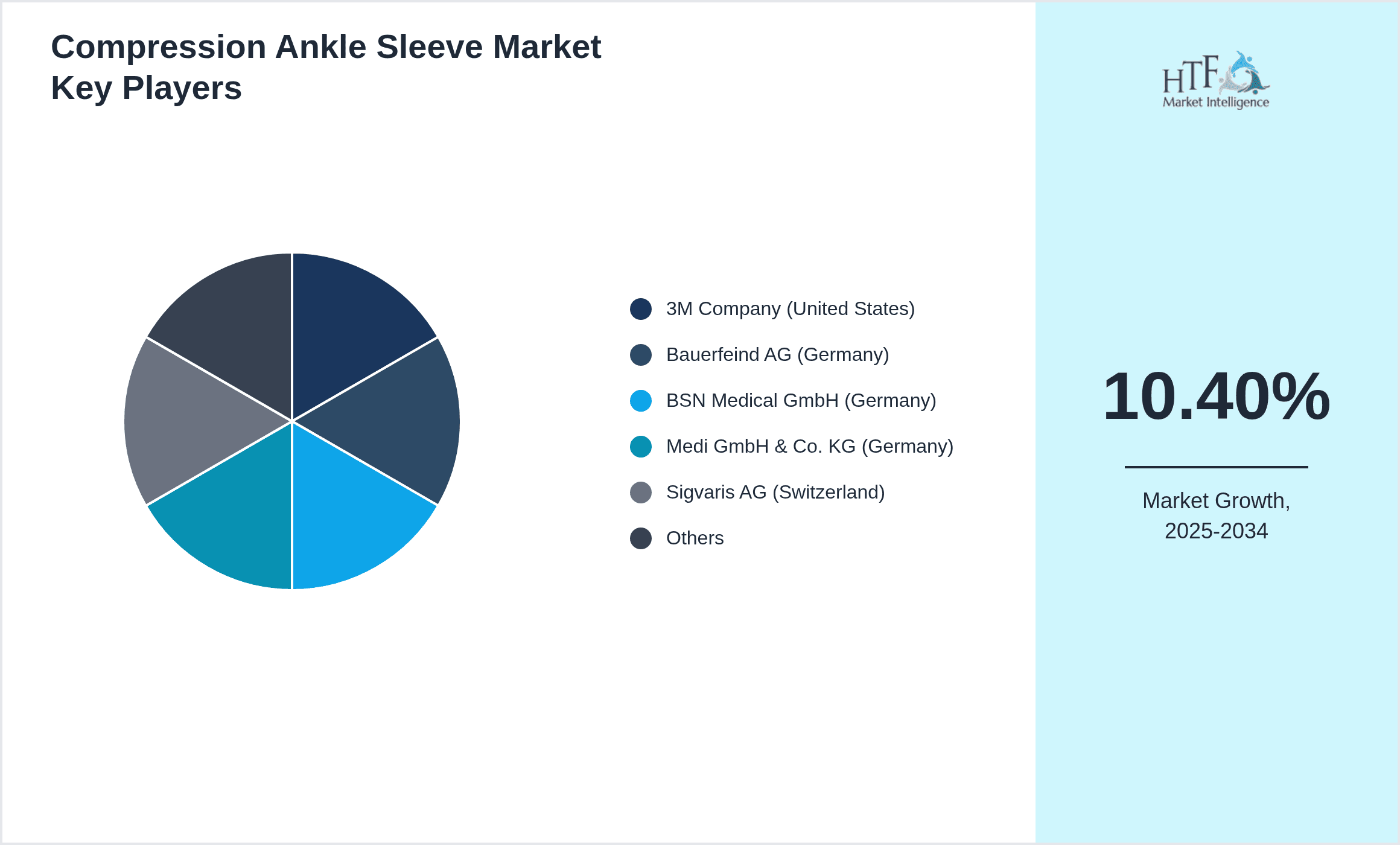
- •3M Company (United States)
- •Bauerfeind AG (Germany)
- •BSN Medical GmbH (Germany)
- •Medi GmbH & Co. KG (Germany)
- •Sigvaris AG (Switzerland)
- •Samyang Holdings Corporation (South Korea)
- •Zamst (Japan)
- •McDavid, Inc. (United States)
- •Thermoskin (New Zealand)
- •Futuro (United States)
- •DJO Global (United States)
- •Aircast (United States)
- •CEP Compression (Germany)
- •Copper Fit (United States)
- •LP Support (United States)
- •Physix Gear Sport (United States)
- •SISU (United States)
- •Shock Doctor (United States)
- •CEP Sports (Germany)
- •OrthoSleeve (United States)
- •Zensah (United States)
- •Bauerfeind Japan KK (Japan)
- •LP Japan KK (Japan)
- •Medi Asia Pacific (Singapore)
- •Samyang Medical (South Korea)
Market Breakdown
- •By Compression Ankle Sleeve Type
- ◦Knitted Compression Sleeves
- ◦Neoprene Compression Sleeves
- ◦Elastic Bandage Compression Sleeves
- ◦Hybrid Compression Sleeves
- ◦Adjustable Compression Sleeves
- •By Application Usage
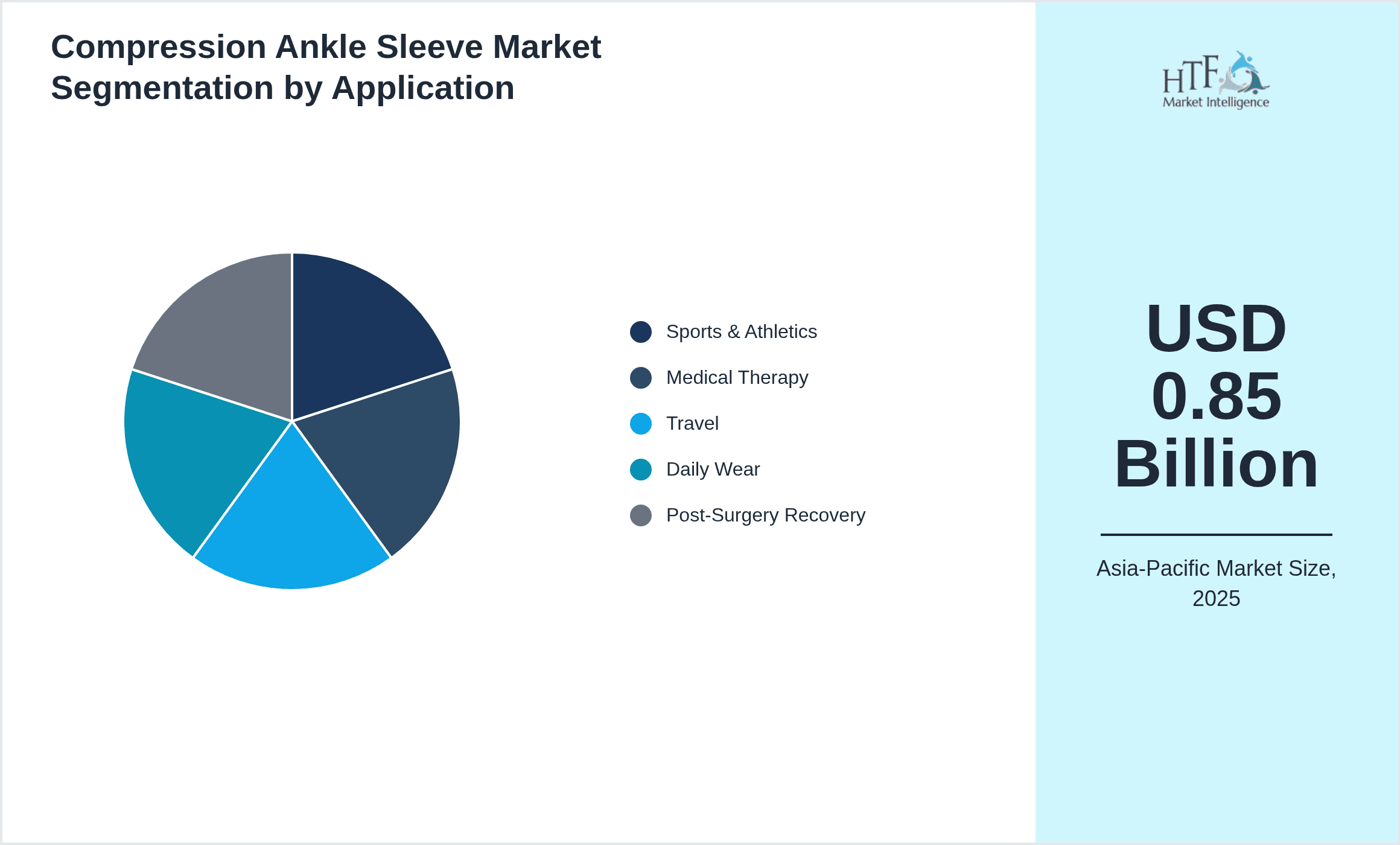
- ◦Sports & Athletics
- ◦Medical Therapy
- ◦Travel
- ◦Daily Wear
- ◦Post-Surgery Recovery
- •By Distribution Channel
- ◦Online Retail
- ◦Pharmacies & Drugstores
- ◦Specialty Sports Stores
- ◦Hospitals & Clinics
- •By Material Technology
- ◦Cotton Blend
- ◦Neoprene
- ◦Nylon/Spandex
- ◦Polyester
- ◦Hybrid Fabrics
Growth Dynamics
- •The Asia-Pacific compression ankle sleeve market is driven by rising sports participation and fitness awareness, particularly in countries like China and India, where increasing middle-class populations engage in athletic activities requiring injury prevention and recovery support.
- •Technological advancements in breathable, lightweight, and antimicrobial materials have enhanced product comfort and efficacy, encouraging wider adoption among both professional athletes and general consumers, thereby boosting market growth.
- •Expanding healthcare infrastructure and increasing prevalence of sports-related injuries and chronic conditions such as arthritis in aging populations drive demand for medical therapy and post-surgery recovery applications of compression ankle sleeves.
- •E-commerce expansion across Asia-Pacific has facilitated easier access to diverse compression sleeve products, enabling consumers from remote and urban areas to purchase tailored solutions with convenience, fueling market penetration.
- •Government initiatives promoting health and wellness, coupled with increasing awareness campaigns about non-invasive injury management, have positively impacted consumer acceptance and product demand across both developed and emerging markets in the region.
Market Trends
- •Integration of smart textile technologies, including sensors for monitoring muscle activity and circulation, is an emerging trend enhancing the functionality and appeal of compression ankle sleeves in Asia-Pacific’s fitness and rehabilitation sectors.
- •Sustainability is gaining traction, with manufacturers developing eco-friendly and biodegradable compression sleeves to meet growing environmentally conscious consumer preferences in countries like Japan and Australia.
- •Collaborations between compression sleeve manufacturers and sports teams or rehabilitation centers are increasing, enabling co-development of products tailored to athlete-specific needs and injury profiles, enhancing market credibility and reach.
- •Customization and personalization of compression ankle sleeves through 3D knitting and advanced sizing technologies are being adopted to improve fit, comfort, and therapeutic outcomes, especially in premium product segments.
- •Rising demand for multifunctional sleeves that combine compression with thermal support or pain relief features reflects consumer preference for versatile and value-added products in competitive markets.
Market Opportunities
- •The growing elderly population in Asia-Pacific presents significant opportunities for compression ankle sleeves designed for chronic condition management, creating demand for specialized therapeutic products with enhanced comfort features.
- •Emerging markets such as Southeast Asia and India offer untapped potential due to increasing disposable incomes, rising health awareness, and expanding e-commerce infrastructure facilitating product accessibility.
- •Innovations in hybrid compression sleeve types combining adjustable and knitted features open avenues for product differentiation and higher consumer adoption across diverse application segments.
- •Strategic partnerships with healthcare providers and sports organizations can accelerate product adoption by leveraging professional endorsements and institutional trust, particularly in rehabilitation and athletic training environments.
- •Investment in digital marketing and direct-to-consumer sales channels can expand brand visibility and consumer engagement, especially among younger, tech-savvy populations in urban centers.
Market Challenges
- •High cost of advanced compression ankle sleeves with smart technology and premium materials poses affordability challenges in price-sensitive markets like India and Southeast Asia, limiting mass-market penetration.
- •Lack of standardized sizing and fit guidelines across different countries results in consumer dissatisfaction and returns, hindering consistent market growth and brand loyalty.
- •Competition from low-cost, unbranded products flooding online marketplaces undermines the credibility and sales of established brands, creating challenges in maintaining premium positioning.
- •Regulatory complexities and varying certification requirements across Asia-Pacific countries increase compliance costs and delay product launches, affecting market entry speed for new players.
- •Limited consumer awareness about the therapeutic benefits and correct usage of compression ankle sleeves restricts broader adoption beyond sports enthusiasts and medical patients.
Regulatory Framework
- •Between 2019 and 2024, several Asia-Pacific countries have introduced or updated medical device regulations requiring compression ankle sleeves marketed for therapeutic use to comply with safety, biocompatibility, and labeling standards. For instance, China’s National Medical Products Administration enforced stricter registration protocols enhancing product quality assurance.
- •Japan’s Pharmaceuticals and Medical Devices Agency updated guidelines mandating clinical evidence for claims related to compression therapy efficacy, ensuring that marketed products meet rigorous performance benchmarks.
- •India’s Central Drugs Standard Control Organization has implemented streamlined approval processes for medical compression garments, aiming to balance safety with faster market access to encourage innovation and availability.
- •Australia’s Therapeutic Goods Administration requires all compression ankle sleeves classified as medical devices to comply with the Therapeutic Goods Act, including registration in the Australian Register of Therapeutic Goods before marketing.
- •Regional trade agreements facilitating harmonization of standards have eased cross-border product distribution within Southeast Asia, promoting market expansion and reducing regulatory barriers for manufacturers.
Market Intelligence
- •15th March 2024, Samyang Medical (South Korea) launched an innovative hybrid compression ankle sleeve integrating adjustable straps with moisture-wicking knitted fabric, targeting professional athletes. This product enhances injury prevention and user comfort, positioning Samyang Medical as a technology leader in the Asia-Pacific market by addressing both performance and recovery needs, with strategic plans to expand digital retail channels across Southeast Asia. Source: Official company press release
- •10th January 2025, Bauerfeind AG (Germany), through its Asia-Pacific subsidiary, unveiled a next-generation neoprene compression ankle sleeve featuring embedded thermal regulation technology designed to improve circulation and reduce inflammation. The launch targets the expanding medical therapy segment in China and India, leveraging partnerships with leading hospitals and sports clinics to boost adoption among rehabilitation patients and athletes. Source: Industry publication
- •20th February 2025, Medi Asia Pacific (Singapore) announced a strategic alliance with a major Southeast Asian e-commerce platform to enhance distribution and accessibility of its compression ankle sleeves across emerging markets. This collaboration aims to capture rising online sales and improve consumer education through integrated digital marketing campaigns, supporting the region’s growing demand for health and wellness products. Source: Company website
- •5th April 2025, 3M Company (United States) expanded its Asia-Pacific portfolio by introducing customizable compression ankle sleeves made with eco-friendly materials, addressing sustainability concerns and consumer preferences in Australia and Japan. The product launch aligns with 3M’s global environmental initiatives and is expected to strengthen its market share in premium segments. Source: Official press release
Regional Outlook
The China currently holds a significant share of the market, primarily due to several key factors: increasing consumption rates, a burgeoning population, and robust economic momentum. These elements collectively drive demand, positioning this region as a leader in the market. On the other hand, India is rapidly emerging as the fastest-growing area within the industry. This remarkable growth can be attributed to swift infrastructure development, the expansion of various industrial sectors, and a marked increase in consumer demand. These dynamics make this region a crucial player in shaping future market growth.
In our report, we cover a comprehensive analysis of the following regions and countries:
- Japan
- China
- Southeast Asia
- India
- Australia
- South Korea
- Others
| Feature | Details |
|---|---|
| Base Year Market Size | USD 0.85 Billion |
| Forecast Year Market Size | USD 2.25 Billion |
| CAGR | 10.4% |
| Forecast Period | 2026 to 2033 |
| YoY Growth | 10% |
| Scope of Report | Market is segmented by Compression Ankle Sleeve Type (Knitted Compression Sleeves, Neoprene Compression Sleeves, Elastic Bandage Compression Sleeves, Hybrid Compression Sleeves, Adjustable Compression Sleeves), Application Usage (Sports & Athletics, Medical Therapy, Travel, Daily Wear, Post-Surgery Recovery), Distribution Channel (Online Retail, Pharmacies & Drugstores, Specialty Sports Stores, Hospitals & Clinics), Material Technology (Cotton Blend, Neoprene, Nylon/Spandex, Polyester, Hybrid Fabrics) |
| Regions Covered | Japan, China, Southeast Asia, India, Australia, South Korea, Others |
| Key Companies | 3M Company (United States), Bauerfeind AG (Germany), BSN Medical GmbH (Germany), Medi GmbH & Co. KG (Germany), Sigvaris AG (Switzerland), Samyang Holdings Corporation (South Korea), Zamst (Japan), McDavid, Inc. (United States), Thermoskin (New Zealand), Futuro (United States), DJO Global (United States), Aircast (United States), CEP Compression (Germany), Copper Fit (United States), LP Support (United States), Physix Gear Sport (United States), SISU (United States), Shock Doctor (United States), CEP Sports (Germany), OrthoSleeve (United States), Zensah (United States), Bauerfeind Japan KK (Japan), LP Japan KK (Japan), Medi Asia Pacific (Singapore), Samyang Medical (South Korea) |
Asia-Pacific Compression Ankle Sleeve Market Size, Growth & Revenue 2024-2034 - Table of Contents
Frequently Asked Questions (FAQ):
The Compact Track Loaders market is expected to see value worth 5.3 Billion in 2025.
North America currently leads the market with approximately 45% market share, followed by Europe at 28% and Asia-Pacific at 22%. The remaining regions account for 5% of the global market.
Key growth drivers include increasing construction activities, rising demand for versatile equipment in agriculture, technological advancements in track loader design, and growing preference for compact equipment in urban construction projects.