
Global Critical Care Transport Services Market Size, Growth & Revenue 2024-2034
Global Critical Care Transport Services Market is segmented by Type (Air Ambulance, Ground Ambulance, Water Ambulance, Others (Mobile ICU Units, Specialized Evacuation Vehicles)), Application (Hospital Transfers, Emergency Response, Organ Transport, Disaster Management, Military Operations), End User (Hospitals & Healthcare Facilities, Government & Public Sector, Private Medical Transport Providers, Military & Defense Agencies), Technology (Telemedicine Integration, Real-Time Patient Monitoring, Advanced Life Support Systems, Automated Dispatch & Tracking), and Geography (North America, LATAM, West Europe, Central & Eastern Europe, Northern Europe, Southern Europe, East Asia, Southeast Asia, South Asia, Central Asia, Oceania, MEA)
Pricing
Report Overview
Executive Summary
- •The Global Critical Care Transport Services Market involves specialized medical transportation solutions such as air, ground, and water ambulances equipped with advanced life-support systems for patient transfers.
- •Market segmentation includes Type (Air Ambulance, Ground Ambulance, Water Ambulance, Others), Application (Hospital Transfers, Emergency Response, Organ Transport, Disaster Management, Military Operations), and Geography (North America, Europe, Asia-Pacific, Latin America, Middle East & Africa).
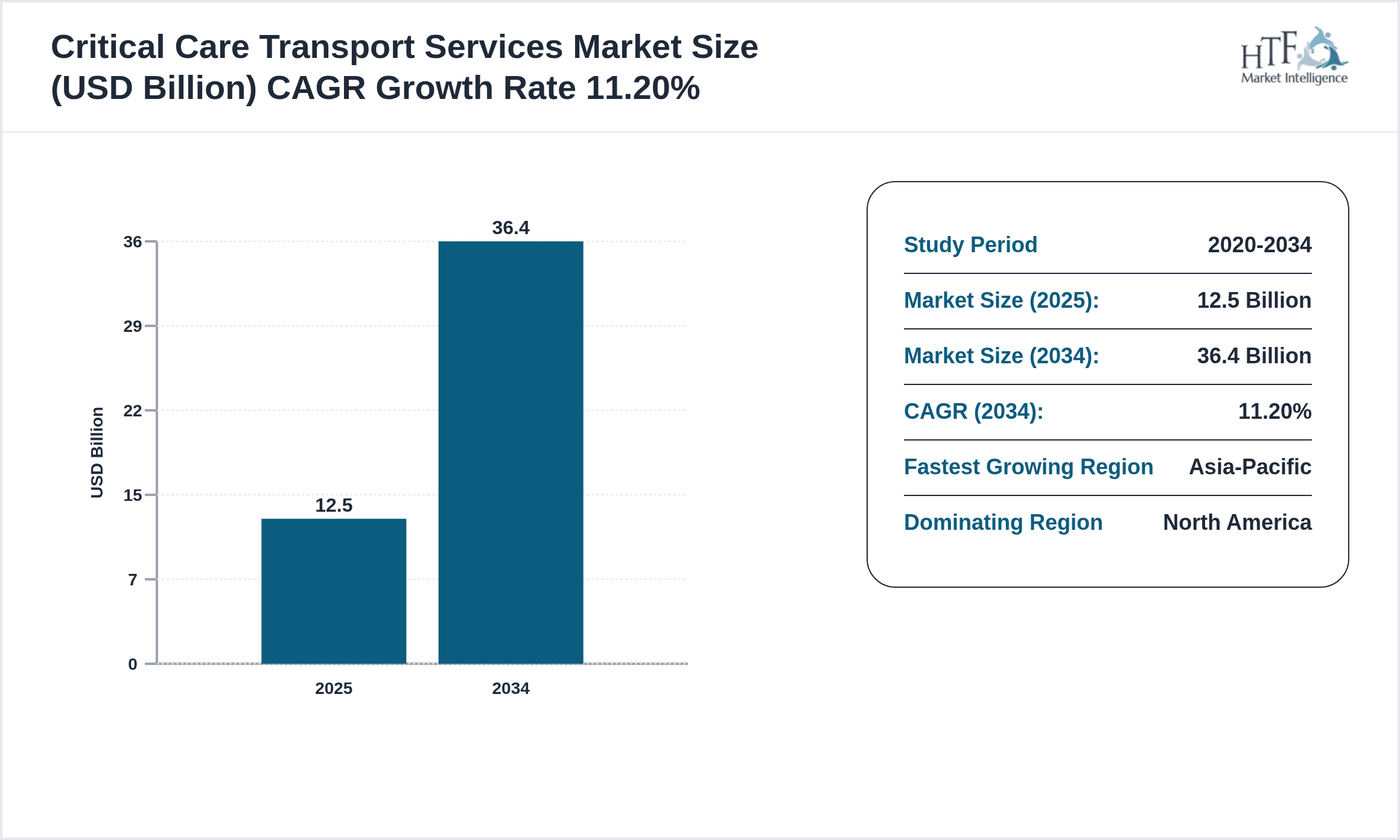
- •Dominated by North America due to robust healthcare infrastructure, with Asia-Pacific as the fastest growing region driven by increasing healthcare investments and emergency service expansion.
- •Leading companies are investing in technology integration, expanding service networks, and strategic partnerships to capitalize on rising demand and regulatory support globally.
Competitive Landscape
The Global Critical Care Transport Services Market exhibits intense competition driven by innovation in medical technology, service quality, and geographic reach. Market leaders focus on differentiating through rapid response capabilities, integration of telemedicine, and enhanced patient monitoring during transit. Rivalry is intensified by strategic alliances, acquisitions, and diversification of service portfolios to cater to broad application needs including disaster management and military operations. Pricing strategies balance cost efficiency with premium service offerings, while regulatory compliances impose operational standards that influence market positioning. Emerging players leverage technological advancements and regional demand growth to challenge established companies. Competitive dynamics also involve partnerships with healthcare providers and government agencies to ensure service accessibility and reliability. Future trends indicate increasing emphasis on digitalization, real-time data transmission, and environmentally sustainable transport solutions shaping competitive strategies.
Leading Companies in Critical Care Transport Services Market
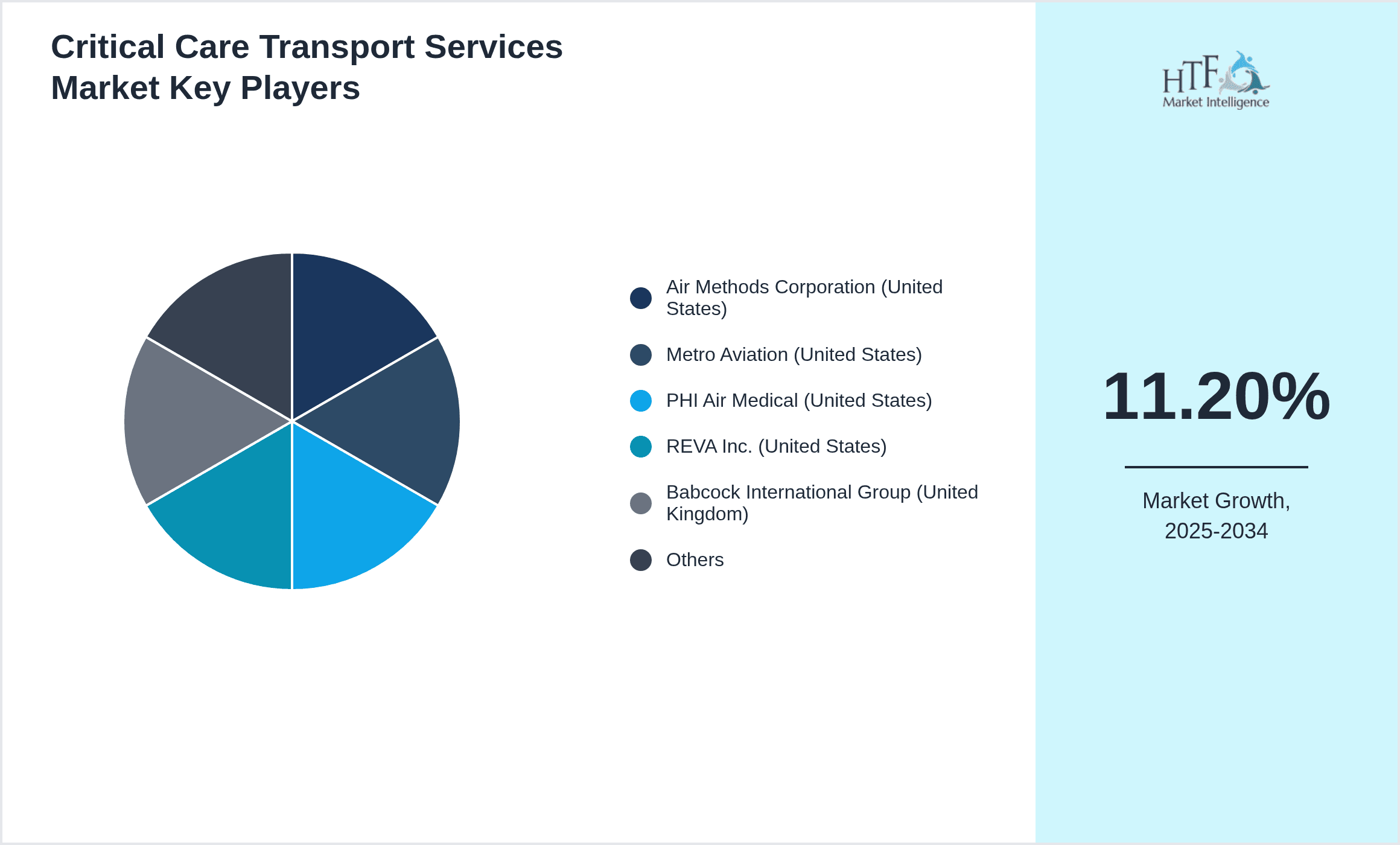
- •Air Methods Corporation (United States)
- •Metro Aviation (United States)
- •PHI Air Medical (United States)
- •REVA Inc. (United States)
- •Babcock International Group (United Kingdom)
- •Lifeguard Ambulance Service (United States)
- •Falck A/S (Denmark)
- •AMR (American Medical Response) (United States)
- •Securite Civile (France)
- •NHV Group (Netherlands)
- •CareFlight Group (Australia)
- •Rettungsdienst (Germany)
- •Acadian Ambulance Service (United States)
- •SAS (Scandinavian Air Ambulance Service) (Sweden)
- •Life Flight Network (United States)
- •STAT Medevac (United States)
- •MedjetAssist (United States)
- •Vita Group (Australia)
- •Emergency Medical Services Authority (United States)
- •Samaritan’s Purse Air Ambulance (United States)
Market Breakdown
- •By Type
- ◦Air Ambulance
- ◦Ground Ambulance
- ◦Water Ambulance
- ◦Others (Mobile ICU Units, Specialized Evacuation Vehicles)
- •By Application
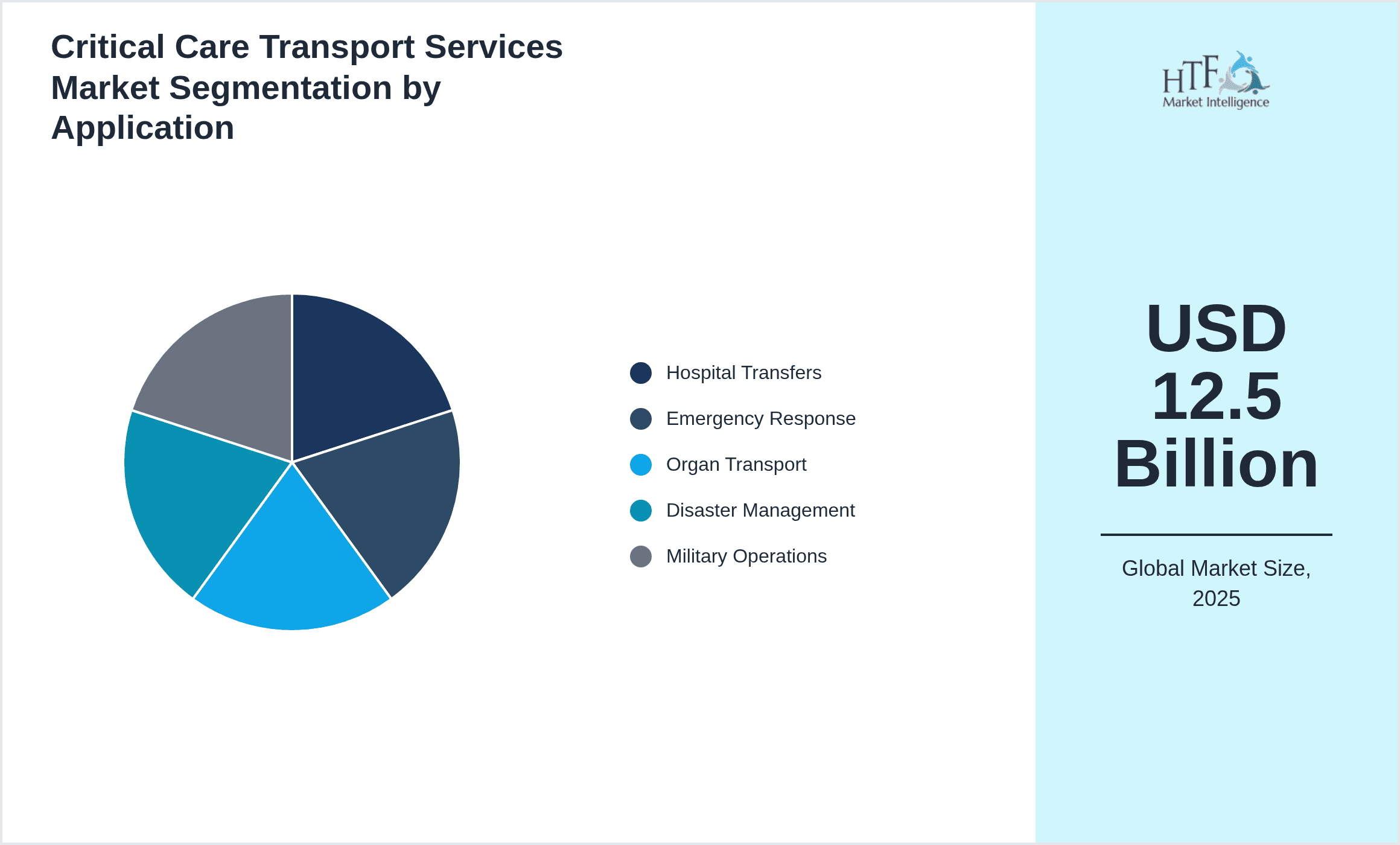
- ◦Hospital Transfers
- ◦Emergency Response
- ◦Organ Transport
- ◦Disaster Management
- ◦Military Operations
- •By End User
- ◦Hospitals & Healthcare Facilities
- ◦Government & Public Sector
- ◦Private Medical Transport Providers
- ◦Military & Defense Agencies
- •By Technology
- ◦Telemedicine Integration
- ◦Real-Time Patient Monitoring
- ◦Advanced Life Support Systems
- ◦Automated Dispatch & Tracking
Growth Drivers
- •Rising prevalence of chronic and critical illnesses globally fuels demand for timely and specialized patient transport, with increasing emergency cases necessitating advanced critical care transport services.
- •Technological advancements such as telemedicine, real-time monitoring, and enhanced life-support equipment improve patient outcomes during transport, encouraging healthcare providers to adopt critical care transport services.
- •Expansion of healthcare infrastructure, especially in emerging economies within Asia-Pacific and Latin America, drives increased investments in critical care transport capabilities to enhance emergency response systems.
- •Government initiatives and funding aimed at improving emergency medical services and disaster preparedness contribute significantly to the growth of the critical care transport market.
- •Increasing awareness among patients and healthcare providers about the benefits of specialized transport services for critical conditions supports market expansion worldwide.

Market Trends
- •Integration of digital health technologies such as telemedicine and remote patient monitoring is transforming critical care transport, enabling real-time data exchange between transport teams and receiving hospitals.
- •Growing adoption of environmentally friendly and fuel-efficient vehicles within ambulance fleets reflects the market’s focus on sustainability and operational cost reduction.
- •Emergence of specialized transport services catering to organ transplant logistics and disaster relief operations highlights diversification within the critical care transport market.
- •Collaborations between private transport providers and public healthcare systems are becoming more prevalent, enhancing service coverage and efficiency in critical care transport.
- •Increased use of data analytics and AI for optimizing dispatch routes and patient triage decisions is gaining traction, improving response times and resource allocation.
Market Opportunities
- •Expansion into underserved regions with limited emergency medical infrastructure offers significant growth potential for critical care transport service providers.
- •Development of integrated service platforms combining transport, telemedicine, and hospital coordination can enhance patient care continuity and operational efficiency.
- •Investment in environmentally sustainable transport technology and alternative energy vehicles can attract funding and meet evolving regulatory standards globally.
- •Growing demand for specialized transport services in military and disaster response sectors opens new market segments with high service complexity and value.
- •Collaborative partnerships between technology firms and transport providers can enable innovative solutions for patient monitoring and predictive maintenance.
Market Challenges
- •High operational costs, including advanced medical equipment maintenance and skilled personnel expenses, pose significant financial barriers for new entrants and existing providers.
- •Regulatory complexities and varying compliance requirements across regions challenge uniform service delivery and expansion efforts for global providers.
- •Limited availability of trained critical care transport professionals restricts service capacity and affects quality in several emerging markets.
- •Infrastructure limitations, including inadequate helipads and poor road conditions in some regions, impede timely transport and increase operational risks.
- •Competition from alternative emergency service models and telehealth solutions may reduce demand for traditional transport services in certain applications.
Regulatory Framework
- •From 2019 to 2024, global regulatory bodies have enforced stricter licensing and certification standards for critical care transport operators, including mandatory accreditation for air ambulances and ground transport services.
- •New mandates emphasize patient safety protocols, equipment standards, and staff training requirements to ensure high-quality critical care during transport across all regions.
- •Government regulations increasingly require integration of electronic health records and communication systems to facilitate seamless data transfer during patient transport.
- •Environmental regulations targeting emissions and noise pollution have led to guidelines promoting adoption of greener transport technologies and quieter aircraft in the critical care sector.
- •Public health policies have expanded funding and support for emergency medical services, encouraging private-public partnerships and innovation in critical care transport.
Market Intelligence
- •15th February 2024, Air Methods Corporation unveiled its new fleet of next-generation air ambulances equipped with enhanced telemedicine capabilities and hybrid propulsion systems aimed at reducing carbon footprint while improving patient monitoring during critical transports. This strategic launch targets expanding service offerings in North America and Asia-Pacific regions to meet rising demand for advanced emergency medical transport. The new aircraft feature integrated real-time video communication and advanced life support systems, positioning the company as a technology leader in critical care transport services. Source: Official Air Methods Corporation press release
- •10th November 2023, Babcock International Group announced a strategic partnership with a leading telehealth provider to integrate remote patient monitoring solutions within its global air ambulance services. This collaboration enhances the clinical capabilities of transport teams by providing continuous vital sign monitoring and expert consultation during patient transfers. The initiative supports expansion into emerging markets across Europe and Asia-Pacific, aligning with increasing regulatory emphasis on telemedicine adoption in emergency care. Source: Babcock International official website
- •5th May 2024, PHI Air Medical completed the acquisition of a regional ground ambulance service provider in Latin America, significantly broadening its operational footprint and service portfolio. This move enables PHI to offer integrated critical care transport solutions combining air and ground modalities, addressing diverse patient transfer needs in the region. The acquisition is expected to drive revenue growth and operational efficiencies through shared technologies and streamlined dispatch systems. Source: PHI Air Medical press announcement
- •20th August 2023, Falck A/S launched an AI-driven dispatch optimization platform across its European critical care transport services, enhancing responsiveness and resource allocation. The platform utilizes predictive analytics to forecast demand and optimize ambulance deployment, resulting in reduced response times and operational costs. This innovation exemplifies the market trend toward digital transformation and data-driven decision-making in critical care logistics. Source: Falck A/S official communication
Regional Outlook
The North America currently holds a significant share of the market, primarily due to several key factors: increasing consumption rates, a burgeoning population, and robust economic momentum. These elements collectively drive demand, positioning this region as a leader in the market. On the other hand, Asia-Pacific is rapidly emerging as the fastest-growing area within the industry. This remarkable growth can be attributed to swift infrastructure development, the expansion of various industrial sectors, and a marked increase in consumer demand. These dynamics make this region a crucial player in shaping future market growth.
In our report, we cover a comprehensive analysis of the following regions and countries:
- North America
- LATAM
- West Europe
- Central & Eastern Europe
- Northern Europe
- Southern Europe
- East Asia
- Southeast Asia
- South Asia
- Central Asia
- Oceania
- MEA
| Feature | Details |
|---|---|
| Base Year Market Size | USD 12.5 Billion |
| Forecast Year Market Size | USD 36.4 Billion |
| CAGR | 11.2% |
| Forecast Period | 2026 to 2033 |
| YoY Growth | 11.1% |
| Scope of Report | Market is segmented by Type (Air Ambulance, Ground Ambulance, Water Ambulance, Others (Mobile ICU Units, Specialized Evacuation Vehicles)), Application (Hospital Transfers, Emergency Response, Organ Transport, Disaster Management, Military Operations), End User (Hospitals & Healthcare Facilities, Government & Public Sector, Private Medical Transport Providers, Military & Defense Agencies), Technology (Telemedicine Integration, Real-Time Patient Monitoring, Advanced Life Support Systems, Automated Dispatch & Tracking) |
| Regions Covered | North America, LATAM, West Europe, Central & Eastern Europe, Northern Europe, Southern Europe, East Asia, Southeast Asia, South Asia, Central Asia, Oceania, MEA |
| Key Companies | Air Methods Corporation (United States), Metro Aviation (United States), PHI Air Medical (United States), REVA Inc. (United States), Babcock International Group (United Kingdom), Lifeguard Ambulance Service (United States), Falck A/S (Denmark), AMR (American Medical Response) (United States), Securite Civile (France), NHV Group (Netherlands), CareFlight Group (Australia), Rettungsdienst (Germany), Acadian Ambulance Service (United States), SAS (Scandinavian Air Ambulance Service) (Sweden), Life Flight Network (United States), STAT Medevac (United States), MedjetAssist (United States), Vita Group (Australia), Emergency Medical Services Authority (United States), Samaritan’s Purse Air Ambulance (United States) |
Global Critical Care Transport Services Market Size, Growth & Revenue 2024-2034 - Table of Contents
Frequently Asked Questions (FAQ):
The Compact Track Loaders market is expected to see value worth 5.3 Billion in 2025.
North America currently leads the market with approximately 45% market share, followed by Europe at 28% and Asia-Pacific at 22%. The remaining regions account for 5% of the global market.
Key growth drivers include increasing construction activities, rising demand for versatile equipment in agriculture, technological advancements in track loader design, and growing preference for compact equipment in urban construction projects.