
Global Biodegradable Packaging Innovations Market Scope & Changing Dynamics 2024-2034
Global Biodegradable Packaging Innovations Market is segmented by Type (Polylactic Acid, Starch-Based Polymers, Cellulose-Based Packaging, Polyhydroxyalkanoates, Others), Application (Food & Beverage, Healthcare & Pharmaceuticals, Personal Care, Agriculture, Retail), and Geography (North America, LATAM, West Europe, Central & Eastern Europe, Northern Europe, Southern Europe, East Asia, Southeast Asia, South Asia, Central Asia, Oceania, MEA)
Pricing
Report Overview
Executive Summary
- •The Global Biodegradable Packaging Innovations market involves the research, development, and commercialization of sustainable packaging alternatives to conventional plastics, primarily utilizing materials such as polylactic acid, starch-based polymers, and polyhydroxyalkanoates. This market addresses environmental concerns by offering solutions that degrade naturally, thus reducing plastic pollution and supporting sustainability goals.
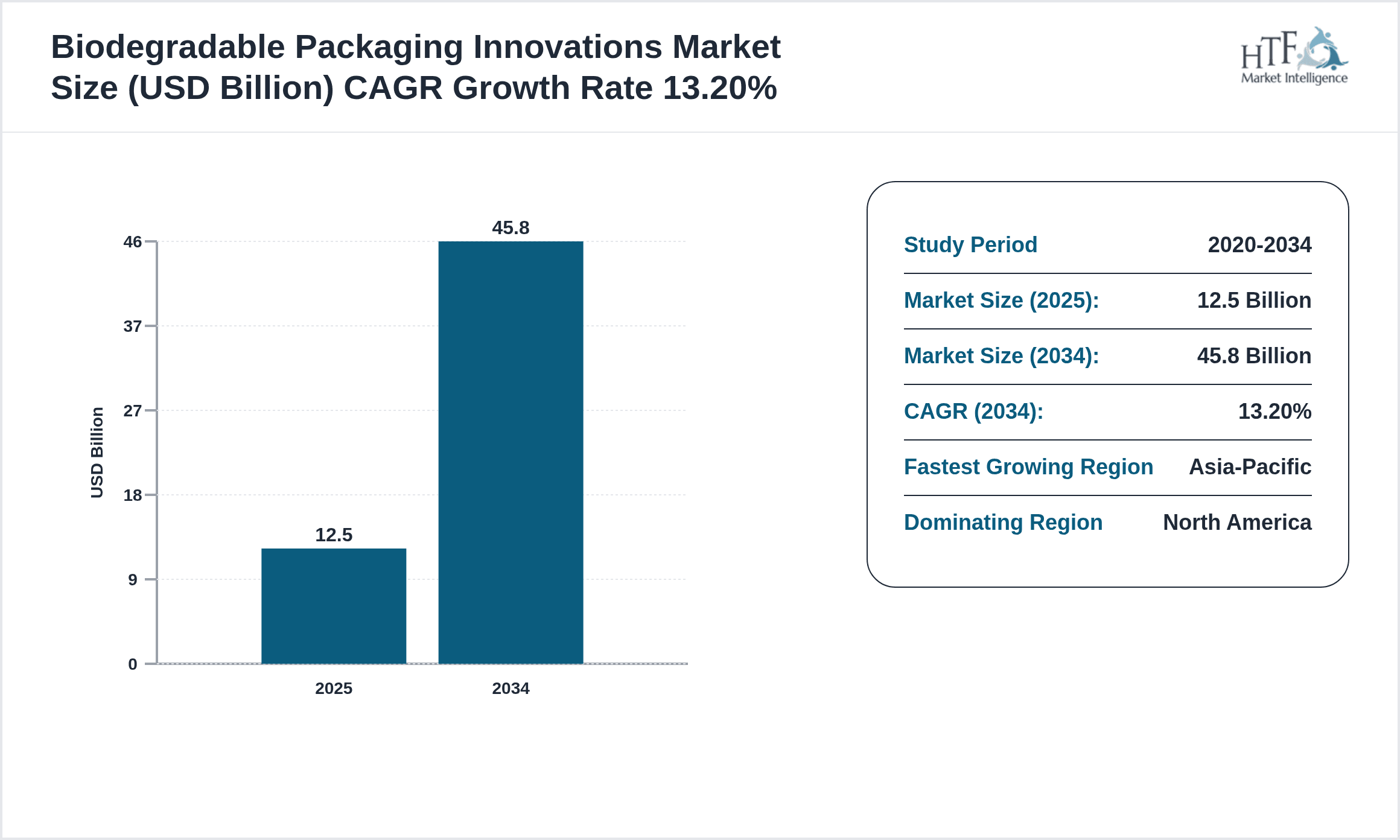
- •Market growth is driven by increasing regulatory pressures, consumer demand for eco-friendly packaging, and technological advancements improving material properties and cost-efficiency. The market is forecasted to expand from USD 12.5 Billion in 2024 to USD 45.8 Billion by 2034, exhibiting a CAGR of 13.2%.
- •Biodegradable packaging innovations provide significant value to industries such as food & beverage, healthcare, agriculture, and retail by enhancing sustainability profiles, complying with environmental regulations, and meeting consumer preferences for green products.
Competitive Landscape
The global biodegradable packaging innovations market features intense competition driven by continuous innovation, strategic collaborations, and sustainability commitments. Leading players compete by developing advanced biodegradable materials with enhanced durability, barrier properties, and cost-effectiveness. Companies focus on strategic partnerships, mergers, and acquisitions to expand product portfolios and geographic reach. Innovation is centered around improving biodegradability without compromising packaging functionality. Competitive strategies include differentiation through proprietary technologies, certifications, and eco-labeling. Market rivalry is further intensified by emerging startups introducing disruptive biopolymer technologies. Pricing strategies balance material costs with sustainability value propositions, while companies emphasize expanding distribution channels and forming alliances with end-use industries to consolidate market position. Regional competition varies, with North America and Europe leading in innovation and regulatory compliance, while Asia-Pacific offers significant growth opportunities driven by rising environmental awareness and government incentives.
Leading Companies in Biodegradable Packaging Innovations Market
- •NatureWorks LLC (United States)
- •Amcor plc (Australia)
- •BASF SE (Germany)
- •Novamont S.p.A. (Italy)
- •Corbion N.V. (Netherlands)
- •Stora Enso Oyj (Finland)
- •Mondi Group (United Kingdom)
- •Biopak Pty Ltd (Australia)
- •Berry Global, Inc. (United States)
- •Sealed Air Corporation (United States)
- •Treofan Group (Germany)
- •Green Dot Bioplastics (United States)
- •Plantic Technologies Limited (Australia)
- •Earthpack (United States)
- •Danimer Scientific (United States)
- •Uflex Limited (India)
- •Toyo Seikan Group Holdings (Japan)
- •Flex Films (India)
- •Total Corbion PLA (Netherlands)
- •PF Resins (South Korea)
- •Kuraray Co., Ltd. (Japan)
- •Biotec GmbH (Germany)
- •Good Natured Products Inc. (United States)
- •Huhtamaki Oyj (Finland)
- •Innovia Films (United Kingdom)
Market Breakdown
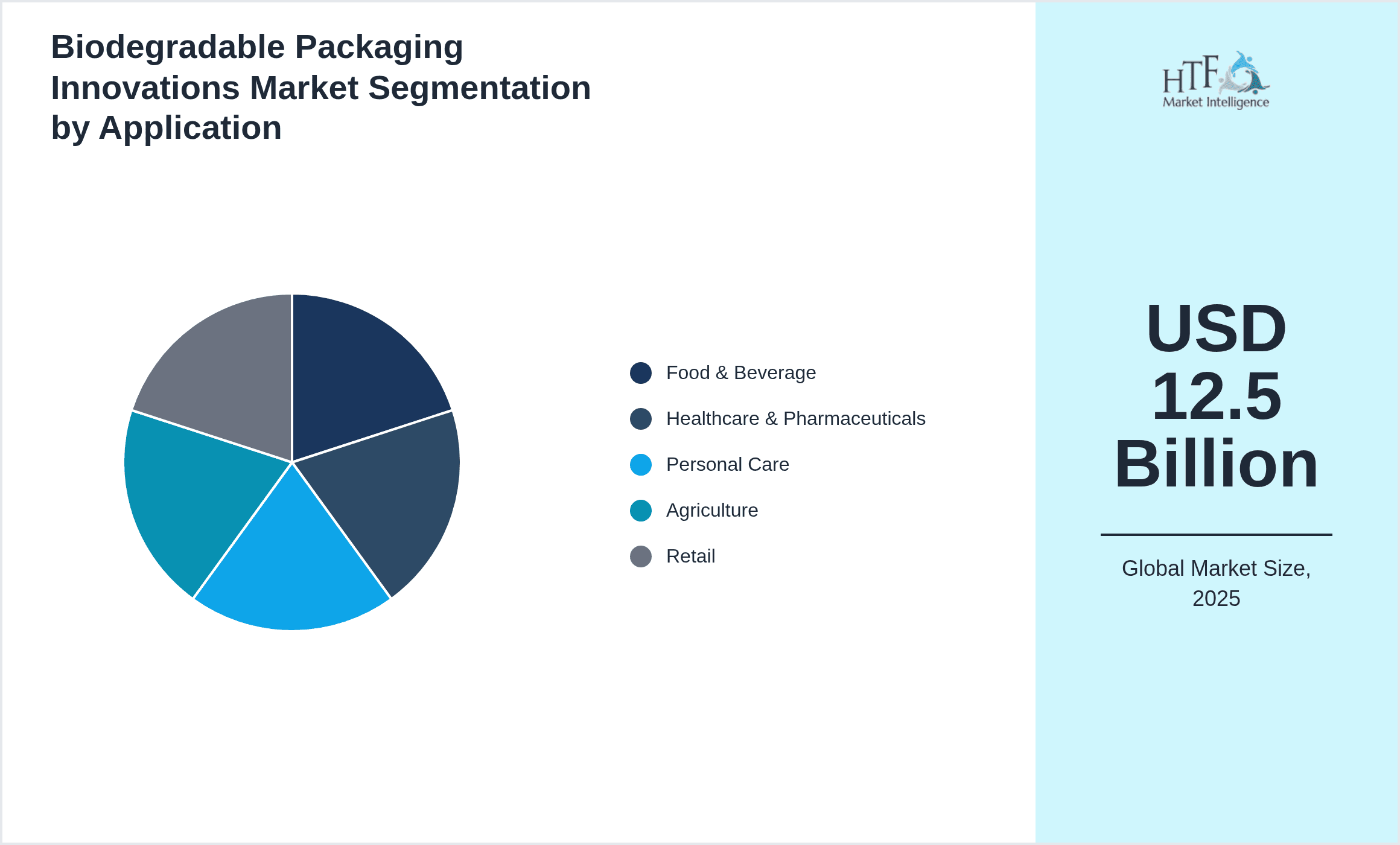
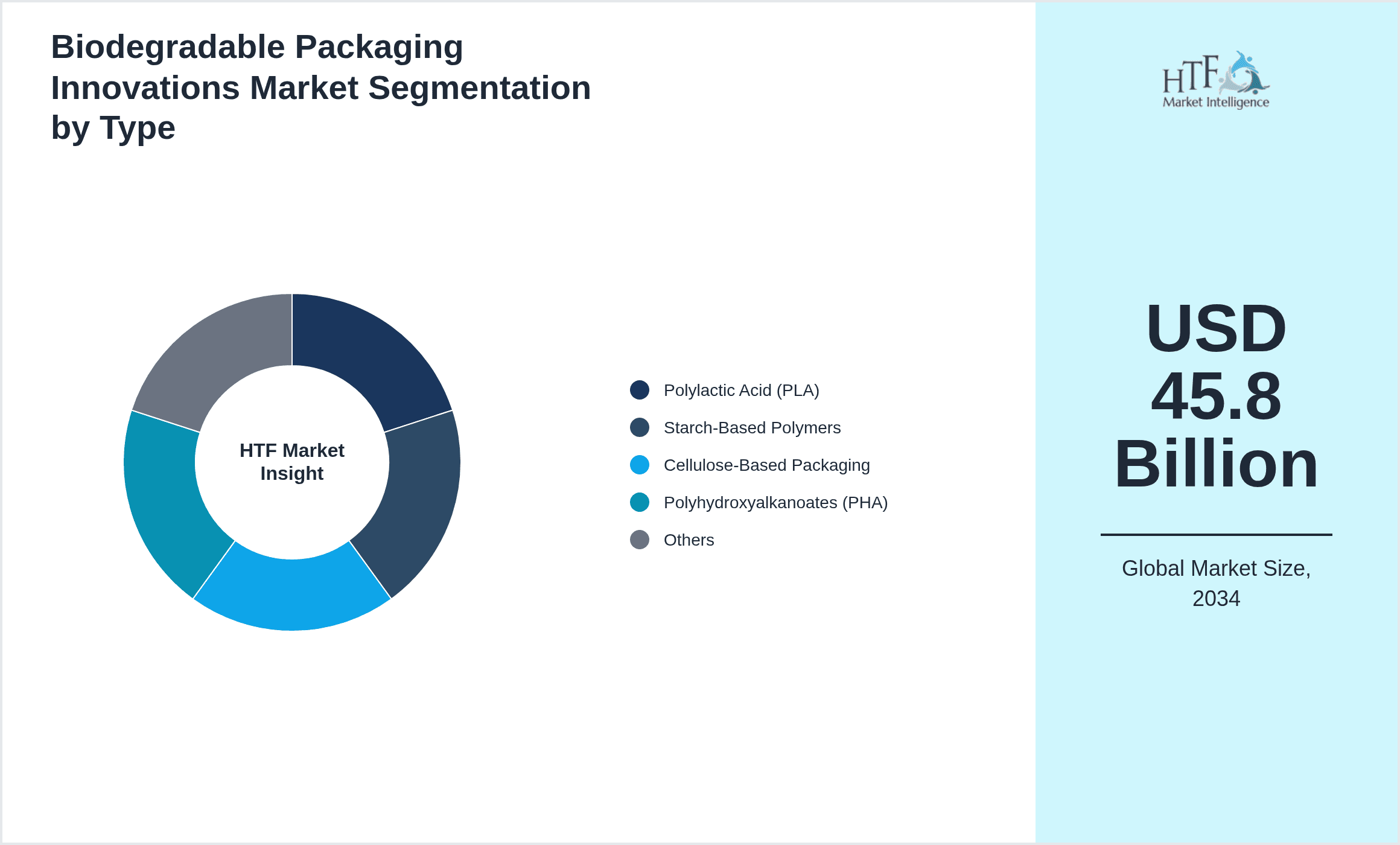
- •By Type
- ◦Polylactic Acid (PLA)
- ◦Starch-Based Polymers
- ◦Cellulose-Based Packaging
- ◦Polyhydroxyalkanoates (PHA)
- ◦Others
- •By Application
- ◦Food & Beverage
- ◦Healthcare & Pharmaceuticals
- ◦Personal Care
- ◦Agriculture
- ◦Retail
- •By End User
- ◦Manufacturing Companies
- ◦Retailers
- ◦Food Service Providers
- ◦Pharmaceutical Companies
- •By Distribution Channel
- ◦Direct Sales
- ◦Distributors
- ◦Online Retail
- ◦Specialty Stores
Growth Drivers
The global biodegradable packaging innovations market is propelled by increasing environmental concerns and stringent governmental regulations aimed at reducing plastic waste and carbon footprint. Consumers are progressively favouring sustainable and eco-friendly packaging, compelling manufacturers to innovate and adopt biodegradable materials such as PLA and PHA. Technological advancements have improved the durability and versatility of biodegradable packaging, enabling broader application across food, healthcare, and retail sectors. Additionally, initiatives promoting circular economy models and extended producer responsibility (EPR) policies incentivize adoption, further stimulating market expansion. Rising investments in R&D to develop cost-effective, high-performance biodegradable polymers enhance accessibility, supporting small and medium enterprises in entering the market. The shift towards green packaging in emerging economies, alongside urbanization and growing e-commerce sectors, also fuels demand, making biodegradable packaging innovations a key growth driver worldwide.
Market Trends
The biodegradable packaging innovations market is witnessing a surge in the integration of bio-based composites and nanotechnology to enhance mechanical strength and barrier properties. Increasing collaborations between material scientists and packaging manufacturers are fostering innovations like compostable films and edible packaging. The market trend towards digital printing on biodegradable materials is gaining traction, providing customization and branding opportunities while maintaining sustainability. Companies are also exploring biodegradable packaging suitable for cold chain logistics, expanding applications in pharmaceuticals and perishable goods. Furthermore, consumer awareness campaigns and eco-label certifications are influencing purchasing decisions, promoting transparency and accountability. The rise of refillable and reusable biodegradable packaging models complements the zero-waste movement, reflecting evolving consumer preferences for sustainability-focused product life cycles.
Market Restraints
Despite promising growth, the biodegradable packaging innovations market faces challenges including higher production costs compared to conventional plastics, limiting widespread adoption, especially among cost-sensitive industries. Variability in biodegradation rates due to differing environmental conditions can affect product performance and consumer trust. Lack of standardized certifications and regulatory harmonization across countries complicates market penetration and compliance. Technical limitations such as reduced barrier properties and mechanical strength relative to traditional materials hinder applications requiring high durability and shelf life. Additionally, insufficient waste management infrastructure for industrial composting in many regions restricts effective disposal and recycling of biodegradable packaging. These restraints collectively slow the transition from plastic to biodegradable alternatives, necessitating further innovations and policy support.
Market Opportunities
Emerging markets in Asia-Pacific and Latin America present significant growth opportunities due to increasing environmental awareness and supportive government policies encouraging sustainable packaging adoption. Innovations in bio-based polymer blends and multi-functional packaging solutions offer differentiation and enhanced performance, opening new application areas. Expansion into sectors such as agriculture for biodegradable mulch films and personal care products for eco-conscious consumers offers untapped potential. Collaborations between startups and established players to scale production capabilities and reduce costs can accelerate market penetration. Furthermore, growing e-commerce and food delivery services demand sustainable packaging alternatives, representing a lucrative opportunity. Investments in improving waste management and composting infrastructure globally will further facilitate market growth by ensuring end-of-life sustainability of biodegradable packaging products.
Market Challenges
The biodegradable packaging innovations market faces challenges including supply chain complexity for bio-based raw materials, which are often dependent on agricultural outputs subject to seasonality and price volatility. Regulatory fragmentation across regions creates compliance burdens for manufacturers aiming for global market presence. Consumer misconceptions about biodegradability and improper disposal practices can undermine environmental benefits and market credibility. Competition from low-cost conventional plastics remains intense, particularly in price-sensitive sectors. Additionally, the need for extensive R&D investments to improve material properties and scalability poses financial risks for companies. Intellectual property disputes and patent complexities in biodegradable technologies may also hinder innovation diffusion. Addressing these challenges requires coordinated efforts from industry stakeholders, policymakers, and consumers to foster sustainable growth.
Regulatory Overview
Recent regulatory frameworks worldwide have increasingly mandated reductions in single-use plastics and promoted the adoption of biodegradable packaging materials. Key policies implemented between 2020 and 2024 include bans on non-biodegradable plastic bags, incentives for bio-based packaging development, and extended producer responsibility regulations requiring manufacturers to manage packaging waste. The European Union’s Directive on single-use plastics and the U.S. Food and Drug Administration’s guidelines for compostable food packaging exemplify regulatory progress. Emerging economies in Asia and Latin America have introduced standards for biodegradability testing and labeling to ensure transparency and consumer trust. These regulations drive innovation, compliance costs, and market adoption, shaping the competitive landscape and accelerating the transition towards sustainable packaging globally.
Market Intelligence
- •In March 2024, NatureWorks LLC launched a new generation of high-performance polylactic acid (PLA) resins designed for flexible packaging applications, featuring enhanced clarity and heat resistance to meet growing consumer demands for sustainable food packaging. This innovation aims to expand the usability of biodegradable materials while maintaining compliance with food safety regulations. Source: NatureWorks Official Press Release
- •In November 2023, Amcor plc announced a strategic partnership with a leading bio-based polymer manufacturer to co-develop compostable packaging solutions targeting the healthcare sector. This collaboration intends to leverage material science advancements to reduce medical packaging waste and improve environmental sustainability in regulated industries. Source: Amcor Corporate News
- •Recent market developments and strategic initiatives are continuously tracked through industry publications, company announcements, and regulatory filings. For the most current information, stakeholders are advised to monitor official corporate communications and recognized market intelligence platforms.
Mergers & Acquisitions
- •In July 2023, Danimer Scientific completed the acquisition of a European biodegradable polymer producer to strengthen its foothold in the European market and expand its product portfolio with advanced PHA-based materials. This strategic move enhances Danimer's global supply chain capabilities and supports its mission to accelerate the adoption of sustainable packaging solutions worldwide.
- •In January 2024, BASF SE acquired a majority stake in a startup specializing in bio-based barrier coatings for packaging applications. This acquisition is aimed at integrating innovative coating technologies that improve the performance and biodegradability of packaging films, aligning with BASF’s sustainability goals and expanding its product offerings in the biodegradable packaging market.
Recent Industry News
- •In May 2021, Novamont S.p.A. partnered with a major global retailer to introduce fully biodegradable shopping bags made from Mater-Bi®, a starch-based biopolymer. This collaboration targets reducing plastic waste in retail environments and promotes consumer adoption of sustainable alternatives. Source: Industry Publication
- •In September 2022, Corbion N.V. expanded its production capacity for lactic acid and PLA polymers in Asia-Pacific to meet rising regional demand driven by stringent environmental regulations and consumer awareness. This expansion supports local manufacturers transitioning to biodegradable packaging. Source: Company Website
- •In February 2023, Biopak Pty Ltd launched a line of compostable food service packaging products compatible with industrial composting facilities, addressing the growing market for sustainable packaging in food delivery and quick-service restaurant sectors. Source: Biopak Press Release
- •In August 2020, Berry Global, Inc. introduced a hybrid packaging solution combining biodegradable and recycled materials to optimize sustainability and performance for personal care products. This innovation reflects industry trends towards multi-material biodegradable packaging. Source: Berry Global Newsroom
Market Statistics
- •CAGR by 2034: 13.2%
- •Market Size by 2034: USD 45.8 Billion
- •Market Size in 2025: USD 14.1 Billion
- •Dominating Type: Polylactic Acid (PLA)
- •Next-Following Type: Polyhydroxyalkanoates (PHA)
- •Dominating Application: Food & Beverage
- •Next-Following Application: Healthcare & Pharmaceuticals
- •Dominating Region: North America
- •Second-Leading Region: Europe
- •Region with Highest Growth Rate: Asia-Pacific
- •Dominating Country: United States
Market Share Table
- •Market Share (%) of Dominating vs Followed Type: Polylactic Acid (PLA) - 40%, Polyhydroxyalkanoates (PHA) - 25%
- •Market Share (%) of Dominating vs Followed Application: Food & Beverage - 45%, Healthcare & Pharmaceuticals - 30%
- •Growth Rate (%) of Dominating vs Followed Type: Polylactic Acid (PLA) - 12.5%, Polyhydroxyalkanoates (PHA) - 16.8%
- •Growth Rate (%) of Dominating vs Followed Application: Food & Beverage - 11.5%, Healthcare & Pharmaceuticals - 14.2%
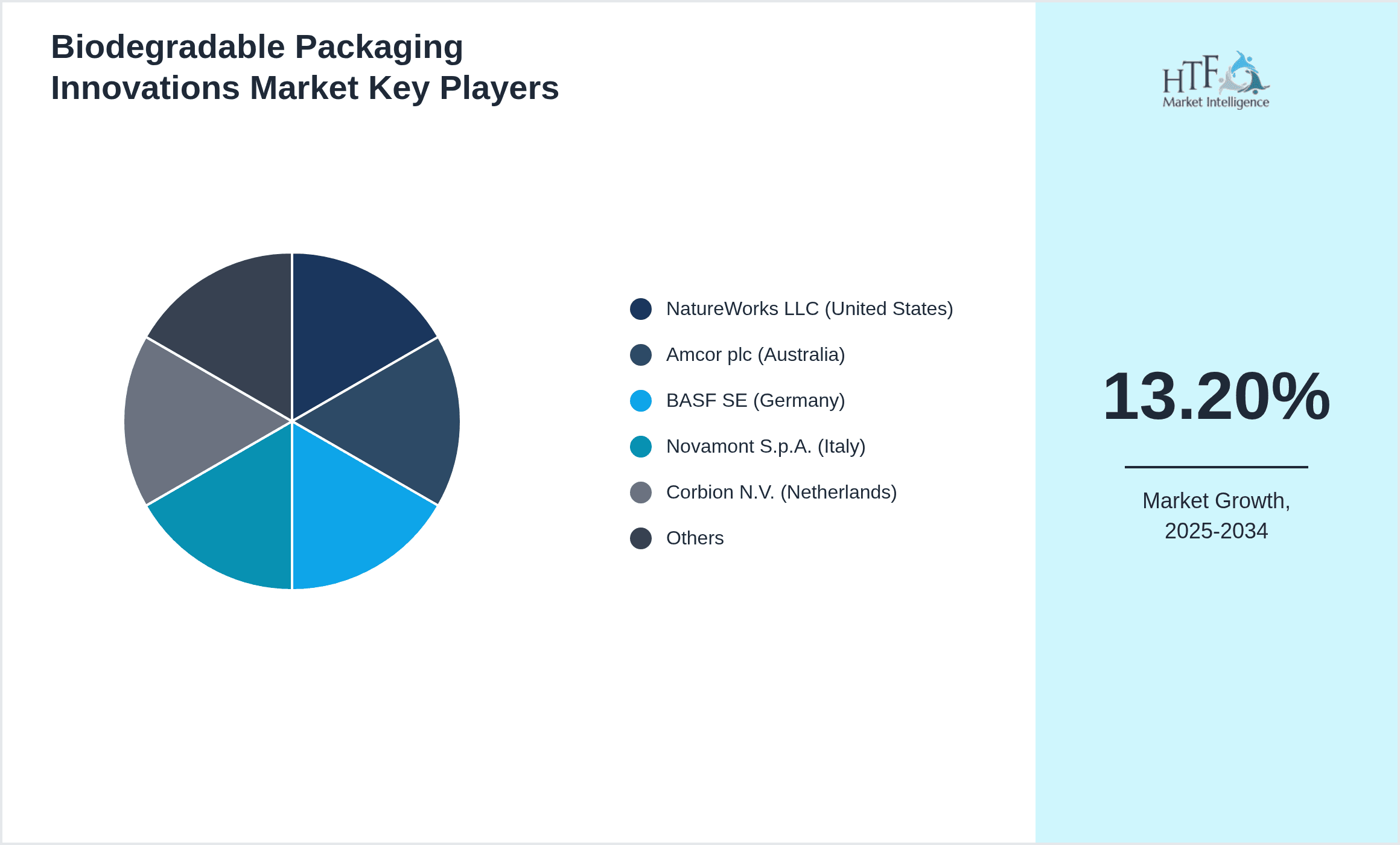
Top 5 Global Players
- •NatureWorks LLC (United States)
- •Amcor plc (Australia)
- •BASF SE (Germany)
- •Novamont S.p.A. (Italy)
- •Corbion N.V. (Netherlands)
Regional Outlook
The North America currently holds a significant share of the market, primarily due to several key factors: increasing consumption rates, a burgeoning population, and robust economic momentum. These elements collectively drive demand, positioning this region as a leader in the market. On the other hand, Asia-Pacific is rapidly emerging as the fastest-growing area within the industry. This remarkable growth can be attributed to swift infrastructure development, the expansion of various industrial sectors, and a marked increase in consumer demand. These dynamics make this region a crucial player in shaping future market growth.
In our report, we cover a comprehensive analysis of the following regions and countries:
- North America
- LATAM
- West Europe
- Central & Eastern Europe
- Northern Europe
- Southern Europe
- East Asia
- Southeast Asia
- South Asia
- Central Asia
- Oceania
- MEA
| Feature | Details |
|---|---|
| Base Year Market Size | USD 12.5 Billion |
| Forecast Year Market Size | USD 45.8 Billion |
| CAGR | 13.2% |
| Forecast Period | 2026 to 2033 |
| YoY Growth | 12.9% |
| Regions Covered | North America, LATAM, West Europe, Central & Eastern Europe, Northern Europe, Southern Europe, East Asia, Southeast Asia, South Asia, Central Asia, Oceania, MEA |
| Key Companies | NatureWorks LLC (United States), Amcor plc (Australia), BASF SE (Germany), Novamont S.p.A. (Italy), Corbion N.V. (Netherlands), Stora Enso Oyj (Finland), Mondi Group (United Kingdom), Biopak Pty Ltd (Australia), Berry Global, Inc. (United States), Sealed Air Corporation (United States), Treofan Group (Germany), Green Dot Bioplastics (United States), Plantic Technologies Limited (Australia), Earthpack (United States), Danimer Scientific (United States), Uflex Limited (India), Toyo Seikan Group Holdings (Japan), Flex Films (India), Total Corbion PLA (Netherlands), PF Resins (South Korea), Kuraray Co., Ltd. (Japan), Biotec GmbH (Germany), Good Natured Products Inc. (United States), Huhtamaki Oyj (Finland), Innovia Films (United Kingdom) |
Global Biodegradable Packaging Innovations Market Scope & Changing Dynamics 2024-2034 - Table of Contents
Frequently Asked Questions (FAQ):
The Compact Track Loaders market is expected to see value worth 5.3 Billion in 2025.
North America currently leads the market with approximately 45% market share, followed by Europe at 28% and Asia-Pacific at 22%. The remaining regions account for 5% of the global market.
Key growth drivers include increasing construction activities, rising demand for versatile equipment in agriculture, technological advancements in track loader design, and growing preference for compact equipment in urban construction projects.