
Global Traditional Hall Current Sensor Market Size, Growth & Revenue 2025-2034
Global Traditional Hall Current Sensor Market is segmented by Type (Open Loop Traditional Hall Current Sensor, Closed Loop Traditional Hall Current Sensor, Bipolar Traditional Hall Current Sensor, Unipolar Traditional Hall Current Sensor), Application (Automotive, Industrial Automation, Consumer Electronics, Energy Management, Healthcare), Deployment Model (Embedded Sensors, External Sensors, Modular Sensor Systems), Output Signal Type (Analog Output, Digital Output, PWM Output), and Geography (North America, LATAM, West Europe, Central & Eastern Europe, Northern Europe, Southern Europe, East Asia, Southeast Asia, South Asia, Central Asia, Oceania, MEA)
Pricing
Report Overview
Executive Summary
- •The Global Traditional Hall Current Sensor market includes devices that measure electrical current using the Hall effect principle, critical for accurate current sensing in numerous sectors. These sensors are categorized by types such as open loop, closed loop, bipolar, and unipolar, each optimized for different accuracy and application needs. Predominant applications span automotive battery systems, industrial process control, consumer electronics power management, energy grid monitoring, and healthcare instrumentation. Increasing demand stems from the rise in electric vehicle adoption, renewable energy integration, and industrial automation worldwide.
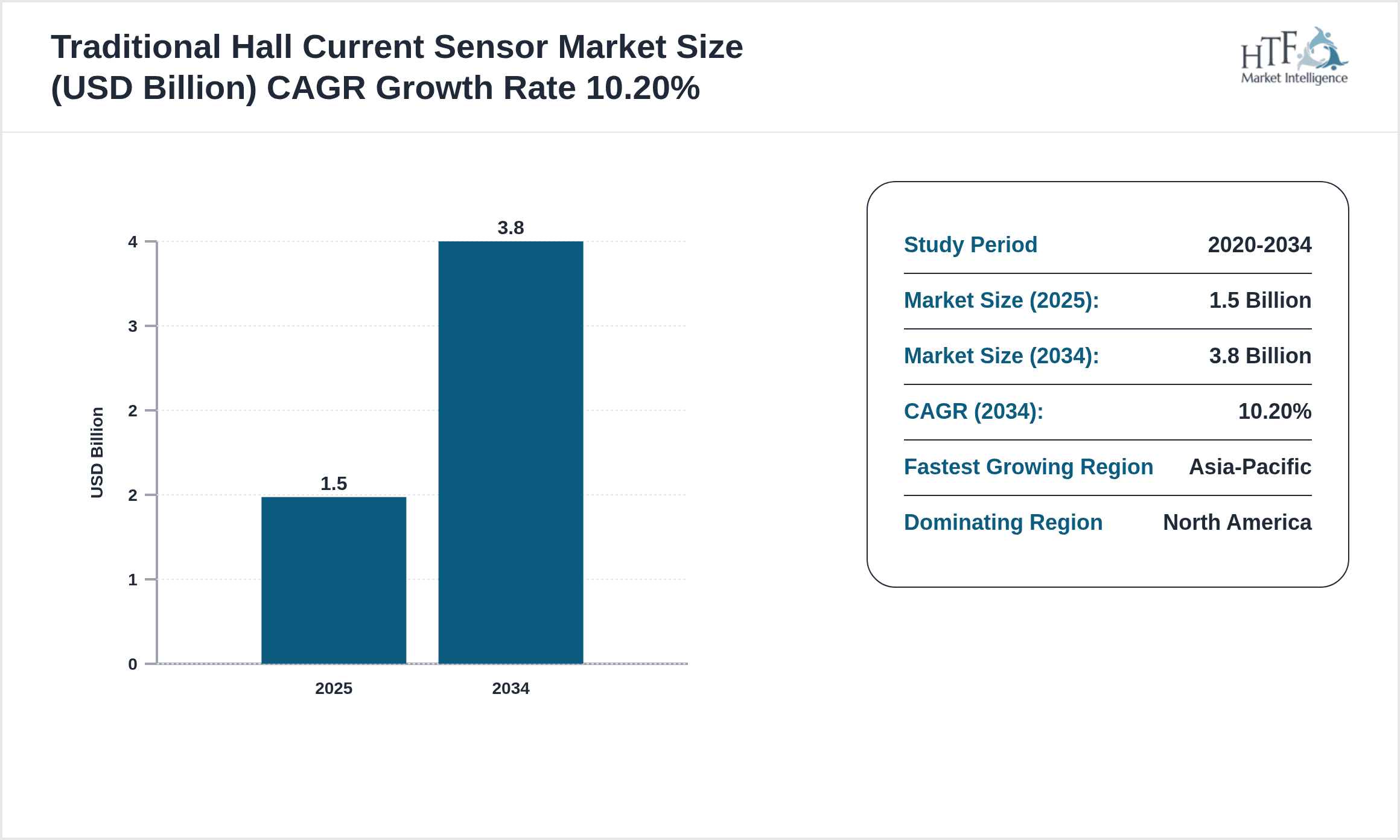
- •Key market highlights include a base market size of USD 1.5 Billion in 2025, projected to reach USD 3.8 Billion by 2034, representing a CAGR of 10.2%. North America leads the market with a 35% share, while Asia-Pacific is the fastest growing region with a 13.5% CAGR and 28% market share. Closed loop sensors dominate product types, whereas bipolar sensors represent the fastest growing segment.
- •This market is strategically important due to its role in enabling efficient, reliable current monitoring essential for safety, energy efficiency, and performance optimization across multiple industries, making it a cornerstone technology in the transition toward advanced electrification and automation worldwide.
Competitive Landscape
The competitive environment in the Global Traditional Hall Current Sensor market is characterized by a mix of established multinational corporations and innovative regional players. Companies focus on strategies such as technological innovation, product differentiation, strategic partnerships, and expanding distribution channels to strengthen market positioning. Investments in R&D drive sensor performance enhancements, including miniaturization and integration capabilities. Mergers and acquisitions are instrumental in consolidating market share and expanding geographic presence. Pricing strategies remain competitive due to market fragmentation, while companies leverage proprietary technologies and patents to maintain competitive advantages. The market faces moderate entry barriers owing to the technical expertise required and capital investment, encouraging continuous innovation and strategic collaborations to sustain growth.
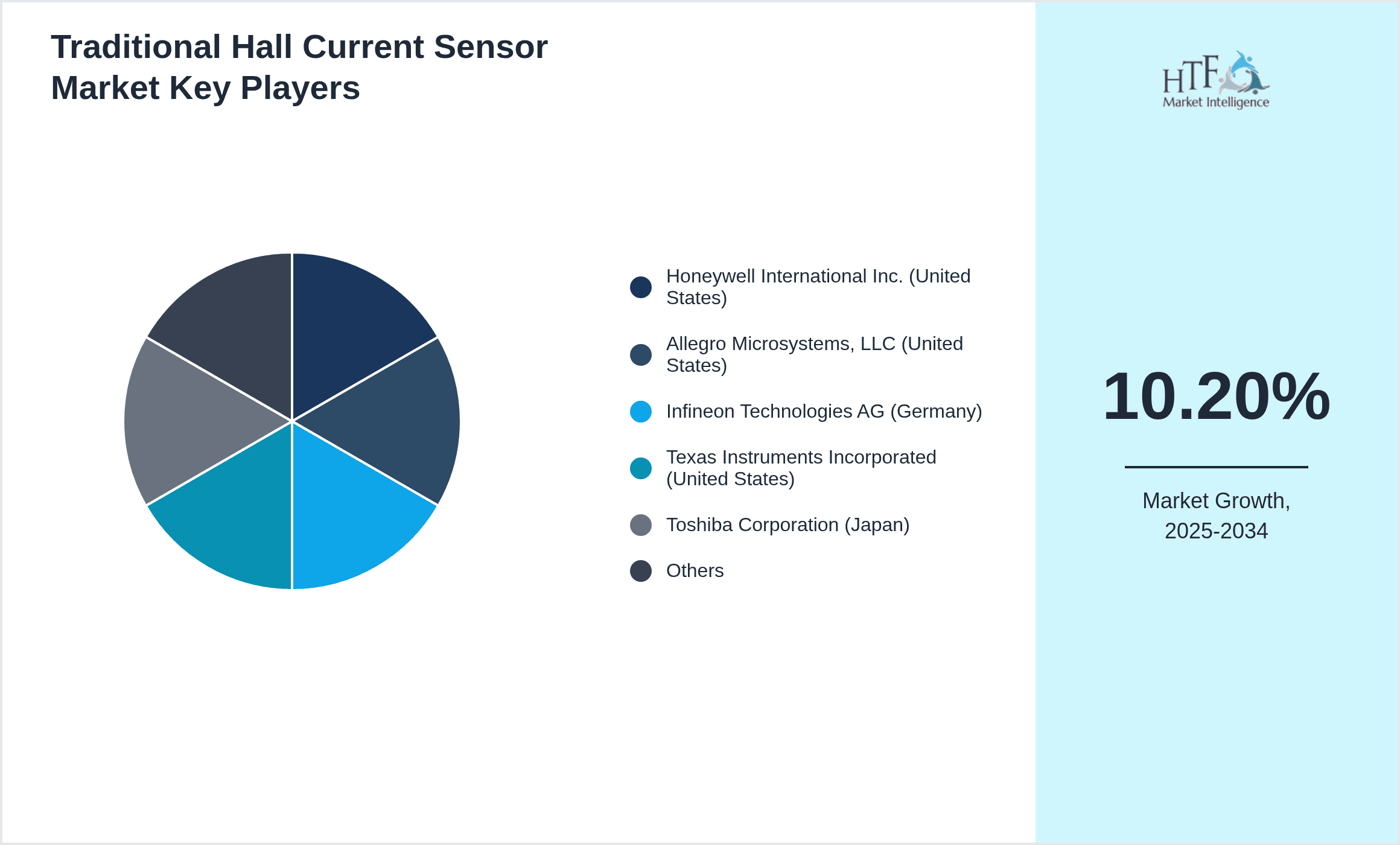
Key Players in Traditional Hall Current Sensor Market
- •Honeywell International Inc. (United States)
- •Allegro Microsystems, LLC (United States)
- •Infineon Technologies AG (Germany)
- •Texas Instruments Incorporated (United States)
- •Toshiba Corporation (Japan)
- •Asahi Kasei Microdevices Corporation (Japan)
- •Renesas Electronics Corporation (Japan)
- •Diodes Incorporated (United States)
- •STMicroelectronics N.V. (Switzerland)
- •Melexis NV (Belgium)
- •Vishay Intertechnology, Inc. (United States)
- •Analog Devices, Inc. (United States)
- •NXP Semiconductors N.V. (Netherlands)
- •Micronas Semiconductor Holding AG (Germany)
- •ROHM Semiconductor (Japan)
- •MPS Micro Precision Systems (Austria)
- •Crouzet (France)
- •Texas Advanced Optoelectronic Solutions (United States)
- •LEM Holding SA (Switzerland)
- •Broadcom Inc. (United States)
- •Diodes Incorporated (United States)
- •MagnaChip Semiconductor Corporation (South Korea)
- •Sensitec GmbH (Germany)
- •EPCOS AG (Germany)
- •ZMDI (Zentrum Mikroelektronik Dresden AG) (Germany)
Market Breakdown
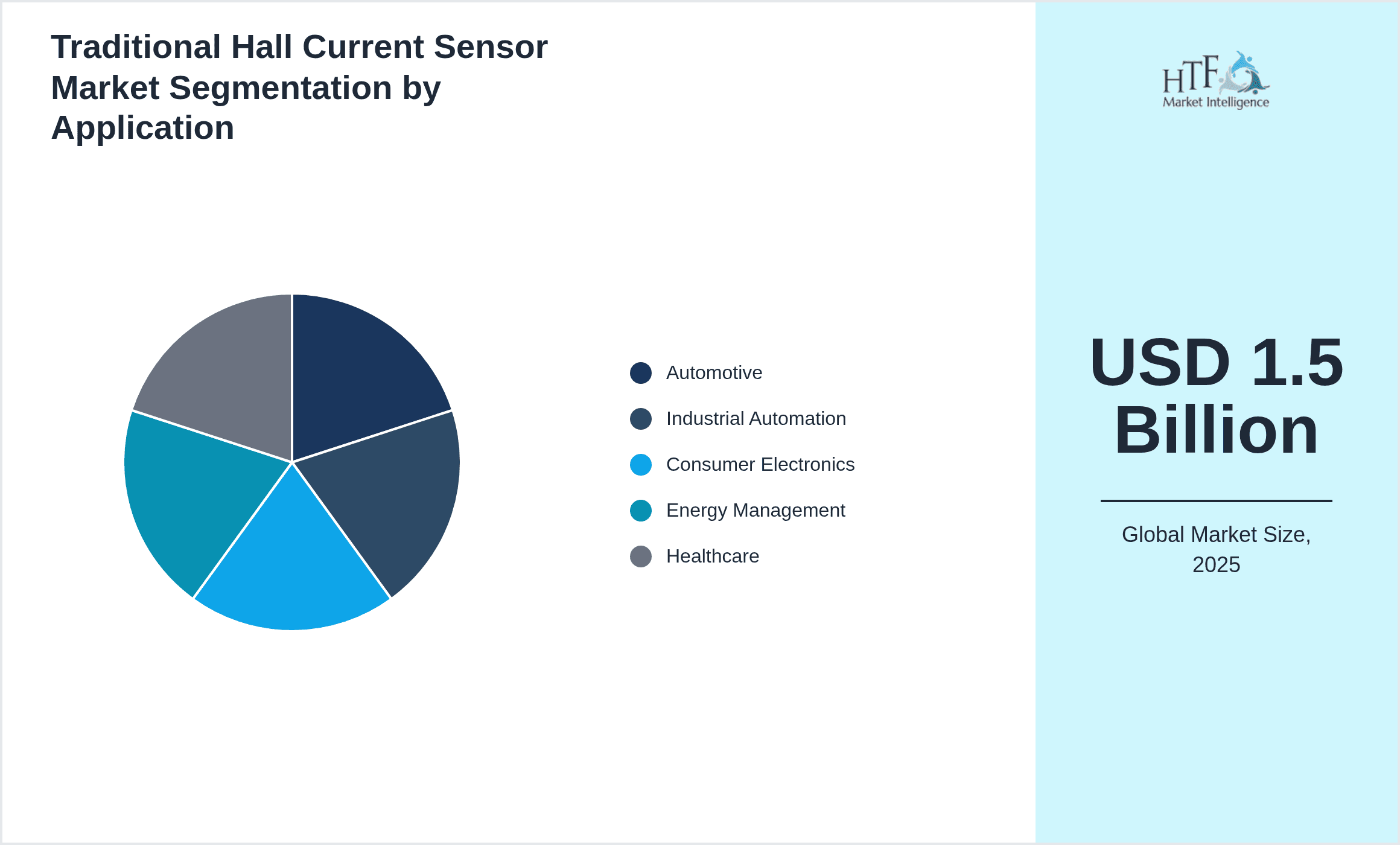
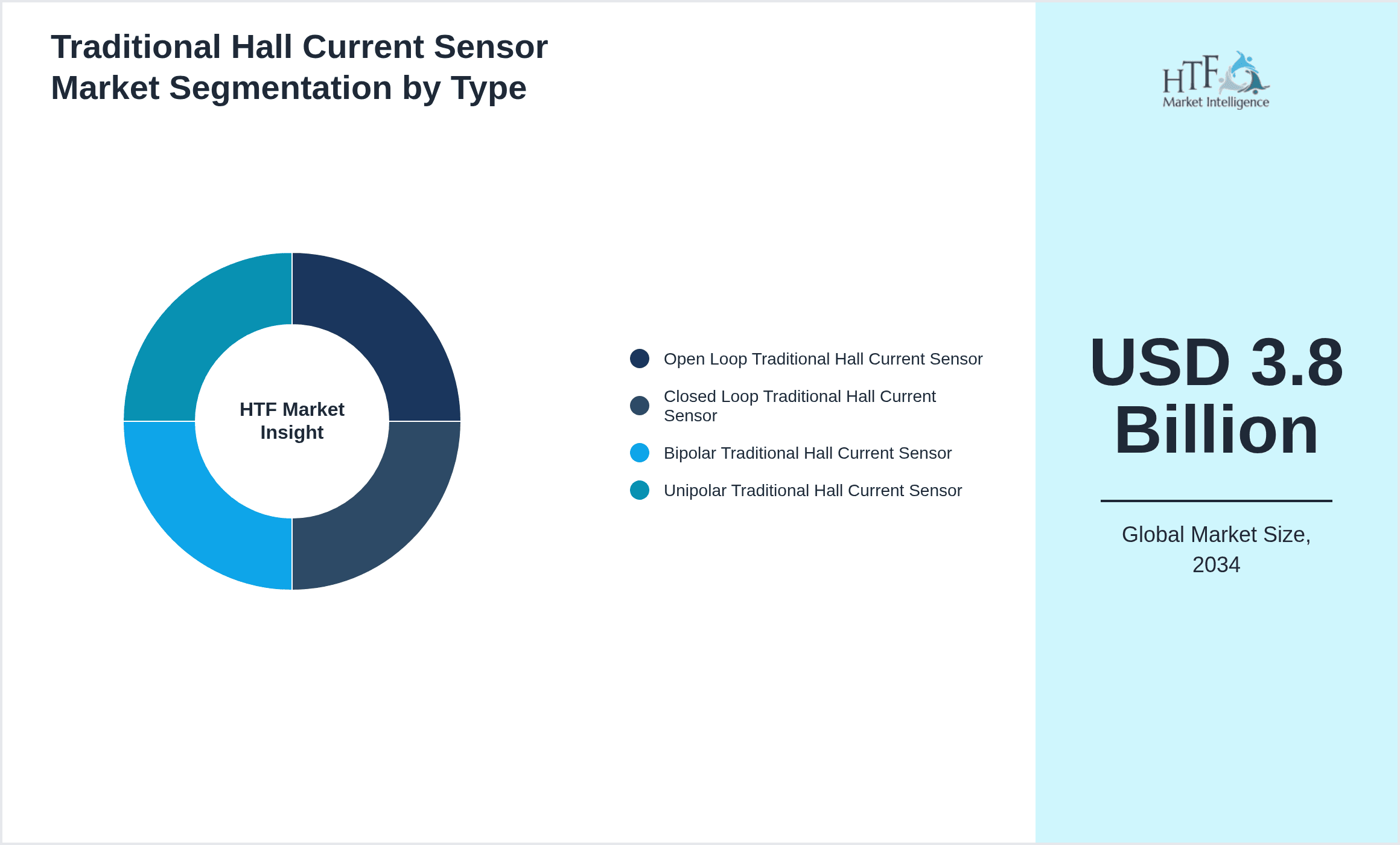
- •By Type
- ◦Open Loop Traditional Hall Current Sensor
- ◦Closed Loop Traditional Hall Current Sensor
- ◦Bipolar Traditional Hall Current Sensor
- ◦Unipolar Traditional Hall Current Sensor
- •By Application
- ◦Automotive
- ◦Industrial Automation
- ◦Consumer Electronics
- ◦Energy Management
- ◦Healthcare
- •By Deployment Model
- ◦Embedded Sensors
- ◦External Sensors
- ◦Modular Sensor Systems
- •By Output Signal Type
- ◦Analog Output
- ◦Digital Output
- ◦PWM Output
Growth Dynamics
The Global Traditional Hall Current Sensor market is propelled by increasing adoption of electric vehicles, which require precise current measurement for battery management and motor control systems. Industrial automation growth also drives demand as manufacturers seek accurate and reliable sensors to optimize processes and ensure safety. Furthermore, rising emphasis on energy efficiency and smart grid technologies necessitates advanced current sensors for real-time monitoring and control. Technological advancements, including sensor miniaturization and integration with IoT platforms, enable broader applications and enhanced performance, further stimulating market expansion globally.
Market Trends
The market is witnessing a trend toward integration of Hall current sensors with smart electronics and IoT-enabled devices, facilitating remote monitoring and predictive maintenance. Demand for closed loop sensors is increasing due to their higher accuracy and faster response times. Sustainability initiatives are encouraging the use of energy-efficient sensor technologies. Additionally, the development of sensors with higher temperature tolerance and robustness is gaining traction to serve harsh industrial environments. These trends collectively enhance sensor functionality and widen their application scope.
Market Opportunities
Expanding electric vehicle markets in Asia-Pacific and Europe present significant growth opportunities for traditional Hall current sensors, especially in battery management systems and electric motor control. The increasing adoption of renewable energy sources creates demand for precise current monitoring in smart grids and energy storage systems. Further, emerging applications in healthcare devices, such as portable diagnostics and patient monitoring, offer new avenues for sensor integration. Collaboration between sensor manufacturers and system integrators can unlock innovation and penetration into untapped market segments worldwide.
Market Challenges
Key challenges include the rising competition from alternative current sensing technologies like Rogowski coils and fluxgate sensors, which offer advantages in specific applications. High initial costs and complexity of closed loop sensors limit adoption in cost-sensitive markets. Additionally, stringent regulatory standards and certification processes increase time-to-market and compliance costs. Supply chain disruptions and raw material price volatility also exert pressure on manufacturing and profitability. Addressing these challenges requires continuous innovation and strategic cost management by market participants.
Regulatory Framework
- •Between 2020 and 2025, regulations such as the EU's RoHS Directive and REACH regulations mandated restrictions on hazardous substances in electronic components, including sensors, impacting manufacturing processes and materials used in traditional Hall current sensors. The International Electrotechnical Commission (IEC) established updated safety and electromagnetic compatibility standards affecting sensor design and performance requirements. In automotive markets, regulations on vehicle safety and emissions indirectly drive sensor adoption for enhanced battery and motor control systems. Compliance with these regulations ensures market access and underpins consumer safety and environmental sustainability.
- •The regulatory landscape also includes country-specific mandates on energy efficiency for industrial equipment and consumer electronics, promoting the use of high-accuracy current sensors. Certification schemes such as UL and CE marks are essential for market acceptance in North America and Europe. Governments are increasingly promoting standards aligned with IoT security and data privacy, influencing sensor connectivity and integration aspects. These evolving regulations necessitate close monitoring and agile adaptation by manufacturers to maintain compliance and competitive advantage.
- •Environmental directives continue to emphasize sustainable manufacturing and end-of-life disposal of electronic sensors, encouraging design for recyclability and reduced environmental impact. Market participants invest in innovation to meet these requirements while balancing cost and performance. Overall, regulatory frameworks play a critical role in shaping product development, market entry strategies, and competitive dynamics in the traditional Hall current sensor market.
Market Intelligence
- •15th January 2025, Honeywell International Inc. launched a new series of closed loop traditional Hall current sensors featuring enhanced accuracy and temperature stability suitable for electric vehicle battery management systems. The new sensors integrate advanced signal processing capabilities to support IoT-based diagnostics and predictive maintenance. Honeywell's strategic objective is to capitalize on the growing EV market by offering high-performance, scalable sensor solutions that improve safety and energy efficiency. This launch is expected to strengthen Honeywell's leadership position and drive revenue growth in the automotive sector. Source: Honeywell Official Press Release
- •10th March 2025, Infineon Technologies AG introduced an innovative bipolar Hall current sensor with integrated digital output designed for industrial automation applications. The sensor incorporates noise reduction technology and supports wireless connectivity for real-time monitoring. Infineon's product aims to address the increasing demand for smart factory solutions by enabling precise current measurement and seamless integration with Industry 4.0 platforms. This initiative underscores Infineon's commitment to advancing sensor technology and expanding its footprint in the industrial IoT market. Source: Infineon Technologies Press Release
- •22nd May 2025, Texas Instruments Incorporated announced a strategic partnership with a leading automotive OEM to co-develop customized traditional Hall current sensors optimized for electric powertrains. The collaboration focuses on enhancing sensor robustness and reducing system costs while meeting stringent automotive safety standards. TI's expertise in analog and mixed-signal processing combined with OEM's vehicle development capabilities aims to accelerate EV adoption globally. This partnership reflects the growing trend of sensor manufacturers aligning with vehicle producers to tailor solutions for evolving market needs. Source: Texas Instruments Corporate News
- •Recent market developments and strategic initiatives are continuously tracked through industry publications, company announcements, and regulatory filings. For the most current information, stakeholders are advised to monitor official corporate communications and recognized market intelligence platforms.
Regional Outlook
The North America currently holds a significant share of the market, primarily due to several key factors: increasing consumption rates, a burgeoning population, and robust economic momentum. These elements collectively drive demand, positioning this region as a leader in the market. On the other hand, Asia-Pacific is rapidly emerging as the fastest-growing area within the industry. This remarkable growth can be attributed to swift infrastructure development, the expansion of various industrial sectors, and a marked increase in consumer demand. These dynamics make this region a crucial player in shaping future market growth.
In our report, we cover a comprehensive analysis of the following regions and countries:
- North America
- LATAM
- West Europe
- Central & Eastern Europe
- Northern Europe
- Southern Europe
- East Asia
- Southeast Asia
- South Asia
- Central Asia
- Oceania
- MEA
| Feature | Details |
|---|---|
| Base Year Market Size | USD 1.5 Billion |
| Forecast Year Market Size | USD 3.8 Billion |
| CAGR | 10.2% |
| Forecast Period | 2026 to 2033 |
| YoY Growth | 10.5% |
| Scope of Report | Market is segmented by Type (Open Loop Traditional Hall Current Sensor, Closed Loop Traditional Hall Current Sensor, Bipolar Traditional Hall Current Sensor, Unipolar Traditional Hall Current Sensor), Application (Automotive, Industrial Automation, Consumer Electronics, Energy Management, Healthcare), Deployment Model (Embedded Sensors, External Sensors, Modular Sensor Systems), Output Signal Type (Analog Output, Digital Output, PWM Output) |
| Regions Covered | North America, LATAM, West Europe, Central & Eastern Europe, Northern Europe, Southern Europe, East Asia, Southeast Asia, South Asia, Central Asia, Oceania, MEA |
| Key Companies | Honeywell International Inc. (United States), Allegro Microsystems, LLC (United States), Infineon Technologies AG (Germany), Texas Instruments Incorporated (United States), Toshiba Corporation (Japan), Asahi Kasei Microdevices Corporation (Japan), Renesas Electronics Corporation (Japan), Diodes Incorporated (United States), STMicroelectronics N.V. (Switzerland), Melexis NV (Belgium), Vishay Intertechnology, Inc. (United States), Analog Devices, Inc. (United States), NXP Semiconductors N.V. (Netherlands), Micronas Semiconductor Holding AG (Germany), ROHM Semiconductor (Japan), MPS Micro Precision Systems (Austria), Crouzet (France), Texas Advanced Optoelectronic Solutions (United States), LEM Holding SA (Switzerland), Broadcom Inc. (United States), Diodes Incorporated (United States), MagnaChip Semiconductor Corporation (South Korea), Sensitec GmbH (Germany), EPCOS AG (Germany), ZMDI (Zentrum Mikroelektronik Dresden AG) (Germany) |
Global Traditional Hall Current Sensor Market Size, Growth & Revenue 2025-2034 - Table of Contents
Frequently Asked Questions (FAQ):
The Compact Track Loaders market is projected to grow at a CAGR of 6.8% from 2025 to 2030, driven by increasing demand in construction and agricultural sectors.
North America currently leads the market with approximately 45% market share, followed by Europe at 28% and Asia-Pacific at 22%. The remaining regions account for 5% of the global market.
Key growth drivers include increasing construction activities, rising demand for versatile equipment in agriculture, technological advancements in track loader design, and growing preference for compact equipment in urban construction projects.