
United States Marine Energy Storage System Market Size, Growth & Revenue 2024-2034
United States Marine Energy Storage System Market is segmented by Application (Offshore Energy Storage, Onshore Energy Storage, Hybrid Systems, Emergency Power Supply, Grid Stabilization), Type (Lithium-Ion Batteries, Flow Batteries, Supercapacitors, Thermal Storage, Mechanical Storage), and Geography (Northeast, Southwest, The South, The Midwest)
Pricing
Report Overview
Executive Summary
- •The United States Marine Energy Storage System market involves technologies and solutions aimed at storing energy generated from marine sources such as tidal, wave, and offshore wind. It covers various storage types including lithium-ion batteries and flow batteries, serving applications like offshore energy storage, onshore systems supporting marine operations, hybrid storage solutions, emergency power supplies for vessels, and grid stabilization in coastal regions. This market plays a pivotal role in enhancing energy reliability and supporting the U.S. clean energy goals by integrating renewable marine energy with efficient storage capabilities.
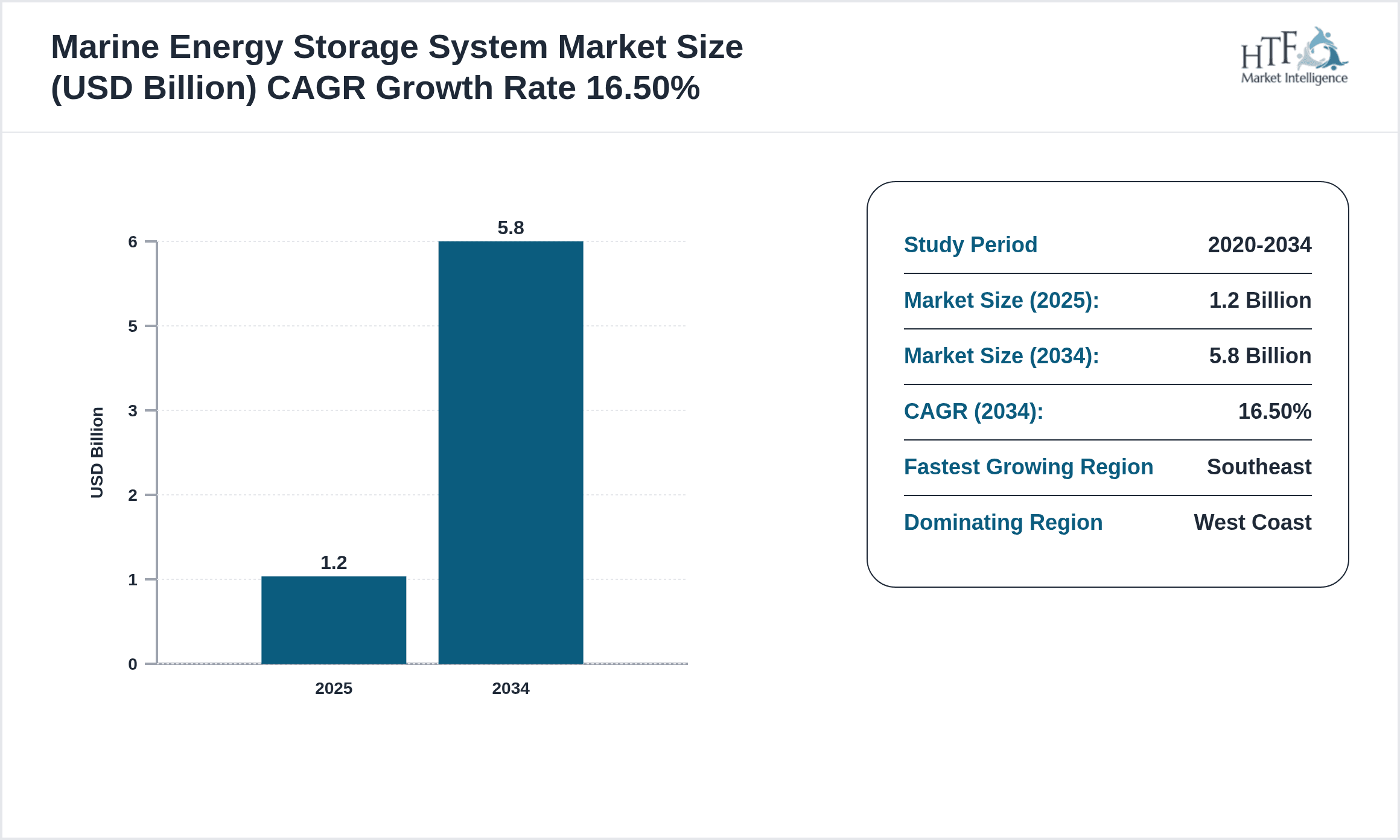
- •The market is witnessing robust growth driven by increasing offshore renewable energy projects, government incentives for clean energy, and rising demand for reliable marine power systems. The forecast projects a CAGR of 16.5% from 2024 to 2034, with the market size expanding from USD 1.2 Billion in 2024 to USD 5.8 Billion by 2034, highlighting significant opportunities for stakeholders.
- •Marine energy storage systems provide strategic value by enabling sustainable maritime operations, reducing greenhouse gas emissions, and enhancing grid stability in coastal areas. These solutions attract investments from technology developers, marine operators, and policymakers aiming to modernize the U.S. marine energy infrastructure and achieve energy resilience.
Competitive Landscape
The United States Marine Energy Storage System market is characterized by intense competition among technology innovators, energy storage manufacturers, and marine service providers. Companies focus on differentiation through advanced battery chemistries, system integration capabilities, and scalability for diverse marine applications. Strategic partnerships and collaborations are common as players seek to combine expertise in marine technologies and energy storage. Market rivalry pushes continuous innovation in energy density, durability, and environmental compliance. Competitive positioning also involves expanding regional footprints, cost optimization, and meeting stringent regulatory standards. The evolving market landscape demands agility from participants to adapt to rapidly changing technology trends, government policies, and customer requirements, fostering a dynamic environment with significant barriers for new entrants due to high R&D costs and certification complexities.
Leading Companies in United States Marine Energy Storage System Market
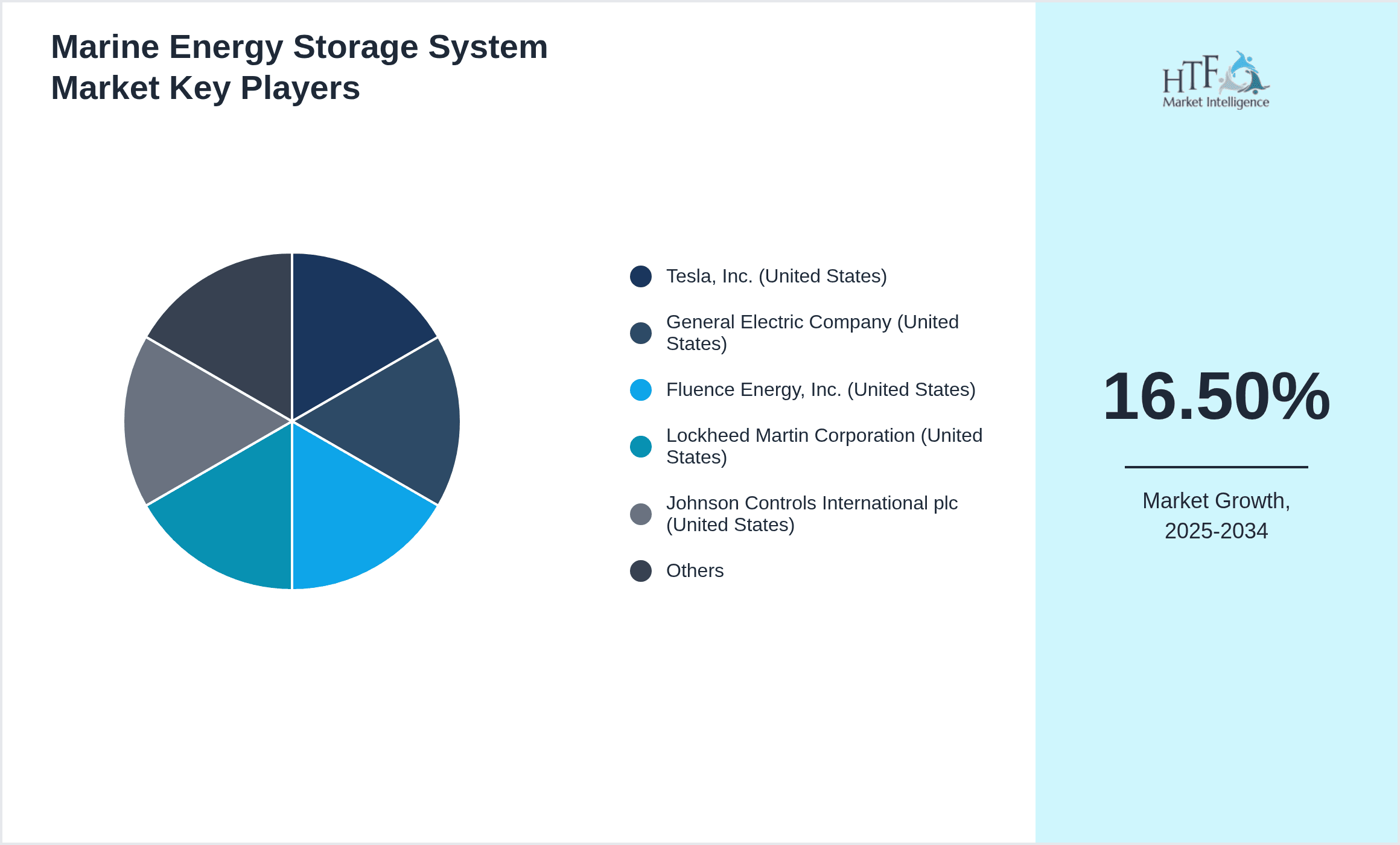
- •Tesla, Inc. (United States)
- •General Electric Company (United States)
- •Fluence Energy, Inc. (United States)
- •Lockheed Martin Corporation (United States)
- •Johnson Controls International plc (United States)
- •Saft Groupe S.A. (France)
- •LG Energy Solution (South Korea)
- •ABB Ltd. (Switzerland)
- •Panasonic Corporation (Japan)
- •Samsung SDI Co., Ltd. (South Korea)
- •Eos Energy Enterprises, Inc. (United States)
- •VARTA AG (Germany)
- •BYD Company Ltd. (China)
- •Toshiba Corporation (Japan)
- •Enersys (United States)
- •Redflow Limited (Australia)
- •Kokam Co. Ltd. (South Korea)
- •Blue Solutions (France)
- •Alevo Group SA (Switzerland)
- •NorthStar Battery Company LLC (United States)
- •EnerSys Asia Pacific (Singapore)
- •Hitachi Chemical Co., Ltd. (Japan)
- •Maxwell Technologies, Inc. (United States)
- •Saft America, Inc. (United States)
- •Aquion Energy (United States)
Market Breakdown
- •By Type
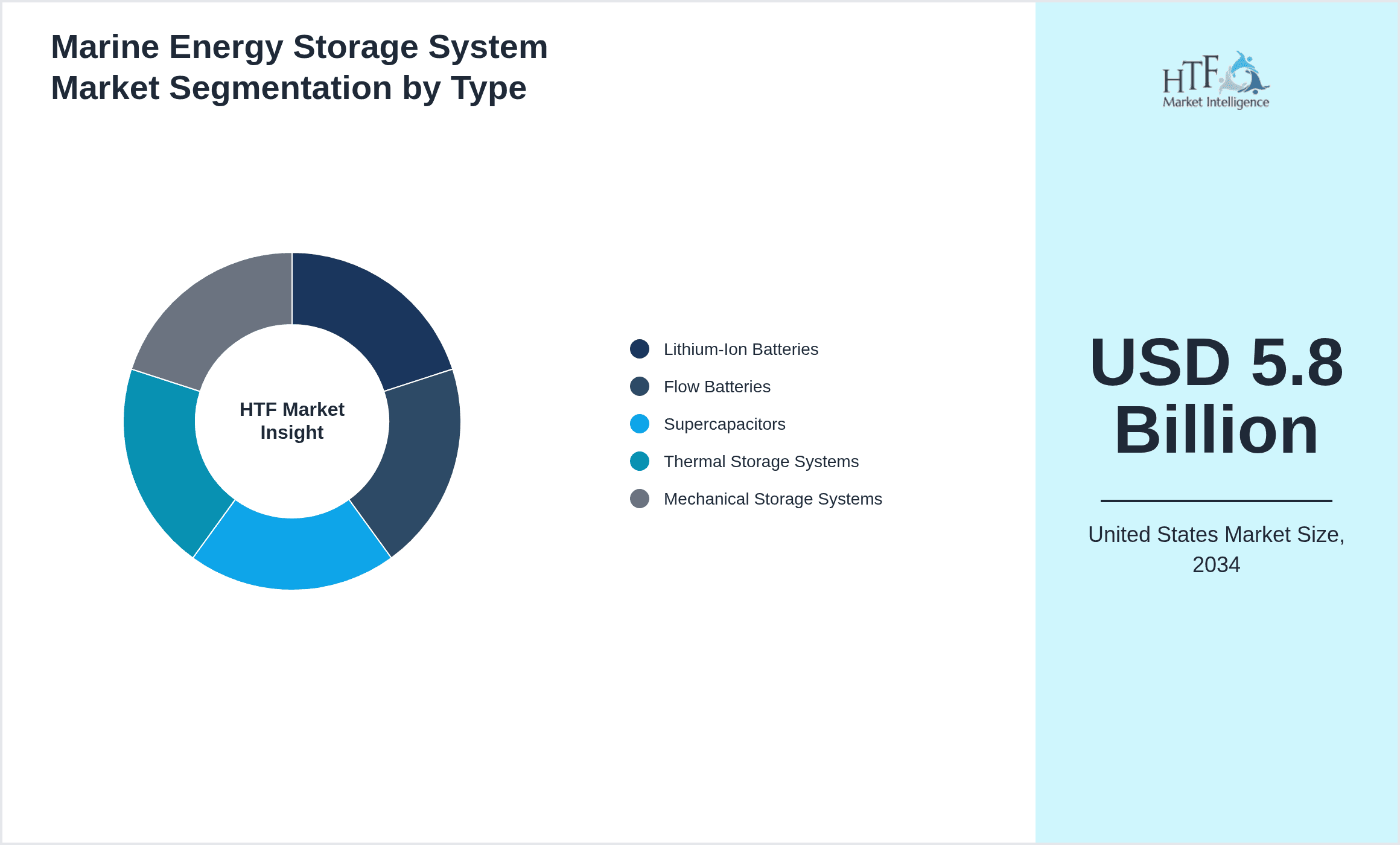
- ◦Lithium-Ion Batteries
- ◦Flow Batteries
- ◦Supercapacitors
- ◦Thermal Storage Systems
- ◦Mechanical Storage Systems
- •By Application
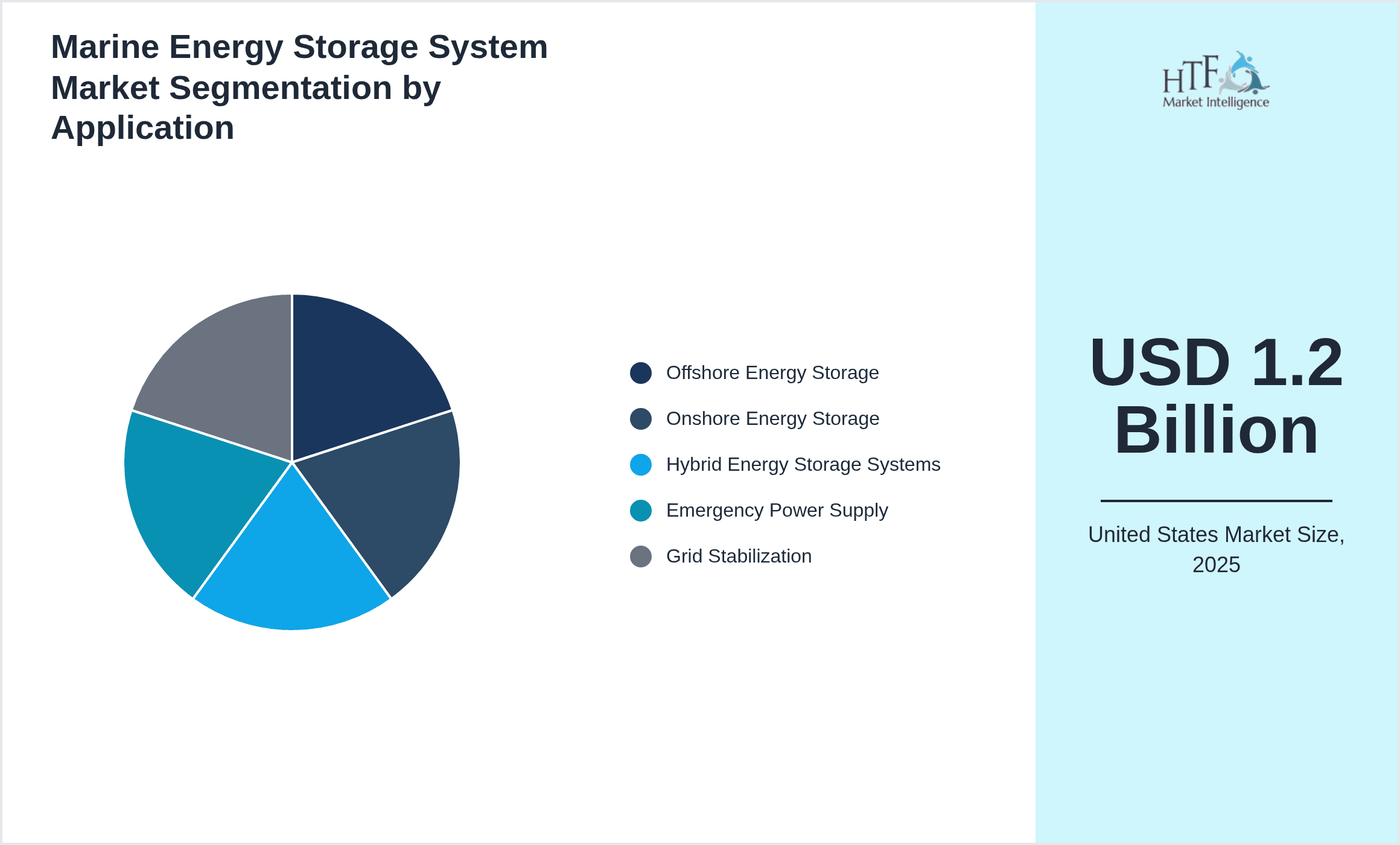
- ◦Offshore Energy Storage
- ◦Onshore Energy Storage
- ◦Hybrid Energy Storage Systems
- ◦Emergency Power Supply
- ◦Grid Stabilization
- •By End User
- ◦Marine Transportation
- ◦Offshore Oil & Gas
- ◦Renewable Energy Operators
- ◦Defense & Naval
- ◦Coastal Utilities
- •By Deployment Model
- ◦Integrated Systems
- ◦Modular Battery Units
- ◦Standalone Storage Solutions
Growth Drivers
The United States Marine Energy Storage System market growth is propelled by the rapid expansion of offshore renewable energy projects, especially wind and tidal installations, necessitating reliable and scalable energy storage solutions to manage intermittent power generation effectively. Government incentives and funding programs aimed at boosting clean energy adoption further stimulate market demand. Technological advancements in lithium-ion and flow battery systems improve energy density and lifecycle, making marine energy storage more cost-effective and efficient. Additionally, increasing maritime regulations on emissions drive the adoption of greener energy storage alternatives for vessels and offshore platforms. Rising investments in grid stabilization and emergency power supply systems in coastal regions also contribute significantly to the market's robust growth trajectory.
Market Trends
Current market trends include the integration of hybrid energy storage systems combining batteries and supercapacitors to optimize marine energy applications, enhancing system reliability and response times. Industry players are focusing on developing modular and scalable storage solutions tailored for diverse marine environments, enabling easier deployment and maintenance. The adoption of digital monitoring and predictive analytics is increasing, improving system management and operational efficiency. Companies are also exploring sustainable battery chemistries with lower environmental impact. Strategic collaborations between energy storage providers and marine renewable operators are becoming more prevalent, accelerating innovation and market penetration.
Restraints
Market growth faces restraints from high initial capital expenditure associated with advanced marine energy storage installations and complex integration requirements with existing marine infrastructure. Technical challenges such as battery degradation in harsh marine environments and the need for specialized maintenance increase operational costs. Regulatory compliance and certification processes for marine energy storage systems can delay deployment timelines. Limited awareness and adoption of emerging storage technologies among some marine operators also hamper market expansion. Furthermore, competition from traditional fossil-fuel-based power systems in certain applications restricts faster market penetration.
Opportunities
Opportunities abound in expanding offshore renewable projects requiring efficient energy storage, where advanced flow batteries offer promising scalability and lifecycle benefits. Growing interest in hybrid systems combining multiple storage technologies unlocks potential for superior performance and cost optimization. Emerging applications such as marine autonomous vessels and defense maritime systems present untapped markets. The increasing emphasis on reducing carbon emissions in maritime transport creates demand for clean energy storage solutions. Additionally, federal and state-level incentives for marine energy infrastructure modernization provide financial support, encouraging innovation and market entry by new players.
Challenges
Key challenges include managing the corrosive and variable marine environment that impacts battery durability and system reliability, requiring robust design and materials. High costs of research, development, and certification slow commercialization of novel technologies. Supply chain constraints for critical battery materials can disrupt production and increase costs. Navigating complex regulatory frameworks across federal and state jurisdictions poses compliance hurdles. Market fragmentation and lack of standardized protocols for marine energy storage systems create interoperability issues. Additionally, competition from alternative energy storage solutions and reluctance among traditional marine operators to adopt new technologies impede rapid market growth.
Regulatory Framework
Between 2020 and 2024, the United States implemented several regulations impacting the marine energy storage system market, including the Offshore Renewable Energy Act which mandates stringent environmental and safety standards for energy storage installations near coastal zones. The Federal Energy Regulatory Commission (FERC) updated grid interconnection rules to facilitate integration of marine energy storage with coastal power grids. The Department of Energy introduced incentives under the Energy Storage Grand Challenge to accelerate marine battery technology development. State-level regulations in California and the Northeast require marine energy systems to meet rigorous emissions and performance benchmarks. Compliance with the International Maritime Organization’s (IMO) energy efficiency guidelines also shapes system design and deployment, ensuring adherence to global sustainability commitments.
Market Intelligence
- •In June 2023, Fluence Energy, Inc. launched a new modular flow battery system specifically designed for offshore marine applications, offering enhanced scalability and improved lifecycle performance tailored to harsh marine environments. This product targets growing offshore wind farms and coastal utilities, aiming to optimize energy storage efficiency and reduce operational costs.
- •In September 2022, Tesla, Inc. announced a strategic partnership with a leading marine renewable energy operator to deploy lithium-ion battery storage solutions on offshore platforms along the U.S. West Coast. This collaboration focuses on integrating battery systems with tidal and wave energy converters to enhance grid stability and sustainability.
- •Recent market developments and strategic initiatives are continuously tracked through industry publications, company announcements, and regulatory filings. For the most current information, stakeholders are advised to monitor official corporate communications and recognized market intelligence platforms.
Mergers & Acquisitions
- •In March 2023, General Electric Company completed the acquisition of a U.S.-based marine battery technology startup specializing in high-capacity lithium-ion storage systems for offshore applications. This acquisition strengthens GE’s portfolio in marine energy storage and accelerates its entry into the growing offshore renewable energy market by leveraging innovative battery solutions designed for marine environments.
- •In November 2021, Johnson Controls International plc acquired a leading flow battery manufacturer in the United States to expand its footprint in marine and grid-scale energy storage markets. This move enhances Johnson Controls’ technological capabilities and aligns with its strategic focus on sustainable energy solutions tailored for marine and industrial applications.
Recent Industry News
- •In August 2024, Saft Groupe S.A. announced the launch of an advanced marine-grade lithium-ion battery system featuring enhanced safety and longer cycle life for offshore wind and tidal energy projects. The system is designed to withstand corrosive saltwater environments and extreme weather conditions, marking a significant innovation in marine energy storage solutions. Source: Saft Official Press Release
- •In February 2023, LG Energy Solution expanded its manufacturing facility in the United States to increase production capacity of lithium-ion batteries tailored for marine and offshore energy storage applications. This expansion aims to meet rising demand from renewable energy developers and maritime operators, supporting the U.S. clean energy transition goals. Source: LG Energy Solution Corporate Website
- •In July 2022, Panasonic Corporation partnered with a major U.S. offshore oil and gas company to develop hybrid energy storage systems combining lithium-ion batteries and supercapacitors for emergency power supply on marine vessels. This collaboration targets improved energy efficiency and emissions reduction in maritime operations. Source: Industry Publication
- •In December 2021, Eos Energy Enterprises, Inc. secured a significant contract to supply flow battery systems for a large-scale offshore wind farm project in the Gulf of Mexico, enhancing grid stability and renewable energy integration in the region. Source: Company Website
Regional Outlook
The West Coast currently holds a significant share of the market, primarily due to several key factors: increasing consumption rates, a burgeoning population, and robust economic momentum. These elements collectively drive demand, positioning this region as a leader in the market. On the other hand, Southeast is rapidly emerging as the fastest-growing area within the industry. This remarkable growth can be attributed to swift infrastructure development, the expansion of various industrial sectors, and a marked increase in consumer demand. These dynamics make this region a crucial player in shaping future market growth.
In our report, we cover a comprehensive analysis of the following regions and countries:
- Northeast
- Southwest
- The South
- The Midwest
| Feature | Details |
|---|---|
| Base Year Market Size | USD 1.2 Billion |
| Forecast Year Market Size | USD 5.8 Billion |
| CAGR | 16.5% |
| Forecast Period | 2026 to 2033 |
| YoY Growth | 16.1% |
| Regions Covered | Northeast, Southwest, The South, The Midwest |
| Key Companies | Tesla, Inc. (United States), General Electric Company (United States), Fluence Energy, Inc. (United States), Lockheed Martin Corporation (United States), Johnson Controls International plc (United States), Saft Groupe S.A. (France), LG Energy Solution (South Korea), ABB Ltd. (Switzerland), Panasonic Corporation (Japan), Samsung SDI Co., Ltd. (South Korea), Eos Energy Enterprises, Inc. (United States), VARTA AG (Germany), BYD Company Ltd. (China), Toshiba Corporation (Japan), Enersys (United States), Redflow Limited (Australia), Kokam Co. Ltd. (South Korea), Blue Solutions (France), Alevo Group SA (Switzerland), NorthStar Battery Company LLC (United States), EnerSys Asia Pacific (Singapore), Hitachi Chemical Co., Ltd. (Japan), Maxwell Technologies, Inc. (United States), Saft America, Inc. (United States), Aquion Energy (United States) |
United States Marine Energy Storage System Market Size, Growth & Revenue 2024-2034 - Table of Contents
Frequently Asked Questions (FAQ):
The Compact Track Loaders market is expected to see value worth 5.3 Billion in 2025.
North America currently leads the market with approximately 45% market share, followed by Europe at 28% and Asia-Pacific at 22%. The remaining regions account for 5% of the global market.
Key growth drivers include increasing construction activities, rising demand for versatile equipment in agriculture, technological advancements in track loader design, and growing preference for compact equipment in urban construction projects.