
Japan Household Coffee Grinding Machines Market Size, Growth & Revenue 2024-2034
Japan Household Coffee Grinding Machines Market is segmented by Application (Manual Brewing, Espresso Machines, Cold Brew, French Press, Drip Coffee), Type (Blade Grinders, Burr Grinders, Manual Grinders, Electric Grinders, Smart Grinders), and Geography (Hokkaido, Tohoku, Kanto, Chubu, Kansai, Chugoku, Shikoku, Kyushu)
Pricing
Report Overview
Executive Summary
- •The Japan Household Coffee Grinding Machines market includes domestic-use coffee grinders employing various technologies such as blade, burr, manual, electric, and smart grinders. It focuses on applications including manual brewing, espresso, cold brew, French press, and drip coffee, targeting household consumers interested in high-quality coffee preparation.
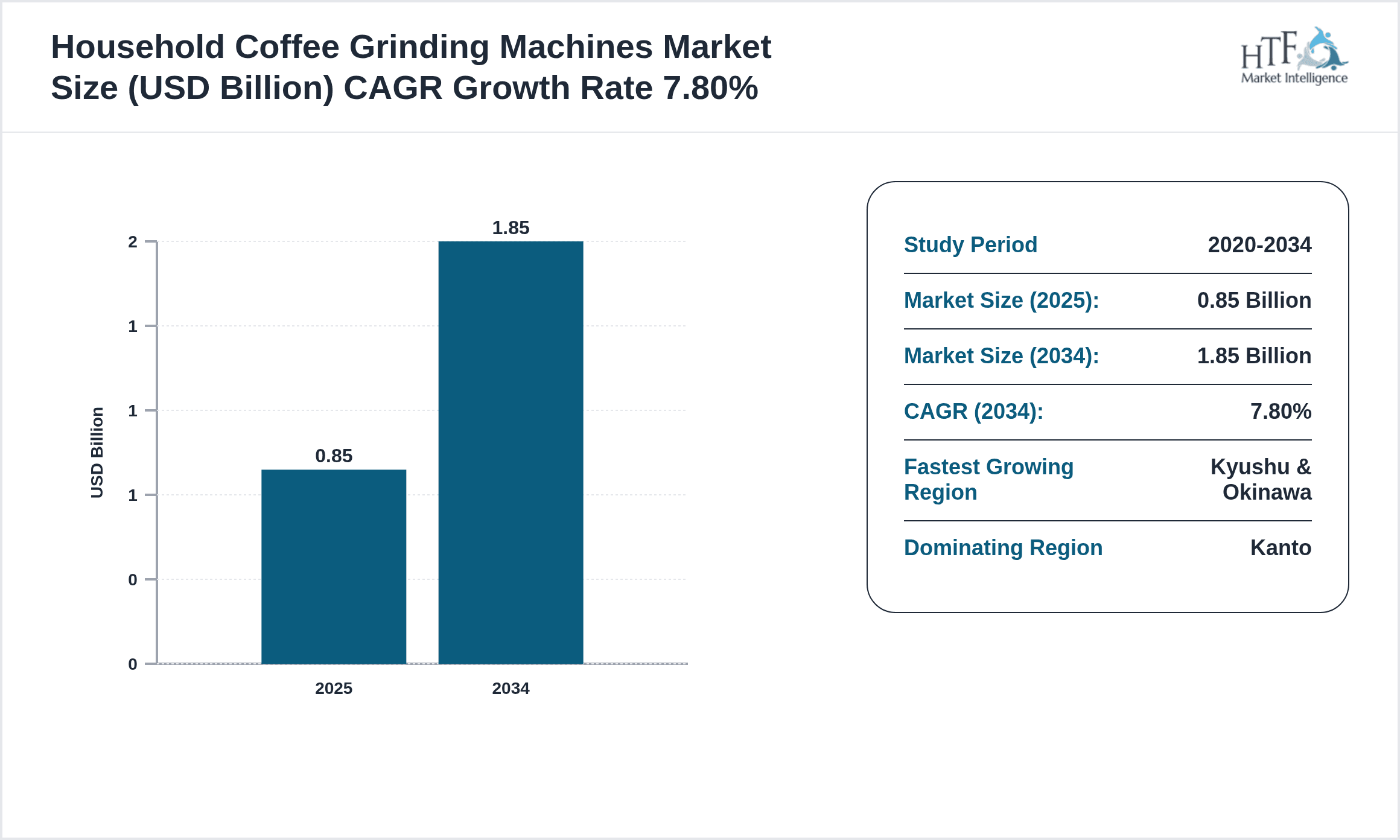
- •The market is expected to grow from USD 0.85 Billion in 2024 to USD 1.85 Billion by 2034, reflecting a CAGR of 7.8%, driven by rising coffee culture, adoption of advanced grinding technologies, and increasing demand for smart home appliances in Japan.
- •This market holds strategic importance for appliance manufacturers, coffee equipment vendors, and retailers, as it merges traditional coffee preferences with innovative technologies, supporting Japan’s evolving consumer lifestyle and specialty coffee trends.
Competitive Landscape
The competitive environment in the Japan Household Coffee Grinding Machines market is characterized by intense rivalry among domestic and international manufacturers focusing on innovation, quality, and design. Companies invest heavily in R&D to develop grinders with enhanced precision, durability, and smart connectivity features. Market leaders leverage advanced technology integration and strong brand presence to maintain market share. Strategic partnerships with coffee retailers and e-commerce platforms enhance distribution reach. Price competition exists between traditional manual grinders and premium electric or smart models, while product differentiation is achieved through user experience improvements and sustainability initiatives. Regional players capitalize on local consumer preferences and after-sales service. Market entry barriers include high capital investment for technology development and stringent quality standards. The evolving competitive landscape reflects growing consumer demand for personalized coffee experiences and digital integration, encouraging ongoing innovation and consolidation trends.
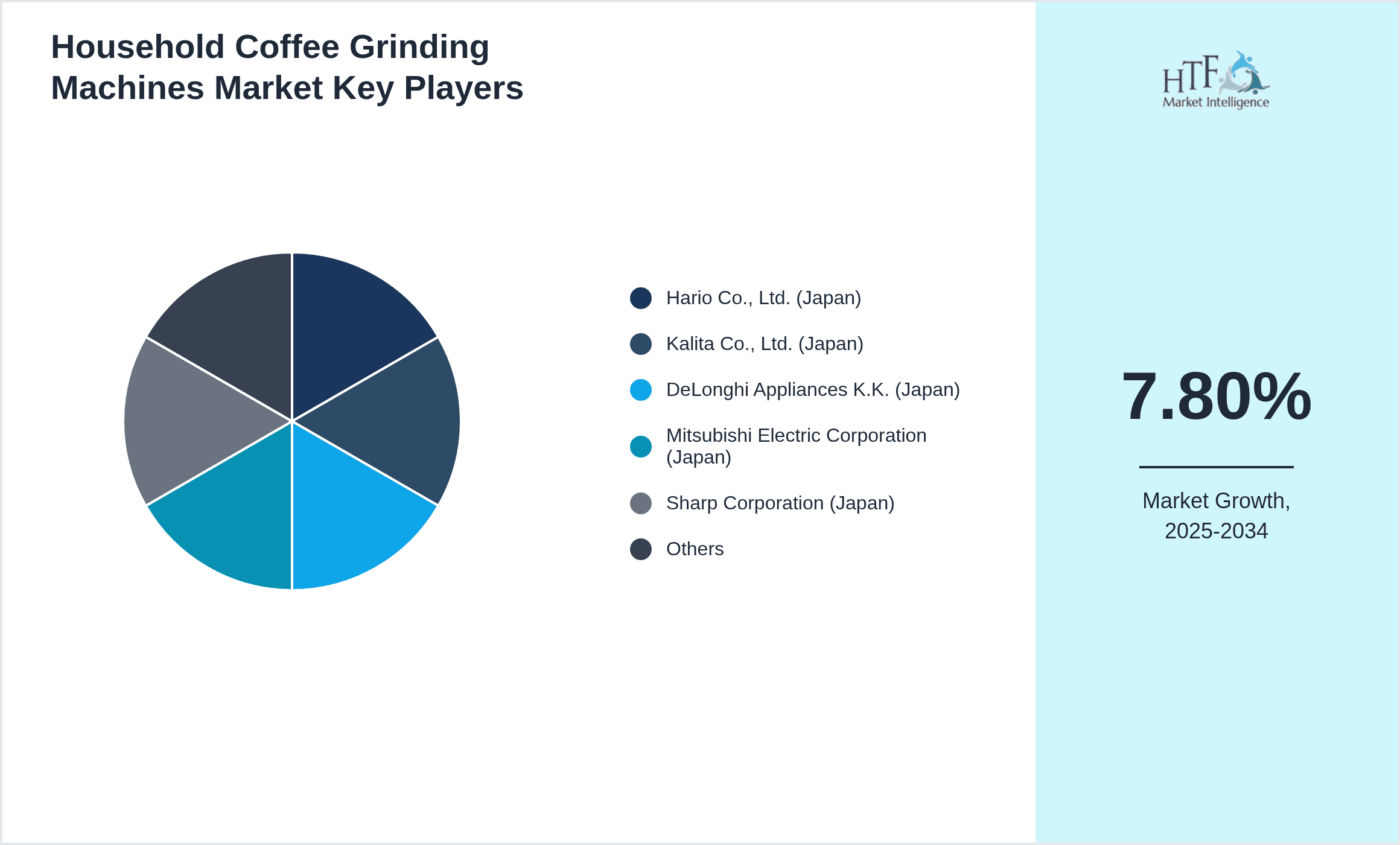
Leading Companies in Japan Household Coffee Grinding Machines Market
- •Hario Co., Ltd. (Japan)
- •Kalita Co., Ltd. (Japan)
- •DeLonghi Appliances K.K. (Japan)
- •Mitsubishi Electric Corporation (Japan)
- •Sharp Corporation (Japan)
- •Panasonic Corporation (Japan)
- •Bodum Japan K.K. (Japan)
- •Krups Japan (Japan)
- •Breville Japan (Japan)
- •KitchenAid Japan (Japan)
- •Siroca Corporation (Japan)
- •Toshiba Lifestyle Products & Services Corporation (Japan)
- •Tiger Corporation (Japan)
- •Zojirushi Corporation (Japan)
- •Fellow Japan (Japan)
- •Wilfa Japan (Japan)
- •Melitta Japan (Japan)
- •Russell Hobbs Japan (Japan)
- •Deerma Japan (Japan)
- •Niche Zero (Japan)
- •Comandante Japan (Japan)
- •Porlex Japan (Japan)
- •Baratza Japan (Japan)
- •OXO Japan (Japan)
- •Eureka Japan (Japan)

Market Segmentation
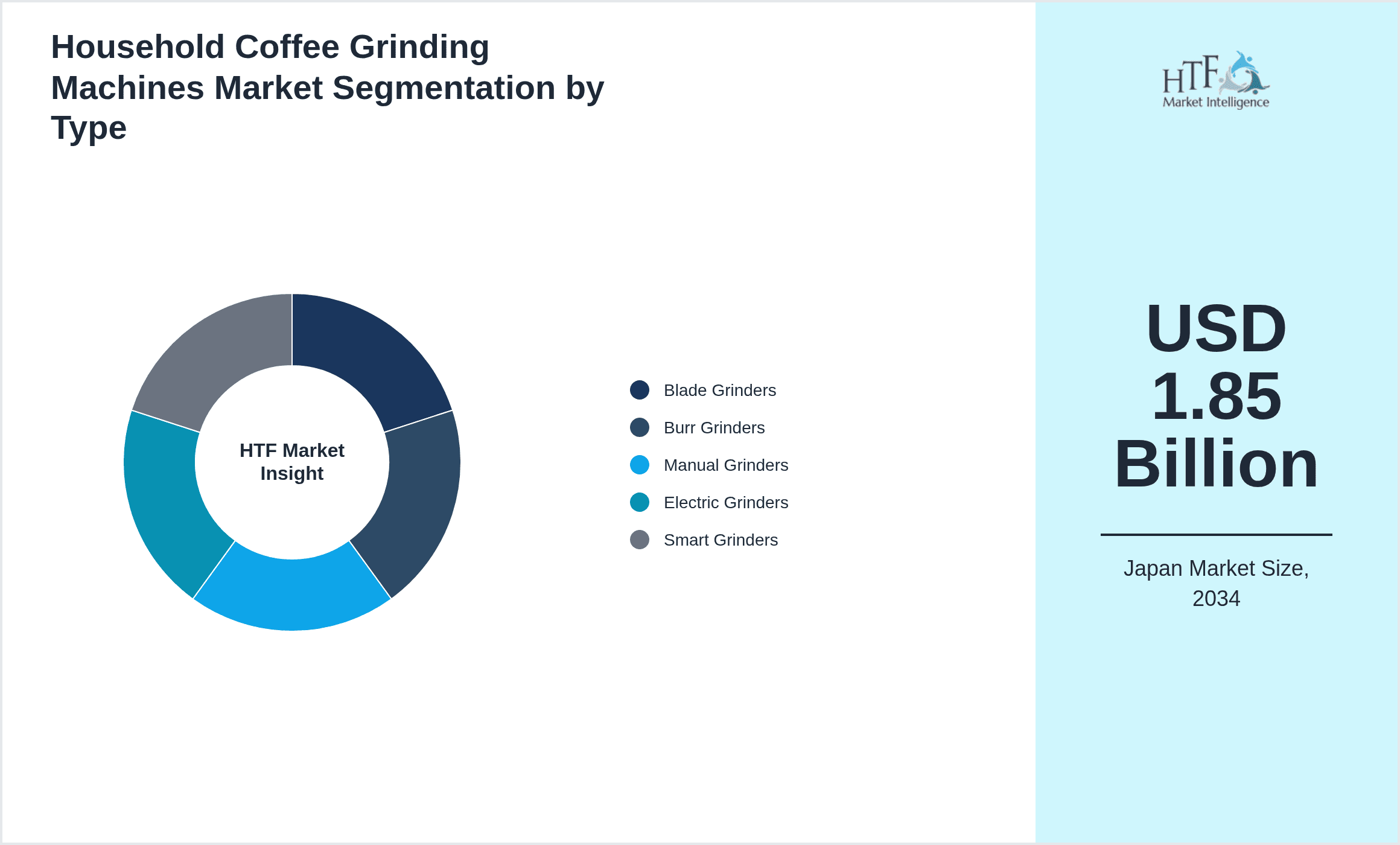
- •By Type
- ◦Blade Grinders
- ◦Burr Grinders
- ◦Manual Grinders
- ◦Electric Grinders
- ◦Smart Grinders
- •By Application
- ◦Manual Brewing
- ◦Espresso Machines
- ◦Cold Brew
- ◦French Press
- ◦Drip Coffee
- •By Distribution Channel
- ◦Online Retail
- ◦Specialty Coffee Shops
- ◦Electronics Stores
- ◦Department Stores
- •By Technology
- ◦Conical Burr Technology
- ◦Flat Burr Technology
- ◦Blade Technology
- ◦Smart Connectivity Features
Growth Drivers
- •The increasing coffee culture in Japan, fueled by a rising preference for specialty and gourmet coffee, drives demand for advanced household coffee grinding machines. Consumers seek fresh ground coffee for superior taste, encouraging adoption of burr and smart grinders offering precision and consistency.
- •Technological advancements such as smart connectivity, app-controlled grinding settings, and noise reduction innovations enhance user experience, propelling market growth. These features appeal to tech-savvy consumers valuing convenience and customization.
- •Growing urbanization and increasing disposable income among Japanese households support premium appliance purchases, including coffee grinders. The trend towards home brewing intensified during the COVID-19 pandemic, establishing long-term consumer habits favoring in-home coffee preparation.
- •Rising awareness about the health benefits of freshly ground coffee beans and sustainable consumption patterns encourage consumers to invest in quality grinders, further boosting market expansion.
- •E-commerce growth and expanding specialty coffee retail networks improve product accessibility and variety, enabling market penetration even in remote regions and smaller cities across Japan.
Market Trends
- •Smart household coffee grinders with IoT integration are gaining traction, providing remote operation, personalized grind profiles, and integration with coffee machines, aligning with Japan’s advanced technology adoption culture.
- •Sustainability is becoming a trend, with manufacturers focusing on eco-friendly materials, energy-efficient motors, and recyclable packaging to appeal to environmentally conscious consumers.
- •Compact and aesthetically designed grinders tailored for small Japanese living spaces are trending, combining functionality with modern minimalist styles favored by urban dwellers.
- •There is a noticeable rise in manual grinders among coffee enthusiasts valuing traditional brewing methods, craftsmanship, and portability, especially for travel and outdoor use.
- •Collaborations between coffee equipment brands and specialty coffee roasters promote co-branded products and educational campaigns, driving consumer engagement and brand loyalty.
Market Restraints
- •High initial purchase cost and maintenance expenses for premium and smart coffee grinders deter price-sensitive consumers, limiting market penetration among lower-income households.
- •Limited awareness and understanding of grinder technology differences among average consumers result in lower adoption of advanced models, restricting growth opportunities.
- •Competitive pressure from coffee shops and cafes offering freshly ground coffee reduces the perceived need for household grinders among casual coffee drinkers.
- •Supply chain disruptions and component shortages due to global economic factors intermittently impact availability and pricing, challenging manufacturers and retailers.
- •Complexity in operating smart grinders and lack of seamless integration with diverse coffee machines can discourage potential buyers unfamiliar with technology.
Market Opportunities
- •Expanding product portfolios to include multi-functional grinders combining grinding, brewing, and storage features cater to convenience-seeking consumers, opening new revenue streams.
- •Growing demand in regional sub-markets such as Kyushu & Okinawa offers opportunities for targeted marketing and distribution expansion, leveraging rising coffee consumption trends.
- •Innovation in smart grinder technologies with AI-driven customization and voice assistant compatibility can attract tech enthusiasts and younger demographics.
- •Partnerships with specialty coffee roasters and subscription services provide cross-promotional opportunities, enhancing customer engagement and recurring sales.
- •Increasing popularity of sustainable and zero-waste lifestyles encourages development of eco-friendly grinders, biodegradable components, and repair services, appealing to conscious consumers.
Market Challenges
- •Intense competition from both established domestic brands and international entrants requires continuous innovation and aggressive marketing, increasing operational costs.
- •Rapid technological changes demand significant investment in R&D and skilled workforce, which small and mid-sized companies may struggle to sustain.
- •Regulatory compliance with safety standards and electromagnetic compatibility for electronic grinders adds complexity to product development and certification processes.
- •Consumer skepticism towards smart appliances due to data privacy and cybersecurity concerns may slow adoption rates of smart grinders.
- •Seasonal demand fluctuations influenced by cultural events and holidays create inventory management challenges for manufacturers and retailers.
Regulatory Overview
- •Recent updates in Japan’s Electrical Appliance and Material Safety Law (2022) have introduced stricter safety testing requirements for household coffee grinding machines, mandating enhanced insulation and electromagnetic compatibility standards to minimize risks.
- •Energy efficiency labeling regulations updated in 2023 require manufacturers to meet higher standards for power consumption, encouraging development of low-energy electric grinders and promoting consumer awareness.
- •Japan’s Act on the Promotion of Effective Utilization of Resources emphasizes use of recyclable materials and reduction of electronic waste, impacting design and disposal processes for coffee grinders.
- •Compliance with the Consumer Product Safety Act mandates clear labeling, user instructions in Japanese, and recall procedures, ensuring consumer protection and product reliability.
- •Ongoing government incentives for smart appliance integration support innovation in connected coffee grinding machines through subsidies and technical support programs.
Industry Insights
In March 2023, Hario Co., Ltd. launched an advanced smart burr grinder featuring Bluetooth connectivity and app-based grind size customization, targeting tech-savvy consumers seeking personalized coffee experiences. This product integrates seamlessly with popular espresso machines, enhancing home brewing convenience in Japan’s growing specialty coffee segment. Meanwhile, in September 2022, Panasonic Corporation introduced a compact electric grinder with noise reduction technology and energy-efficient motors, designed specifically for small urban kitchens. These innovations reflect increasing consumer demand for technologically advanced, user-friendly grinders that cater to space constraints and lifestyle preferences in Japanese households.
Mergers & Acquisitions
- •In July 2023, DeLonghi Appliances K.K. acquired a majority stake in Siroca Corporation, a Japanese manufacturer known for its innovative kitchen appliances including coffee grinders. This strategic move aims to consolidate market presence in Japan by combining DeLonghi's global brand with Siroca's local innovation expertise, enhancing product portfolio diversity and expanding distribution channels across urban and regional markets.
- •In November 2022, Sharp Corporation completed the acquisition of a controlling interest in Fellow Japan, a niche player specializing in premium manual and smart coffee grinders. This acquisition supports Sharp’s strategy to penetrate the specialty coffee equipment segment by leveraging Fellow’s design capabilities and loyal consumer base, fostering innovation and elevating market competitiveness.
Recent Industry News
- •15th January 2025, Panasonic Corporation announced the expansion of its coffee grinder manufacturing facility in Osaka, increasing production capacity by 30% to meet rising domestic demand for electric and smart grinders. The investment includes state-of-the-art automation and quality control systems to enhance product reliability and reduce lead times. This expansion is expected to strengthen Panasonic's position in Japan’s growing household coffee grinding machines market. Source: Panasonic Official Press Release
- •10th October 2024, Kalita Co., Ltd. launched a limited-edition manual burr grinder collaboration with a renowned Japanese ceramic artist, combining functionality with traditional craftsmanship. The product targets premium consumers seeking aesthetic appeal alongside performance, reinforcing Kalita’s brand heritage and differentiating it within the competitive market. Source: Kalita Corporate Website
- •22nd June 2023, DeLonghi Appliances K.K. partnered with a leading Japanese e-commerce platform to create exclusive online bundles of smart coffee grinders and espresso machines, enhancing customer convenience and leveraging digital sales channels. This strategic alliance aims to capitalize on increasing e-commerce penetration and consumer preference for bundled coffee solutions. Source: Industry Publication
- •5th March 2023, Hario Co., Ltd. introduced a new eco-friendly line of manual coffee grinders made from biodegradable materials and featuring modular components for easy repair. This initiative aligns with Japan’s growing sustainability movement and targets environmentally conscious consumers, potentially setting new industry standards. Source: Hario Official Announcement
Regional Outlook
The Kanto currently holds a significant share of the market, primarily due to several key factors: increasing consumption rates, a burgeoning population, and robust economic momentum. These elements collectively drive demand, positioning this region as a leader in the market. On the other hand, Kyushu & Okinawa is rapidly emerging as the fastest-growing area within the industry. This remarkable growth can be attributed to swift infrastructure development, the expansion of various industrial sectors, and a marked increase in consumer demand. These dynamics make this region a crucial player in shaping future market growth.
In our report, we cover a comprehensive analysis of the following regions and countries:
- Hokkaido
- Tohoku
- Kanto
- Chubu
- Kansai
- Chugoku
- Shikoku
- Kyushu
| Feature | Details |
|---|---|
| Base Year Market Size | USD 0.85 Billion |
| Forecast Year Market Size | USD 1.85 Billion |
| CAGR | 7.8% |
| Forecast Period | 2026 to 2033 |
| YoY Growth | 7.5% |
| Regions Covered | Hokkaido, Tohoku, Kanto, Chubu, Kansai, Chugoku, Shikoku, Kyushu |
| Key Companies | Hario Co., Ltd. (Japan), Kalita Co., Ltd. (Japan), DeLonghi Appliances K.K. (Japan), Mitsubishi Electric Corporation (Japan), Sharp Corporation (Japan) |
Japan Household Coffee Grinding Machines Market Size, Growth & Revenue 2024-2034 - Table of Contents
Frequently Asked Questions (FAQ):
The Compact Track Loaders market is expected to see value worth 5.3 Billion in 2025.
North America currently leads the market with approximately 45% market share, followed by Europe at 28% and Asia-Pacific at 22%. The remaining regions account for 5% of the global market.
Key growth drivers include increasing construction activities, rising demand for versatile equipment in agriculture, technological advancements in track loader design, and growing preference for compact equipment in urban construction projects.