
South America Rare Earth Magnet Market Size, Growth & Revenue 2025-2034
South America Rare Earth Magnet Market is segmented by Application (Automotive, Electronics, Renewable Energy, Industrial Machinery, Healthcare), Type (Neodymium Iron Boron, Samarium Cobalt, Alnico, Ceramic, Flexible), By End-Use Industry (Consumer Electronics, Automotive, Energy, Healthcare), and Geography (Brazil, Argentina, Chile, Peru, Colombia, Rest of South America)
Pricing
Report Overview
Market Definition & Scope
- •The South America Rare Earth Magnet Market involves magnets made from rare earth elements with strong magnetic properties used across multiple industries.
- •Key magnet types include Neodymium Iron Boron, Samarium Cobalt, Alnico, Ceramic, and Flexible, serving automotive, electronics, renewable energy, and healthcare sectors.
- •This market covers the full value chain from raw material extraction to manufacturing and application in end-use industries within Brazil, Argentina, Chile, Peru, and Colombia.
- •Growing demand for energy-efficient technologies and sustainable industrial solutions drives market growth, leveraging South America’s mineral resources and expanding industrial base.
The Future of Revolutionising Energy and Technology with Rare Earth Magnets
- •Rare earth magnets are central to advancing electric vehicles, renewable energy, and high-performance electronics in South America.
- •Innovations in magnet composition and manufacturing are enabling lighter, stronger, and more efficient components.
- •South America is poised to become a key supplier and consumer in the global rare earth magnet ecosystem.
Industry Challenges in South America’s Rare Earth Magnet Market
- •Limited regional processing infrastructure increases dependency on imports and raises production costs.
- •High raw material extraction costs and complex supply chain logistics hinder market scalability.
- •Adoption barriers persist due to technology transfer gaps and lack of skilled workforce.
Rare Earth Magnet Innovation: The Game Changer
- •Advanced magnet technologies offer superior magnetic strength and thermal stability essential for high-demand applications.
- •Cost-efficient manufacturing methods reduce material waste and production expenses.
- •Enhanced magnet performance improves operational efficiency in electric motors and renewable energy systems.
Market Segmentation
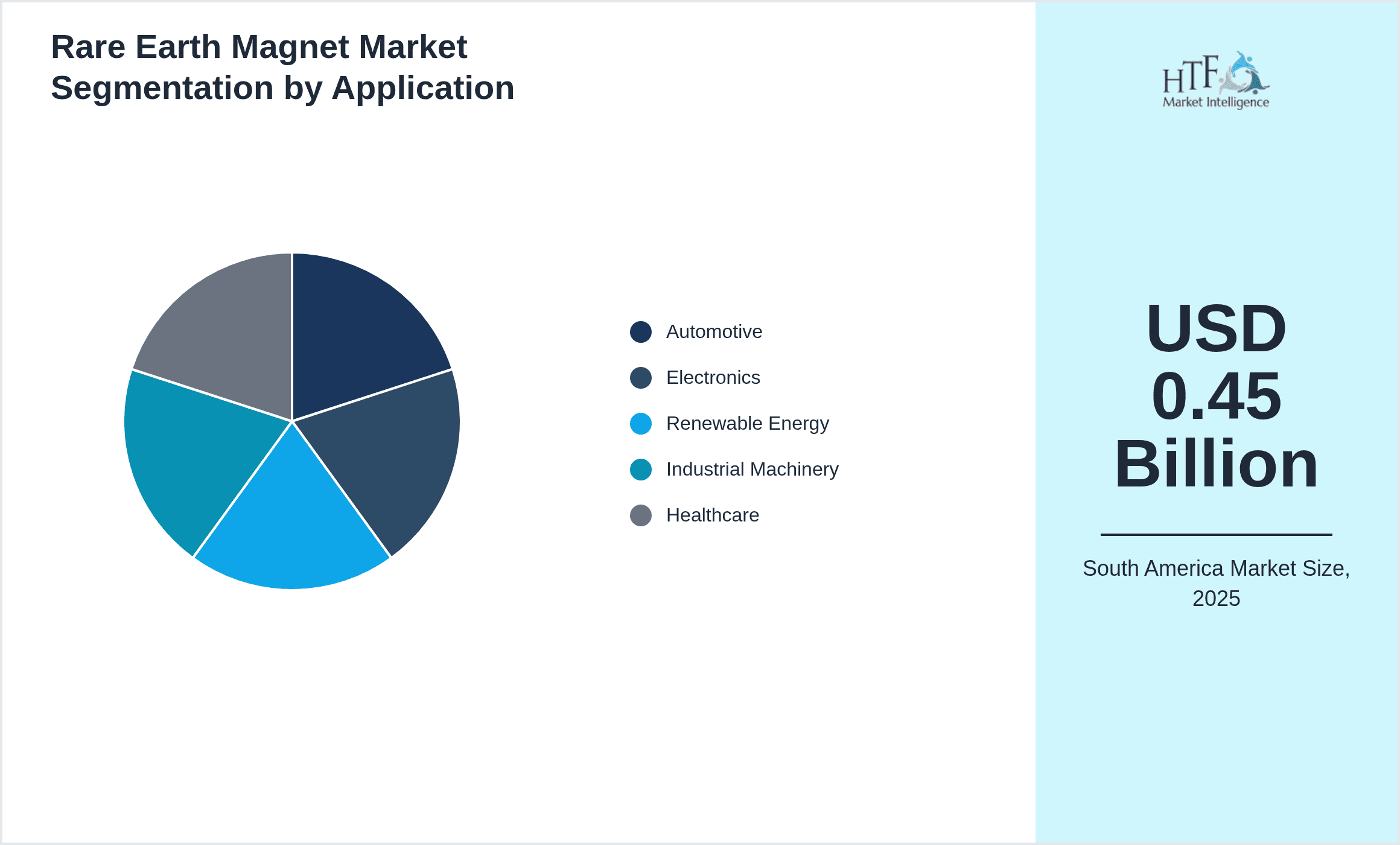
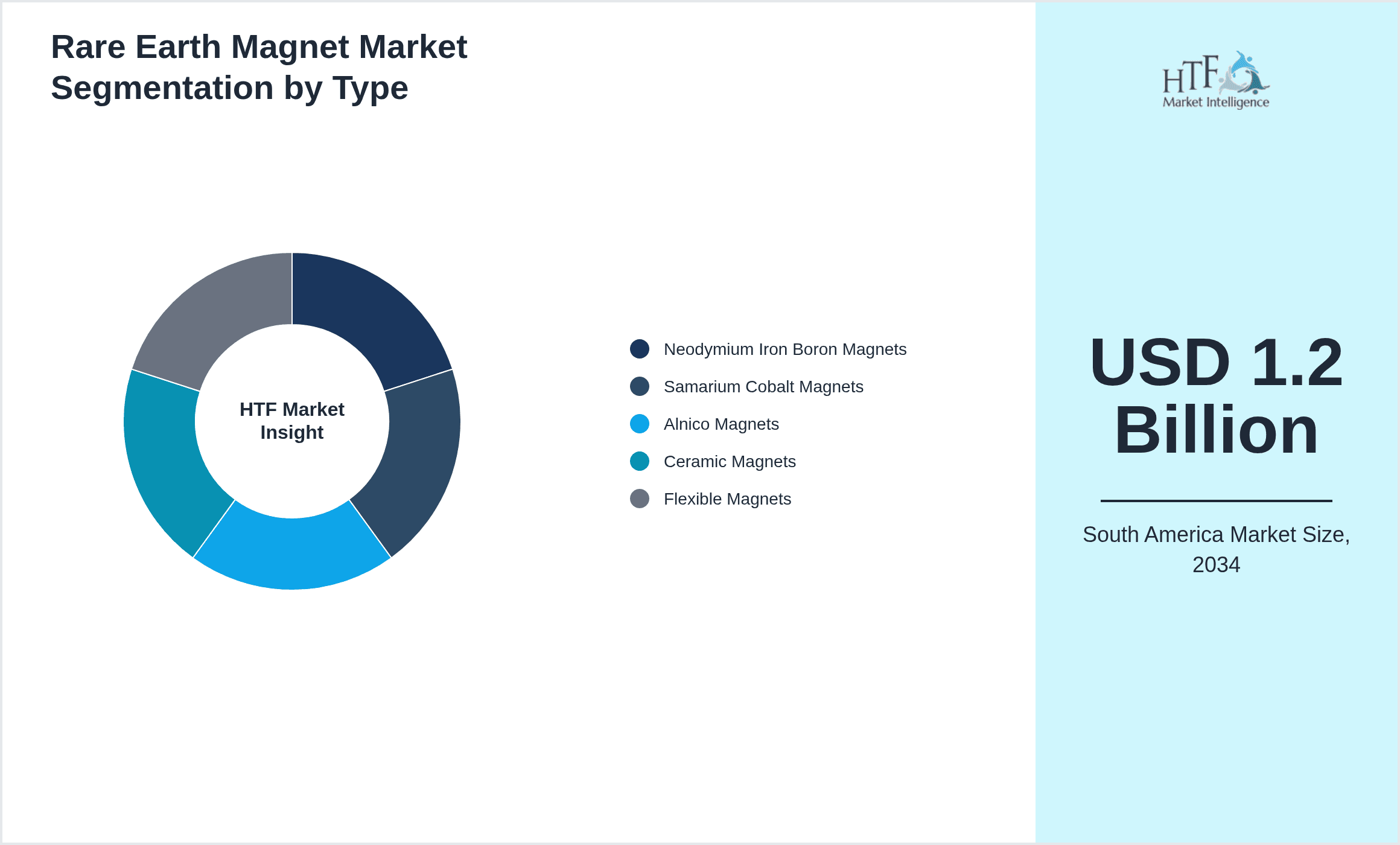
- •By Type
- ◦Neodymium Iron Boron Magnets
- ◦Samarium Cobalt Magnets
- ◦Alnico Magnets
- ◦Ceramic Magnets
- ◦Flexible Magnets
- •By Application
- ◦Automotive
- ◦Electronics
- ◦Renewable Energy
- ◦Industrial Machinery
- ◦Healthcare
- •By End-Use Industry
- ◦Consumer Electronics
- ◦Automotive Manufacturing
- ◦Energy Sector
- ◦Healthcare Equipment
- •By Distribution Channel
- ◦Direct Sales
- ◦Distributors
- ◦Online Platforms
Market Explosion: A Rapidly Growing Sector
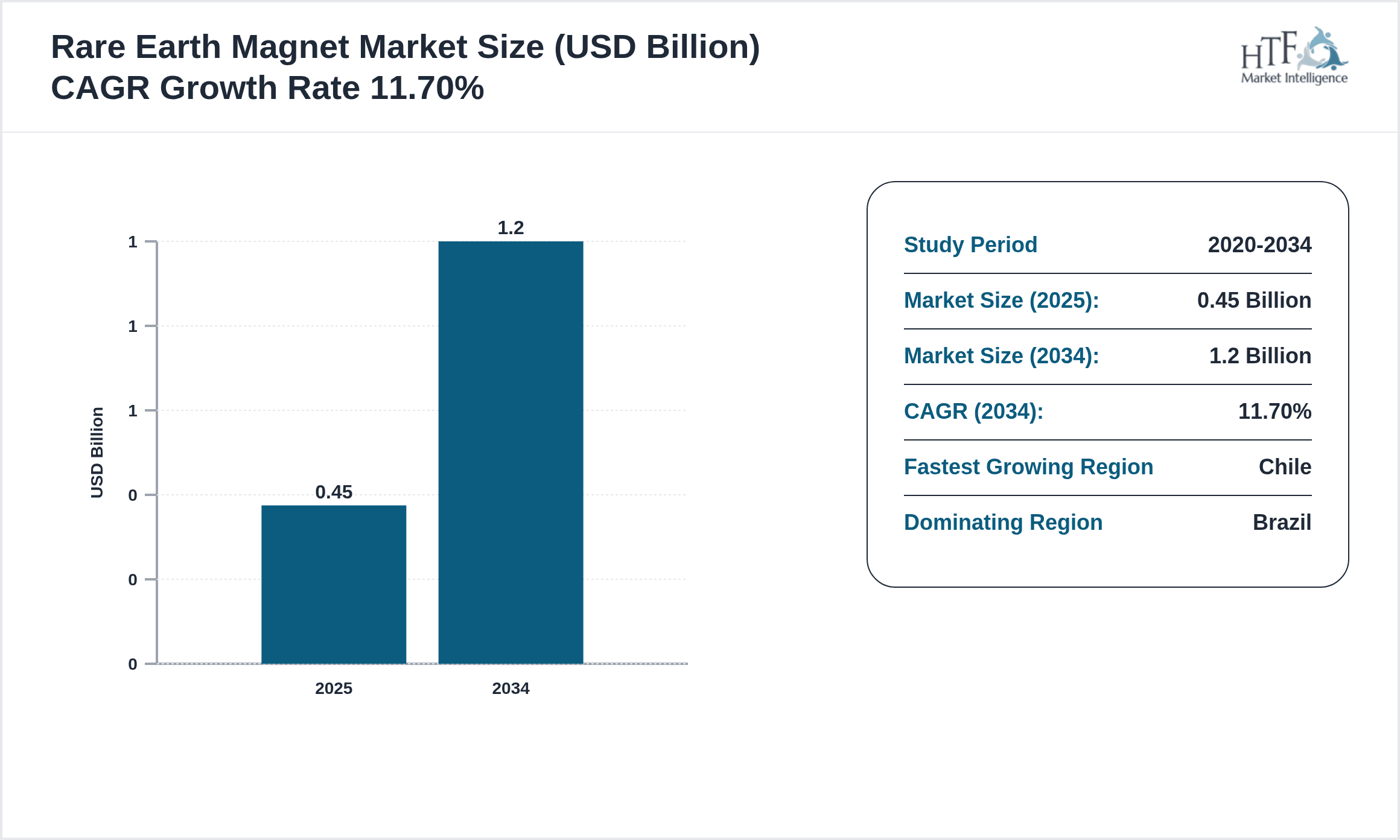
- •The South America Rare Earth Magnet Market is valued at USD 0.45 Billion in 2025.
- •Forecast to reach USD 1.20 Billion by 2034, reflecting strong regional industrial growth.
- •Expected CAGR of 11.7% between 2025 and 2034 driven by rising demand in automotive and renewable sectors.
- •Year-over-year growth estimated at 11.2%, reflecting accelerating adoption of rare earth magnet technologies.
Key Drivers of Growth
- •Government incentives for green energy and electric vehicle manufacturing stimulate rare earth magnet demand.
- •Strategic partnerships between local manufacturers and global technology firms enhance market capabilities.
- •Continuous technological innovation improves magnet performance and cost-effectiveness, expanding application scope.
Dominant Segments
- •Neodymium Iron Boron magnets lead product types due to superior magnetic strength and versatility.
- •Automotive and renewable energy applications dominate due to increasing electrification and clean energy initiatives.
Leading the Charge: Key Players and Innovations
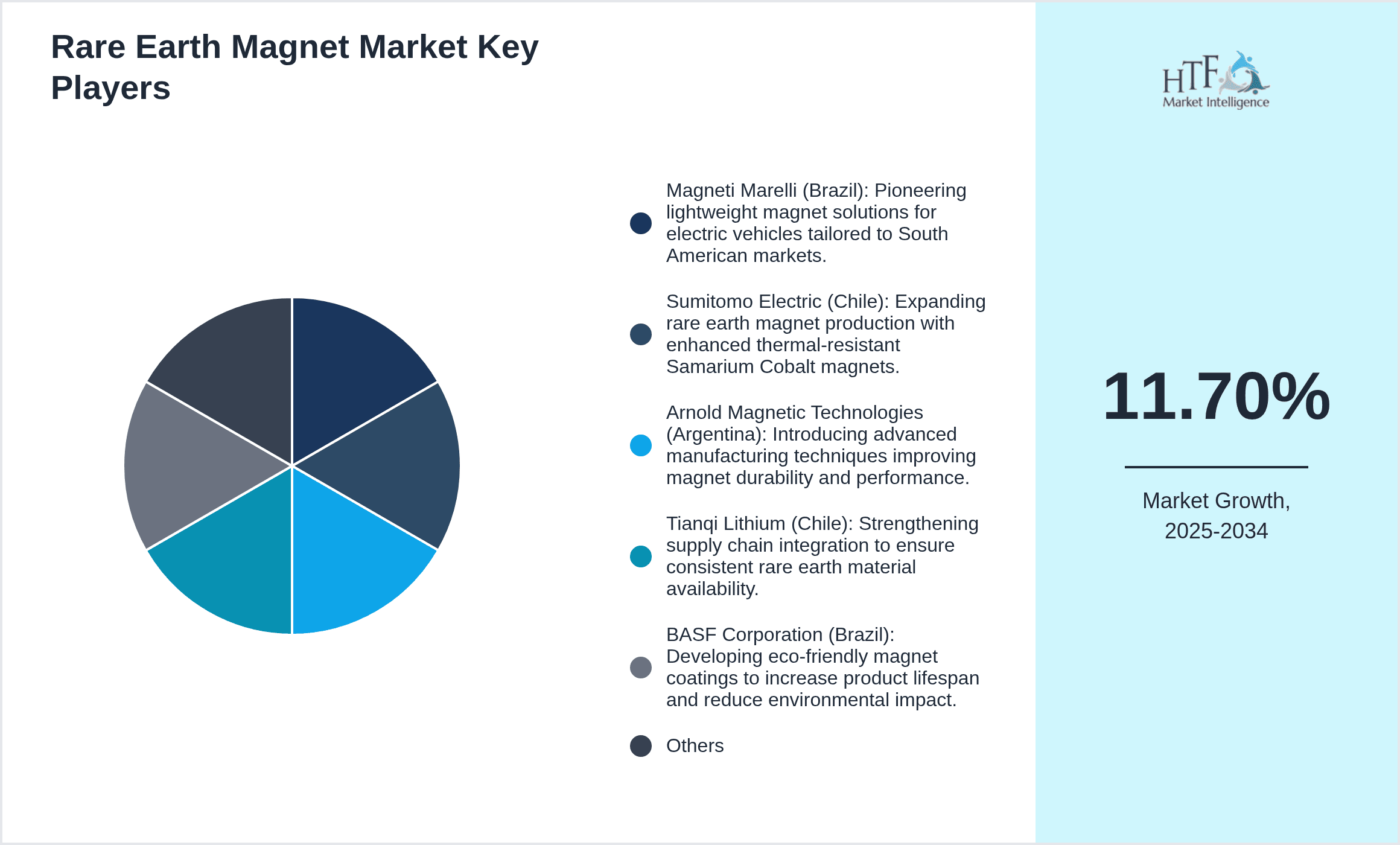
- •Magneti Marelli (Brazil): Pioneering lightweight magnet solutions for electric vehicles tailored to South American markets.
- •Sumitomo Electric (Chile): Expanding rare earth magnet production with enhanced thermal-resistant Samarium Cobalt magnets.
- •Arnold Magnetic Technologies (Argentina): Introducing advanced manufacturing techniques improving magnet durability and performance.
- •Tianqi Lithium (Chile): Strengthening supply chain integration to ensure consistent rare earth material availability.
- •BASF Corporation (Brazil): Developing eco-friendly magnet coatings to increase product lifespan and reduce environmental impact.
- •Hitachi Metals (Brazil): Innovating compact magnet designs for high-efficiency electric motors in automotive and industrial sectors.
- •Niroo Research Institute (Argentina): Advancing research in rare earth magnet alloys for renewable energy applications.
- •China Rare Earth Holdings (Brazil): Expanding local manufacturing to reduce import dependence and optimize logistics.
- •VACUUMSCHMELZE GmbH (Chile): Launching new flexible magnet products enhancing design versatility for consumer electronics.
Competitive Landscape
The South America Rare Earth Magnet Market features intense competition among multinational corporations and emerging local manufacturers. Companies focus on innovation to differentiate through enhanced magnet properties such as strength, thermal stability, and cost efficiency. Strategic alliances and localized production facilities mitigate supply chain risks and reduce reliance on imports. Market rivalry drives continuous R&D investments, pushing advancements in magnet composition and manufacturing processes. Price competitiveness and technology differentiation remain key to capturing diverse industrial segments. Regional players leverage partnerships with global firms to access cutting-edge technologies while meeting local demand. The competitive environment fosters a dynamic market with evolving product offerings aligned with South America’s energy transition and industrial modernization goals.
Future Outlook: A Connected and Sustainable Ecosystem
- •Expansion into electric vehicle and renewable energy sectors will fuel sustained market growth across South America.
- •Brazil is expected to remain the dominating country, while Chile emerges as the fastest-growing market driven by mining and manufacturing investments.
- •Long-term transformation involves integration of sustainable sourcing, circular economy practices, and smart manufacturing technologies.
The Road Ahead: Embrace the Rare Earth Magnet Revolution
- •The South America Rare Earth Magnet Market is set to transform regional industries by enabling electrification and green technologies at scale.
- •Long-term impacts include enhanced industrial competitiveness, reduced environmental footprint, and leadership in critical magnet technologies.
Regional Outlook
The Brazil currently holds a significant share of the market, primarily due to several key factors: increasing consumption rates, a burgeoning population, and robust economic momentum. These elements collectively drive demand, positioning this region as a leader in the market. On the other hand, Chile is rapidly emerging as the fastest-growing area within the industry. This remarkable growth can be attributed to swift infrastructure development, the expansion of various industrial sectors, and a marked increase in consumer demand. These dynamics make this region a crucial player in shaping future market growth.
In our report, we cover a comprehensive analysis of the following regions and countries:
- Brazil
- Argentina
- Chile
- Peru
- Colombia
- Rest of South America
| Feature | Details |
|---|---|
| Base Year Market Size | USD 0.45 Billion |
| Forecast Year Market Size | USD 1.2 Billion |
| CAGR | 11.7% |
| Forecast Period | 2026 to 2033 |
| YoY Growth | 11.2% |
| Regions Covered | Brazil, Argentina, Chile, Peru, Colombia, Rest of South America |
| Key Companies | Magneti Marelli (Brazil), Sumitomo Electric (Chile), Arnold Magnetic Technologies (Argentina), Tianqi Lithium (Chile), BASF Corporation (Brazil), Hitachi Metals (Brazil), Niroo Research Institute (Argentina), China Rare Earth Holdings (Brazil), VACUUMSCHMELZE GmbH (Chile) |
South America Rare Earth Magnet Market Size, Growth & Revenue 2025-2034 - Table of Contents
Frequently Asked Questions (FAQ):
The Compact Track Loaders market is expected to see value worth 5.3 Billion in 2025.
North America currently leads the market with approximately 45% market share, followed by Europe at 28% and Asia-Pacific at 22%. The remaining regions account for 5% of the global market.
Key growth drivers include increasing construction activities, rising demand for versatile equipment in agriculture, technological advancements in track loader design, and growing preference for compact equipment in urban construction projects.