
South America Employee Monitoring Software Market - Outlook 2020-2034
South America Employee Monitoring Software Market is segmented by Type (Cloud-Based Solutions, On-Premise Solutions, Hybrid Solutions, Mobile Monitoring, Desktop Monitoring), Application (Remote Workforce Management, Productivity Analysis, Compliance Monitoring, Security Surveillance, Time Tracking), Industry Vertical (Information Technology, Financial Services, Manufacturing, Retail & E-commerce, Healthcare), Deployment Model (Cloud Deployment, On-Premise Deployment, Hybrid Deployment), and Geography (Brazil, Argentina, Chile, Peru, Colombia, Rest of South America)
Pricing
Report Overview
Executive Summary
- •The South America Employee Monitoring Software market comprises software suites designed to oversee and analyze employee activities, ensuring productivity, compliance, and security across enterprises. These solutions offer functionalities such as remote workforce management, time tracking, security surveillance, and productivity analysis, supported by cloud-based, on-premise, hybrid, mobile, and desktop deployment models. The market addresses the increasing need for efficient workforce oversight driven by the rise of remote work and regulatory compliance demands in South America. Key applications span multiple sectors including IT, finance, manufacturing, and services, with Brazil leading market adoption while emerging economies like Chile exhibit rapid growth. The integration of AI and data analytics enhances the capability of these tools to provide actionable insights and automate monitoring tasks. The market is influenced by factors such as digital transformation, evolving workforce policies, and data privacy regulations, positioning it for significant expansion from 2025 through 2034.
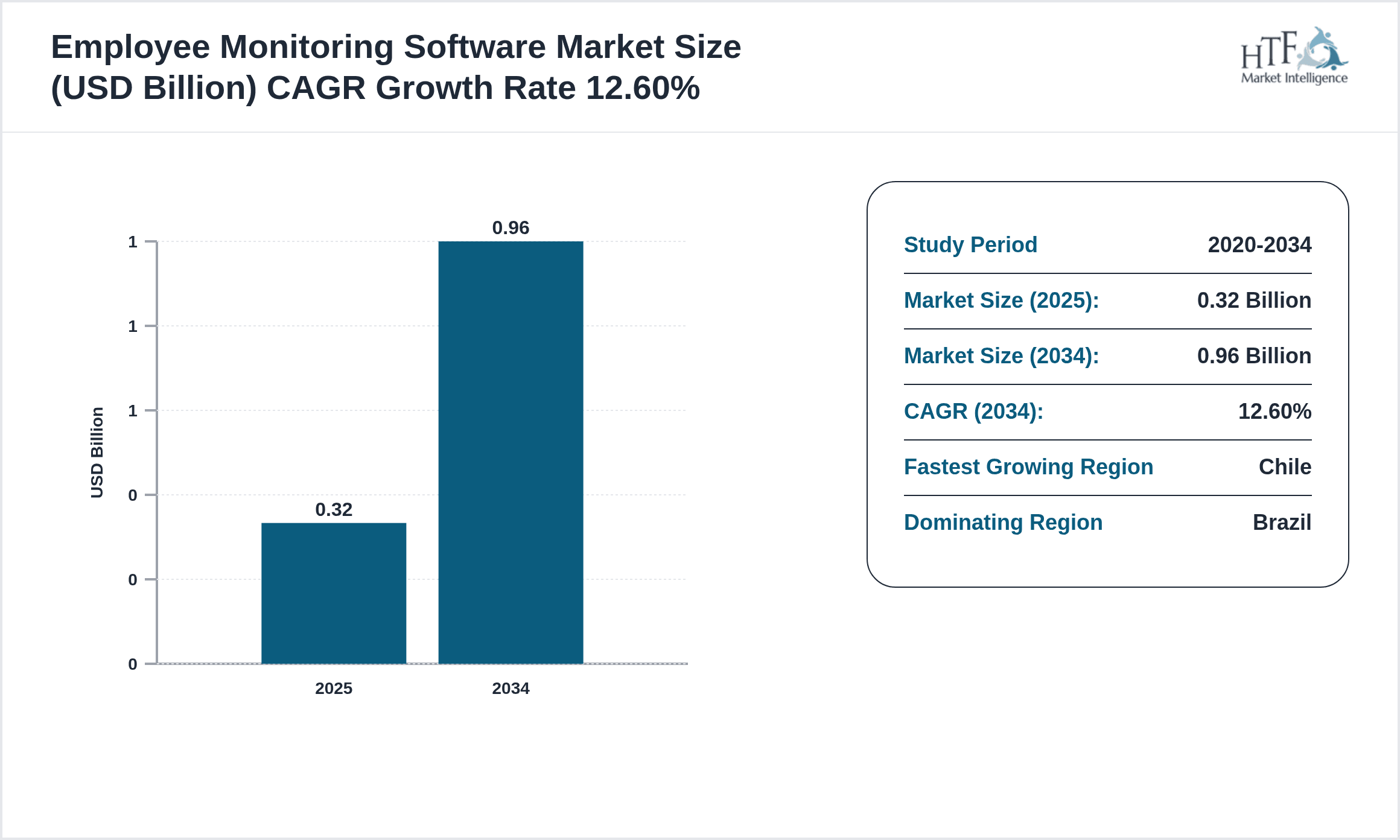
- •Market highlights include a base market size of USD 320 Million in 2025, projected to reach USD 960 Million by 2034 at a CAGR of 12.6%. Brazil dominates with a 35% market share, while Chile is the fastest growing country with a CAGR of 15.8% driven by increasing remote workforce adoption. Cloud-based solutions lead product types, supported by a surge in mobile monitoring technologies. The market growth is propelled by rising organizational emphasis on productivity and regulatory compliance amidst workforce digitization.
- •The strategic importance of employee monitoring software in South America lies in its ability to streamline workforce management, enhance operational efficiency, and ensure adherence to compliance mandates. Businesses across sectors leverage these tools to mitigate risks associated with data breaches and operational inefficiencies. For stakeholders including software vendors, enterprises, and regulatory bodies, the market presents opportunities for innovation, strategic partnerships, and service expansion aligned with evolving workforce dynamics and technological advancements.
Competitive Landscape
The South America Employee Monitoring Software market is characterized by a competitive environment where global technology leaders and regional players engage through diverse strategies such as product innovation, strategic partnerships, and regional customization. Market participants focus on enhancing AI-driven analytics, improving user experience, and expanding cloud capabilities to meet the growing demand for flexible, scalable solutions. Competitive positioning is influenced by factors including pricing strategies, integration capabilities, and compliance features tailored for South American regulatory environments. The market sees ongoing mergers and acquisitions aimed at consolidating technological expertise and expanding customer bases. Distribution channels increasingly emphasize digital platforms and localized support services, while innovation in mobile and hybrid monitoring solutions drives differentiation. Future competitive trends point to heightened focus on data privacy, real-time analytics, and AI integration to sustain market leadership and capitalize on expanding remote workforce management needs.
Leading Companies in South America Employee Monitoring Software Market
- •Teramind (United States)
- •ActivTrak (United States)
- •Hubstaff (United States)
- •Veriato (United States)
- •InterGuard (United States)
- •Time Doctor (United States)
- •SoftActivity (Russia)
- •Workpuls (United Kingdom)
- •SentryPC (United States)
- •StaffCop (Russia)
- •DeskTime (Lithuania)
- •Kickidler (Russia)
- •TSheets (United States)
- •RescueTime (United States)
- •Monitask (United States)
- •Desktime (Lithuania)
- •TimeCamp (Poland)
- •ActivTrak (United States)
- •InterGuard (United States)
- •Teramind (United States)
- •Worktime (Russia)
- •Veriato (United States)
- •Hubstaff (United States)
- •Time Doctor (United States)
- •SoftActivity (Russia)

Market Breakdown
- •By Type
- ◦Cloud-Based Solutions
- ◦On-Premise Solutions
- ◦Hybrid Solutions
- ◦Mobile Monitoring
- ◦Desktop Monitoring
- •By Application
- ◦Remote Workforce Management
- ◦Productivity Analysis
- ◦Compliance Monitoring
- ◦Security Surveillance
- ◦Time Tracking
- •By Industry Vertical
- ◦Information Technology
- ◦Financial Services
- ◦Manufacturing
- ◦Retail & E-commerce
- ◦Healthcare
- •By Deployment Model
- ◦Cloud Deployment
- ◦On-Premise Deployment
- ◦Hybrid Deployment
Growth Dynamics
The South America Employee Monitoring Software market is driven by the rapid digital transformation across enterprises seeking to optimize workforce productivity amid increasing remote work trends. Organizations are adopting advanced monitoring tools to maintain operational continuity and ensure compliance with evolving labor regulations. The surge in cloud adoption and mobile workforce necessitates scalable, secure monitoring solutions, fostering market expansion. Additionally, heightened cybersecurity concerns and data protection mandates propel demand for integrated monitoring systems that combine productivity tracking with threat detection. The increasing focus on data-driven decision-making and performance analytics further accelerates growth, enabling businesses to identify inefficiencies and enhance employee engagement through actionable insights.

Market Trends
A prominent trend in the South America Employee Monitoring Software market is the integration of artificial intelligence and machine learning to deliver predictive analytics and automate workflow monitoring, enhancing decision-making accuracy. Organizations are increasingly shifting towards cloud-native solutions to support flexible, remote, and hybrid working models. The proliferation of mobile monitoring applications addresses the growing need for oversight across diverse device types. Furthermore, the adoption of privacy-centric monitoring tools reflects compliance with stringent data protection laws, balancing employee privacy with organizational security. Collaborative platforms embedding monitoring functionalities are gaining traction, reflecting a holistic approach to workforce management and engagement.
Market Opportunities
The South America Employee Monitoring Software market presents significant opportunities through the expansion of remote workforces in emerging economies such as Chile and Peru, where digital infrastructure investments are accelerating. Vendors can capitalize on unmet demand for localized solutions compliant with diverse regional regulations. Integration of advanced analytics and AI-driven insights offers avenues for innovation and differentiation. Expansion into SMEs and non-traditional industries such as healthcare and retail, where workforce management is becoming critical, represents untapped market potential. Strategic partnerships with cloud service providers and telecom operators can enhance solution accessibility and scalability, driving broader adoption.
Market Challenges
Key challenges in the South America Employee Monitoring Software market include concerns over employee privacy and resistance to monitoring practices, which can hinder adoption and lead to regulatory scrutiny. Diverse and evolving data protection laws across South American countries complicate compliance efforts for software providers. Infrastructure limitations in rural and underserved regions restrict deployment and consistent monitoring capabilities. Additionally, the high cost of advanced monitoring solutions poses barriers for small and medium enterprises. Integration complexities with legacy systems and the need for customized solutions to address varied industry requirements further challenge market growth.
Regulatory Framework
From 2020 to 2025, South American countries have progressively implemented data protection regulations impacting the deployment of employee monitoring software. Brazil’s General Data Protection Law (LGPD), enacted in 2020, mandates strict guidelines on employee data collection, storage, and consent, influencing market compliance requirements. Argentina and Chile have updated privacy frameworks emphasizing transparency and employee rights, necessitating software adaptation to ensure lawful monitoring practices. These regulations require organizations to balance monitoring objectives with privacy protections, often requiring explicit employee notification and data minimization. Regulatory enforcement includes penalties for non-compliance, encouraging adoption of compliant software solutions. Additionally, labor laws in several countries regulate workplace surveillance scope, compelling vendors to incorporate customizable privacy settings. The evolving regulatory landscape underscores the need for continual monitoring of legal developments to maintain compliance and market viability.
Market Intelligence
- •15th March 2025, Teramind launched an AI-powered employee monitoring module tailored for South American enterprises, featuring advanced behavior analytics and automated compliance reporting. This innovation addresses growing demand for intelligent oversight in remote and hybrid work environments, enhancing real-time productivity insights. The product integrates seamlessly with leading cloud platforms, enabling scalable deployment across diverse organizational sizes and sectors. Teramind’s strategic focus on regional data privacy compliance differentiates the offering in the South America market, supporting customer adherence to LGPD and similar regulations. This launch positions Teramind to capitalize on the market’s rapid growth trajectory and evolving workforce management needs. Source: Teramind Official Press Release
- •22nd September 2025, Hubstaff introduced a mobile-focused monitoring solution designed to optimize remote workforce management in South America, incorporating GPS tracking, app usage analytics, and secure data encryption. Targeting industries with mobile employees such as logistics and field services, the product enhances operational visibility while addressing privacy concerns through customizable user permissions. Hubstaff’s initiative reflects broader market trends towards mobility and cloud adoption, offering flexible pricing models to penetrate SME segments across Brazil, Chile, and Argentina. This launch strengthens Hubstaff’s regional presence and aligns with growing demand for comprehensive, privacy-compliant monitoring tools. Source: Hubstaff Corporate Announcement
- •Recent market developments and strategic initiatives are continuously tracked through industry publications, company announcements, and regulatory filings. For the most current information, stakeholders are advised to monitor official corporate communications and recognized market intelligence platforms.
Regional Outlook
The Brazil currently holds a significant share of the market, primarily due to several key factors: increasing consumption rates, a burgeoning population, and robust economic momentum. These elements collectively drive demand, positioning this region as a leader in the market. On the other hand, Chile is rapidly emerging as the fastest-growing area within the industry. This remarkable growth can be attributed to swift infrastructure development, the expansion of various industrial sectors, and a marked increase in consumer demand. These dynamics make this region a crucial player in shaping future market growth.
In our report, we cover a comprehensive analysis of the following regions and countries:
- Brazil
- Argentina
- Chile
- Peru
- Colombia
- Rest of South America
| Feature | Details |
|---|---|
| Base Year Market Size | USD 320 Million |
| Forecast Year Market Size | USD 960 Million |
| CAGR | 12.6% |
| Forecast Period | 2026 to 2033 |
| YoY Growth | 12% |
| Scope of Report | Market is segmented by Type (Cloud-Based Solutions, On-Premise Solutions, Hybrid Solutions, Mobile Monitoring, Desktop Monitoring), Application (Remote Workforce Management, Productivity Analysis, Compliance Monitoring, Security Surveillance, Time Tracking), Industry Vertical (Information Technology, Financial Services, Manufacturing, Retail & E-commerce, Healthcare), Deployment Model (Cloud Deployment, On-Premise Deployment, Hybrid Deployment) |
| Regions Covered | Brazil, Argentina, Chile, Peru, Colombia, Rest of South America |
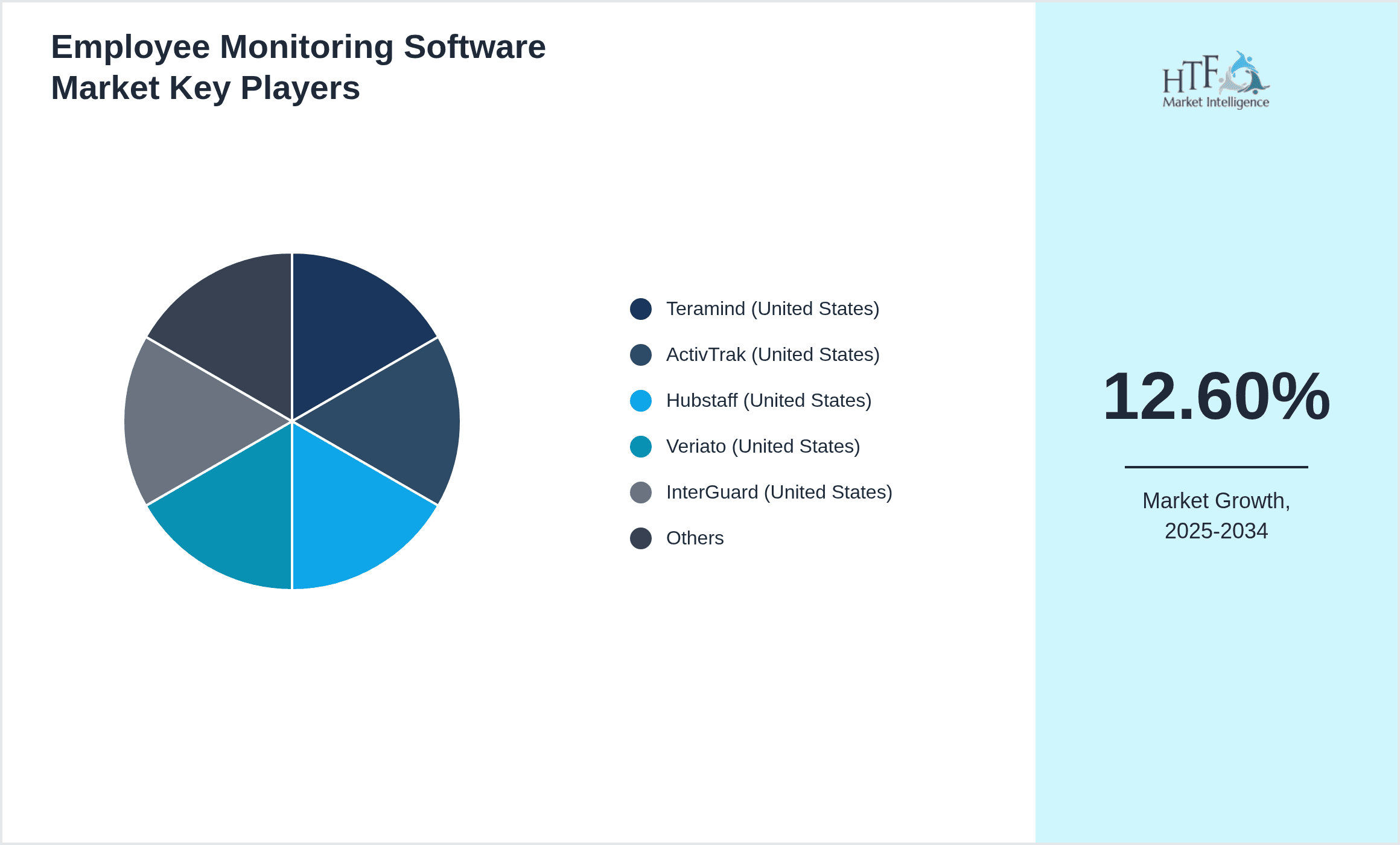
| Key Companies | Teramind (United States), ActivTrak (United States), Hubstaff (United States), Veriato (United States), InterGuard (United States) |
South America Employee Monitoring Software Market - Outlook 2020-2034 - Table of Contents
Frequently Asked Questions (FAQ):
The Compact Track Loaders market is projected to grow at a CAGR of 6.8% from 2025 to 2030, driven by increasing demand in construction and agricultural sectors.
North America currently leads the market with approximately 45% market share, followed by Europe at 28% and Asia-Pacific at 22%. The remaining regions account for 5% of the global market.
Key growth drivers include increasing construction activities, rising demand for versatile equipment in agriculture, technological advancements in track loader design, and growing preference for compact equipment in urban construction projects.