
North America Renewable Methanol Market Size, Growth & Revenue 2024-2034
North America Renewable Methanol Market is segmented by Application (Fuel, Chemical Intermediates, Power Generation, Marine Fuel, Others), Type (Bio-methanol, E-methanol, Green Methanol, Waste Methanol), and Geography (United States, Canada, Mexico)
Pricing
Report Overview
Executive Summary
- •The North America Renewable Methanol market focuses on methanol produced from sustainable sources such as biomass, renewable electricity, and waste materials, targeting applications in fuel, chemical production, and energy sectors.
- •Key growth drivers include government policies promoting carbon reduction, rising demand for green fuels, and technological advancements in renewable methanol synthesis and distribution.
- •The market presents strategic importance for regional decarbonization efforts, offering alternatives to fossil methanol and supporting industries aiming for sustainability and regulatory compliance.

Competitive Landscape
The North America Renewable Methanol market exhibits intense competition among established chemical producers and emerging green technology firms. Market players focus heavily on innovation to improve production efficiency, reduce costs, and develop proprietary renewable methanol technologies. Strategic partnerships and alliances are common to secure feedstock supply and expand distribution networks. Companies differentiate themselves through sustainability credentials, product purity, and integration with renewable energy sources. The rivalry is also fueled by regional regulations incentivizing low-carbon fuels, compelling firms to accelerate commercialization of green methanol. Market positioning is influenced by scale of operations, technological capabilities, and geographic reach, with leading players investing in capacity expansions and joint ventures to strengthen their foothold. Overall, the competitive landscape is dynamic with a strong emphasis on R&D, strategic collaborations, and regulatory navigation to capture growing demand in North America.
Leading Companies in North America Renewable Methanol Market
- •Methanex Corporation (Canada)
- •Greenlane Renewables Inc. (Canada)
- •OCI N.V. (United States)
- •Carbon Clean Solutions Limited (United States)
- •Prometheus Fuels Inc. (United States)
- •BioMCN (United States)
- •Carbon Recycling International (United States)
- •Enerkem Inc. (Canada)
- •Baker Hughes Company (United States)
- •FuelCell Energy, Inc. (United States)
- •Liquid Wind AB (United States)
- •LanzaTech, Inc. (United States)
- •Carbon Free Chemicals (United States)
- •Shell Canada Limited (Canada)
- •Air Products and Chemicals, Inc. (United States)
- •Trillium Renewable Chemicals (United States)
- •Marathon Petroleum Corporation (United States)
- •Renewable Energy Group, Inc. (United States)
- •Newlight Technologies (United States)
- •Sasol Limited (United States)
- •Honeywell UOP (United States)
- •Covestro AG (United States)
- •ExxonMobil (United States)
- •LyondellBasell Industries (United States)
- •Chevron Phillips Chemical Company LP (United States)
Market Segmentation
- •By Type
- ◦Bio-methanol
- ◦E-methanol (Electrolytic Methanol)
- ◦Green Methanol
- ◦Waste Methanol
- ◦Synthetic Methanol
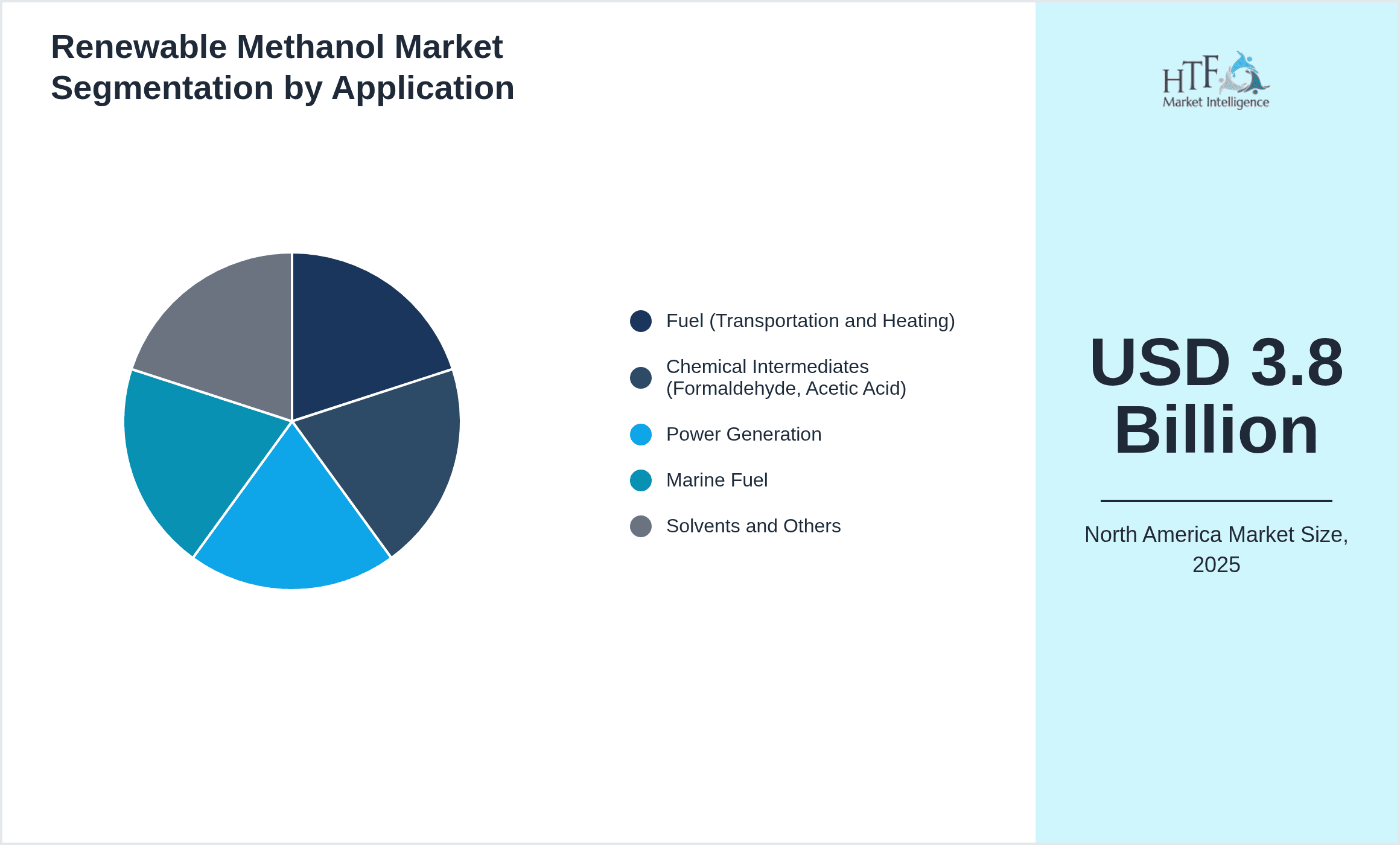
- •By Application
- ◦Fuel (Transportation and Heating)
- ◦Chemical Intermediates (Formaldehyde, Acetic Acid)
- ◦Power Generation
- ◦Marine Fuel
- ◦Solvents and Others
- •By End User Industry
- ◦Transportation
- ◦Chemical Manufacturing
- ◦Energy & Utilities
- ◦Marine Shipping
- ◦Industrial & Commercial
- •By Distribution Channel
- ◦Direct Sales
- ◦Distributors
- ◦Online Platforms
Growth Drivers
- •Increasing governmental mandates and subsidies for carbon-neutral fuels in the United States and Canada are accelerating renewable methanol adoption in transportation and industrial sectors.
- •Technological advancements in electrolysis and biomass gasification have lowered production costs, making renewable methanol more competitive with fossil-derived alternatives.
- •Growing demand for sustainable marine fuels, driven by International Maritime Organization regulations, is boosting the use of renewable methanol as a clean-burning fuel.
- •Rising investments in renewable energy infrastructure facilitate green hydrogen production, a key feedstock for e-methanol synthesis, expanding market potential.
- •Corporate sustainability commitments among chemical manufacturers are increasing procurement of renewable methanol to reduce carbon footprints and comply with environmental standards.

Market Trends
- •Integration of renewable methanol production with carbon capture and utilization technologies is emerging as a trend to enhance overall process sustainability and economics.
- •Expansion of renewable methanol blending mandates in North American fuel markets is encouraging wider adoption across transportation and power sectors.
- •Strategic partnerships between renewable methanol producers and marine shipping companies are increasing, focusing on zero-emission fuel supply chains.
- •Digitalization and automation in renewable methanol plants are improving operational efficiency and reducing production downtime, leading to cost savings.
- •Emergence of waste-to-methanol technologies exploiting municipal and industrial waste streams is gaining traction as circular economy initiatives intensify.

Market Restraints
- •High capital expenditure requirements for renewable methanol production facilities limit new entrants and slow market expansion.
- •Feedstock availability and price volatility, especially for biomass and renewable electricity, pose challenges to stable production costs.
- •Lack of comprehensive infrastructure for widespread renewable methanol distribution and storage restricts market penetration in certain regions.
- •Regulatory uncertainties and inconsistencies across North American jurisdictions create compliance complexities for manufacturers and end-users.
- •Competition from other renewable fuels and chemicals, such as bioethanol and green ammonia, limits renewable methanol market share growth.
Market Opportunities
- •Development of advanced catalysts and process intensification methods offers opportunities to enhance efficiency and reduce costs in methanol synthesis.
- •Growing marine fuel demand under IMO 2030/2050 emission targets opens new markets for renewable methanol as an alternative bunker fuel.
- •Expansion of renewable methanol use in power generation and combined heat and power (CHP) systems presents avenues for diversification.
- •Increasing collaborations between renewable methanol producers and green hydrogen suppliers can optimize supply chains and production scalability.
- •Emerging government incentive programs targeting circular economy and waste valorization can accelerate waste methanol production projects.
Market Challenges
- •Establishing consistent quality standards and certification protocols for renewable methanol remains challenging, impacting market confidence.
- •Limited public awareness and acceptance of renewable methanol as a fuel hinder widespread adoption among consumers and industries.
- •Supply chain complexities, including logistics and storage of methanol, pose operational risks and cost escalations for producers and distributors.
- •High dependency on policy support and subsidies exposes the market to risks from changing political and economic conditions.
- •Technical challenges in scaling up novel renewable methanol technologies from pilot to commercial scale delay market penetration.
Regulatory Overview
- •Between 2022 and 2024, North America has witnessed strengthened regulations promoting low-carbon fuels, including Renewable Fuel Standard (RFS) enhancements in the U.S. mandating higher renewable identification numbers (RINs) for methanol-derived fuels.
- •Canada’s Clean Fuel Standard introduced in 2023 sets carbon intensity reduction targets incentivizing renewable methanol adoption in transportation and industrial sectors.
- •New emission regulations by the Environmental Protection Agency (EPA) emphasize lifecycle greenhouse gas reductions, favoring renewable methanol over fossil alternatives.
- •State-level initiatives, such as California’s Low Carbon Fuel Standard (LCFS), provide credits for renewable methanol blending and usage, boosting regional market demand.
- •Safety and handling regulations have been updated to address specific risks associated with renewable methanol storage and transport, aligning with international standards.
Industry Insights
- •In March 2024, Methanex Corporation announced the commissioning of a new bio-methanol production facility in Louisiana, designed to integrate biomass feedstocks with renewable hydrogen, scaling capacity by 30%. This facility aims to serve growing demand in chemical manufacturing and marine fuels in North America, reinforcing Methanex's leadership in sustainable methanol production.
- •In November 2023, Prometheus Fuels launched an innovative e-methanol pilot plant in California utilizing direct CO2 capture and solar-powered electrolysis. This project represents a breakthrough in e-methanol production cost reduction and positions Prometheus as a key player in renewable fuel technology within the region.
Mergers & Acquisitions
- •In July 2023, Enerkem Inc., a Canadian leader in waste-to-renewable fuels, acquired Greenlane Renewables Inc., expanding its portfolio to include advanced methanol production technologies. This strategic acquisition strengthens Enerkem’s position in the North American renewable methanol market by combining proprietary gasification with methanol synthesis capabilities, accelerating commercial-scale deployments.
- •In January 2024, OCI N.V. completed the acquisition of Carbon Recycling International’s North American methanol assets, aiming to enhance its green methanol production capacity. This deal enables OCI to capitalize on increasing demand for sustainable methanol in industrial and marine sectors, leveraging CRI’s innovative technologies and regional infrastructure.
Recent Industry News
- •15th January 2025, Methanex Corporation announced a strategic partnership with a major North American shipping company to supply bio-methanol fuel for a fleet of cargo vessels. This collaboration supports the shipping industry's decarbonization goals and promotes renewable methanol adoption in marine fuels. The initiative is expected to reduce emissions significantly over the next decade. Source: Official Methanex Press Release
- •10th March 2025, Prometheus Fuels launched an expansion of its California pilot plant to increase e-methanol production capacity by 50%. The new phase incorporates enhanced solar electrolysis technology and carbon capture integration, aiming to meet rising industrial fuel demand. This expansion highlights Prometheus’ commitment to sustainable fuel innovation. Source: Company Website Announcement
- •20th April 2025, Enerkem Inc. inaugurated a new waste methanol production facility in Alberta, Canada. The plant utilizes municipal solid waste gasification to produce renewable methanol at commercial scale, addressing waste management and clean fuel needs simultaneously. This facility is projected to serve chemical and energy sectors across Western Canada. Source: Industry Publication
- •5th June 2025, OCI N.V. announced a joint venture with a U.S.-based renewable hydrogen producer to develop a green methanol complex in Texas. The project aims to leverage abundant renewable electricity and hydrogen to supply methanol for both chemical manufacturing and transportation fuels, enhancing regional green fuel infrastructure. Source: Official Company Release
Market Statistics
- •CAGR by 2034: 12.9%
- •Market Size by 2034: USD 12.6 Billion
- •Market Size in 2025: USD 4.3 Billion
- •Dominating Type: Bio-methanol
- •Next-Following Type: Green Methanol
- •Dominating Application: Fuel (Transportation and Heating)
- •Next-Following Application: Chemical Intermediates
- •Dominating Region: United States
- •Second-Leading Region: Canada
- •Region with Highest Growth Rate: Canada
- •Dominating Country: United States
Market Share Table
- •Market Share (%) of Dominating vs Followed Type
- ◦Bio-methanol: 55%
- ◦Green Methanol: 25%
- •Market Share (%) of Dominating vs Followed Application
- ◦Fuel (Transportation and Heating): 48%
- ◦Chemical Intermediates: 30%
- •Growth Rate (%) of Dominating vs Followed Type
- ◦Bio-methanol: 11.5%
- ◦Green Methanol: 16.8%
- •Growth Rate (%) of Dominating vs Followed Application
- ◦Fuel (Transportation and Heating): 12.3%
- ◦Chemical Intermediates: 13.1%
Top 5 Global Players
- •Methanex Corporation (Canada)
- •OCI N.V. (United States)
- •Enerkem Inc. (Canada)
- •Prometheus Fuels Inc. (United States)
- •Carbon Recycling International (United States)
Regional Outlook
The United States currently holds a significant share of the market, primarily due to several key factors: increasing consumption rates, a burgeoning population, and robust economic momentum. These elements collectively drive demand, positioning this region as a leader in the market. On the other hand, Canada is rapidly emerging as the fastest-growing area within the industry. This remarkable growth can be attributed to swift infrastructure development, the expansion of various industrial sectors, and a marked increase in consumer demand. These dynamics make this region a crucial player in shaping future market growth.
In our report, we cover a comprehensive analysis of the following regions and countries:
- United States
- Canada
- Mexico
| Feature | Details |
|---|---|
| Base Year Market Size | USD 3.8 Billion |
| Forecast Year Market Size | USD 12.6 Billion |
| CAGR | 12.9% |
| Forecast Period | 2026 to 2033 |
| YoY Growth | 12.1% |
| Regions Covered | United States, Canada, Mexico |
| Key Companies | Methanex Corporation (Canada), Greenlane Renewables Inc. (Canada), OCI N.V. (United States), Carbon Clean Solutions Limited (United States), Prometheus Fuels Inc. (United States), BioMCN (United States), Carbon Recycling International (United States), Enerkem Inc. (Canada), Baker Hughes Company (United States), FuelCell Energy, Inc. (United States), Liquid Wind AB (United States), LanzaTech, Inc. (United States), Carbon Free Chemicals (United States), Shell Canada Limited (Canada), Air Products and Chemicals, Inc. (United States), Trillium Renewable Chemicals (United States), Marathon Petroleum Corporation (United States), Renewable Energy Group, Inc. (United States), Newlight Technologies (United States), Sasol Limited (United States), Honeywell UOP (United States), Covestro AG (United States), ExxonMobil (United States), LyondellBasell Industries (United States), Chevron Phillips Chemical Company LP (United States) |
North America Renewable Methanol Market Size, Growth & Revenue 2024-2034 - Table of Contents
Frequently Asked Questions (FAQ):
The Compact Track Loaders market is expected to see value worth 5.3 Billion in 2025.
North America currently leads the market with approximately 45% market share, followed by Europe at 28% and Asia-Pacific at 22%. The remaining regions account for 5% of the global market.
Key growth drivers include increasing construction activities, rising demand for versatile equipment in agriculture, technological advancements in track loader design, and growing preference for compact equipment in urban construction projects.