
Asia-Pacific Automotive EVP Market Size, Growth & Revenue 2025-2034
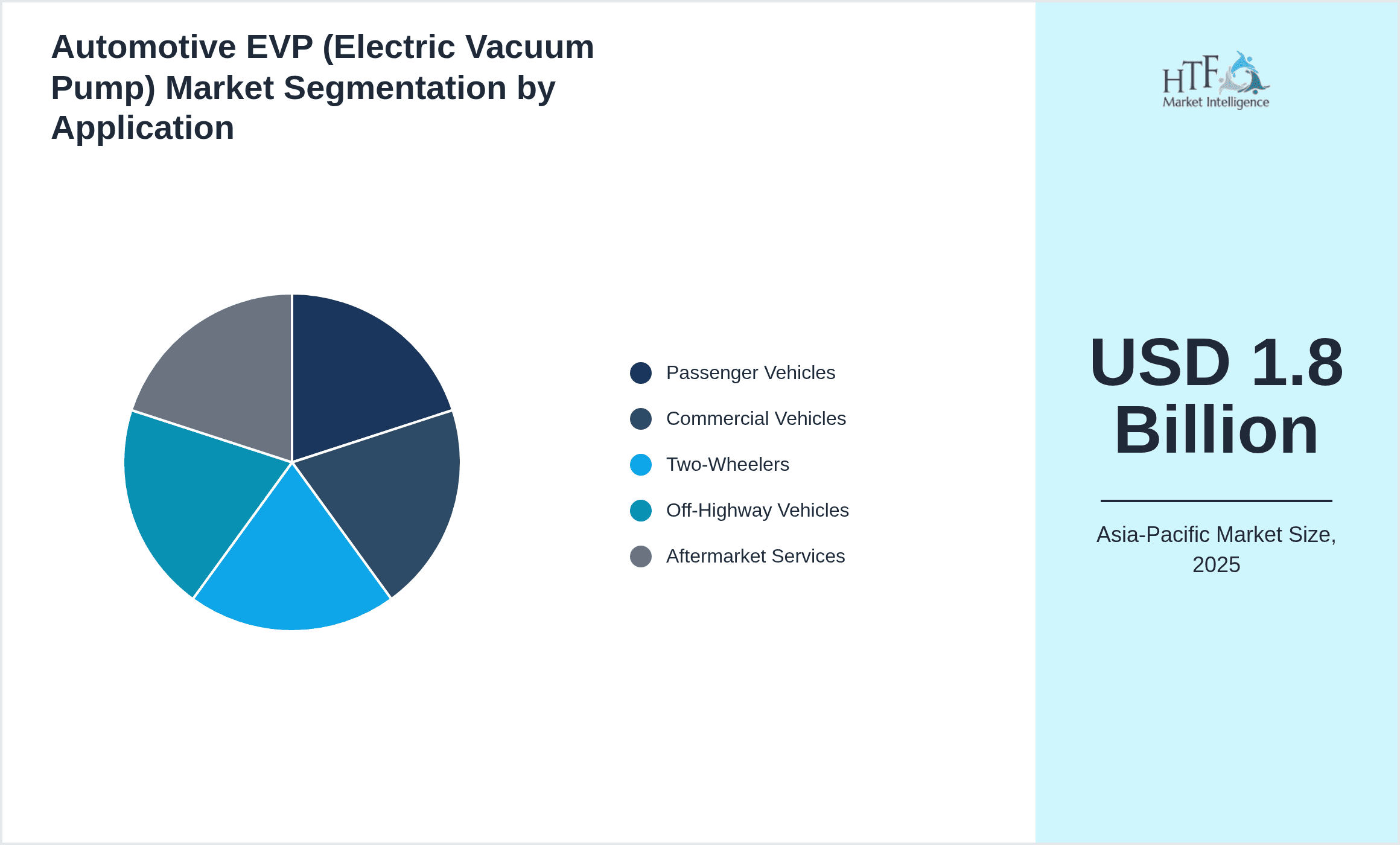
Asia-Pacific Automotive EVP Market is segmented by Type (Internal Gear Electric Vacuum Pump, External Gear Electric Vacuum Pump, Diaphragm Electric Vacuum Pump, Rotary Vane Electric Vacuum Pump, Scroll Electric Vacuum Pump), Application (Passenger Vehicles, Commercial Vehicles, Two-Wheelers, Off-Highway Vehicles, Aftermarket Services), Vehicle Type (Electric Vehicles, Hybrid Vehicles, Internal Combustion Engine Vehicles), Sales Channel (OEM, Aftermarket, Replacement Parts), and Geography (Japan, China, Southeast Asia, India, Australia, South Korea, Others)
Pricing
Report Overview
Executive Summary
- •The Asia-Pacific Automotive Electric Vacuum Pump (EVP) market comprises various types including internal gear, external gear, diaphragm, rotary vane, and scroll electric vacuum pumps specifically engineered for automotive applications such as passenger vehicles, commercial vehicles, two-wheelers, and off-highway vehicles. This market also includes aftermarket services supporting maintenance and replacements. The demand is propelled by the rising adoption of electric and hybrid vehicles, government emission regulations, and the need for enhanced brake system efficiency. Key countries driving this market are China, India, Japan, South Korea, Australia, and Southeast Asian nations, contributing to significant regional growth. The market is characterized by continuous product innovation, increasing integration of advanced materials, and growing investments in automotive component manufacturing hubs across Asia-Pacific.
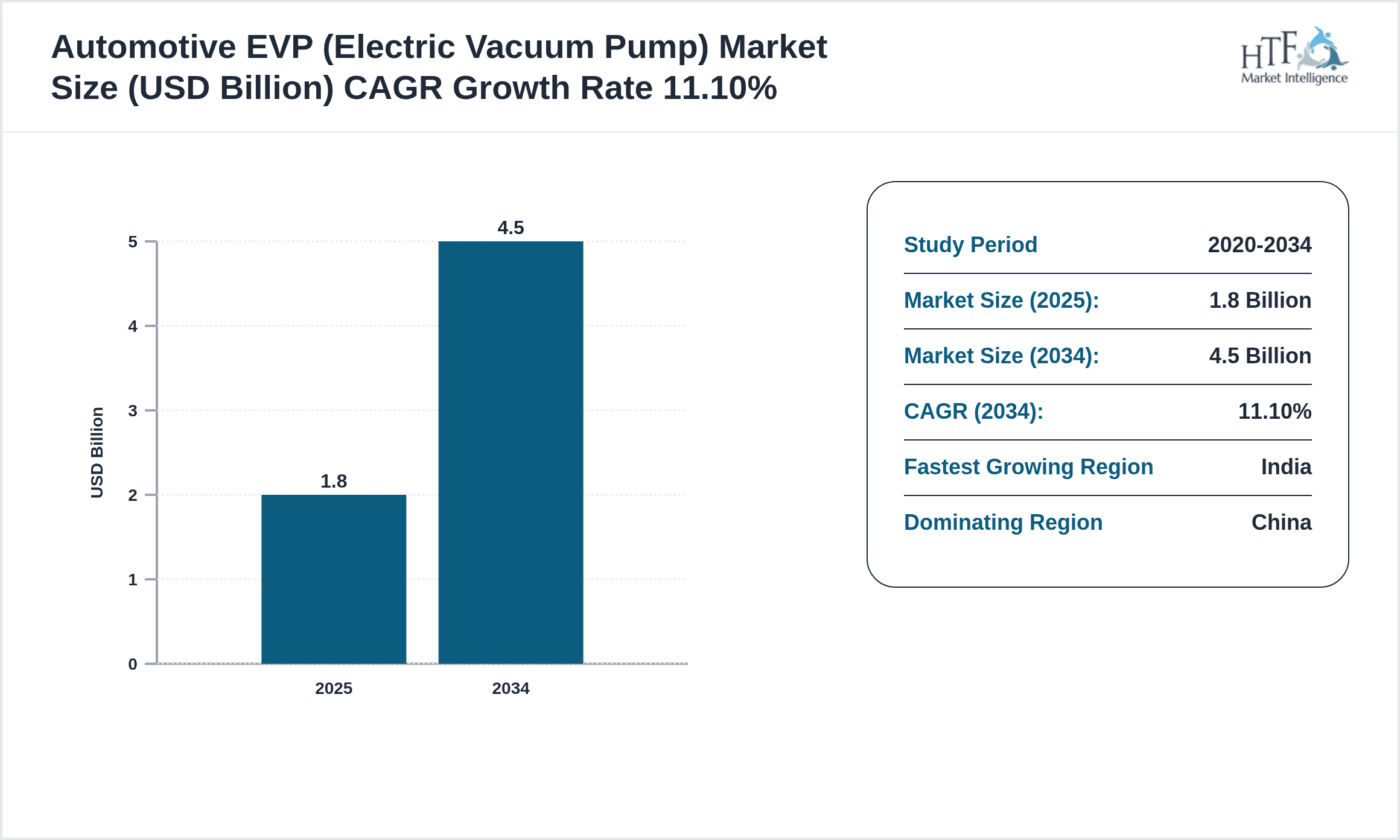
- •Market highlights include a base market size of USD 1.8 Billion in 2025, forecasted to reach USD 4.5 Billion by 2034, registering a CAGR of approximately 11.1%. China dominates the market with a share of 38%, while India is the fastest growing country with a CAGR of 14.5%, driven by rapid industrialization and automotive sector expansion. Scroll electric vacuum pumps represent the fastest growing product type owing to their efficiency and noise reduction benefits. The market faces challenges related to raw material price volatility and technical integration in electric vehicles but presents ample opportunities in emerging economies and aftermarket services.
- •The Asia-Pacific Automotive EVP market holds strategic importance for automotive OEMs, component manufacturers, and stakeholders focusing on emission compliance, vehicle safety, and electrification. Advancements in EVP technology enhance vehicle braking systems and emission controls, supporting the region’s shift towards sustainable and efficient transport solutions. The market’s growth trajectory is influenced by regional regulatory frameworks, rising consumer demand for electric vehicles, and increased investments in automotive R&D centers.
Competitive Landscape
The Asia-Pacific Automotive EVP market is highly competitive with key players adopting strategies such as innovation in EVP technology, strategic partnerships with automotive OEMs, and expansion of manufacturing capabilities across emerging economies. Companies focus on product differentiation through improved energy efficiency, reduced noise emissions, and enhanced durability. Market participants are investing in R&D to develop EVPs compatible with electric and hybrid vehicles, meeting stringent emission and safety regulations. Competitive pricing, regional presence, and supply chain optimization are critical success factors. The market also witnesses mergers and acquisitions aimed at consolidating market share and expanding product portfolios. Increasing collaboration with regional automotive clusters fosters innovation and accelerates time-to-market for new EVP solutions.
Leading Companies in Asia-Pacific Automotive EVP Market
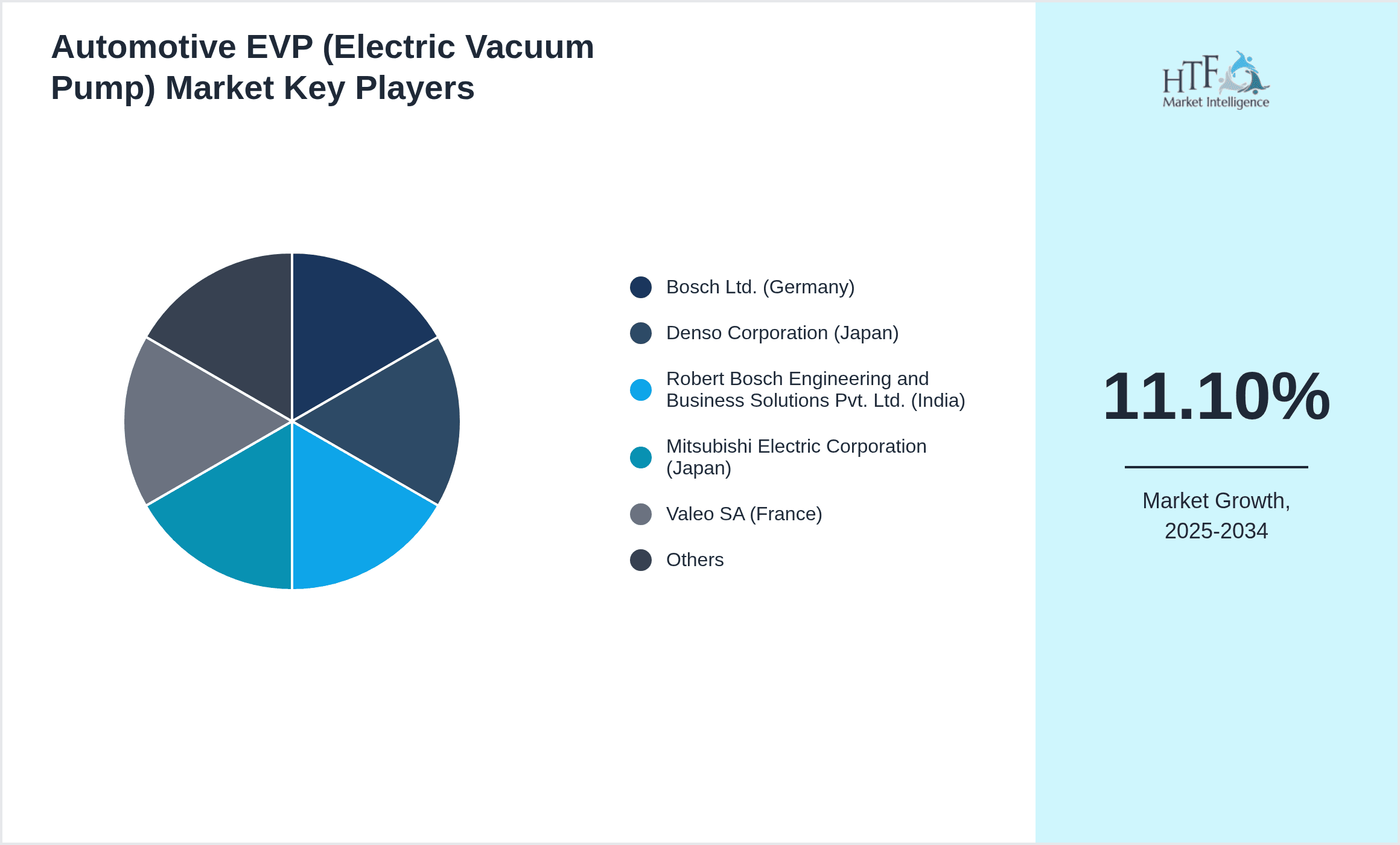
- •Bosch Ltd. (Germany)
- •Denso Corporation (Japan)
- •Robert Bosch Engineering and Business Solutions Pvt. Ltd. (India)
- •Mitsubishi Electric Corporation (Japan)
- •Valeo SA (France)
- •Continental AG (Germany)
- •Hyundai Mobis (South Korea)
- •Keihin Corporation (Japan)
- •Johnson Electric Holdings Limited (Hong Kong)
- •Zhejiang Sanhua Intelligent Controls Co., Ltd. (China)
- •Hitachi Automotive Systems Ltd. (Japan)
- •Yutaka Giken Co., Ltd. (Japan)
- •Schaeffler Group (Germany)
- •Gates Corporation (United States)
- •Hanon Systems (South Korea)
- •Nidec Corporation (Japan)
- •Magneti Marelli (Italy)
- •Valeo Siemens eAutomotive Germany GmbH (Germany)
- •Sogefi Group (Italy)
- •Fujikura Ltd. (Japan)
- •Tenneco Inc. (United States)
- •Denso Ten Limited (Japan)
- •Calsonic Kansei Corporation (Japan)
- •NGK Spark Plug Co., Ltd. (Japan)
- •Toyota Boshoku Corporation (Japan)
Market Breakdown
- •By Type
- ◦Internal Gear Electric Vacuum Pump
- ◦External Gear Electric Vacuum Pump
- ◦Diaphragm Electric Vacuum Pump
- ◦Rotary Vane Electric Vacuum Pump
- ◦Scroll Electric Vacuum Pump
- •By Application
- ◦Passenger Vehicles
- ◦Commercial Vehicles
- ◦Two-Wheelers
- ◦Off-Highway Vehicles
- ◦Aftermarket Services
- •By Vehicle Type
- ◦Electric Vehicles
- ◦Hybrid Vehicles
- ◦Internal Combustion Engine Vehicles
- •By Sales Channel
- ◦OEM
- ◦Aftermarket
- ◦Replacement Parts
Growth Dynamics
The Asia-Pacific Automotive EVP market growth is driven by increasing electrification of vehicles coupled with stringent emission regulations mandating efficient vacuum systems in braking and emission control. Rising consumer preference for electric and hybrid vehicles in countries like China and India fuels demand. Additionally, government incentives for electric vehicle adoption and investments in automotive manufacturing infrastructure accelerate market expansion. Technological advancements enhancing pump efficiency and durability also contribute to growth, alongside growing aftermarket demand for maintenance and replacement parts in mature vehicle fleets.

Market Trends
The market is witnessing a shift towards scroll electric vacuum pumps due to their superior efficiency and noise reduction capabilities, aligning with consumer demand for quieter vehicles. Integration of smart sensors and IoT connectivity in EVPs for real-time performance monitoring is emerging. Additionally, collaborations between automotive OEMs and EVP manufacturers are becoming common to develop customized solutions for electric vehicles. The trend towards lightweight materials and compact designs supports fuel efficiency and vehicle performance enhancements.
Market Opportunities
Untapped potential exists in emerging Asia-Pacific markets such as Southeast Asia and India where electric vehicle adoption is in nascent stages but growing rapidly. Expansion into aftermarket services offers significant growth due to increasing vehicle parc size. Innovation in EVP technology for hybrid and electric vehicles, including integration with advanced driver assistance systems, opens new revenue streams. Partnerships with regional automotive clusters and government-backed initiatives promoting sustainable transport create favorable conditions for market players to capitalize on.
Market Challenges
Challenges include supply chain disruptions impacting raw material availability and cost volatility, which affect manufacturing margins. Technical integration of EVPs in diverse electric vehicle platforms requires substantial R&D investment. Additionally, the fragmented nature of the aftermarket segment and varying regional regulatory requirements pose compliance and operational difficulties. Competition from alternative vacuum generation technologies and pressure to reduce costs while maintaining performance also hinder market growth.
Regulatory Framework
- •Between 2020 and 2025, Asia-Pacific governments implemented stringent emission and safety regulations impacting automotive vacuum pump requirements. China’s China VI emission standards and India’s BS VI norms necessitate improved vacuum pumps for emission control. Japan’s Ministry of Economy, Trade and Industry enforces energy efficiency standards promoting electric vacuum pump adoption. Regulatory emphasis on vehicle safety mandates reliable brake booster systems supported by EVPs. Additionally, import-export policies and automotive manufacturing guidelines influence production and distribution. Compliance with these regulations drives innovation and quality enhancement in EVP designs across the region.
- •Environmental policies focusing on reducing vehicular emissions encourage automotive manufacturers to adopt electric vacuum pumps over traditional vacuum generation methods. Incentives for electric and hybrid vehicle production and sales in countries like South Korea and Australia further stimulate EVP market demand. The regulatory landscape continues to evolve with emerging standards anticipated to address electric vehicle safety and component interoperability, requiring ongoing adaptation by market participants.
- •Regional safety standards mandate rigorous testing and certification of automotive EVP components to ensure durability, reliability, and performance under various operating conditions. Compliance with international standards such as ISO/TS 16949 is common among manufacturers targeting export markets within Asia-Pacific. These frameworks ensure consistent product quality and facilitate cross-border trade.
- •Government initiatives promoting local manufacturing and technology innovation in countries like India’s Make in India program and China’s Made in China 2025 impact the EVP market by encouraging domestic production capabilities and reducing reliance on imports. These policies foster competitive advantages for regional players through subsidies and infrastructure development.
Market Intelligence
- •12th February 2025, Denso Corporation launched an advanced scroll electric vacuum pump designed for electric vehicles, featuring enhanced energy efficiency and reduced noise emissions. This product targets the rapidly expanding electric vehicle segment in China and India, aligning with regional emission regulations and consumer demand for quieter vehicles. The launch includes strategic partnerships with leading automotive OEMs in Asia-Pacific to integrate this technology into upcoming vehicle models, aiming to capture a significant market share by 2030. Source: Denso Corporation Official Press Release
- •25th April 2025, Bosch Ltd. announced a strategic expansion of its EVP manufacturing facility in India, increasing production capacity by 40% in response to growing demand from domestic and export markets. The facility upgrade includes the implementation of Industry 4.0 technologies for enhanced quality control and operational efficiency. This move supports Bosch’s commitment to strengthening its footprint in Asia-Pacific’s electric vehicle component sector. Source: Bosch Ltd. Annual Report 2025
- •18th June 2025, Mitsubishi Electric Corporation introduced an innovative diaphragm electric vacuum pump with integrated IoT sensors enabling real-time performance monitoring and predictive maintenance. This technology targets commercial and passenger vehicles across Asia-Pacific, offering improved reliability and reduced downtime. The product rollout is part of Mitsubishi’s broader strategy to enhance smart automotive components aligned with Industry 4.0 trends and evolving regulatory requirements. Source: Mitsubishi Electric Corporation Press Release
- •Recent market developments and strategic initiatives are continuously tracked through industry publications, company announcements, and regulatory filings. For the most current information, stakeholders are advised to monitor official corporate communications and recognized market intelligence platforms.
Regional Outlook
The China currently holds a significant share of the market, primarily due to several key factors: increasing consumption rates, a burgeoning population, and robust economic momentum. These elements collectively drive demand, positioning this region as a leader in the market. On the other hand, India is rapidly emerging as the fastest-growing area within the industry. This remarkable growth can be attributed to swift infrastructure development, the expansion of various industrial sectors, and a marked increase in consumer demand. These dynamics make this region a crucial player in shaping future market growth.
In our report, we cover a comprehensive analysis of the following regions and countries:
- Japan
- China
- Southeast Asia
- India
- Australia
- South Korea
- Others
| Feature | Details |
|---|---|
| Base Year Market Size | USD 1.8 Billion |
| Forecast Year Market Size | USD 4.5 Billion |
| CAGR | 11.1% |
| Forecast Period | 2026 to 2033 |
| YoY Growth | 11.3% |
| Scope of Report | Market is segmented by Type (Internal Gear Electric Vacuum Pump, External Gear Electric Vacuum Pump, Diaphragm Electric Vacuum Pump, Rotary Vane Electric Vacuum Pump, Scroll Electric Vacuum Pump), Application (Passenger Vehicles, Commercial Vehicles, Two-Wheelers, Off-Highway Vehicles, Aftermarket Services), Vehicle Type (Electric Vehicles, Hybrid Vehicles, Internal Combustion Engine Vehicles), Sales Channel (OEM, Aftermarket, Replacement Parts) |
| Regions Covered | Japan, China, Southeast Asia, India, Australia, South Korea, Others |
| Key Companies | Bosch Ltd. (Germany), Denso Corporation (Japan), Robert Bosch Engineering and Business Solutions Pvt. Ltd. (India), Mitsubishi Electric Corporation (Japan), Valeo SA (France), Continental AG (Germany), Hyundai Mobis (South Korea), Keihin Corporation (Japan), Johnson Electric Holdings Limited (Hong Kong), Zhejiang Sanhua Intelligent Controls Co., Ltd. (China), Hitachi Automotive Systems Ltd. (Japan), Yutaka Giken Co., Ltd. (Japan), Schaeffler Group (Germany), Gates Corporation (United States), Hanon Systems (South Korea), Nidec Corporation (Japan), Magneti Marelli (Italy), Valeo Siemens eAutomotive Germany GmbH (Germany), Sogefi Group (Italy), Fujikura Ltd. (Japan), Tenneco Inc. (United States), Denso Ten Limited (Japan), Calsonic Kansei Corporation (Japan), NGK Spark Plug Co., Ltd. (Japan), Toyota Boshoku Corporation (Japan) |
Asia-Pacific Automotive EVP Market Size, Growth & Revenue 2025-2034 - Table of Contents
Frequently Asked Questions (FAQ):
The Compact Track Loaders market is expected to see value worth 5.3 Billion in 2025.
North America currently leads the market with approximately 45% market share, followed by Europe at 28% and Asia-Pacific at 22%. The remaining regions account for 5% of the global market.
Key growth drivers include increasing construction activities, rising demand for versatile equipment in agriculture, technological advancements in track loader design, and growing preference for compact equipment in urban construction projects.