
North America Molecular Biology Enzymes, Kits & Reagents Market Size, Growth & Revenue 2025-2034
North America Molecular Biology Enzymes, Kits & Reagents Market is segmented by Type (Restriction Enzymes, DNA Polymerases, Ligases, Reverse Transcriptases, Nucleases), Application (PCR & qPCR, DNA Sequencing, Gene Expression Analysis, Protein Analysis, Cell & Molecular Biology Research), Kit Type (PCR Kits, Sequencing Kits, RNA Extraction Kits, Protein Assay Kits, Cell Lysis Kits), End User (Pharmaceutical & Biotechnology Companies, Academic & Research Institutes, Diagnostic Laboratories, Contract Research Organizations, Healthcare Providers), and Geography (United States, Canada, Mexico)
Pricing
Report Overview
Executive Summary
- •The North America Molecular Biology Enzymes, Kits & Reagents market comprises biochemical products critical for molecular biology applications including DNA/RNA analysis, amplification, and protein studies. This market serves diverse sectors such as academic research, clinical diagnostics, and pharmaceutical development, providing enzymes like DNA polymerases, ligases, restriction enzymes, reverse transcriptases, and nucleases alongside specialized kits and reagents that enable advanced molecular techniques.
- •Market growth is driven by rising investment in genomics research, advances in molecular diagnostics technologies, and increasing adoption of personalized medicine. The expanding biotechnology and pharmaceutical sectors in the United States, Canada, and Mexico contribute significantly to demand, supported by government funding and private sector R&D.
- •The market offers strategic value by enabling critical research and diagnostic workflows that underpin healthcare innovation, drug development, and disease understanding, positioning it as a foundational component of the North American life sciences ecosystem.
Competitive Landscape
The North America Molecular Biology Enzymes, Kits & Reagents market is characterized by intense competition among global biotech firms and specialized reagent manufacturers, focusing on product innovation, strategic partnerships, and expanding distribution networks. Companies leverage advanced R&D to develop high-fidelity enzymes and integrated kits tailored for emerging molecular techniques. Pricing strategies balance cost-effectiveness with premium product quality to capture diverse customer segments. The market sees frequent collaborations between reagent suppliers and instrument providers to offer comprehensive solutions. Consolidation through mergers and acquisitions has enhanced market positioning, while regional players capitalize on localized customer support and regulatory compliance. Future competition is expected to revolve around technological differentiation, expanding application scope, and digital integration for supply chain optimization.
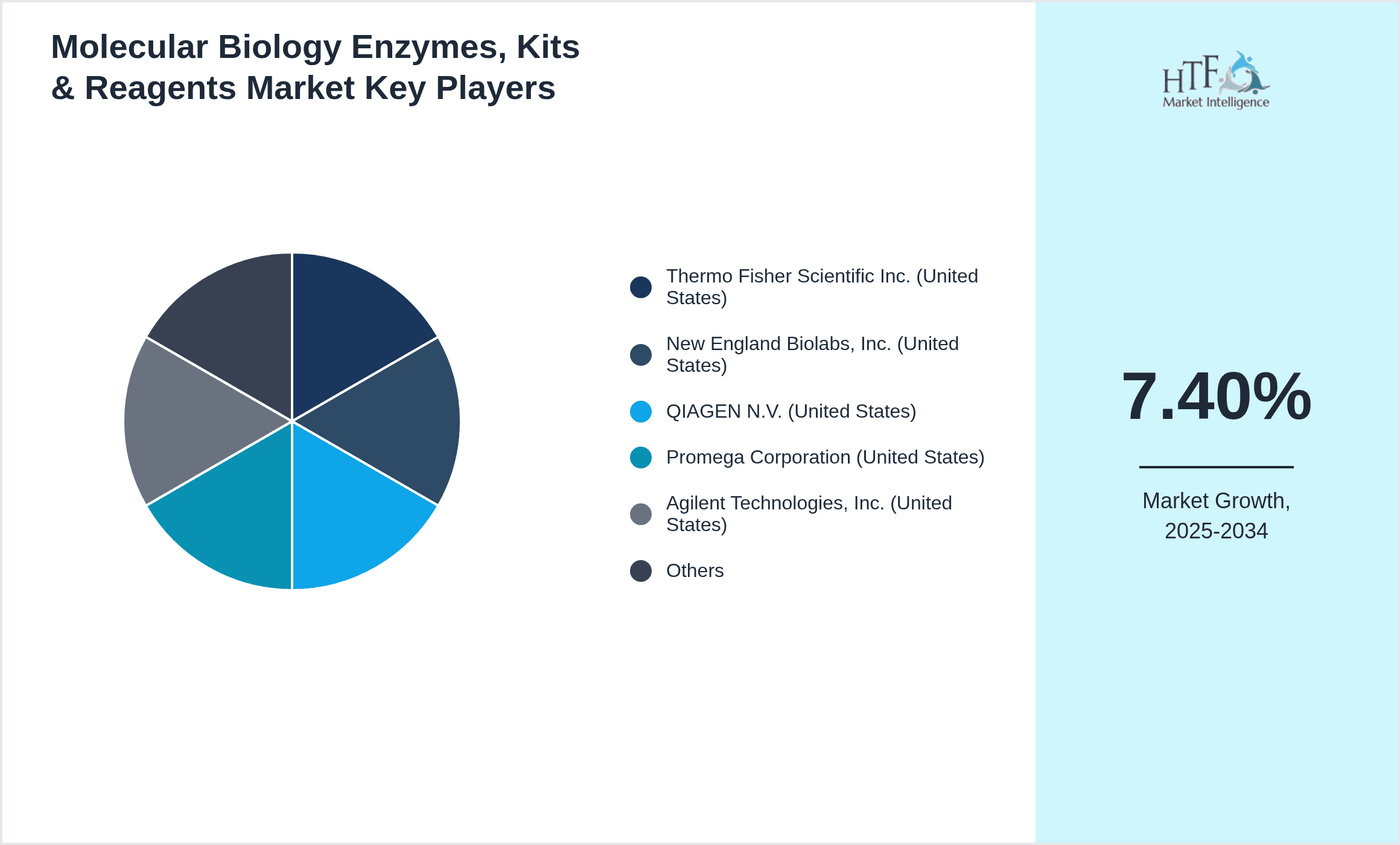
Leading Companies in North America Molecular Biology Enzymes, Kits & Reagents Market
- •Thermo Fisher Scientific Inc. (United States)
- •New England Biolabs, Inc. (United States)
- •QIAGEN N.V. (United States)
- •Promega Corporation (United States)
- •Agilent Technologies, Inc. (United States)
- •Bio-Rad Laboratories, Inc. (United States)
- •Takara Bio Inc. (United States)
- •PerkinElmer, Inc. (United States)
- •Integrated DNA Technologies, Inc. (United States)
- •Merck KGaA (United States)
- •Eppendorf AG (United States)
- •GenScript Biotech Corporation (United States)
- •Zymo Research Corporation (United States)
- •Lucigen Corporation (United States)
- •LGC Biosearch Technologies (United States)
- •Cell Signaling Technology, Inc. (United States)
- •New England Biolabs Canada (Canada)
- •BioVision, Inc. (United States)
- •Sierra Bioresearch (United States)
- •Omega Bio-tek, Inc. (United States)
- •ArcticZymes Technologies ASA (United States)
- •LGC Limited (United States)
- •Biosearch Technologies (United States)
- •Clontech Laboratories, Inc. (United States)
- •Genesee Scientific (United States)

Market Breakdown
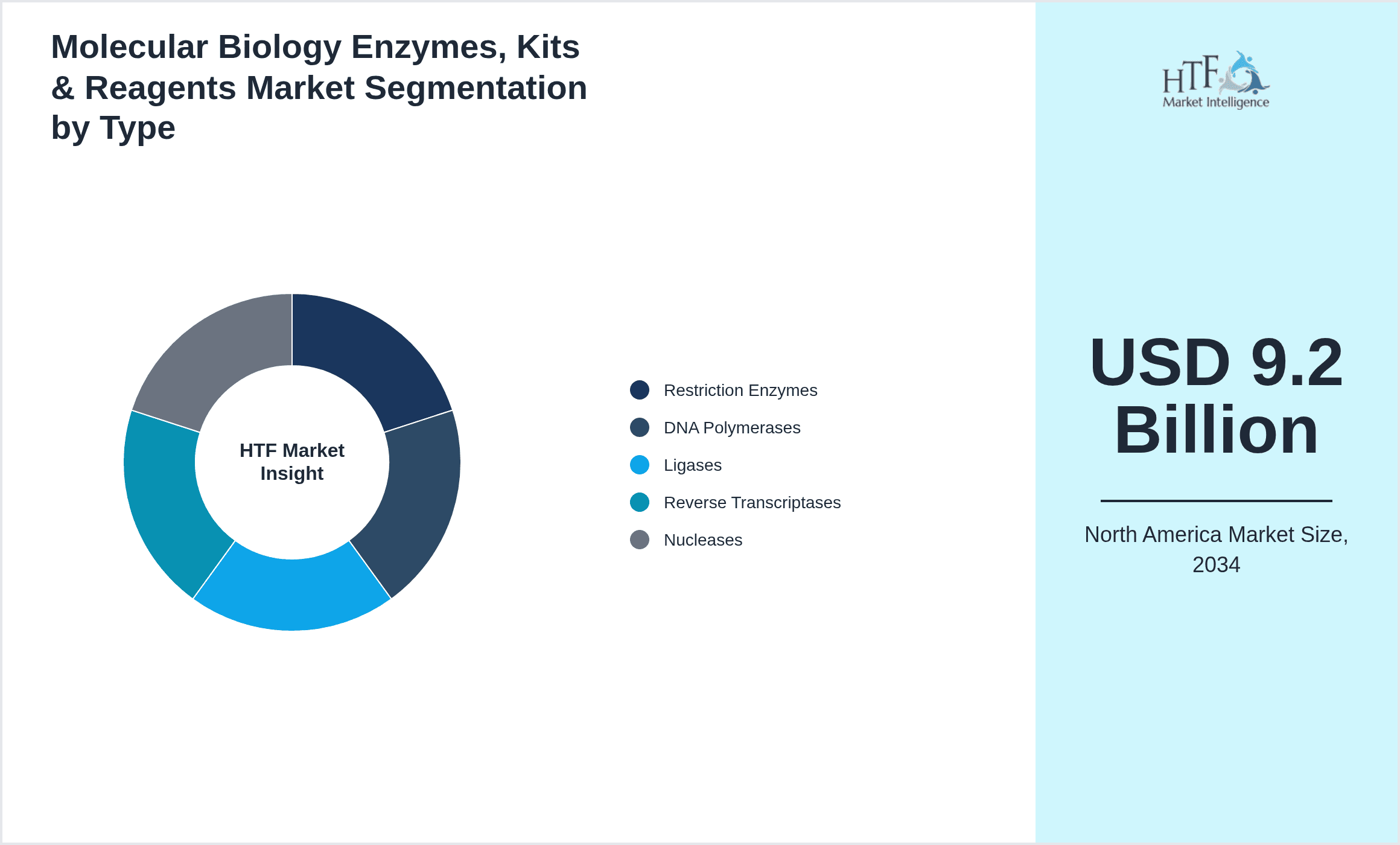
- •By Type
- ◦Restriction Enzymes
- ◦DNA Polymerases
- ◦Ligases
- ◦Reverse Transcriptases
- ◦Nucleases
- •By Application
- ◦PCR & qPCR
- ◦DNA Sequencing
- ◦Gene Expression Analysis
- ◦Protein Analysis
- ◦Cell & Molecular Biology Research
- •By Kit Type
- ◦PCR Kits
- ◦Sequencing Kits
- ◦RNA Extraction Kits
- ◦Protein Assay Kits
- ◦Cell Lysis Kits
- •By End User
- ◦Pharmaceutical & Biotechnology Companies
- ◦Academic & Research Institutes
- ◦Diagnostic Laboratories
- ◦Contract Research Organizations
- ◦Healthcare Providers
Growth Dynamics
The North America Molecular Biology Enzymes, Kits & Reagents market is propelled by increasing investments in genomics and proteomics research, where precise enzymatic tools are essential. Rising prevalence of genetic disorders and cancer drives demand for advanced molecular diagnostics, fostering market expansion. Government initiatives to support biotechnology startups and research infrastructure significantly boost innovation and adoption. The surge in personalized medicine and companion diagnostics necessitates reliable enzymes and kits, directly impacting market growth. Additionally, enhanced automation and high-throughput screening technologies create new growth avenues, enabling rapid and cost-effective molecular analyses that accelerate R&D pipelines.
Market Trends
Emerging trends include integration of next-generation sequencing (NGS) compatible reagents and enzymes, increasing the demand for high-fidelity polymerases and reverse transcriptases. There is a growing preference for ready-to-use kits that simplify workflows and reduce contamination risks. Adoption of digital PCR and single-cell analysis technologies is reshaping reagent requirements, with suppliers innovating for enhanced sensitivity and specificity. Sustainability trends have encouraged manufacturers to develop eco-friendly reagents with reduced hazardous chemicals. Strategic collaborations between reagent manufacturers and instrument providers are becoming common, offering bundled solutions that improve user experience and data reliability.
Market Opportunities
Significant opportunities lie in expanding applications of molecular biology enzymes and reagents in emerging fields such as liquid biopsy and CRISPR-based gene editing. The rising adoption of molecular diagnostics in personalized healthcare offers scope for innovative kit development targeting niche indications. Opportunities also exist in enhancing reagent stability for point-of-care testing and decentralized laboratories, increasing accessibility. Investments in synthetic biology and bio-manufacturing open new markets for custom enzymes and reagents. Additionally, growing demand in academic and contract research organizations for high-quality, cost-effective reagents provides avenues for market penetration and product differentiation.
Market Challenges
Challenges include stringent regulatory compliance requirements that increase time-to-market and development costs, particularly for clinical-grade reagents. The market faces price pressures from generic reagent suppliers and regional manufacturers, impacting profitability. Technical complexities in enzyme engineering and reagent formulation require substantial R&D investment. Supply chain disruptions and raw material availability constraints pose risks to consistent product delivery. Additionally, intellectual property disputes and patent expirations create competitive uncertainties. Market fragmentation with numerous small players complicates standardization and quality assurance across product lines.
Regulatory Framework
From 2020 to 2025, the North American market has been shaped by evolving regulatory frameworks including FDA guidelines for in vitro diagnostic reagents and Clinical Laboratory Improvement Amendments (CLIA) compliance. The FDA’s 21 CFR Part 820 Quality System Regulation mandates stringent quality controls for manufacturing molecular biology kits and enzymes used in diagnostics, ensuring safety and efficacy. Additionally, Environmental Protection Agency (EPA) regulations on chemical reagents enforce standards on hazardous substances management. Canada’s Health Canada regulatory requirements similarly govern enzyme and reagent approvals, emphasizing clinical validation and labeling accuracy. These regulations impact product development timelines and require robust documentation and validation processes. Market participants continuously adapt to shifting regulatory landscapes to maintain compliance and market access.
Market Intelligence
- •15th February 2025, Thermo Fisher Scientific Inc. announced the launch of a novel high-fidelity DNA polymerase kit designed for next-generation sequencing applications. The product offers enhanced accuracy and reduced error rates, targeting pharmaceutical and academic research laboratories. This launch aligns with rising demand for precise sequencing reagents in personalized medicine development and supports the company’s strategy to expand its molecular biology portfolio in North America. The kit integrates seamlessly with popular sequencing platforms, enhancing workflow efficiency and data quality. Source: Official Thermo Fisher Scientific Press Release.
- •10th April 2025, New England Biolabs, Inc. introduced an innovative reverse transcriptase enzyme optimized for single-cell RNA sequencing workflows. The enzyme demonstrates superior sensitivity and robustness, catering to the growing single-cell analysis market segment. This product addresses research needs in oncology and immunology, where single-cell profiling is increasingly critical. The launch strengthens New England Biolabs’ position in the molecular biology reagents market by offering specialized tools that enhance transcriptomic studies. Source: New England Biolabs Corporate Announcement.
- •22nd June 2025, QIAGEN N.V. completed the acquisition of a leading molecular diagnostics reagent manufacturer, expanding its product offerings in molecular biology enzymes and kits. The strategic acquisition aims to accelerate innovation in nucleic acid amplification technologies and broaden market reach in North America. This move is expected to enhance QIAGEN’s competitive edge by integrating complementary technologies and expanding its customer base across clinical and research segments. Source: QIAGEN Official Press Release.
- •Recent market developments and strategic initiatives are continuously tracked through industry publications, company announcements, and regulatory filings. For the most current information, stakeholders are advised to monitor official corporate communications and recognized market intelligence platforms.
Regional Outlook
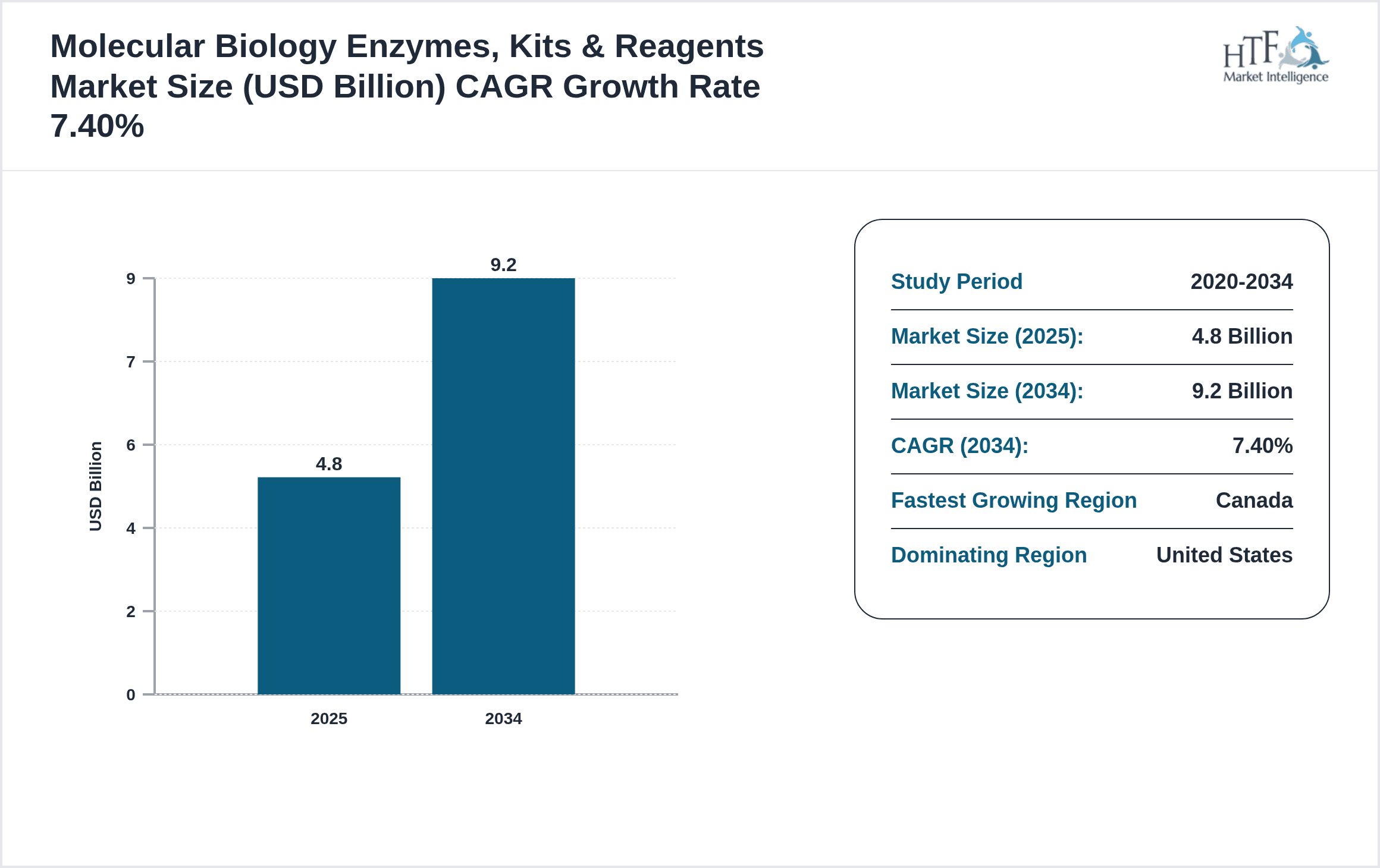
The United States currently holds a significant share of the market, primarily due to several key factors: increasing consumption rates, a burgeoning population, and robust economic momentum. These elements collectively drive demand, positioning this region as a leader in the market. On the other hand, Canada is rapidly emerging as the fastest-growing area within the industry. This remarkable growth can be attributed to swift infrastructure development, the expansion of various industrial sectors, and a marked increase in consumer demand. These dynamics make this region a crucial player in shaping future market growth.
In our report, we cover a comprehensive analysis of the following regions and countries:
- United States
- Canada
- Mexico
| Feature | Details |
|---|---|
| Base Year Market Size | USD 4.8 Billion |
| Forecast Year Market Size | USD 9.2 Billion |
| CAGR | 7.4% |
| Forecast Period | 2026 to 2033 |
| YoY Growth | 7.2% |
| Scope of Report | Market is segmented by Type (Restriction Enzymes, DNA Polymerases, Ligases, Reverse Transcriptases, Nucleases), Application (PCR & qPCR, DNA Sequencing, Gene Expression Analysis, Protein Analysis, Cell & Molecular Biology Research), Kit Type (PCR Kits, Sequencing Kits, RNA Extraction Kits, Protein Assay Kits, Cell Lysis Kits), End User (Pharmaceutical & Biotechnology Companies, Academic & Research Institutes, Diagnostic Laboratories, Contract Research Organizations, Healthcare Providers) |
| Regions Covered | United States, Canada, Mexico |
| Key Companies | Thermo Fisher Scientific Inc. (United States), New England Biolabs, Inc. (United States), QIAGEN N.V. (United States), Promega Corporation (United States), Agilent Technologies, Inc. (United States), Bio-Rad Laboratories, Inc. (United States), Takara Bio Inc. (United States), PerkinElmer, Inc. (United States), Integrated DNA Technologies, Inc. (United States), Merck KGaA (United States), Eppendorf AG (United States), GenScript Biotech Corporation (United States), Zymo Research Corporation (United States), Lucigen Corporation (United States), LGC Biosearch Technologies (United States), Cell Signaling Technology, Inc. (United States), New England Biolabs Canada (Canada), BioVision, Inc. (United States), Sierra Bioresearch (United States), Omega Bio-tek, Inc. (United States), ArcticZymes Technologies ASA (United States), LGC Limited (United States), Biosearch Technologies (United States), Clontech Laboratories, Inc. (United States), Genesee Scientific (United States) |
North America Molecular Biology Enzymes, Kits & Reagents Market Size, Growth & Revenue 2025-2034 - Table of Contents
Frequently Asked Questions (FAQ):
The Compact Track Loaders market is projected to grow at a CAGR of 6.8% from 2025 to 2030, driven by increasing demand in construction and agricultural sectors.
North America currently leads the market with approximately 45% market share, followed by Europe at 28% and Asia-Pacific at 22%. The remaining regions account for 5% of the global market.
Key growth drivers include increasing construction activities, rising demand for versatile equipment in agriculture, technological advancements in track loader design, and growing preference for compact equipment in urban construction projects.