
South America New Energy Vehicle Motor Shaft Market Size, Growth & Revenue 2024-2034
South America New Energy Vehicle Motor Shaft Market is segmented by Application (Passenger Electric Vehicles, Commercial Electric Vehicles, Electric Buses, Electric Two-Wheelers, Electric Trucks), Type (Steel Motor Shafts, Aluminum Motor Shafts, Composite Motor Shafts, Carbon Fiber Motor Shafts), and Geography (Brazil, Argentina, Chile, Peru, Colombia, Rest of South America)
Pricing
Report Overview
Executive Summary
- •The South America New Energy Vehicle Motor Shaft market represents a critical segment within the electric vehicle supply chain, focusing on motor shafts that enable torque transfer in electric motors across multiple vehicle types including passenger cars, commercial vehicles, and two-wheelers. The market covers various shaft materials such as steel, aluminum, composite, and carbon fiber, addressing demands for performance and efficiency.
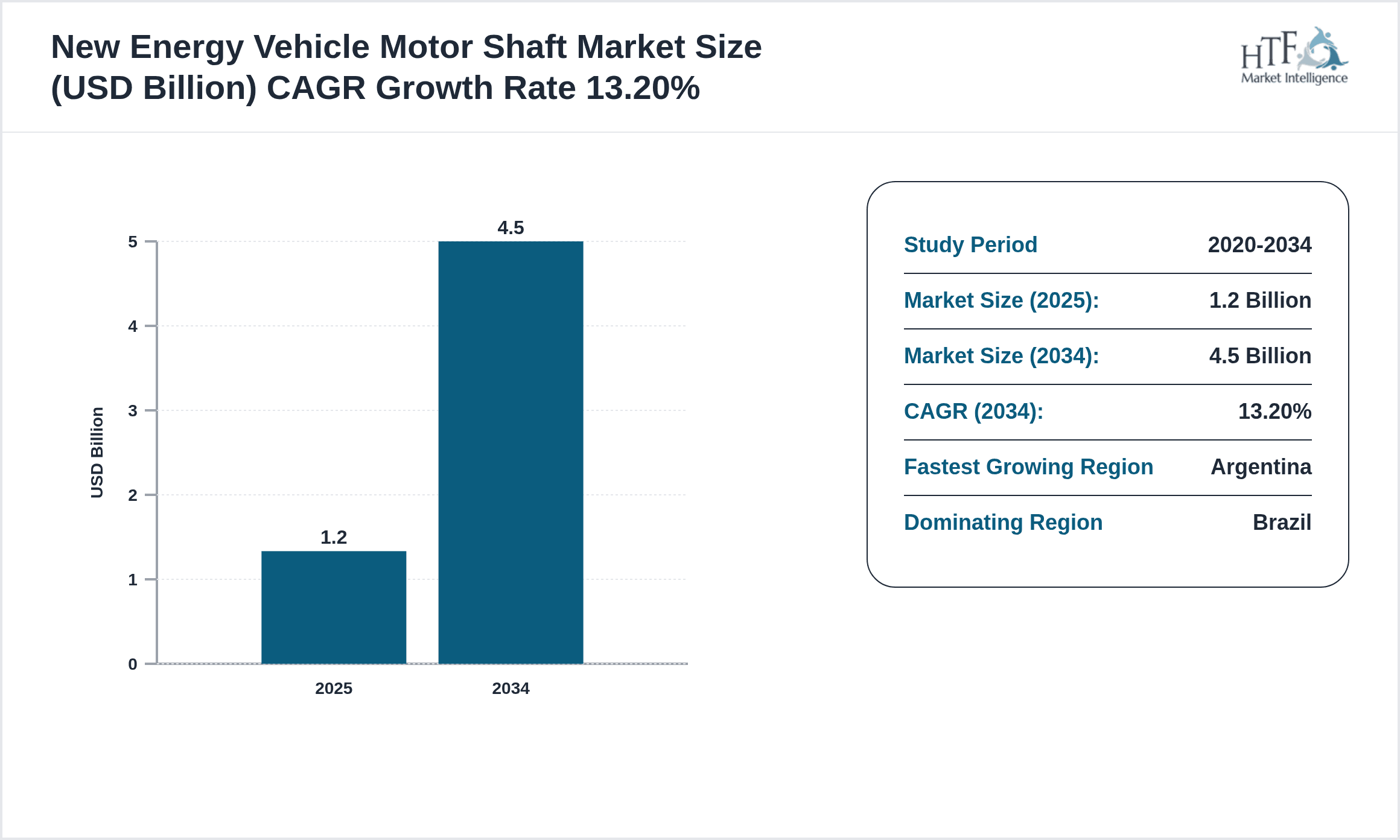
- •Key market highlights indicate rapid growth driven by escalating new energy vehicle adoption in Brazil and neighboring countries, supported by government incentives and increasing environmental awareness. The market size is projected to expand from USD 1.2 Billion in 2024 to USD 4.5 Billion by 2034, with a CAGR of 13.2%, underscoring robust demand and technological advancements.
- •This market offers strategic value to automotive OEMs, component manufacturers, and raw material suppliers by facilitating the shift toward sustainable transportation. Innovations in lightweight motor shaft materials and manufacturing technologies enhance vehicle efficiency, aligning with regional regulations aimed at reducing carbon footprints and promoting electric mobility.
Competitive Landscape
The South America New Energy Vehicle Motor Shaft market is characterized by intense competition among global and regional manufacturers focusing on innovation, material development, and cost efficiency. Companies leverage advanced R&D to develop lightweight, durable motor shafts that meet stringent performance standards. Strategic partnerships and regional manufacturing setups enhance market positioning. Rivalry is fueled by the race to supply rapidly growing electric vehicle production hubs in Brazil and Argentina. Competitive strategies include product differentiation through proprietary material technologies, optimized supply chains, and localized production to reduce costs. Market players also emphasize sustainability and compliance with evolving regional regulations, creating barriers for new entrants. The competitive environment is expected to intensify as demand grows, with companies investing in automation, digitalization, and collaborative innovation to secure market share and capitalize on the expanding electric vehicle ecosystem.
Leading Companies in South America New Energy Vehicle Motor Shaft Market
- •Schaeffler Group (Germany)
- •SKF Group (Sweden)
- •GKN Automotive (United Kingdom)
- •BorgWarner Inc. (United States)
- •Nidec Corporation (Japan)
- •Magneti Marelli (Italy)
- •Valeo (France)
- •Dana Incorporated (United States)
- •AAM (American Axle & Manufacturing) (United States)
- •Linamar Corporation (Canada)
- •JTEKT Corporation (Japan)
- •Yazaki Corporation (Japan)
- •Motherson Sumi Systems (India)
- •Hitachi Automotive Systems (Japan)
- •BASF SE (Germany)
- •Tenneco Inc. (United States)
- •Freudenberg Group (Germany)
- •Mitsubishi Electric Corporation (Japan)
- •Continental AG (Germany)
- •Zhejiang Lianchuang Electric Co., Ltd. (China)
- •Tata AutoComp Systems Limited (India)
- •Robert Bosch GmbH (Germany)
- •Hyundai Mobis (South Korea)
- •Valeo Siemens eAutomotive (France/Germany)
- •Aisin Seiki Co., Ltd. (Japan)
Market Breakdown
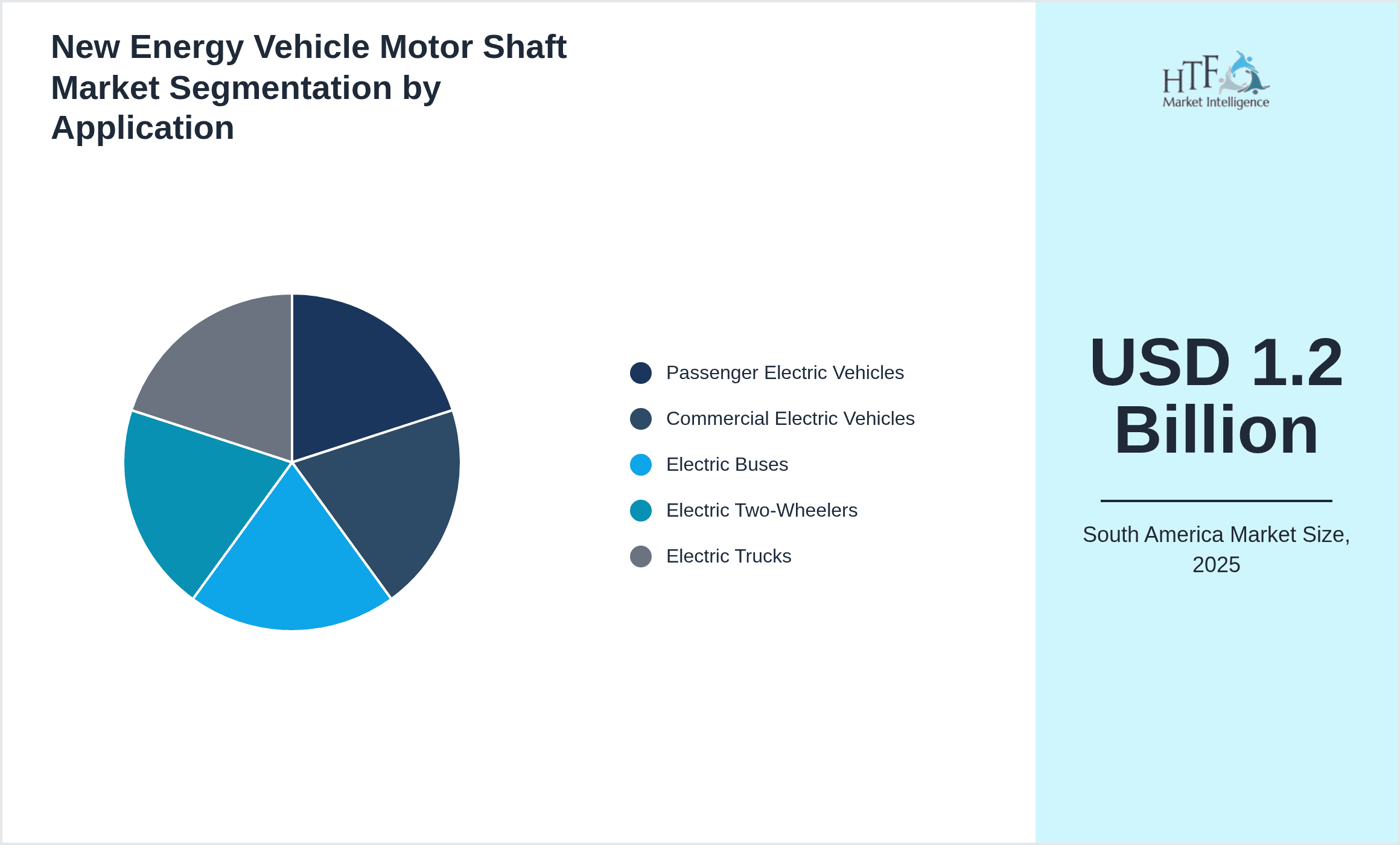
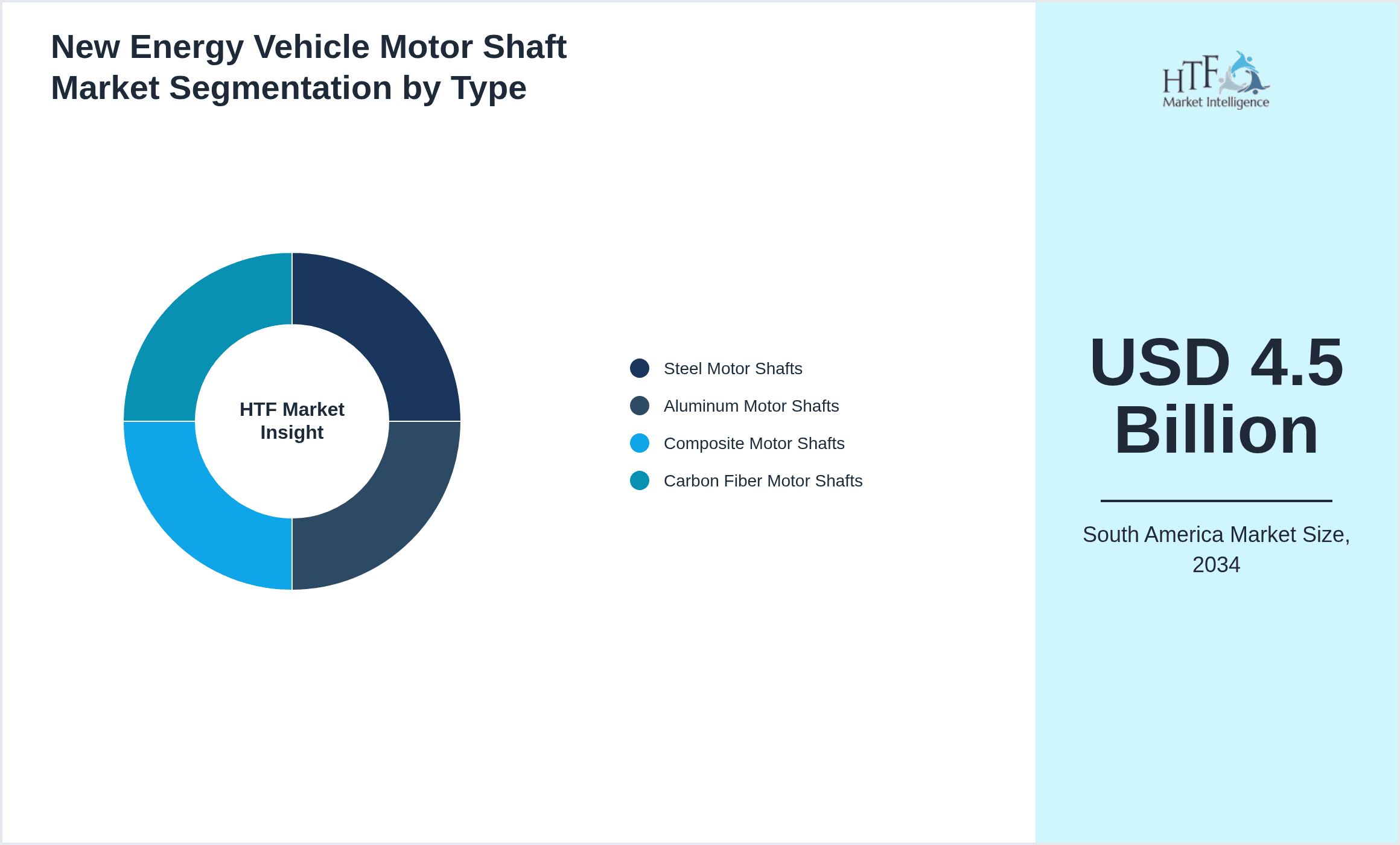
- •By Type
- ◦Steel Motor Shafts
- ◦Aluminum Motor Shafts
- ◦Composite Motor Shafts
- ◦Carbon Fiber Motor Shafts
- •By Application
- ◦Passenger Electric Vehicles
- ◦Commercial Electric Vehicles
- ◦Electric Buses
- ◦Electric Two-Wheelers
- ◦Electric Trucks
- •By Manufacturing Technology
- ◦Forging
- ◦Machining
- ◦Casting
- ◦Additive Manufacturing
- •By Distribution Channel
- ◦OEM Supply
- ◦Aftermarket
- ◦Direct Sales
Growth Drivers
The South America New Energy Vehicle Motor Shaft market growth is propelled by accelerated adoption of electric vehicles across Brazil and neighboring countries, driven by government incentives promoting clean energy transportation. Increasing consumer environmental awareness and urbanization amplify demand for passenger and commercial electric vehicles. Technological advancements in lightweight motor shaft materials such as carbon fiber significantly enhance vehicle efficiency, reducing energy consumption and emissions. Expansion of electric vehicle manufacturing facilities in South America stimulates demand for high-quality motor components. Additionally, rising investments in charging infrastructure and supportive regulatory frameworks foster a conducive environment for market expansion. The shift from conventional internal combustion engines to electric drivetrains necessitates specialized motor shafts, stimulating growth. Growing export opportunities and integration with global EV supply chains further reinforce market prospects, positioning South America as a promising hub for new energy vehicle component production over the forecast period.
Market Trends
Key trends shaping the South America New Energy Vehicle Motor Shaft market include a pronounced shift towards lightweight materials such as carbon fiber and composites to improve motor efficiency and vehicle range. Digitalization and Industry 4.0 adoption in manufacturing processes enhance precision and reduce lead times. Collaborative innovation between component manufacturers and OEMs is accelerating development of customized motor shafts tailored for regional electric vehicle models. The rise of electric two-wheelers and buses reflects changing urban mobility patterns, influencing shaft design requirements. Sustainability initiatives are driving the use of eco-friendly manufacturing technologies and recyclable materials. Additionally, local content policies encourage the establishment of regional production facilities, fostering supply chain resilience. Market players are increasingly investing in smart monitoring systems embedded in motor shafts to enable predictive maintenance, boosting product reliability and customer satisfaction. These trends collectively underscore the market’s evolution towards advanced, efficient, and sustainable motor shaft solutions in South America.
Market Restraints
Despite promising growth, the South America New Energy Vehicle Motor Shaft market faces challenges including high initial costs associated with advanced lightweight materials like carbon fiber, limiting widespread adoption among price-sensitive manufacturers. Infrastructural constraints, such as limited charging stations and inconsistent electricity supply in certain regions, dampen electric vehicle sales and consequently reduce component demand. Complex supply chains and dependence on imported raw materials expose manufacturers to volatility in material costs and delivery delays. Additionally, a shortage of skilled workforce specialized in electric vehicle component manufacturing hinders rapid scaling of production capabilities. Regulatory fragmentation and varying emission standards across South American countries create compliance complexities for manufacturers. Price competition from traditional motor shaft producers and aftermarket parts further pressure profit margins. These restraints necessitate strategic investments in cost optimization, supply chain localization, and workforce development to ensure sustainable market growth.
Market Opportunities
Significant opportunities exist in expanding electric commercial vehicle and bus segments, where customized motor shafts can deliver enhanced torque and durability, addressing urban transport electrification. Emerging applications in electric two-wheelers present untapped potential, particularly in densely populated cities. Growth prospects are amplified by regional governments’ increasing focus on renewable energy integration and emission reduction targets. Innovations in additive manufacturing open pathways for cost-effective, complex motor shaft designs that improve performance and reduce waste. Strategic partnerships between local manufacturers and global technology providers can accelerate technology transfer and market penetration. Additionally, rising exports of electric vehicle components from South America to global markets offer revenue diversification. Developing comprehensive aftermarket services and component refurbishment programs also present lucrative avenues, enhancing customer loyalty and sustainability. These opportunities position the market favorably for adaptive growth aligned with evolving mobility demands.
Market Challenges
The South America New Energy Vehicle Motor Shaft market encounters challenges related to fluctuating raw material prices, particularly steel and carbon fiber, which impact production costs and pricing strategies. Limited regional manufacturing infrastructure and technology gaps restrict rapid scaling of advanced motor shaft production. Regulatory inconsistencies across countries create barriers for harmonized market development. Supply chain disruptions, exacerbated by geopolitical tensions and pandemic-related constraints, hamper timely component availability. Furthermore, competition from established traditional automotive component suppliers delays electric vehicle component adoption. The need for continuous R&D investment to meet evolving performance standards strains financial resources, especially for smaller manufacturers. Consumer skepticism regarding electric vehicle reliability and higher upfront costs also limits market expansion. Addressing these challenges requires robust policy support, investment in technology, and collaborative industry efforts to foster a resilient and innovative market ecosystem.
Regulatory Framework
South America’s regulatory landscape for new energy vehicle motor shafts has evolved significantly between 2020 and 2024, with Brazil implementing stricter emission norms and incentives for electric vehicle adoption, including tax benefits and subsidies for local component manufacturing. Argentina has introduced regulations mandating increased local content in electric vehicle production, promoting regional supply chains for motor shaft components. Chile and Colombia have developed policies incentivizing electric public transport fleets, indirectly driving demand for specialized motor shafts. Environmental standards focusing on reduced carbon footprints require manufacturers to meet sustainability criteria in production processes. Additionally, safety and quality certifications specific to electric vehicle components have become mandatory, ensuring product reliability and compliance. These regulatory developments collectively foster a supportive environment for market growth while aligning industry practices with broader sustainability and electrification goals across South America.
Industry Insights
In March 2023, Schaeffler Group expanded its manufacturing footprint in Brazil by launching a new facility dedicated to producing advanced motor shafts for electric vehicles, aiming to serve growing regional demand with localized supply. The plant integrates Industry 4.0 technologies to enhance precision and efficiency. In November 2024, Nidec Corporation introduced a lightweight carbon fiber motor shaft optimized for electric buses in South America, enhancing torque performance while reducing weight by 30%, supporting the region's sustainable urban mobility initiatives. These developments underscore increasing investments and innovation in motor shaft technology tailored for the South American electric vehicle market, reflecting the sector’s dynamic evolution and commitment to regional growth.
Mergers & Acquisitions
- •In August 2023, BorgWarner Inc. completed the acquisition of a local Brazilian motor shaft manufacturer specializing in lightweight aluminum shafts for electric vehicles. This strategic move aimed to strengthen BorgWarner’s production capacity within South America, enabling enhanced supply chain integration and faster delivery times to regional electric vehicle OEMs. The acquisition expands BorgWarner’s technological portfolio, allowing for innovation in motor shaft materials and manufacturing processes tailored to South America’s unique market demands.
- •In January 2024, Dana Incorporated acquired a Chilean composite motor shaft producer to bolster its product offerings in sustainable electric vehicle components. The acquisition supports Dana’s strategic focus on expanding lightweight motor shaft technologies in emerging South American markets, enhancing its competitive positioning and enabling access to new customer segments across commercial and passenger EV segments.
Recent Industry News
- •In July 2022, SKF Group announced a partnership with a leading Brazilian electric bus manufacturer to co-develop high-performance steel motor shafts designed for demanding urban transit applications. This collaboration focuses on improving shaft durability and reducing maintenance costs, supporting the electrification of public transport in Brazil. The initiative also includes joint R&D efforts to integrate sensor technologies for real-time performance monitoring. Source: SKF Official Press Release
- •In September 2023, Valeo inaugurated a new innovation center in Argentina aimed at accelerating research on aluminum and composite motor shafts for electric vehicles. The center leverages advanced simulation and prototyping technologies to optimize shaft design for enhanced energy efficiency and weight reduction. This investment aligns with Argentina’s push towards domestic EV manufacturing and component supply. Source: Valeo Corporate Announcement
- •In April 2024, GKN Automotive launched a carbon fiber motor shaft product line tailored for electric two-wheelers popular in urban South American markets. The new shafts offer superior strength-to-weight ratios, improving vehicle agility and battery range. The product launch included strategic partnerships with local EV assemblers to facilitate rapid market entry. Source: GKN Automotive Newsroom
- •In December 2021, Motherson Sumi Systems expanded its distribution network in South America to include specialized motor shafts for commercial electric vehicles. This expansion supports growing demand from fleet operators shifting towards electrification. The company also invested in localized assembly units to reduce lead times and costs, enhancing service levels. Source: Motherson Sumi Systems Press Release
Market Statistics
- •CAGR by 2034: 13.2%
- •Market Size by 2034: USD 4.5 Billion
- •Market Size in 2025: USD 1.3 Billion
- •Dominating Type: Steel Motor Shafts; Next-Following Type: Aluminum Motor Shafts
- •Dominating Application: Passenger Electric Vehicles; Next-Following Application: Commercial Electric Vehicles
- •Dominating Region: Brazil; Second-Leading Region: Argentina
- •Region with Highest Growth Rate: Argentina (16.0%)
- •Dominating Country: Brazil
Market Share Table
- •Market Share (%) of Dominating vs Followed Type: Steel Motor Shafts - 45%, Aluminum Motor Shafts - 30%
- •Market Share (%) of Dominating vs Followed Application: Passenger Electric Vehicles - 50%, Commercial Electric Vehicles - 25%
- •Growth Rate (%) of Dominating vs Followed Type: Steel Motor Shafts - 12.0%, Aluminum Motor Shafts - 10.5%
- •Growth Rate (%) of Dominating vs Followed Application: Passenger Electric Vehicles - 13.5%, Commercial Electric Vehicles - 11.0%
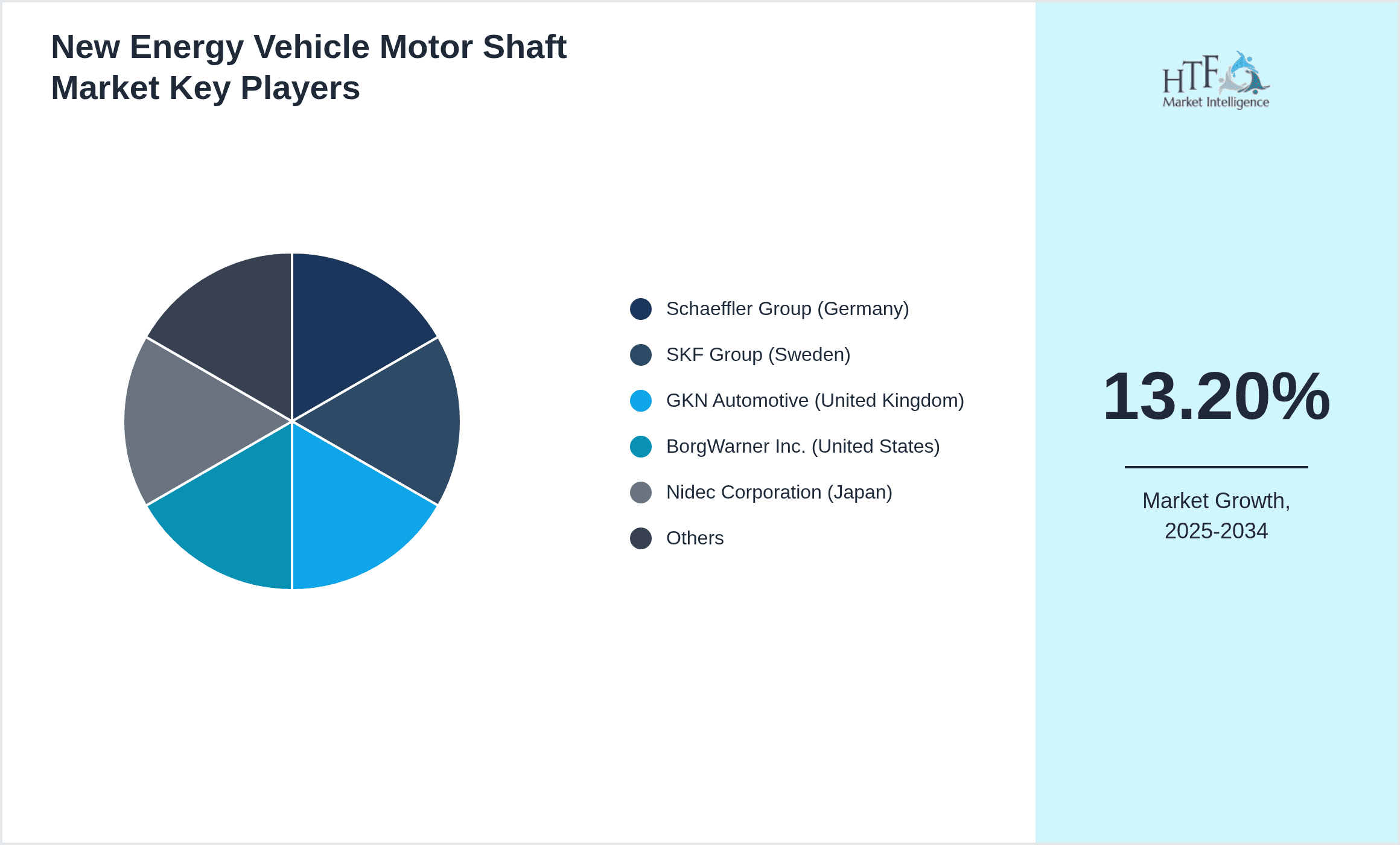
Top 5 Global Players
- •Schaeffler Group (Germany)
- •SKF Group (Sweden)
- •GKN Automotive (United Kingdom)
- •BorgWarner Inc. (United States)
- •Nidec Corporation (Japan)
Regional Outlook
The Brazil currently holds a significant share of the market, primarily due to several key factors: increasing consumption rates, a burgeoning population, and robust economic momentum. These elements collectively drive demand, positioning this region as a leader in the market. On the other hand, Argentina is rapidly emerging as the fastest-growing area within the industry. This remarkable growth can be attributed to swift infrastructure development, the expansion of various industrial sectors, and a marked increase in consumer demand. These dynamics make this region a crucial player in shaping future market growth.
In our report, we cover a comprehensive analysis of the following regions and countries:
- Brazil
- Argentina
- Chile
- Peru
- Colombia
- Rest of South America
| Feature | Details |
|---|---|
| Base Year Market Size | USD 1.2 Billion |
| Forecast Year Market Size | USD 4.5 Billion |
| CAGR | 13.2% |
| Forecast Period | 2026 to 2033 |
| YoY Growth | 12.5% |
| Regions Covered | Brazil, Argentina, Chile, Peru, Colombia, Rest of South America |
| Key Companies | Schaeffler Group (Germany), SKF Group (Sweden), GKN Automotive (United Kingdom), BorgWarner Inc. (United States), Nidec Corporation (Japan), Magneti Marelli (Italy), Valeo (France), Dana Incorporated (United States), AAM (American Axle & Manufacturing) (United States), Linamar Corporation (Canada), JTEKT Corporation (Japan), Yazaki Corporation (Japan), Motherson Sumi Systems (India), Hitachi Automotive Systems (Japan), BASF SE (Germany), Tenneco Inc. (United States), Freudenberg Group (Germany), Mitsubishi Electric Corporation (Japan), Continental AG (Germany), Zhejiang Lianchuang Electric Co., Ltd. (China), Tata AutoComp Systems Limited (India), Robert Bosch GmbH (Germany), Hyundai Mobis (South Korea), Valeo Siemens eAutomotive (France/Germany), Aisin Seiki Co., Ltd. (Japan) |
South America New Energy Vehicle Motor Shaft Market Size, Growth & Revenue 2024-2034 - Table of Contents
Frequently Asked Questions (FAQ):
The Compact Track Loaders market is projected to grow at a CAGR of 6.8% from 2025 to 2030, driven by increasing demand in construction and agricultural sectors.
North America currently leads the market with approximately 45% market share, followed by Europe at 28% and Asia-Pacific at 22%. The remaining regions account for 5% of the global market.
Key growth drivers include increasing construction activities, rising demand for versatile equipment in agriculture, technological advancements in track loader design, and growing preference for compact equipment in urban construction projects.