
North America Medical Equipment Leasing Service Market Size, Growth & Revenue 2025-2034
North America Medical Equipment Leasing Service Market is segmented by Type (Imaging Equipment Leasing, Surgical Equipment Leasing, Diagnostic Equipment Leasing, Therapeutic Equipment Leasing, Patient Monitoring Equipment Leasing), Application (Hospitals, Diagnostic Centers, Ambulatory Surgical Centers, Clinics, Home Healthcare), Service Model (Operating Lease, Finance Lease, Sale and Leaseback), Contract Duration (Short-term (less than 12 months), Medium-term (1-3 years), Long-term (more than 3 years)), and Geography (United States, Canada, Mexico)
Pricing
Report Overview
Executive Summary
- •The North America Medical Equipment Leasing Service market involves leasing of diverse medical devices across hospitals, diagnostic centers, clinics, ambulatory surgical centers, and home healthcare. This service reduces capital expenditure and facilitates technology upgrades, covering imaging, surgical, diagnostic, therapeutic, and patient monitoring equipment.
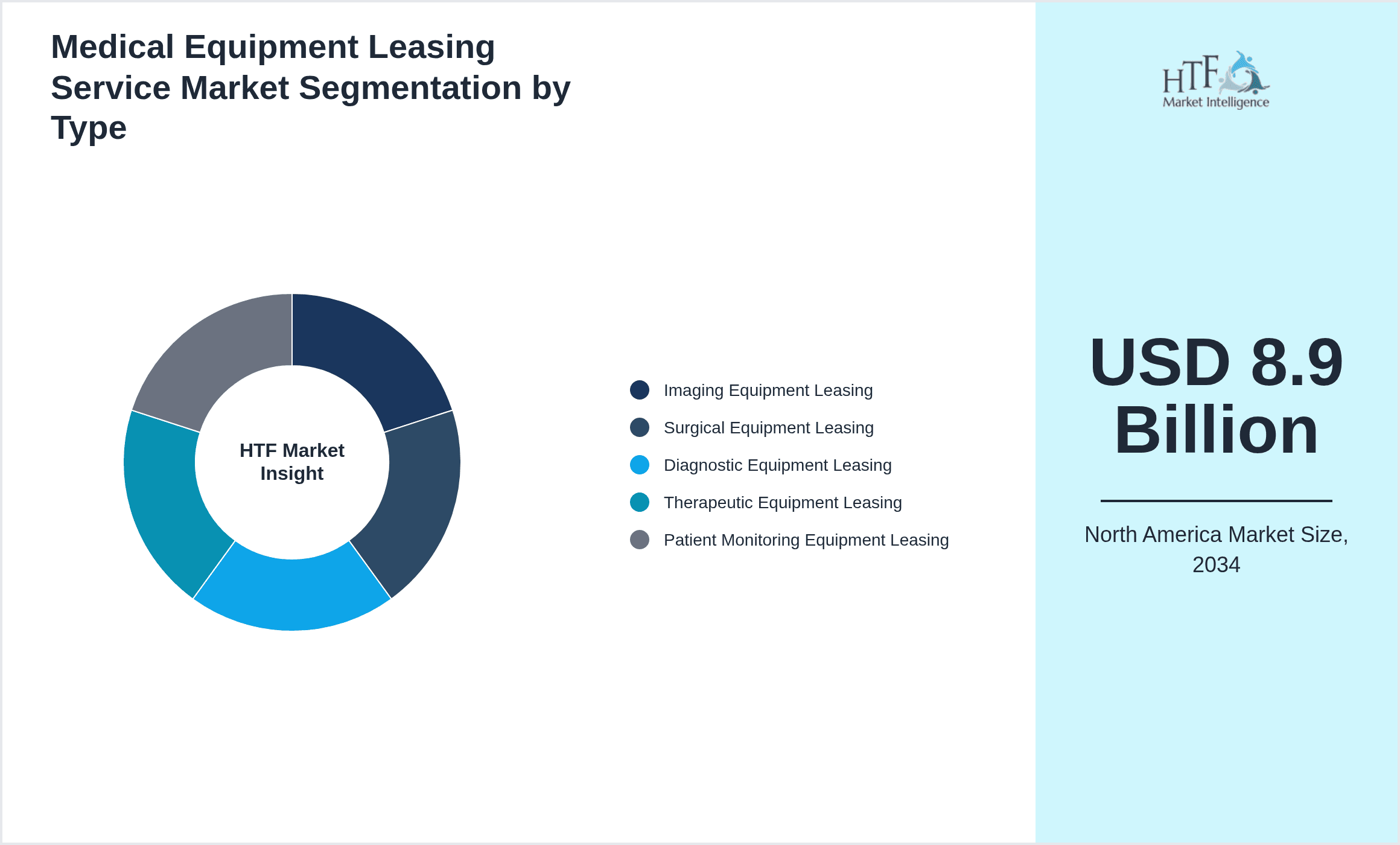
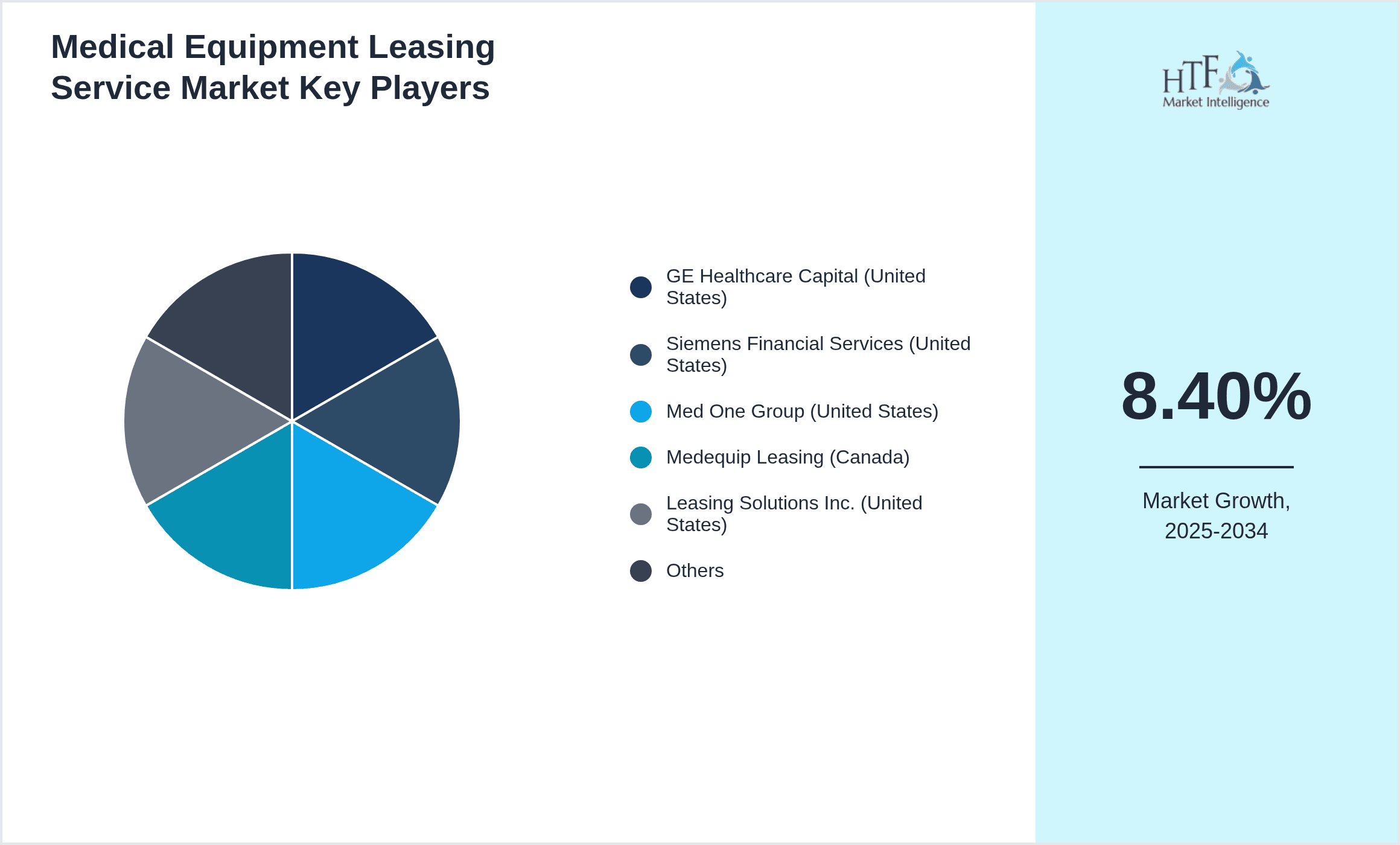
- •Market growth is driven by the increasing demand for advanced medical technologies, cost-containment strategies in healthcare institutions, and preference for operational expenditure models. The market is forecasted to expand from USD 4.2 Billion in 2025 to USD 8.9 Billion by 2034, with a CAGR of 8.4%.
- •Leasing services provide healthcare providers with flexible access to state-of-the-art equipment, improving patient care and operational efficiency. The market’s strategic importance lies in supporting healthcare providers’ scalability, compliance with regulatory standards, and risk mitigation through asset management.

Competitive Landscape
The North America Medical Equipment Leasing Service market is characterized by intense competition among major leasing firms, specialized healthcare equipment financiers, and technology service providers. Competitive strategies focus on flexible leasing terms, bundled maintenance, and technology upgrades to retain clients. Companies leverage strategic partnerships with equipment manufacturers to offer latest devices and enhance service portfolios. Innovation in digital asset management and remote monitoring solutions is driving differentiation. Market entry barriers include regulatory compliance and capital intensity. Regional competition is strong, with firms focusing on key healthcare hubs. Pricing strategies balance affordability with comprehensive service packages, while distribution channels emphasize direct engagements with healthcare institutions. Future trends suggest consolidation through mergers and acquisitions, increased customization of leasing solutions, and adoption of AI-powered asset utilization analytics to strengthen competitive positions.
Leading Companies in Medical Equipment Leasing Service Market
- •GE Healthcare Capital (United States)
- •Siemens Financial Services (United States)
- •Med One Group (United States)
- •Medequip Leasing (Canada)
- •Leasing Solutions Inc. (United States)
- •HealthTrust Leasing (United States)
- •Canon Financial Services Inc. (United States)
- •Bank of America Leasing (United States)
- •TD Equipment Finance (Canada)
- •First American Equipment Finance (United States)
- •National Leasing Group (United States)
- •U.S. Bank Equipment Finance (United States)
- •CIT Healthcare (United States)
- •BMO Financial Group (Canada)
- •SunTrust Equipment Finance (United States)
- •Wells Fargo Equipment Finance (United States)
- •PNC Equipment Finance (United States)
- •Key Equipment Finance (United States)
- •Herc Rentals (United States)
- •RBC Equipment Finance (Canada)
- •Apple Leasing Corp. (United States)
- •Progressive Leasing (United States)
- •Fresenius Medical Care Equipment Leasing (United States)
- •Stryker Capital (United States)
- •Philips Financial Services (United States)

Market Breakdown
- •By Type
- ◦Imaging Equipment Leasing
- ◦Surgical Equipment Leasing
- ◦Diagnostic Equipment Leasing
- ◦Therapeutic Equipment Leasing
- ◦Patient Monitoring Equipment Leasing
- •By Application
- ◦Hospitals
- ◦Diagnostic Centers
- ◦Ambulatory Surgical Centers
- ◦Clinics
- ◦Home Healthcare
- •By Service Model
- ◦Operating Lease
- ◦Finance Lease
- ◦Sale and Leaseback
- •By Contract Duration
- ◦Short-term (less than 12 months)
- ◦Medium-term (1-3 years)
- ◦Long-term (more than 3 years)
Growth Dynamics
The North America Medical Equipment Leasing Service market growth is propelled by healthcare providers’ increasing preference for leasing to reduce upfront capital expenditure amid tightening budgets. Hospitals and clinics are leveraging leasing to access cutting-edge medical technologies without large capital investments. The rise in chronic diseases and aging populations drives demand for advanced diagnostic and monitoring equipment, fueling leasing needs. Additionally, technological advancements in equipment and digital asset management enable service providers to offer flexible, tailored leasing solutions, enhancing customer adoption. Reimbursement policies favoring operational expense models further stimulate leasing uptake. Market participants are investing in service integration and maintenance contracts, creating comprehensive value propositions that attract healthcare providers seeking efficiency and cost control.
Market Trends
A significant trend in North America is the integration of IoT and AI in leased medical equipment for real-time monitoring and predictive maintenance, improving uptime and reducing operational disruptions. Leasing companies are adopting digital platforms for streamlined contract management and asset tracking, enhancing transparency and customer experience. The shift towards value-based healthcare models is increasing demand for flexible leasing terms and bundled services. Environmental sustainability is gaining importance, with providers seeking energy-efficient equipment and leasing companies promoting green initiatives. Additionally, partnerships between leasing firms and equipment manufacturers are becoming more prevalent, enabling faster technology refresh cycles and competitive pricing.
Market Opportunities
Opportunities abound in expanding leasing services to underserved segments like ambulatory surgical centers and home healthcare, where equipment leasing penetration is currently low. Advances in portable and wearable medical devices open new leasing avenues with shorter contract durations. The growing adoption of telemedicine and remote patient monitoring increases demand for leasing patient monitoring equipment. Additionally, emerging technologies such as robotic surgical systems present high-value leasing prospects. Market expansion through customized leasing models tailored to small and mid-sized healthcare providers presents a significant growth opportunity. Furthermore, digital transformation in contract management and asset lifecycle services offers differentiation potential for leasing providers.
Market Challenges
Challenges include stringent regulatory requirements related to medical equipment safety and leasing contracts, which complicate compliance and increase operational costs for leasing firms. High capital requirements and asset depreciation risks pose financial barriers. The COVID-19 pandemic disrupted healthcare operations, causing temporary declines in leasing demand in some sub-segments. Additionally, competition from equipment manufacturers offering direct financing and purchase options impacts leasing market share. Integration of new technologies necessitates continuous training and support, increasing service complexity. Market fragmentation and diverse healthcare regulations across North America require tailored approaches, limiting scalability. Finally, managing equipment end-of-life and disposal responsibly remains a challenge amid growing environmental concerns.
Regulatory Framework
Between 2020 and 2025, the North America medical equipment leasing market has been influenced by regulations such as the FDA’s Medical Device Regulation updates focusing on safety and performance standards, impacting leasing equipment eligibility and maintenance requirements. The Health Insurance Portability and Accountability Act (HIPAA) enforces stringent data security and privacy requirements on leasing contracts involving connected medical devices. Additionally, state-level regulations impose specific licensing and operational standards on leasing firms. The U.S. Centers for Medicare & Medicaid Services (CMS) reimbursement policies encourage operational expenditure models, favoring leasing over purchasing. Environmental regulations mandate proper disposal and recycling of leased equipment at contract end. Compliance with international standards such as ISO 13485 ensures quality management in leased equipment lifecycle. These regulatory frameworks collectively enhance market transparency, safety, and service quality, while increasing compliance costs for leasing providers.
Market Intelligence
- •15th March 2025, GE Healthcare Capital announced the launch of a new flexible leasing program targeting mid-sized hospitals across the United States. This program offers customizable lease terms from 12 to 48 months with integrated maintenance and upgrade options, designed to facilitate access to advanced imaging and monitoring equipment. The initiative aims to support healthcare providers managing uncertain capital budgets post-pandemic. GE Healthcare Capital expects the program to drive 15% revenue growth in the leasing segment by 2026, strengthening its market leadership. Source: GE Healthcare Official Press Release.
- •10th June 2025, Siemens Financial Services introduced an AI-enabled asset management platform for medical equipment leasing customers. The platform leverages predictive analytics to optimize maintenance schedules and reduce downtime, enhancing equipment utilization rates. Siemens aims to reduce operational costs for lessees and improve lifecycle management efficiency. The solution is targeted at large hospital networks and diagnostic centers in North America, positioning Siemens as a technology innovator in the leasing market. Early trials demonstrated a 20% reduction in maintenance-related disruptions. Source: Siemens Financial Services Corporate Announcement.
- •22nd September 2025, Med One Group completed the acquisition of Leasing Solutions Inc., a regional leasing provider specializing in surgical equipment for ambulatory surgical centers. The deal expands Med One’s portfolio and geographic footprint, enabling broader service offerings and increased market penetration in Canada and the United States. The merger is expected to generate synergies through combined customer bases and streamlined operations, reinforcing Med One’s competitive position in the North American market. Source: Med One Group Press Release.
- •Recent market developments and strategic initiatives are continuously tracked through industry publications, company announcements, and regulatory filings. For the most current information, stakeholders are advised to monitor official corporate communications and recognized market intelligence platforms.
Regional Outlook
The United States currently holds a significant share of the market, primarily due to several key factors: increasing consumption rates, a burgeoning population, and robust economic momentum. These elements collectively drive demand, positioning this region as a leader in the market. On the other hand, Canada is rapidly emerging as the fastest-growing area within the industry. This remarkable growth can be attributed to swift infrastructure development, the expansion of various industrial sectors, and a marked increase in consumer demand. These dynamics make this region a crucial player in shaping future market growth.
In our report, we cover a comprehensive analysis of the following regions and countries:
- United States
- Canada
- Mexico
| Feature | Details |
|---|---|
| Base Year Market Size | USD 4.2 Billion |
| Forecast Year Market Size | USD 8.9 Billion |
| CAGR | 8.4% |
| Forecast Period | 2026 to 2033 |
| YoY Growth | 8.3% |
| Scope of Report | Market is segmented by Type (Imaging Equipment Leasing, Surgical Equipment Leasing, Diagnostic Equipment Leasing, Therapeutic Equipment Leasing, Patient Monitoring Equipment Leasing), Application (Hospitals, Diagnostic Centers, Ambulatory Surgical Centers, Clinics, Home Healthcare), Service Model (Operating Lease, Finance Lease, Sale and Leaseback), Contract Duration (Short-term (less than 12 months), Medium-term (1-3 years), Long-term (more than 3 years)) |
| Regions Covered | United States, Canada, Mexico |
| Key Companies | GE Healthcare Capital (United States), Siemens Financial Services (United States), Med One Group (United States), Medequip Leasing (Canada), Leasing Solutions Inc. (United States), HealthTrust Leasing (United States), Canon Financial Services Inc. (United States), Bank of America Leasing (United States), TD Equipment Finance (Canada), First American Equipment Finance (United States), National Leasing Group (United States), U.S. Bank Equipment Finance (United States), CIT Healthcare (United States), BMO Financial Group (Canada), SunTrust Equipment Finance (United States), Wells Fargo Equipment Finance (United States), PNC Equipment Finance (United States), Key Equipment Finance (United States), Herc Rentals (United States), RBC Equipment Finance (Canada), Apple Leasing Corp. (United States), Progressive Leasing (United States), Fresenius Medical Care Equipment Leasing (United States), Stryker Capital (United States), Philips Financial Services (United States) |
North America Medical Equipment Leasing Service Market Size, Growth & Revenue 2025-2034 - Table of Contents
Frequently Asked Questions (FAQ):
The Compact Track Loaders market is projected to grow at a CAGR of 6.8% from 2025 to 2030, driven by increasing demand in construction and agricultural sectors.
North America currently leads the market with approximately 45% market share, followed by Europe at 28% and Asia-Pacific at 22%. The remaining regions account for 5% of the global market.
Key growth drivers include increasing construction activities, rising demand for versatile equipment in agriculture, technological advancements in track loader design, and growing preference for compact equipment in urban construction projects.