
Asia-Pacific Home Flower Pots and Planters Market Size, Growth & Revenue 2024-2034
Asia-Pacific Home Flower Pots and Planters Market is segmented by Type (Ceramic Pots, Plastic Pots, Metal Planters, Wooden Planters, Composite Planters), Application (Indoor Gardening, Balcony Gardening, Office Decor, Gifts & Events, Others), Distribution Channel (Online Retail, Specialty Stores, Supermarkets/Hypermarkets, Garden Centers), Material Type (Natural Clay, Plastic Resin, Metal Alloy, Wood, Composite Materials), and Geography (Japan, China, Southeast Asia, India, Australia, South Korea, Others)
Pricing
Report Overview
Executive Summary
- •The Asia-Pacific Home Flower Pots and Planters Market covers the manufacturing and sale of decorative and functional plant containers used in residential and commercial spaces. It includes ceramic, plastic, metal, wooden, and composite planters designed for indoor gardening, balcony use, office décor, and gifting. The market is influenced by increasing urban green initiatives, consumer preference for eco-friendly products, and the rise in home gardening activities across key countries like China, India, Japan, and Southeast Asia. Demand is driven by lifestyle changes and rising disposable incomes in the region.
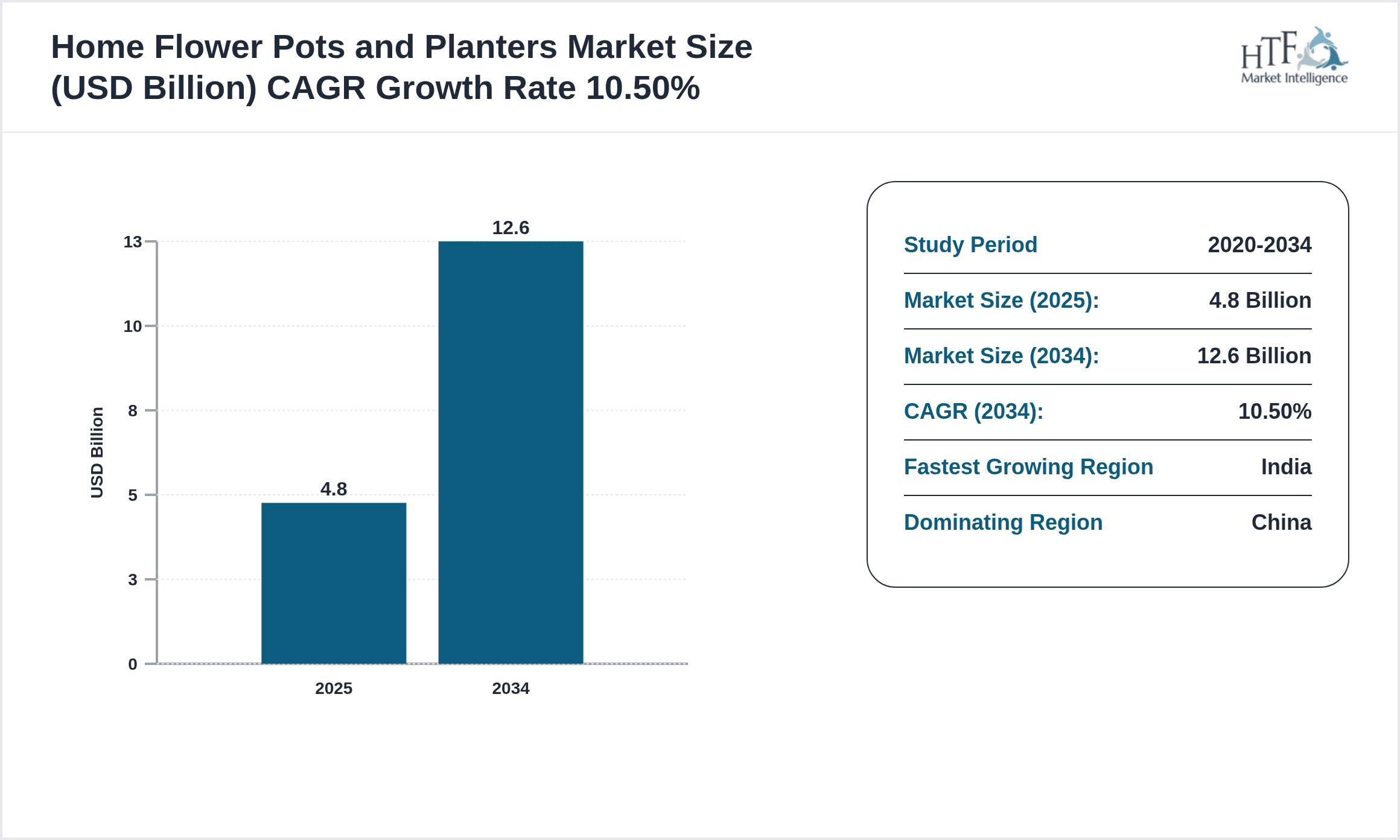
- •Market highlights include a base size of USD 4.8 Billion in 2024 with a projected CAGR of 10.5% leading to a forecast size of USD 12.6 Billion by 2034. Ceramic pots dominate the product segment, while indoor gardening remains the primary application area. China holds the largest market share, followed by India which is the fastest-growing country in the region.
- •The market offers strategic value by enabling sustainable urban gardening solutions and enhancing aesthetic appeal in homes and workplaces. It benefits manufacturers, retailers, and consumers by fostering innovation in eco-friendly materials and designs aligned with Asia-Pacific’s evolving lifestyle trends.
Competitive Landscape
Competition in the Asia-Pacific Home Flower Pots and Planters Market is characterized by a mix of established multinational corporations and local manufacturers focusing on product innovation, design differentiation, and sustainability. Companies invest in R&D to develop eco-friendly materials and smart planters integrated with technology. Price competitiveness and distribution network expansion are key strategies to capture urban and rural market segments. The rivalry intensifies as players leverage digital marketing and e-commerce platforms to enhance brand visibility and customer engagement. Strategic collaborations and regional customization of products further define competitive positioning, while barriers such as raw material costs and regulatory compliance shape market entry and expansion.
Leading Companies in Asia-Pacific Home Flower Pots and Planters Market
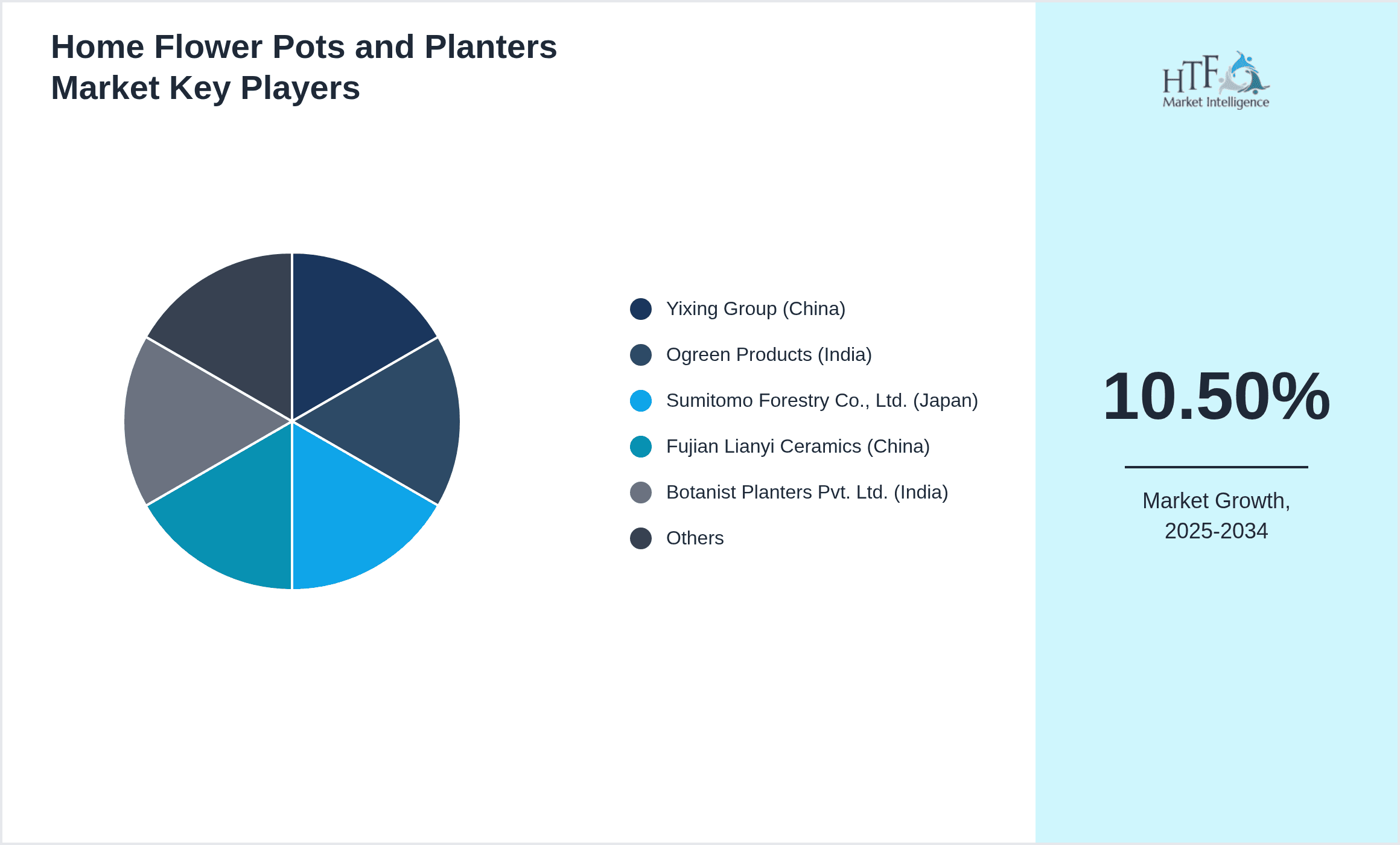
- •Yixing Group (China)
- •Ogreen Products (India)
- •Sumitomo Forestry Co., Ltd. (Japan)
- •Fujian Lianyi Ceramics (China)
- •Botanist Planters Pvt. Ltd. (India)
- •Keter Group (Israel - operations in Asia-Pacific)
- •Fujian Huayuan Ceramics Co., Ltd. (China)
- •Evergreen Garden Products (Australia)
- •Jardine Matheson Holdings (Hong Kong)
- •Sunho Plastic Co., Ltd. (South Korea)
- •Nikko Ceramics (Japan)
- •Capi Europe (Netherlands - Asia-Pacific presence)
- •GreenTech Innovations Pvt. Ltd. (India)
- •Tianjin Ruitai Ceramics (China)
- •Soam Group (India)
- •Craftsman Potters (Australia)
- •Innova Planters (South Korea)
- •Yantai Sansun Ceramics (China)
- •Gardeners Supply Company (USA - Asia-Pacific operations)
- •Suzhou Green Home (China)
- •Bambu Works (Indonesia)
- •Hua Hong Ceramics (China)
- •EcoPlanters Pvt Ltd (India)
- •Melbourne Garden Supplies (Australia)
- •Seowon Ceramic Co., Ltd. (South Korea)
Market Breakdown
- •By Type
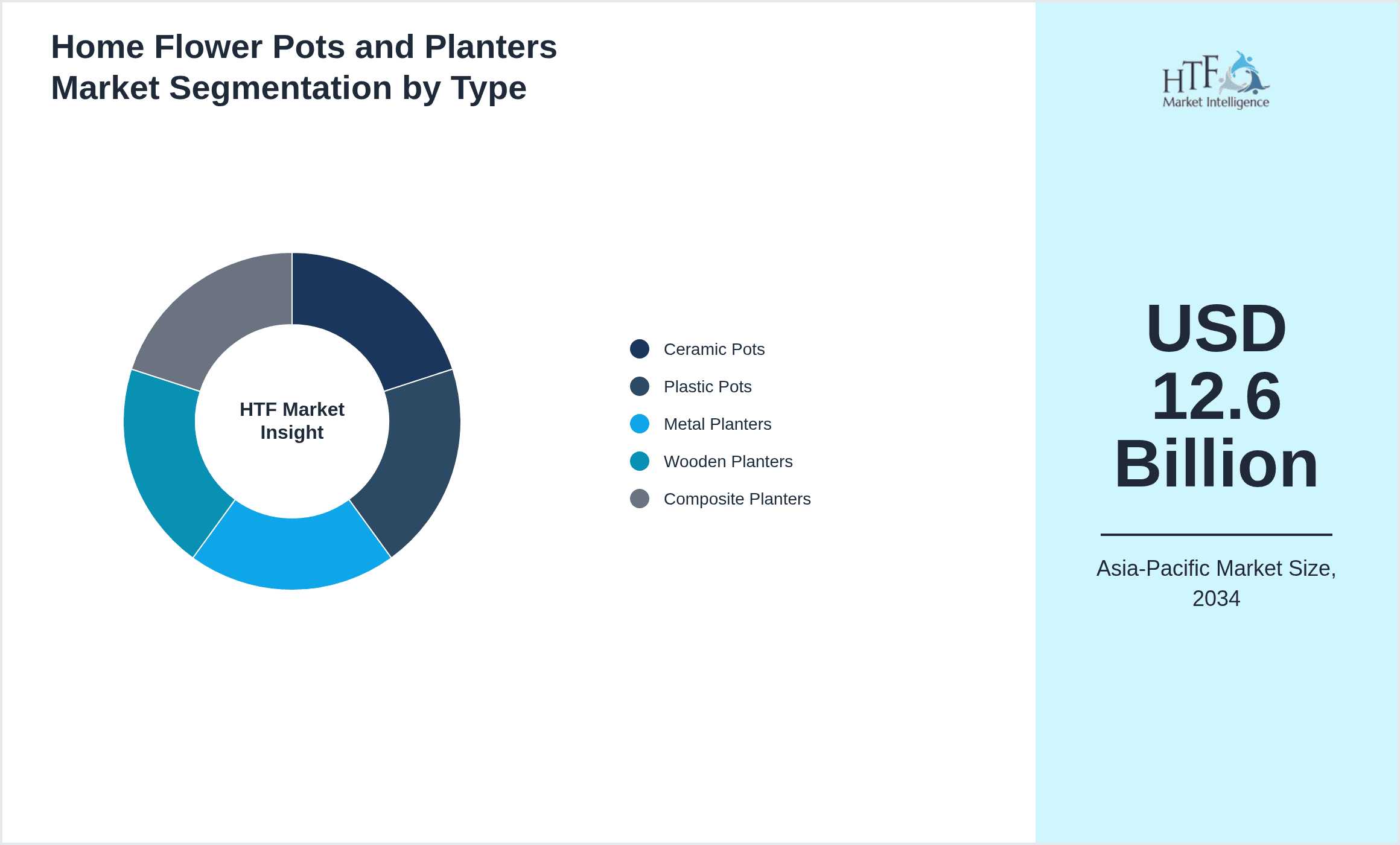
- ◦Ceramic Pots
- ◦Plastic Pots
- ◦Metal Planters
- ◦Wooden Planters
- ◦Composite Planters
- •By Application
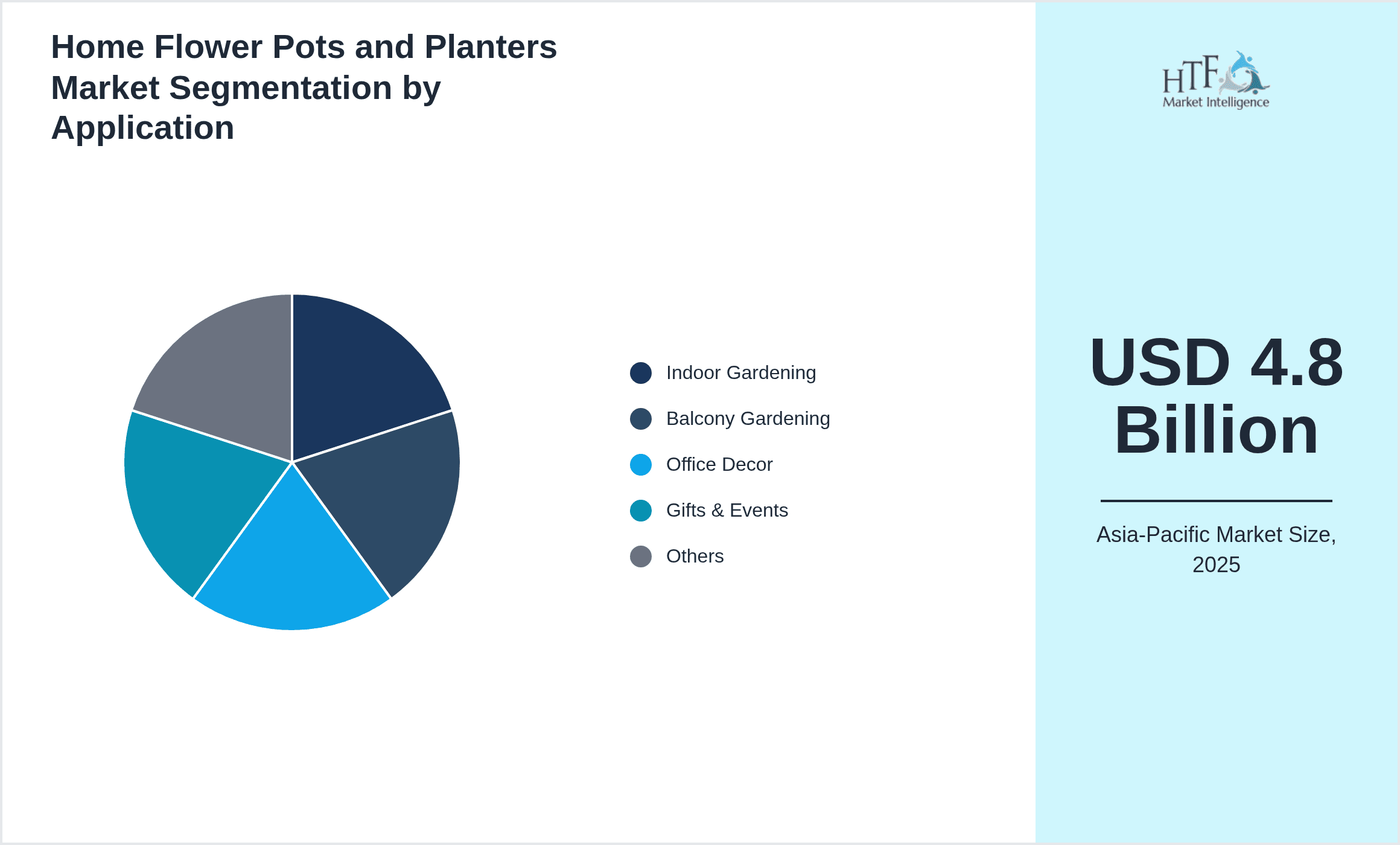
- ◦Indoor Gardening
- ◦Balcony Gardening
- ◦Office Decor
- ◦Gifts & Events
- ◦Others
- •By Distribution Channel
- ◦Online Retail
- ◦Specialty Stores
- ◦Supermarkets/Hypermarkets
- ◦Garden Centers
- •By Material Type
- ◦Natural Clay
- ◦Plastic Resin
- ◦Metal Alloy
- ◦Wood
- ◦Composite Materials
Growth Drivers
- •Rapid urbanization and growing disposable income in Asia-Pacific countries such as China and India are increasing demand for aesthetically pleasing and functional home gardening accessories, including flower pots and planters.
- •Rising environmental awareness and sustainability trends are encouraging consumers to adopt eco-friendly materials like biodegradable composites and natural clays, stimulating product innovation and market growth.
- •The expansion of e-commerce platforms across Asia-Pacific facilitates easy access to a variety of home flower pots and planters, broadening the customer base and boosting sales volumes.
- •Increasing popularity of indoor plants for air purification and wellness benefits in urban households and offices is driving market demand for decorative and functional planting solutions.
- •Government initiatives promoting urban greening and sustainable living, particularly in metropolitan areas, are providing a favorable environment for market expansion.
Market Trends
- •There is a growing trend towards smart planters integrated with sensors to monitor soil moisture and nutrient levels, enhancing plant care convenience for consumers in tech-savvy Asia-Pacific markets like Japan and South Korea.
- •Minimalist and Scandinavian-inspired planter designs are gaining traction, reflecting a shift in consumer preference towards modern aesthetics in urban homes and offices.
- •Sustainable packaging and zero-waste manufacturing processes are increasingly adopted by key players to align with regional environmental regulations and consumer expectations.
- •Collaborations between ceramic artisans and designers are creating unique, handcrafted planters that appeal to premium market segments in countries such as China and India.
- •Expansion of online gardening communities and social media influence is driving interest in home gardening and decorative planters among millennials and Gen Z consumers.
Market Restraints
- •High raw material costs, especially for ceramic and composite planters, limit price competitiveness and profit margins for manufacturers in the Asia-Pacific region.
- •Lack of standardized quality certification for planters leads to variability in product durability and customer trust issues, constraining market growth.
- •Limited awareness in rural areas and smaller cities restricts market penetration beyond major urban centers.
- •Environmental regulations around plastic use pose challenges for manufacturers reliant on plastic pots, requiring shifts to alternative materials.
- •Seasonality in demand, with peaks during festivals and planting seasons, results in uneven revenue streams for market participants.
Market Opportunities
- •Development of biodegradable and self-watering planters presents opportunities to cater to eco-conscious consumers and improve plant care convenience.
- •Expansion into emerging Southeast Asian markets with rising middle-class populations offers untapped growth potential for manufacturers and retailers.
- •Integration of IoT and smart home technologies in planters can create differentiated products, attracting tech-savvy buyers in developed Asia-Pacific countries.
- •Collaborations with landscape architects and interior designers can boost adoption of premium planters in commercial and hospitality sectors.
- •Leveraging social media and influencer marketing to educate consumers on home gardening benefits can expand the customer base and increase demand.
Market Challenges
- •Fragmented supply chains and reliance on imported raw materials create vulnerabilities in production continuity and cost management.
- •Competition from low-cost unbranded planters, especially in online marketplaces, pressures established players on pricing and brand loyalty.
- •Rapidly changing consumer preferences require continuous innovation, posing risks for companies unable to keep pace with trends.
- •Regulatory compliance across diverse Asia-Pacific countries adds complexity and increases operational costs for regional manufacturers.
- •Environmental concerns and plastic waste regulations challenge manufacturers heavily invested in plastic-based pots, requiring costly material transitions.
Regulatory Framework
- •Between 2020 and 2024, several Asia-Pacific countries implemented stricter environmental regulations targeting single-use plastics, impacting plastic pot manufacturers and encouraging the shift to biodegradable materials.
- •China’s National Green Development Policy mandated sustainable manufacturing practices in 2022, influencing planter production standards and waste management protocols.
- •India introduced the Plastic Waste Management Rules update in 2021, requiring producers to ensure extended producer responsibility (EPR) for plastic pots and packaging.
- •Australia’s Environment Protection and Biodiversity Conservation Act revisions in 2023 enforced stricter controls on import and use of non-biodegradable planters to reduce environmental impact.
- •Japan’s Ministry of Economy, Trade and Industry promoted eco-labeling for gardening products in 2020, fostering consumer awareness and encouraging sustainable product choices.
Market Intelligence
- •15th March 2024, Yixing Group launched an innovative line of eco-friendly ceramic planters made from recycled clay, targeting urban consumers in China interested in sustainable home gardening. The product features enhanced durability and modern aesthetics, aiming to capture premium market share through online and specialty retail channels. This launch reflects growing consumer demand for environmentally responsible home décor options in Asia-Pacific. Source: Yixing Group Official Press Release
- •2nd August 2024, Ogreen Products introduced smart planters integrated with moisture sensors and automated watering systems in India. Designed for busy urban households, these planters help maintain optimal plant health with minimal effort, leveraging IoT technology. The company plans to expand its digital sales footprint and collaborate with home décor retailers across major Indian cities, positioning itself as a technology-driven market leader. Source: Ogreen Products Corporate Announcement
- •20th January 2025, Sumitomo Forestry Co., Ltd. announced a strategic partnership with local artisans in Japan to produce handcrafted wooden planters combining traditional craftsmanship with sustainable forestry practices. This initiative aims to cater to premium segments and promote eco-conscious consumerism, boosting brand differentiation in the Asia-Pacific market. Source: Sumitomo Forestry Press Release
- •10th April 2025, Fujian Lianyi Ceramics expanded its manufacturing capacity in China with a new facility dedicated to producing composite material planters that offer enhanced durability and weather resistance. The move supports growing demand in both domestic and export markets, strengthening the company’s competitive positioning in Asia-Pacific. Source: Fujian Lianyi Ceramics Industry Update
Regional Outlook
The China currently holds a significant share of the market, primarily due to several key factors: increasing consumption rates, a burgeoning population, and robust economic momentum. These elements collectively drive demand, positioning this region as a leader in the market. On the other hand, India is rapidly emerging as the fastest-growing area within the industry. This remarkable growth can be attributed to swift infrastructure development, the expansion of various industrial sectors, and a marked increase in consumer demand. These dynamics make this region a crucial player in shaping future market growth.
In our report, we cover a comprehensive analysis of the following regions and countries:
- Japan
- China
- Southeast Asia
- India
- Australia
- South Korea
- Others
| Feature | Details |
|---|---|
| Base Year Market Size | USD 4.8 Billion |
| Forecast Year Market Size | USD 12.6 Billion |
| CAGR | 10.5% |
| Forecast Period | 2026 to 2033 |
| YoY Growth | 10% |
| Scope of Report | Market is segmented by Type (Ceramic Pots, Plastic Pots, Metal Planters, Wooden Planters, Composite Planters), Application (Indoor Gardening, Balcony Gardening, Office Decor, Gifts & Events, Others), Distribution Channel (Online Retail, Specialty Stores, Supermarkets/Hypermarkets, Garden Centers), Material Type (Natural Clay, Plastic Resin, Metal Alloy, Wood, Composite Materials) |
| Regions Covered | Japan, China, Southeast Asia, India, Australia, South Korea, Others |
| Key Companies | Yixing Group (China), Ogreen Products (India), Sumitomo Forestry Co., Ltd. (Japan), Fujian Lianyi Ceramics (China), Botanist Planters Pvt. Ltd. (India), Keter Group (Israel - operations in Asia-Pacific), Fujian Huayuan Ceramics Co., Ltd. (China), Evergreen Garden Products (Australia), Jardine Matheson Holdings (Hong Kong), Sunho Plastic Co., Ltd. (South Korea), Nikko Ceramics (Japan), Capi Europe (Netherlands - Asia-Pacific presence), GreenTech Innovations Pvt. Ltd. (India), Tianjin Ruitai Ceramics (China), Soam Group (India), Craftsman Potters (Australia), Innova Planters (South Korea), Yantai Sansun Ceramics (China), Gardeners Supply Company (USA - Asia-Pacific operations), Suzhou Green Home (China), Bambu Works (Indonesia), Hua Hong Ceramics (China), EcoPlanters Pvt Ltd (India), Melbourne Garden Supplies (Australia), Seowon Ceramic Co., Ltd. (South Korea) |
Asia-Pacific Home Flower Pots and Planters Market Size, Growth & Revenue 2024-2034 - Table of Contents
Frequently Asked Questions (FAQ):
The Compact Track Loaders market is expected to see value worth 5.3 Billion in 2025.
North America currently leads the market with approximately 45% market share, followed by Europe at 28% and Asia-Pacific at 22%. The remaining regions account for 5% of the global market.
Key growth drivers include increasing construction activities, rising demand for versatile equipment in agriculture, technological advancements in track loader design, and growing preference for compact equipment in urban construction projects.