
South America Suspension Insulators Market Size, Growth & Revenue 2024-2034
South America Suspension Insulators Market is segmented by Type (Porcelain Suspension Insulators, Glass Suspension Insulators, Composite Suspension Insulators, Polymer Suspension Insulators, Silicone Rubber Suspension Insulators), Application (Transmission Lines, Distribution Lines, Railways, Industrial Power Systems, Renewable Energy Installations), End User Sector (Utility Companies, Industrial Plants, Renewable Energy Developers, Rail Network Operators), Distribution Channel (Direct Sales, Distributors, Online Sales Platforms), and Geography (Brazil, Argentina, Chile, Peru, Colombia, Rest of South America)
Pricing
Report Overview
Executive Summary
- •The South America Suspension Insulators market involves the supply and application of suspension insulators primarily used in electrical transmission and distribution systems to ensure the secure and efficient flow of electricity across the region. This market includes a variety of insulator types such as porcelain, glass, composite, polymer, and silicone rubber, each tailored for specific voltage levels and environmental conditions. Key applications cover transmission lines, distribution networks, railways, industrial usage, and renewable energy projects. The market is driven by South America's increasing demand for grid reliability, infrastructure upgrades, and renewable energy integration, offering critical solutions to withstand harsh climatic and pollution challenges prevalent in the region.
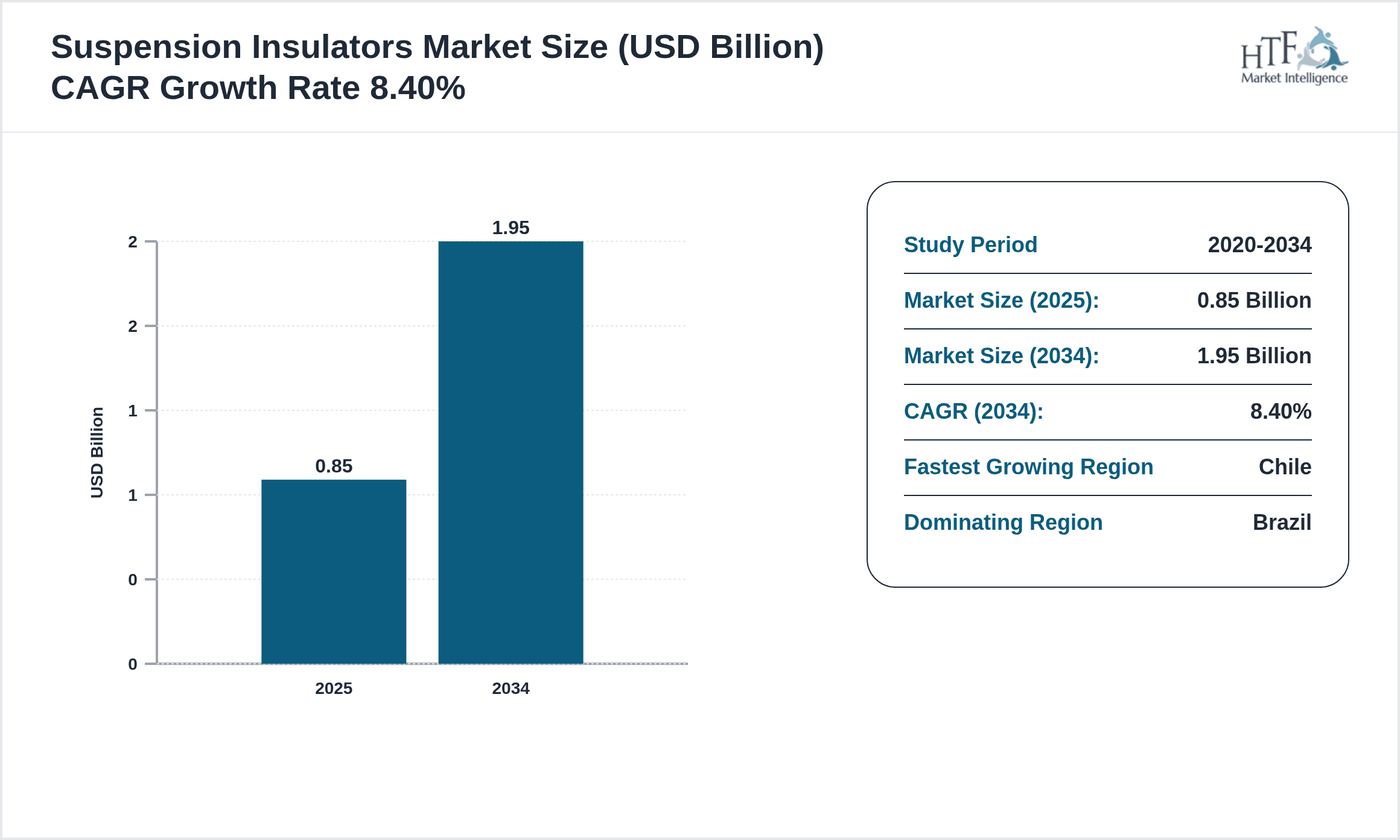
- •The market is anticipated to grow at a CAGR of 8.4% from 2024 to 2034, reaching an estimated USD 1.95 Billion by 2034 from USD 0.85 Billion in 2024. Brazil dominates the regional market with the largest share, while Chile is the fastest-growing country driven by expanding renewable energy projects. Porcelain suspension insulators hold the largest market share, but composite insulators are gaining traction due to their enhanced performance and lightweight properties. The increasing investments in transmission infrastructure and modernization programs underpin the robust growth trajectory.
- •This market presents significant value for utility companies, transmission operators, insulator manufacturers, and infrastructure investors by offering durable, high-performance insulators that improve grid stability and reduce maintenance costs. The strategic importance of suspension insulators is heightened by the region's focus on renewable energy expansion and electrification efforts, positioning the market for sustained growth and technological innovation.
Competitive Landscape
The South America Suspension Insulators market features intense competition driven by a mix of global manufacturers and regional suppliers focusing on product innovation, quality, and cost efficiency. Key competitive strategies include development of advanced composite insulators that offer superior mechanical strength and pollution resistance, and expansion of local manufacturing to reduce lead times and costs. Companies compete on pricing, technological advancements, and after-sales services while forming strategic partnerships with utilities and infrastructure developers. Market rivalry also revolves around certification compliance and adaptation to local environmental standards. Innovation in materials and production techniques remains pivotal in maintaining competitive advantage, while emerging players focus on niche applications and renewable energy sectors to carve market share. The competitive environment is expected to intensify with increasing demand for smart grid-compatible insulator solutions and sustainability-driven product portfolios.
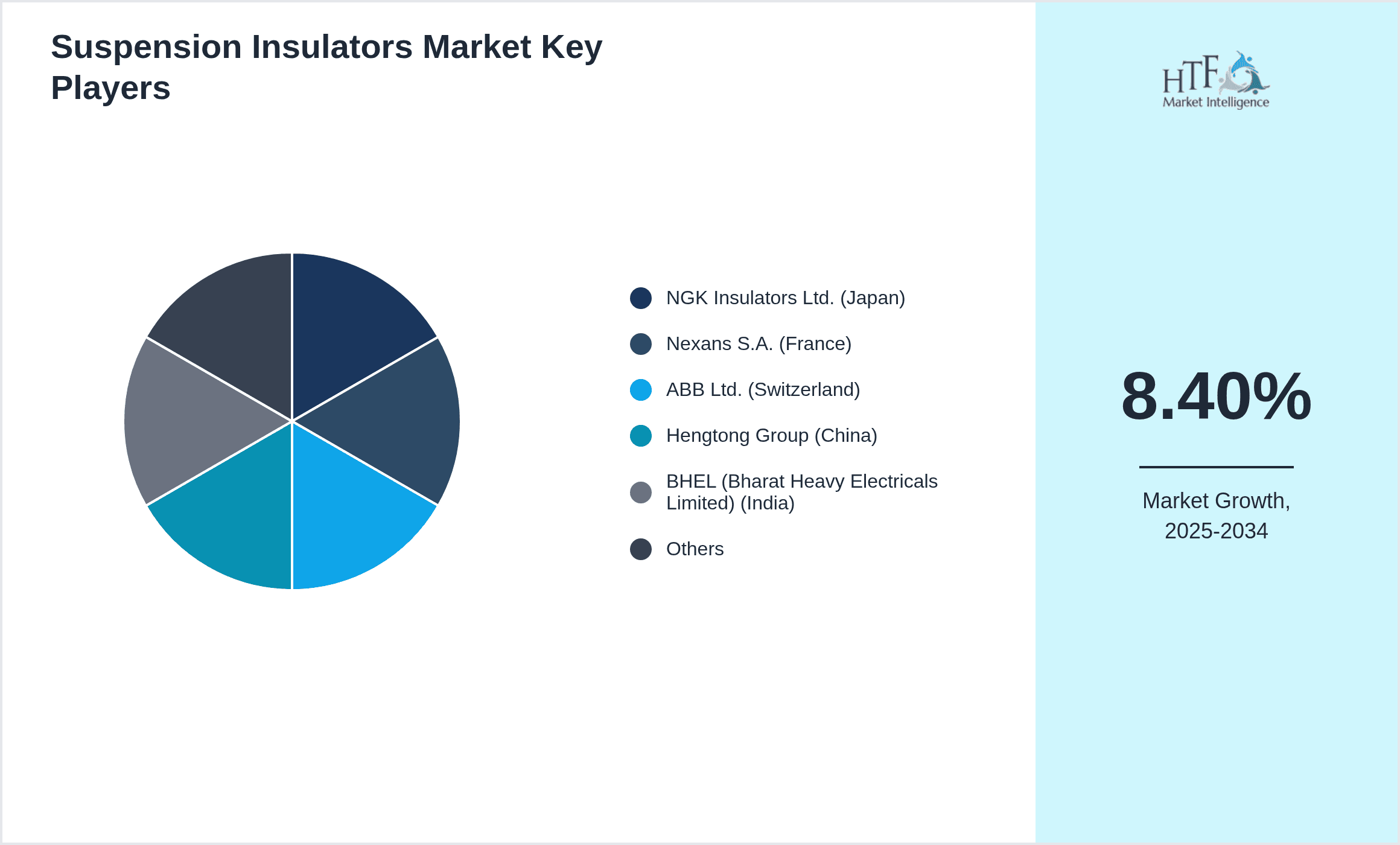
Leading Companies in South America Suspension Insulators Market
- •NGK Insulators Ltd. (Japan)
- •Nexans S.A. (France)
- •ABB Ltd. (Switzerland)
- •Hengtong Group (China)
- •BHEL (Bharat Heavy Electricals Limited) (India)
- •SICAME Group (France)
- •Cooper Power Systems (United States)
- •Lapp Insulators (Germany)
- •Zhejiang Changxing Electric Co., Ltd. (China)
- •Rosenberger Hochfrequenztechnik GmbH & Co. KG (Germany)
- •Isolux Corsan (Spain)
- •Ferroxcube (Netherlands)
- •TPI Composites, Inc. (United States)
- •Mersen Group (France)
- •Minghua Group (China)
- •Shanghai Huayi Group Corporation (China)
- •Efacec Power Solutions (Portugal)
- •Shandong Taikai Electric Power Technology Co., Ltd. (China)
- •Polimex-Mostostal S.A. (Poland)
- •CDE Global Limited (United Kingdom)
- •Siemens Energy AG (Germany)
- •Toshiba Corporation (Japan)
- •Hyosung Corporation (South Korea)
- •DuPont de Nemours, Inc. (United States)
- •Jiangsu Xinchang Electric Co., Ltd. (China)
Market Breakdown
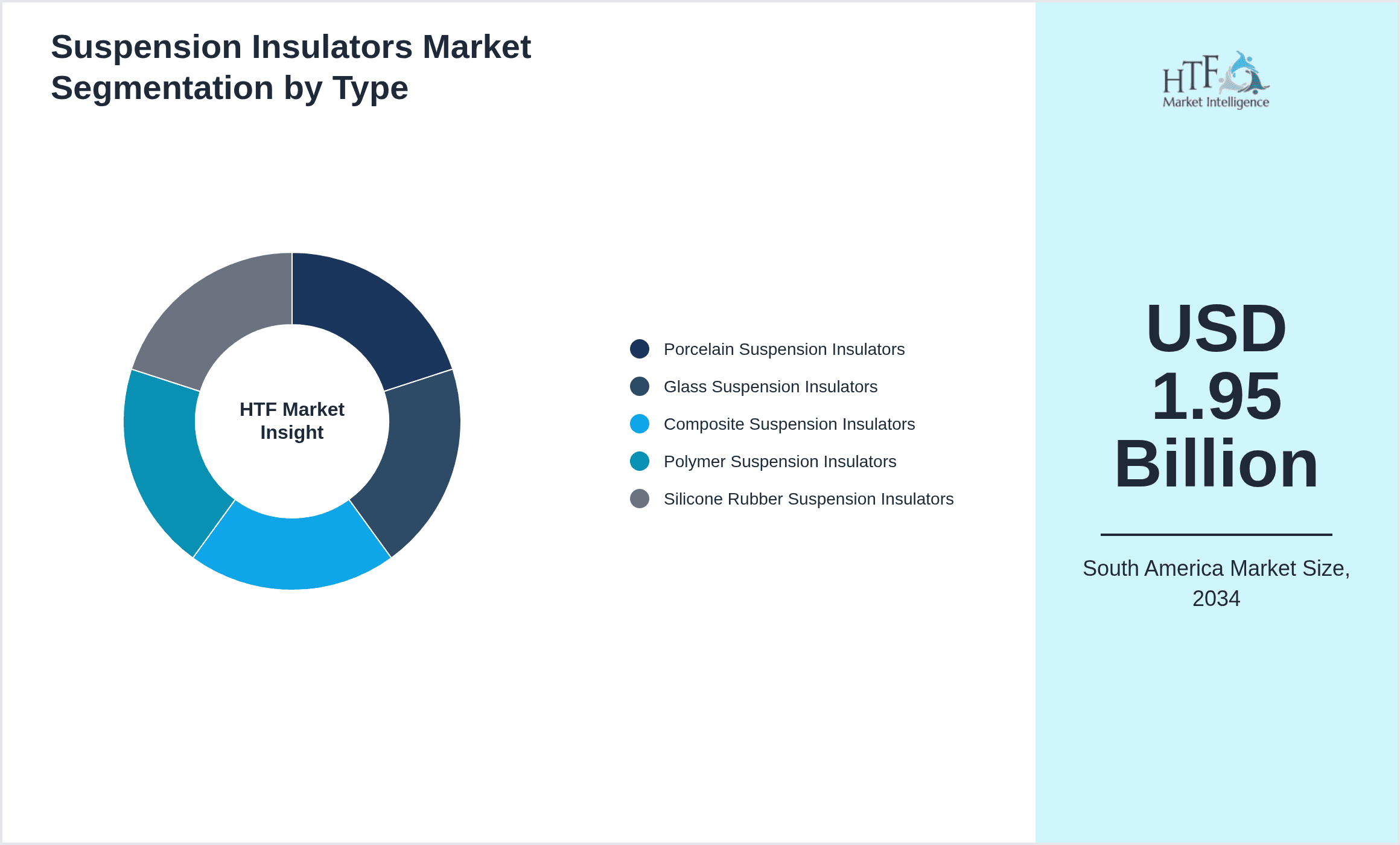
- •By Type
- ◦Porcelain Suspension Insulators
- ◦Glass Suspension Insulators
- ◦Composite Suspension Insulators
- ◦Polymer Suspension Insulators
- ◦Silicone Rubber Suspension Insulators
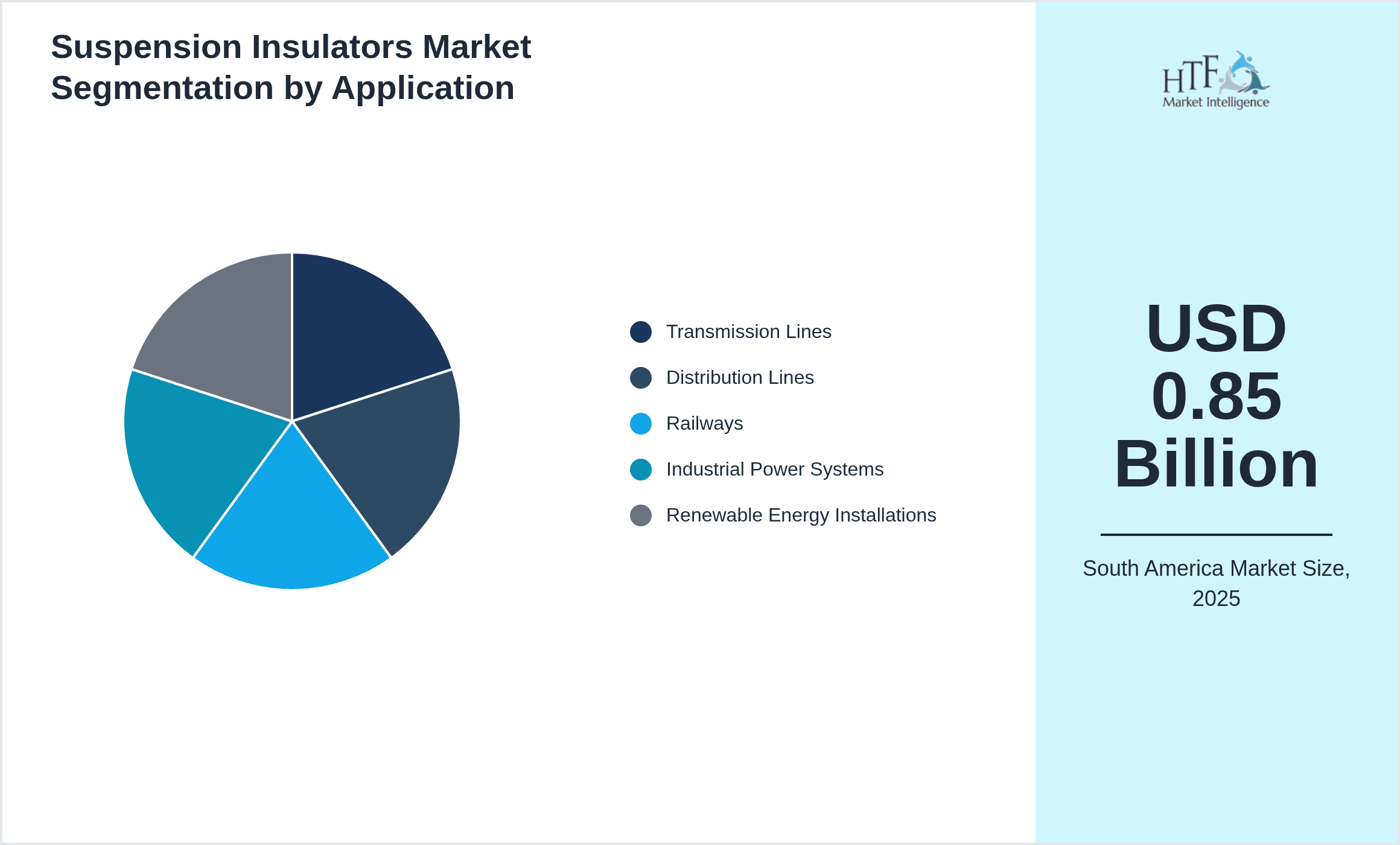
- •By Application
- ◦Transmission Lines
- ◦Distribution Lines
- ◦Railways
- ◦Industrial Power Systems
- ◦Renewable Energy Installations
- •By End User Sector
- ◦Utility Companies
- ◦Industrial Plants
- ◦Renewable Energy Developers
- ◦Rail Network Operators
- •By Distribution Channel
- ◦Direct Sales
- ◦Distributors
- ◦Online Sales Platforms
Growth Drivers
- •Expansion of electrical grid infrastructure in South America, especially in Brazil and Argentina, is driving demand for high-quality suspension insulators to support increased transmission capacity and reliability.
- •Significant investments in renewable energy projects such as wind and solar farms require durable insulators capable of withstanding harsh environmental conditions, fueling market growth.
- •Technological advancements in composite and polymer insulators offering enhanced mechanical strength, lightweight properties, and pollution resistance are accelerating adoption across the region.
- •Government initiatives focused on rural electrification and grid modernization programs throughout South America boost the demand for reliable suspension insulator solutions.
- •Rising replacement demand due to aging infrastructure and increasing maintenance costs of conventional porcelain insulators encourages market uptake of advanced materials.
Market Trends
- •Growing preference for composite suspension insulators over traditional porcelain and glass types due to their superior pollution performance and lighter weight is shaping product demand.
- •Integration of smart grid technologies is leading to the development of suspension insulators with embedded sensors for real-time monitoring and predictive maintenance.
- •The rise of renewable energy installations in South America is encouraging manufacturers to tailor insulator designs to meet specific environmental and voltage requirements.
- •Increasing focus on sustainability and environment-friendly manufacturing processes is influencing material selection and production methods within the insulator market.
- •Strategic collaborations between local utilities and global insulator manufacturers are enhancing product availability and customization for regional needs.
Market Opportunities
- •Untapped rural electrification projects in countries like Peru and Colombia offer substantial growth potential for suspension insulator suppliers targeting infrastructure development.
- •Emerging demand for high-voltage direct current (HVDC) transmission lines creates opportunities for specialized suspension insulator solutions with enhanced electrical performance.
- •Expansion of renewable energy sectors, particularly offshore wind and solar parks, opens avenues for customized insulators designed for extreme weather resistance and longevity.
- •Investment in local manufacturing hubs and distribution networks can reduce dependency on imports, improving supply chain efficiency and market responsiveness.
- •Development of next-generation hybrid composite materials integrating nanotechnology may provide competitive differentiation and superior product offerings.
Market Challenges
- •High initial costs and longer lead times associated with composite and polymer insulators can hinder adoption among cost-sensitive utilities in South America.
- •Logistical challenges and infrastructure constraints in remote and rural areas complicate timely delivery and installation of suspension insulators.
- •Lack of standardized testing and certification protocols across South American countries creates barriers for new entrants and product acceptance.
- •Competition from low-cost imported porcelain insulators limits market penetration for advanced composite types despite their longer-term benefits.
- •Environmental factors such as high pollution, salt contamination, and extreme weather demand robust product performance, increasing R&D and manufacturing complexity.
Regulatory Framework
- •Between 2019 and 2024, South American countries have introduced stricter electrical safety and environmental regulations mandating higher performance standards for suspension insulators, enhancing grid reliability and reducing outage risks.
- •Brazil's National Electric Energy Agency (ANEEL) issued updated technical guidelines in 2023 requiring utilities to adopt insulators with improved pollution resistance and mechanical strength to comply with new grid codes.
- •Argentina implemented environmental compliance mandates in 2022 focusing on manufacturing emissions and waste management in insulator production, encouraging sustainable practices among suppliers.
- •Chile’s Ministry of Energy introduced in 2021 renewable energy grid integration standards that indirectly impact insulator specifications to ensure compatibility with modern HV transmission systems.
- •Regional trade agreements within Mercosur facilitate harmonized standards and reduce tariff barriers for suspension insulator imports and exports, fostering competitive market dynamics.
Market Intelligence
- •15th February 2024, NGK Insulators Ltd. launched a new composite suspension insulator series specifically engineered for South American high-pollution environments, featuring enhanced hydrophobic coatings and improved mechanical resilience, targeting renewable energy and transmission sectors to increase grid reliability and reduce maintenance costs. This launch aligns with regional infrastructure modernization initiatives to support sustainable power distribution. Source: Official NGK Press Release
- •10th August 2024, Nexans S.A. announced a strategic partnership with a leading Brazilian utility company to supply advanced polymer suspension insulators for a large-scale transmission upgrade project aimed at integrating wind and solar power capacity. The collaboration focuses on reducing installation times and improving operational efficiency through tailored insulator designs. Source: Nexans Corporate Announcement
- •Recent market developments and strategic initiatives are continuously tracked through industry publications, company announcements, and regulatory filings. For the most current information, stakeholders are advised to monitor official corporate communications and recognized market intelligence platforms.
Regional Outlook
The Brazil currently holds a significant share of the market, primarily due to several key factors: increasing consumption rates, a burgeoning population, and robust economic momentum. These elements collectively drive demand, positioning this region as a leader in the market. On the other hand, Chile is rapidly emerging as the fastest-growing area within the industry. This remarkable growth can be attributed to swift infrastructure development, the expansion of various industrial sectors, and a marked increase in consumer demand. These dynamics make this region a crucial player in shaping future market growth.
In our report, we cover a comprehensive analysis of the following regions and countries:
- Brazil
- Argentina
- Chile
- Peru
- Colombia
- Rest of South America
| Feature | Details |
|---|---|
| Base Year Market Size | USD 0.85 Billion |
| Forecast Year Market Size | USD 1.95 Billion |
| CAGR | 8.4% |
| Forecast Period | 2026 to 2033 |
| YoY Growth | 8.1% |
| Scope of Report | Market is segmented by Type (Porcelain Suspension Insulators, Glass Suspension Insulators, Composite Suspension Insulators, Polymer Suspension Insulators, Silicone Rubber Suspension Insulators), Application (Transmission Lines, Distribution Lines, Railways, Industrial Power Systems, Renewable Energy Installations), End User Sector (Utility Companies, Industrial Plants, Renewable Energy Developers, Rail Network Operators), Distribution Channel (Direct Sales, Distributors, Online Sales Platforms) |
| Regions Covered | Brazil, Argentina, Chile, Peru, Colombia, Rest of South America |
| Key Companies | NGK Insulators Ltd. (Japan), Nexans S.A. (France), ABB Ltd. (Switzerland), Hengtong Group (China), BHEL (Bharat Heavy Electricals Limited) (India), SICAME Group (France), Cooper Power Systems (United States), Lapp Insulators (Germany), Zhejiang Changxing Electric Co., Ltd. (China), Rosenberger Hochfrequenztechnik GmbH & Co. KG (Germany), Isolux Corsan (Spain), Ferroxcube (Netherlands), TPI Composites, Inc. (United States), Mersen Group (France), Minghua Group (China), Shanghai Huayi Group Corporation (China), Efacec Power Solutions (Portugal), Shandong Taikai Electric Power Technology Co., Ltd. (China), Polimex-Mostostal S.A. (Poland), CDE Global Limited (United Kingdom), Siemens Energy AG (Germany), Toshiba Corporation (Japan), Hyosung Corporation (South Korea), DuPont de Nemours, Inc. (United States), Jiangsu Xinchang Electric Co., Ltd. (China) |
South America Suspension Insulators Market Size, Growth & Revenue 2024-2034 - Table of Contents
Frequently Asked Questions (FAQ):
The Compact Track Loaders market is projected to grow at a CAGR of 6.8% from 2025 to 2030, driven by increasing demand in construction and agricultural sectors.
North America currently leads the market with approximately 45% market share, followed by Europe at 28% and Asia-Pacific at 22%. The remaining regions account for 5% of the global market.
Key growth drivers include increasing construction activities, rising demand for versatile equipment in agriculture, technological advancements in track loader design, and growing preference for compact equipment in urban construction projects.