
Global Petrochemical Raman Spectrometer Market - Outlook 2024-2034
Global Petrochemical Raman Spectrometer Market is segmented by Type (Dispersive Raman Spectrometer, Fourier Transform Raman Spectrometer, Portable Raman Spectrometer, Microspectrometer, Fiber Optic Raman Spectrometer), Application (Petrochemical Analysis, Process Monitoring, Quality Control, Research & Development, Environmental Monitoring), End User (Petrochemical Refineries, Chemical Manufacturing, Research Laboratories, Environmental Agencies), Distribution Channel (Direct Sales, Distributors and Dealers, Online Sales), and Geography (North America, LATAM, West Europe, Central & Eastern Europe, Northern Europe, Southern Europe, East Asia, Southeast Asia, South Asia, Central Asia, Oceania, MEA)
Pricing
Report Overview
Executive Summary
- •The Global Petrochemical Raman Spectrometer market comprises advanced spectroscopic instruments utilized for molecular and chemical analysis within the petrochemical industry. It includes various types such as dispersive, Fourier transform, portable, microspectrometers, and fiber optic spectrometers. These instruments are critical for petrochemical analysis, process monitoring, quality control, research and development, and environmental monitoring, enabling precise, non-destructive testing of hydrocarbons and polymers. The market serves a broad spectrum of end-users including refineries, chemical manufacturers, research centers, and regulatory bodies worldwide, focusing on improving operational efficiency and compliance.
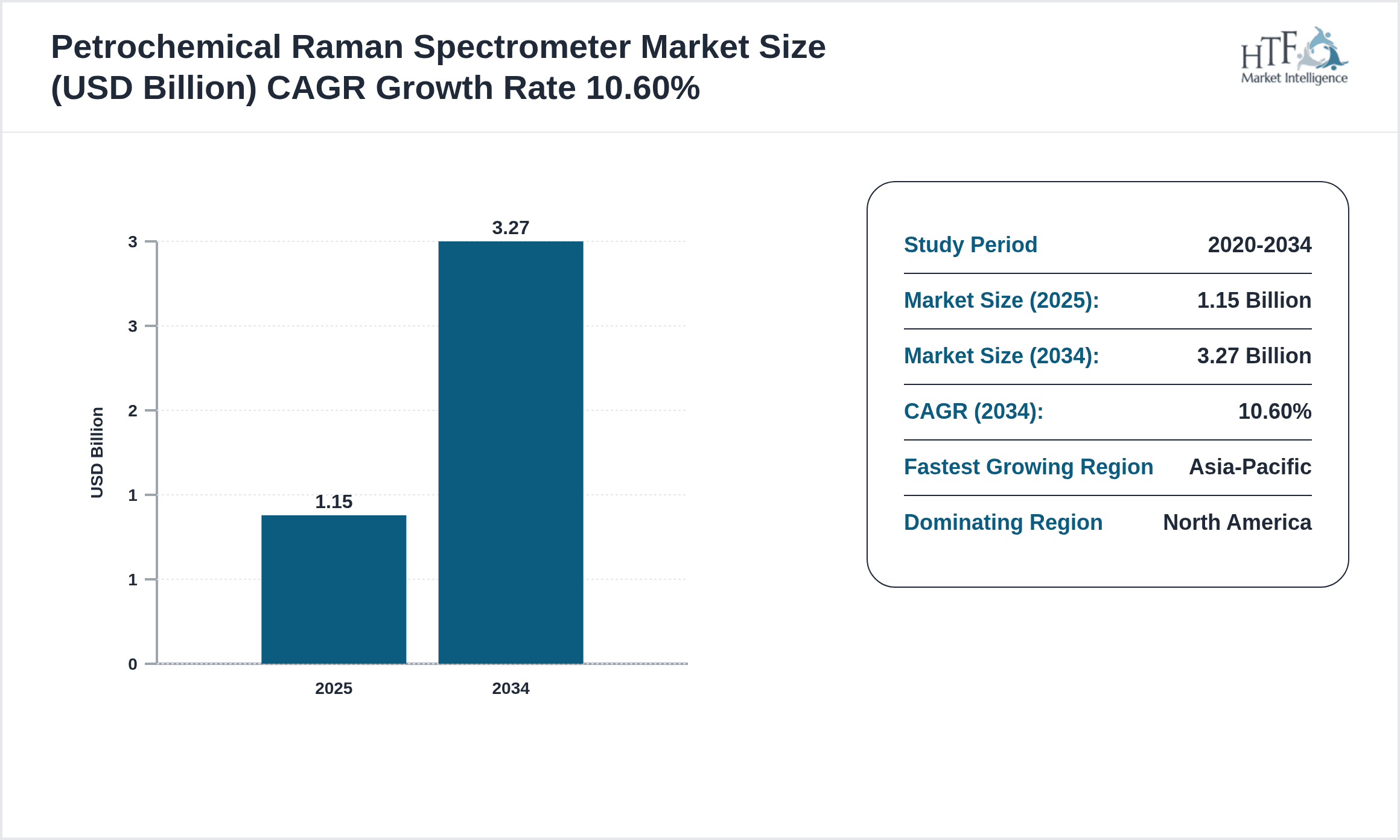
- •Key market highlights include a current valuation of USD 1.15 Billion in 2024, with projections to reach USD 3.27 Billion by 2034, representing a CAGR of 10.6%. Dispersive Raman Spectrometers currently dominate the market, while Portable Raman Spectrometers exhibit the fastest growth due to their mobility and ease of use in field applications. North America leads in market share, followed by Europe and Asia-Pacific, with Asia-Pacific forecasted to grow at the highest rate driven by industrial expansion.
- •This market holds strategic importance for petrochemical producers, analytical instrument manufacturers, and environmental regulators, providing essential tools for ensuring product quality, safety, and environmental compliance. The integration of Raman spectrometers with digital technologies enhances real-time analytics and process automation, bolstering operational resilience and sustainability across the petrochemical value chain.
Competitive Landscape
The competition in the Global Petrochemical Raman Spectrometer market is characterized by a mix of established multinational corporations and innovative niche players focusing on technological advancements and product differentiation. Companies compete by enhancing spectrometer sensitivity, portability, and integration with digital platforms such as IoT and AI to deliver real-time data analytics and predictive maintenance. Strategic partnerships, research collaborations, and continuous product innovation are key competitive strategies to capture market share. The rivalry is intensified by the demand for customized solutions tailored to specific petrochemical processes. Market leaders leverage strong global distribution networks and after-sales support to maintain their dominance. Emerging players focus on affordability and regional market penetration, creating a dynamic competitive environment fostering innovation and customer-centric solutions.
Leading Companies in Petrochemical Raman Spectrometer Market
- •Thermo Fisher Scientific (United States)
- •HORIBA Ltd. (Japan)
- •Bruker Corporation (United States)
- •Renishaw plc (United Kingdom)
- •PerkinElmer, Inc. (United States)
- •B&W Tek, Inc. (United States)
- •JASCO Corporation (Japan)
- •Ocean Insight (United States)
- •Anton Paar GmbH (Austria)
- •Agilent Technologies, Inc. (United States)
- •Brimrose Corporation of America (United States)
- •Enwave Optronics Corporation (Canada)
- •Ibsen Photonics A/S (Denmark)
- •EDAX, Inc. (United States)
- •StellarNet, Inc. (United States)
- •Specac Ltd. (United Kingdom)
- •LAUDA Scientific GmbH (Germany)
- •Metrohm AG (Switzerland)
- •Malvern Panalytical Ltd. (United Kingdom)
- •Coherent, Inc. (United States)
- •Sierra Instruments, Inc. (United States)
- •Nanalysis Corp. (Canada)
- •B&W Tek (United States)
- •Ocean Optics, Inc. (United States)
- •Hitachi High-Tech Corporation (Japan)
Market Breakdown
- •By Type
- ◦Dispersive Raman Spectrometer
- ◦Fourier Transform Raman Spectrometer
- ◦Portable Raman Spectrometer
- ◦Microspectrometer
- ◦Fiber Optic Raman Spectrometer
- •By Application
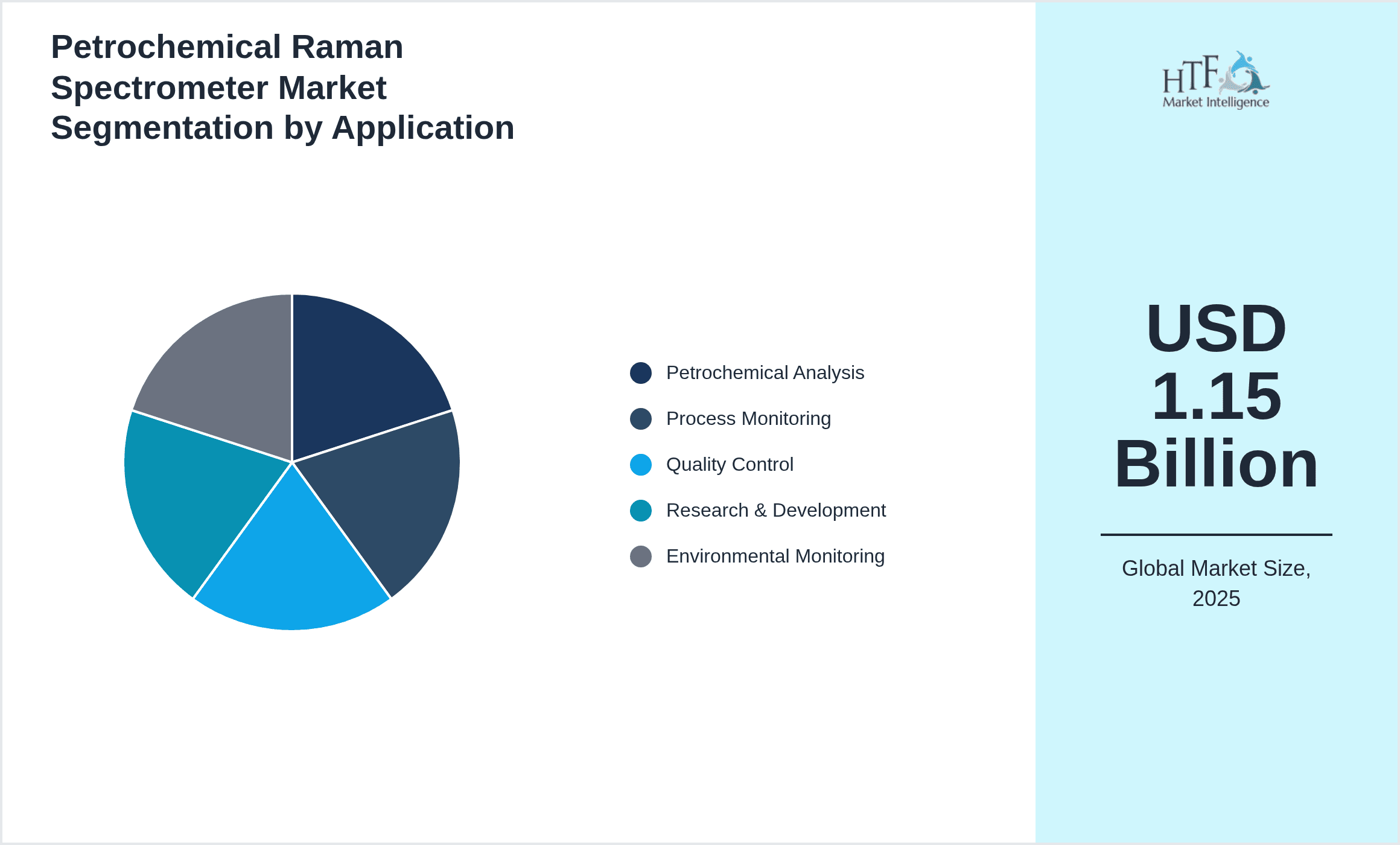
- ◦Petrochemical Analysis
- ◦Process Monitoring
- ◦Quality Control
- ◦Research & Development
- ◦Environmental Monitoring
- •By End User
- ◦Petrochemical Refineries
- ◦Chemical Manufacturing
- ◦Research Laboratories
- ◦Environmental Agencies
- •By Distribution Channel
- ◦Direct Sales
- ◦Distributors and Dealers
- ◦Online Sales
Growth Drivers
The Global Petrochemical Raman Spectrometer market is propelled by the escalating demand for advanced analytical tools that provide precise molecular characterization essential for petrochemical process optimization. Increasing industrial automation and stringent environmental regulations drive the adoption of Raman spectrometers for real-time monitoring and quality assurance. Furthermore, advancements in portable and fiber optic Raman technologies facilitate on-site analysis, reducing downtime and operational costs. Growth in petrochemical production worldwide, especially in emerging economies, fuels market expansion. The integration of Raman spectroscopy with AI and IoT enhances data analytics capabilities, enabling predictive maintenance and process control, further stimulating market growth. Additionally, rising investments in research and development within the petrochemical sector create sustained demand for high-performance spectrometers tailored for complex applications.

Market Trends
A prominent trend in the Global Petrochemical Raman Spectrometer market is the increasing shift towards miniaturized and portable spectrometers that enable field-based analysis, enhancing operational flexibility. The adoption of AI-driven data analytics to interpret Raman spectra is transforming traditional laboratory workflows and enabling predictive insights. Sustainability considerations are encouraging the development of greener, energy-efficient spectrometers with reduced environmental footprints. Collaborative innovation between instrument manufacturers and petrochemical companies is fostering application-specific customization. Cloud-based data management platforms integrated with Raman systems are gaining traction for seamless data sharing and remote monitoring. These evolving trends reflect the market’s adaptation to digital transformation and stringent regulatory demands while addressing user convenience and cost efficiency.
Restraints
The market faces challenges from the high initial investment costs associated with advanced Raman spectrometers, which can impede adoption, particularly among small and medium-sized enterprises in the petrochemical sector. Technical complexities and the need for skilled operators limit widespread usage. Interference from fluorescence and sample heterogeneity can reduce measurement accuracy, necessitating additional corrective procedures. Furthermore, stringent calibration and maintenance requirements increase operational expenses. Market penetration is also hindered by the competition from alternative spectroscopic techniques such as infrared and nuclear magnetic resonance spectroscopy, which are sometimes preferred for specific applications. Regulatory compliance and safety standards impose additional operational constraints, affecting market growth.
Opportunities
The evolving petrochemical landscape offers significant opportunities for Raman spectrometer manufacturers through expanding applications in process analytical technology and environmental monitoring. Growing emphasis on digitalization and Industry 4.0 drives demand for integrated, smart Raman systems capable of remote monitoring and automated analysis. Emerging markets in Asia-Pacific and Latin America present untapped potential due to increasing petrochemical investments. Innovation in portable and handheld spectrometers opens avenues for on-site, real-time analysis in hazardous environments, enhancing safety and efficiency. Collaborations with petrochemical firms for developing customized solutions and expanding service portfolios can generate additional revenue streams. Furthermore, advancing laser and detector technologies promise improved sensitivity and reduced costs, fostering broader adoption.
Market Challenges
Key challenges in the Global Petrochemical Raman Spectrometer market include overcoming technical limitations such as fluorescence interference, which affects spectral clarity and data reliability. The requirement for frequent calibration and maintenance raises total cost of ownership and operational complexity. Market fragmentation and intense competition necessitate continuous innovation and differentiation, pressuring companies to invest heavily in R&D. Data security and integration issues arise with growing adoption of cloud and AI technologies. Additionally, supply chain disruptions and raw material price volatility can impact production schedules and pricing. The necessity to comply with diverse international regulatory standards complicates market entry and expansion strategies, particularly for smaller players lacking extensive resources.
Regulatory Framework
From 2023 to 2024, the Global Petrochemical Raman Spectrometer market has been influenced by evolving regulatory requirements emphasizing environmental protection and process safety. Regulations such as the EU’s REACH and the U.S. EPA’s stricter emission standards mandate enhanced monitoring and quality control, driving demand for precise analytical instruments like Raman spectrometers. Compliance with ISO standards related to instrument calibration and measurement accuracy has become essential. Additionally, safety regulations governing laser operation and electromagnetic emissions have tightened, requiring manufacturers to innovate safer, compliant devices. These regulatory frameworks have prompted increased investments in advanced Raman technologies capable of supporting stringent reporting and operational transparency within petrochemical processes across global markets.
Market Intelligence
In March 2024, Thermo Fisher Scientific launched a new portable Raman spectrometer optimized for petrochemical onsite analysis, featuring enhanced spectral resolution and AI-powered data interpretation capabilities, aimed at improving field diagnostics and reducing analysis time. This innovation is expected to strengthen its market position in portable solutions. In November 2023, HORIBA Ltd. introduced an integrated Raman spectroscopy platform with IoT connectivity, enabling real-time process monitoring and remote analytics for petrochemical plants. This development addresses growing digitalization trends and operational efficiency demands. These strategic product launches highlight industry focus on mobility, automation, and data integration to meet evolving petrochemical sector needs. Source: Official company announcements and industry publications.
Mergers & Acquisitions
- •In July 2023, Bruker Corporation acquired a niche Raman spectroscopy startup specializing in portable spectrometers with AI-enabled analytics. This acquisition enhances Bruker’s product portfolio by integrating advanced portable Raman technologies, expanding its footprint in the petrochemical sector. The strategic move aims to accelerate innovation, improve market responsiveness, and strengthen competitive positioning globally. It also supports Bruker’s objective to cater to growing demand for field-deployable analytical instruments, opening new revenue streams and customer segments.
- •In January 2024, Renishaw plc completed the acquisition of a European laser technology firm focused on enhancing Raman spectrometer performance through innovative laser sources. This consolidation aims to boost Renishaw’s R&D capabilities and product differentiation. The integration is expected to result in next-generation spectrometers with superior sensitivity and operational efficiency, reinforcing its leadership in petrochemical analytical solutions. The deal reflects an industry trend towards consolidating technological expertise to maintain market competitiveness amid rising innovation demands.
Recent Industry News
- •In April 2022, PerkinElmer, Inc. announced a strategic partnership with a leading petrochemical company to develop customized Raman spectroscopy solutions for continuous process monitoring. This collaboration aims to integrate PerkinElmer’s advanced spectrometers with process control systems, enhancing operational efficiency and compliance. The initiative demonstrates growing industry focus on tailored, integrated analytical technologies. Source: Industry publication.
- •In September 2023, B&W Tek, Inc. expanded its manufacturing facility in the United States to increase production capacity of portable Raman spectrometers. This expansion responds to rising demand from petrochemical refineries for on-site analytical tools, aiming to reduce delivery lead times and improve customer service. Source: Company press release.
- •In February 2021, Agilent Technologies, Inc. launched an enhanced Fourier Transform Raman spectrometer with improved sensitivity and software for petrochemical applications. The product targets research laboratories and quality control units seeking precise molecular characterization. It strengthens Agilent’s position in the high-end spectroscopy market segment. Source: Official announcement.
- •In October 2020, Renishaw plc introduced a cloud-enabled Raman spectroscopy platform facilitating remote monitoring and data sharing across petrochemical facilities globally. This innovation supports digital transformation and operational transparency. Source: Industry news outlet.
Market Statistics
- •CAGR by 2034: 10.6%
- •Market Size by 2034: USD 3.27 Billion
- •Market Size in 2025: USD 1.27 Billion
- •Dominating Type: Dispersive Raman Spectrometer
- •Next-Following Type: Portable Raman Spectrometer
- •Dominating Application: Petrochemical Analysis
- •Next-Following Application: Process Monitoring
- •Dominating Region: North America
- •Second-Leading Region: Europe
- •Region with Highest Growth Rate: Asia-Pacific
- •Dominating Country: Not applicable for Global report
Market Share Table
- •Market Share (%) - Dominating Type vs Followed Type
- ◦Dispersive Raman Spectrometer: 45%
- ◦Portable Raman Spectrometer: 25%
- •Market Share (%) - Dominating Application vs Followed Application
- ◦Petrochemical Analysis: 40%
- ◦Process Monitoring: 30%
- •Growth Rate (%) - Dominating Type vs Followed Type
- ◦Dispersive Raman Spectrometer: 9.0%
- ◦Portable Raman Spectrometer: 13.8%
- •Growth Rate (%) - Dominating Application vs Followed Application
- ◦Petrochemical Analysis: 8.7%
- ◦Process Monitoring: 11.5%
Top 5 Global Players
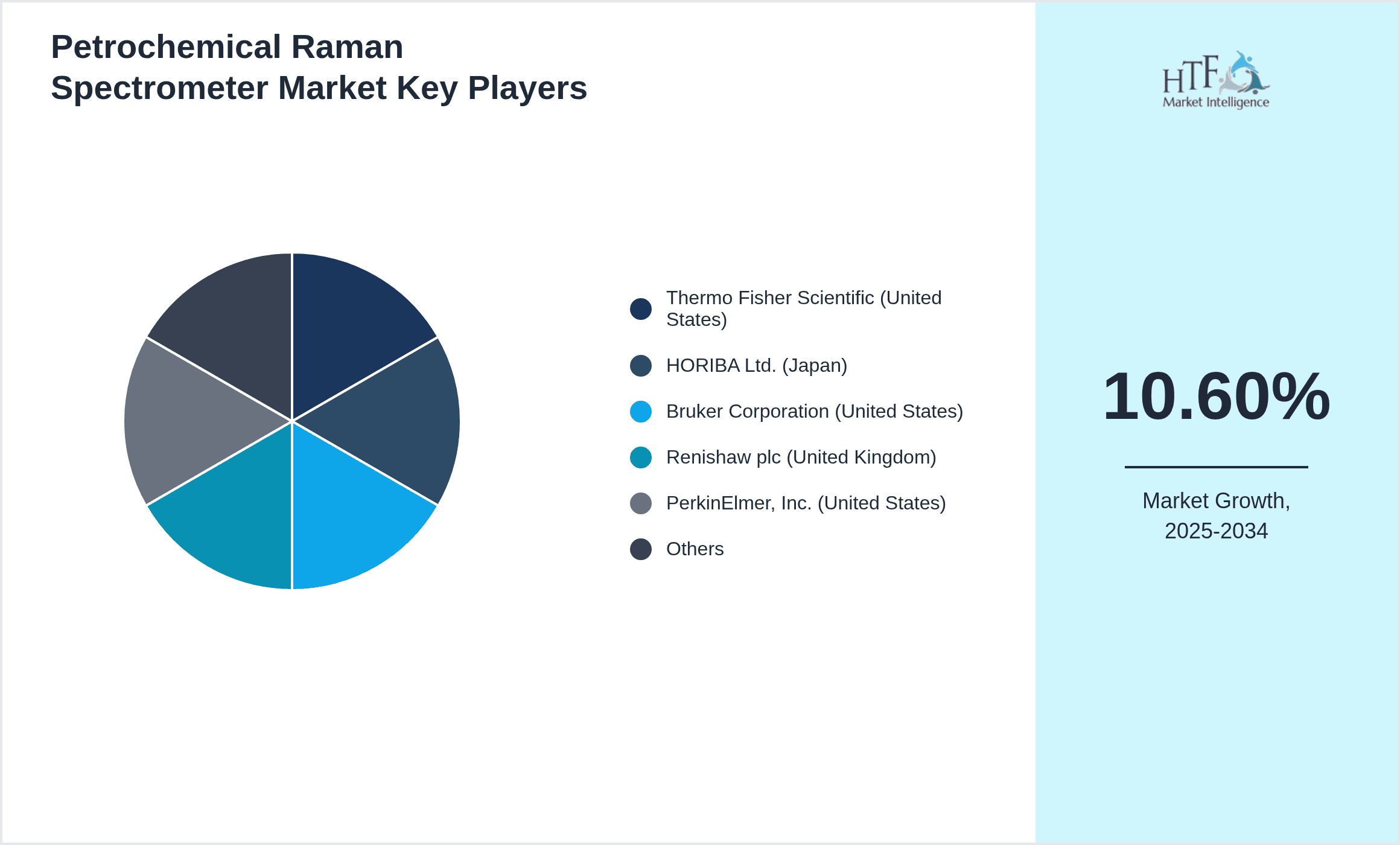
- •Thermo Fisher Scientific (United States)
- •HORIBA Ltd. (Japan)
- •Bruker Corporation (United States)
- •Renishaw plc (United Kingdom)
- •PerkinElmer, Inc. (United States)
Regional Outlook
The North America currently holds a significant share of the market, primarily due to several key factors: increasing consumption rates, a burgeoning population, and robust economic momentum. These elements collectively drive demand, positioning this region as a leader in the market. On the other hand, Asia-Pacific is rapidly emerging as the fastest-growing area within the industry. This remarkable growth can be attributed to swift infrastructure development, the expansion of various industrial sectors, and a marked increase in consumer demand. These dynamics make this region a crucial player in shaping future market growth.
In our report, we cover a comprehensive analysis of the following regions and countries:
- North America
- LATAM
- West Europe
- Central & Eastern Europe
- Northern Europe
- Southern Europe
- East Asia
- Southeast Asia
- South Asia
- Central Asia
- Oceania
- MEA
| Feature | Details |
|---|---|
| Base Year Market Size | USD 1.15 Billion |
| Forecast Year Market Size | USD 3.27 Billion |
| CAGR | 10.6% |
| Forecast Period | 2026 to 2033 |
| YoY Growth | 9.7% |
| Scope of Report | Market is segmented by Type (Dispersive Raman Spectrometer, Fourier Transform Raman Spectrometer, Portable Raman Spectrometer, Microspectrometer, Fiber Optic Raman Spectrometer), Application (Petrochemical Analysis, Process Monitoring, Quality Control, Research & Development, Environmental Monitoring), End User (Petrochemical Refineries, Chemical Manufacturing, Research Laboratories, Environmental Agencies), Distribution Channel (Direct Sales, Distributors and Dealers, Online Sales) |
| Regions Covered | North America, LATAM, West Europe, Central & Eastern Europe, Northern Europe, Southern Europe, East Asia, Southeast Asia, South Asia, Central Asia, Oceania, MEA |
| Key Companies | Thermo Fisher Scientific (United States), HORIBA Ltd. (Japan), Bruker Corporation (United States), Renishaw plc (United Kingdom), PerkinElmer, Inc. (United States), B&W Tek, Inc. (United States), JASCO Corporation (Japan), Ocean Insight (United States), Anton Paar GmbH (Austria), Agilent Technologies, Inc. (United States), Brimrose Corporation of America (United States), Enwave Optronics Corporation (Canada), Ibsen Photonics A/S (Denmark), EDAX, Inc. (United States), StellarNet, Inc. (United States), Specac Ltd. (United Kingdom), LAUDA Scientific GmbH (Germany), Metrohm AG (Switzerland), Malvern Panalytical Ltd. (United Kingdom), Coherent, Inc. (United States), Sierra Instruments, Inc. (United States), Nanalysis Corp. (Canada), B&W Tek (United States), Ocean Optics, Inc. (United States), Hitachi High-Tech Corporation (Japan) |
Global Petrochemical Raman Spectrometer Market - Outlook 2024-2034 - Table of Contents
Frequently Asked Questions (FAQ):
The Compact Track Loaders market is projected to grow at a CAGR of 6.8% from 2025 to 2030, driven by increasing demand in construction and agricultural sectors.
North America currently leads the market with approximately 45% market share, followed by Europe at 28% and Asia-Pacific at 22%. The remaining regions account for 5% of the global market.
Key growth drivers include increasing construction activities, rising demand for versatile equipment in agriculture, technological advancements in track loader design, and growing preference for compact equipment in urban construction projects.